


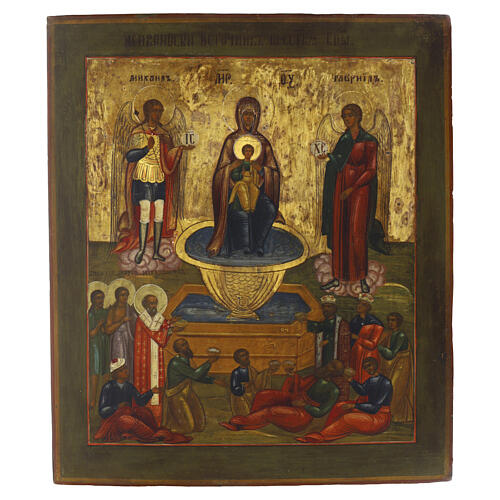
Russian Icon "Fountain of Life" 19th century, 35x30 cm
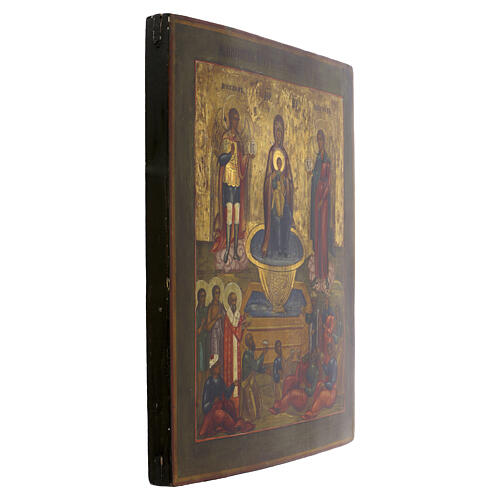
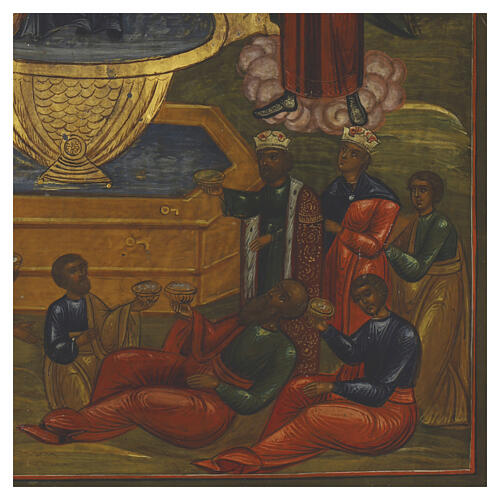
Russian icon "Fountain of Life" (Zoodòchos Pigi), 19th century, 35x30 cm. The devotion to the "Fountain of Life" is linked to one of the oldest and most venerated Marian shrines of Constantinople, near the Golden Gate. According to tradition, the future emperor Leo I, then still a soldier, encountered a blind, thirsty man and through an apparition of the Virgin Mary, discovered a miraculous spring hidden beneath the mud. The man regained his sight after washing with that water, and once he becam...
Info and features
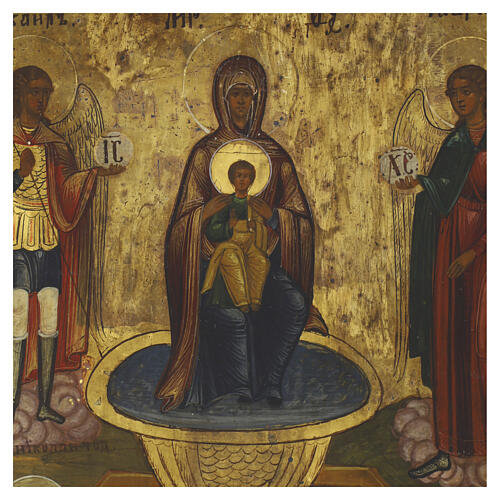
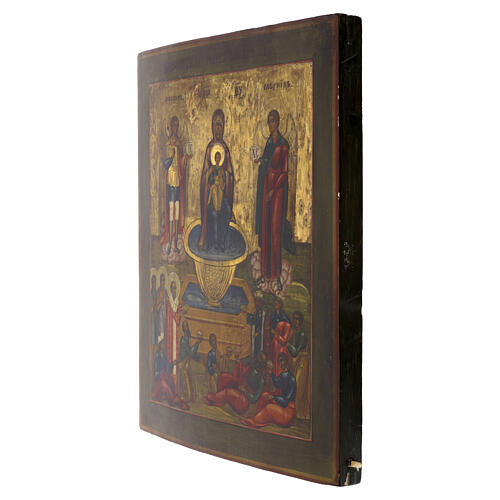
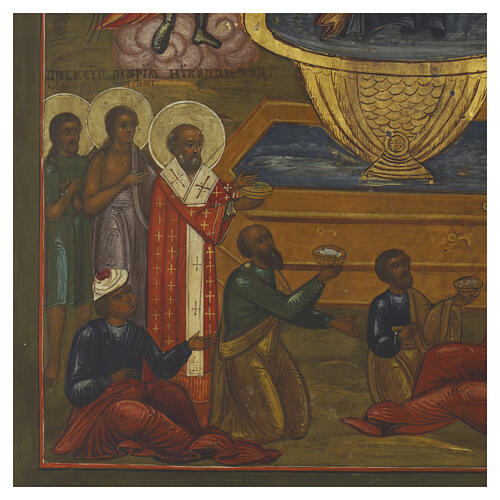
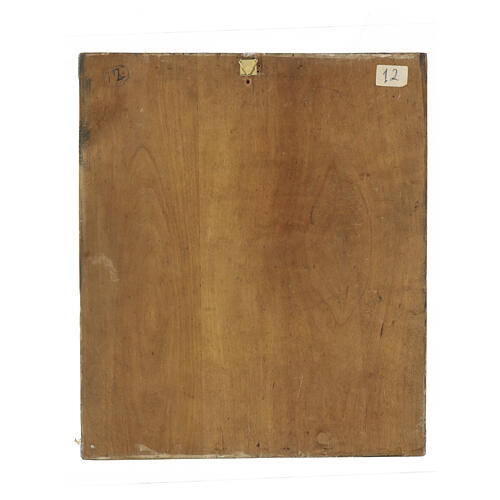
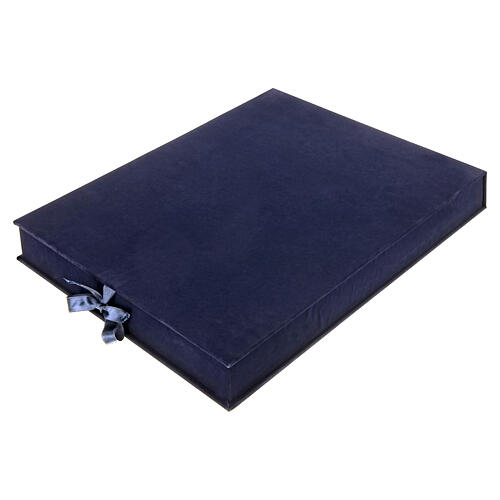
Russian icon "Fountain of Life" (Zoodòchos Pigi), 19th century, 35x30 cm. The devotion to the "Fountain of Life" is linked to one of the oldest and most venerated Marian shrines of Constantinople, near the Golden Gate. According to tradition, the future emperor Leo I, then still a soldier, encountered a blind, thirsty man and through an apparition of the Virgin Mary, discovered a miraculous spring hidden beneath the mud. The man regained his sight after washing with that water, and once he became emperor Leo had a church built in honor of the Mother of God, naming it the "Fountain of Life." Over time the sanctuary became a pilgrimage site and the scene of numerous miracles and healings, regarded as one of the most important spiritual centers of Eastern Christianity. The iconography presents the Virgin as a source of grace and life, a symbol of protection and salvation for the faithful. The work is executed in the traditional manner with egg tempera on a wood panel prepared with levkas, an ancient technique preserved in Russian icon workshops. The icon is accompanied by an expert appraisal and is delivered in a blue velvet case.
Origin: Moscow, Russia.
Technique: Egg tempera on wood prepared with levkas.
Materials: Wood, levkas.
Dimensions: 35 x 30 cm.
Period: 19th century.