


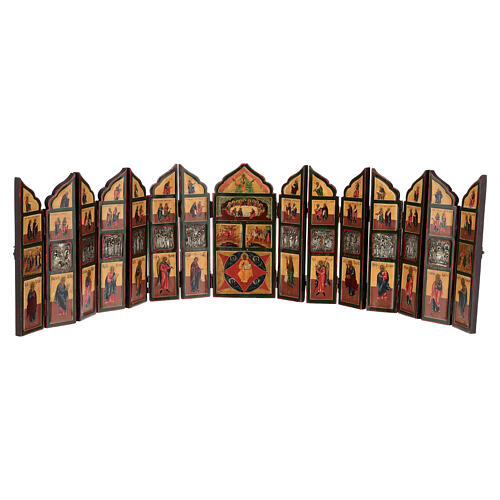
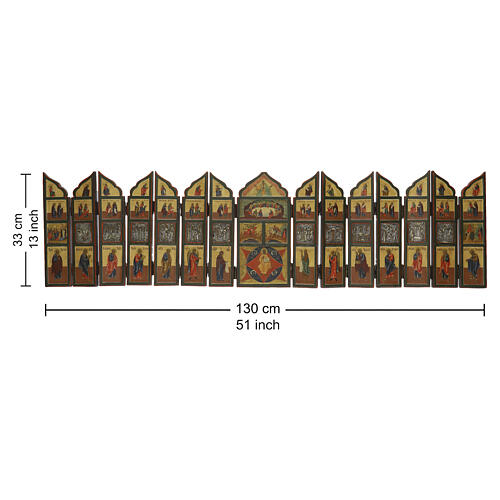
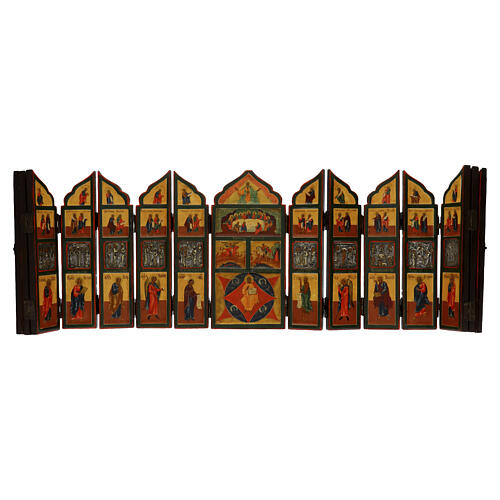
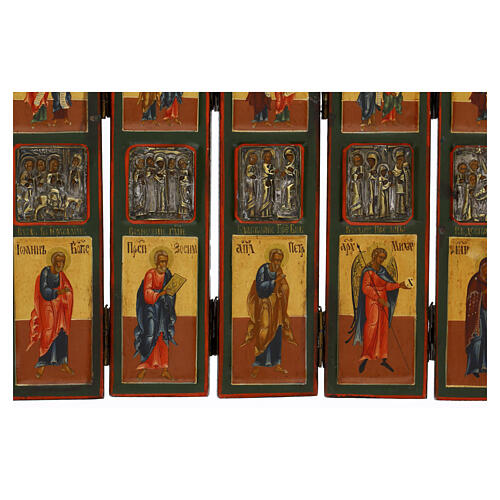
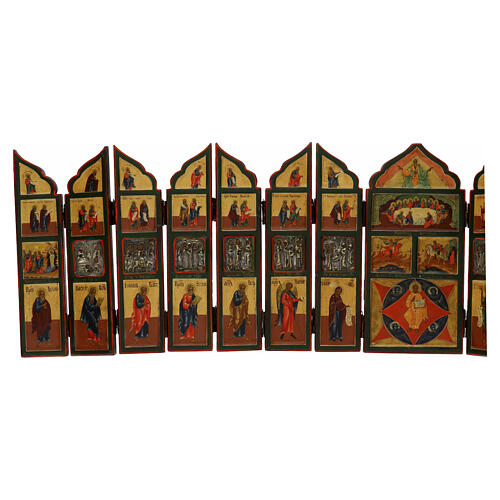
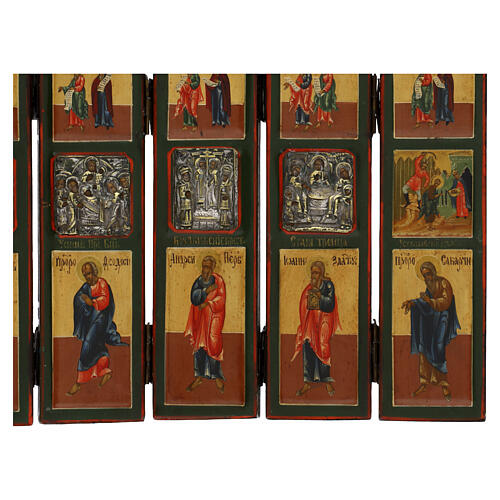
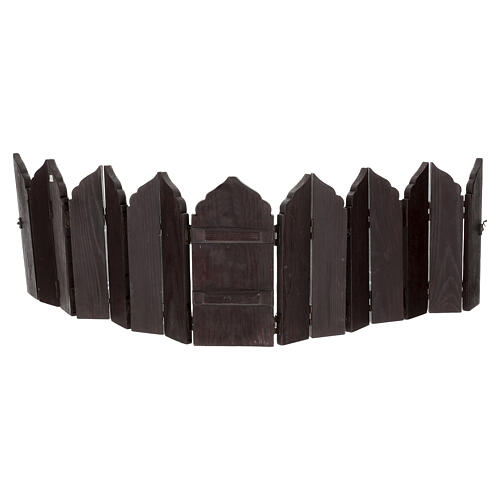
Domestic Russian Foldable Iconostasis, 130x33 cm, 19th century
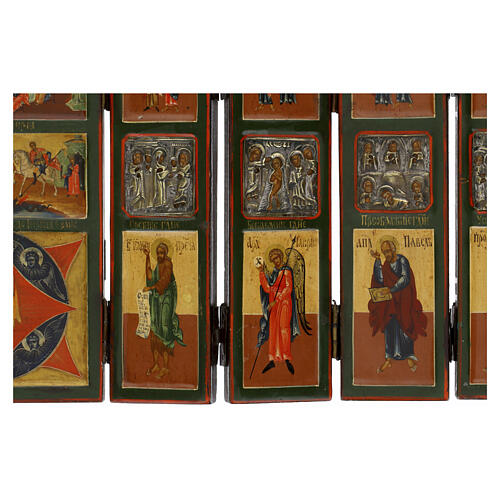
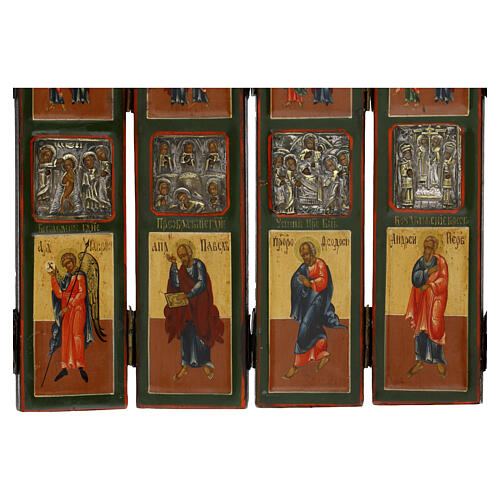
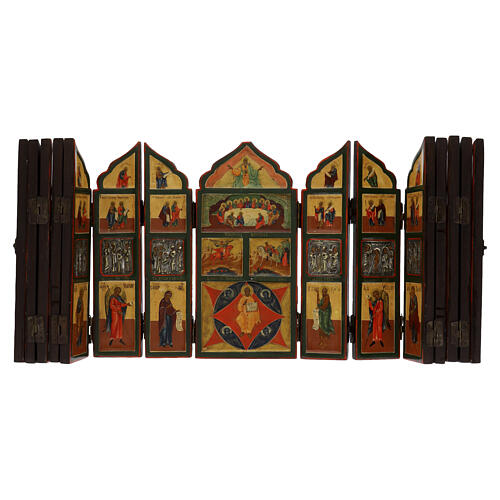
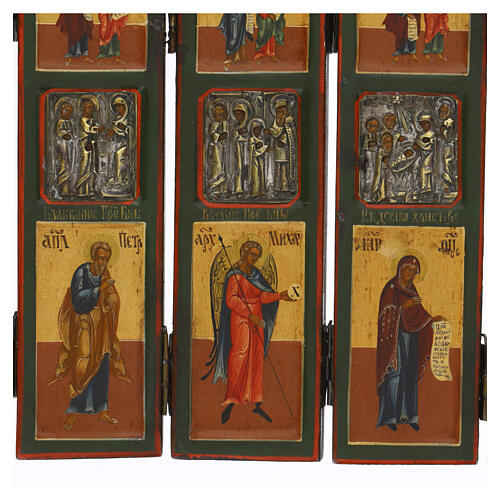
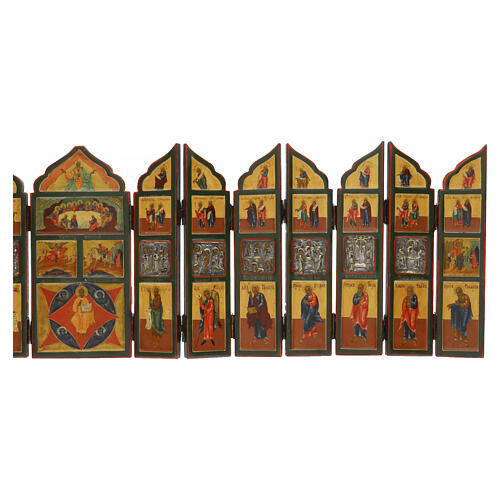
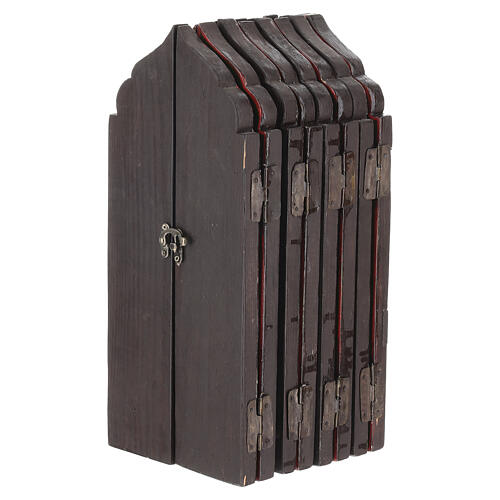
Foldable domestic Russian iconostasis from the 19th century, attributed to the Old Believers School and datable to 1860–1880. Created in egg tempera on wood with levkas (gesso ground), it measures 130 x 34 cm open and 33 x 16 cm closed. In the Orthodox tradition the iconostasis represents the symbolic link between the earthly and heavenly realms. The arrangement follows a precise iconographic order that retraces salvation history across several registers, bringing together Gospel episodes, proph...
Info and features
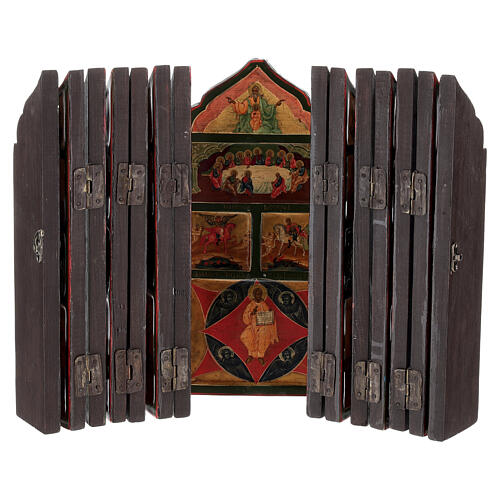
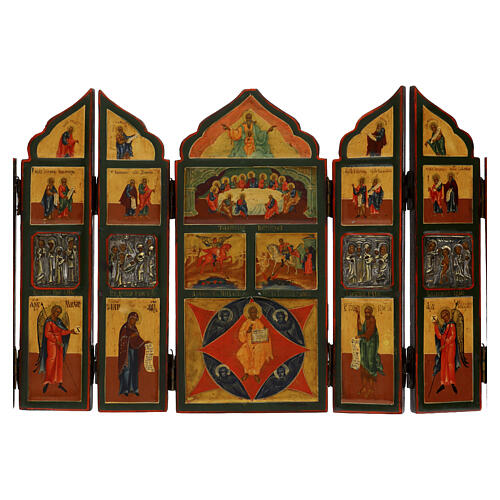
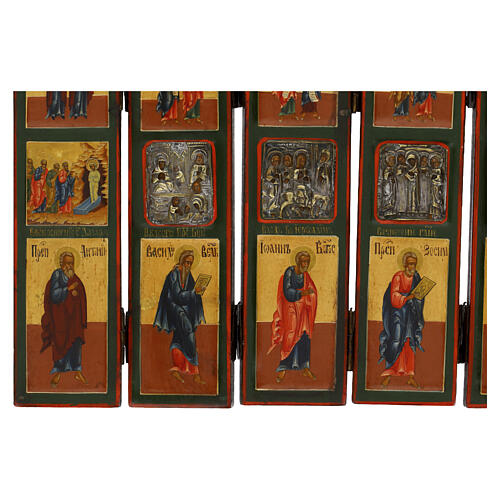
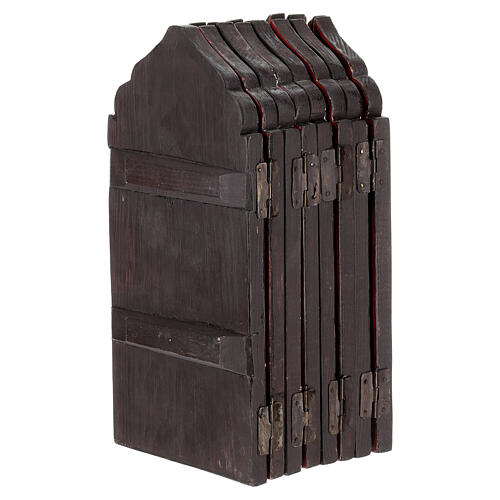
Foldable domestic Russian iconostasis from the 19th century, attributed to the Old Believers School and datable to 1860–1880. Created in egg tempera on wood with levkas (gesso ground), it measures 130 x 34 cm open and 33 x 16 cm closed. In the Orthodox tradition the iconostasis represents the symbolic link between the earthly and heavenly realms. The arrangement follows a precise iconographic order that retraces salvation history across several registers, bringing together Gospel episodes, prophets, saints and central figures of the Christian faith. The lower register houses the Royal Doors, a central element traditionally associated with entrance to the Kingdom of Heaven; they are painted with the Annunciation and the four Evangelists. Above them appears the Last Supper, connected to the sacrament of the Eucharist. Flanking the doors are the images of the Savior and the Virgin with Child, alongside other figures from the Orthodox iconographic repertoire. The second tier is dedicated to the Deesis, centered on Christ and the intercessory prayer. The third tier, known as the Feasts, depicts the principal events narrated in the Gospels, from the Nativity of the Virgin to the Assumption. Above these are the register of the Prophets, announcing the coming of the Messiah, and the register of the Ancestors, recalling the origins of biblical history. At the top is represented God the Father, the Ancient of Days, in a benedictory attitude. The foldable structure identifies this work as an iconostasis intended for domestic devotion, conceived to condense the complex symbolic and figurative organization of large church iconostases into a more compact format. The piece is accompanied by a velvet case and an expert appraisal documenting its Russian provenance.
Provenance: Russia, Old Believers School
Period: 1860–1880, 19th century
Technique: egg tempera
Materials: wood and levkas (gesso ground)
Dimensions open: 130 x 34 cm
Dimensions closed: 33 x 16 cm
Set: velvet case and expert appraisal