


Antique Russian Icon Twelve Feasts Gold Background, 20th Century, 31x26 cm
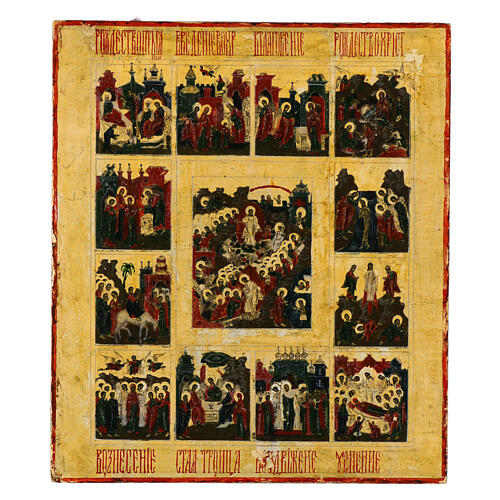
This ancient Russian icon depicts the 12 Feasts that proclaim the faith of the Church. These iconographic representations serve as a continuous liturgical-biblical catechesis for the faithful, placed in the front row of the iconostasis. Among the fixed-date celebrations are the Nativity of Mary (September 8), the Exaltation of the Cross (September 14), the beginning of Holy Week, the Ascension, and Pentecost. Iconographic compositions from the 18th century onwards, especially in Russia, combine ...
Info and features
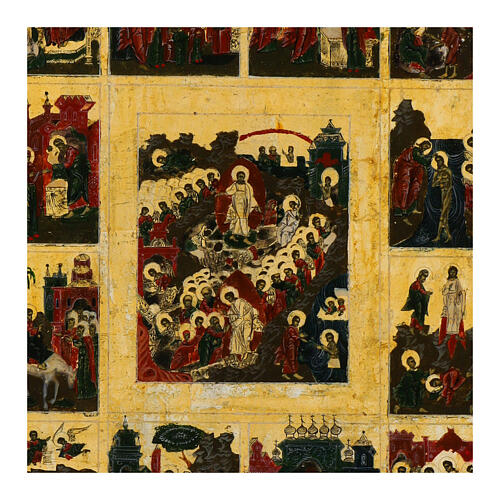
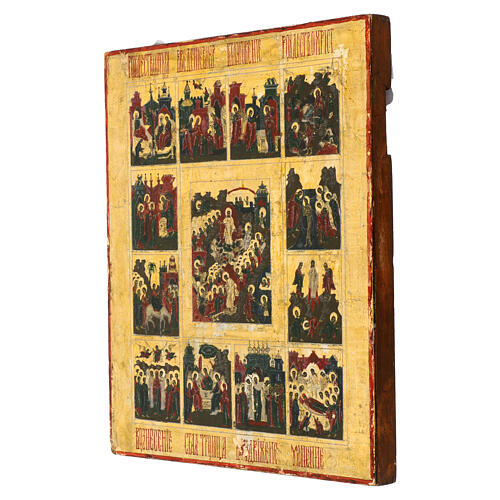
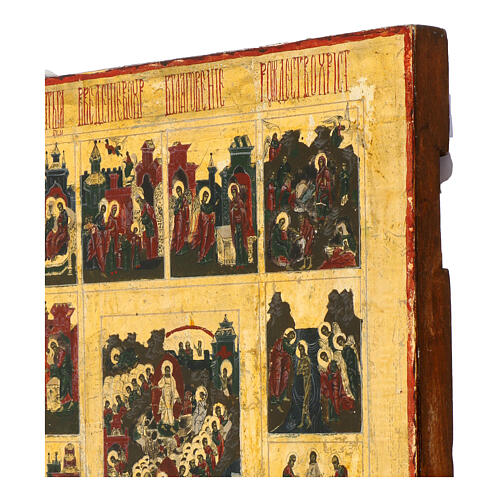
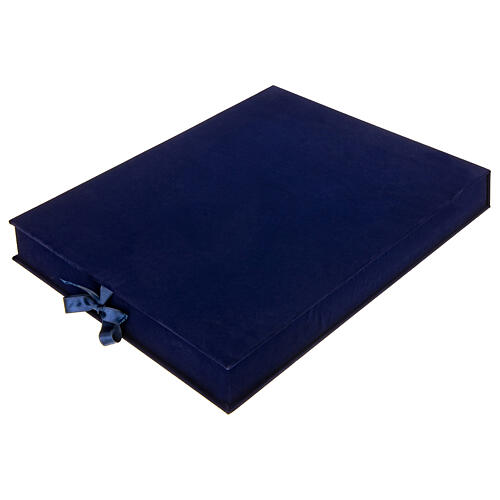
This ancient Russian icon depicts the 12 Feasts that proclaim the faith of the Church. These iconographic representations serve as a continuous liturgical-biblical catechesis for the faithful, placed in the front row of the iconostasis. Among the fixed-date celebrations are the Nativity of Mary (September 8), the Exaltation of the Cross (September 14), the beginning of Holy Week, the Ascension, and Pentecost. Iconographic compositions from the 18th century onwards, especially in Russia, combine the cycle of the twelve feasts into a single representation centered around the Easter image. Although not formally included among the feasts, Easter symbolizes their core and fulfillment, carrying profound theological significance. The twelve feasts include: the Nativity of Mary, the Presentation of Mary in the Temple, the Birth of Jesus, the Presentation of Jesus in the Temple, the Baptism of Christ, the Entry into Jerusalem, the Transfiguration of Jesus, the Holy Trinity, the Exaltation of the Holy Cross, the Ascension of Christ, Pentecost, and the Dormition of Mary. The central scene holds significant importance as a Paschal message portraying Christ's descent into hell, the procession of the blessed towards Paradise led by the good thief, the Resurrection of Jesus, and his appearance at the Lake of Tiberias. The linden wood panel is well-preserved. The Russian orthodox icon is delivered with an elegant velvet case and accompanied by an appraisal conducted by a specialized expert. Origin: Moscow. Technique: egg tempera. Materials: wood, levkas. Actual Measurements: 30.8x26.5 cm. Era: Early 20th century.