


Antique Russian icon Our Lady of Kazan, 18th century 27x23 cm
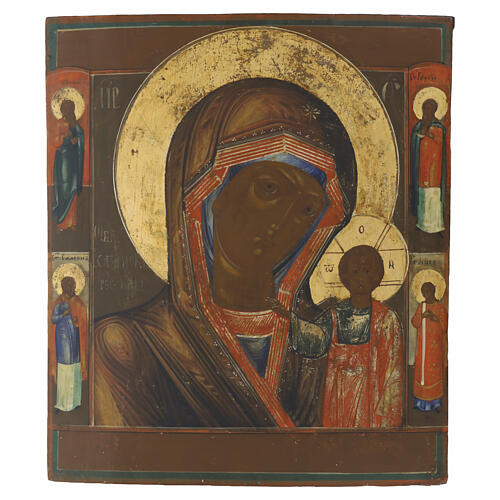
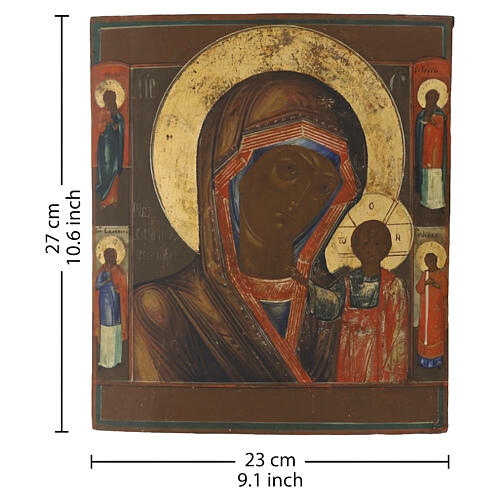
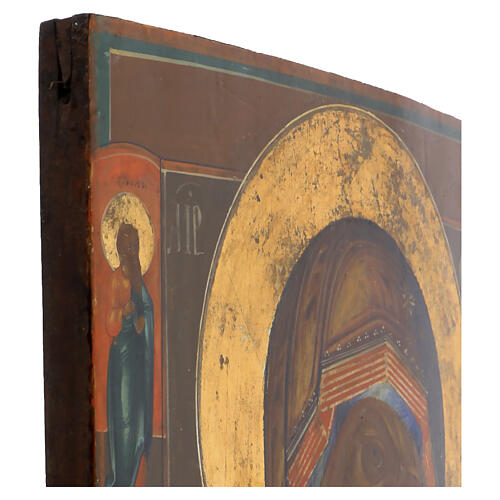
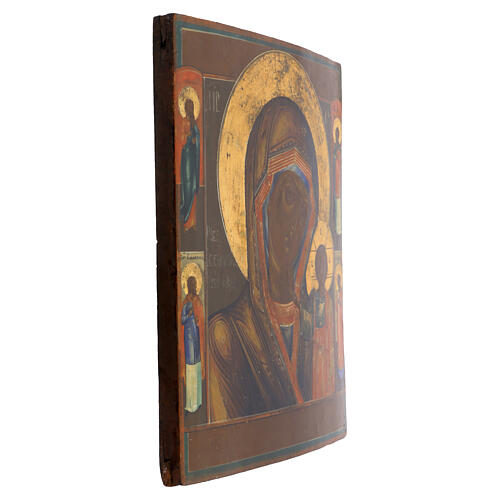
Antique Russian icon depicting Our Lady of Kazan, originating from Central Russia and datable to the late 18th century. The panel measures 27.2 x 23.5 cm and is executed in egg tempera on wood prepared with levkas. Devotion to Our Lady of Kazan originates in 1579 when, according to tradition, the icon was found in Kazan after the Virgin appeared repeatedly to a young girl, indicating the place where the image had been hidden. From that moment the Mother of God of Kazan became one of the most ven...
Info and features
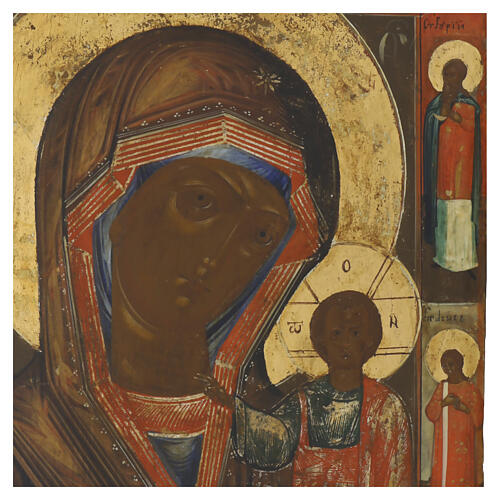
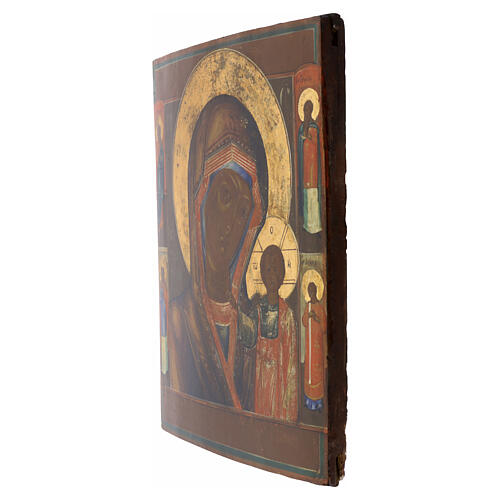
Antique Russian icon depicting Our Lady of Kazan, originating from Central Russia and datable to the late 18th century. The panel measures 27.2 x 23.5 cm and is executed in egg tempera on wood prepared with levkas. Devotion to Our Lady of Kazan originates in 1579 when, according to tradition, the icon was found in Kazan after the Virgin appeared repeatedly to a young girl, indicating the place where the image had been hidden. From that moment the Mother of God of Kazan became one of the most venerated Marian images in the Russian tradition. Over the centuries the icon was associated with pivotal moments in Russian history: in 1612 a copy of the revered image accompanied the forces engaged in the liberation of Moscow, and subsequently the Madonna of Kazan was regarded as protector of the Romanov dynasty and of important cities of the Russian Empire. Iconographically the composition is a variant of the Hodegetria type, the "Mother of God who shows the Way." The Virgin is shown half‑length while the Christ Child appears standing beside her. This more intimate arrangement became particularly widespread in Russian painting from the 16th century onward. The restraint of the composition concentrates attention on the faces of Mother and Child, underlining the devotional meaning of the image and the Virgin's role as protector and intercessor in Orthodox spirituality. The religious icon is accompanied by an expert's appraisal and a velvet presentation box, which complete its documentation and presentation.
Provenance: Central Russia
Period: late 18th century
Technique: egg tempera
Materials: wood and levkas
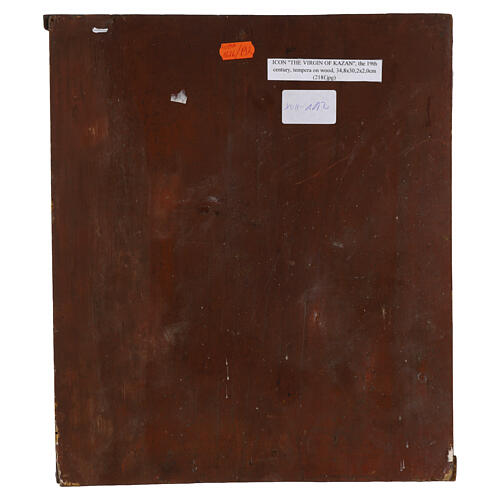
Dimensions: 27.2 x 23.5 cm
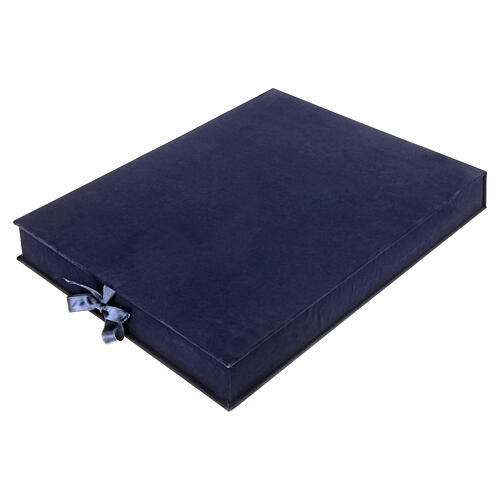
Accompaniment: expert appraisal and velvet presentation box.