


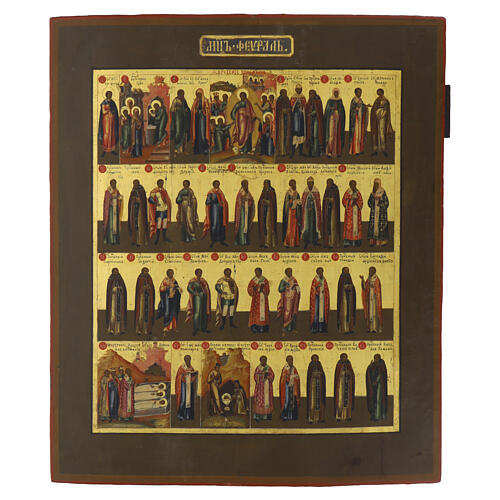
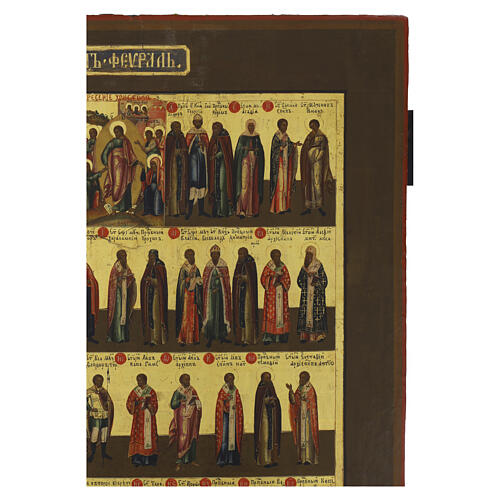
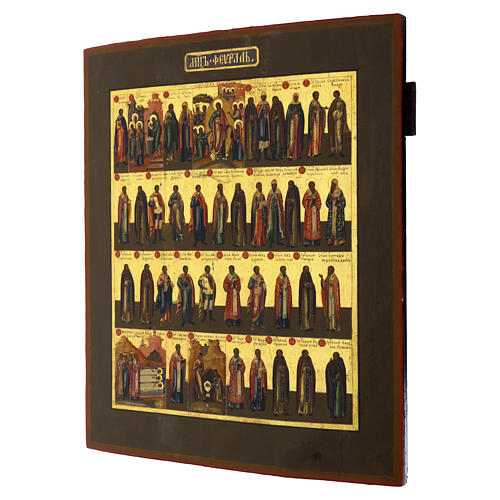
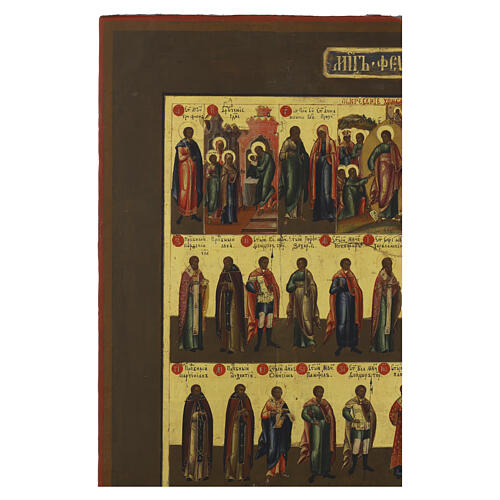
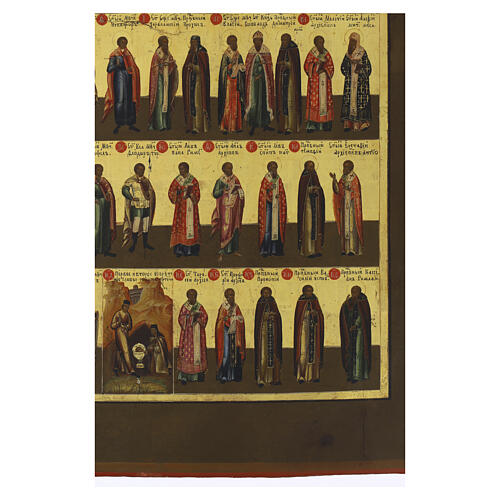
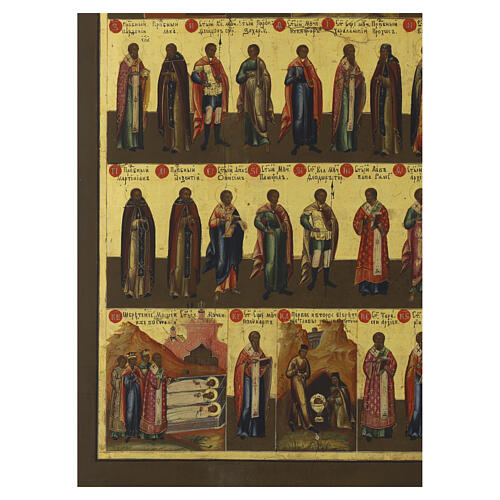
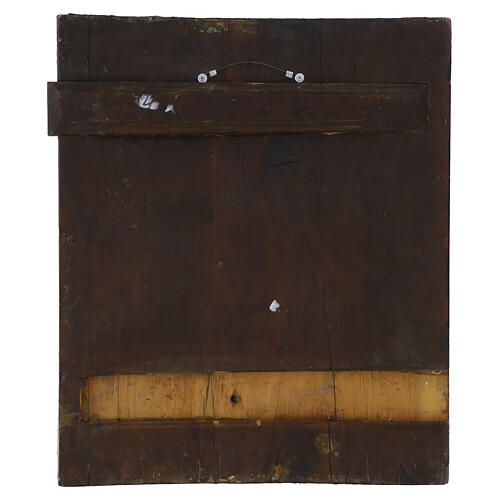

Antique Russian Icon February Menologium, 44x38 cm 19th century
Antique Russian icon depicting the saints and main liturgical scenes of February, painted with egg tempera on gold leaf on a levkas-prepared wooden panel. The Menologium represents the ecclesiastical calendar section dedicated to the daily commemoration of saints. Since the 9th-10th centuries, such icons visually illustrated the liturgical cycle to believers, spreading knowledge of hagiographic lives and fostering saint veneration. In this work dedicated to February, notable depictions include t...
Info and features
Antique Russian icon depicting the saints and main liturgical scenes of February, painted with egg tempera on gold leaf on a levkas-prepared wooden panel. The Menologium represents the ecclesiastical calendar section dedicated to the daily commemoration of saints. Since the 9th-10th centuries, such icons visually illustrated the liturgical cycle to believers, spreading knowledge of hagiographic lives and fostering saint veneration. In this work dedicated to February, notable depictions include the Presentation of Jesus at the Temple in the upper register and the Finding of the Head of John the Baptist in the lower register. The individual saint figures, arranged according to the liturgical calendar, succeed each day, providing a valuable testimony of popular devotion and the 19th-century Russian iconographic tradition. The rich gilding of the background and the finesse of the features, typical of Palekh and Vladimir region schools, give the icon a luminosity and spiritual depth of great intensity. The icon is delivered in an elegant blue velvet box and is accompanied by an expert appraisal from a registered appraiser. Origin: Palekh or Vladimir region, Russia. Technique: egg tempera on gold leaf. Materials: wood, levkas. Dimensions: 44x38 cm. Era: approximately 1800-1850.