


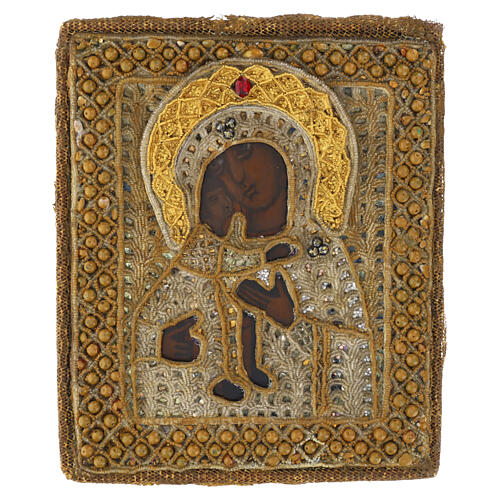
Ancient Russian Icon Mother of God Feodorovskaya late 18th–early 19th century 31x26 cm with Honorary Embroidery and Glass Pearls
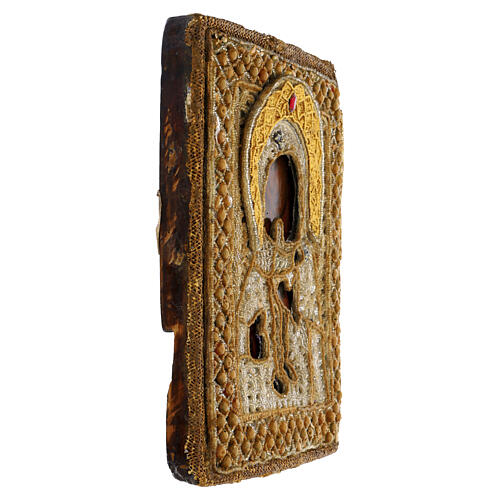
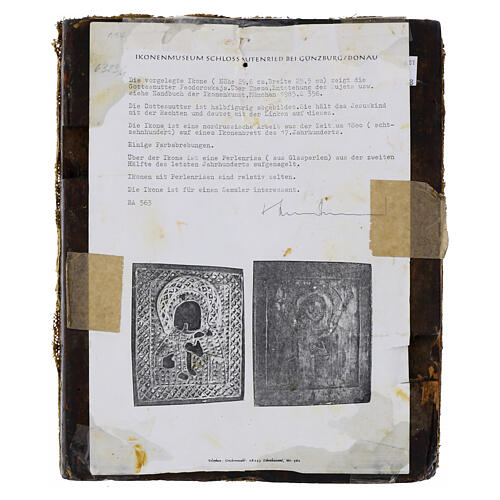
Ancient Russian icon of the Mother of God Feodorovskaya, from Northern Russia, datable to the late 18th–early 19th century. Executed in egg tempera on wood with levkas, the panel measures 31x26 cm. The iconography derives from the venerated image of the Mother of God of St. Theodore, kept in the Cathedral of the Dormition in Kostroma. According to tradition, that icon was found and brought to Kostroma after the destruction of a town on the Volga and over time became one of the principal Marian s...
Info and features
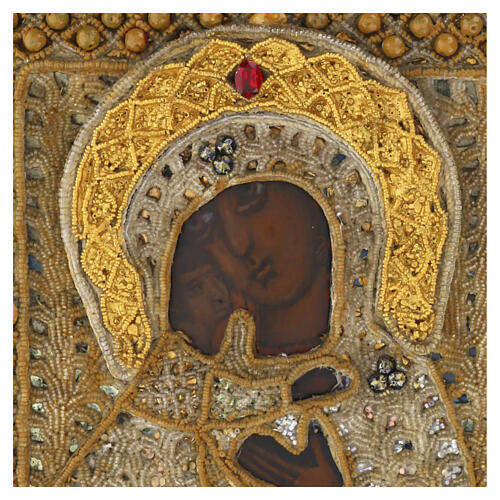
Ancient Russian icon of the Mother of God Feodorovskaya, from Northern Russia, datable to the late 18th–early 19th century. Executed in egg tempera on wood with levkas, the panel measures 31x26 cm. The iconography derives from the venerated image of the Mother of God of St. Theodore, kept in the Cathedral of the Dormition in Kostroma. According to tradition, that icon was found and brought to Kostroma after the destruction of a town on the Volga and over time became one of the principal Marian subjects of Russian devotion. The composition belongs to the type known as the Madonna of Tenderness: the Christ Child presses his cheek against his Mother’s in a gesture of intimacy and affection, while Mary embraces him with a contemplative, introspective expression. The theme expresses the union of the divine and the human and, in the Orthodox tradition, evokes the image of the Church welcoming Christ.
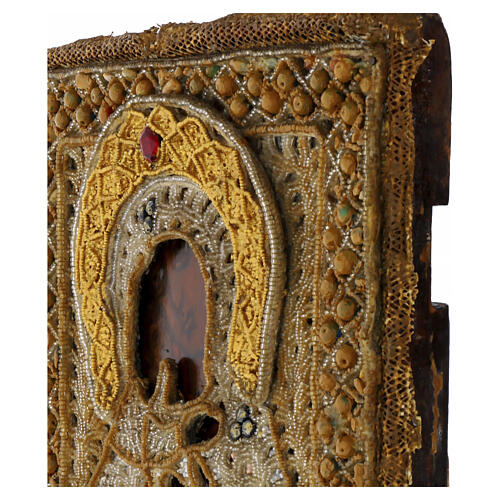
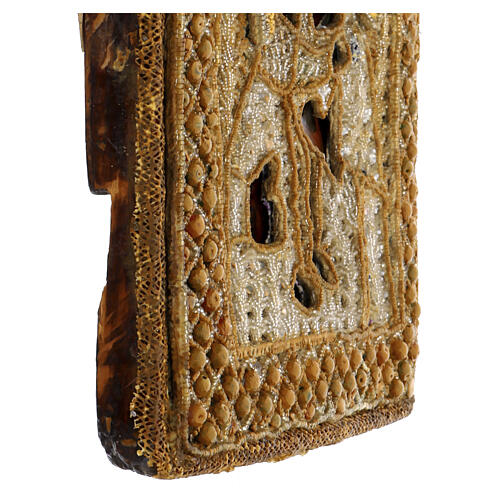
An identifying iconographic feature of the Feodorovskaya is the left leg of the Child left uncovered, which distinguishes it from similar representations while maintaining a close compositional affinity with the Mother of God of Vladimir. Since the 17th century devotion to the Feodorovskaya Mother of God has been closely linked to the Romanov dynasty, especially to the election of Tsar Mikhail Feodorovich Romanov in 1613, an event that helped spread veneration of the Orthodox icon throughout Russia. The panel also preserves an oklad decorated with glass pearls and an overlaid honorary embroidery, elements that enrich the surface and emphasize the icon’s devotional character.
Origin: Northern Russia
Period: late 18th–early 19th century
Technique: egg tempera
Materials: wood with levkas
Decoration: oklad with glass pearls and overlaid honorary embroidery
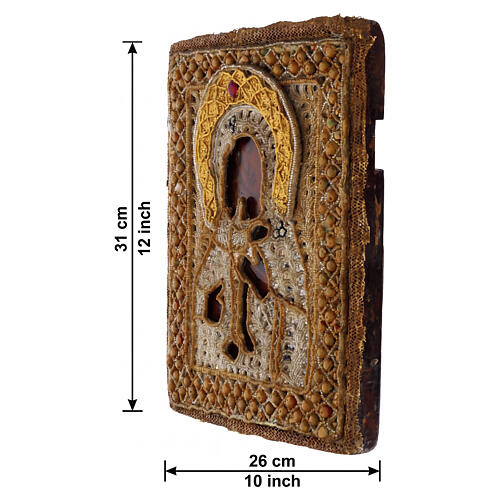
Dimensions: 31x26 cm.