


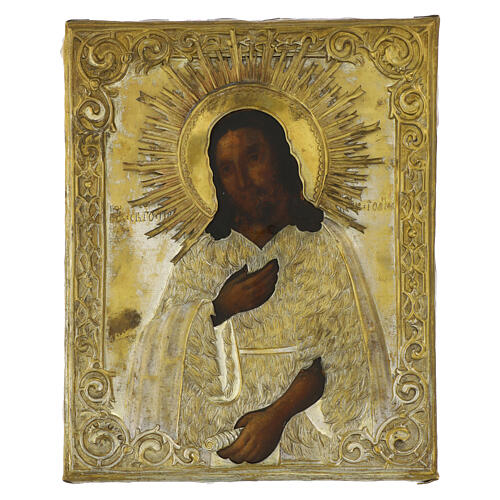
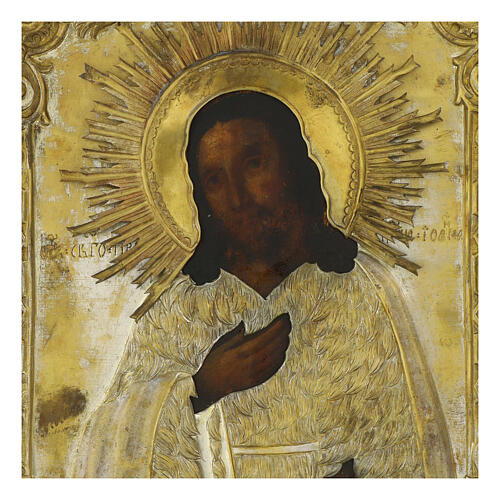

Icon St. John the Baptist riza brass Russia 19th century, 32x25 cm
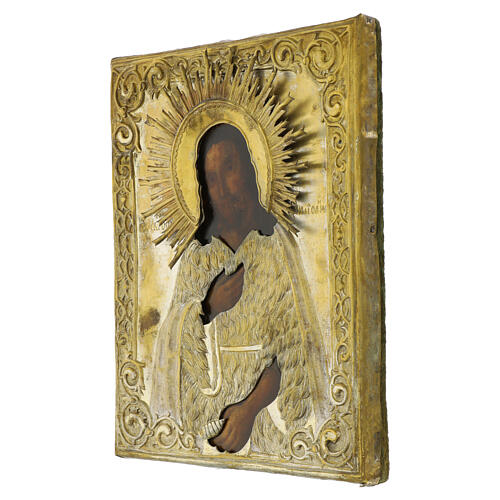
Icon of St. John the Baptist riza brass Russia 19th century 32x25 cm. Antique orthodox icon, depicting John the Baptist in the guise of an ascetic, a desert hermit, dating back to the evangelical testimonies about John as a prophet, a precursor of Christ, preaching penance. In addition, the New Testament refers to John the Baptist and the Old Testament prophecies such as: "The voice of one crying in the wilderness: prepare the way of the Lord, make straight his paths" and: "I send my messenger b...
Info and features
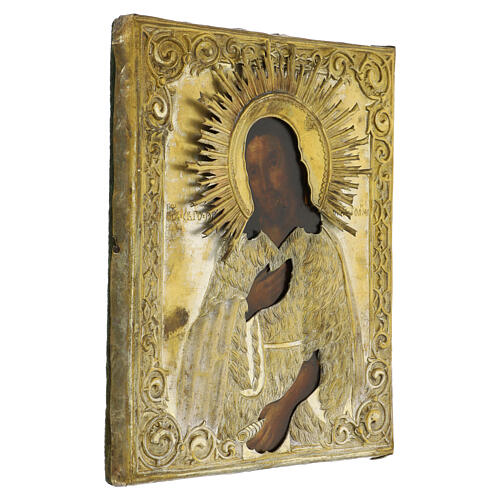
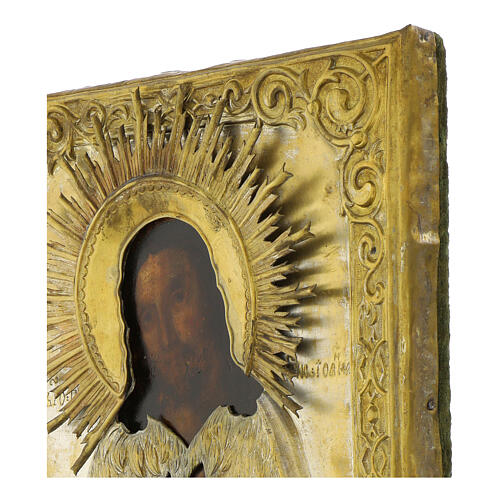
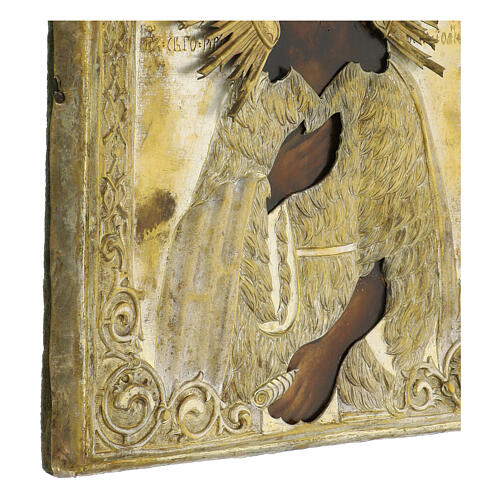
Icon of St. John the Baptist riza brass Russia 19th century 32x25 cm. Antique orthodox icon, depicting John the Baptist in the guise of an ascetic, a desert hermit, dating back to the evangelical testimonies about John as a prophet, a precursor of Christ, preaching penance. In addition, the New Testament refers to John the Baptist and the Old Testament prophecies such as: "The voice of one crying in the wilderness: prepare the way of the Lord, make straight his paths" and: "I send my messenger before you, he will prepare the way before you". This last prophecy is the basis of the iconography of the desert, known in Byzantine art from the end of the 13th - first half of the 14th century (the oldest of the depictions of this type that have come down to us appears in the frescoes of the church of St. Achilleus in Arilije). In Russian art, depictions of this kind are encountered starting from the 14th century (the icon of John the Forerunner Angel of the Desert, from the end of the 14th century, from Kolomna, currently in the Tretyakov Gallery), and are widely distributed between the 16th and 17th centuries. The Jesus icon in question is covered with a silver metal riza worked according to the iconography of the clothes that John wore in the desert. It is delivered with an elegant blue box and an expert's report.
Origin: Moscow.
Technique: egg tempera.
Materials: wood, levkas, silver metal riza.
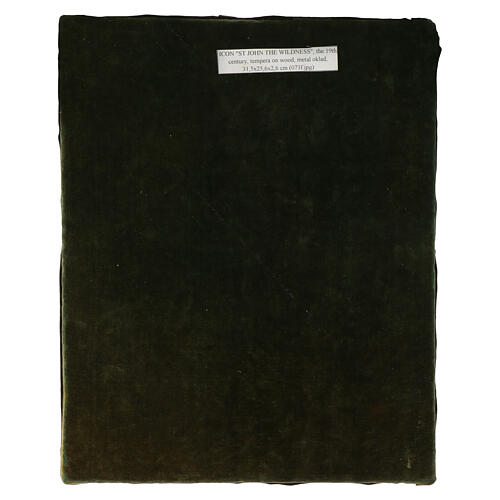
Actual dimensions: 32x25.8 cm.
Period: mid-19th century.