


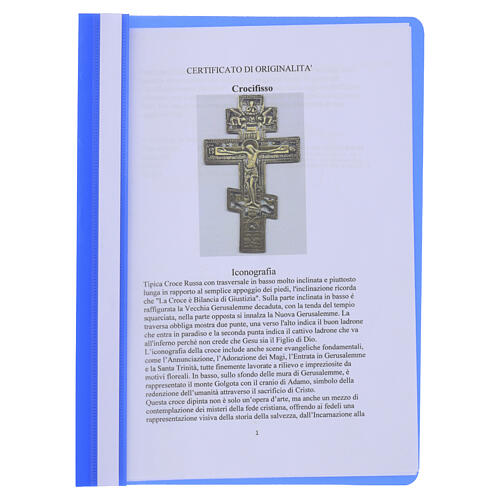

Antique Russian Orthodox Bronze Crucifix with White and Blue Enamels, early 19th century, 25x14 cm
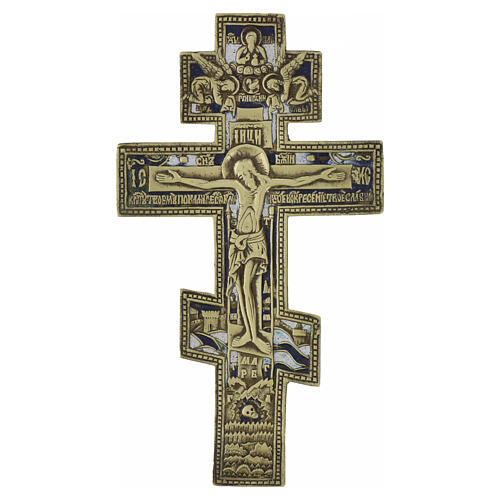
Antique Russian Orthodox bronze crucifix with white and blue enamels, early 19th century, 24.5 x 14 cm. An important example of the Eastern iconographic tradition, this crucifix presents the characteristic Russian three-bar structure, with the lower bar inclined to symbolize the "Scales of Justice": on one side the Good Thief welcomed into Paradise, on the other the Bad Thief turning away from salvation. The lower register develops a rich theological symbolism: the fallen Old Jerusalem contrasts...
Info and features
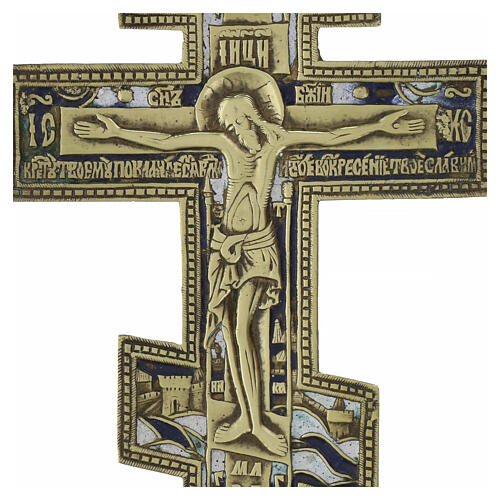
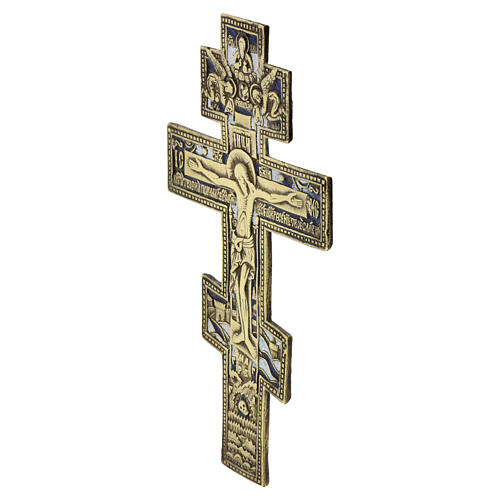
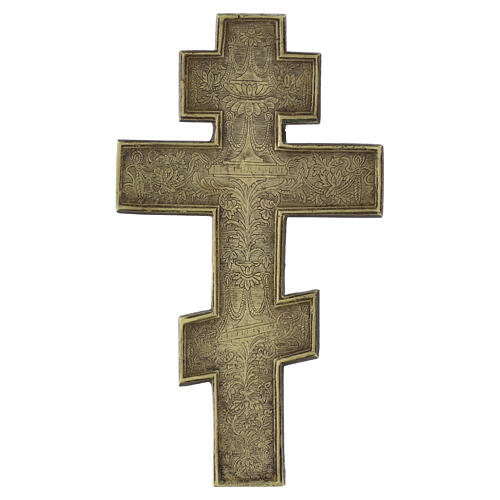
Antique Russian Orthodox bronze crucifix with white and blue enamels, early 19th century, 24.5 x 14 cm. An important example of the Eastern iconographic tradition, this crucifix presents the characteristic Russian three-bar structure, with the lower bar inclined to symbolize the "Scales of Justice": on one side the Good Thief welcomed into Paradise, on the other the Bad Thief turning away from salvation. The lower register develops a rich theological symbolism: the fallen Old Jerusalem contrasts with the New Jerusalem, while at the base Mount Golgotha is depicted together with the skull of Adam, a sign of humanity's redemption through Christ's sacrifice. Incised inscriptions recall the salvific meaning of the Cross as the place where "the site of the Crucified One becomes Paradise." The white and blue enamels impart notable luminosity and contrast, enhancing the finely modelled relief details and emphasizing the central Crucifixion scene. In the Eastern tradition Christ is portrayed with regal dignity, not in the spasm of suffering but in the glory of victory over death.
Both a work of art and an object for devotion, this crucifix condenses the mystery of salvation into an intense and symbolic composition. The Orthodox crucifix is accompanied by an expert appraisal by an iconography specialist and is housed in an elegant blue velvet presentation case, attesting to its authenticity and collector's value.
Provenance: Moscow, Russia.
Materials: Bronze and enamels.
Dimensions: 24.5 x 14 cm.
Period: early 19th century.