


Antique Russian Icon, November Menologium 31x26 cm
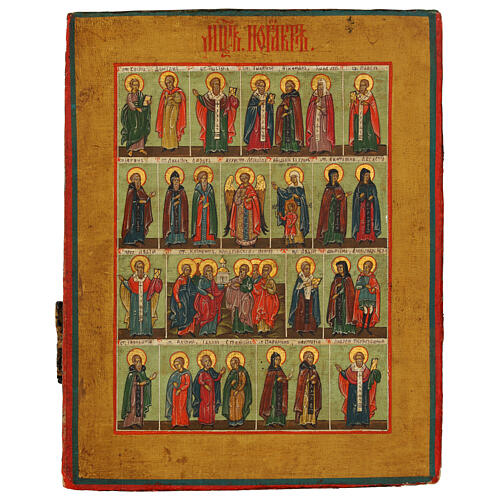
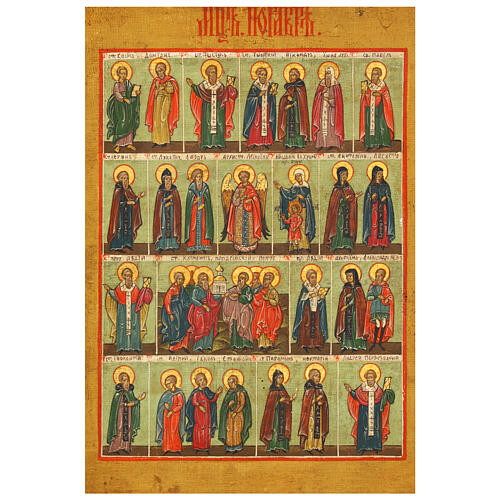
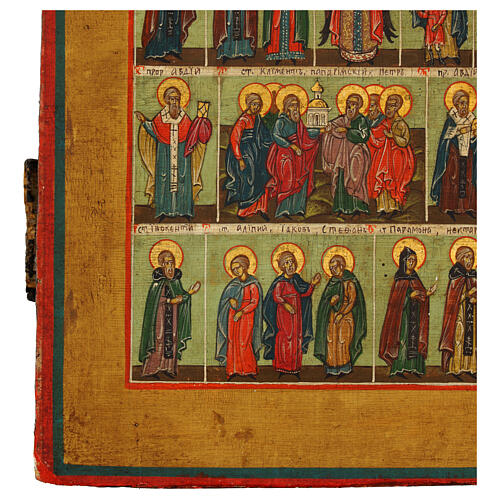
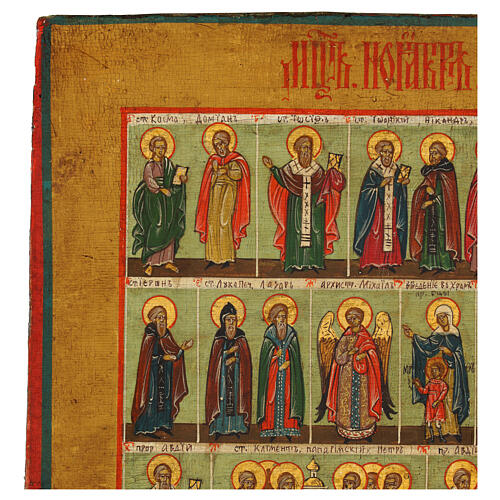
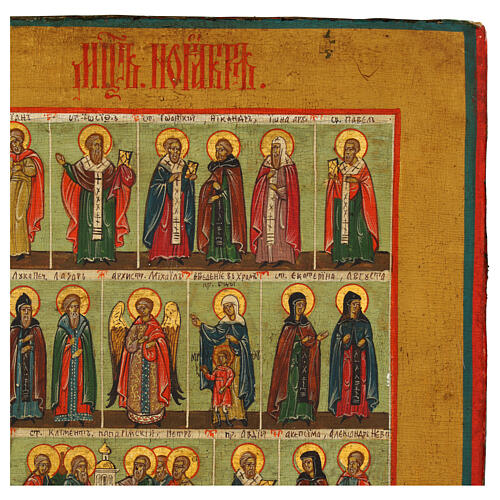
Antique Russian Icon, portraying the November Menologium. The Menologium (Mineja, from Greek "month") is a liturgical book that collects prayers, hymns, and texts dedicated to saints and festivities celebrated each day of the year. Icons with this designation depict saints and feasts remembered in liturgical Menologi. This icon presents the sequence of saints commemorated in the liturgical calendar of November on five equal-height registers, arranged chronologically based on their liturgical rem...
Info and features
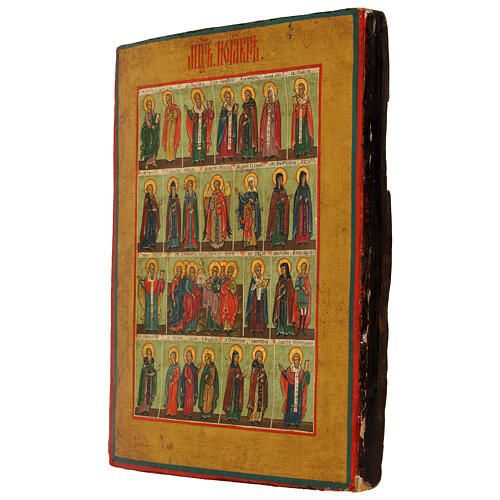
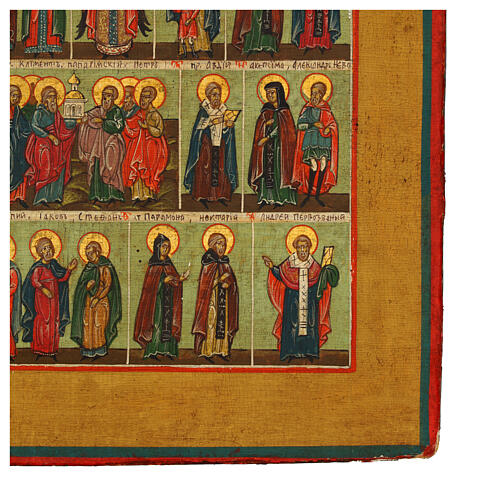
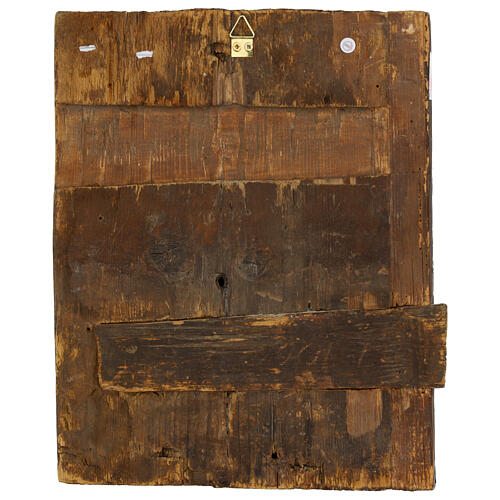
Antique Russian Icon, portraying the November Menologium. The Menologium (Mineja, from Greek "month") is a liturgical book that collects prayers, hymns, and texts dedicated to saints and festivities celebrated each day of the year. Icons with this designation depict saints and feasts remembered in liturgical Menologi. This icon presents the sequence of saints commemorated in the liturgical calendar of November on five equal-height registers, arranged chronologically based on their liturgical remembrance. Unlike other Menologium icons, saints are not depicted frontally but in natural poses facing each other, giving the composition a more dynamic aspect. Prominent among the depicted feasts are the Synaxis of the Archangels Michael and Gabriel (8th November, center of the second register) and the Presentation of the Mother of God at the Temple (21st November, fourth register). The traditional scene of Saint Varlaam of Khutyn's Burial (6th November) is replaced here by the figure of the saint himself. The festive scenes depart from the typical iconographic reduction of Menologi, instead presenting complete and detailed representations. In the Synaxis of the Archangels, the inclined angels are arranged in the supplicating attitude of the Deesis, while in the Presentation of the Mother of God at the Temple, Mary's parents and a virgin form a processional ritual. Origin: Central Russia. Technique: egg tempera on wood with levkas preparation. Measurements: 31 x 26.4 cm. Era: late 19th-20th century. This icon, with its wealth of details and accurate compositional structure, represents a precious example of Orthodox iconographic tradition. The orthodox icon is accompanied by an expert appraisal certifying its authenticity and historical value, along with a description of the Menologium's significance in Orthodox Christian liturgy.