


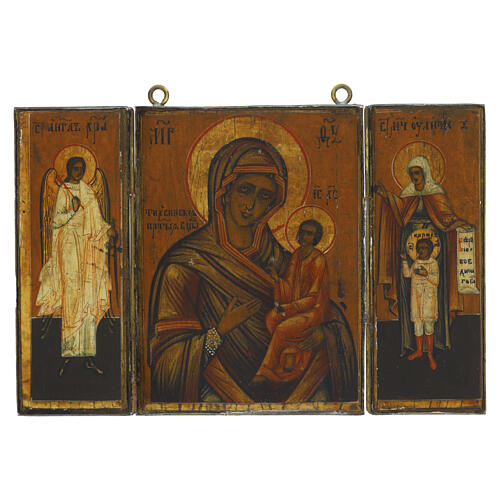
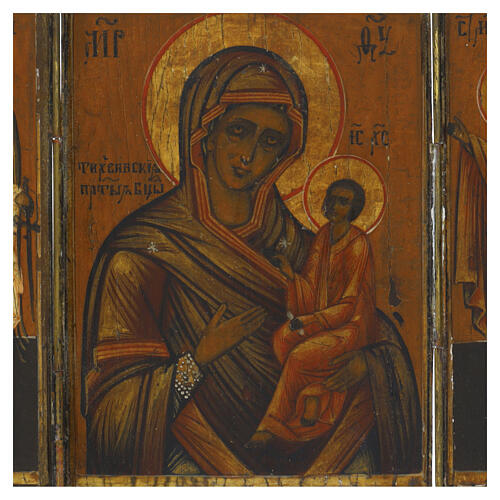
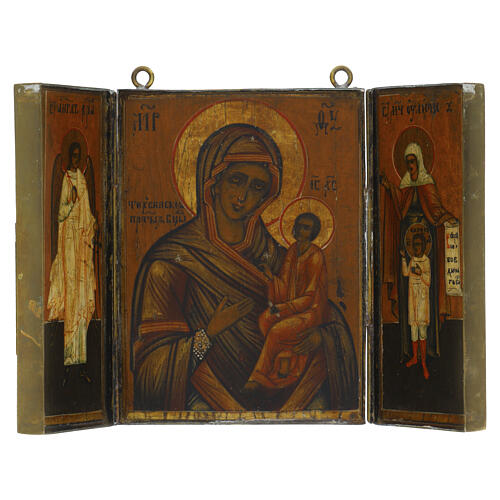
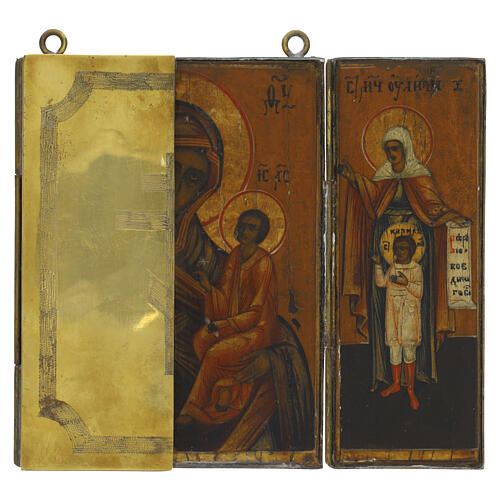
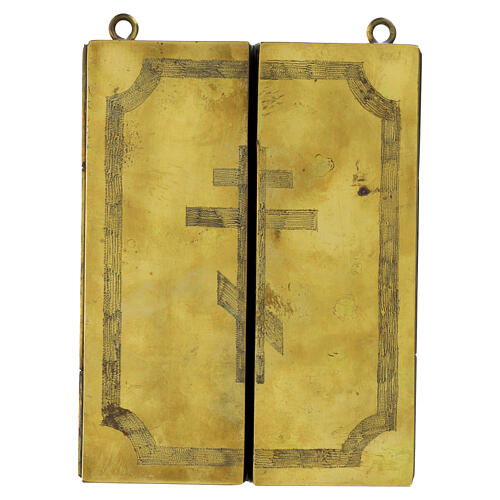
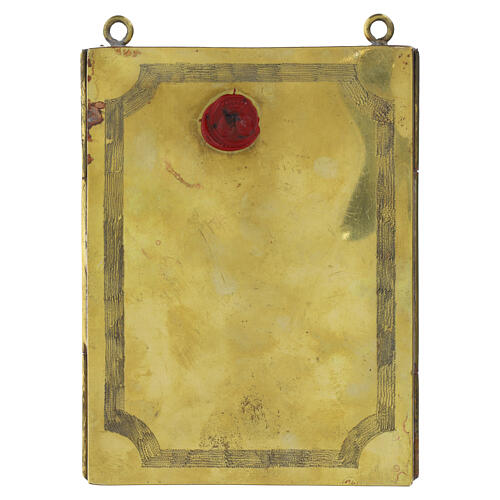
Ancient Russian Travel Triptychl Mother of God Tikvin 19th Century 10x15x1 cm
Ancient Russian travel triptych Mother of God Tikvin 19th century 10x15x1 cm. In Russia, starting from 1440 AD, the tradition of creating small icons not only in wood but also in metal, porcelain, and even pressed paper became popular. These lightweight and durable images were accessible and particularly suitable for daily use. The most common subjects included the Crucifix, Christ Acheiropita, the Virgin Mary, numerous Saints, the Holy Trinity, and Deesis. Due to their manageability, these work...
Info and features
Ancient Russian travel triptych Mother of God Tikvin 19th century 10x15x1 cm. In Russia, starting from 1440 AD, the tradition of creating small icons not only in wood but also in metal, porcelain, and even pressed paper became popular. These lightweight and durable images were accessible and particularly suitable for daily use. The most common subjects included the Crucifix, Christ Acheiropita, the Virgin Mary, numerous Saints, the Holy Trinity, and Deesis. Due to their manageability, these works were soon identified as neck or travel icons, allowing believers to always carry with them the venerated sacred figure, considered a constant source of protection and blessing. Until the 17th century, the most used metals were bronze and copper, in the following century brass was added, and more rarely, silver. Colored enamels were commonly used as background decoration to embellish the image. The most common forms ranged from simple crucifixes or those accompanied by side icons, to single tablets of various sizes, to diptychs, triptychs, and polyptychs. Concerning the wooden support, extremely hard and carefully seasoned essences were preferred, often with over a century of natural drying, to ensure maximum stability and avoid damage due to residual moisture.
Origin: Moscow-Russia.
Materials: Bronze, wood - levkas.
Measurements: Open 26x17 cm; Closed: 12.8x17 cm.
Period: 19th century.
The foldable structure makes this religious icon a practical object for prayer and meditation, maintaining the rich tradition of Russian sacred art. The orthodox icon is accompanied by an expert appraisal, certifying its authenticity and historical value.