


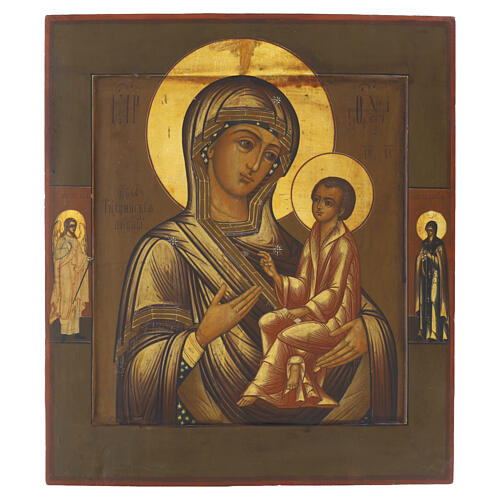
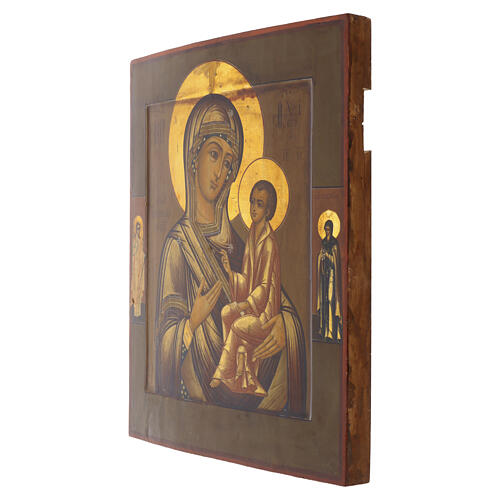
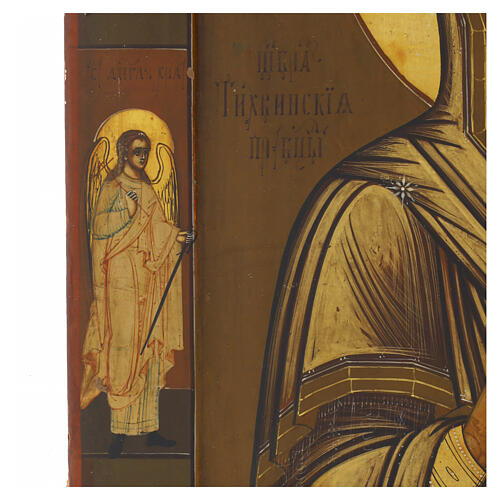
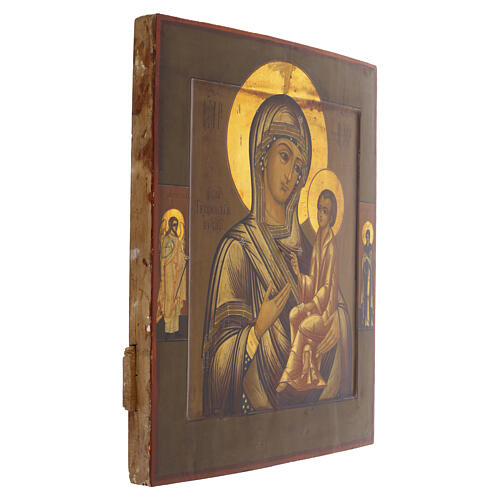
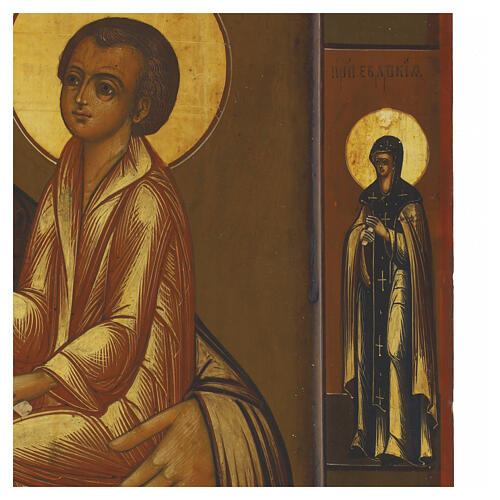
Ancient Russian icon Our Lady of Tikhvin, 19th century, 35x30 cm
The Tikhvin Icon of the Mother of God Russian icon, 19th century, 35x30 cm. The religious icon of the Mother of God of Tikhvin is one of the most venerated miraculous images in the Russian tradition. According to the chronicles, it first appeared in 1383 near Novgorod and manifested several times until it remained finally on the bank of the Tikhvinca River, where the Church of the Dormition and, in 1560, the Tikhvin Monastery were later founded. The site became a major center of devotion, especi...
Info and features
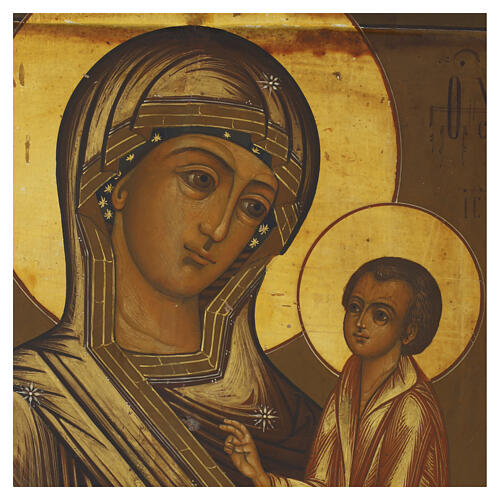
The Tikhvin Icon of the Mother of God Russian icon, 19th century, 35x30 cm. The religious icon of the Mother of God of Tikhvin is one of the most venerated miraculous images in the Russian tradition. According to the chronicles, it first appeared in 1383 near Novgorod and manifested several times until it remained finally on the bank of the Tikhvinca River, where the Church of the Dormition and, in 1560, the Tikhvin Monastery were later founded. The site became a major center of devotion, especially after being miraculously saved from the Swedish siege of 1613–1615 through the intercession of the Virgin. In the 17th century, during the reign of Alexei Mikhailovich, the icon was identified with the ancient Byzantine Hodegetria, reinforcing its spiritual and liturgical significance; its feast was established on June 26. During the 20th century the icon experienced a long displacement: removed during World War II, it was kept first in Germany and then in the United States, until its return to Russia in 2004. Iconographically it belongs to the Hodegetria type ("She who shows the Way"): the Virgin points to the Child Jesus as the true path to salvation. A distinctive element of this variant is the gesture of Christ blessing His Mother with his right hand, underlining the profound bond between the two figures and the mystery of the Incarnation. Executed in the traditional technique of egg tempera on a board prepared with levkas, the icon is an important testimony to Russian sacred art and spirituality.
Provenance: Moscow, Russia.
Technique: Egg tempera.
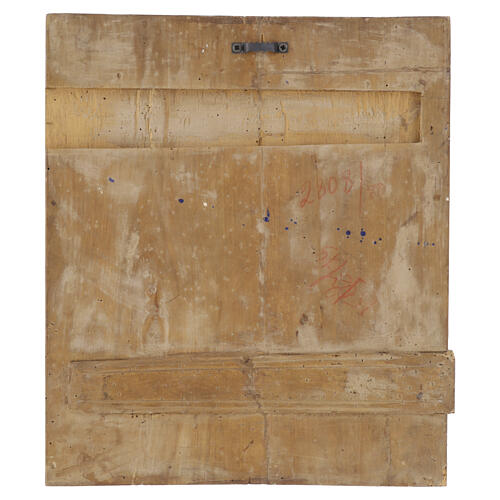
Materials: Wood, levkas.
Measurements: 34.4x29 cm.
Period: mid 19th century.