



Ancient Russian Icon of Christ Pantocrator 19th century, 31x26 cm
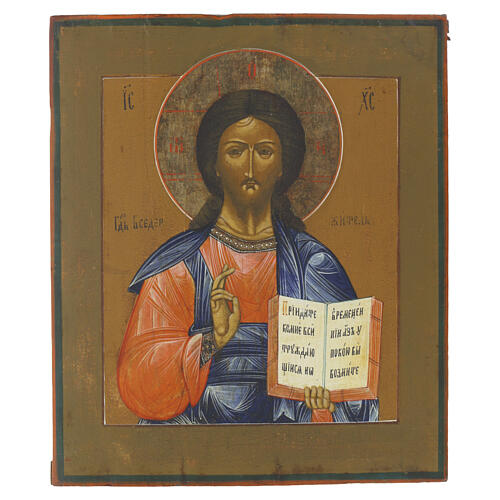
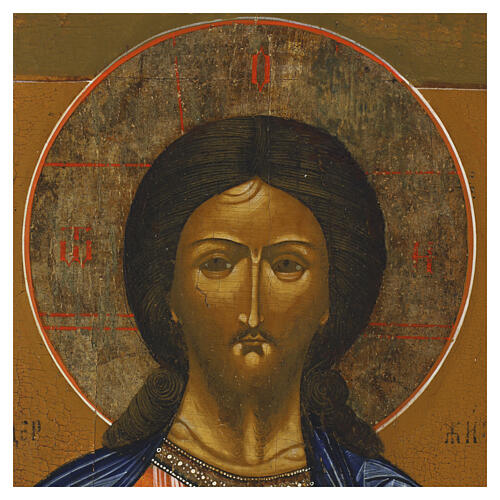
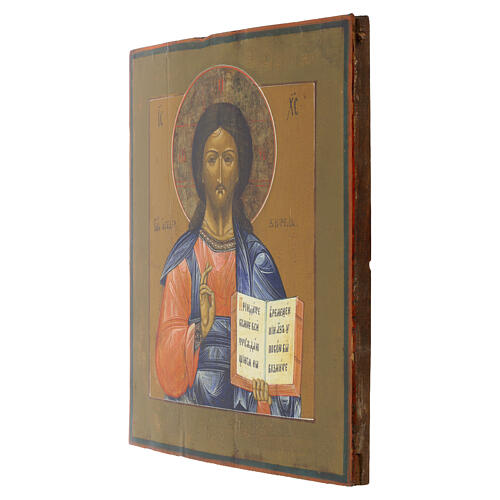
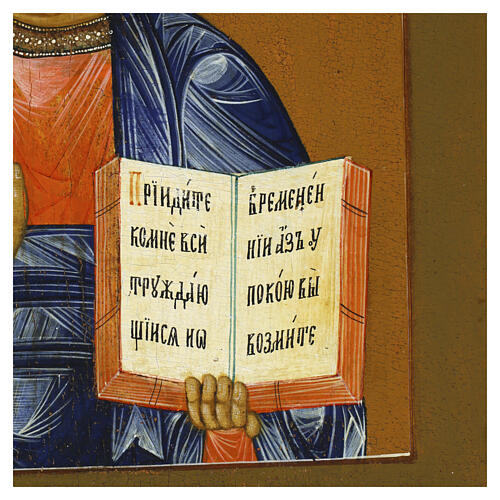
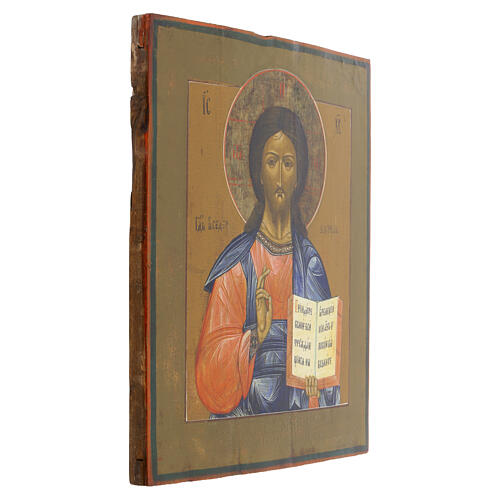
Ancient Russian icon of Christ Pantocrator, 19th century, 31x26 cm. The Christ Pantocrator is one of the most widespread and solemn representations in the Christological tradition, symbolizing the majesty, glory and power of Christ, Lord of the universe. Jesus is portrayed frontally in a hieratic, blessing pose: with his right hand he makes the gesture of blessing according to the Orthodox rite, while his left holds the Gospel, often open and turned toward the faithful as a sign of the living Wo...
Info and features
Ancient Russian icon of Christ Pantocrator, 19th century, 31x26 cm. The Christ Pantocrator is one of the most widespread and solemn representations in the Christological tradition, symbolizing the majesty, glory and power of Christ, Lord of the universe. Jesus is portrayed frontally in a hieratic, blessing pose: with his right hand he makes the gesture of blessing according to the Orthodox rite, while his left holds the Gospel, often open and turned toward the faithful as a sign of the living Word. In the cruciform nimbus (halo) are the Greek letters meaning “He who is”. The intensely expressive face follows traditional iconographic canons: center-parted hair, deep contemplative eyes and sober features that express both the divine and human dimensions of Christ. In this iconographic type the face becomes the theological centre of the image, the point of encounter between the believer and the mystery of God made man. Occasionally the Gospel is depicted closed, a rarer variant that underlines the importance of the whole evangelical message as a guide to salvation. The work is executed in the traditional manner with egg tempera on a wooden panel prepared with levkas, an ancient technique that makes each icon a unique piece of great spiritual and artistic value. Origin: Moscow - Russia. Technique: Egg tempera. Materials: wood, levkas. Measurements: 31x26 cm. Period: 19th century.