


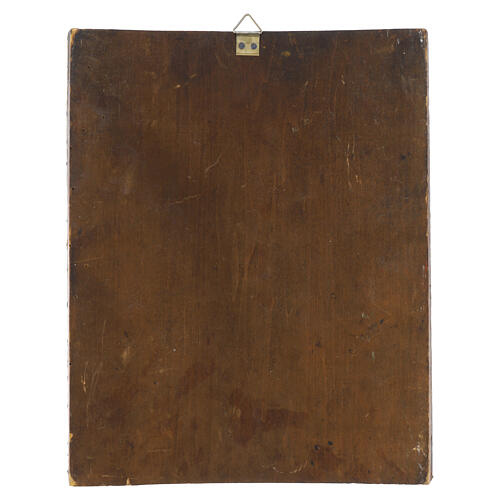
Ancient Russian Acheiropoietos Icon 18th-19th Century, 30x25 cm
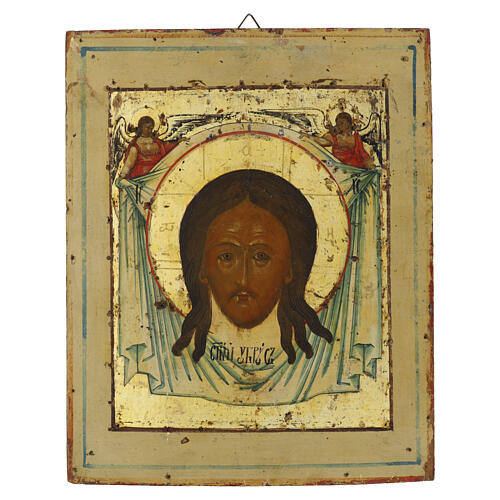
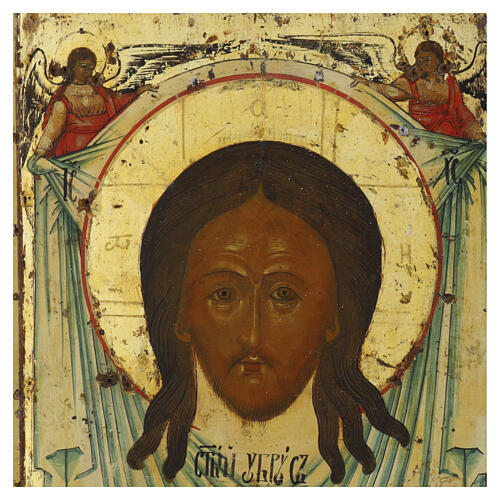
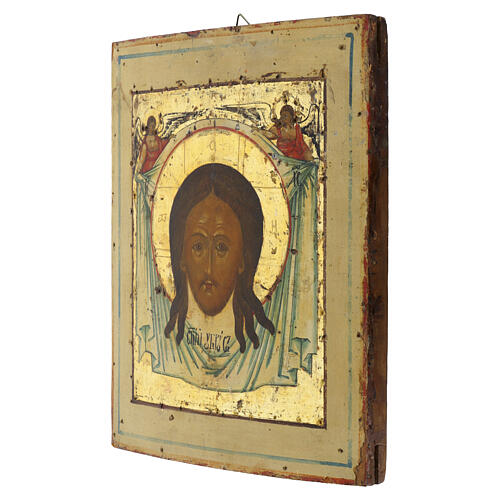
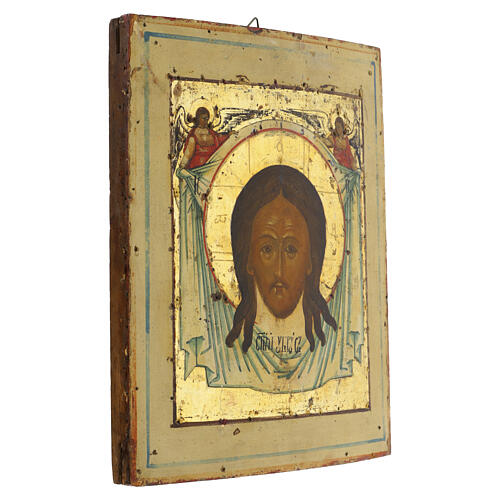
Ancient Russian Acheiropoietos Icon dating back to the 18th-19th century, measuring 30x25 cm.
According to tradition, King Abgar of Edessa received this miraculous image directly from Jesus, who imprinted his features on a linen cloth (Mandylion) after drying his face with it. Considered an "icon not painted by human hands", it became the model for all depictions of Christ's face.
The Miraculous icon was transferred from Edessa to Constantinople on August 15, 944, where it remained until 1204 when...
Info and features
Ancient Russian Acheiropoietos Icon dating back to the 18th-19th century, measuring 30x25 cm.
According to tradition, King Abgar of Edessa received this miraculous image directly from Jesus, who imprinted his features on a linen cloth (Mandylion) after drying his face with it. Considered an "icon not painted by human hands", it became the model for all depictions of Christ's face.
The Miraculous icon was transferred from Edessa to Constantinople on August 15, 944, where it remained until 1204 when it reached Rome after the crusader's plunder, venerated as Veronica. In Eastern tradition, it is celebrated on August 16 and the first Sunday of Lent, the feast of the "Triumph of Orthodoxy". This image, believed to be a sign of divine protection, was reproduced on imperial banners and processional labara. The Acheiropoietos represents the face given by God to humanity, surpassing the biblical prohibition of creating sacred images, and remains the prototype of every aspect of the Savior, also linked to the tradition of the Holy Shroud of Turin.
Origin: Northern Russia.
Technique: Egg tempera.
Materials: Wood - levkas, gold background.
Dimensions: 32x25 cm.
Era: 18th-19th century.
The religious icon comes with an expert appraisal certifying authenticity and historical value, as well as confirming its originality and origin.