


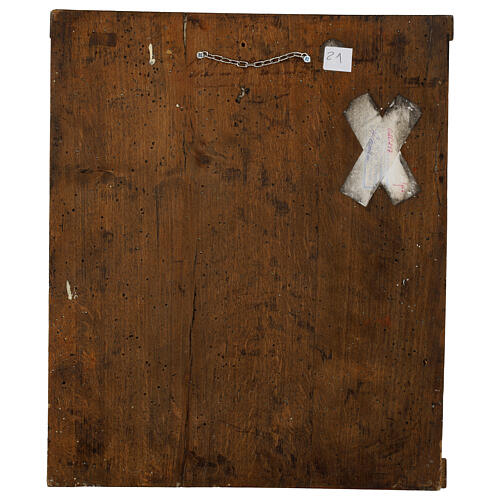

Acheiropoietos Antique Russian Icon 18th Century, 45x38 cm
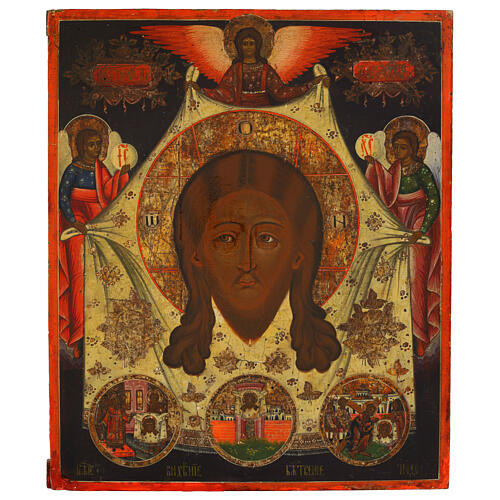
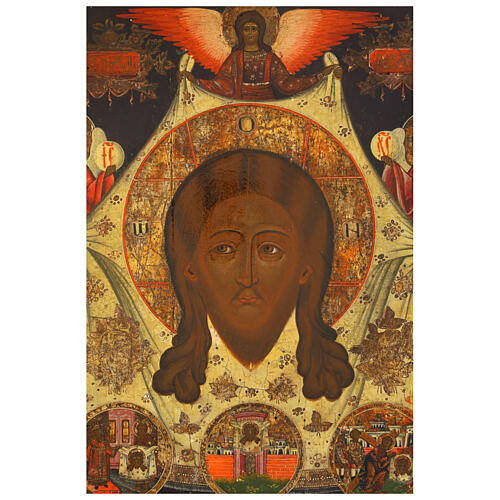
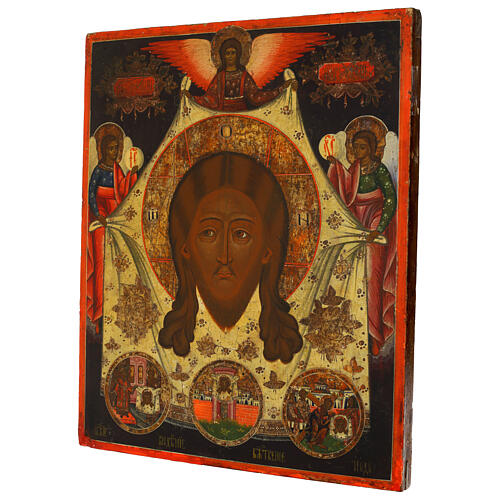
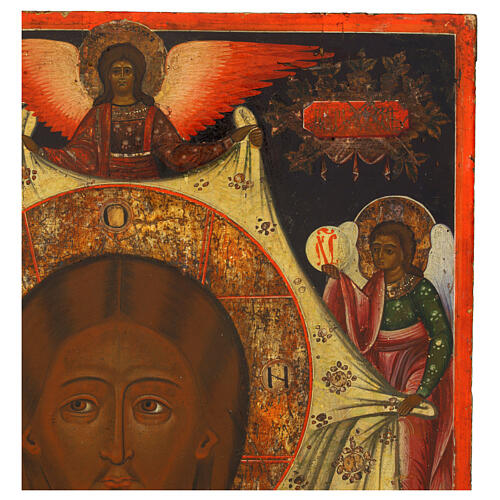
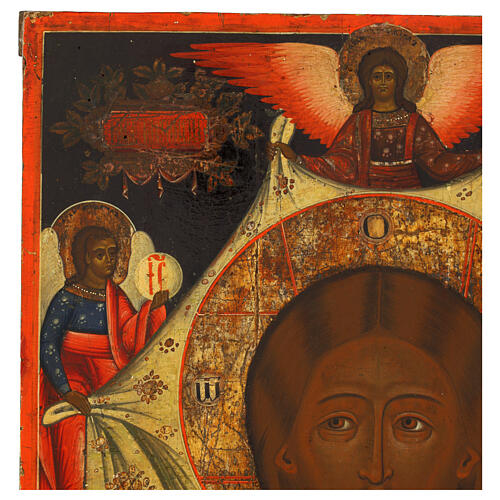
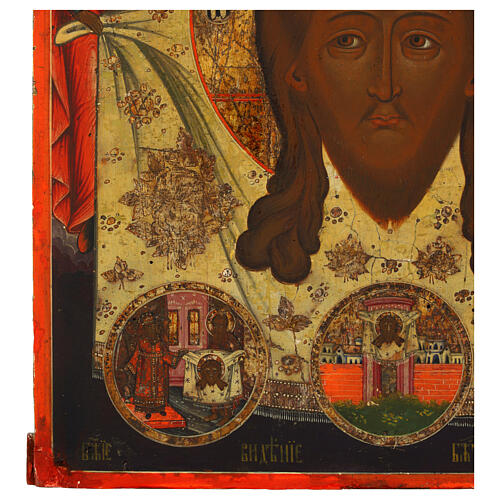
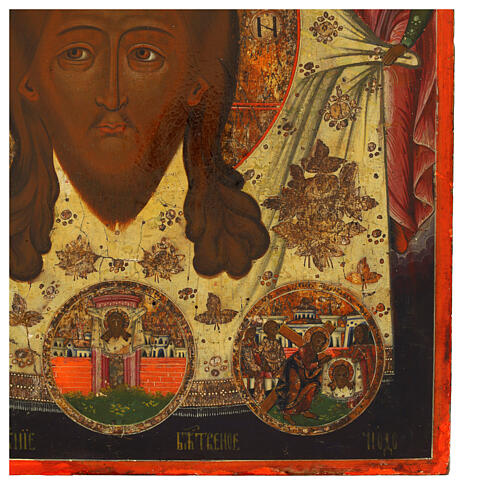
Antique Russian 18th-century Acheiropoietos Icon 45x38 cm. This antique Russian icon depicts the Acheiropoietos, the Holy Face. Created at the end of the 18th century, it reproduces the sacred image of Christ's Face, known as Acheiropoietos, meaning "not painted by human hands". According to tradition, the first version of this icon was given by Christ himself to King Abgar of Edessa, who wished for his portrait or a miraculous healing. Jesus imprinted his features on a linen cloth, the Mandylio...
Info and features
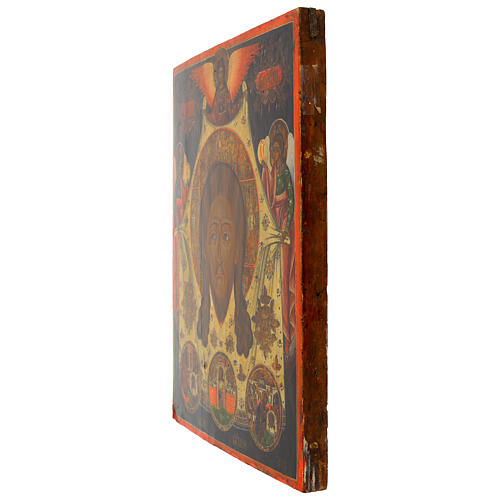
Antique Russian 18th-century Acheiropoietos Icon 45x38 cm. This antique Russian icon depicts the Acheiropoietos, the Holy Face. Created at the end of the 18th century, it reproduces the sacred image of Christ's Face, known as Acheiropoietos, meaning "not painted by human hands". According to tradition, the first version of this icon was given by Christ himself to King Abgar of Edessa, who wished for his portrait or a miraculous healing. Jesus imprinted his features on a linen cloth, the Mandylion, creating the oldest image of the Holy Face. The Savior's icon not painted by human hands was transferred from Edessa to Constantinople in 944, remaining there until an invasion in 1204 by the crusaders. Subsequently, the sacred image arrived in Rome and was venerated in the Vatican with the title of Veronica, meaning "true icon". In the Orthodox tradition, this image is celebrated on August 16th, in the feast of the icon of the Savior not painted by human hands, and on the first Sunday of Lent, known as the Triumph of Orthodoxy, marking the victory of the veneration of images over iconoclasts. Origin: Northern Russia. Technique: egg tempera on wood with levkas preparation. Dimensions: 44.8 x 37.8 cm. Era: late 18th century. Inspired by the Byzantine prototype, the orthodox icon represents the Holy Face as a model for all depictions of Christ in the Orthodox tradition. Its protective function often led to it being included in imperial military standards and in processional labara. The Russian icon comes with a certificate of authenticity, affirming its historical value and importance in the Christian tradition.