Author: Redazione

The meaning of the Mitre

The meaning of the Mitre

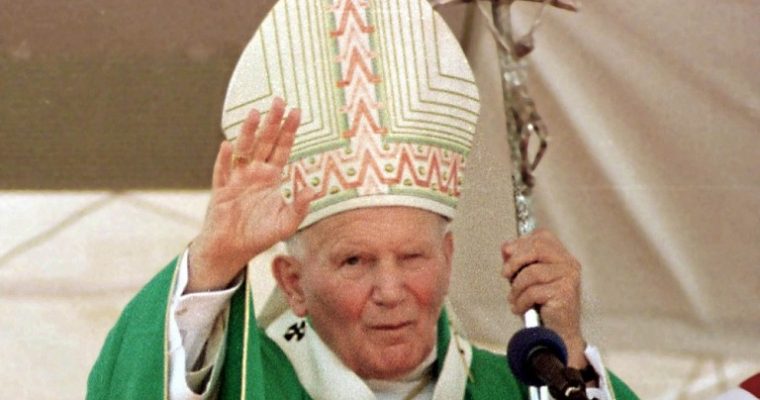
Contents1 But where does this strange hat come from?2 What is the shape of the Mitre?3 When is the mitre worn?4 Episcopal ordination What does the Mitre represent, the strange headdress worn by the bishops at different moments in the Liturgy? We discover the origin…
Building the Nativity scene according to expert advice

Building the Nativity scene according to expert advice

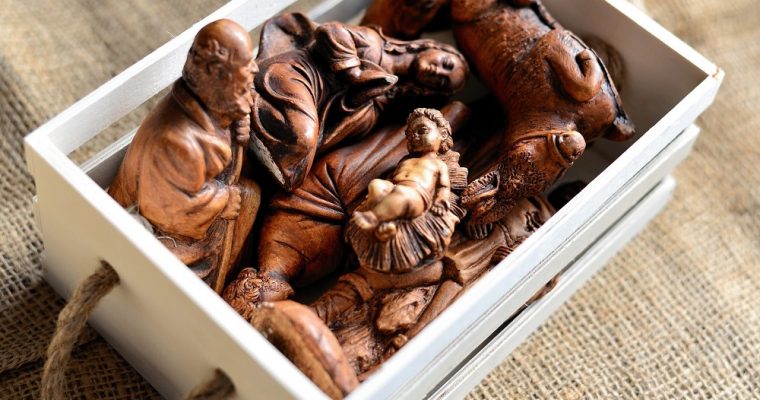
Contents1 The style2 The space3 The background for the Nativity scene4 The deconstruction into planes5 Statues6 Nativity scene lights7 Moss and lichen Who said that setting up a Nativity scene is child’s play? It takes inventiveness, planning, a touch of dexterity and obviously the right…

5 funny characters for your nativity scene

5 funny characters for your nativity scene

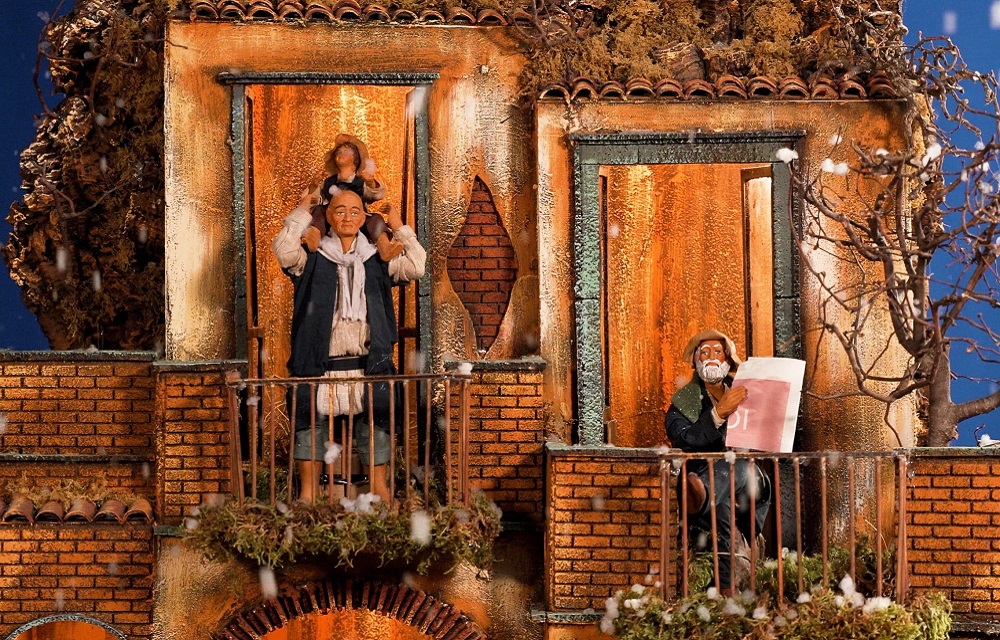
A funny nativity scene? Of course yes, thanks to the skill of the great masters of the Neapolitan nativity scene! Here are 5 characters for an animated nativity scene that will make you smile

It is not easy to choose the characters for your animated nativity scene. In addition to the canonical characters, which cannot be missing, the Holy Family, first of all, the shepherds, the ox and the donkey, the three wise men, and all those characters that contain more or less hidden symbols, those who love the traditional Nativity populate it every year with new appearances, enrich it with skits and glimpses that give it greater truthfulness, local colour, which make it more picturesque and personal.

But how far can we go to liven up our Nativity scene?

We have spoken extensively of the ancient Neapolitan nativity art, which is renewed every year in the alleys of the picturesque district of San Gregorio Armeno, which for centuries has been used to host the workshops of master craftsmen devoted to the creation of figurines for the Nativity scene. Once, where the church dedicated to San Gregorio Armeno now stands, there was the temple of the goddess Ceres, goddess of fertility and crops, to whom terracotta statuettes were offered as a gift, which was made in the artisan shops already present in the street at that time. These shops were possibly converted over time, transforming themselves to make statuettes for the Nativity scene, after the construction of the church and the spread of the cult of San Gregorio and Santa Patrizia. It is fascinating to think that even these two saints were brought in terracotta statuettes in offerings, as a sign of devotion and gratitude for the graces obtained.

Nativity 768x512

Read more:

10 characters that cannot be missing from your nativity
When St. Francis of Assisi had the idea of reproducing the birth of Jesus, his intention was to make an important and…

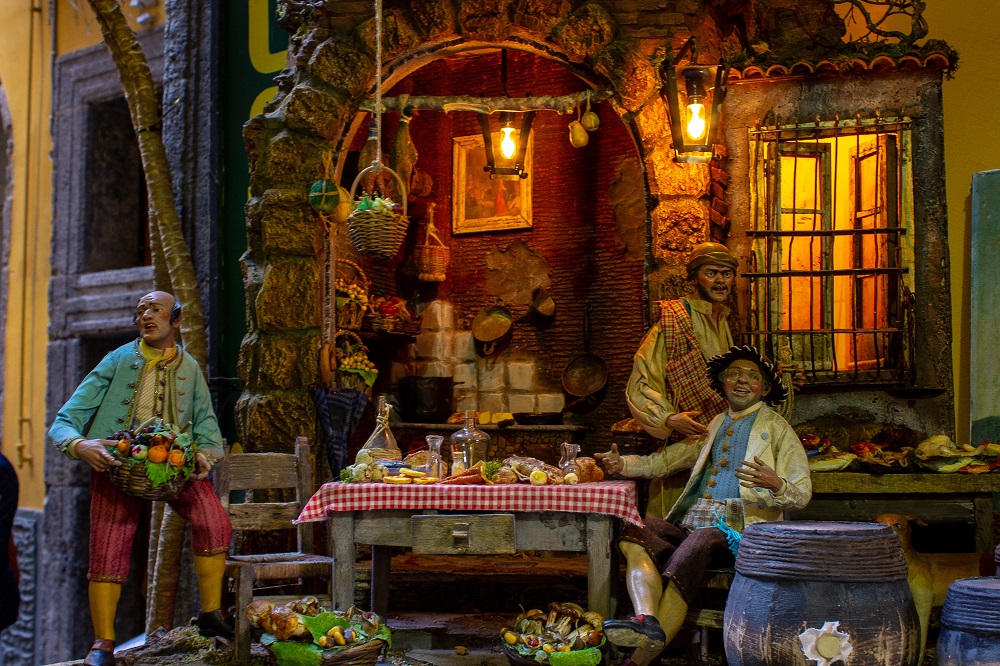
We certainly know that it was precisely here that between 1600 and 1700 the tradition of the Neapolitan Nativity scene statues experienced an impressive development and was codified according to the rules we still know today. Rules that are not rules, because one of the most fascinating aspects of this nativity scene tradition is its subversiveness, its surprising theatricality, in a mixing of the sacred and the profane, with the increasingly impressive introduction of characters linked to popular tradition, such as traders, beggars, buskers, as well as stalls, shops, taverns, in an increasingly strong and felt call to the life of Naples and its lively streets. Even the tendency to populate the Neapolitan nativity scene with even grotesque figures, men and women suffering from deformities, burdened by poverty, was fueled on the one hand by the love for this local colour, on the other by the desire to show humble, unfortunate, suffering people and therefore closer to Jesus.

The folkloristic detail trend has not left the alleys of San Gregorio Armeno even today. In addition to handing down the processing techniques and the secrets of their ancestors, the Neapolitan masters keep their subversive spirit intact, populating their nativity scenes not only with the innumerable traditional characters, each now invested with a fascinating and suggestive symbolic charge, but adding new characters every year, inspired by the world of politics, entertainment, current events, sport. So it will not be unusual to find on the stalls of San Gregorio Armeno, alongside the characters for animated nativity scenes such as shepherds and wives, footballers acclaimed by the fans, presenters and showgirls, even characters from successful television series.

These contaminations make us understand how the Neapolitan Nativity still lends itself today to the juxtaposition of traditional and modern characters, even bizarre ones. Our article arises from this point of view, in which we want to offer you five funny characters for the Nativity scene. Characters for nativity scenes in movement also made in this case by Neapolitan masters, all strictly by hand, in terracotta. Once made, the statues are covered with fabric, which is shaped and treated. The craftsmanship of each detail makes each setting and each figurine always different and unique.

Let’s go through them together.

drunkard-and-woman-with-broom-14cm-neapolitan-animated-nativity
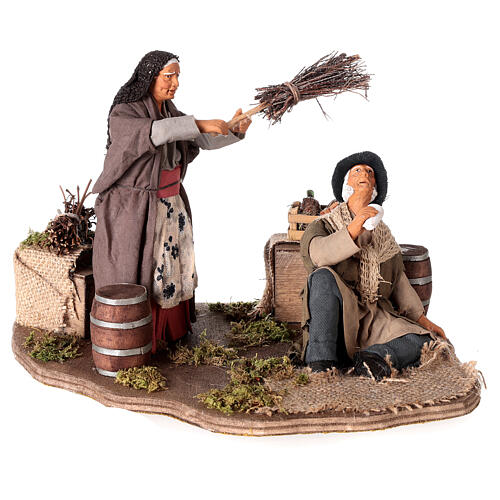
Woman with broom hitting her drunk husband

An always up-to-date domestic scene, which cannot help but make us smile: an angry wife who hits her deadbeat and drunk husband with her broom. In our store, you will find five variants, all animated.

In the variant Drunk and woman with broom 14cm animated Neapolitan nativity scene we see the two characters portrayed with exceptional realism, he sprawled seated, she standing, and with a truly combative expression! The patterned fabric and every detail cared for by hand down to the smallest detail give an exceptional vividness to the scene. It almost seems to hear the screams of the woman who inveighs against her drunkard husband. The movement uses a 220V electric motor and metal levers, it is activated by simply connecting the power outlet. The limited availability of fabrics and the manual processing of each detail make this picture unique. Note the wealth of details, the beautiful movement effect given by the fabric details, the realism of the broom made with real wood.

The painted terracotta statuettes are beautiful, carefully finished in every detail according to the secrets of the ancient nativity scene tradition of Naples. The clothes and details are in treated and shaped fabric. All materials are characterised by high reliability and durability.
Buy Now
pair-of-gossips-for-neapolitan-nativity-scene-15-cm-in-terracotta
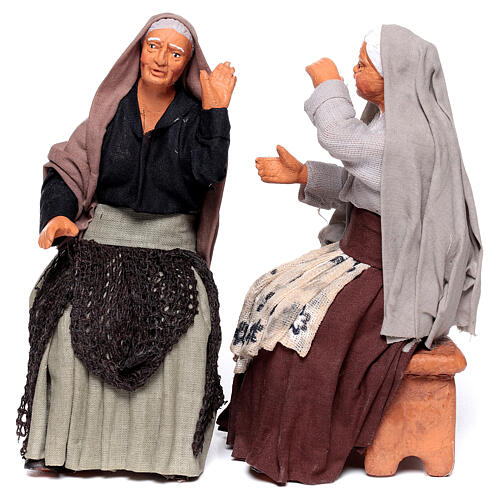
Female country gossips

Another animated scene that can give a touch of irony and fun to your Neapolitan nativity scene is that of the two wives gossiping to each other. This image also never goes out of fashion and retains all its realism and cheerfulness over time.

In our store, you will find a variant of Neapolitan nativity gossip women suitable for cribs of 15 cm, with the two wives seated, intent on chattering: one listens to the other, who seems to show her the size of something, certainly exaggerating them a little! Also in this case, as for the wife who beats her drunkard husband, the statues are made entirely in Italy according to the Neapolitan nativity scene tradition in terracotta and shaped cloth for the clothes.
Buy Now
animated-woman-chasing-away-mice-14-cm-naples
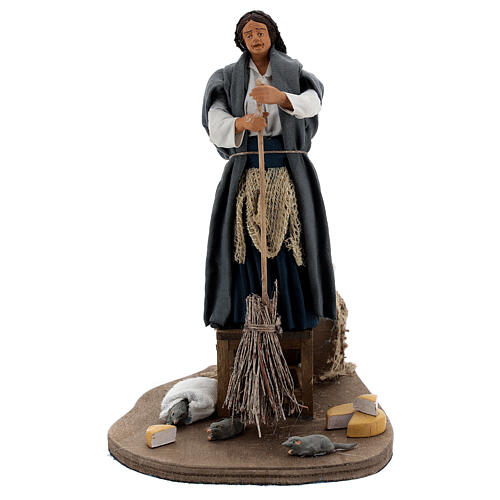
Woman chasing mice away

What's more fun than a housewife trying to shoo mischievous mice with a broom? We present three variations, one more beautiful than the other, all in terracotta and fabric, all with fabulous motion effects.

The woman chases mice Naples 14cm, shows an animated scene with the woman standing on the chair, while with a broom in hand she tries to chase the mice eating her cheese away. Around her are sacks of flour and other mice, to make the scene even more lively and realistic. The woman is in terracotta, dressed in pieces of cloth. Mice and pieces of cheese are terracotta. The flour sacks are made of white fabric. A wooden box behind the figure hides the motor that allows movement, which consists of the horizontal movement of the arms as if he were actually crushing something with the broom.
Buy Now
mom-spanking-child-12-cm-moving-neapolitan-nativity
Woman spanking a baby

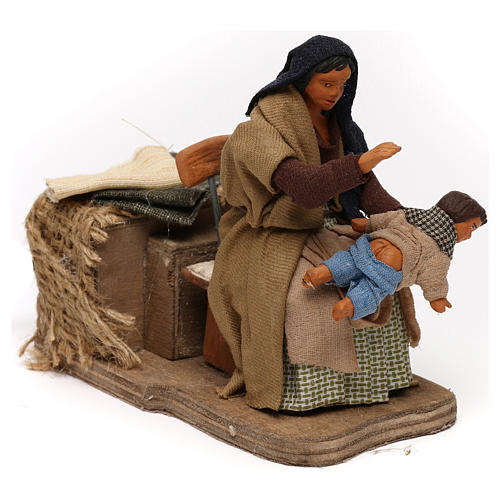
The women of the Nativity scene are not only struggling with drunk husbands and slackers, but also with naughty children. Here is the idea of the Mother spanking a child in an animated Neapolitan nativity scene 12cm. A truly irresistible scene that represents a mother spanking her son, sitting on a terracotta chair, all on a wooden base.

The figurines are in terracotta, covered with pieces of cloth, and behind them is the wooden box that contains the motor that allows movement: the right hand of the mother rises and lowers to spank the brat, while with the left holds him. The scene is 12cm high and suitable for a 12cm nativity scene.
Buy Now
basket-scene-13-cm-neapolitan-nativity
Basket scene

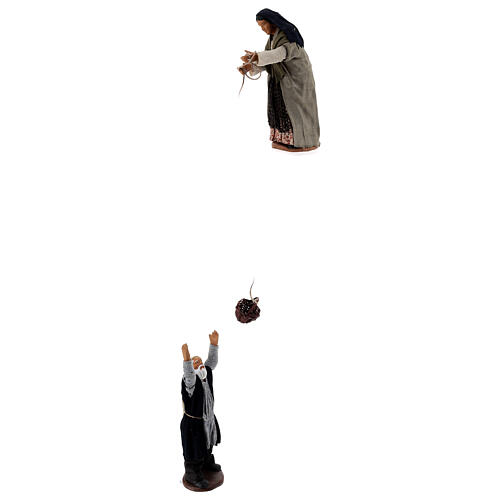
An original and impressive idea, perfect for Nativity scenes arranged on different levels is the scene of the basket: an old woman lowers a basket tied to a rope to a man who raises his arms to welcome it. The scene is really beautiful and will be of great effect if we have the opportunity to place the figurines in such a way that one is on a higher floor and the other below.

In our store, you will find two versions: Baker scene 10cm basket and 13cm  Neapolitan nativity scene basket. In both cases, the woman holds the rope with the basket in her hands and the man with his arms raised tries to take it. The figurines are as always in terracotta and covered with fabric, shaped and treated. The craftsmanship of each detail makes each setting and each figurine always different and unique.
Buy Now


Original nativity scenes: the 5 strangest of the Holyart catalogue

Original nativity scenes: the 5 strangest of the Holyart catalogue

Contents1 Winepress with a nativity scene2 Cask with a complete nativity scene3 Guitar nativity scene4 Mocha nativity scene5 Nativity Tree The nativity scene in the mocha or the one built on the branches of a fir tree? This year choose something original for your Christmas,…

Mother Teresa symbol of charity

Mother Teresa symbol of charity

Contents1 So, what is charity2 Mother Teresa of Calcutta and her work of charity3 Good resolutions for the new year What if our most important and sincere purpose was charity towards others? Mother Teresa of Calcutta was a master in this. The holiday season predisposes…

Fake snow for a nativity scene: how to get a realistic effect!

Fake snow for a nativity scene: how to get a realistic effect!

Do you want to give your Christmas an even more magical atmosphere thanks to the fake snow for the nativity scene? Go professional with Holyart snow guns!

Imagine landscapes with houses, hills and characters who engage in different activities. They are the views of our nativity scenes. Now imagine, as night falls on figurines, animals and nativity huts, a silent snowfall, with flakes falling on the Nativity, on the terracotta statues, on the moss and lichens.

How to ensure this wow-effect? Instead of resorting to cotton and spray cans, you can get a realistic and spectacular snowfall thanks to the generators available on Holyart. These are snow machines ideal for shops, shopping centres, parishes, but also homes with large spaces where you can set up a special nativity scene.

Artificial snow generators for nativity scenes

The artificial snow guns for cribs that we present to you are Kuopio 08 and Kuopio 09, both are simple to use and reliable. They are equipped with a reservoir where you put the snow liquid – a non-harmful water-based solution, with refills that can be purchased on Holyart. The generator transforms the liquid into foam, which is pushed by a fan towards the crib and falls to the ground creating the snow effect, you are looking for. The foam dries in a few minutes and does not wet or damage the surfaces: any streaks can be easily cleaned with a damp cloth.

Just place the snow machine next to the nativity scene – it can also be hung from the ceiling thanks to the supplied bracket – and connect the plugs to the power supply. If you want the snow cycle to follow the phases of a nativity scene control unit, just connect the appropriate plug to the control unit.

When the snow generator is switched on, it is necessary to wait a minute for the starting process to take place – it is not recommended to switch the generator on and off before the start is complete: you will get a very intense and powerful snowfall the next time you switch it on; however, the mechanism of the machine is not affected.

Customise the snowfall

All that remains is to decide what type of snow we want by adjusting the intensity and the fan using two knobs. The higher the intensity, the larger the size of the flakes. For those who want a really heavy snowfall, Kuopio 08 also has the super function, activated by a button. The power of the fan affects the range of the snow machine. Kuopio 08 is more powerful and covers from 1 to 4 metres, while Kuopio 09 covers from 1 to 2 metres. By adjusting the intensity and the fan you can have slower snowfalls with larger flakes or more “windy” snowfalls with finer flakes.

At this point you no longer need to imagine: here is the snow-covered nativity scene you wanted!

5 home decorations ideal for Christmas or the whole year

5 home decorations ideal for Christmas or the whole year

Contents1 1. Sacred picture2 2. Yuletide Candle3 3. Guardian angel bell4 4. Coloured Christmas window5 5. Candle holder in wood with raised tube-shaped edge Christmas decorations? They are never enough! Let’s find out how to create the perfect Christmas atmosphere with objects that can beautify…

5 gift ideas for Christmas: for him and her

5 gift ideas for Christmas: for him and her

Christmas is approaching. Do you already know what to give to your loved ones? Christmas shopping anxiety? Here are some very special gift ideas for him and her. How far are you with gift ideas for Christmas? Exchanging gifts is certainly one of the most…

Christmas tree with built-in lights

Christmas tree with built-in lights

Christmas tree with built-in lights Why not? A modern and comfortable way to avoid the stress of the chains of lights without giving up the whole atmosphere of the party.

Why pick a Christmas tree with built-in lights? Doesn’t it take away the atmosphere from Christmas? Definitely not, and we explain why.
The time is now approaching to think about the Christmas tree, the crux and delight of the upcoming holidays. Delight because how can you give up the tradition that lives again every year in our homes, thanks to the Christmas trees, which have always been symbols of celebration, of that all-familiar warmth, which seems to be accentuated at this time of the year and gather around these ornaments multicoloured and shining with lights?

Croce because, if it is true that making the Tree can be a great experience for the whole family, especially if you use ornaments and balls that are handed down from generation to generation, full of the sweet flavour of lost Christmases, and if you decorate them all together, it is also true that the unfortunate person who has the burden of having to think about the lights to be placed on the Tree must face many inconveniences.

How to place the lights on Christmas tree

Read more:

How to place the lights on your Christmas tree
We are almost there. Winter hit us after a long and hot summer, and fall seemed hesitant to drive away the warm season…
In this article, we will not talk about the need to use only safe and certified Christmas lights. However, we refer to previous articles to remind you of the importance of safety in the use of lights, and above all of the care required in placing the Christmas lights once the tree is unpacked. This will ensure that we will find them in good condition the following year, still working, with all the bulbs in the right place, not burned out, without tangles of wire, and so on.

But sometimes care and attention is not enough.

Arranging the chains of lights on the Tree is not a trivial operation. First of all, you need to worry not to leave ‘holes’, that is areas not illuminated by the lights which, when the Tree is on, will give the impression that it is bare and messy. To do this we must consider that, given the size of the Tree, rarely a single chain of lights will be sufficient to fill it adequately.

So here it becomes necessary to buy more than one chain of lights, and then the real pain begins. Because, once you start arranging the lights on the Tree, the threads of the various lights end up intertwining, creating unpleasant tangles, which you will then need to try to mask with tinsel and other decorations, with the risk of ruining the symmetry of the Tree itself.

What is worse is when taking all our light chains down from the top of the Tree to its base, we realise too late that maybe one or more of them are not long enough to reach the socket, and then we have to redo them all over again, with the (inevitable) risk of finding ourselves struggling with the usual entanglements. And having to untangle metres upon metres of electrical wires does not at all reconcile the Christmas spirit, let’s face it …
Again, if we have been good enough to calculate perfectly the right length of our chains of lights for the Tree, so that they cover it evenly, without overlapping, and comfortably reach the spine, here is the moment of truth, that is, when we plug the adapter into the socket, we realise that one or more bulbs in a chain have burned out. A trivial piece of advice to remedy this latter possibility is to try the lights attached to the current BEFORE giving us so much to do to put them on the Tree. But sometimes even this precaution is not enough.

What else?

Oh yes, the black wires that hang from the base of the tree and go to gather in the socket, or the power strip. In addition to representing an irresistible temptation for the children of the house and perhaps even for pets, they are certainly not a pretty sight, and it is really difficult to hide them effectively.

For all these reasons, and more, the Christmas tree with built-in lights can be a comfortable, safe choice that will minimise the stress, already concentrated enough during the Christmas period.

Let’s see an example. Let’s say you have chosen one of our beautiful artificial Christmas trees, with PVC branches in a beautiful natural green that is easily mounted with a practical hook system. A beautiful tree, simple and super basic, economical, but also stable and safe, made with guaranteed materials. The only flaw? It requires to be completely decorated: balls, tinsel, and of course, countless chains of lights.

Let’s now see another Tree, definitely much more functional. We are talking about a Christmas tree with built-in lights, always artificial, with branches in poly feel-real (polyethene) for an extremely realistic effect, memory shape for a perfect shape (it is not necessary to open the branches from time to time because the branches are also closed keep the memory of the open form), and integrated lights.

How does it work?
The trunk is a bayonet-type: it has an internal contact that allows the lights on the upper floor to work without having to connect cables. Easy, right? The practical umbrella opening of the branches also allows you to assemble this Christmas tree quickly. Basically, each branch is permanently attached to a metal support
, but there’s more.
In addition to the integrated coloured LED lights, with replaceable bulbs (a bag with 5 spare bulbs will be provided), which continue to work if only one burns out, the Albero is also equipped with a 9-function Bluetooth programmer! In practice, a Bluetooth control unit is mounted on the Tree that can be connected to any Bluetooth device (for example a Smartphone), thanks to which it is possible to listen to music from a speaker, while the lights light up according to the rhythm.

In short, a must in the field of Christmas trees with built-in lights! But in our online store, you will find many others, suitable for every need and every budget.

What you have to consider is that, when it comes to a Christmas tree with built-in lights, the investment is convenient, precisely because it will allow you to save on expensive and delicate chains of lights, as well as avoid a lot of effort and unnecessary stress.

Complete crib or only trio of the Nativity

Complete crib or only trio of the Nativity

Complete nativity scene or just the Holy Family? Christmas is approaching and it is time to decide. Let’s find out the reasons for a choice together. The tradition of the Nativity has deep roots and is particularly felt in our country. A short time ago…

5 Weird Christmas trees

5 Weird Christmas trees

Contents1 1. Christmas tree 180 cm Fancy Silver silver fir with a mouldable tip 300 internal external LEDs2 2. Obsidian Gold Christmas tree 210 cm3 3. Luminous tree Cherry 300 cm cold white outside4 4. Luminous Tree Weeping Willow 150cm 360 LED Warm White Outdoor5…

How to build a DIY nativity scene: a mini guide

How to build a DIY nativity scene: a mini guide

We talk about Christmas again. Lights, decorated trees, all the symbols we love so much, which comfort our hearts with the hope of rebirth, with the warmth of the family. We want to carry on, offering you a little guide on how to build a DIY nativity scene.

Among all the traditions of Christmas, the nativity scene is perhaps one of the most deeply rooted in our country. It is certainly one of those that most effectively expresses the Christmas atmosphere, made of warmth, domestic intimacy, ancient suggestions that are renewed every year. Perhaps it is the very origin of the crib, being the representation of the birth of Jesus, that gives it a family dimension. This is what it all boils down to, basically: the miracle of a mother, a father, a newborn baby placed in a manger. There is nothing simpler, nothing more immense.
Perhaps the deep domestic sense of the nativity scene also depends on the fact that in most homes, the nativity scene is built by the whole family gathered together. Even more than the final result, it is the setting of this scenography itself that involves everyone, especially children, to create moments of play, sharing and harmony.


Christmas home decoration

Read more:

Christmas home decorations – do-it-yourself
Let the do-it-yourself mood get to you this Christmas…


It can become an opportunity for great fun, especially if you have to put your hand to the historical decorations, handed down from grandparents, jealously kept in the cellar or attic and pulled out every Christmas. So making the nativity scene also becomes a way to rediscover one’s past, to compare oneself with oneself a few years ago and perhaps to remember loved ones who are no longer there. It is no coincidence that we remember that according to some historical sources the Catholic Nativity scene derives from the Roman tradition. In the Roman houses, there were altars built inside small niches in which statuettes made of wood, wax, terracotta was placed, depicting the protector gods of the house (the Penates) and the ancestors (the Lares familiares, or Lari). A particular tradition was consumed in the period of the winter solstice and served to strengthen the union and the values of the family. The festival was called “Sigillaria”, and all the members of the family exchanged the “sigilla”, the statuettes of the Lares and Penates. Children had to polish the statuettes and recreate a small bucolic environment where they placed them. The family then placed bowls with food and wine on offer in front, to invoke the protection of the ancestors and the gods of the house.

Even more, it can be fun and engaging for young and old to choose to make a DIY nativity scene. Also thanks to the Web today there are many tools available, and all family members can contribute by building something. Then yes, you can get a truly unique and special nativity scene! Just a little manual skills, a few tricks, and of course a lot of imagination.

A good compromise could be to make the base of the Nativity scene with recycled material, such as aluminium foil, wadding, cardboard, wood, cork, stones, gravel, and then buy in the store only those elements that are more difficult to make, or the details.

Let’s start thinking together about the essential elements for a DIY nativity scene. Then you can always have time to add an element that can make it more beautiful and particular, infinite accessories, furnishings, even fake food of great realism. This is the basis.

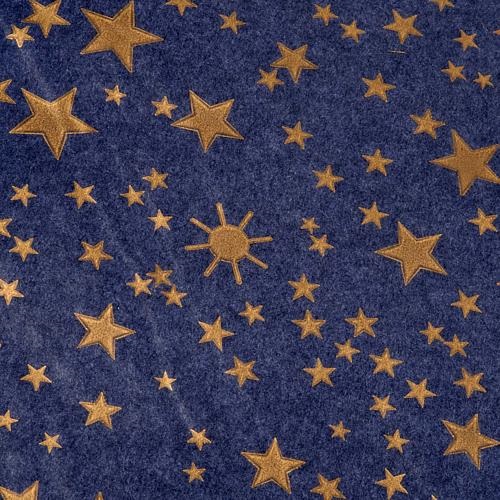
1 – Background for the nativity scene, landscapes and panels (starry skies, rock paper)

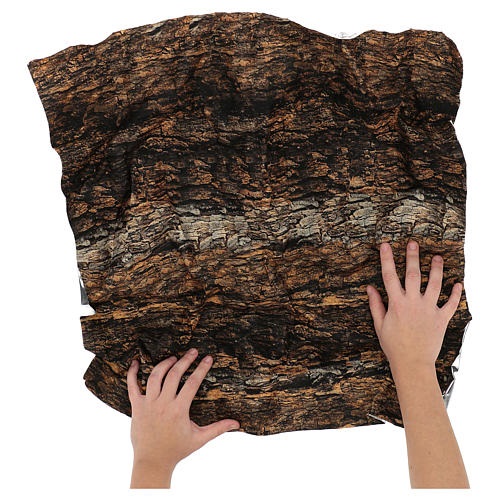
As with all things, even for the DIY nativity scene, you have to start from the beginning. Or, in this case, from the background. On the market, there are many types of materials perfect for creating backgrounds for the crib, from landscapes for painted cribs, to panels, from rolls of paper for backdrops, to starry skies in paper or fabric or PVC, from cork panels to LED screens. You can choose many different backgrounds, from the cheapest, easily achievable at home with a little rock paper with which we will cover boxes of various sizes, to reconstruct a mountainous landscape, with starry skies, achievable with decorated paper, or, if we have a larger budget, with a dark background illuminated with led lights or optical fibre. We can also opt for a beautifully painted backdrop, which depicts the desert under the starry sky or a beautiful Arab city.

nativity scene landscapes
Nativity scene background, landscapes and panels.
Buy Now
Nativity scene backdrop
Nativity scene backdrop, greaseproof paper 70 x 100cm.
Buy Now
Moulable paper for Nativity scene
Nativity background paper, cork moldable 120x60 cm.
Buy Now
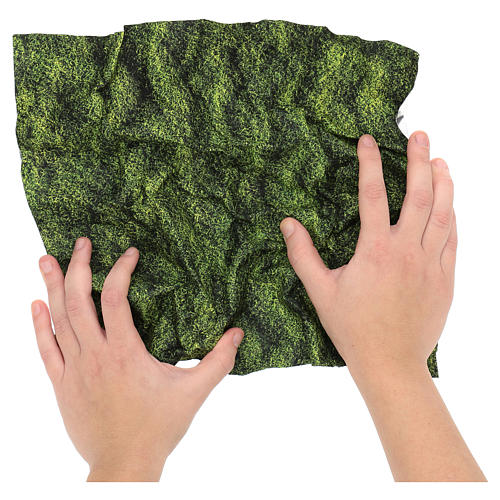
Moss design paper for nativity scenes
Moss design paper for nativity scenes 30x30 cm.
Buy Now

2 – Moss, lichens, plants, flooring, from super cheap to the most realistic, typical nativity plants such as palm trees, the inevitable moss, stones and gravel

Even the base of our nativity scene will be crucial because we will build all our scenography on it. We can indulge ourselves with pieces of wood, gravel, sand, rocks, depending on the landscape we want to build, and also make use of very useful products that can be purchased at low prices, such as timeless moss paper or cork panels that reproduce brick walls or rock walls, light and realistic, and even pieces of resin paving to create a road pavement of great effect. If we have chosen a desert landscape, palm trees will not be missing, which will make our oasis more realistic, but also lichen trees or if we have chosen to reconstruct a more Nordic scenario, small pines.Moss, Trees, Palm trees, Floorings

3 – Control units and effects or fountains and waterfalls: either one or the other for those on a tight budget, the important thing is to amaze!

Another element that makes the nativity scene truly special is the light, sound and movement effects. Building a waterfall or river with really flowing water or a bubbling fountain in the village square is easier than you might think, using the right tools! Just a motor for the recycling of water, connected to an electrical outlet, to obtain a truly amazing effect. Or maybe you prefer to turn your DIY nativity scene into a light show. Also in this case you can choose from a wide range of slide projectors, which will make suggestive images appear and move on your backdrop, or day-night fading effects, which will imitate the alternation of sun and moon. Smoke generators are also very popular, to make lit fireplaces and fires more realistic, snow generators and for lovers of extreme realism the control units that reproduce noises, from the sounds of animals to the sound of bells.

4 – Nativity Huts and Caves: with light or with integrated fire?

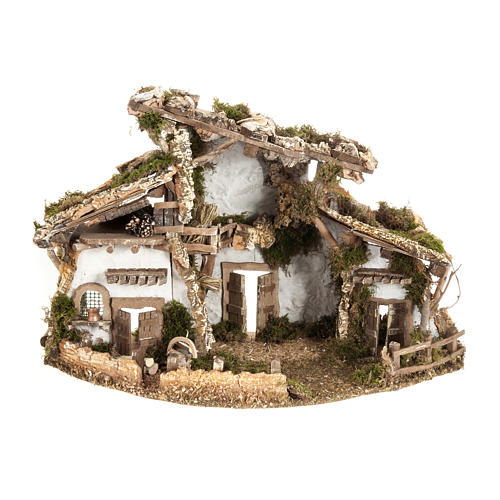
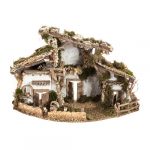
If you are not very good at DIY or prefer to use a ready-made structure, you can find numerous solutions. In addition to the hut or the grotto of the nativity, perhaps with the lights already integrated, you will find truly spectacular stables, caves, huts, villages, entire villages. In some cases, these scenographies reconstructed in the smallest details are also already populated by the statuettes, such as the nativity hut with built-in fire, small but already perfect in everything.

nativity scene stable in wood
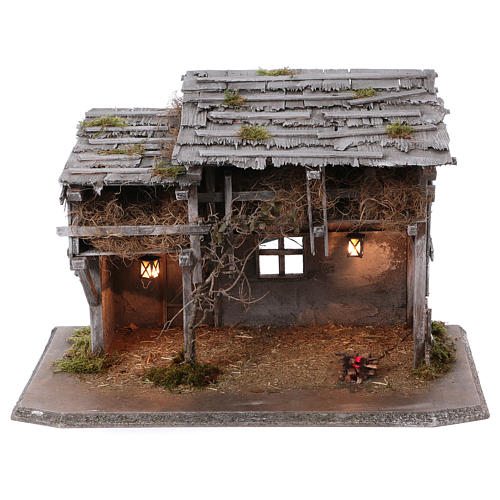
Nativity Stable, Luhe model in wood with lights and fire, for 14-15 cm nativity.
Buy Now
neapolitan nativity scene
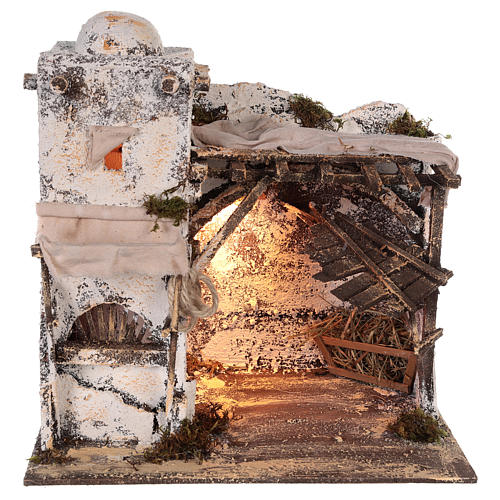
Neapolitan Nativity scene, Palestinian house.
Buy Now
Nativity set accessory
Nativity set accessory, cabin-style Hut 60x30x40 cm.
Buy Now

5 – Nativity statues of all types and sizes, in all possible materials and for all budgets.

Of course, once our nativity scene is set up, the figurines will play the role of absolute protagonists. We will have the opportunity to talk about it in many subsequent articles. For now, we will limit ourselves to remembering that there are also infinite solutions to make the characters of the nativity scene, some strictly do-it-yourself, with figurines cut out of cardboard, modelled in Fimo or Das or maybe crocheted. Alternatively, you will find an infinite choice of characters to populate your nativity scene on sale, from the Holy family to the shepherds, from the Magi to the animals, made with different materials and different styles, but all faithful to the centuries-old tradition of this wonderful symbol.

Nativity Scene figurines
Nativity Scene figurines: terracotta, resin and wooden figurines.
Buy Now
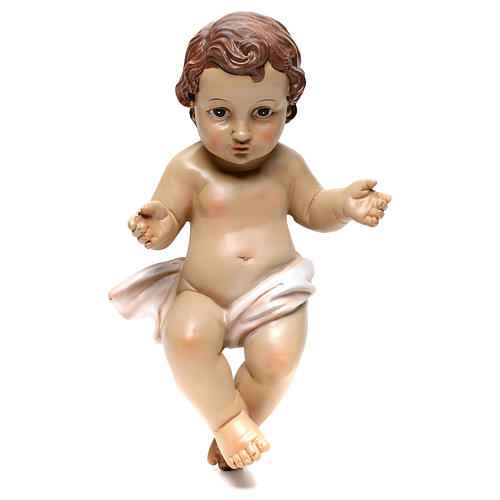
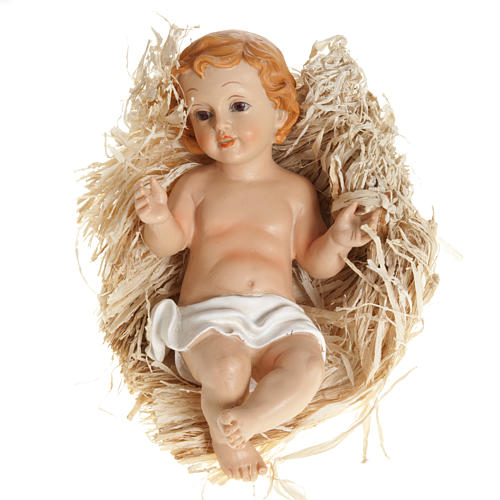
Baby Jesus statue in resin
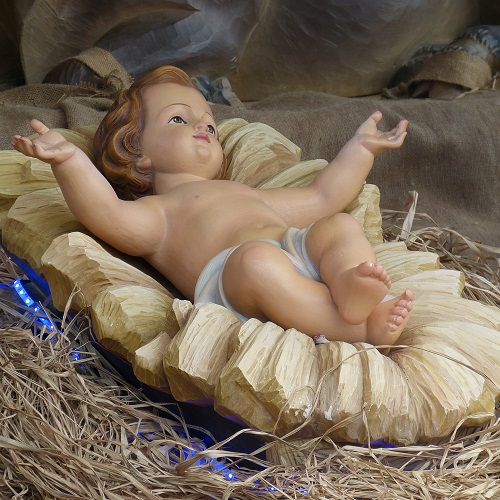
Baby Jesus figurine, 26 cm in resin.
Buy Now
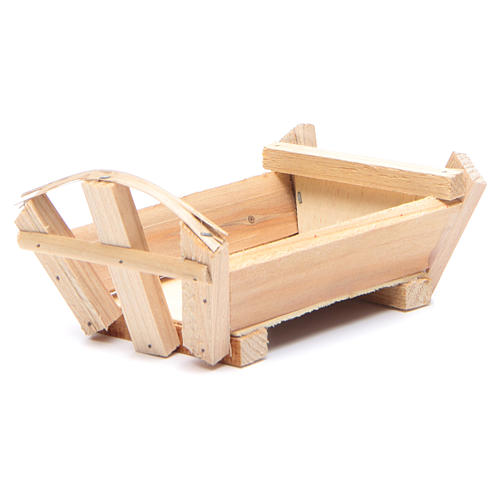
Nativity accessory, cradle in wood
Nativity accessory, cradle in wood for Baby Jesus 8x14x9cm.
Buy Now
Baby Jesus figurine in pvc laying on straw
Baby Jesus figurine laying on straw, in pvc various sizes.
Buy Now
How to choose an artificial Christmas tree

How to choose an artificial Christmas tree

All you need to know about artificial Christmas trees. Ready in a couple of minutes So, you’ve decided to buy an artificial Christmas tree, and you’re asking the age old question:  how do I make my choice? And above all, why is it that if…

October: the month of the Holy Rosary

October: the month of the Holy Rosary

What is the connection between the fall month with what is probably the most important and popular devotional form in the world? October – month of the rosary: historical memory, visions, a path of faith and fervor that comes from far away and carries the…

The Canticle of the Creatures of St. Francis

The Canticle of the Creatures of St. Francis

St. Francis of Assisi is one of the most loved and venerated saints by the Catholic Church. Close to the poor, brother of the least, he made love for all God’s creatures his life mission and the emblem of his faith. The Canticle of the Creatures of St. Francis, a prayer that is also a love poem.

St. Francis is considered, together with St. Catherine of Siena, the patron saint of Italy. Jorge Mario Bergoglio wanted to choose his name when he was elected Pope in 2013. His memory is celebrated on 4 October. His life, the unstoppable desire that led him to deny all that belonged to him, all that he was, in the name of faith, have made him over the centuries an emblematic figure, often misunderstood. Francesco was certainly misunderstood by his contemporaries, unable to understand how the rich scion of a family of Umbrian merchants could give up a life of revelry and pleasure, to embrace absolute poverty.

His life

His real name was Giovanni di Pietro di Bernardone (Assisi, 1181 – Assisi, October 3, 1226). His father, Pietro di Bernardone, ran a rich trade of fine fabrics, many from Provence, which the man resold in the Duchy of Spoleto. It is reasonable to think that Francis’ childhood and youth took place with ease. Protected by his family, the boy grew up carefree, amidst listless studies and entertainment with his peers. He was certainly destined to support his father in the commercial activity, but fate had something completely different in store for him. Captured during the war between Assisi and Perugia, Francesco experienced imprisonment and illness, and perhaps it was precisely in that terrible period that the boy began to mature his conversion. Back home he spent his convalescence in his father’s possessions, outside the city, away from the revelry and bad habits to which he was dedicated and immersed in nature. His desire to fight had not disappeared, however, because, once healed, the young man wanted to participate in the Crusade of 1203. He fell ill again and had to give up his plan, but a profound, inexplicable change was already underway in him. Suddenly Francis seemed to have been seized by a fever of love, which he addressed above all to the poor, the defenceless, the marginalised, the sick. He gave them what he had, his father’s goods, but also the clothes he wore, and he was not afraid to hug and kiss infected men and women. He began to shy away from the company of friends and to retire to solitary places, and it was on one of these occasions, while he was praying in a small country church, in front of the Crucifix of San Damiano, that Francis told of having heard the Crucifix address him with these words: “Francesco, go and repair my house which, as you can see, is all in ruins.

Crucifix of San Damiano

Read more:

Crucifix of San Damiano
The Crucifix of San Damiano is the one in front of which St. Francis was intent on praying when, in the distant year of 1205…

Believing that the rumour was referring to the church where he was praying, the boy returned home, sold his father’s fabrics and his horse and donated the proceeds to the priest who ran it, who however refused for fear of reprisals by Pietro Bernardone. In an extreme attempt to make his son come to his senses, the latter dragged him before the consuls of the city, to be tried, but Francis appealed to the bishop and in front of him he publicly renounced the goods and the name of his family, literally stripping himself of every means.

Thus it was that Francis embraced his new life, made up of poverty, almsgiving, hardship, but above all of the total love, of a perfect and ideal union with the creation and with all its creatures, in perfect harmony of spirit. In this new vision, revolutionary for his time, Francis entrusted himself to Jesus, his example and model, and conceived his Canticle of creature.

The Cantico of Creature

The Cantico of Creature, or Canticle of Friar Sole, was composed by Francis around 1224, only two years before his death which took place in 1226. It is one of the oldest texts in Italian literature, the first of which the author is known. It is a poem, but it is also a prayer, which expresses love for creation as love for God. Respect for nature and animals had never been taken into consideration, they did not belong to the mentality of the time. Francis makes it the centre of his poetics and his faith, praising a sense of brotherhood with the world and with all its creatures. The whole world, insofar as it is not only created by God, but a reflection of God is worthy of love, and by loving creation, man manifests his love for God. It is no coincidence that Francis calls all creatures “brother” and “sister“, even death. Everything is good because it is part of creation.

We must not think that the Canticle of Creatures is devoid of depth, a simple and naive way of expressing one’s faith. Beyond the poetic richness of the text, written in the Umbrian vernacular, with Tuscan and French influences and Latinisms, and the wise use of assonances and rhetorical figures, which betrays the studies carried out by its author, in the Cantico Francesco chooses to celebrate God starting from a different assumption from that carried out by the doctors of the church until then. Leave aside the philosophical and theological dissertations, to abandon yourself to the mystical ecstasy suggested by the perception of reality, by living immersed in it, as an integral part of creation. A sensory and profound experience, which through creation allows us to ascend to God the Creator and Father.

Francis begins his Canticle by premising that no word of praise uttered by man is worthy of God, but nevertheless raises his song to the Creator, with humility and infinite love, through the sun, the moon, the stars, the four fundamental elements, wind, waterfire and earth, all seen from a positive perspective. Francis also addresses death, which will in any case be kind to those who will die respecting God’s will.

He concludes his poem with an invitation to all men, which is also a promise of salvation: “Laudate et benedicete mi’ Signore’ et ringratiate et serviateli cum grande humilitate” (Praise and bless my Lord, thank him and serve him with great humility).

St. Francis and the animals

In the Canticle of the Creatures, Francis does not speak directly of animals. But mention the flowersfruit, grass and all the creatures that populate the world that God has built. Francis dialogued with nature, he felt part of creation, and as such the brother of every living being. Numerous stories see him as the protagonist together with animals of all kinds. Perhaps they perceived his goodness, his sense of belonging, which led him to live in harmony and respect with all of them. After all, the saint was certain that no animal could ever harm him if he hadn’t hurt it first. Let’s think, for example, of the wolf that terrified the inhabitants of Gubbio, and that he was able to tame gently. He believed in the supreme harmony of the earthly Paradise, and he tried to find it every day in the world around him, and to rebuild it as far as was in his power. Even in the prayers of the saint, hares, fish, lambs and birds are used. In many stories he, having received fish, birds or lambs as gifts, to eat them, preferred to free them, and the little creatures remained beside him as if they knew how good that little man could be. Particularly poignant is the legend relating to 4 October, the day when we commemorate the death of the saint. It is said that shortly before his death Francis wanted to sing the Canticle of the Creatures for the last time, but he had no voice to do so. The larks, heralds of the morning, came to his aid, even though it was evening, and they sang with him, accompanying him gently in death.

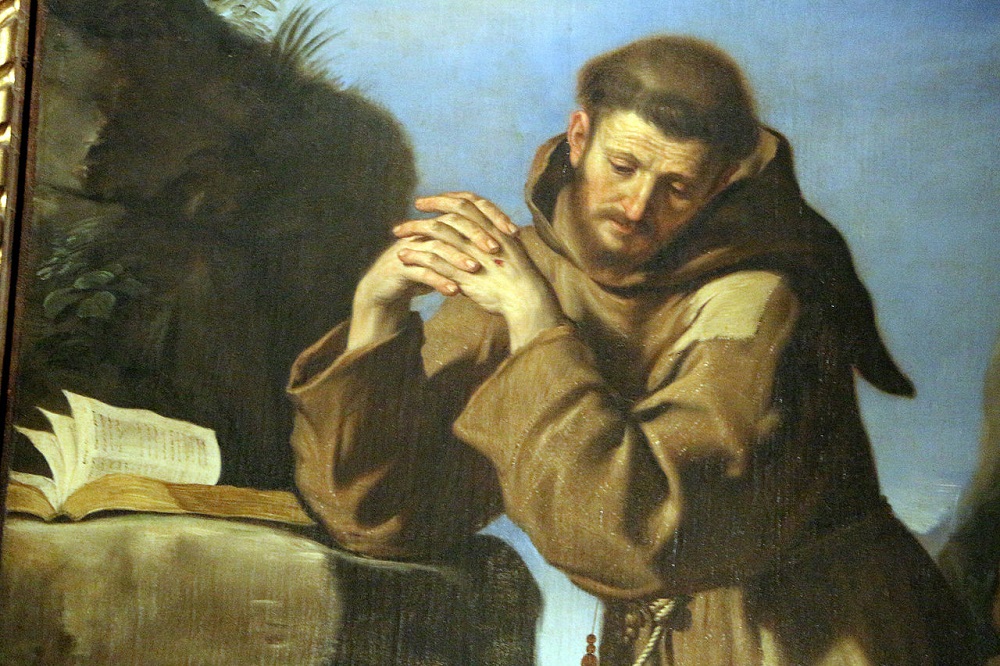
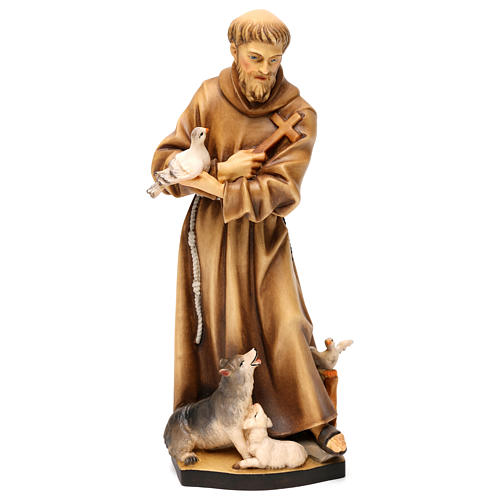
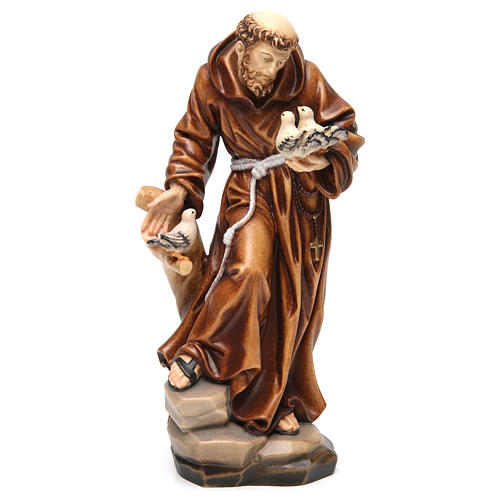
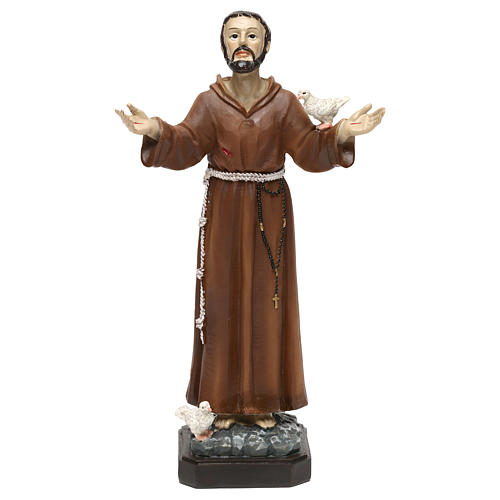
Art and iconography have often wanted to remember this particular aspect of St. Francis. He always appears wearing the brown robe that will become characteristic of the Franciscan order. He had chosen her because she was humble and recalled the colours of the earth, of which she helped him feel part of it. In many representations, Francis appears surrounded by animals, intent on taking care of them, or protecting them, or praying with them beside him. Today, more than ever, his example of humility and love for nature, of profound respect for animals should guide the actions of men, to guarantee a future for the new generations and the planet.

st. francis of assisi with animals statue in wood val gardena
Saint Francis of Assisi with animals in Valgardena wood.
Buy Now
saint francis statue coloured realistic style
Saint Francis statue coloured realistic style.
Buy Now
st. francis statue in resin 20 cm
St. Francis Resin Statue, 20 cm.
Buy Now
Holy Family picture: a symbol to keep at home

Holy Family picture: a symbol to keep at home

The Holy Family, the ideal model of every family nucleus, the incarnation of love, mercy, humility. Keeping a picture of the Holy Family at home is a sign of devotion, but also a way to have comfort at all times. From the point of view…

The Garden of Eden in Genesis

The Garden of Eden in Genesis

The Garden of Eden represents the first, immense gift that God gave to man and woman. Lost following the original Sin, it remains an emblematic place, a symbol of rediscovered innocence and inexhaustible hope. Let’s find out more about it. We have already had the…

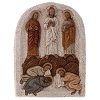
The transfiguration of Jesus Christ

The transfiguration of Jesus Christ

On 6 August the Transfiguration of Jesus is celebrated, forty days before the Exaltation of the Holy Cross, the commemoration of the Crucifixion. What does Transfiguration mean? What’s the celebration?

Before explaining what the Transfiguration of Jesus is, let us try to understand what the word “transfiguration” means in general. The dictionary reads like this: transfigurazióne (ant. Transfigurazióne) sf [from Lat. transfiguratio-onis]. – The act, the fact of transfiguring, of transfiguring oneself; change of figure or appearance or expression.

It would therefore be a sort of transformation, which changes the appearance of something, or someone until it is different from what it previously appeared.

In this case, the transfiguration of Jesus celebrated by the Church on August 6 concerns a miraculous transformation of Jesus, before the eyes of three of his disciples: Peter, James and John.

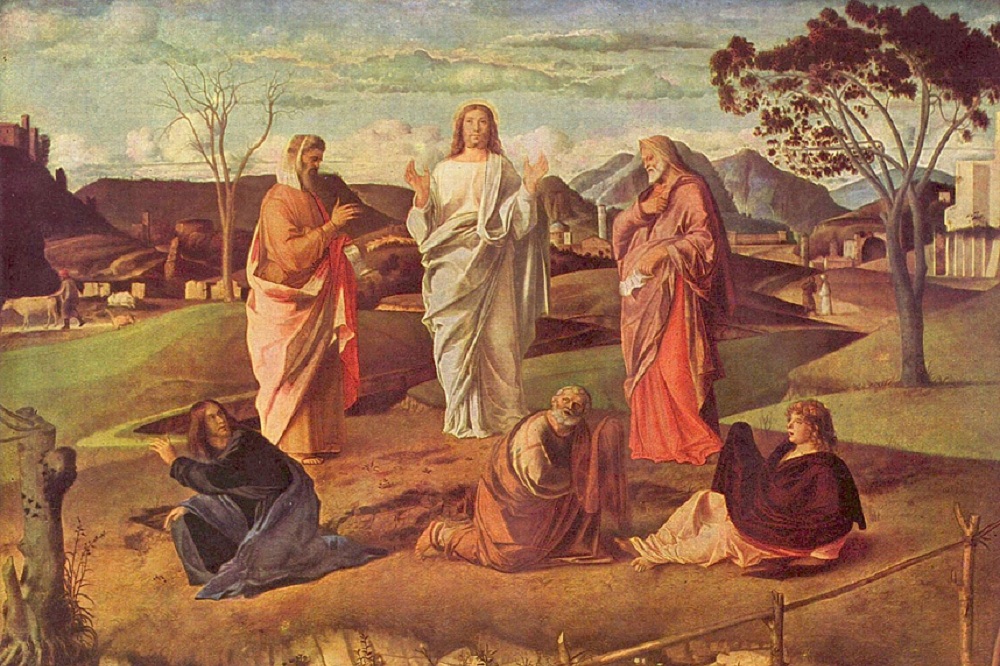
This episode is mentioned in three of the four so-called synoptic Gospels: Matthew 17,1-8; Mark 9: 2-8; Luke 9: 28-36. In short, Jesus, Peter, James and John had withdrawn from the other disciples and climbed a high mountain to pray. Suddenly, during the prayer, Jesus changed his appearance. His face and body had begun to glow and his robes had turned a dazzling white.

Soon after, two mysterious men, who turn out to be Moses and Elijah, appear in the same place and start talking to Jesus. Peter offers to erect three huts for Jesus and the two Prophets, but a voice comes from a luminous cloud and urges the disciples to listen to Jesus, as his chosen and beloved Son. The three disciples at this point were overwhelmed, and when they recovered the prophets and the cloud had disappeared, and they remained on the mountain with Jesus.

The account of the Transfiguration of Christ is rich in prophetic and messianic suggestions, which have made scholars debate for a long time about its actual historical truthfulness. In fact, it is one of the few occasions when Jesus manifested himself in his divine nature, presenting himself to his companions as the Son of God. There had already been precedents, in particular, the Baptism of Jesus, when, after John, the Baptist had baptized him, the sky had opened and the Holy Spirit had descended like a dove announcing the identity of Christ: “And immediately, coming out of the water, he saw the heavens tear apart and the Spirit descending towards him like a dove. And a voice came from heaven: “You are my beloved Son: I am pleased with you“(Mark 1:9-11).

Subsequently, it will be Jesus himself who will confirm his identity as the Son of God, when, on the eve of the Passion, retiring to the garden of Gethsemane, he will pray calling God the Lord: “My Father if this cup cannot pass by me without my drinking it, thy will be done.” (Matthew 26:41).

The theme of transformation, of the dazzling splendour that invests those close to God, recurs in many other passages of the Holy Scriptures, in particular concerning the Apocalypse, when all will be judged and those who deserve it will be saved.
Those who are wise will shine like the brightness of the heavens, and those who lead many to righteousness, like the stars eternally”. (Daniel 12:3)
And all of us, with our faces uncovered, reflecting the glory of the Lord as in a mirror, are transformed into that same image, from glory to glory, according to the action of the Spirit of the Lord.” (St. Paul to the Corinthians 3:18)
Of course, the splendour that springs from Jesus is also an anticipation of his Resurrection and celestial glory, as well as the whiteness of his robe.

Other elements of the account of the Transfiguration of the Lord also make us understand its evocative and symbolic power.

Moses and Elijah represent the will to refer to the Jewish tradition and the prophecies on the coming of the Messiah contained in the Old Testament. Always linked to the ancient tradition are the three huts that Peter offers to build, which refer to the camp of the Jews at Mount Sinai when Moses received the tablets of the law, and which were remembered by the Jewish people with the Feast of Booths, and etc.

The shining cloud from which the voice of God emerges is a recurring element in theophanies or the apparitions of the divine among men.

There are significant differences between the three Gospels that recount this episode, linked to the different theological vision of the three evangelists. These differences also contribute to emphasising the messianic and symbolic dimension of the Transfiguration.

The mountain where the transfiguration took place

There are several conjectures as to which Mount of the Transfiguration was, on which Jesus and his disciples went up that day. It is probably a symbolic mountain, not a real one, like other similar places, such as the one mentioned in the Sermon on the Mount (Mt 5:1).

Some traditions have instead identified it with Mount Tabor, a rounded and isolated hill that rises in the plain of Esdraelon. Here the Byzantines had three churches built and, subsequently, Benedictine and Franciscan monks took turns, building other places of worship. In 1924 the basilica with three naves was inaugurated, designed by the architect Antonio Barluzzi.

Mount Hermon, north of Caesarea Philippi, not far from the headwaters of the Jordan River, was also considered by many to be a possible setting for the Transfiguration.

The interpretation of St. Augustine

St. Augustine provides his own personal and fascinating explanation of the Transfiguration of Jesus in Discourse 78, describing how the white clothes of Jesus are a symbol of the Church and its splendour an omen of Salvation. In the Transfiguration, he presents himself as the light that illuminates every man who comes into this world, shining with a light similar to that of the sun, but which can be perceived with the eyes of the soul and the heart. His very white clothes are his Church because whoever serves the Church can see all his sins washed away, and he will always appear dressed in immaculate splendour.

jesus on the cross

Read more:

Why is Jesus on the cross such an important symbol for Catholics?
The figure of Jesus on the cross represents for every Christian the symbol of love par excellence, the incarnation of his own mission of faith and life.

Augustine also speaks of Peter, of his not knowing how to face the vision of the transfigured Jesus except by proposing to build a house for him and the two prophets. In reality, Peter’s desire to please Jesus stems from the fact that even he would never want to leave the mountain, where he can enjoy the splendour of Christ without having to worry about others. But Peter, limited by his human vision, does not realise that where he wants to build three tents, only one would be enough, because: “Christ is the Word of God, Word of God in the Law, Word of God in the Prophets. Why, Peter, do you try to divide him? Rather, you shall remain united with him.” Peter will have to understand that he will not be able to enjoy the luminous presence of Christ until after death and that for this reason, he will have to dedicate his life to charity and love, to deserve to be able to remain Him again, in the light.

The voice that comes out of the cloud places Jesus in a higher condition than the prophets, as they had written the laws and spoken of His coming, but now He was present, real, the Son, the source of all Salvation. Moses spoke with God, in the burning bush, and from him, he received the Law. Elijah proclaimed the coming of the Messiah, with such ardour that he deserved to go up to heaven in a chariot of fire. But Jesus is the Law, he is the Messiah, and his greatness and splendour are unattainable.

When is it celebrated and why?

As we have already mentioned, the choice to celebrate the Transfiguration on 6 August derives from the fact that it would have taken place forty days before the crucifixion of Jesus, which was celebrated by the Eastern Church on 14 September with the Exaltation of the Holy Cross. In the West, the celebration of the Transfiguration began in the 9th century.

The Transfiguration explained to children

How can an important event of immeasurable symbolic significance be explained to a child? It’s not easy, but it can be done. Wanting to adapt the story of the Transfiguration for children, we can say that Jesus, Peter, James and John went to the top of a mountain one day to pray together. At a certain point, Jesus lit up everything, he began to shine like the sun, his clothes became as white as snow. His friends saw his face change and, in addition to the human face, they saw the divine face and knew they had the Son of God before them.

But that’s not all. After Jesus began to shine like a star, Moses and Elijah also appeared on the mountain, two very important characters for Christians, because Moses was the one who saved the Jews by leading them out of Egypt and received the tablets with the Ten Commandments, and Elijah proclaimed the coming of Jesus with all his might. These two great men begin to chat with Jesus, before the increasingly incredulous eyes of the disciples.

And it is not over yet. From a shining cloud in heaven came the voice of God who said: “This is my beloved Son: in Him, I am pleased. Listen to him.
At this point Peter, James and John were overcome with emotion and fell to the ground, but Jesus immediately rushed to reassure them, to tell them that everything was fine. Because they were his friends, and he took care of them, as it should be.

What does this passage from the Gospel mean? It teaches us that each of us, in every moment, can be like Jesus, show the light within, show others how much God’s love makes us shine and shine. Because we too, like Jesus, are children of God, and if we follow his example, if like him we are kind and caring towards our friends if we love our loved ones and those around us with all of ourselves, we can transfigure ourselves and shine like stars! This is the secret of the transfiguration, letting others glimpse a little bit of the light that blurs within us.

Representations of the transfiguration of Jesus

The Transfiguration recurs less than other sacred subjects in sacred iconography, but it has not failed to inspire many great artists. Representations of this miraculous event are found in both Eastern and Western art. Many splendid Byzantine icons have the Transfiguration as their subject, as well as marvellous mosaics, such as that of the Monastery of Santa Caterina sul Sinai, or that of the Palatine Chapel in Palermo, or the allegorical Transfiguration in the mosaic of the apse of Sant’Apollinare in Classe a Ravenna.
Great Italian painters such as Beato Angelico, Raphael, Perugino, Bellini and Titian left frescoes and paintings on the transfiguration of Jesus.
In more recent times the artist Marko Ivan Rupnik created an impressive mosaic for the church of Santi Giacomo e Giovanni in Milan.

jubilee of mercy logo

Read more:

Jubilee of Mercy Logo: what is it and who designed it
The Logo of the extraordinary Jubilee of Mercy was created and designed by an artist and religious man…