Homepage | Religion | Spiritual discernment: what it is and how it is practised
Spiritual discernment: what it is and how it is practised
13 April 2026
Reading Time: 6minutes
Spiritual discernment is a gift from God that helps us in the knowledge of ourselves and of life, and the Holy Spirit is our guide
The term discernment has a very broad meaning, and even within Christian Catholic spirituality it can take on different meanings depending on the context. In general, we speak of spiritual discernment to mean that precious process of knowledge that allows us to orient ourselves along the path of existence, to evaluate the reality around us and the events that occur in the light of faith. It is a gift bestowed upon us by God Himself through the Holy Spirit, which makes us more aware of His presence in our lives, more inclined to listen to His voice in order to discover the reasons for our existence.
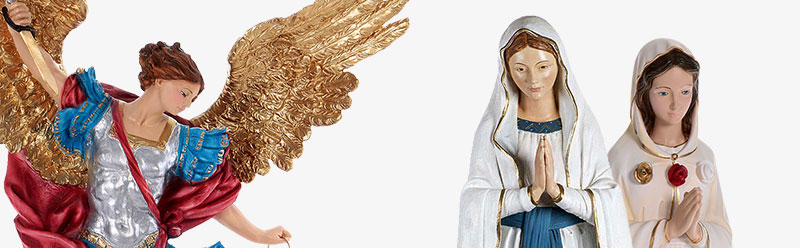
Statue made in Val Gardena, Italy, sculpted in maple wood and oil-painted by hand.
In this sense, discernment becomes vocationaldiscernment, a process of personal exploration and discovery aimed at understanding one’s calling, one’s purpose in life. However, we must not believe that vocational discernment concerns only those aspiring to the priesthood. Although often associated with the choice of a religious vocation, vocational discernment can be applied to any sphere of life, such as career, public service or even interpersonal relationships.
It is important to emphasise that spiritual discernment is not a one-off process, but a continuous journey of spiritual growth.
How can one understand whether the call felt within the soul is a call that leads us to God? It is precisely discernment that comes to our aid—this deep and intimate listening that brings us into contact with our spirituality and with the Lord, helping us to understand how we may dedicate our lives to Him, whether by continuing to live among others while making the world a better place each day, or by embracing the priestly vocation and truly becoming instruments of His will.
The path of vocational discernment is a fascinating journey that begins with the emergence of thoughts that urge us to explore the deeper meaning of our lives. These thoughts, if guided by the Lord, will lead us to discover our authentic calling. The vocational journey requires patience and attentiveness and unfolds through various stages that correspond to further moments of awareness. Meanwhile, it is important to remain open and receptive to what life offers us, knowing that some thoughts are only temporary and will fade over time. The search for one’s calling requires time, but in the end it will lead us to new horizons and to a profound personal fulfilment.
In the journey of the priestly vocation, vocational discernment plays a fundamental role. Spiritual and intellectual formation, participation in Mass, frequenting the sacraments, and reading and studying theology, philosophy and other relevant disciplines are just some of the aspects to be considered on the path towards the priesthood. Spiritual accompaniment by a guide is also important—a spiritual director or a priest, an experienced mentor who can offer advice, guidance and support during the process of discernment and help the candidate for the priesthood to reflect on his experiences, to discern the signs of God in his life and to evaluate his suitability for the priesthood.
Another important aspect of vocational discernment is pastoral experience within the community of faith. Candidates for the priesthood are encouraged to take an active part in parish life, to assume pastoral responsibilities and to serve others. This offers them the opportunity to test their inclinations and to develop the skills necessary for priestly ministry.
Only after these experiences and an appropriate period of in-depth discernment does the candidate who has clearly and consistently felt God’s call to the priesthood decide to enter the seminary. During the time in the seminary, discernment will continue with the guidance of the rector and the other formators.
The Holy Spirit and the gift of discernment
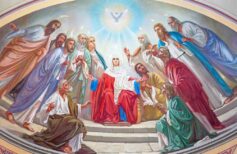
The Holy Spirit is considered the principal agent of discernment in the Christian tradition. He is the gift of God to the Church and works in the lives of believers to guide them in understanding the divine will and in making wise and just decisions. Discernment is not merely an intellectual or rational process, but involves the whole person in a spiritual dynamic, requiring openness of heart and a willingness to listen to the voice of God through the Holy Spirit. It is He who enlightens the mind, opens the eyes of the heart and grants deep spiritual insight. In the Bible, the Holy Spirit is presented as the Comforter, the Counsellor and the Teacher who assists believers in understanding the truth and in making right decisions. Through the presence of the Holy Spirit, believers can discern between good and evil, between the will of God and the ways of the world.
Discernment is closely linked to the gifts of the Holy Spirit, that is, those spiritual qualities and abilities, those “permanent dispositions which make a person docile in following the promptings of the Holy Spirit”, so that he may act for the good. Among the gifts of the Holy Spirit that are particularly relevant in the context of discernment, we can identify the gift of wisdom, which enables one to discern and evaluate situations with a spiritual outlook, seeing things according to God’s perspective; the gift of knowledge, which helps one to understand deeply the truth revealed by God and to discern His will; and the gift of counsel, which acts upon human understanding by enlightening it in moral choices.
There is also the discernment of spirits, another gift of the Holy Spirit which enables one to recognise and distinguish the different spiritual influences present in situations and in people, helping to distinguish between what comes from God, what is human, and what is of malicious origin.
According to Catholic doctrine, discernment is a process that involves all the faithful, but bishops hold a particular role as guardians and guides of the ecclesial community. Bishops are considered successors of the Apostles and have received the authority and grace to govern, teach and sanctify the people of God.
Bishops, by virtue of their episcopal consecration and their communion with the Pope, are regarded as the primary persons responsible for discerning the will of God for the Church and for the faithful. They have the task of teaching Catholic doctrine and morality, administering the sacraments and guiding the community in spiritual growth. In a word, they are the custodians, entrusted by the Holy Spirit with the duty and the capacity to guide the flock, by virtue of the spiritual and pastoral discernment indispensable for attaining knowledge and fulfilment of the will of God, in which all fullness resides.
Vocational discernment arises in the heart and mind of the bishop through his deep life of prayer, which characterises his intimate relationship with God and makes him steadfast in his choices and actions, both at a personal and ecclesial level. In the silence of prayer, the Bishop learns to recognise the voice of God, gaining access to a higher truth inspired by the Holy Spirit.
Let us explore together the profound meaning and importance of the Sacrament of Reconciliation in the Christian faith. The crucial...
What’s the Future of Religion?
What’s the Future of Religion?
A Beginner’s Guide to Christianity
A Beginner’s Guide to Christianity
Mind-Blowing Statistics About Christianity You Need to Know
Mind-Blowing Statistics About Christianity You Need to Know
8059
Enter the Holyart world: $20 discount voucher valid on over 60,000 items
Come and discover Holyart, the largest e-commerce of religious articles in Europe and immediately receive a $20 voucher to use with your first purchase.
Check your mailbox: you will receive your discount within 5 minutes













 12 October 2026