The Way of Saint Benedict: Discovering the Places Touched by the Saint
22 July 2026
Reading Time: 8minutes
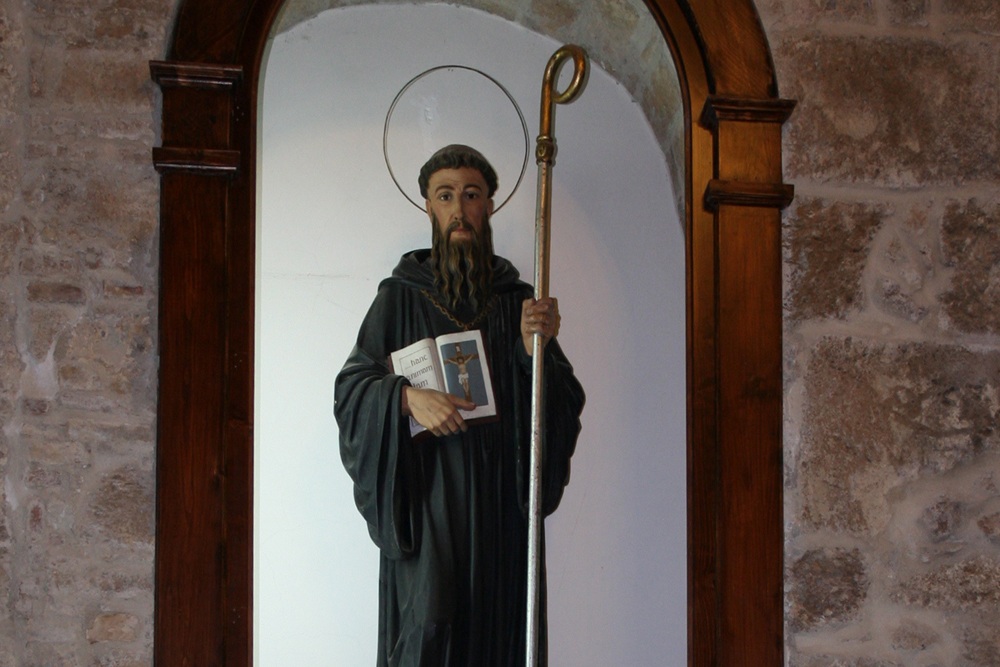
Let us discover the Way of Saint Benedict, a journey steeped in history and spirituality through the places touched by the founding Saint of the Benedictine Order. Through Norcia, Subiaco, and Montecassino, amidst ancient monasteries, evocative valleys, and sacred sites that shaped the life and thought of the Patron Saint of Europe.
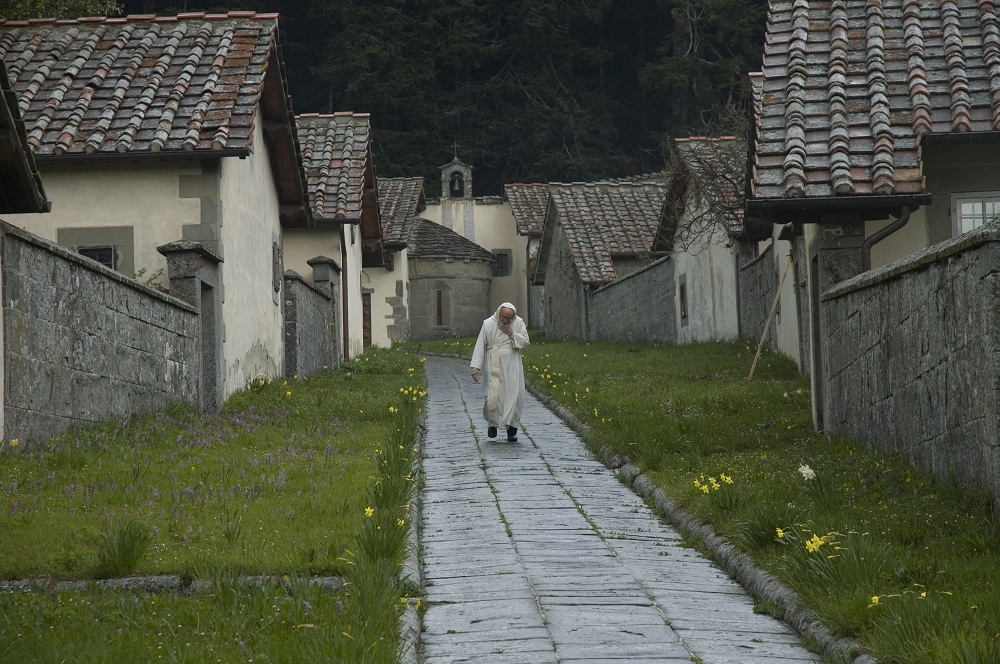
In the green heart of Italy, amidst lush valleys and enchanting landscapes, winds a path steeped in millennia of history and profound spirituality: the Way of Saint Benedict. This itinerary, which follows in the footsteps of the founding Saint of the Benedictine Order and Patron Saint of Europe, offers pilgrims a unique experience—a journey through places charged with religious significance and historical and cultural traditions.
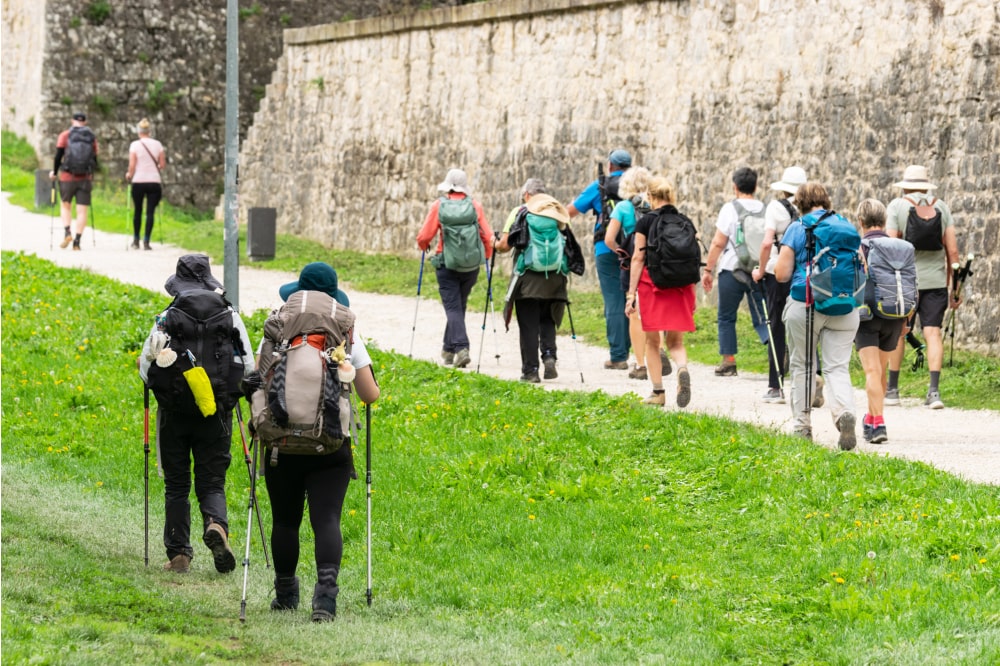
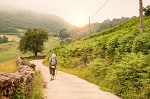
The Way of Saint Benedict extends for approximately 300 kilometres through the splendid lands of Umbria and Lazio, from Norcia to Montecassino. Along the route, pilgrims can visit numerous significant sites linked to the life of Saint Benedict and the Benedictine Order. It is a spiritual experience, but also an immersion into the rich culture and history of Central Italy; along the way, pilgrims can savour delicious Umbrian and Latian cuisine, discover ancient medieval villages, and admire breathtaking landscapes.
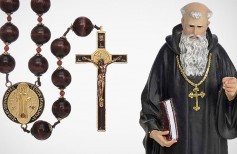
As with all pilgrimages, it is possible to request the Pilgrim’s Credential for the Way of Saint Benedict. The Way of Saint Benedict Credential is an essential document for pilgrims undertaking this journey. It is made available to pilgrims for a small contribution at the traveller’s discretion to cover printing and shipping costs. This choice allows the service to remain autonomous and accessible to everyone. The Credential is not merely a practical document, but also a symbol of belonging and commitment to the path. It certifies the pilgrim’s status and is stamped at various facilities along the route, such as religious lodgings or other donation-based structures. Besides being a distinctive mark, it represents a tangible testimony of the journey completed and a precious keepsake to cherish. The donations received for the Credential are allocated to the non-profit association Amici del Cammino di San Benedetto (Friends of the Way of Saint Benedict).
The Way of Saint Benedict should not be interpreted as a historical path, as it does not chronologically follow the movements of Saint Benedict from Norcia, but rather as a spiritual itinerary. It unites the three most significant places linked to the life of Saint Benedict: Norcia, Subiaco, and Montecassino.
Norcia, in Umbria, is the place where Benedict was born at the end of the 5th century AD, along with his twin sister, the future Saint Scholastica. Of noble origins, the two were the children of Eutropius, a Roman Consul and Captain General, and a local noblewoman. After a childhood spent amidst the splendour and excesses of Rome, both young people chose to abandon the world and renounce their paternal wealth to retreat with their nurse Cyrilla to the valley of the River Aniene.
From the Aniene valley, Benedict then moved to the Subiaco valley, living as a hermit among the ruins of a Neronian villa, and later in an inaccessible cave on Mount Taleo. Subsequently, he moved to the cenobitic monastery of Vicovaro, where he became a spiritual guide for several monks, before moving again and creating, over time, a vast community of monasteries managed by abbots delegated by him.
Finally, he arrived at Montecassino, where he remained for thirty years and where he founded his most famous and well-known monastery. Here, he also wrote his Rule.
Here are the sixteen stages of the Way of Benedict, from Norcia to Montecassino, for a total of about 300 km, with an elevation gain between 400 and 1000 metres.
Stage 1 – from Norcia to Cascia
The journey begins in Norcia, an authentic jewel hidden between the Valnerina and the slopes of the Sibillini Mountains in the heart of Umbria, amidst breathtaking landscapes and enchanted atmospheres. This picturesque town, with its ancient paved streets and stone-fronted houses, enchants visitors with its timeless charm and rich history. Norcia is surrounded by untouched nature and offers countless insights into its history. Founded by the ancient Umbri and later conquered by the Romans, the city boasts an extraordinary historical and cultural heritage. Its medieval walls, towers, churches, and historic palaces tell of centuries of events and occurrences that shaped its unique character.
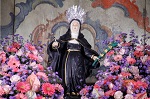
The journey continues to Cascia, the birthplace of Saint Rita, and Monteleone di Spoleto, two medieval villages rich in charm and authenticity, which safeguard historical, cultural, and spiritual treasures.
Cascia is a place of pilgrimage and devotion for thousands of faithful every year. The Basilica of Saint Rita, built on the site where the Saintlived much of her life, welcomes visitors with its imposing façade and evocative works of art.
Monteleone di Spoleto, located a few kilometres from Cascia, is another jewel to discover. Framed by the peaks of the Sibillini Mountains, this medieval village offers enchanting views and an atmospheric setting. Its narrow, winding streets, stone houses, and historic churches tell centuries of history and tradition, while its strategic position makes it an ideal starting point for exploring the natural beauty of the surroundings.
Stage 3 – Monteleone di Spoleto to Leonessa
From Umbria, the path crosses into Lazio, with stages passing through Leonessa, Poggio Bustone, Rieti, Rocca Sinibalda, Castel di Tora, Orvinio, and Mandela, amidst evocative villages and glimpses of timeless beauty and charm.
Leonessa, a medieval gem situated among the peaks of the Laga Mountains, with its narrow paved streets and stone houses, transports visitors into a fairy-tale atmosphere where time seems to have stood still.
Stage 4 – from Leonessa to Poggio Bustone
Continuing on, one reaches Poggio Bustone, a small village nestled among the hills of the Holy Valley (Valle Santa), an ideal place to relax and immerse oneself in the beauty of the surrounding nature.
Stage 5 – from Poggio Bustone to Rieti
Rieti, in the heart of the Holy Valley, is famous for its medieval monuments, its Romanesque churches, and its charming squares. Here, it is possible to discover the city’s millenary history and savour the local cuisine.
Stage 6 – from Rieti to Rocca Sinibalda
Rocca Sinibalda offers spectacular panoramas and an enchanted atmosphere. With its imposing medieval castle and narrow cobbled streets, it transports visitors to a distant era.
Stage 7 – from Rocca Sinibalda to Castel di Tora
Castel di Tora, situated on the shores of Lake Turano, is another village not to be missed along the journey. With its colourful houses overlooking the lake and its picturesque alleys, it is the ideal place for a pleasant walk and to enjoy the tranquillity of the surrounding nature.
Stage 8 – from Castel di Tora to Orvinio
In Orvinio, nestled among the green hills of the Lucretili Mountains, it is possible to stroll through the ancient streets and discover hidden treasures.
Stage 9 – from Orvinio to Mandela
Finally, Mandela, an enchanting village perched on the slopes of Mount Cosce, possesses a rustic charm and wild beauty.
Stage 10 – from Mandela to Subiaco
The route continues into the Monti Lucretili Regional Park, an oasis of untouched nature, peace, and tranquillity. Walking through ancient woods and rolling hills, one reaches Subiaco, a sacred site for devotees of Saint Benedict. Here, an imposing monastery encloses the Sacro Speco (Holy Cave), the grotto where the Saint lived in solitude and meditation; it represents a focal point for pilgrims in search of spirituality and contemplation.
Stage 11 – from Subiaco to Trevi nel Lazio
Descending into the picturesque Ciociaria region, one encounters enchanting villages such as Trevi nel Lazio, with its medieval streets and evocative panoramic views. Here, it is possible to stroll among ancient churches and historic palaces, immersing oneself in local history and culture.
Stage 12 – from Trevi nel Lazio to Collepardo
Collepardo and Casamari are two other hidden gems of Ciociaria, rich in charm and authenticity—Collepardo with its stone houses and picturesque alleys, and Casamari, famous for its Cistercian Abbey.
Stage 13 – from Collepardo to Casamari
Stage 14 – from Casamari to Arpinio
Arpino, the birthplace of Cicero, is another unmissable stop along the journey. With its historical monuments and evocative panoramic views, Arpino is a place that enchants visitors with its beauty and millenary history.
Stage 15 – from Arpinio to Roccasecca
The journey proceeds past the Hermitage of the Holy Spirit (Eremo dello Spirito Santo), located at the entrance of the Melfa Gorges guarding the Liri Valley—an emblematic example of a hermitage carved into a natural cave and subsequently modified over the centuries. Hidden among the rock walls of the Melfa Gorges, this hermitage evokes a sense of mystery and spirituality, enveloping the visitor in its suggestive atmosphere. The ancient cave, inhabited by hermits since medieval times, has undergone several modifications over time, with interventions that transformed its original appearance without compromising its authenticity.
Stage 16 – from Roccasecca to Montecassino
Finally, one reaches the Abbey of Montecassino, a symbol of faith and spirituality that dominates the valley below.
When to Walk the Way of Saint Benedict
The Way of Saint Benedict welcomes pilgrims all year round. However, during the winter months, it is important to keep in mind that some stages at higher altitudes may be affected by the presence of snow.
Despite the challenges the winter climate can bring, many pilgrims choose to face the Way even in this season, attracted by the beauty of the snow-covered landscapes and the quiet that envelops the sacred places along the route.
It is therefore advisable to be properly prepared with clothing and equipment suitable for the weather conditions and to monitor weather forecasts before undertaking the journey. Furthermore, it is advisable to check for any restrictions or trail closures due to climatic conditions.
The Way of Saint Benedict offers different route options to adapt to the needs and preferences of pilgrims. On foot, the route is divided into 16 stages over as many walking days, ideal for a more detailed and contemplative experience. On the other hand, for those who wish to tackle the route by bicycle, it can be completed in 7 days.
This flexibility allows pilgrims to customise their journey based on the time available and their physical fitness. Furthermore, it is completely natural and acceptable to walk only a part of the path, perhaps focusing on specific stages that arouse greater interest or personal significance.
Despite their diversity, many religions show elements in common. Let us discover which religions believe in angels Angels are perhaps...
What’s the Future of Religion?
What’s the Future of Religion?
A Beginner’s Guide to Christianity
A Beginner’s Guide to Christianity
Mind-Blowing Statistics About Christianity You Need to Know
Mind-Blowing Statistics About Christianity You Need to Know
8462
Enter the Holyart world: $20 discount voucher valid on over 60,000 items
Come and discover Holyart, the largest e-commerce of religious articles in Europe and immediately receive a $20 voucher to use with your first purchase.
Check your mailbox: you will receive your discount within 5 minutes





 16 October 2026