The Lady of All Nations is the title by which the Virgin Mary appeared to the Dutch seer Ida Peerdeman in fifty-six visions spanning fourteen years. Here is the message of peace she brought forth.
Contents
In the history of Marian apparitions, one of the best-known cases is that of the Lady of All Nations, which took place in Amsterdam between 1945 and 1959. Although the authenticity of these apparitions has never been officially confirmed, the veneration of the Virgin under the Marian title of “Lady of All Nations” is permitted and practised by many believers. The visions of Ida Peerdeman, the seer at the heart of these episodes, continue to influence the spirituality of Catholics in the Netherlands and beyond.
Marian Titles: what are they and how many are all the names dedicated to Mary
Marian Titles: all the appellations with which Mary, mother of Jesus…
The Amsterdam Apparitions
The Amsterdam apparitions began just a few months after the end of the Second World War, during a time of reconstruction and spiritual renewal. On 25 March 1945, a young Dutch woman, Isje Johanna Peerdeman (known as Ida), claimed to have had a vision of the Virgin Mary. Mary would reportedly appear to her on fifty-six occasions over fourteen years between 1945 and 1959. In reality, the very first apparition was said to have taken place on 13 October 1917—a significant date, as it coincides with the last of the famous Marian apparitions at Fatima. At the time, Isje was only twelve years old; on the advice of her spiritual director, Father Frehe, she told no one of the encounter with the “Beautiful Lady,” a woman of light and extraordinary beauty who appeared as she was walking home and smiled sweetly at her. It was only in 1945, however, that the Madonna revealed herself to Isje (who by then had become a woman) for who she truly was, defining herself as the Lady and Mother of All Nations. Subsequently, the Madonna reappeared many times to Isje to convey various messages regarding a divine plan for the salvation of the world. This plan saw the Virgin Mary herself as the focal point and catalyst—an incarnation of mercy and a loving mother ready to act as the intermediary between God and His children.
 Read more:
Our Lady of Fatima: Penance and prayer are salvation
On 13 May we celebrate the Madonna of Fatima. Her invitation to penance and prayer as instruments of salvation today …
Our Lady of Amsterdam
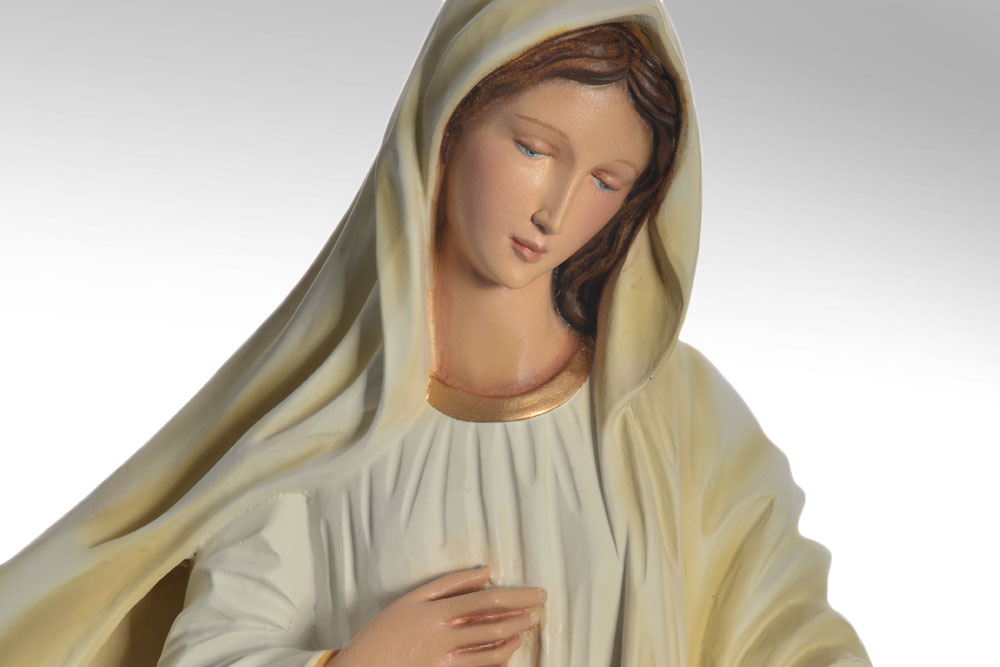
Mary is also said to have given Ida an image and a prayer. Mary, the Lady of All Nations, appears standing upon the terrestrial globe, wrapped in a long, flowing white robe, with her loose dark hair falling to either side of her face. Behind her towers a large Cross. From her open hands emanate rays of light, representing Grace, Redemption, and Peace. In many reproductions, flocks of sheep are seen at her feet, representing the peoples of the entire world. Indeed, world peace is one of the central points of the Lady of All Nations’ messages; only by turning their gaze to the Cross can humanity hope to find harmony and unity among all peoples and religions.
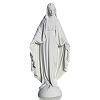
The figure described by Isje Peerdeman strongly recalls that of Our Lady of the Miraculous Medal, who appeared on 27 November 1830 to the young novice and future Saint Catherine Labouré. In that instance, the rays of light streaming from the rings on Mary’s fingers represented the graces she dispenses to all her children, embodying her mission as a loving intermediary between man and God. These rays of grace, pouring onto the earth, spread love and salvation, while the light they radiate symbolises the triumph of Mary, the first among those who have been and will be saved. This symbolism highlights Mary’s central role in the work of Redemption, her being the dispenser of divine graces, and the intercessor with God for the good of humanity.
The Amsterdam apparitions have sparked varying opinions within the Catholic Church. While some believers accept the visions as authentic and significant, others remain more sceptical, suggesting they may be the product of imagination or the cultural influences of the era. Despite this, over the years, the Church has launched thorough investigations into the apparitions. In 2002, the Episcopal Conference of the Netherlands stated that “there is nothing against faith or morals in the Amsterdam apparitions.” However, to date, the Church has not issued a definitive judgement on the authenticity of the visions.
Marian Apparitions Worldwide: The 10 Most Important Ones
The many names by which Christians address the Madonna largely derive from the numerous Marian apparitions around the world …
Our Lady’s Messages Around the World
The messages from various “Madonnas” around the world have a rich and diverse history spanning centuries of religious and spiritual tradition. From Fatima to Lourdes, from Guadalupe to Medjugorje, and beyond, Marian apparitions have been a significant element of Catholic devotion. The messages attributed to the Virgin often encourage prayer, penance, conversion, and peace, offering spiritual guidance and consolation for millions of believers worldwide.
In Fatima, where some of the most famous Marian apparitions occurred, the Madonna entrusted three small shepherd children with a message of prayer, penance, and conversion. She is also said to have predicted future events, including the end of the First World War and the spread of communism.
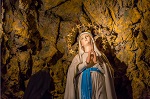
In Lourdes, France, in 1858, the Virgin Mary reportedly appeared to a young shepherdess named Bernadette Soubirous. During the apparitions, Bernadette was instructed to dig for a miraculous spring of water, which has since become a major site of pilgrimage and healing for the faithful worldwide. The messages of Lourdes emphasise trust in God’s mercy and the importance of prayer and penance.
In Guadalupe, Mexico, in 1531, the Madonna is said to have appeared to an indigenous peasant named Juan Diego, asking him to build a church in her honour. During the apparition, Mary left a miraculous image of herself imprinted on Juan Diego’s cloak, which is today venerated as the Virgin of Guadalupe, patroness of Mexico and Latin America. The messages of Guadalupe promote trust in Mary’s maternal protection and unity between different peoples and cultures.
The apparitions at Medjugorje, in Bosnia and Herzegovina, which began in 1981, have captured the attention of millions across the globe. Although they have not yet been officially recognised by the Catholic Church, the alleged messages from the Madonna to six young seers include calls to prayer, conversion, and peace. Medjugorje has become an important place of pilgrimage for those seeking a deeper spiritual experience and a personal encounter with the Madonna.
The Lady of All Nations promised the seer Ida that prayer would save the world. She also revealed several major prophecies: the Chinese communist revolution led by Mao Tse-Tung, man’s landing on the Moon, the Cold War, the meeting between Pope Paul VI and the Archbishop of Canterbury Michael Ramsey, the fall of the Berlin Wall, and the death of Pope Pius XII. The Madonna also asked Ida to request that the Church recognise a dogma of Mary as “Co-redemptrix, Mediatrix, and Advocate.”
Prayer to the Lady of All Nations
Here is the prayer for peace entrusted by the Virgin herself to Ida as a message for all humanity:
Lord Jesus Christ, Son of the Father,
send now Your Spirit over the earth.
Let the Holy Spirit live in the hearts of all nations,
that they may be preserved from corruption,
calamities, and war.
May the Lady of All Nations,
who once was Mary,
be our Advocate.
Amen.


 16 October 2026