Author: Redazione

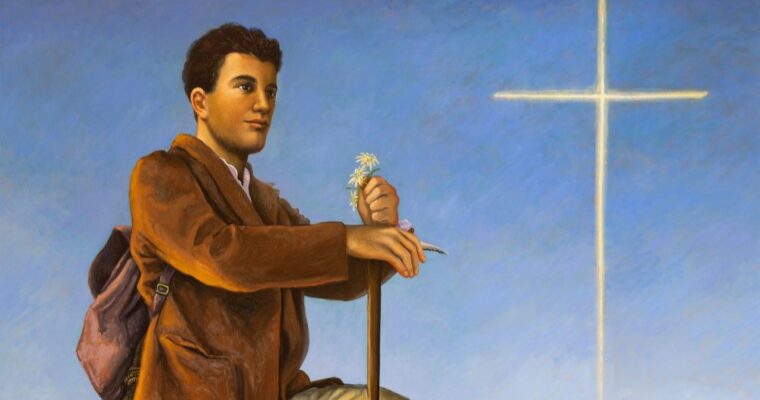
From the mountain to the sky: the life and message of Pier Giorgio Frassati

From the mountain to the sky: the life and message of Pier Giorgio Frassati

Contents1 The life of Pier Giorgio Frassati2 What miracles Pier Giorgio Frassati did3 When Pier Giorgio Frassati will be canonised From the mountains to heaven: the life and message of Pier Giorgio Frassati, the boy who loved the mountains and God, an example of charity…

What is the most frequently used name by popes?

What is the most frequently used name by popes?

Contents1 The names that wrote the legend of the popes2 The names of the first popes in history3 How many popes have there been4 Names of popes from 1900 to the present What is the most frequently used name by popes? A journey through the…

Our Lady of the Snow and the miracle of 5 August

Our Lady of the Snow and the miracle of 5 August

On 5 August in Rome, Our Lady of the Snow is commemorated, marked by a spectacular snowfall on the square of the Papal Basilica of Santa Maria Maggiore, dedicated to her. This is how the cult was born

Our Lady of the Snow and the miracle of 5 August are an integral part of Rome’s religious history. Since August 5, 358 AD, a miraculous snowfall blanketed the Esquiline hill, decreeing the place where the Papal Basilica of Santa Maria Maggiore, the oldest Marian sanctuary in the West, would have stood, this day represents a significant appointment in the liturgical calendar, which combines history, faith and tradition in a unique and evocative event. The festival of Our Lady of the Snow is not only an opportunity to remember the miracle, but also a moment of spiritual reflection for the faithful, on the role of the Virgin Mary as a mediator of divine Grace, a symbol of purity and renewal, just like the snow from which she took the Marian title of Our Lady of the Snow, precisely.

seven churches tour

Read more:

The Seven Churches Tour: pilgrimage itineraries for the Jubilee
The Seven Churches Tour is an ancient devotional itinerary still undertaken by believers today…

According to legend, Our Lady appeared in a dream on the night between 4 and 5 August 364 to Pope Liberius (352-366), or, according to another tradition, to the Roman patrician John, who would then report the dream to the Pope. In both cases, the Virgin asked that a Basilica be erected in her name and announced that, to indicate the exact place, she would send snow. That night, a miraculous snowfall occurred on the Esquiline Hill. Here, the Liberian Basilica was first built, on the remains of which Sixtus III had the Basilica of Santa Maria Maggiore, dedicated to the Virgin, erected. With its imposing architecture and artistic treasures, the Basilica underwent various restoration interventions over the centuries, becoming enriched with works of art. Even today, it remains one of the most important symbols of Marian faith and devotion worldwide.

The 10 Most Famous Marian Shrines in Italy

Read more:

The 10 Most Famous Marian Shrines in Italy
Marian Shrines have always been places where devotion to the Virgin, Mother of Jesus, is concentrated. Between history and traditions…
When is Our Lady of the Snow celebrated?

Our Lady of the Snow is therefore celebrated on 5 August to commemorate the famous miracle of the snowfall on the Esquiline. Every year, on August 5, the festival of Our Lady of the Snow is celebrated with a solemn Mass in honour of the Virgin Mary. This anniversary, which commemorates the miracle of snow, attracts tourists from all over the world. In the square in front of the Basilica of Santa Maria Maggiore, a show of sounds and lights is organised, followed by an artificial snowfall that recalls the miraculous one that occurred in 358 AD. In ancient times, white rose petals were used as a symbol of snowflakes.

According to some traditions, 5 August is also remembered as the birthday of Our Lady. The Nativity of the Virgin is officially celebrated on 8 September, although this date is purely conventional, since there are no precise indications on the date of Mary’s birth. The choice of 8 September coincides with the dedication feast of St. Anne’s Basilica in Jerusalem, built in the fourth century AD on the site where Mary’s parents’ house is believed to have stood. However, other traditions coincide with the birthday of Our Lady on different dates, including August 5, the feast day of Our Lady of the Snow.

Why is Santa Maria Maggiore dedicated to the Virgin of the Snow?

Santa Maria Maggiore is dedicated to the Virgin of the Snow to commemorate the miracle that occurred on 5 August. This event is deeply rooted in the Christian tradition and has given rise to one of the most heartfelt and celebrated Marian festivals. Every year, on 5 August, the Papal Basilica of Santa Maria Maggiore in Rome hosts a solemn liturgical celebration and a spectacular artificial “snowfall” of white petals, reminiscent of the miraculous summer snowfall that occurred in 358 AD.

The Church of Our Lady of the Snow (in Latin, Sancta Maria ad Nives) is one of the papal basilicas, or those fundamental churches that house a papal altar, where only the Pope or a few other high-ranking priests are permitted to celebrate the Eucharist. Each of the papal basilicas also has a Holy Door that is opened on the occasion of the Jubilee. The opening of the Holy Door is a central event of the Jubilee and marks the beginning of the period of grace and mercy that it represents. In particular, the opening of the Holy Door of St. Peter’s Basilica, which for the 2025 Jubilee will take place on 24 December 2024, officially marks the beginning of the Holy Year. Walking through the Holy Door invites the faithful to conversion and to receive the grace of forgiveness.

Jubilee Churches

Read more:

Jubilee Churches, pilgrimage destinations not to be missed during the Jubilee
Jubilee Churches are those equipped with a Holy Door…
The Papal Basilica of Santa Maria Maggiore, situated in Rome, is a remarkable example of early Christian architecture. Its construction began, as we have seen, under the pontificate of Pope Liberius, but the basilica has undergone numerous modifications and extensions over the centuries. Santa Maria Maggiore is famous, among other things, for its mosaics, dating back to the period of its construction. These mosaics run high along the central nave, both right and left. Initially, there were 42 panels, but only 27 survived (12 on the left and 15 on the right), while the others were destroyed in the eighteenth century, and in some cases, they were replaced by frescoes. The boxes represent stories from the Old Testament. Other precious mosaics adorn the triumphal arch that delineates the apse, representing scenes from the life of Jesus.

The famous sculptor Gian Lorenzo Bernini is also buried in the Basilica of Santa Maria Maggiore.

Episcopal Ring with Amethyst: What Is Its Meaning

Episcopal Ring with Amethyst: What Is Its Meaning

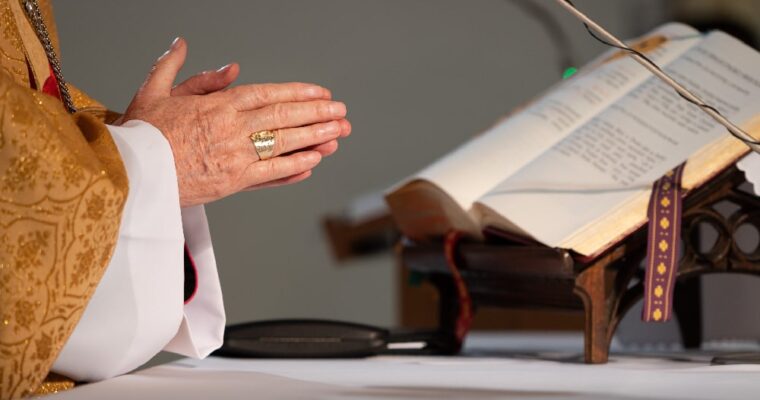
Contents1 The Meaning of the Amethyst in the Episcopal Ring2 The Bishop’s Ring3 The Archbishop’s Ring4 The Cardinal’s Ring Amethyst for Bishops, yellow topaz for Archbishops, sapphire or ruby for Cardinals—the episcopal ring, between symbolism and spirituality. As with every other aspect of religion, the…

Templar Symbols: The history and meaning of these ancient symbols

Templar Symbols: The history and meaning of these ancient symbols

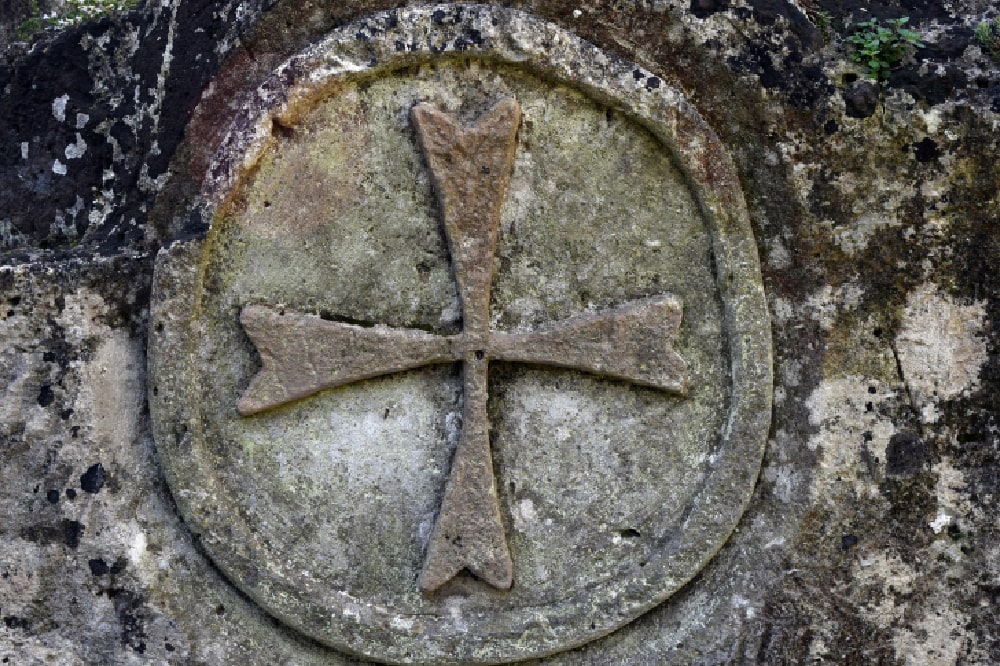
Contents1 History of the Templars2 Templar seal3 Templar cross The Order of the Templars no longer exists but remains present in history also thanks to the esoteric Templar symbols linked to it. Let’s find out what they are and what they mean. Among the various…

The Wedding of Cana: explanation, miracle and message

The Wedding of Cana: explanation, miracle and message

The Wedding of Cana tells the story of the first miracle performed by Jesus. Let us see what message this story hides

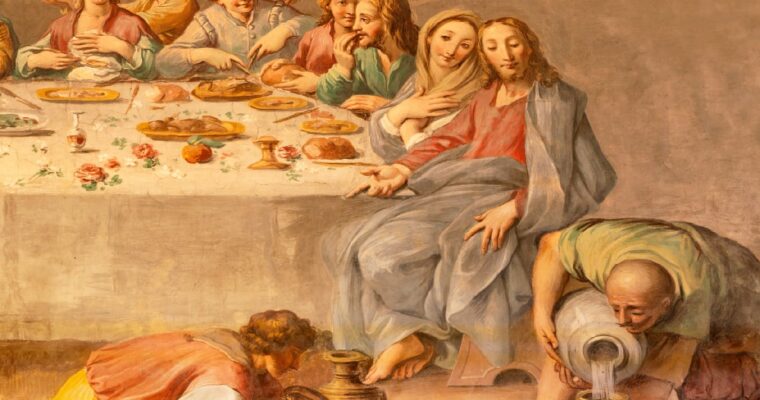
The evangelist John tells us in his Gospel about the first miracle that Jesus would perform. Known as the miracle of the Wedding at Cana, it would be more appropriate to call it The Turning of Water into Wine. We all know the story, told in John 2,1-12: Jesus had taken part with some disciples and his mother Mary at a wedding feast at Cana of Galilee, And when the wine was finished, he had six vessels filled with water brought in, and turned it into wine.

Miracle of the Wedding at Cana

“In those days there was a wedding feast at Cana of Galilee and the mother of Jesus was present. Jesus and his disciples were also invited to the wedding. When the wine ran out, Jesus’ mother said to him: «They have no wine». And Jesus answered her: «Woman, what do you want from me? My hour has not yet come». His mother said to the servants: «Whatever he tells you, do it». There were six stone amphorae for the ritual purification of the Jews, each containing from eighty to one hundred and twenty litres. And Jesus said to them, «Fill the amphoras with water»; and they filled them up to the edge. He said to them again, «Now take some and bring it to the one who directs the banquet». And they brought it to him. As he tasted the water turned wine, the one who was leading the banquet – who did not know where it came from, but the servants who had taken the water knew it – called the groom and said: Everyone puts the good wine on the table at the beginning and, when you have already drunk a lot, the less good one. You have kept the good wine until now.»” (Jn 2,1-12)

The symbologies and doctrinal messages hidden in this simple story are many and different, so much so that for centuries the story of the Cana wedding has been the subject of dissertations by theologians and religious.

To begin with, the presence of Jesus at a wedding banquet has been interpreted by many as the moment of the institution of the Sacrament of Matrimony, For his presence that day and place would sanctify the union between the bridegroom and bride in the sight of God.

Another very important aspect of this Gospel episode is the role played by the Virgin Mary in it. Mary intercedes with her Son, pointing out that the diners have finished their wine, and in this way, she becomes the bearer of a silent plea from men towards Jesus. For the first time, Our Lady stops being only a mother, but she becomes the spokesman of humanity to her Son, and instructs those present to follow her word, abandoning herself to it in full confidence: “Do what he will tell you.”

Mary’s presence at the miracle of the Wedding at Cana has an even deeper meaning. It is the first of the so-called Seven Signs, the seven miracles that in the Gospel of John tell the path taken by Jesus to show the disciples His powers and what it is intended for, before arriving at the Last Supper, to the Passion and death. Reading the Scriptures, it is easy to see that there are more occasions when Jesus uses his power to heal, heal and deliver from the devil. John chooses to tell seven episodes:

  1. The Wedding of Cana in Galilee;
  2. the recovery of the captain’s son;
  3. the healing of the sick for thirty-eight years in Bethesda;
  4. the multiplication of loaves.
  5. Jesus walking on water;
  6. the healing of the born blind person;
  7. the resurrection of Lazarus.

At the first of these signs is present the Mother of Jesus, and he seems to distance himself, when she turns to him for help, he almost seems to treat her badly. “Woman, what do you want from me in this? My hour has not yet come”. But Our Lady does not let these words fool her and she repeats to the servants: “Do whatever he tells you” (Jn 2:3-5). Mary knows that her Son is special, that he is destined for great things. And Jesus knows that it is time for him to break away from his mother in order to embrace the destiny that God has in store for him. The fact that he is there with the disciples on that day is already significant that his mission has begun. The disciples are his new family, who will accompany him to his destiny and final sacrifice. At the Wedding of Cana, Jesus offered himself for the first time in the name of the Covenant between God and men which He came to renew.

Finally, we must consider the symbolism linked to wine, which for the Jews was a very important element, a symbol of joy and sacredness at one time, elements that can not be missing in a wedding. Not only that, Jesus transforms into wine the water destined for ritual purification, not ordinary water, and turns it into an excellent wine, the best.

Painting of the Wedding at Cana by Veronese

Wedding at Cana Veronese
Wedding of Cana – Veronese

The Wedding of Cana has inspired many artists over the centuries. We mention here the eponymous painting made by Veronese in 1563 and kept today at the Louvre in Paris. It represents the episode of the transformation of water into wine, with a scene rich in details and in an environment that mixes elements related to the time of the facts and other contemporaries to the artist. The guests at the banquet wear late Renaissance clothes with bright colours, there are musicians engaged in playing modern instruments, and many of the characters are portrayed with the features of famous historical figures, as well as the artist himself.

Saint Christopher, the Patron Saint of Pilgrims

Saint Christopher, the Patron Saint of Pilgrims

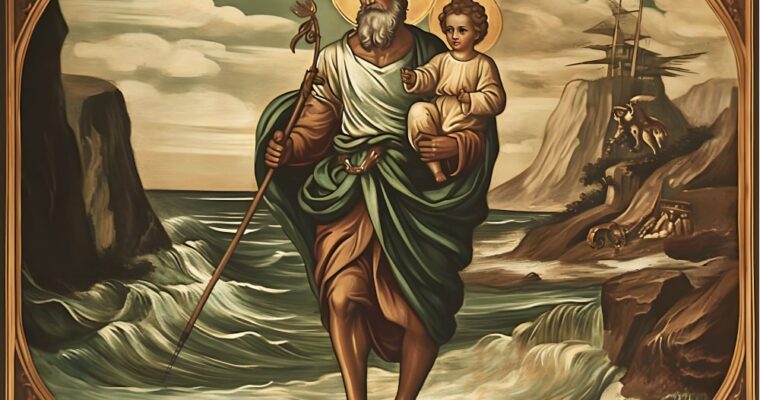
Contents1 The Story of Saint Christopher2 The Way of Saint Christopher3 The Medal of Saint Christopher Saint Christopher is remembered as the protector of pilgrims. History and legend intertwine to create a cult that has existed for centuries in both the East and the West…

Saint James the Apostle: The Story Behind the Saint of the Famous Pilgrimage Route

Saint James the Apostle: The Story Behind the Saint of the Famous Pilgrimage Route

Contents1 Saint James the Greater: The History2 The Link to the Camino de Santiago3 The Camino of Saint James in Sicily Saint James the Apostle was one of Jesus’ closest disciples. The first of the Apostles to suffer martyrdom, he still guides thousands of pilgrims…

Pope Leo XIV: The New Face of the Catholic Church in the Third Millennium

Pope Leo XIV: The New Face of the Catholic Church in the Third Millennium

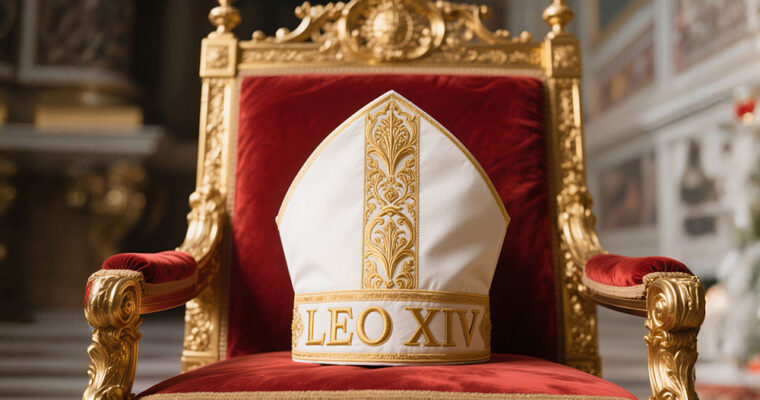
The pontificate of Pope Leo XIV begins like a door slightly ajar to the future. Who is the first American Pope in the history of the Church

There was a moment, as the world waited in silence, when the bells rang and history began to flow once more, its mighty heart beating again. From the Loggia of the Blessings, where every new beginning takes on flesh and word, a voice broke the suspense with simple words, trembling with emotion: words of peace, words of gratitude. The name of Pope Francis, just spoken by the one who now inherits his legacy, echoed across St Peter’s Square like a breath of living memory: Pope Leo XIV, born Robert Francis Prevost. The new Pontiff did not hide his emotion. He spoke of Francis as a spiritual father, a gentle shepherd who had led the Church through times of unrest and hope. “I take up his legacy,” he said, “and with it, the dream of a poor, fraternal, pilgrim Church.” Just elected, with a soft accent and discreet step, he opened a new era, scented with continuity and prophecy.


Born in Chicago to a family interwoven with European roots, the first American Pope in history presents himself as a man of the frontier, a bridge between worlds, between cultures, between ages. With his heart turned to the peripheries of the soul and a gaze able to glimpse tomorrow’s challenges, Leo XIV is called to lead God’s people in the fragile and bold time of the third millennium. And he does so with the humility of one who knows he is not alone, for every step he takes carries the footprints of those who came before.

His is a profile that unites roots, rigour and breadth: a mind shaped by logic and theology, a heart forged through contact with poverty, a spirit tempered in Augustinian fraternity. His figure naturally embodies the balance the Church invokes today: between institution and people, between Tradition and the questions of the present, between the unity of faith and the plurality of cultures.

Information about Pope Francis

Read more:

20 interesting facts to know about Pope Francis
Information about Pope Francis, interesting facts, and special moments from his pontificate…


The Origins and Identity of a “Quiet American Citizen” Pope

Robert Francis Prevost was born on 14 September 1955 in the metropolis of Chicago, the beating heart of an America able to cherish ancient traditions while gazing fearlessly into the unknown. His roots lie in a soil of interwoven stories: Italian-French-Spanish blood, languages and devotions chasing one another from one continent to another.

His surname is already a kind of interior geography, a call to origins that become universal vocation. Sometimes names carry with them an ancient echo, like a bell sounding from far away. The surname Prevost originates in France, where it once indicated someone called to lead, to oversee, to serve with authority and justice. It derives from the medieval term prévôt, used to designate officials who administered land, communities and sacred places on behalf of a lord or the king. Going even deeper, its Latin root praepositus holds the original meaning: “the one placed in front.” Not to dominate, but to guard. Not to command, but to guide.

Over time, that title became a name, and then a surname, passed down from generation to generation like a silent inheritance. It crossed the centuries, spread through the French regions of Normandy and Île-de-France, reflected in the dialects of Northern Italy, becoming Prevosto, Prevò, Provost, and in some Alpine valleys it came to mean the parish priest, the rector of the community, the one who watched over others’ lives.

Priestly ordination

Read more:

A Priest’s Life: Answers to the Most Curious Questions
What is life like as a priest? What does a typical day look like for a priest? How much…


One branch bends southward, through the valleys of Piedmont and the lakes of Lombardy, where languages intertwined like dialects and surnames crossed borders. Louis Marius Prevost, father of the future Pope, carried an Italian heritage, perhaps hidden in his maternal genealogy, in those mixed marriages uniting families from beyond the Alps with local ones, in a web of movement, porous borders and shared affection.

It is there, between Italy and France, that the name Prevost becomes a cultural bridge, then crosses the ocean to take root in America, like a seed carried on the wind of history. A mosaic of origins now composed in the gentle and resolute face of Leo XIV, a Pope of the borderlands, son of diverse lands and universal brother, with a vocation to responsibility, service and guardianship.

The family of Robert Francis Prevost embodies this interwoven story: a name from afar, familiar with courts and churches, countryside and cities, now echoing in St Peter’s Basilica as a sign of destiny. Prevost: a man “placed in front”, yes, but to be a servant, not a master. To stand among, not above. To build bridges, not thrones.

A Vocation Carved Through Time and Space

The calling, for Robert Francis Prevost, did not arrive like a sudden bolt of lightning, but like a line drawn patiently, step by step, between lecture halls and the world’s peripheries. Raised in the United States, he walked from an early age the path of the Order of Saint Augustine, imbued with contemplative spirituality and thirst for justice.

The first breath of his formation came in the Augustinian Minor Seminary, then expanded into the world of science and thought. In 1977, he graduated in Mathematics and Philosophy from Villanova University in Pennsylvania, a place where logic meets faith, and intellectual rigour opens to mystery.

That same year, he entered the Augustinian novitiate in Saint Louis, Missouri, embracing the Rule as a compass for the soul. He made solemn vows in 1981, sealing a choice that was not merely religious, but profoundly existential. He studied Theology at the Catholic Theological Union in Chicago, and later flew to Rome, the pulsating heart of Christianity, where he earned a doctorate in Canon Law with honours at the Pontifical University of St Thomas Aquinas.

Saint Peter Basilica

Read more:

St. Peter’s Basilica in the Vatican: A Church that symbolizes the entire Christian world
St. Peter’s Basilica in the Vatican is a church full of meaning, mysteries, and masterpieces…


In 1982, in a Rome still stirred by post-Council winds, he was ordained a priest. But it was in 1980s Peru, among the dusty streets of Trujillo and the wounded faces of poverty, that the young Father Prevost underwent one of the most defining experiences of his life. For nearly fifteen years, he served as parish priest, prior, formator, judicial vicar, and lecturer in Patristics and Moral Theology. He taught, led, listened. He learned a language that was not just Spanish, but the universal language of compassion. The global South entered his blood and heart, shaping in him a pastoral approach rooted in closeness.

In 1999, he returned to the United States, becoming provincial prior of the Augustinian Province of Chicago. Two years later, in 2001, he was elected Prior General of the entire Order of Saint Augustine, a leadership role he held for twelve years, traversing continents and communities in a constant tension between contemplation and mission.

Under Pope Francis, his figure definitively emerged on the stage of the universal Church. In 2014, he was named bishop of Chiclayo, Peru, and later held important positions in the Roman Curia. Appointed a member of major Dicasteries, including those for Clergy and Bishops, he became in 2023 the Prefect of the Dicastery for Bishops and President of the Pontifical Commission for Latin America—key roles in discerning and appointing new pastors.

On 30 September 2023, Francis created him a cardinal, a gesture that already felt like a prelude.

Saint augustine of hippo

Read more:

The Confessions of Saint Augustine: How to Change Your Life
The Confessions of Saint Augustine are a timeless testimony of a journey of faith and self-awareness…

He is the first Pope with a degree in mathematics. They already call him the “mathematical Pope,” and yet listening to him, there is nothing cold or abstract about him. Analysis, precision, clarity of argument—these are tools submitted to the light of the Gospel. Even in his first appearance, Leo XIV broke with tradition: he was the first to read from a prepared speech from the Loggia of St Peter’s—a small gesture, perhaps, but one that reveals a method, a vision. Every word counts. Every choice carries weight.

He has been called a reserved man, yet in the moments before his election, his humanity shone through with disarming power. Cardinals recall seeing him breathing deeply, overwhelmed by the call; one of them, Cardinal Tagle, offered him a sweet: a small gesture, immense tenderness. And when, at the decisive moment, the assembly rose to acclaim him, he remained seated. Not out of pride, but out of holy fear: someone had to take his hand and help him rise.


The Road to the Chair of Peter

The election of Leo XIV came like a wind shifting direction without warning. The Conclave, suspended between expectation and prayer, saw three names rise: Pietro Parolin, the face of Vatican diplomacy; Peter Erdo, a theological stronghold; and Robert Prevost, a silent presence filled with meaning.

Divisions among the Italian cardinals broke the old unity of their bloc, while the Erdo proposal, backed by more conservative voices, found insufficient resonance within the Sistine Chapel.

It was at the fourth ballot that the atmosphere truly changed. “The votes swung overwhelmingly towards Prevost,” recounted Cardinal You of Korea. A broad consensus, like a silent tide that envelops everything. Leo XIV emerged as a figure of synthesis: a bridge between eras, spiritual heir to Francis, a man able to speak to a world in transition.

How a Pope is elected Conclave

Read more:

How a Pope is elected: the role of the Conclave and the secrets of the ritual
How a Pope is Elected: History, Tradition, and the Mystery of an Ancient Rite – the Conclave…


The Choice of Name: A Pontifical Programme

When he revealed the name he had chosen—Leo XIV—he did so with the calmness of one who knows that every word is a promise. The reference was to Leo XIII, author of Rerum novarum, a prophetic voice in the time of the first industrial revolution. Today too, the new Pontiff said, we are living through another revolution: that of artificial intelligence, of new inequalities, of work that changes its shape and meaning.

His name is a declaration of intent, a bridge thrown between the questions of the past and those of the present. With the same strength as the Lion, this Pope wants to defend human dignity, proclaim the value of work, and listen to the voiceless. And in doing so, he places the Church within the great dialogue between humanity and its future.

His vision is clear: just as Leo XIII spoke to his time with words of justice, so Leo XIV seeks to offer our age criteria for discernment. Artificial intelligence, the transformation of labour, human dignity—these are the new frontiers of a social doctrine that cannot lag behind. “Every technology,” he has said, “must be measured by its ability to serve human beings, not to dominate them. Every advance must become a caress, not a wound.” In this light, the Church has the task of reminding the world that man is not a function, but a mystery.


A Pontificate Marked by Peace and Reconciliation

“Peace be with you all”: with these words he began, like a universal embrace. But this is not the peace of convenience, that avoids conflict for the sake of comfort. His is a “disarmed and disarming peace”, a peace offered bare, and for that reason stronger than any army. A peace that challenges consciences, that builds bridges while the world raises walls.

The Pope is, in the original sense of the word, the one who unites the shores. And Leo XIV wants to be just that: a craftsman of encounters, a silent builder in a world that shouts.

“I am the unworthy successor of Peter,” Leo XIV said, and in those words echoed the humility of the greats. His gaze is turned to Tradition, but with eyes wide open to the frontiers. He declared his intention to continue “the precious legacy of Pope Francis”, walking a path of inclusion, synodality, listening. In his heart lives the spirit of the Second Vatican Council, a luminous compass for navigating uncertain times.
His idea of the Church is that of a living body, where every voice has the right to be heard, and where authority does not impose but serves.


The Augustinian Tradition as Compass

He quoted Saint Augustine: “With you I am a Christian, for you I am a bishop.” In these words lies the deep wisdom of one who understands the depths of the human soul. Just as Augustine lived through the fall of the Empire and the rise of a new world, so Leo XIV now guides the Church amid the ruins and promises of our own time. He is a bishop because he is a brother. Not a monarch, but a servant. Not a distant figure, but a presence beside.

He traced his journey in clear and luminous words: primacy of Christ, missionary conversion, synodality, attentiveness to the sensus fidei, popular piety, care for the least, dialogue with the world. Not a list, but a map of the heart.

At the centre, Christ. Not as a symbol, but as a living presence. And around him, a community that proclaims, listens, allows itself to be transformed. A Church unafraid of fragility, but dwelling within it as a place of grace.

The pontificate of Leo XIV opens like a door slightly ajar upon the future. Within, one glimpses faces, tears, hopes. A Church that walks, that allows itself to be questioned, that is not afraid to get its hands dirty. A Church that knows how to say “we”. With Francis’s breath in his heart, and the gaze of the poor in his eyes, Leo XIV begins his journey. He does so as one who carries a flaming torch, received with reverence and returned with fidelity. And in that flickering flame, which is both memory and prophecy, the face of the Church to come is already visible.


What Saint Malachy’s Prophecy Says About the Popes

What Saint Malachy’s Prophecy Says About the Popes

Contents1 Who Was Saint Malachy2 Malachy’s Prophecy3 Prophecy About the Last Pope Saint Malachy’s Prophecy on the End of the Papacy: Between Vision and Deception, Faith and Unease In an age where the world seems to be rushing ever faster towards an uncertain future, ancient…

How a Pope is Elected: The Role of the Conclave and the Secrets of the Rite

How a Pope is Elected: The Role of the Conclave and the Secrets of the Rite

Contents1 Who Elects the Pope2 The Rules of the Conclave3 Black Smoke or White4 Habemus Papam How a Pope is Elected. History, Tradition and Mystery of an Ancient Rite: the Conclave When the papal throne becomes vacant, the Catholic Church prepares to experience one of…

What Happens When a Pope Dies: All the Stages from Death to the Election of His Successor

What Happens When a Pope Dies: All the Stages from Death to the Election of His Successor

The Death of a Pope: What Really Happens Between His Passing and the Election of the Next Pontiff

The death of a Pope is never a common event. It never has been, in the two thousand years of the Church’s history.
When a Pontiff dies, it’s not just the end of a man—it marks the close of an entire spiritual, pastoral, political, and human era. A voice that has guided millions of faithful, that has prayed, spoken, suffered, and forgiven, falls silent. One door closes, but another opens—a suspended, sacred, and solemn time known as the Sede Vacante (“Vacant See”). The bells toll not only in mourning; they also ring to remind the world that the Church is now orphaned. But it is not lost. Every gesture, every step, every word is already written in a millennia-old liturgy that guides the transition from one pontificate to the next. Everything has its order, its timing, its meaning. Even silence.
Time stands still for a moment, but the millennial engine of the Church does not stop. It sets into motion a sequence of ancient gestures, solemn symbols, and crucial decisions.
Behind the Vatican walls, a ritual machine begins to move—full of secrets and symbols, intertwining spirituality with history, grief with responsibility. From the first moment the Pope’s death is confirmed until the announcement of the new pontiff with the famous Habemus Papam, the Church embarks on a journey that blends the human and the divine, mourning and hope.

Saint Peter in the Vatican: Church symbol of the whole Christian world

Read more:

How Pope Francis transformed the Church during his pontificate
What did Pope Francis do that was important? His pontificate was…

But what exactly happens between the death of a Pope and the election of his successor? Who holds power? Who guards the silence? And who decides when it’s time to turn the page?

Here are all the phases, step by step—each marked by a ritual that combines faith, mourning, and responsibility.


The Role of the Camerlengo

In the heart of the Vatican, the moment the Pope closes his eyes to the world, one man approaches his bedside: the Camerlengo, custodian of the transition between one pontificate and the next.
An ancient title that sounds like it came from a medieval novel, yet it still carries one of the most delicate and symbolic responsibilities in the Catholic Church.

The Camerlengo—currently Cardinal Kevin Joseph Farrell—is the guardian of the “in-between time”, when the Church is without a leader, but not without order.
His duty begins with a gesture full of meaning: officially certifying the Pope’s death. In the past, this was done by calling the Pope’s name three times and solemnly declaring in Latin “Vere Papa mortuus est.” Today, confirmation is entrusted to a physician, but the solemnity remains unchanged.

Once the death is confirmed, the Camerlengo symbolically enters the sphere of power. He seals the papal apartments, halts all official Vatican communications, and assumes control of the vacant Apostolic See. But his authority is most visibly expressed through one specific object: the Fisherman’s Ring (Anulus Piscatoris), the Pope’s personal seal, worn on the ring finger of his right hand. It bears the Pope’s name and an image of Saint Peter fishing—symbol of his mission as a “fisher of men.”

The fisherman’s ring and the rite that marks the beginning of the pontificate

Read more:

The fisherman’s ring and the rite that marks the beginning of the pontificate
The Fisherman’s ring is one of the oldest traditions related to…

Upon the Pope’s death, the ring must be destroyed or rendered unusable. The Camerlengo, in the presence of cardinals, carries out this ritual—either by breaking it or engraving two crossed lines upon it—ensuring no one can forge documents or claim authority in the late pontiff’s name.
A simple yet powerful act. It says: “This pontificate is over. No one can speak in his name anymore.”

But what breaks is not just an object. It is the tangible end of an era—etched in metal. A closure that opens the way for a new beginning. From that moment, the world knows the Church is preparing to turn the page, while the Camerlengo, silent and watchful, guards the waiting.

Following the Pope’s death and the Camerlengo’s formal assumption of his role, he is not left alone. Through the wisdom of centuries, the Church has ensured that every stage is monitored by multiple eyes, hearts, and consciences.
Thus, among the cardinals already gathered in the Vatican for the upcoming Conclave, three assistants are chosen by lot: one bishop, one priest, and one deacon—one for each ecclesiastical order. Together with the Camerlengo, they form the so-called Particular Congregation, a small committee tasked with helping him in day-to-day decisions and overseeing the Church’s routine administration during the Sede Vacante. This ensures balance and transparency during the time when the Chair of Peter is empty and the entire Church is waiting.

Consistory of Cardinals: What It Is and How It Works

Read more:

Consistory of Cardinals: What It Is and How It Works
The Consistory is a gathering of cardinals around the Pope to make important decisions. But how…


The Pope’s Funeral

When a Pope dies, it is not only the Church’s voice that speaks—its gestures and ritual silences also speak volumes. One of the most eloquent moments unfolds before millions of eyes, yet in a deeply intimate atmosphere.
In the heart of St. Peter’s Square, the large bronze door leading to the Vatican Curia offices is half-closed. One side open, the other shut. Not a mistake—but a sign. The Church is alive, but wounded. Moving forward, but without its shepherd.

Simultaneously, the bells of the Basilica toll mournfully—a solemn, heavy rhythm, not the joyful peals of celebration. The sound spreads through Rome, and then the world. Whoever hears it understands: the Pope is dead.
This simple but powerful gesture marks the visible beginning of the Sede Vacante. From that moment, everything changes—but everything already follows an order. Church time becomes memory, prayer, and waiting.

Saint Peter in the Vatican: Church symbol of the whole Christian world

Read more:

Saint Peter in the Vatican: Church symbol of the whole Christian world
Saint Peter in the Vatican is a basilica full of meanings, mysteries and…

Thus begins the time of mourning. But the Church is never empty—it is expectant.
The Pope’s body is prepared, dressed in sacred vestments—a white miter, a red chasuble—and placed in a wooden and zinc coffin, with his face visible, so the faithful can pay their final respects. Traditionally, the body was exposed without a coffin, but Pope Francis opted for a simpler ritual: dignity without grandeur. Less pomp, more essence. He revised the liturgical texts, shortened the ceremonies, and restored to the Pope’s death a more human and spiritual dimension.

The mourning lasts nine days—the Novendiales—during which cardinals celebrate daily Masses in suffrage. There are three solemn milestones in this period: the confirmation of death, public viewing, and burial. The latter typically takes place in the Vatican Grottoes, beneath St. Peter’s Basilica, beside the pontiff’s predecessors—where the silent soil holds the history of the Church.

The meaning of the Mitre

Read more:

The meaning of the Mitre
What does the Mitre represent, the strange headdress worn by the bishops at different moments in the Liturgy? We discover…


Francis’ Exception: Choosing Santa Maria Maggiore

Pope Francis did not wish to rest among the solemn marble tombs of the Vatican Grottoes.
He chose the earth.
He chose simplicity.
And, as he so often did during his pontificate, he broke with tradition in a gesture of powerful coherence.

In his 2022 testament, Jorge Mario Bergoglio laid out his wishes clearly: no monuments, no grand inscriptions. Just a simple burial niche in the Basilica of Santa Maria Maggiore, with a single word engraved: Franciscus. Nothing more. A tomb in the earth, without embellishment. A final message more powerful than a thousand homilies.
But this was not just a stylistic choice—it was profoundly spiritual.

Santa Maria Maggiore is the Marian heart of Rome, the home of the Salus Populi Romani—the icon to which Francis entrusted every step of his pontificate. He visited it in silence before and after every apostolic journey—without announcements or fanfare. It was his sacred place.
It also connects to his Jesuit roots: it was in this very basilica that Saint Ignatius of Loyola, founder of the Society of Jesus, celebrated his first Mass in 1538 after receiving papal approval. Francis, the first Jesuit Pope in history, chose to return there.

And then there is his trademark sobriety. Even in death, Francis wished to strip away power and remain a man among men. His tomb is that of a shepherd. No statues, no golden crypt—just earth.

This decision also had practical consequences for the funeral protocol.
Francis requested that his body be placed directly in the coffin inside the Sistine Chapel, without the traditional raised catafalque, and that a simplified liturgy with revised texts be used—to restore the centrality of silence and prayer.

The burial expenses were not covered by the Vatican, but by an anonymous benefactor, as Francis himself had requested. One final act of humility that speaks to the hearts of the humble.


The Conclave and the Election of the New Pope

Meanwhile, behind closed doors, the cardinals prepare to choose Peter’s successor. The Conclave begins between the 15th and 20th day after the death, barring exceptions.
It is held in the Sistine Chapel, a place infused with art and the Holy Spirit, where only the cardinal electors may enter. They vote in secret ballots. Each vote is burned in a stove with added chemicals.

A black smoke rising signals to the world that no decision has yet been reached. But when white smoke billows from the chimney, it is as if heaven itself responds: a new Pope has been chosen.

The tomb of Saint Peter and his incredible discovery

Read more:

The tomb of Saint Peter and his incredible discovery
The tomb of St. Peter in Rome has always been considered one of the sacred places…

The name of the newly elected is announced to the waiting crowd with the historic formula:
“Annuntio vobis gaudium magnum: Habemus Papam”.
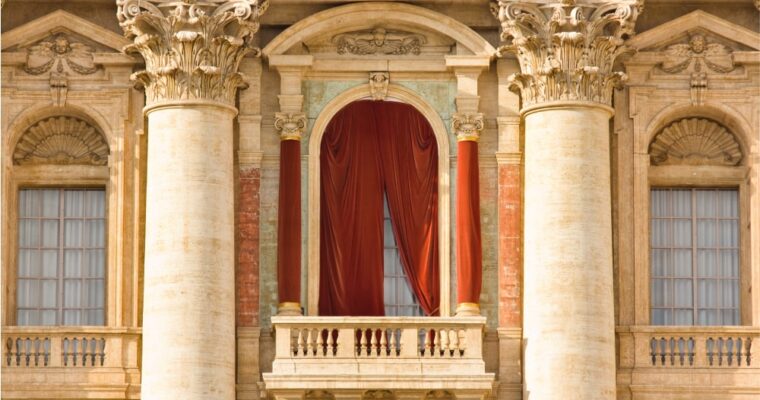
It is the moment when a man, dressed in white, steps out onto the balcony of St. Peter’s Basilica—and the entire world holds its breath. A new pontificate begins. And with it, a new chapter in the history of the Church.


Jubilee of Youth 2025: Dates and Full Programme

Jubilee of Youth 2025: Dates and Full Programme

Contents1 The Dates of the Jubilee of Youth 20252 World Youth Day3 Jubilee of Youth Programme Jubilee of Youth 2025: A Week Dedicated to the Pilgrims of Hope Who Will Change the World As summer takes hold, making our days increasingly sweltering, Rome is preparing…

Via Francigena: Among the Oldest Pilgrimage Routes

Via Francigena: Among the Oldest Pilgrimage Routes

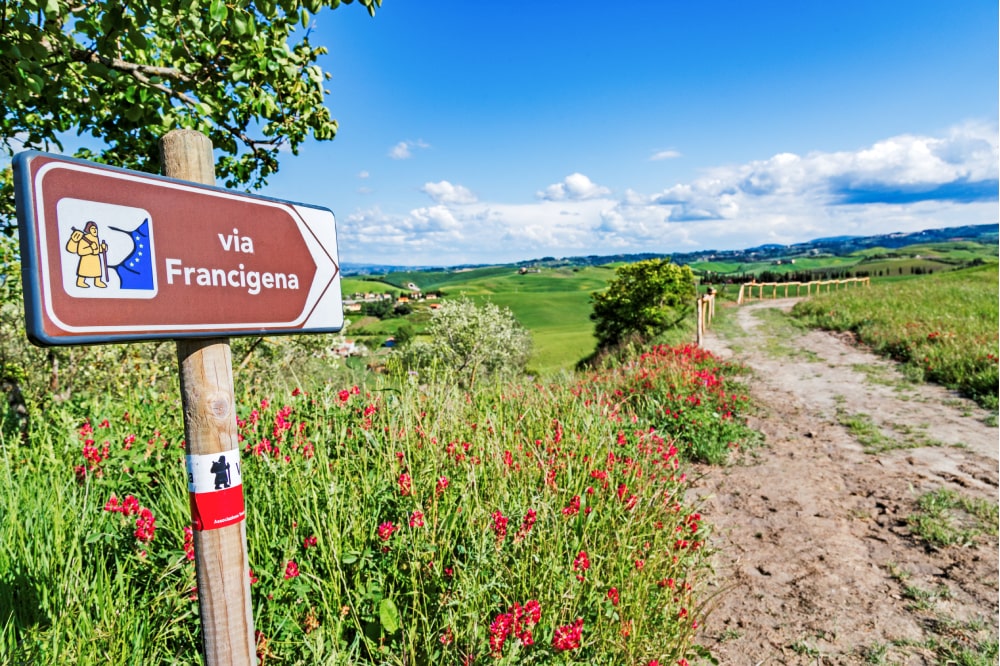
Contents1 What is the Via Francigena2 Sigeric’s Itinerary3 Via Francigena: the stops in Italy4 Pilgrim Passport From Canterbury to Puglia stretches a road travelled for centuries by people in search of God and of themselves. This is the Via Francigena. Most of us have probably…

The Functions of the Dicastery for the Causes of Saints

The Functions of the Dicastery for the Causes of Saints

What is the Dicastery for the Causes of Saints, and what does it do? This is the department of the Roman Curia responsible for overseeing the processes of beatification and canonisation.

The world is changing at an increasingly rapid pace, and the Church, too, adapts in response, reshaping its internal structures to meet the ever-evolving and urgent demands of modernity. The pontificate of Pope Francis has, for instance, led to the creation of 16 Dicasteries that manage various bureaucratic as well as religious aspects of the Roman Curia. Until recently, the term Dicastery referred generally to all bodies within the Curia. However, with the apostolic constitution Praedicate Evangelium, issued on 19 March 2022, the various Dicasteries became clearly defined institutions which, although part of the Curia, now follow different regulations. One such institution is the Dicastery for the Causes of Saints (Latin: Dicasterium de Causis Sanctorum).

The Congregation for the Causes of Saints

In fact, a congregation for the causes of saints has existed for centuries, albeit under different names. Its evolution runs parallel to the promulgation of apostolic constitutions – the formal decrees issued by the Popes throughout history.

Pope Sixtus V, in 1588, with the constitution Immensa Aeterni Dei, established the Congregation of Rites (Congregatio pro Sacri Ritibus et Caeremoniis), which was responsible within the Curia for overseeing all aspects of liturgical worship, as well as the causes of canonisation in the Catholic Church and the organisation of solemn ceremonies.

In 1969, Pope Paul VI restructured the longstanding institution with the constitution Sacra Rituum Congregatio, dividing the old Congregation of Rites into two distinct bodies: the Congregation for the Causes of Saints and the Congregation for Divine Worship and the Discipline of the Sacraments.

The 1988 constitution Pastor Bonus, under Pope John Paul II, gave the Congregation for the Causes of Saints its modern form, while the 2022 apostolic constitution Praedicate Evangelium, promulgated by Pope Francis, retained the same structure but changed its name to the Dicastery for the Causes of Saints.

Process of Sanctification

Read more:

How Does One Become a Saint? Explaining the Process of Sanctification
The process of sanctification consists of various stages and unfolds over…

What Does the Dicastery for the Causes of Saints Do?

In simple terms, it handles all matters related to the process of beatification and canonisation for individuals who are recognised for their holiness of life. These persons may be given the title Servant of God after their death, and later possibly Venerable, Blessed, and Saint.

The Dicastery is also responsible for awarding the title Doctor of the Church to those saints whose lives and works have been particularly distinguished by theological insight, the dissemination of Christian teachings, and spiritual enlightenment. The Dicastery evaluates whether a saint should receive this title, after consulting the Dicastery for the Doctrine of the Faith, which must confirm the eminence of the saint’s doctrine (Art. 102).

In addition, the Dicastery must verify the authenticity of relics, bodily remains, and personal effects believed to belong to a saint. It establishes the canonical procedure to verify and declare the authenticity of sacred relics, and ensures their preservation (Art. 101).

The Difference Between Venerable, Blessed, and Saint

As mentioned, the title Servant of God is the first step in the canonisation process. A person may later be declared Venerable if the Dicastery determines they demonstrated exceptional heroism in the practice of Christian virtues or suffered martyrdom for their faith.

Saints Moderns

Read more:

Modern Saints: The Canonizations by Pope Francis in Recent Years
Blessed saints are key figures in the history of the Catholic Church…

What is the difference between Venerable, Blessed, and Saint?

Once declared Venerable, the investigation continues, involving careful examination of documents and, where possible, testimonies from those who knew the person. If a miracle is attributed to the Venerable’s intercession – an event considered to be of divine origin – they may then be beatified and given the title Blessed.

The title Saint is reserved for those Blessed individuals to whom a second miracle is attributed.

The Process of Beatification and Canonisation

Through Beatification, the Church formally acknowledges that a deceased person has entered Heaven. This recognition, based on their earthly virtues, confers upon them the ability to intercede with God on behalf of the faithful. The beatification process may take varying lengths of time: for example, Pope John Paul II (Wojtyła) was beatified in just six years, while Pope John XXIII’s cause took thirty-seven years. A Blessed person may be venerated only in specific regions or by certain groups of devoted followers.

However, not all the Blessed are canonised Saints. Canonisation is the more rigorous process by which the Church not only confirms that the individual is in Heaven, but also allows for universal veneration as a Saint. This process can take many years and, as mentioned, requires the recognition of two miracles.

Over the centuries, the Dicastery for the Causes of Saints – in all its various forms – has always had to evaluate alleged miracles not only from a spiritual but also from a medical-scientific perspective. Even in the Middle Ages, specially appointed Medical Experts were tasked with this responsibility. In the 18th century, a formal register was created for them.

In 1948, Pope Pius XII established a Commission of Doctors and a Medical Council. In 1959, Pope John XXIII merged these into the Medical Board, which remains active to this day.

The official proclamation of a new Saint is ultimately the responsibility of the Pope, who issues it with a formal papal decree.

Recognized Miracles by the Church

Read more:

Recognized Miracles by the Church: All the Healings and Extraordinary Events
What are the miracles recognized by the Church, and…

Jubilee of Priests 2025: Information and Event Programme

Jubilee of Priests 2025: Information and Event Programme

Jubilee of Priests 2025: When the Church Rediscovers Itself and Begins to Walk Again There comes a moment in the life of a believing man when the heart feels the need to return to the source. When the voice becomes prayer, silence becomes listening, and…

The 7 Gifts of the Holy Spirit: What They Are and Their Meaning

The 7 Gifts of the Holy Spirit: What They Are and Their Meaning

Contents1 What are the seven gifts of the Holy Spirit?2 Why are there seven gifts of the Holy Spirit?3 When are the gifts of the Holy Spirit received? The gifts of the Holy Spirit make a person receptive to divine inspiration and define their relationship…

Consistory of Cardinals: What It Is and How It Works

Consistory of Cardinals: What It Is and How It Works

The Consistory is a gathering of cardinals around the Pope to make important decisions. But how has it evolved throughout history, and how does one become a cardinal?

The word Consistory derives from the Latin consistorium, already used in ancient Rome to denote the emperor’s private council, made up of his closest advisers, and known as the sacrum consistorium – the “sacred college”. The Catholic Church adopted the concept of the Consistory to define a formal assembly of the College of Cardinals, that is, all cardinals of the Catholic Church, including both electors and non-electors. The Consistory is a key moment for the Church: it is the occasion for making major decisions, most notably the appointment of new cardinals, but also for dialogue and debate on issues of global significance. Causes for canonisation are also discussed during the Consistory. The cardinals who must elect a new Pope, however, gather in what is called the Conclave.

Modern Saints

Read more:

Modern Saints: The Canonizations by Pope Francis in Recent Years
Blessed saints are key figures in the history of the Catholic Church…

In the medieval period, Consistories were held frequently. The Pope would summon them whenever an important decision had to be made, in order to discuss the matter with the cardinals—just as the emperor did with his sacred college. We must remember that at that time, the Pope held both spiritual and temporal power. Innocent III, who was Pope from 1198 to 1216, is said to have called a Consistory at least three times a week!

Later, around the 16th century, the Roman Congregations were established under Pope Sixtus V as part of a broader plan to restructure the Curia. These were divisions of cardinals into specific departments (or dicasteries) to assist the Pope in various aspects of governance and spiritual administration. The Church was experiencing a turbulent era. The Western Schism and later the Protestant Reformation had both undermined its authority and questioned its power. In an effort to consolidate his role, the Pope created these dicasteries to handle administrative matters, drawing on the College of Cardinals for their membership. Initially intended as temporary bodies, the Congregations later became permanent institutions, always directly overseen by the Pope.

It was with Pope Paul VI’s reform in 1969 that the Consistory became the occasion for the appointment of new cardinals, investing the meeting with a new sacred character and transforming it from a ‘political’ event into a liturgical rite. Until the Second Vatican Council, the election of new cardinals required three different consistories: the secret consistory, during which the Pope listed the names of the new cardinals; the public consistory, when they were given the red biretta as a sign of their cardinalatial dignity; and finally the imposition of the galero, the cardinal’s hat.

Benedict XVI shared his Pontificate with the cardinals, calling a Consistory each time an important decision had to be made, including his historic resignation from the Papal throne.

What Does Consistory Mean?

The word Consistory means assembly or council. In Latin, consistĕre means “to stand”, which is exactly what the members of the sacred college would do in the emperor’s presence, while he remained seated on his throne.

Ordinary and Extraordinary Consistories

Depending on whether the consistory involves only cardinals residing in Rome or all cardinals worldwide, it is classified as either ordinary or extraordinary. This distinction has existed since 1983, established by the new Code of Canon Law. Previously, consistories could be secret, public, or semi-public.

The Pope convenes the Extraordinary Consistory, involving all cardinals, only on special occasions, whereas the Ordinary Consistory—which is also public and open to other clergy and even laypeople—is more frequent and is used by the Pontiff to address more routine matters or to proclaim solemn acts such as a confirmed canonisation.

Who Can Be Appointed Cardinal?

The Consistory is composed of cardinals, the highest-ranking members of the Catholic hierarchy, second only to the Pope, who alone has the authority to appoint them. In turn, it is the cardinals who elect the new Pope after the death of his predecessor. The position is governed by Canon Law and is not considered to be of divine origin. Cardinals also hold the most important roles within the Roman Curia.

In the past, becoming a cardinal was tied to the level of ordination. There were thus cardinal deacons, cardinal priests, and cardinal bishops. In the Middle Ages and up to 1903, tradition required that cardinals be of noble or bourgeois social origin. Pope Leo XIII decreed that anyone could aspire to the role, regardless of social class.

It was Pope John XXIII in 1962 who decided that, in order to be appointed a cardinal, one must first be consecrated as a bishop. In practice, to be elected cardinal, one must have already been a bishop and served in lower roles for at least 10 years. There may also be Cardinal Deacons—officials of the Roman Curia or priests created cardinals at a very advanced age—or Cardinal Priests, who were historically assigned to the care of Rome’s oldest churches.

Thanks to special dispensations, John Paul II, Benedict XVI, and Pope Francis have all appointed some priests as cardinals without first consecrating them as bishops. Also under John XXIII, cardinals were stripped of any governing power over the church or diocese to which they were assigned, both in terms of property administration and discipline. These duties are entrusted to parish priests and diocesan bishops.

But what is the difference between a bishop and a cardinal? As we have seen, a cardinal must first have been a bishop, whereas not all bishops become cardinals. Bishops wear purple and are addressed as “Monsignor”, while cardinals wear scarlet red and are addressed as “Eminence”. Even today, a cardinal functions as an ecclesiastical official, an adviser to the Pope, while the bishop is focused on pastoral life and the diocese entrusted to him.