Author: Redazione

Prayer rings: a gift made with faith and love

Prayer rings: a gift made with faith and love

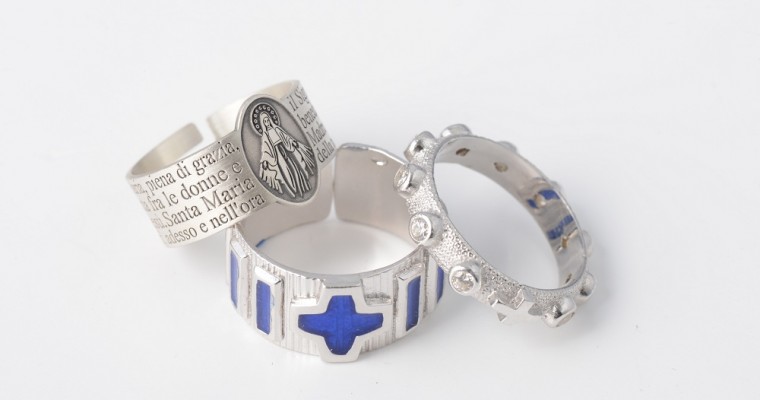
Among the sacred objects that can be worn, prayer rings deserve a special mention. The symbolism of the ring is complex and has its roots in ancient traditions, drawn from various cultures and civilizations. It seems that rings have been widespread since the Bronze Age,…
Electric candles: when a cult loses its sacredness

Electric candles: when a cult loses its sacredness

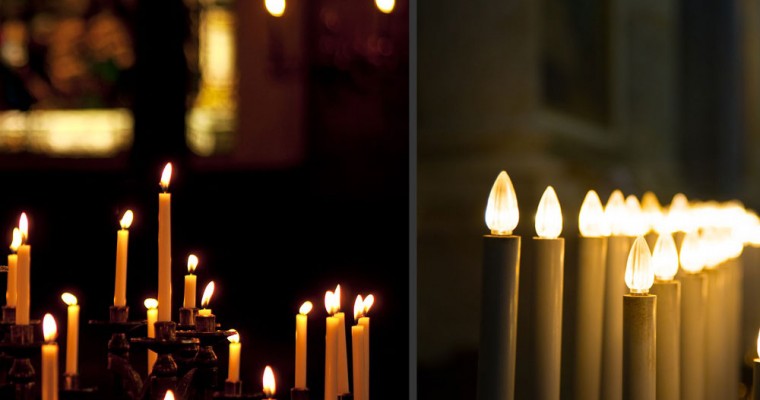
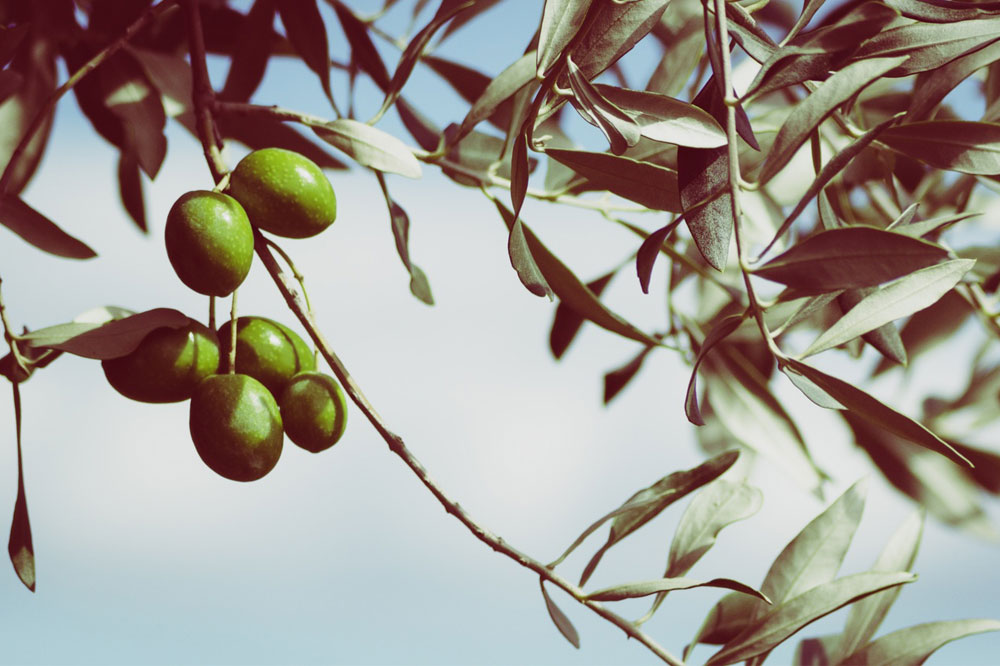
When we think of a church, the first image that is formed in our mind is probably that of a known religious building, with a bell tower, the Cathedral of our city, or perhaps a place of worship that is particularly dear to us for…

Trees and plants in the Christian tradition

Trees and plants in the Christian tradition

In ancient times, the relationship between man and nature was much closer than itis today. Everyday life was inextricably linked to the alternation of the seasons, atmospheric precipitations, excessive heat, or excessive cold. Our ancestors certainly did not live an easy existence, victims of a world too big and insidious, for them, too difficult to subject, to control. The comforts and security that we tend to take for granted, the effective drugs against diseases that are trivial for us, but which once claimed thousands of victims, the services available today for everyone, are conquests that have arrived in a relatively long time short, for the history of mankind, infinitesimal in the life of our planet.

Now we want to take a step back, when man lived, willy-nilly, more in close contact with the environment around him, and his survival depended exclusively on how he would have been able to take advantage of the few resources made available to him, to feed, cover, protect yourself.

In this world the existence of man depended very largely on trees and plants. From these our ancestors drew nourishment, in the form of berries and fruits, timber to build huts, houses, palisades to defend themselves, firewood to illuminate the night and keep warm, but also precious distillates and remedies to cure diseases.

Precious allies, trees, faithful friends, but also mysterious, silent sentinels and, perhaps, guardians of ancestral knowledge. So they had to consider them as ancient men, because since the dawn of time the trees have been given great powers and a role of communication between the various levels of existence. In fact their roots sank in the ground, their trunks grew robust and lush on the surface, and their tops soared towards the sky, sometimes getting lost in the clouds. It is not difficult to imagine how, in the minds of our ancestors, this prodigious development coincided with the ability to connect the world of the Underworld, that of Men and that of the Gods.

Not only that, but often the trees were assimilated directly to the deities. There is no religion of the past that does not contemplate myths about trees. For example, the ancient Egyptians believed that the goddess Nut shed the water of immortality on the soul of the dead from a Sycamore tree, while for the Scandinavians the birth of the universe itself was linked to that of Yggdrasill, an immense ash tree. , which was rooted in the past, present and future, and embraced with its foliage all the earth and sky. For the Sioux, a large tree was at the center of the Circle of the World.

The Greek myths are then very rich in references to the trees: think of the golden apples in the garden of the Hesperides, which gave immortality, to the olive tree sacred to Athena, to the laurel and cypress dear to Apollo, and so on.

Religious and esoteric symbols are often inspired by trees or parts of trees. The tree of life is a universal image, a powerful archetype that takes on infinite forms. The ancient Egyptians often portrayed onions in the hieroglyphs and in the pharaohs’ tombs: for them they were very effective to pass through the afterlife. The cypress, born from the metamorphosis of the young Ciparisso by Apollo, has always been a symbol of mourning and eternity.

Even the Christian tradition has attached great importance to plants.

Ancient and New Testament contain numerous mentions to plants, flowers and shrubs. Others have been associated over time to the cult of Our Lady, of Jesus or of some saints. We want to examine those that seem to us more significant and interesting.

Spruce, Peccio (Picea abies)

It may seem trivial to want to start from the fir tree, what we all know as children as a Christmas tree, but it is not. Before becoming a symbol of Christendom, associated with the Resurrection ofChristmas tree red Christ, like all evergreens, the Fir was a tree that recalled the idea of ​​longevity and immortality. In antiquity the Fir was used for sacrificial fires and divination. The Celts associated it with fertility, the Greeks with hope. The diffusion of the Christmas trees, partly out of Christian symbolism, it has nevertheless linked it to a sense of warmth, joy and family that goes well with the Christmas tradition. The Christmas Tree recalls the beginning of the annual cycle and therefore of life. The spruce instead it represents Christ in his human incarnation, as a symbol of sacrifice, death and eternal life.

Acacia, Robinia (Robinia pseudoacacia)

The wood of Acacia is very hard and resistant, which is why the various religions have attributed to this plant the idea of ​​strength, of vigor. Among the Egyptians and the Chinese it was a tree linked to knowledge. In Egyptian culture in particular Acacia was the initiatory tree: it was believed that many Egyptian deities were born under the Acacias, and the tree itself was a symbol of the transition from ignorance to knowledge. In the biblical context it is worth remembering that the Noah’s Ark was built entirely from the hard acacia wood.

Judea tree (Cercis siliquastrum)

Originally from Israel, this tree is also called the “Tree of Judah”. According to the Christian tradition it would be the tree to which Judas hanged himself after betraying Jesus. The flowers that bloom directly from the trunk symbolize the tears of Christ, while their deep pink color represents the shame of Judas for his frightful crime.

AloeAloe (Aloe vera)

Known since ancient times for its extraordinary pharmaceutical properties, Aloe was used by the Egyptians to embalm corpses. Even the body of Jesus should have followed the same destiny. In fact it is said that Nicodemus brought the Aloe to perfume the sheet and, presumably, to embalm it. For many ancient cultures, Aloe was a symbol of eternal life, of immortality.

Angelica

It’s very sweet scent has earned it the name of “grass of the angels”, or even “grass of the archangels”, since Raffaele himself would have made known his exceptional healing powers to men.

Effective against many diseases and disorders, in ancient times it was placed around the necks of children to protect them from harm.

Aquilegia (Aquilegia vulgaris)

Aquilegia is also known as the “Gloves of our Lady”. It owes this original name to its bizarre shape: in fact its flowers are formed by five horns with petals that recall the fingers of one hand, the hand of the Madonna, in fact.

Mary’s thistle (Silybum marianum)

Typical of warm and sunny areas, the cardo di Maria is linked to the legend that, during the flight from Judea to Egypt to escape Herod, Maria hid the little Jesus under a thistle bush to feed him. A little of his milk fell on the plant, whose leaves have since then white ribs.

Carrubo (Ceratonia siliqua)

Together with the Cedar, Aloe and Fico, the Carob tree was widespread in Galilee. It does not have a particular symbolic meaning, but it is remembered because it appears in the parable of the Prodigal Son.

Cedar (Cedrus)

Originally from China and India, it was the first citrus to be grown in Israel. Tradition has it that the temple of Jerusalem, the palace of Solomon and the Labyrinth of Minos, had majestic columnspalm for nativity scene in resin 80cm of Cedar of Lebanon supporting the ceilings.
During the Feast of Tabernacles the Jews used its foliage, along with palm branches and myrtle branches. Around the world, palm is a type of tree that is always included in the cribs. There palm for nativity scene symbolizes the connection between man and the mysteries of life. It also constitutes a constant during the holy week period. The Jews use cedar fruits during their celebrations. Cedar is a tree that also symbolizes knowledge.

Onion (Allium cepa)

If for the Egyptians the onion was a pass for the afterlife and for the Greeks an emblem of valour and courage linked to the God of War Ares, in the Bible it is a symbol of sin and falsity. The pain and discomfort caused to the eyes by the onion recall the guilt of those who commit sin, while the many layers of which it is composed represent deception and deception.

Fig tree (Ficus)

The Fico recurs as a symbolic tree in many religions and cultures, from Islam to Christianity and Judaism, but also in Hinduism. He was already known and appreciated in ancient Greece, where he was associated with Dionysus and Athena. It is mentioned both in the Old and in the New Testament. In fact it was one of the seven plants of the Promised Land. In all civilizations it has always represented roughly the same values: abundance, fecundity, prosperity, earthly and otherworldly happiness, but also strength, light and knowledge.

Wheat (Durum wheat)

WheatWheat is one of the most cited plants in the Bible. Its importance is obvious, given that the flour obtained from it was at the base of the feeding of the territories that act as theatre to the events of the Bible, consumed in the form of semolina, bread, focaccia, etc. In ancient civilizations, wheat was a symbol of rebirth and the alternation of the seasons. In fact, the cereal remains buried under the ground and then born in spring, just as the soul passes from shadow to light. Among the Egyptians he was associated with Osiris, among the Greeks at Demeter.
In the Christian context, Jesus is associated with the seed of wheat that dies in the earth to be reborn, to the ear cornered by men, to the grains sifted. From all this suffering, from all this violence, it is born in nourishment that allows us to live. As Jesus died for all of us, his example, his words, his memory are seeds that fall and take root in the fertile earth of our hearts, to produce new good fruits.

Lily (Lilium)

Symbol of beauty and purity par excellence, but also of virginity and fecundity, the Lily is a beautiful flower, with an intoxicating scent.

For the Jews it was a symbol of beauty and fertility, for Christians it is associated with the concepts of sanctity and resurrection. In Christian iconography it is associated with the Virgin, and St. Joseph is often represented with a stick from which lilies bloom.

Almond (Prunus dulcis)

Being the first tree to blossom with the beautiful season, it has been considered by many ancient civilizations as a symbol of fertility, rebirth and resurrection. In the Bible it is often cited as a symbol of God’s promise of salvation to the chosen people. From the stick of Aronne sprouted white flowers that gave an almond fruit. Instead, the Christian tradition associates it with the Virgin, once virgin and fruitful.

Apple tree (Malus domestica)

The apple tree occurs in many mythological traditions, being a very diffused tree. In Greek mythology the apple fruit is the protagonist of many myths, from that of the golden apples kept in the garden of the Hesperides, which gave immortality, to the pommel of discord, disputed between three goddesses and donated by Paride to Elena, which triggered the Trojan War. In Scandinavian mythology, apples were the food of the gods.

In the Jewish and Christian context, as we all know, the apple was the forbidden fruit, which brought knowledge to those who tasted it, and which determined the expulsion of Adam and Eve from the earthly Paradise.

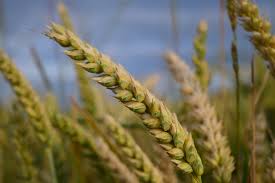
Olive tree, or Olive tree (Olea europaea)

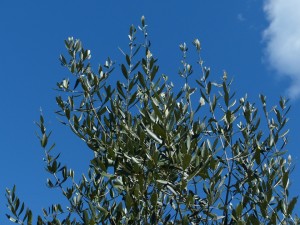
Considered by many peoples and civilizations of the past a sacred tree and a symbol of peace. In ancient Greece there was the leader of the winning athletes and it was dear to Athena, who hadOlive tree given it to the men. In honour of the goddess, the Ulivo also became a symbol of chastity.
In Jewish culture it was instead a symbol of justice and wisdom. When the Flood ended, Noah sent a dove in recognition, and it returned with a branch of Olive tree in its beak, a sign that the wrath of God had subsided and the men had been forgiven.

On the feast of the palms, in the Christian context, the olive tree represents Jesus who, dying on the cross and sacrificing himself, becomes a symbol of reconciliation between God and men. Moreover, Jesus was welcomed to Jerusalem by a crowd that waved palm fronds and branches of Olivo, and spent his last night in the Garden of Olives.

Olive fruits also have a strong religious value: olive oil is at the base of the Chrism, with here the celebrants baptize the new born, mark the boys who receive the Confirmation, consecrate the new priests and impart the extreme unction.

Passiflora

Passiflora, or “flower of the Passion” recalls the Passion of Christ, whose emblem is the same: the pistil has three stigmata that symbolize the nails of the cross, five specks that recall the five wounds of Jesus, while the corolla presents 72 filaments like 72 were the thorns of the crown on the head of Our Lord, and twelve petals as twelve were the apostles. Again, its leaves are sharp, like spearheads and within the flower there are 30 rounded slits, like the 30 denarius for which Judas betrayed Jesus.

Buttercup (Ranunculus acris)

Symbol of beauty and wealth, but also of their transience, being a very beautiful flower, but that lasts very little. It often occurs in the Bible. According to tradition, Jesus transformed the stars into Ranuncoli to make a gift to his mother, Our Lady, which is why these flowers are used to decorate the altars during Holy Week.

The hour of Mercy

The hour of Mercy

Mercy This is a word that often comes up when we talk about Our Lord. Mercy: origin and meaning The term derives from the Latin misereor (I have mercy) and cor -cordis (heart), but conceptually it has always existed, in the context of the Christian…

The various meanings of liturgical clothing

The various meanings of liturgical clothing

The term liturgical clothes, or  liturgical vestments, generally indicates the clothing used by priests of various ranks in the context of religious ceremonies and festivals. These clothes differ in various characteristics and, in particular, vary in colour, depending on the time of year and the…

The apparitions of Our Lady of Guadaloupe

The apparitions of Our Lady of Guadaloupe

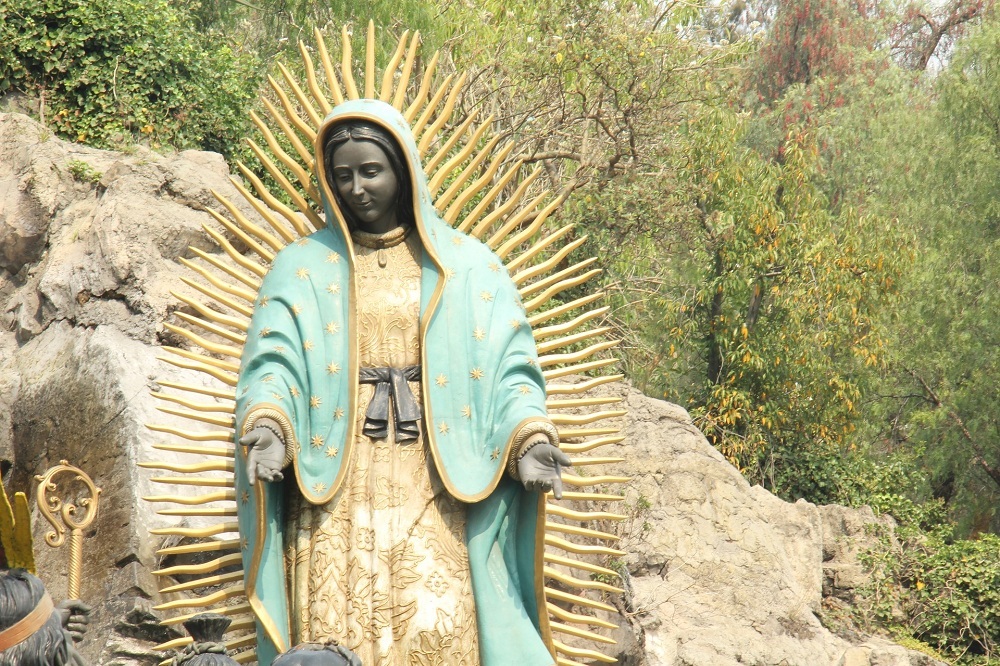
By the Apparitions of Guadalupe, we refer to the four appearances of Our Lady to Juan Diego Cuauhtlatoatzin, an Aztec convert to Christianity. These apparitions took place within a few days of each other in December 1531, on Tepeyac hill, near Mexico City. The definition Apparitions of Guadalupe comes from the Monastery of Guadalupe, and perhaps also from the Aztec expression Coatlaxopeuh, which means “she who crushes the serpent” (see Genesis 3: 14-15), which, when transliterated into Spanish refers to the Madonna. In any event, Our Lady, and in particular, the Statues of the Virgen of Guadaloupe, have since become a symbol of the veneration of all Spanish-speaking countries, and of South America in particular. Its appearance makes it particularly dear to the people who venerate it: in fact it is represented as a young dark-skinned girl, with features that resemble mestizo girls, who share common features with the native Indians and the current inhabitants of Mexico. The faithful turn to her as ”Virgen Morenita”.

With over 20 million pilgrims visiting it every year, the Abbey of Our Lady of Guadaloupe, which is built at the place the apparitions took place, is one of the most visited places of worship in the world, attracting even more pilgrims than Lourdes and Fatima, and is the first in America. The Abbey, which stands where there was once a small chapel, which then became a Sanctuary, is home to the cloak of Juan Diego Cuauhtlatoatzin; this bears the image of the Virgin and is the object of a veneration comparable only to that dedicated to the Holy Shroud. The Madonna of Guadaloupe has a surprising devotional following, not only because of the many miraculous events that have characterised it over the centuries, but also because of the amazing properties of Juan Diego Cuauhtlatoatzin’s cloak, with its mysterious imprinted image, the miraculous origins of which countless scientific studies and increasingly accurate examinations have been unable to disprove to this day.

The fact that Mary Most Holy showed herself surrounded by flowers and celestial music, which promised salvation and protection to all people who speak nāhuatl, the uto-Aztec language spoken in Mexico, was the reason for the immediate spread of this cult. To the indigenous population of South America, the Madonna of Guadalupe has come to represent a sort of element of continuity with the ancient gods, making the transition from paganism to the new religion easier and more comprehensible for the native Mexicans. In just a few years, especially thanks to the dark-skinned Virgin with her Latino face, almost nine million indigenous people have accepted the faith and converted. So the history and cult around this Madonna have served as a keystone for the spread of Christianity in a country, which for so long has been devastated by violence, with too much innocent blood spilled by the hands of those who presented themselves under an effigy of the crucifix to justify their prevarications. Our Lady of Guadalupe has succeeded where the arrogance of the conquistadors failed.
On 12 October, 1895, Pope Leo XIII declared the Coronation Day of the miraculous image of Our Lady of Guadalupe. Pope John Paul II defined this dark-skinned Madonna as the “Mother of the two Americas”.

The apparitions of Our Lady of Guadaloupe

The apparitions of Our Lady of Guadalupe took place ten years after the fall of the Aztec empire, and eleven years after the arrival of the conquistadores. The political and religious climate was not at its best. The new rulers of those distant lands mistreated the natives, and even made life difficult for missionaries who had set out to evangelise them. The indigenous people, accustomed for centuries to worshipping deities who claimed tributes of blood, struggled to understand the true meaning of the Gospel message, and, as accomplices to the violence and abuse they were subjected to daily by their new masters, lived in the terror of an imminent end of the world.

In this bloody scenario dominated by fear, the apparitions that involved Juan Diego turned out to be a glimmer of light, a message of hope in the most gloomy despair.

The Madonna appeared for the first time in India on 9 December, 1531, in the guise of a young mestiza woman, wrapped in clothes that shone like the sun. After presenting herself as the Virgin Mary, she ordered Juan Diego to go to the Bishop and tell him that he should build a church on the hill.

After the first disbelieving reaction from the Bishop, Our Lady once again appeared to Juan Diego, encouraging him to go back the next day to talk to him and convince him.  The Bishop still showed himself as a sceptic and demanded some sort of sign. The Madonna appeared for the third time as a native, promising to appear to him the next day, but Juan Diego could not visit the hill in those days, because he had to help a sick uncle.

He returned there on 12 December, while he went to look for a priest who gave his uncle’s final unction at the end of his life, ashamed of having missed the meeting with the Virgin. In fear of meeting her, he made a wide circle, but Maria appeared to him for the fourth and last time, on a golden cloud. He reassured him about his uncle’s health and told him to get on the hill, pick some flowers and bring them to the Bishop. Juan Diego obeyed, and climbed the hill, which at that time was barren and barren, but he found it covered with beautiful roses of Castile. He collected so many that he had to undo the tilmàtli, a cloak composed of two sheets of agave fiber sewn together, and use it to contain them all. With his load on his shoulders he went to the Bishop and in front of him and to other people he untied his cloak. But when the flowers were spilled, the image of the Blessed Virgin appeared imprinted on the rough fabric.

From that moment no one doubted the words of Juan Diego anymore. A chapel was immediately erected in the place indicated by him, and inside was placed the miraculous mantle. It is still kept in the Abbey that now stands in place of the first, humble construction, protected in a glass case and venerated as the most precious of relics. It is said that on December 26, 1531, while a procession wore the cloak in the newly built chapel, a young dancer killed by an arrow was placed at the foot of the tilmatli and immediately resurrected.

The cloak of Juan Diego

The tilmàtli of Juan Diego has always been kept in the Abbey of Our Lady of Guadalupe. Even when, in 1921, a terrorist detonated a bomb beneath the altar that hosted his garment, the cloak emerged unscathed.

The tilmàtli, or Tilma, is a rough cape, formed from two sheets of agave fibre fabric sewn together with a white thread. The image of the Virgin that is imprinted onto it is 143 centimetres high. The Madonna has dark skin, like an Indios – the features are neither European nor native Mexican, but an equal mix. She is wrapped in a pink dress with flowers, and in a sea-blue veil of golden stars that covers her head and descends to the ground. She stands on a golden moon and twelve rays of sunlight frame her face.

As one might expect, the tilma of Juan Diego has been subjected to countless scientific examinations over the years since 1666.

Since then scholars have asserted that such a clear image could not have been painted in oil or tempera on such a rough and untreated fabric, and that even if it was remotely possible, the passage of time would have irreparably damaged the painting.

In 1751, a new inspection, conducted by seven painters, reached the same conclusions: the image of Our Lady of Guadalupe could not be a painting, because the colours were entirely incorporated into the surface and their conservation would have been impossible under any circumstances. So the mantle of Juan Diego is considered to be acheropita , “not made by human hands”, like the Shroud that’s preserved in Turin, which represents the image of Jesus imprinted on the sheet in which He was wrapped after being taken down from the Cross.

The tilma has been the subject of many other prodigious events.

In 1791, some workers were cleaning the frame that it was mounted on, and inadvertently left a few drops of an aqueous solution of 50% nitric acid on the fabric, which should have irreparably damaged both the colours and the fibres of the fabric. Instead of which, the liquidò evaporated without leaving any trace, apart from a slight halo which subsequently faded over time.

An in-depth analysis of the fabric that was performed in 1936 reaffirmed there was no trace of dyes on it of any kind, as if, indeed, the image had not been painted by human hands. This was also indicated by the fact that, over the centuries, painted figures have been added to the tilma, but have faded and been erased, whilst the original image remains clear and perfect.

In 1929, amongst other things, it was discovered that the figures of Juan Diego and other witnesses to the miracle of the roses were reflected in Mary’s pupils. Between 1956 and 1958, new examinations were performed with more up to date and sophisticated machinery, and showed that these figures could not have been painted, because their angles could not be reproduced, even by photography. Studies of the eyes of Our Lady of Guadalupe have continued over the years,  and are still going on to this day, enriching the history of these prodigious apparitions with ever more significant and convincing details.

The cult of Archangel St. Michael

The cult of Archangel St. Michael

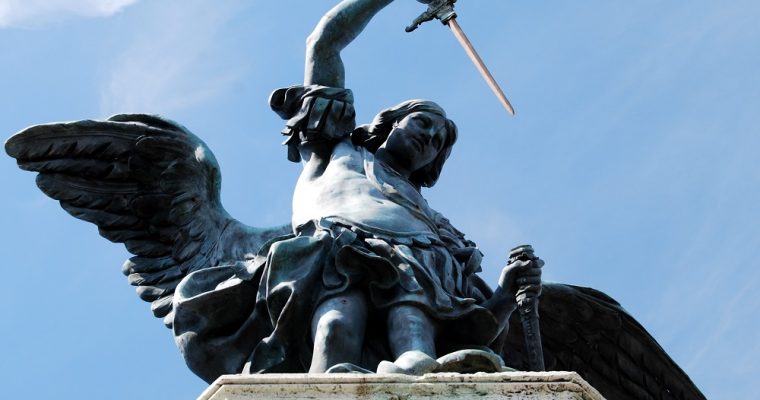
Contents1 History of Archangel St. Michael2  The sacred lay line of Archangel St. Michael3 Prayers to the Archangel St. Michael4 Representations of St. Michael the Archangel in art and the collective imagination St. Michael the Archangel is one of the three archangels recognized by Christianity,…

The roles of Altar Servers

The roles of Altar Servers

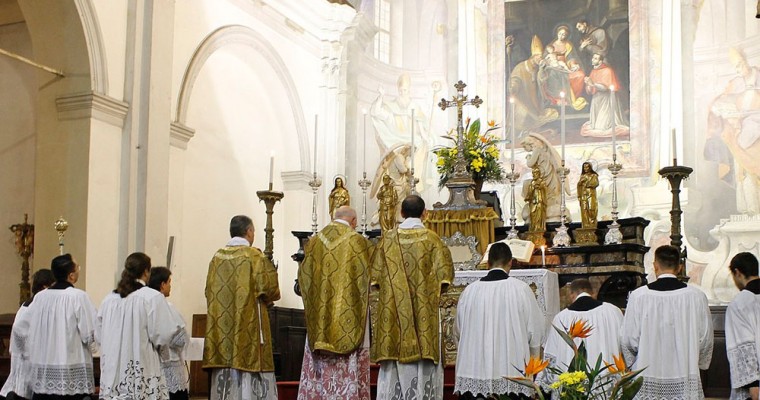
Altar Servers, more commonly known as altar boys, are children or teenagers who assist a priest during Mass. Their name comes from the Latin word “ministrare” which means ‘’to serve’’. Their role is recognized by the Conciliar Constitution as an integral part of the liturgic…

Way of the Cross for children: how to tell your child about the 14 stations

Way of the Cross for children: how to tell your child about the 14 stations

It is not easy to explain certain things to a child. Not even for modern children, used to witnessing impressive scenes on television every day, bombarded on all sides by disturbing images, suggestions, media solicitations completely disrespectful of their age, the fragile condition of their psyche still so malleable. Indeed, seeing and knowing, albeit superficially, aspects of life that were hidden from their peers years ago, or at least that they came through mediated by the experience and filter of an adult, makes them even more exposed to error, confusion, existential uncertainty that characterizes our time.

In movies, even in cartoons, they see men hit with violence, killed by other men. For them it becomes normal, they can hardly give the right weight, the right dimension to death.

Via Crucis, a story of love

But how can you explain to a child the story of a man torn from the affection of his friends, his mother, dragged through an angry mob, to be subjected to the judgment of other men, completely unworthy to judge him, and then beaten, scourged, crowned with thorns, and finally nailed to a cross, amid the shouts of jubilation of an angry mob?

So it really seems the plot of a story of terror, or a fact of news recently happened, perhaps even in our country … Instead it is the story of the most beautiful Love that has ever been told, the story of a man who sacrificed himself for all other men, who did not hesitate to sacrifice himself to guarantee hope to his own executioners. It is the story of Jesus, naturally, and in particular of the Via Crucis, or Way of the Cross, his painful path along the road that led him to Mount Golgotha.

The Church recalls this devotional path since the XIII century. It is probable that the practice was born in the Franciscan context, but there are no certain sources. Certainly there was born of the need for the faithful to make a pilgrimage of faith and penance in the places that had seen the Passion of Jesus. Since it was not possible for everyone to go there, someone thought to make representations of the various episodes that marked the painful path and make them ‘stations’ along which pilgrims could stop and pray.

Progressively in the convents and in the churches began these paths, consisting of fourteen stations, plus a fifteenth with the Resurrection. Those who devote themselves to this devotional practice enjoyed the same indulgences granted to those who went to the Holy Land.

The Via Crucis stations are the following:Via Crucis stations

  1. Jesus is condemned to death
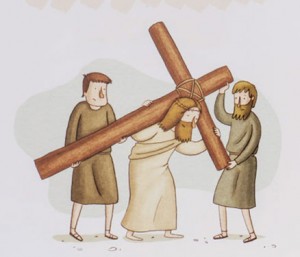
  2. Jesus is loaded with the cross
  3. For the first time, in
  4. Jesus meets his mother
  5. Jesus is helped to carry the cross by Simon of Cyrene
  6. Saint Veronica wipes the face of Jesus
  7. Jesus falls for the second time
  8. Jesus warns the women of Jerusalem
  9. Jesus falls for the third time
  10. Jesus is stripped of his clothes
  11. Jesus is nailed to the cross
  12. Jesus dies on the cross
  13. Jesus is deposed from the cross
  14. The body of Jesus is placed in the sepulchre
  15. (Jesus rises again)

But let’s get back to the initial problem: how do you explain the Via Crucis to children?

We could begin by explaining what Lent is, the period of forty days that precedes Easter, which serves to prepare us for this event that is so great and important for the life of each of us.

We will have to explain to them that Easter reminds us that Jesus died for the salvation of men, but who then rose, as he had promised, bringing joy and hope to everyone, and that every year we remember his death and his resurrection and all the love that he showed us.

In the name of this love he chose to let himself be mistreated by men like us who did not understand how important and precious he was.

We will then have to tell them that during every Friday of Lent we remember the pain of Jesus through the Via Crucis, that is the “way of the cross”, which recalls the path of Jesus through the streets of Jerusalem to Mount Golgotha, where he was killed.

The 14 stations of the Via Crucis

  1. Jesus is condemned to death

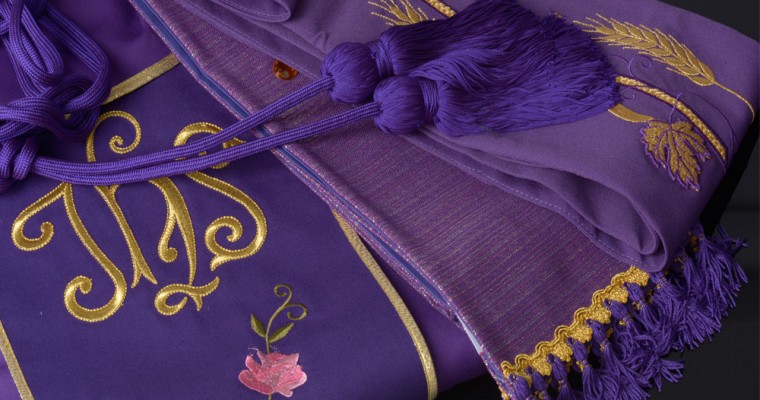
The soldiers brought Jesus before Pontius Pilate, who was the governor of that territory. Pilate, however, did not want to judge him, because it seemed to him that Jesus had done nothing wrong, and so he sent him to King Herod, who instead hated Jesus, because he proclaimed himself Messiah and King, and Herod did not like that there was another King to compete with him. So he teased Jesus, making him cover with a cloak those purple, which was the colour with which the sovereigns were dressed, in fact, and then sent him back to Pilate. But he was still undecided, and so he asked the crowd if they preferred to condemn Jesus or the bandit Barabbas to death, and the crowd chose to save Barabbas, even though he was a criminal.

  1. Jesus is loaded with the cross

tell your child about the 14 stationsJesus was stripped and the Roman soldiers put a heavy wooden cross on his shoulders, forcing him to carry it along the road, towards a mountain that rose just outside the city, Mount Golgotha. That was how those condemned to death were punished.

  1. For the first time, in

Jesus was weak and tired, and he could not support that heavy cross. In addition, the soldiers beat him and he was wounded. At one point he fell under the weight of the cross, but immediately got up, painfully, and resumed his journey.

  1. Jesus meets his mother

As Jesus walked carrying the cross, two wings of crowds crowded in his passage, insulting him and making fun of him. At one point in the crowd also appeared Mary, the mother of Jesus, who cried desperately to see what was happening, how much pain is suffering his son.

  1. Jesus is helped by the Cyrenian

Since Jesus was harder and harder to carry the cross, the soldiers forced a man to help him. His name was Simon the Cyrenian, and for a while he helped Jesus carrying the cross on his shoulders, but then he had to leave him alone again.

  1. Saint Veronica wipes the face of Jesus

A kind girl, Veronica, saw Jesus suffering so much, and while the soldiers were not looking he approached him and gently wiped his face with a cloth, collecting tears and sweat. Legend has it that the face of Jesus remained impressed on that cloth, as in a photograph.

  1. Jesus falls for the second time

Jesus fell a second time, more and more exhausted, more and more painful, but once again he got up, to move forward, towards his destiny. And all this just for our sakes.

  1. Jesus comforts women

Even though he was suffering so much, even though he was hurt and bleeding and could not take it anymore, Jesus still found the strength to console the women who, seeing him so battered, wept desperately. Even though he was so ill, it was he who strengthened them, encouraged them, put himself aside even in that terrible moment. Because when you love someone, you can forget your pain to make others feel better, even in the darkest moments.

  1. Jesus falls for the third time

Once again Jesus fell, amid the laughter of the crowd, and once again stood up, slowly, with the last remaining forces.

  1. Jesus is stripped of his clothes

Arrived near Golgotha, the soldiers completely stripped Jesus and played his poor clothes in the dice.

  1. Jesus is crucified

Jesus finally arrived at the top of Mount Golgotha. The soldiers made him lie on the cross and nailed his hands and feet to the wood. Jesus, instead of shouting and complaining, said, turning to God the Father: “Father, forgive them because they do not know what they do.” And it was true, because those foolish men who laughed seeing his pain had no idea what they were doing, who were killing the Son of God, who came to Earth only for our sake!

  1. Jesus dies on the cross

Exhausted by suffering, Jesus eventually died on the cross. Shortly before, however, he turned again to God the Father, asking him: “My God, my God, why have you forsaken me?” Now he was tired, desperate, upset by so much pain, so much ferocity by those who had come to save, and his heart, though big and strong, wavered for a moment. At three o’clock in the afternoon, while Jesus exhaled his last breath, the sky became black and the veil of the temple of Jerusalem tore with a sinister sound. As if the Earth itself was crying for that terrible death.

  1. Jesus is deposed from the cross

When evening came and the crowd was dispersed, a man named Joseph of Arimathea asked Pontius Pilate to take Jesus out of the cross. Pilate gave him permission, and so Joseph lifted Jesus, wrapped him lovingly in a sheet, and took care of his body torn by wounds.

  1. Jesus is placed in the sepulchre

Joseph of Arimathea took the body of Jesus into a sepulchre, placed it there and then closed the entrance with a large stone, as was customary.

  1. Jesus has risen

Three days after Jesus’ death, some women went to his grave to anoint his body, but they found it open, empty, and an angel sitting nearby told them that Jesus was resurrected and that they would no longer find him in that place of death.

General indications

Of course these are general indications.

The way in which the Way of the Cross can be explained to children also depends a lot on their age. There are many books suitable to help them understand this delicate and important ritual, and for the little ones too illustrated books that tell the Via Crucis, or videos and cartoons, in which the most scabrous and violent elements are left out or at least softened, and more emphasis is given to the goodness of Jesus, to his sacrifice of love.

In all cases it is important to approach as soon as possible the children to the Via Crucis, as well as to the Paschal Mystery, certainly the most precious and solemn for Christians.

Sacred or profane favours?

Sacred or profane favours?

Baptisms, Communions, Marriages: what do these three occasions have in common? We guess that the first thing that for many of you, the first thing that came to mind was: the favours. And it’s perfectly true. On the occasion of all these celebrations, it is traditional…

Catholic gifts for your child’s godfather and godmother

Catholic gifts for your child’s godfather and godmother

We have already discussed the importance of the figures of the Godfather and Godmother on the occasion of a Confirmation. Their role is really important, and not just on the occasion of the sacrament itself. The Godfather and Godmother for the Confirmation will have to remain…

The different uses of incense

The different uses of incense

Incense has always been linked to the idea of ​​the sacred, and the divine. Since the earliest times, its use has been attested in ancient civilizations, almost always for religious purposes. Their intense and aromatic scent was considered to be appreciated by the Gods, as it was by men, and the custom of burning the bark and wood of particularly scented plants has always been widespread.

Incense was burnt during religious celebrations, as well as in houses, to purify them and keep away evil spirits. Its aromatic vapours created a communication channel with the divine, and with the kingdom of the dead.

olibano incenses
Buy on Holyart:
Incenses display box 36 pcs – various fragrances

In addition to religious uses, incense was recognised very early on, particularly in Arab countries, as a precious and useful ingredient in the treatment of many diseases and discomforts.

Even in a Christian context, incense was immediately given enormous consideration. Just think – it appears among the gifts that the Magi brought to Jesus (in reality it appears twice, because Myrrh is nothing but another kind of incense). The Jews used it for fumigation, a practice that allowed them to approach God by burning incense and inhaling the fumes, and so Christians continued to use incense in the Churches, burning it during the ceremonies and sprinkling it onto the faithful, but also to disinfect rooms and purify the air.

It is worth discovering more about this ancient product, which is full of hidden virtues.

Where does incense come from?

The term “incense” generically refers to oleoresins produced by various plants from the Burseraceae family, originating mainly from the Arabian Peninsula and the Horn of Africa, an area located at the edge of the desert, composed mainly of earth and stones, which takes name of the “incense belt”.

In particular, the Boswellia sacra, from which it is obtained, produces the incense oliban, and Commyphora, from which the incense myrrh is produced. The bark of these plants is cut, and the resin that comes out from it is collected. Some plants secrete the resin directly, without needing to be cut. In both cases, the resin is then crystallized: this normally takes a month to harden sufficiently. The collection of resin can be carried out up to 12 times a year, which ensures a constant production to the men who dedicate themselves to it, in arid and rocky areas from which it is difficult to obtain other forms of sustenance. In fact, these plants are capable of growing, even in very barren and less fertile areas, and their leaves offer shade and nourishment to humans and animals. Indeed, too much water would be fatal for the plants that produce incense.

The incense road

The collection and trade in incense has spread since ancient times. All of the civilizations of the Mediterranean basin, as well as those of Asia Minor, and many more to the East, used it, and the demand was such as to give rise to a dense network for commercial traffic. The “Via dell’Incenso“, which has existed since Roman times, connected the Arabian Peninsula with the Mediterranean. The caravans that ran through it carried goods that came from India and the Far East across the sea. In addition to fabrics, precious metals, precious stones, rice, sugar and cereals, and countless other products, merchants brought incense, spices like pepper, nutmeg, cloves and cinnamon, and fragrant essences like sandalwood, musk and camphor. The latter often served as ingredients for pharmacopoeia and were also used in cosmetics.

The Assyrians, Egyptians, Chinese and Indians used incense for both medicinal and devotional purposes. In Egypt it was the basis for a particular type of Kajal, which was used not only to adorn the eyes, but to protect them from infections.

Immersing yourself in the smoke of incense helped combat joint pains and rheumatism, with a powerful anti-inflammatory action.

In India, Guggul incense was used as a remedy in Ayurvedic medicine, to promote sleep and to allay anxiety and nervousness. Also in the context of Ayurveda, incense was used to prepare ointments for sores and skin rashes. It was also burnt as an accompaniment for yoga and meditation.

Traditional Chinese medicine used the technique of fumigation with incense.

Wherever it was used, it was believed that incense purified the internal environment and at the same time kept diseases and evil spirits away. It helped concentration and meditation, allowing one to come into contact with one’s inner self and with the Divine.

How incense is used

How can we use incense in our homes? There are many types of incense on the market, in various forms, and it is not easy to navigate round them. Above all, we must ensure that the incense we buy is pure, and not cut with sand or chemical additives, which distort its quality.

The oldest and most original form used is resin beads.

The incense is burnt on charcoal, which can be lit directly with a lighter or a candle and then placed on a saucer with sand in it, or on a plate incenser. There are also terracotta incense burners, which are used to burn incense charcoals over which beads of incense are then poured. But a simple saucepan or a metal plate filled with sand is also good as a base for burning charcoals. The charcoals last about 40 min. and can be re-ignited.

Alternatively you can use a ‘bruciaresine’, a kind of tripod under which a candle is placed to heat crystals placed in the dish, turning them into aromatic smoke, in a similar way to diffusers for essential oils. Just a few grains of incense are needed at a time, to achieve a pleasant and effective diffusion.

Various types of incense

Besides olibano, or Franchincenso incence obtained from Boswellia sacra, there are different varieties of incense, that have been used in different eras according to their characteristics and properties.

gedda frankincense myrrh
Buy on Holyart:
Incense with Myrrh Fragrance

Let’s take a look at just a few:

Myrrh incensex

Even the Myrrh plant grows in the desert. Its name is Mirra Commyphora. Brought as a gift from the Magi to baby Jesus, the incense of Myrrh has always been traded like oliban incense. According to the Egyptians, it proscribed insanity, calmed the spirit and relaxed the nervous. In general, it is considered to be rich in a beneficial and useful energy to combat fatigue and mental confusion.

Benzoin incense

Originally from the Far East, and especially from Indochina, Benzoin incense is the resin extracted from the Benzoe Siam tree. Too intense and irritating on its own, it is usually mixed with cinnamon and sandalwood for a calming effect, or with incense and cedar to elevate the mind and access other spiritual planes.  Shakti, a blend obtained from benzoin, has stimulating properties on creativity, love and sensuality

Cedar wood incense

Originally from Mesopotamia, cedar was considered to be the tree of revelations and was associated with the tree of Eden. The fumes of cedar incense brought supernatural suggestions, inner strength and self-esteem, as well as purifying the environment of negative energies.

Ladan incense 

Obtained from the Cistus reticus, a resinous shrub, the incense of Ladan originated in the Mediterranean basin, particularly from Crete. It strengthens sensitivity and self-perception, amplifies memories and nurtures the imagination. In general, it helps us to find inner stability and solidity.

Storace incense

A native bush of Mesopotamia that secretes a liquid balsam, Storace was considered to be perfume of feasts, because it infused energy, vigour and sensuality. The aroma of Storace incense is like amber, and is nowadays sold in the form of a “gum”.

Sandalwood incense

This is the wood of the Santalum album tree, originally from eastern India. When burnt, the incense of Sandalwood strengthens vital energies, combats stress and neurosis and is effective against headaches.

Church devotions for every month of the year

Church devotions for every month of the year

At the time of the ancient Roman civilization in situations of extreme gravity, a commander could decide to sacrifice his life to ensure the victory of his own troops and the salvation of his men. To do so, he pronounced a vow to the gods…

The Egg as a symbol of Easter

The Egg as a symbol of Easter

Whenever we think of Easter, apart from the religious significance of this festival for Christians, the first thought that probably comes to mind is chocolate eggs, which we give away as gifts for the occasion. The Easter egg is a form gluttony covered with coloured, shiny…

How to recite the Chaplet of Divine Mercy

How to recite the Chaplet of Divine Mercy

The Chaplet of Divine Mercy is a devotional prayer that guarantees those who recite it, especially at the point of death, the grace of conversion and the forgiveness of all sins. It is also a prayer that invokes God’s mercy on all humanity, offering the Passion and Love of Jesus, His suffering, as a sacrifice, to bring God closer to men.

Its origin is linked to the figure of Sister Maria Faustina Kowalska, a religious woman who lived in the early 1900s, a member of the Congregation of the Sisters of the Blessed Virgin Mary of Mercy who was canonized in 2000 by Pope John Paul II.

The many graces she received in her short life, the visions, the miracles, the revelations of which she was the bearer, made her the main propagator of devotions to the Merciful Jesus. Jesus himself, on one of the occasions when he appeared to her, called her the “Secretary of Divine Mercy”, and as an Apostle of Divine Mercy, she is worshiped everywhere.

Born and raised in a very religious but poor family, Sister Faustina showed a precocious and authentic vocation, but had to wait a long time before she could embrace a religious life. With poor health, she died at thirty-three, but left a testimony of faith and religious fervor of great intensity and humanity, a complete union with God and his Will.

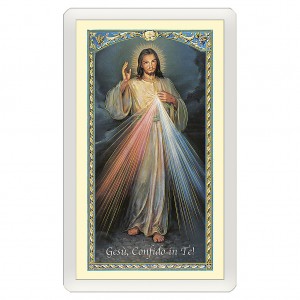
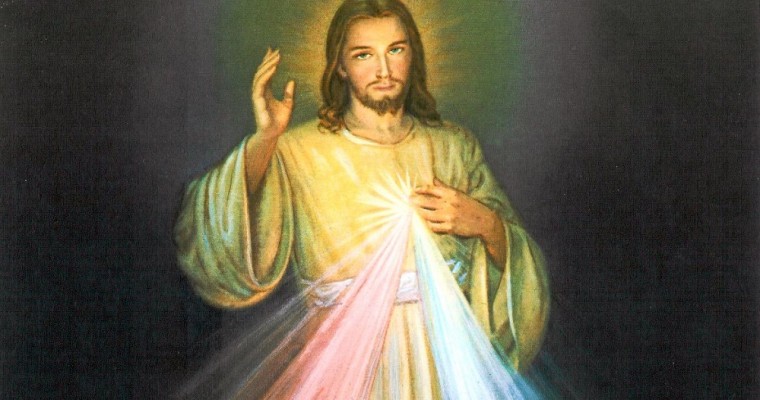
She was a great populariser of the Divine Mercy cult, after an apparition of Jesus who, dressed in white and in blessing, ordered her to depict him and spread His image, promising that anyone who venerated him would know salvation and the eternal life. This image was created for the first time by a Lithuanian artist, following instructions from Sister Faustina’s spiritual father and under strict control of the latter. It depicts Jesus wearing a white robe, his right hand raised and two rays coming out of his heart, a white one representing water and a red one representing blood. Always under the indication of Sister Faustina, the image shows the inscription “Jezu, ufam tobie” (Jesus, I trust in you).Passion and Love of Jesus

On the occasion of a later apparition, Jesus taught her a particular form of prayer, which would have guaranteed His mercy to those who had recited it, especially at the time of death. This is the Chaplet of Divine Mercy.

With this prayer, we address ourselves directly to God by offering him the body, blood and soul of His Son and our Saviour Jesus Christ. The suffering of Jesus brings God closer to men, places the salvation of all mankind in His hands and in His Will. The graces that can be requested through this prayer, the hope of Salvation, are commensurate with the full trust placed in the mercy of Jesus and in the Will of God, to which ours can only adapt and entrust himself. In fact, Jesus told Sister Faustina: “For the recitation of this Chaplet I like to grant everything that will ask me if this will conform to my will.

The Chaplet of Divine Mercy also guarantees the grace of being able to die peacefully and in peace. This promise is not only valid for those who recite it, but also for those who are dying and have someone else to pray for them. Jesus assured Sister Faustina that when someone says this Chaplet next to a dying man, He will place himself between the soul of the latter and His Father, not as a judge, but as a saviour, and His infinite Mercy will welcome that soul.

chaplet of the divine mercy
Buy on Holyart
Chaplet of the Divine Mercy

The Chaplet is also a hope for sinners, even the most ardent ones. Jesus indicated it to the priests as the last tablet of salvation for those who spent their lives in sin. According to Sister Faustina in her diaries, Jesus said: “When you recite this prayer with a repentant heart and with faith for some sinner, I will grant him the grace of conversion …” It will be enough to recite this Chaplet only once, and the infinite mercy of God will descend on the most hardened sinner, freeing his soul from guilt and granting him eternal salvation. Sister Faustina spoke of having been invited by Jesus to recite the Chaplet at the bedside of a sinner. His guardian angel was at his side, helpless before his suffering, while a host of demons already anticipated his soul. But thanks to Faustina’s intervention and to the recitation of the Chaplet of Divine Mercy the demons disappeared and the poor man could breathe in peace and grace.

It is a good idea to recite the Chaplet of Divine Mercy every day, or at least for nine consecutive days, preferably at 3 pm, the hour when Jesus gave his life for us. In one of her diaries, Sister Faustina wrote that Jesus, speaking to her about his death, told her: “In that hour you will get everything for yourself and for others; in that hour grace was given to the whole world, Mercy won justice.” Reciting the Chaplet at that time is as if we find ourselves with the spirit under the Cross of Christ, and beg for God’s mercy for ourselves and for the whole world, by virtue of His passion.  Jesus said to Sister Faustina: “At three o’clock in the afternoon, implore My Mercy especially for sinners and even for a brief moment immerse yourself in My Passion, especially in my abandonment at the time of death. It is an hour of great Mercy for the whole world.”

It takes only 5 minutes

It takes only five minutes, and it is an act of truly comforting devotion, which infuses peace with joy.

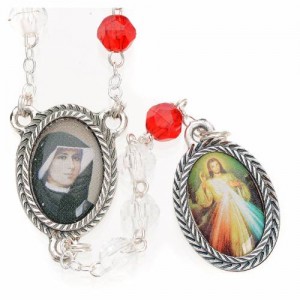
To recite the chaplet of Divine Mercy it is sufficient to use the crown of the Holy Rosary, even though, with the diffusion of prayer, specially created rosaries were made, with a medal depicting the Merciful Jesus and a portrait of Sister Faustina.

We begin by reciting the Sign of the Cross, followed by an Our Father, a Hail Mary and the Creed.

Each of the five major beads is recited: “Eternal Father, I offer You the Body and the Blood, the Soul and the Divinity of Your most beloved Son and Our Lord, Jesus Christ, in expiation of our sins and for those of the whole world”, while for each of the fifty minor beads you say: “For your painful Passion, have mercy on us and on the whole world.”

The Chaplet continues on arriving at the end of the Rosary and repeating three times: “Holy God, Holy Strength, Holy Immortal, have mercy on us and on the whole world” and ends with the invocation: “Oh Blood and Water that spring from the Heart of Jesus as a source of mercy for us, I trust in you!” and with the sign of the cross.

In summary:

Sign of the cross

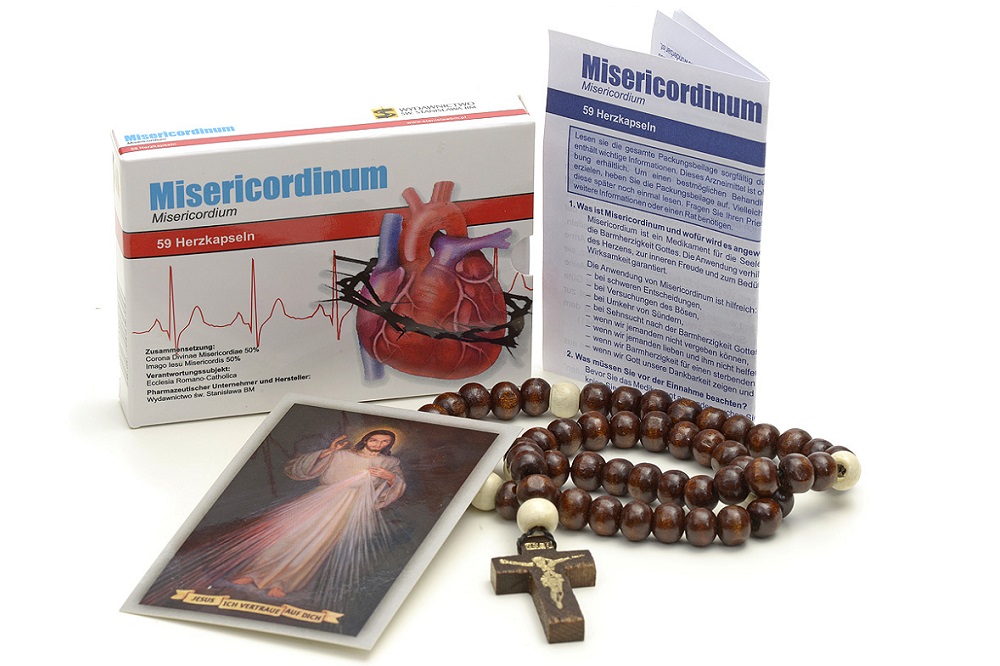
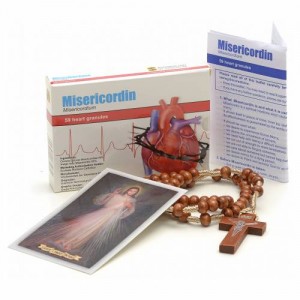
misericordina of pope francis
Buy on Holyart
Misericordina of Pope Francis

Lord’s Prayer

Ave Maria

APOSTOLIC CREDITS

On the 5 beads of the Our Father, we recite:

Eternal Father, I offer You the Body and the Blood, the Soul and the Divinity of Your Most Beloved Son and our Lord Jesus Christ, in expiation of our sins and for those of the whole world.

On the 50 beads of the Ave Maria we recite:

For His painful Passion, have Mercy of us and of the whole world.

Finally, we repeat 3 times:

Holy God, Holy Strength, Holy Immortal, have mercy on us and on the whole world.

In conclusion, before the Sign of the Cross, we recite:

Oh Blood and Water that springs from the Heart of Jesus, as Source of Mercy for us, I trust in You.

The Novena to Mary that loosens the knots

The Novena to Mary that loosens the knots

The Novena is a Christian devotional form that is usually practiced on a religious recurrence or a particularly important holiday, like at Christmas, Easter, Immaculata or Pentecost. It involves reciting a particular prayer for nine consecutive days, or different prayers, addressed to God, and usually aimed at requesting the intercession…

Archangels: who are they and what is their function?

Archangels: who are they and what is their function?

The Catholic Church recognises the existence of only three Archangels, or the three mentioned in the Scriptures: Michael (“Who is like God?”), Gabriel (“God’s Power”) and Raphael (“God’s Doctor”). This clarification is needed, because one could object that in the texts of the past, other archangels have been mentioned, the same as…

How to explain Confession to your child

How to explain Confession to your child

It isn’t easy to explain what a Confession is to a child. It isn’t easy because it isn’t easy to explain what the concept of Sin is to them. Yet it is fundamental for a child’s growth as a human being, and as a Christian, that they understand what it means to sin, and even more, what it means to be able to confess one’s sins to God, who is infinitely kind and merciful.

In fact, the fundamental question of Confession resides in this: to be aware that, although we may be marked by large and small faults, God the Father is ready to forgive us if we show genuine repentance. This isn’t trivial. Children who grow up with threats like: “Don’t do this because it is a sin”, but without anyone taking the trouble to explain to them what a genuine sin is, and what consequences entail, may pick up an incorrect vision of God, imagining him as a cruel presence who is ready to arbitrarily punish anyone who makes a mistake. In fact, some children tend to exaggerate their sense of guilt, even for the tiniest of shortcomings, and to live their own age badly.

God loves us all.

Probably the first thing that you can make a child understand is that God is good, He created everything beautiful and perfect for us, and sacrificed his only son Jesus for our sakes. How could such a good and generous Father condemn us without the possibility of appeal?

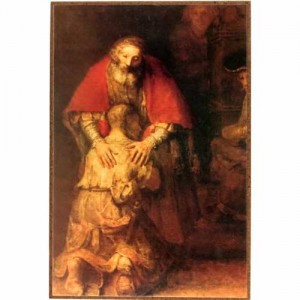
Indeed, God is always ready to welcome us back into his arms, in the same way the father welcomed his younger son back in the Parable of the Prodigal Son, proving that no fault was really serious in the face of Love.print on wood rembrandt prodigal son

God is love, and therefore, God forgives. In the hearts of men there is a seed of Evil that cannot be destroyed by anyone, not even by God. Yet he has never given up on us, since the dawn of time. He tried to cleanse the world of evil people with the Flood, but seeing that it was useless, sent his prophets to preach about Goodness, and in the end, sent his own Son, Jesus, to show men the pathway to Love. Because the only way to help men to be better is to show them the way of goodness, and convert them to it. God has done, and continues to do, everything for us, even if we continue to offend him with our bad deeds, and our bad thoughts. Fortunately for us, his Mercy is infinite, and his ability to forgive is endless.

Sin is the evil of the world.

Sin exists, and we are all subject to it. Adam and Eve committed it first, and transmitted it to all their descendants. Unfortunately, because of this first mistake, we are all born marked by sin, and the sin of turning away from God. It is important to learn to recognise it, and to be aware of its effects in the world.

To do this, you can show a child how everything bad that happens in the world is the fruit of sin, and that these bad deeds bring terrible consequences, not only for individuals, but for everyone. A good system could be to start from a vision of how the world was before sin, by illustrating to a child the uncontaminated nature, harmony and happiness that reigned among all of God’s creatures, the happiness and the absence of the pain that Adam and Eve experienced. Later, you can show him or her how the real world actually is, perhaps by quoting news stories, explaining what is going on in the world, how much suffering afflicts human beings everywhere: wars, violence and accidents. By bringing these two worlds, which are so different, into comparison, a question will arise spontaneously: why does God allow all of this to happen?

The answer is in the Bible: Evil has arrived in the world because of man.

A man who lives in sin, and who shows that he does not appreciate the gifts of God, and proclaims that he wants to be God himself. That is what Adam and Eve did. The original sin was not in the theft of the forbidden apple, but in openly challenging God, not limiting himself to listening to his warnings, but pretending to be on his own, to being like him. That is what we do every time we commit a sin. We believe ourselves to be smarter than God, we believe ourselves to be superior to him, and we behave badly, and in full knowledge that we are wrong. When we do it we are not happy, we are not comfortable with ourselves, because we are perfectly aware that certain things are wrong. It’s like when we tell a lie and then we are afraid of being discovered, or when we do a bad deed and we live in the anguish that our mother will find out and punish us. God is much better than our own mother at knowing when we have done something wrong, and even if he loves us as much, or more than she does, and is willing to forgive us, he wants us to admit our guilt first, and to sincerely apologise.

That is why he created Confession.

What is the purpose of Confession?

Once a child has understood the existence of sin, and the goodness of God, we must make them understand how they can deserve forgiveness. This can be achieved by teaching a child how to perform an examination of conscience. Or, after a day of studying, games and activities, when the child is alone in their room, to invite them to consider their actions during the day that has just ended, what they have done, what they have not done, and what they should have done.  It is an examination that must be made with sincerity and honesty, in full awareness that God knows very well how we have behaved. But this is a thing we need, to understand if and where we were wrong, to realize that we could have done more. At this point we apologise to the Lord with a prayer, and the next day we try to do better, and so on, day after day.

That is the first step towards a Confession.

Confession is in fact a kind of examination of conscience, but done aloud in front of a priest, at the end of which you admit your mistakes and declare that you do not want to make any more of them. It isn’t enough just to say that we are sorry: we must show that we have a heart full of repentance and the willingness to do well, in the future; only in this way will God forgive us.

Confession is essential for obtaining God’s forgiveness, and for getting closer to him. It is a sacrifice, an act of humility. It isn’t easy to admit our mistakes. It is not easy to recognise that we are wrong, even when it is very obvious. Men are made like that, they are proud, big guys. But God loves them for this as well, and precisely because he knows them well, and knows how they are made, he appreciates it even more when they are willing to give in, and to ask for forgiveness. God doesn’t want to punish us, he doesn’t want to condemn us: he just wants to forgive, and to save us. He doesn’t stop loving us even when we’ve behave badly, let alone when we recognise it and we apologise! Then he is the proudest and the happiest of Fathers! He embraces us, comforts us, and our life suddenly becomes even more beautiful and special. It is as if the wind sweeps away the grey clouds from the sky, and everything turns blue, bright and luminous. That is how we are after a Confession.