Author: Redazione

Outdoor Christmas decorations: luminaries

Outdoor Christmas decorations: luminaries

In Christian religion, light has always had a very important symbolic meaning. That is demonstrated by the fact that it was used since the origins of fire during celebrations, and also by the fact that the use of candles spread not only as a source…
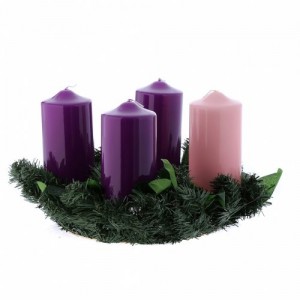
An ornament that cannot be missed in every home: the Advent Wreath

An ornament that cannot be missed in every home: the Advent Wreath

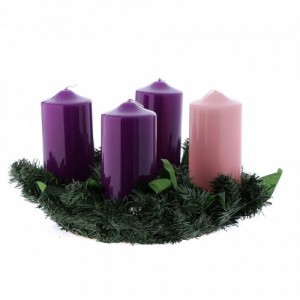
The Advent Wreath is at the same time a Christmas ornament that embellishes your home and an object of great sacred value for believers. As a matter of fact, the Advent Wreath accompanies the devotees for four weeks until Christmas. It is made of many…

Getting ready for Christmas while having fun with your child

Getting ready for Christmas while having fun with your child

Christmas is the family holiday, the occasion where all gather to celebrate and spend some time in peace and harmony. Wouldn’t it be nice if the family was involved in the organization of such celebrations and in the decoration of the house? Especially for the youngest ones, that could be a creative experience that will test their fantasy and their ability to create something really unique and special with unusual materials.

For example, why not discard plastic balls and traditional tree ornaments, in exchange for homemade decorations? The possibilities are multiple, you’ll just need a little imagination. You can use ping pong balls, plastic glasses, papier-mâché, and also old unpaired socks to create fun colored hangings for your tree, bell- or snowman-shaped.

Marker pens, glue and colors, maybe some glitter, will transform common objects into beautiful ornaments. You could also use paper, cardboard and scissors to create many beautiful decorations, drawing colored shapes directly on paper and cutting them, or maybe printing them from the internet and glueing them together. That way you can make garlands, but also Christmas card for family and friends.

With the help from mum, and using polymer clay or bread dough, you can create many little objects as gifts and, why not, a small nativity scene with handmade figures! Is there anything more special than giving your mother or your friends something made with your own hands? Maybe originally and uniquely wrapped too, with a hand drawn and personalized card? Children must be stimulated and guided to discover their infinite potential and they can really be surprising with their imagination. Let’s make sure that this Christmas is a chance for growth and fun!

Decorate your house for Christmas in complete safety

Decorate your house for Christmas in complete safety

When a little child lives in the house, you need to opt for a series of indispensable precautions to avoid unpleasant accidents which can also have serious consequences. It’s a well known fact that kids are curious by nature. The youngest ones crawl in every…

Christmas markets in Bolzano and Bressanone

Christmas markets in Bolzano and Bressanone

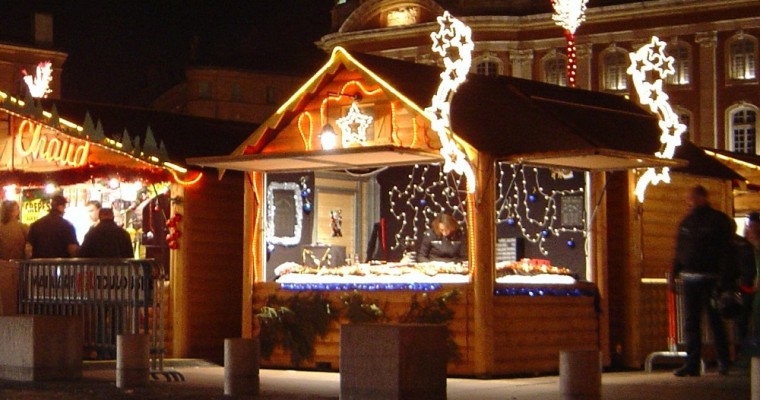
Few places call to mind holidays atmosphere as much as Christmas markets do. They are definitely not usual markets, as we are used to see all year round in our cities. Christmas markets are veritable events, which change the look of the streets and squares…

Animals that should not be missing in your nativity scene

Animals that should not be missing in your nativity scene

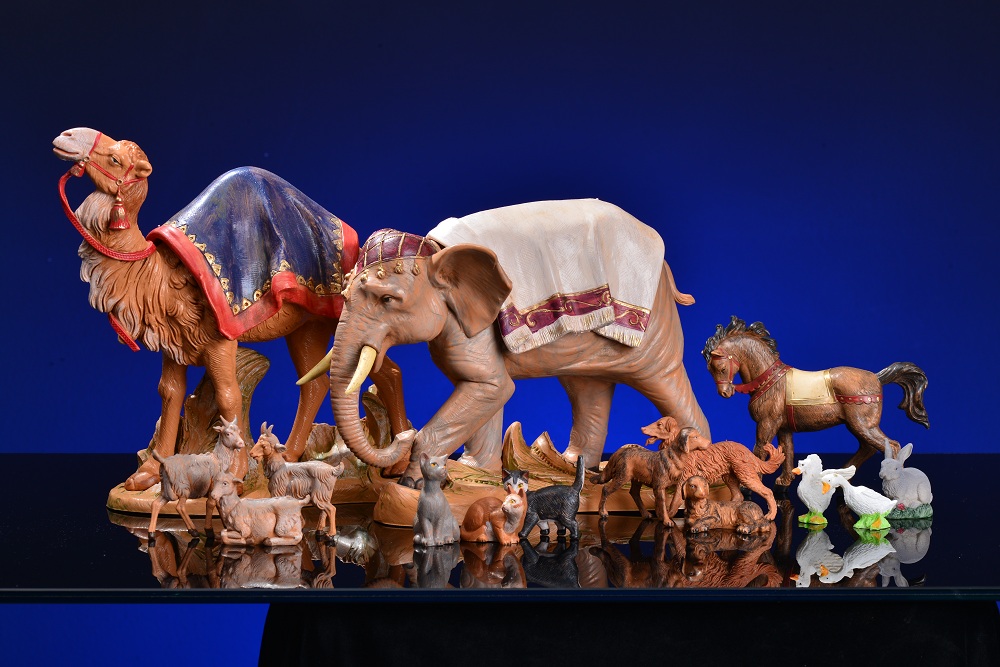
Among the many characters in a nativity scene, you just cannot ignore the large amount of animals of any kind. The most “famous” are surely the ox and the donkey, which warmed baby Jesus with their warm breath. The former is said to have lured the Holy Family in the manger with its bellowing, and gave up eating fresh straw so that the Virgin Mary could arrange a softer bed for Jesus in the manger; the latter is said to have joined them in their long trip towards Bethlehem.

Since there are several shepherds, it is obvious to think that there were many sheeps and goats as well. The story tells that one of them offered its warm wool to the Virgin Mary so that she could knit a blanket to warm up her Baby.

Ancient stories tell that animals were active and aware participants in the Nativity, kneeling still, almost as if they were in prayer. Legends say that they could talk among themselves and that their language was understandable for human beings as well, and from their words they could deduct important information about the new year that was about to come. We often find other barnyard animals in artisanal nativities, such as horses, cows, geese, pigs, birds, often with their shepherds, or also exotic animals such as monkeys, parrots and dromedaries. Popular belief created several legends around those animals. They tell about turtle doves and robin redbreasts that cradled the agitated sleep of the baby Jesus with their sweet singing so that he could forget about the cold; there were also bees, whose buzz was said to be hiding a secret praise for the birth of the Son of God; and also the firefly, silent and invisible, that guided the shepherds to the manger and, grazed by the hand of the Baby, began shining like a little star.

Those are simple stories of devotion, but also rich and authentic, that should remind us that Christmas come for our friend animals too, and that they also deserve a bit more warmth and affection during the Holidays.

Chocolate Christmas

Chocolate Christmas

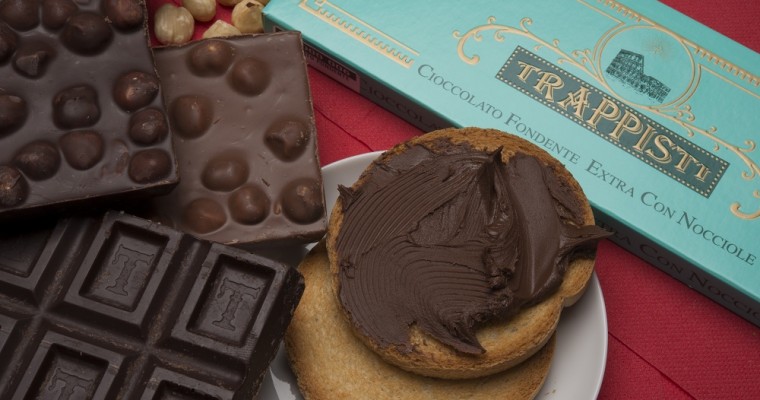
Dessert should not be missing from the holiday table. Let alone on the table of the Ultimate Holiday! During Christmas sweets of all kind play a fundamental role in Italian meals. The great classics, as panettone, pandoro and nougat, industrial Christmas desserts; in addition we…

8 ideas for a religious Christmas gift

8 ideas for a religious Christmas gift

Christmas, time for gifts. Actually, someone has already begun his rush to Christmas shopping; woe to those who find themselves unprepared, woe to those waiting till last minute, and make someone unhappy. It is such a pity that to some extent the fever for gifts…

The birth of Baby Jesus: the deepest meaning of Christmas

The birth of Baby Jesus: the deepest meaning of Christmas

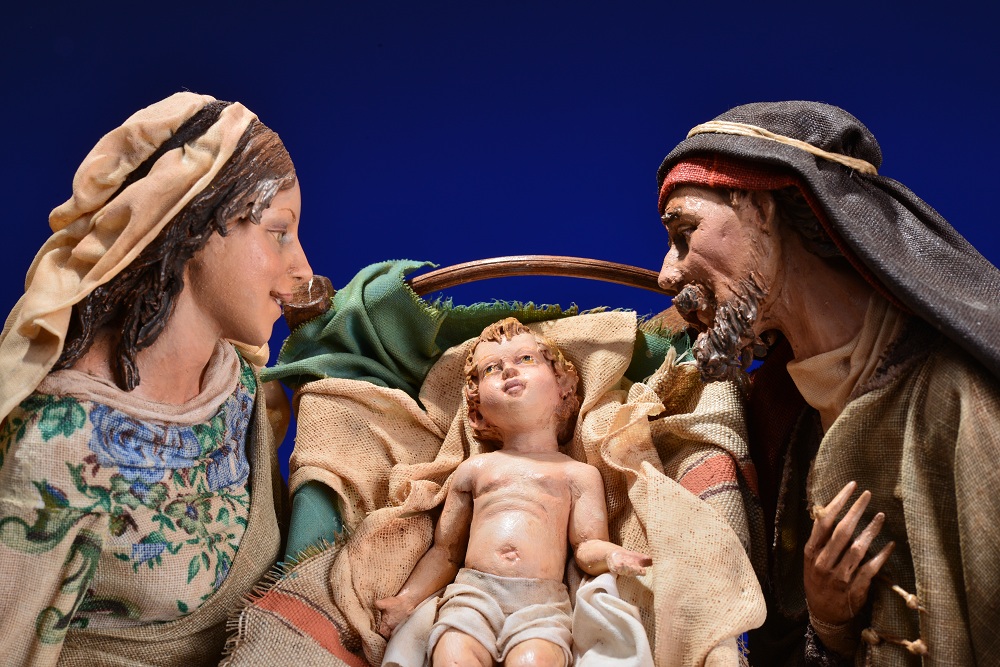
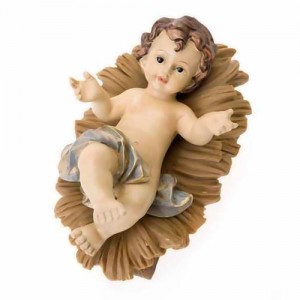
The Nativity of Jesus surely symbolizes the highest and most meaningful moment of the Christian calendar. Every year this miracle repeats itself, along with its promise of salvation. The statues of Baby Jesus that look upon us from nativity scenes in churches, squares and in our own houses tell a marvellous and solemn mystery: the dream of a Virgin visited by an angel, who was asked to become the servant and mother of God; a putative father who gave up his own life to travel and swore to protect that baby that was not his own; shepherds and Kings that came from far away to give homage to a newborn that was facing his first night in a manger, warmed by the breath of an ox and a donkey.

Resin Baby Jesus statue with cradle

The Evangelists Luke and Matthew have passed on the events connected to the Nativity with some big differences, but its deep meaning stays the same among believers. It is the ultimate mystery, the act of immense love by a God for his children, perpetrated throughout the centuries, to renew an ancient but always new Allegiance.

The statue of Baby Jesus becomes the beating heart of a scenography that comes to life and tells the same story, year after year, and each time we are enchanted and touched by that. Each time it calls us back to ourselves and to authentic values, to what is really important, and that too often we miss, while we are caught up by our daily routines and modern life frenzy.

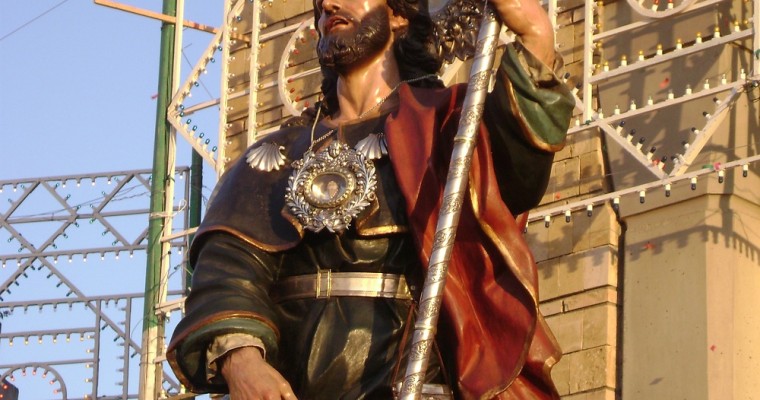
The story of Saint Roch of Montpellier: French pilgrim and thaumaturge

The story of Saint Roch of Montpellier: French pilgrim and thaumaturge

Saint Roch of Montpellier has many traits in common with Saint Frances of Assisi, whom he whorshipped and fervently imitated. He came from a rich family too, was also very good-looking, had an active and rich mind, nurtured by university studies and a natural curiosity…

Embellish your nativity scene with a unique and original scenography

Embellish your nativity scene with a unique and original scenography

Since its first appearance in the popular tradition, the nativity scene has had the double meaning of deep and human expression of devotion, and work of art of absolute refinement and attention to details. Although the subjects represented were for the most part common men…

Christmas symbols and their meaning

Christmas symbols and their meaning

Christmas is the richest holiday in terms of sacred and profane symbolism, all intersected throughout centuries until they became an indissoluble and indistinguishable one. All Christmas symbols and the habits related to each one were preserved form generation to generation. From the Nativity to the tree, from the mistletoe to the Advent Wreath, from the holly to the Panettone, all merge together to create a unique atmosphere, whose meaning is often forgotten when looking at the whole, but that can only spread among everyone.

The Nativity

The Nativity is maybe the most important symbol for catholics. From the stories of Evangelists Luke and Matthew, who described the Nativity, an immense mistery comes out: a God that chooses to become a man to descent among his Sons and lead them to Salvation, all enclosed in an apparently common event, in its semplicity, as the birth of a child in a starry night.

The Christmas tree

The Christmas tree has instead pagan origins. It is a symbol for life that renovates itself and that’s why it is usually an evergreen tree. During Medieval times, the first Christmas trees were decorated with paper flowers, fresh and dry fruits, and other symbols for wealth, to recall the Garden of Eden and the Tree of Knowledge of good and evil. Later, people began to decorate Christmas trees with candles, symbols for Advent and for the Savior that defeats the darkness of sin, and place them inside their houses.

The Advent wreath

Also the Christmas candle symbolically recalls Jesus as bringer of light and salvation, while the four candles of the Advent wreath are on one side a reference to ancient pagan traditions connected to light, and on the other side they are symbols respectively for Prophets, Betlehem, Shepherds and Angels. The lighting of each candle corresponds to a moment of prayer.

Advent wreath
Liturgical Advent kit

The habit of exchanging gifts on Christmas is probably of Roman origins: Romans used to exchange gifts on New Year’s Eve and during other strennas feasts, from the name of the sabine goddess Strenna. At the beginning they were auspicious laurel, olive or fig twigs, but they were soon replaced by actual gifts. Inside the Christian sphere, the gifts exchange is associated with the symbology of god that gives his only Child to men.

Santa Claus

Santa Claus brings gifts to children during the night between December 24th and 25th. He can be associated with several characters present in many cultures all over the world, even if the closest seems to be Saint Nicolas. He was bishop of Myra and performed some miracles that allowed him to save some children. Only at the beginning of the 19th Century he began to be represented dressed in red and with a long beard, while in the 20th Century American advertising agencies made that the official representation we all know.

The Christmas log symbolically represents the Tree of Life and the salvation brought by Christ: with that, people heated up their homes to make them more comfortable on the event of his coming.

Lastly, mistletoe is considered to be auspicious. It grows on other trees trunks, has no roots to the ground, and its white berries grow in nine months, as a human child, gathering in groups of three, sacred number in many cultures. In ancient time it was believed to be healing for any sickness, and if hanged outside the house, it would grant prosperity and wealth.

The day Virgin Mary revealed herself to Bernadette Soubirous

The day Virgin Mary revealed herself to Bernadette Soubirous

Still today, those who visit the Grotto of Massabielle, where Marie-Bernarde Soubirous also known as Bernadette reported the miracolous visions of a “lady dressed in white”, experience a feeling of great holiness and intimate comfort. The niche where the visions appeared is at the top,…

The importance of the right background for your do-it-yourself nativity scene

The importance of the right background for your do-it-yourself nativity scene

The creation of a nativity scene is a moment of great creativity, which tests imagination and screening ability of those who make it.  Especially if you decide for a do-it-yourself nativity, where every single aspect of the scenography is the outcome of personal initiative, of…

5 good reasons to buy candles online

5 good reasons to buy candles online

We have already spoken in a previous article about the importance of candles in religious celebrations. At home, but particularly within churches and shrines, their light is a constant call to the Light of God, and in particular to the figure of Jesus, the Light of the World. More generally, the light of the candles that illuminates the naves of the churches, the chapels of the sanctuaries, reminds us of  the faith that illuminates the darkness and keeps the darkness away. So it’s very important that a place of worship is always well supplied with candles, whether they are votive candles for the faithful offerings near the altars and the statues of the saints, rather than baptismal candles, the funerary ones used in processions, and so on.

But where do parish priests and ministrants generally buy candles and votives?

Of course, there are shops specializing in religious items that sell this kind of products, and candle manufacturers that sell retail, but in recent years the trend has been for parishes and dioceses to buy candles and and votives online.

What are the advantages of buying candles online? There are many, but we want to focus only on five, which seem to us the most significant.

Comfort

 Obviously buying online rather than physically going to a store is much more practical. What’s more comfortable than an “open” shop 24 hours a day, 7 days a week? You don’t have to worry about finding the time to go in person to make purchases, perhaps getting stuck in traffic, or making a long journey. Buying online is fast, easy without constraints, without queues on the counter or at the cash desk and unnecessary waiting times.

It is convenient for everyone, even for priests, who already have so many commitments to face in their daily mission.

The products can be ordered comfortably from your computer, and delivered at times that are not only acceptable, but can often be adjusted according to your needs. For example, if a parish needs to be supplied with candles on a regular basis, it will be able to establish an online purchase calendar so it can be certain it will never run out of supplies. You can receive the quantities of products you need on a specific date directly at home, without having to give it an more consideration.

Moreover, for festivals, such as Christmas or Easter, which require special candles and votives to be purchased, like Easter Candles, the parish cannot risk not finding what it needs, because often  stocks tend to be insufficient, in these situations, and do not guarantee the quantities needed to meet the demand, which increases considerably at this time.

No unpleasant journeys, therefore, no waiting, no queueing, and the guarantee of never being without candles and votives. So with one click there’s a lot you don’t have to think about.

Convenience

 As with any product, even candles and votives need to be stored in a space, which costs the vendors money.

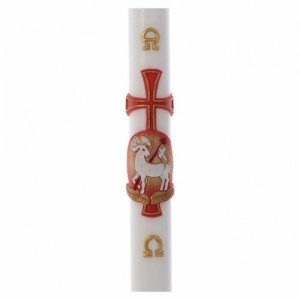
Easter candle lamb cross white wax
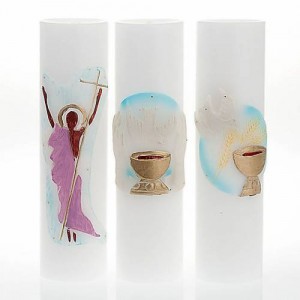
Candles, large candles

In addition to this, physical stores inevitably have a whole series of intermediations and expenses that end up making the final price for the buyer increase. This doesn’t happen when buying online. E-commerce can avoid many of the problems which are the order of the day for physical stores, and this often allows them to guarantee products at a lower or discounted prices compared to the same products purchased in store. That’s right, buying online means you can often take advantage of special offers and discounts. Furthermore, cheap offers and quantity discounts are the norm. Just scroll through any of the virtual shops that sell candles and votives, because your eye will be drawn to numerous ads for ‘bulk discounts’ and offers of up to 20%, 30% or 40% off the usual price. All this means huge savings, on a product that is needed the whole year, which does not expire, does not go out of fashion and serves everyone!

Quality

As they don’t have any ancillary expenses, companies that sell online can invest more in the quality of materials. In fact, just like for any other kind of product, even candles and votives, if made with good quality materials, have a better performance. For example, not everyone knows that properly packaged candles made with quality materials do not have wax that runs down their surfaces. A low oil content, to mention only one recurring defect, avoids drips and prevents fires.  The candles are produced, mostly with refined white wax, paraffin, incense, aromatic oils that give them particular aromas. Care in choosing these raw materials ensures the best performance for the finished product, avoids unnecessary pollution, bad smells, hard to remove incrustations, furniture being by wax and heat, and so on.

Wider product ranges 

Online stores offer much larger and more diverse showcases than you could ever offer a physical store, no matter how big.

white candle in beeswax
Candles

The range of candles and candles can be found in their virtual pages are so many, and meet every requirement and need. They range from simple votive candles, to minor altars and statues, to all shapes and sizes, to white or coloured wax, to votive candles. Naturally, there are vast assortments of Easter candles, of all sizes and with a vast selection of decors, with corresponding portacero bases. There is no shortage of Christmas candles, with countless models, not only those used by churches, but also those to beautify a home and give it an air of celebration: shaped like a Christmas tree, star, holly, angel, and so on. What’s more, online stores also offer a wide selection of metal candlesticks, altar crosses with candlesticks, chandeliers, lamps for the Altissimo and all of the items that can be used as candles and votives.

Safety

Although there’s still a lot of distrust towards online purchases, at least in our country, they are, in most cases, paradoxically safer than those made in physical stores. We assume scammers have been around since long before the Internet was invented, but having said that, buying from online sites is safer and more reliable, because e-commerce shops are forced by law to use certificates and security protocols that physical stores don’t have to. These certificates store user data in an encrypted form, especially sensitive data like credit card information. In addition, online purchases have an advantage also from the point of view of consumer protection, because they have to guarantee by law a right to return the purchase within ten days of making the order, in most cases with free returns. This right, which is governed by Italian Legislative Decree185 of 1999, doesn’t apply to physical stores, which, consequently, offer less guarantees of refunds for inadequate or damaged goods.

All you need to know about the hosts and particles

All you need to know about the hosts and particles

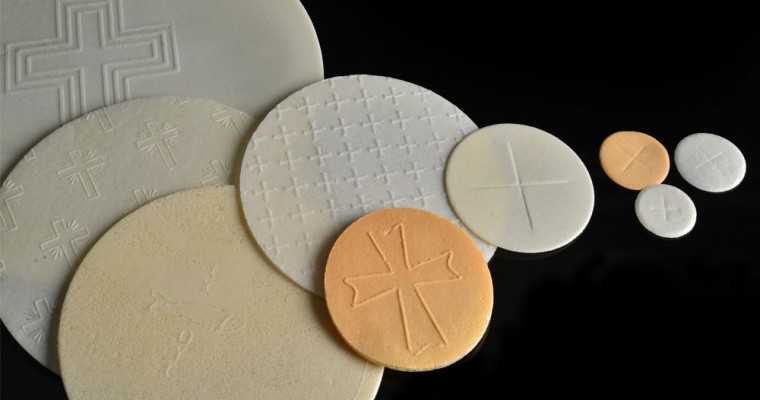
The host is a wafer of unleavened bread, made with wheat flour, usually circular in shape. The term ostia derives from the Latin hostia, “Sacrificial victim”, which used to indicate, in a generic way, a sacrifice made to a deity. In antiquity and until the…

Tips for facing the winter: infusions, herbal teas and syrup

Tips for facing the winter: infusions, herbal teas and syrup

Winter is a season that is beautiful in its own way, full of suggestive atmospheres, a unique light, a harsh climate, but one that evokes a desire for warmth and comforting intimacy, which inevitably takes us back to our childhood, when winter meant snowball fights…

Liturgical candles: when and why they are important

Liturgical candles: when and why they are important

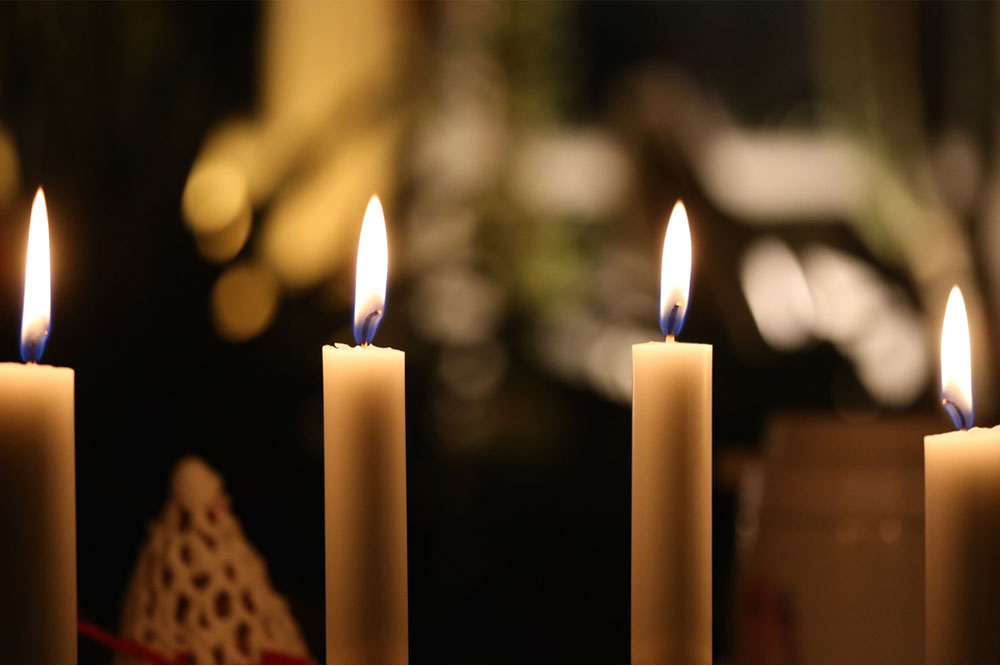
Light has always had a very deep and essential meaning for men. There is no religion that hasn’t made it a key element in its mythology, no civilization that hasn’t celebrated it as an assimilable, if not overlapping, element to the very concept of life. The reasons are obvious, and certainly deserve a more in-depth discussion.

We need to consider a particular kind of ‘light’ associated with religion, spirituality. We’re talking about liturgical candles.

Candles, since their creation, have appeared in the rites and ceremonies of many religions.

For example, in the Jewish religion, the lighting of candles on a Friday evening, to celebrate the beginning of Shabbat, or the Hanukkah Festival, the Festival of Lights, during which a candle is lit every night for eight consecutive days to commemorate consecration of a new altar in the Temple of Jerusalem after the freedom conquered from the Hellenic invaders. The Jews still have a custom of lighting a candle that lasts 24 hours to mark the anniversary of a loved one’s death.

Christianity has adorned candles and their light with an even more significant importance.

And God said: Fiat lux!, Let there be light.  And there was light.“(Gen 1,3).

This is one of the first things we read in the Bible, the creation of light by God the Father. This was his first gift for the world that He is creating, the first visible manifestation of His Will, of His Essence, for where there is God there can no longer be darkness. And that’s not all. It is light that allows us to see, to see the magnificence of the world created by God. Without light the Creation itself would have no reason to exist, it would lose much of its immense greatness. A world that cannot be admired does not exist.

From this moment on, then, from this first spark arising from an act of love and will, the idea of ​​God is constantly connected to that of light. A light that illuminates, warms, vivifies, nourishes and ‘infects’, improving the colours that are exposed, wrapped and fed by it.

Liturgical candles are linked to this idea of ​​God being understood as light, and above all of Jesus as the Light of God. In fact, Jesus is repeatedly defined in the Scriptures as the “light that enlightens the world”.

“In him was life; and the life was the light of men. The light shone in the darkness, and the darkness has not overwhelmed it” (John 1: 4-5)

“The true light that enlightens every man was coming into the world“(John 1: 9)

Then spake Jesus again unto them, saying, I am the light of the world: he that followeth me shall not walk in darkness, but shall have the light of life.” (John 8:12)

The light in this case has an exquisitely spiritual value, of guidance in the darkness, of knowledge of God who, through His Son, descended on us, opening our eyes and making us worthy of His presence, and of His consideration.

Again, it was Jesus himself who told his disciples: “I am the true light” and later: “You are the light of the world … your light must shine before men so that they may see your good works and glorify the Father who is in heaven!” (Matt. 5:16).

It is therefore normal that in churches, candles are placed on the altar, or near the tabernacle, and are the protagonists of rites and celebrations.

Not only that, the church uses candles in almost all the sacraments, from baptism to anointing, as irreplaceable symbolic elements.

We want to try to understand and identify the various liturgical candles, to discover their meaning and their importance in the area of ​​the sacred rites.

Candle of baptism or baptismal candle

Baptism is the first sacrament imparted to the new Christian. Usually this happens when it is still a new-born, if it belongs to a religious family, but it can be celebrated at any age. It is fundamental and indispensable, because it is through this that Original Sin is washed away from the soul, making us pure and ready to welcome God into our lives.

baptismal candle
Baptismal candle in box

Besides the presence of a priest who pronounces the words of the ritual and the gestures necessary for the new faithful to begin his or her new life of faith, Baptism involves the use of some objects, which in this context assume a series of profound and symbolic meanings. There is water, of course, which washes away original sin; oil of the catechumens, applied on the chest as a shield against temptation and evil; the chrism, which consecrates God to the newly baptized; the white dress, a symbol of purity and rebirth; and, finally, the lighted candle, which is given to the godparents who accompany the new Christian, and symbolizes Christ, the light of the world.

The symbolism of the lit candle to fulfil the rite of Baptism has ancient origins and expresses different aspects of the spiritual life of the newly baptized.

First of all there is the wish on the part of those who love him that he or she can find the light in their own existence (John 8.12 – “I am the light of the world”). The desire is for a life with Christ and in Christ, therefore, illuminated by His presence, by His example. The fact that today the candle is handed over to godparents, is symbolic of their role. The candle delivered in their hands symbolizes the fact that the newly baptized will not have to carry out his own search for light alone, but that these strong and wise presences will guide him at all time, to help him, to advise him and to make him become a true Christian .

Secondly, the baptismal candle indicates that the newly baptised must become in turn a light for the world (Mt 5:14 – “You are the light of the world; a city placed on a mountain cannot remain hidden”) and to do so he must lead a life of industrious witness (Matthew 25.1-15 Parable of wise virgins and foolish virgins).

The baptismal candle accompanies the faithful throughout his or her religious life. In fact they must be reported to the Church on the occasion of the other sacraments. It is a sort of ‘identity document’ of the faithful, a passport that allows him to access the religious celebrations that accompany the most important moments of his or her life.

Easter candle

Easter candle
White Paschal Candle

The Easter candle is accessed during the Easter Vigil, the solemn mass celebrated after sunset on Holy Saturday and before the dawn of Easter Sunday, to celebrate the resurrection of Jesus. More than in any other situation therefore, the lighted candle symbolises, in this case, Jesus as the “Light of the World”, risen from the dead to enlighten the path of His Sons and ensure them of salvation.

The Easter candle is then left on at the altar throughout Easter time and is extinguished at Pentecost, when the Ascension of Jesus to glory in Heaven is celebrated. Usually it is a very large and richly decorated candle. Outside of Easter, it is kept in the Baptistery and lit at every baptism. Indeed, his flame will be used to light the baptismal candle which will be given to the godfathers of the newly baptized, as a wish for a life in faith and in the light of Christ. The Easter candle is also used on the occasion of a funeral, as a symbol of hope for resurrection and eternal life.

Votive candles

Votive candles lit by the faithful in front of an altar, or a statue of Jesus, of the Madonna, of a Saint, have a precise meaning. This is not simply an offer that the Christian makes to accompany his own prayer, to strengthen them or ask for a grace. The lighted candle symbolizes the Christian himself, his being a child of light, and therefore a child of God. Lighting a candle and offering it is a way to affirm one’s will to follow Jesus’ example of being “the light of the world”. Lighting a votive candle also expresses the desire to entrust one’s words and thoughts to the Lord, to Our Lady, to the Saints. It is a request for help, a light that illuminates our life from above, perhaps at a time when we are struggling in the darkness. Finally, the offer we leave when we light the candle is a sacrifice that accompanies our prayer with deeds and makes our intention of Faith tangible.

Votive candle
Votive candles (package)

Candle of the Tabernacle

The light that illuminates the Tabernacle is worthy of a separate discourse, indicating the presence of Christ within it. But it is usually a lamp, not a candle, so would be a little beyond our excursus. It should however be remembered that, of all the lights that illuminate our churches, it is one of the most important and precious, the burning flame that symbolizes Jesus and the faith of those who love Him, the inexhaustible light that remains lit for us even when we leave the church, promising us a safe place to return at any time.

Advent candles

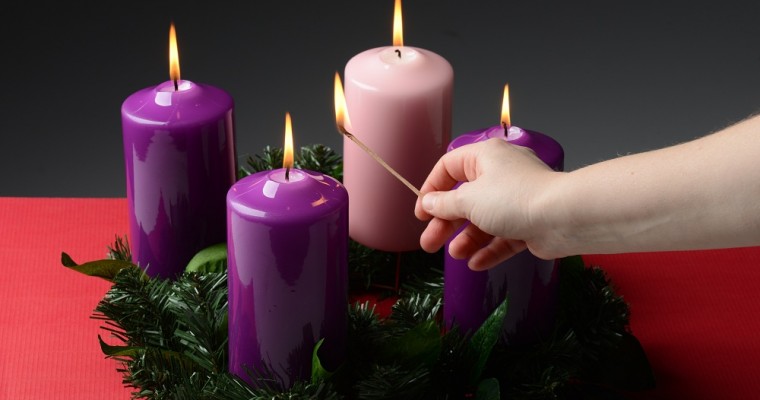
The Advent wreath is a custom that developed in Europe, starting in the mid-1800s, to mark the weeks that are lead up to Christmas. It is composed of a wreath of evergreen branches intertwined with each other, holding up four candles. Every Sunday of Advent a candle is lit. Originally, the Advent wreath provided a candle for every Advent day, and often, in modern crowns, a fifth candle is inserted, which is lit at Christmas. The crowns are kept in the house and usually the task of lighting the candles is given to the youngest of the family.

Advent candle
Liturgical Advent kit

Each of the four Advent candles has a particular name and meaning.

  1. On the first Sunday of Advent the “Candle of the Prophet” or “Candle of Hope” is lit. It recalls the prophecies about the coming of the Messiah.
  2. On the second Sunday of Advent the “Candle of Bethlehem” or “Candle of the universal call to salvation” is lit. It reminds us of the city where the Messiah was born.
  3. On the third Sunday of Advent the “Candle of the Shepherds” or “Candle of Joy” is lit. Recalling the pastors, the first to worship Jesus. Usually it has a different colour than the others, because on the third Sunday of Advent the Liturgy says that the priest should wear pink rather than purple.
  4. On the fourth and last Sunday of Advent the “Candle of the Angels” is lit. To remind us that they were the first to announce the birth of the Saviour to the world.

Candlemas candles

Forty days after Christmas, the Presentation of Jesus is celebrated at the temple. This party is known by all as Candelora, and owes its name to the ancient popular proverb: ” Per la santa Candelora se nevica o se plora dell’inverno siamo fora “, which is linked to the celebrations of the end of winter in the same period, and to the many candles that are blessed and lit during the celebrations. Once again, the rite refers to Jesus as the light of the world. In the Gospel according to Luke, Jesus is led to the temple by his parents and Simeon affirms: “Now let the Lord let your servant go in peace, according to your Word, because my eyes have seen your salvation, prepared by you before all peoples: light to enlighten the peoples and glory of your people, Israel” (Luke 2: 25-35). The lighting of Candlemas candles is therefore a tribute to Jesus, the bearer of light and a gesture that expresses the will to drive out the darkness.