Author: Redazione

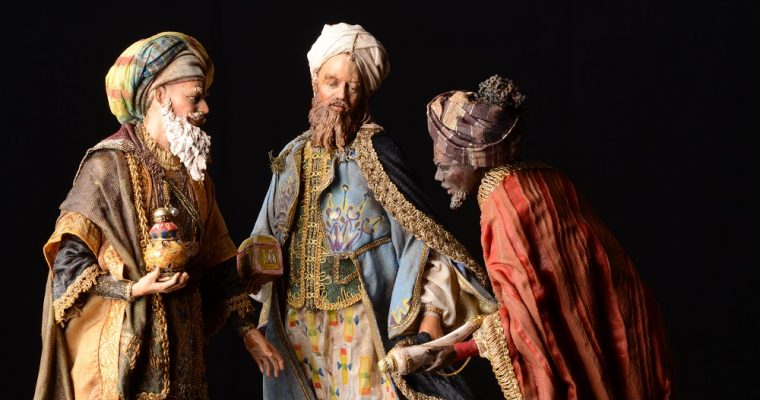
Who were the Wise Men and their names

Who were the Wise Men and their names

Contents1 The Wise Men according to the Gospel2 Who were the Wise Men? The different theories3 The gifts of the Wise Men4 The names of the Wise Men and their meaning5 The ability to donate6 Holyart Wise Men We all know the Three Wise Men…
Exchanging gifts for Christmas

Exchanging gifts for Christmas

It’s always nice to receive a gift, especially from someone that loves us and during Christmas, symbol of Jesus’ birth. Have we ever wondered where the act of exchanging gifts come from? How was this habit developed? It is not clear why the habit of…
10 ideas to decorate your garden during Christmas

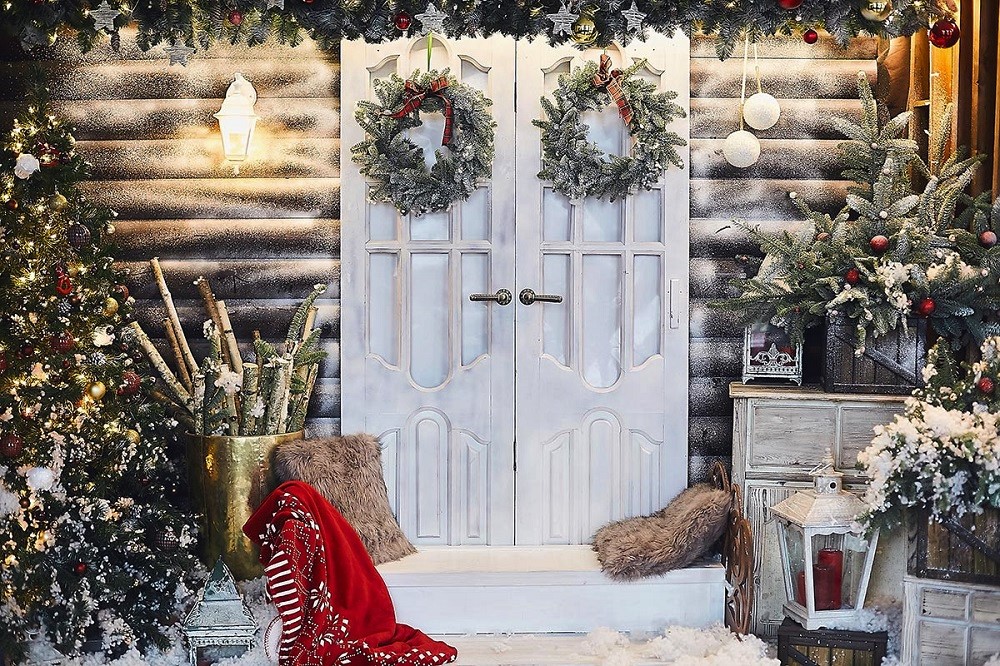
10 ideas to decorate your garden during Christmas

Christmas is getting closer, and we are all buzzing about how we should decorate and embellish our homes for Christmas. But the garden also deserves to be decorated, let’s see together some ideas to do it better.

The tradition of decorating our homes for Christmas is deeply rooted in ancient times. Today we just adapted to new means and technologies, which allow us to choose among an almost endless range of ornaments options. So, go ahead with Christmas trees of course, but also garlands, wreaths, lights, branches crowns and poinsettias, felt dolls, you name it.

But the garden deserves to be decorated as well, wheter it is big or small, especially if we think that it’s what people are more likely to see of our home. To some extent, outdoor decorations represent the wish to make the street, the neighborhood, the whole town we live in more beautiful and magic, just as we do with our homes. But this time we commit to create something beautiful for others, for strangers passing by, in a community celebration of joy and expectation for the coming Christmas.

There are plenty of ways to decorate the facade of your home and embellish your garden, make it welcoming and joyful even in winter, switching up lights and colors. You don’t need a huge garden. Even the walkway to your door can be enhanced until it completely changes its looks. Ornaments and decorations created on purpose for outdoor environments, united to fantasy and creativity, can help you wrap your home into a magic and special atmosphere.

Lights

Let’s begin with lights, maybe a predictable suggestion, but that can offer many variations, some of which are very original. We can find many light strings and ornaments for outdoors on the market. Make sure you buy only the one reporting the mark ‘outdoor’ on the box and tag, besides the IP Code (International Mark for Protection, or Mark for Entrance Protection), which states the grade of protection of electric materials in the presence of solid particles (such as dust) or liquids. The protection standard required for Christmas light must be minimum IP44. It is also advisable to choose low-consumption led lights.

Outdoor lights can be placed in so many ways, it all depends on how your garden is structured, if there are trees, bushes, columns or railings. The facade of the house too can provide points of support that can help you create light games of great effect. Even benches and chairs can become supports for your lights.

You can create beautiful effects framing your windows with lights, both on the inside and on the outside, so that the sparkling can be seen from outside. Another option is taking small lanterns, maybe handmade with small jars and twine, and putting some lights inside them, to create an even more spectacular effect. Obviously if you have a big garden with many trees, you can fill them with shiny lights. They don’t have to be necessarily spruces. In the past people used fruit trees as Christmas trees!

The entrance door

The entrance door is a fundamental element for your home, whether you live in a condo or in an independent house. It’s the first thing people will see when passing by your house, the welcome we offer to those visiting. Therefore it deserves to be decorated and made special for Christmas holidays.

The decorations that are most suitable for entrance doors are surely garlands, wreaths and festoons. Many beautiful light garlands can be found in stores, they will turn your door into the entrance to a magic and warm world. As an alternative, you could opt for classic holly festoons, or spruce branches, decorated with red ribbons, satin or tulle bows and christmas decorations. Even pine cones, painted in gold or silver, can be an excellent ornament for your door. With wire, cottonwool and fabrics you can create a chubby and colorful Santa Claus to guard your door.

If you have an old umbrella stand next to your door, it can become a beautiful decoration too. You just need to paint it with acrylic colors, spraying it with golden dust and glitters, and put a beautiful red bow on it. And remember, it is good practice to hang mistletoe above your door. It pushes evil away, protects your home and will ensure that every visitor will give you a kiss as good wish before coming in.

garden decorations

Vases

If you have vases in front of your home or on window sills, you can have fun decorating them a thousand different ways. First, fill them up with balls and Christmas ornaments, which will capture lights sending them back with many shiny beams. The perfect thing would be to fill the vases with plants that are already decorative on their own and apt for the season: poinsettias first of all, then dwarf spruce, small evergreen bushes, holly, heather, hellebore.

Ribbons and bows wrapped around the vases will create an elegant Christmas frame. You can choose to be faithful to your terracotta vases, so rustic and peculiar, or change their look during Christmas, painting and decorating them. Use gold, silver, red and blue to paint them entirely, or just to draw some decorations, snowflakes, stars, and so on.

The green leaves of the plants will do the rest, creating amazing contrasts that will highlight every corner of your garden.

If you have flower pots you could put dwarf pines inside, and let colorful light strings flow through them. You can add Christmas balls and other decorations to the flower pots.

Windows

Windows are suitable for many decorative options, which will make your house beautiful both on the inside and on the outside. We already mentioned framing them with colorful light strings.

At the same way we can ornate them with green festoons, decorated with Christmas ribbons and balls. You could create an interesting effect using stencils directly on glass: with colored paint or even better spray snow, you could create draw images that can easily be removed after the holidays.

On the market you can find Christmas themed adhesive window transparencies. Placed on your windows, they will make them look like cathedrals glass windows, and with the surrounding lights, they will spread the color and Christmas magic all around. Alternatively, there are stickers you can apply on windows, representing Christmas decorations, red bows, small Santas, snowflakes, and so on.

You can hang small figures so that they dangle in front of the window, maybe attached directly to the fixtures with ribbons or the curtain box: they will look gorgeous from the outside and from the inside.

If it’s very cold, you can also use ice as decoration, placing some jars full of water on your windowsills, and putting berries, pearls or leaves inside.

Read more:

Exchanging gifts for Christmas
It’s always nice to receive a gift, especially from someone that loves us and during Christmas, symbol of Jesus’ birth.

Christmas balls

Of any color, any size, they are suitable to decorate every detail of your home, both on the inside and on the outside.

Place them on every tree and bushes, in vases and flower pots. They will make your garden look like a treasure chest! If you chose to place your Christmas tree outside, do not skimp. Use mainly plastic balls that are more resistant, and you will have a spectacular effect.

You can find giant Christmas balls in stores, or you might paint big balls as if they were Christmas balls. In both cases, success is guaranteed. If you have a terrace or balcony, hang balls and other decorations along the whole railing, putting a light string among them.

Snowmen

What is more magic and joyful than a snowman?

Waiting to be able to make a real snowman, as an alternative, if winter will not be snowy enough, you can make one with onld tyres painted in white, or with your old Christmas tree. Turning vases upside down, and with a little fantasy, you can create an army of white and red small Santa Claus.

You can find inflatabble snowmen or made of LED lights in stores.

Wood decorations

Tree logs decorated with Santa’s face, raindeers carved in wood, or even just “slices” of logs tied together in lines with red ribbons and painted. Otherwise, sticks where you can paint Santa’s face on, maybe with a red hat, or again slices of wood assembled to create stars and stylised trees.

Wood is a highly versatile material, warm and suitable for beautiful Christmas decorations even if you don’t have great manual skills. Wood figures, already described when talking about window decorations, are suitable for multiple uses. Use tree branches, place them around the house and decorate them with balls and ribbons keeping its natural color or painting them in white to obtain an extra touch of elegance.

A little wooden fence built around our Christmas tree in our garden, or fruit crates painted in white and filled with dwarf spruces, poinsettias and evergreen trees will make your garden or terrace more beautiful than ever.

Read more:

Christmas home decorations – do-it-yourself
Let the do-it-yourself mood get to you this Christmas. It doesn’t matter if you’re good at it or not, just put a lot of fantasy…

Garden gnomes

Not everybody loves them but they can be precious allies. You just need to improve them a little bit, putting Santa’s hats on, and they’ll fill your garden with colorful characters perfect for your Christmas setting.

Fountain

Not everyone is lucky enough to have a fountain in their garden.

If you are among the lucky ones, you can turn it into a decorative element, placing colored led lights on the side or even inside the tub: once they are lit, they’ll create wonderful game lights.

Projectors

One of the most recent innovations in outdoor decorations, especially meant for Christmas, are projectors. You can find laser or LED models, and they offer spectacular decorations without having to move anything.

They are easily installed, with no need for technical support, are easy and safe to use, and also low-consumption. With them you can light up walls, terraces, trees, hedges, even the bottom of a pool, with colorful and dynamic light games of great effect. There are various effects you can choose from, such as stars, snowflakes, countless shiny and colorful spotlights, wish signs or Santa Claus’ sledge.

November 25th, Saint Catherine of Alexandria

November 25th, Saint Catherine of Alexandria

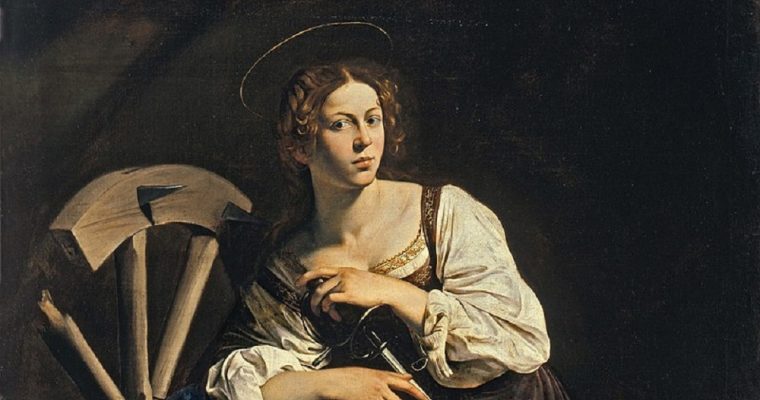
On November 25th we celebrate the martyrdom of Saint Catherine of Alexandria, a young woman born and raised in Egypt and famous both for her many qualities shown during her life and the sanctity of her death. Catherine, born in Alexandria of Egypt from a…

Christmas traditions from all over the world that you don’t know about

Christmas traditions from all over the world that you don’t know about

Christmas is perhaps the most famous holiday in the world. It was born in a religious setting, as celebration for Jesus’ birth, the son of God made man, and with this meaning it is celebrated in all Christian Catholic countries, and protestant and orthodox, with…

Nativity scenes that resemble children

Nativity scenes that resemble children

Modern kids are much more informed than the kids of few years ago under many points of view. They are constantly influenced by mediatic inputs, and are targets of more or less deceptive commercials; they are influenced by stereotypes that want them to act and resemble fixed models, whose pace of life often clashes with the need for freedom typical of their age. Children that grow up too quickly, and at the same time spoiled by adults that try compensate the lack of time with gifts and allow them any type of tantrums.

Convey the true meaning of Christmas

It’s not always like that htough, and it shouldn’t be so, and Christmas can be a perfect occasion to come closer to our children, to share every moment of this wonderful and so important Holiday with them.

It is something we owe to our children, more than gifts, which they will surely receive: make Christmas and its preparation a moment of spiritual communion and sharing. Because Christmas doesn’t have to be only decorated windows, bright lights, bakeries full of colorful sweets and toys shops full of wonderful objects. Because they have to understand that receiving gifts must not be taken for granted, that the old saying “if you behave well you will receive…” is still valid, or so it should be.

How can we let our hi-tech children understand the true meaning of Christmas?

It is not that hard. Afterall, Christmas is the holiday that celebrates the birth of a very special Baby, and to some extent, that makes all the kids in the world the main chacaters of this Holiday.

Symbolic gifts

We can begin our path towards Christmas for our children by celebrating it with a beautiful Advent calendar. It is the perfect time to light up the spirit and the magic of Christmas in the young ones (but also in the older ones…); or we can buy an Advent Wreath and let them light up the candles week after week, and tell them something about Jesus every time, his miracolous birth, the immense love of his mother and Joseph for him, who defied many dangers and the harshness of winter only to make sure He could come to life in that magic night. After all, the story of baby Jesus is a wonderful story, and as such we can tell it to our children, a piece at a time, guiding them through a path of faith that is most of all a wonderful journey. The important thing is not to make it too mushy. The story of Mary and Joseph and their tiring journey, of the many refusals received by everyone in that cold night, is also a constructive story that can teach our children the importance of generosity and welcoming, in a world that is more and more insensitive and selfish.

Telling the story of Mary and Joseph can represent a chance to show our kids the power of love that parents are capable of, ready to defy any danger in order to guarantee the safety of their children, to guarantee them a future. Such a current story, today more than ever.

We tell our children about the birth of a baby that had nothing, that shivered for cold in a manger, warmed only by the breath of an ox and a donkey, and the endless love of his mother and father. A love that could turn a cold hut into a cozy and warm place, a throbbing cornerstone that could call everyone nearby in that special night.

nativity

We can tell them of how the cry of baby Jesus slowly summoned many people, poor people, the humblest ones, lost in a night that was too big and too cold; farmers, shepherds, beggars, who left what they could nect to the manger, poor but heartfelt gifts, such as bread, fruit, or anything that could help worn-out parents.

This is where the magic of Christmas lies, in this feeling of wait, in this Love that spreads all around a baby that shines in a manger, in a dark hut, and which lights up the world with his light.

Another way to push pur children closer to Christmas and let them experience the magic with you could be to take them to see a Christmas show, or even better, let them participate in a Christmas play, maybe at school. Nowadays it is hard to combine everyone faith professions. We are now a cosmopolitan country, and even school struggles with keeping up with the times. In some institutes it is still common to organize simple initiatives during Christmas, and take our childern to such an experience can be a wonderful way to push them closer to this Holiday with the right spirit.

There are many books we can read with them, some only cointain images, for the youngest ones; others have beautiful stories connected to Christmas spirit, and of course, there are movies we can watch with them.

The main point is to instill in them this feeling of magic, of wait, which characterizes this holiday.

Shepherds, farmers, angels and Wise Men, all rushed to the hut in the end, and for the same reason: to celebrate the birth of Jesus, the Savior of the world, the miracolous baby that came to our world to bring joy, light and hope to all men, whether errands or kings.

Holyart Nativity scenes for children

Even the Nativity scene can be an efficent way to let our kids understand the mystery of Jesus’ birth. What is better than a child-sized Nativity scene?  Even better, a Nativity where characters look like cute and chubby children, sweet and smiling?

Holyart thought of you, with a wider choice of nativities that are perfect for the children’s bedroom; child-sized Nativities, but so beautiful that even grownups will find them irresistible.

The handmade wooden Nativities of Val Gardena are particularly appropriate for your children.

For example, Holyart proposes a beautiful Nativity made by the children of Val Gardena composed of 20 wooden characters, all handmade and painted with wonderful colors. The statues are 10 cm tall, and represent all the traditional characters of a Nativity scene: Jesus, Joseph and Mary, the Wise Men, the ox and the donkey, but all of them looking cute and chubby. Even the sheeps are somwhat plump and have sweet litlle faces! A magnet placed at the base of their necks allows them to move their heads where you want, and also to switch them among the different figures. A Nativity scene that is also a toy, what else can a child wish for?

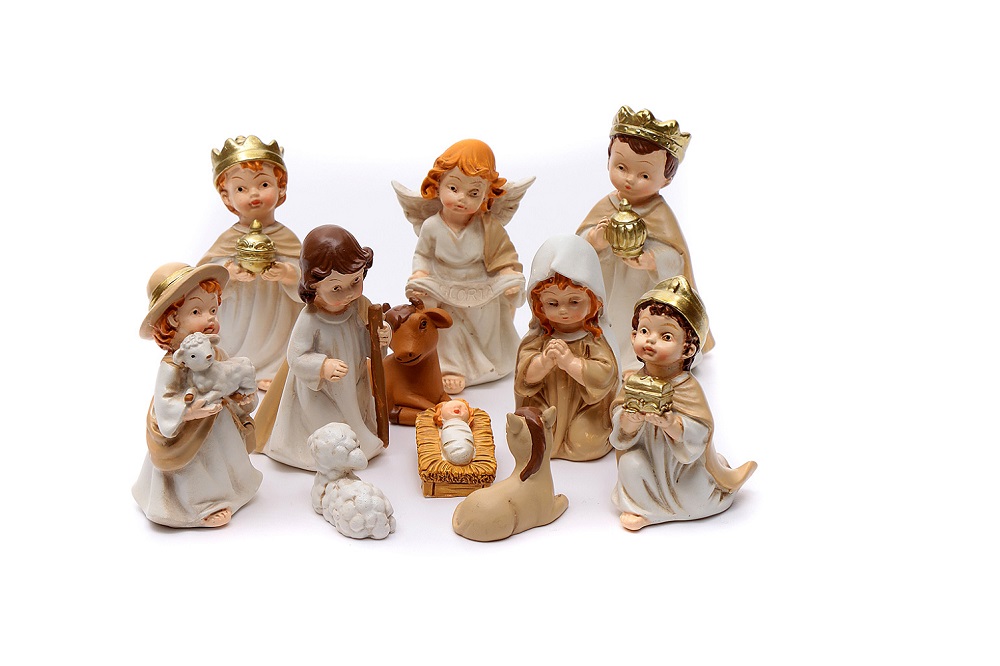
Or else, you could choose a resin Nativity with statues about 13 cm tall, all hand-painted. Also in this case, there are 11 characters typical of the Nativity, but showing the typical looks of chubby children with colorful clothes.

A gentle and adorable world that will embellish your home, your Christmas, and will guide your children towards the discovery of this wonderful journey!

Holyart natural jams: tasty, simple and genuine

Holyart natural jams: tasty, simple and genuine

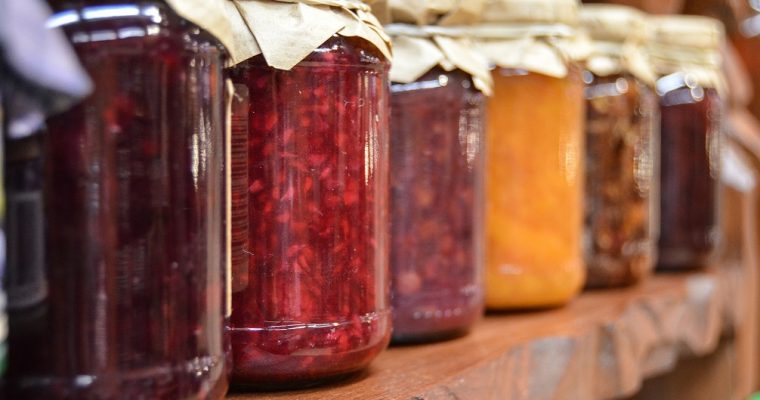
Natural jams are guarantee of quality and genuineness. In a world torn between junk food and the obsession for organic food, where can we find real natural products? In a world where genuineness has become a matter of health rather than taste, more and more…

The meaning of the seven Deadly Sins

The meaning of the seven Deadly Sins

Contents1 History of the seven Deadly Sins2 Why are the deadly sins seven?3 What are the seven Deadly Sins? What is the meaning of the seven Deadly Sins? Where do they come from and how were they defined throughout history? Why are they seven? Let’s…

The Menorah: history and meaning of the Jewish candelabra

The Menorah: history and meaning of the Jewish candelabra

The Menorah is one of the main symbols of the Jewish world. It is a seven-branched oil lamp. In ancient times, it was lit in the Temple of Jerusalem, and it was an extremely sacred and majestic object. Let’s get to know it a little better.

According to Christianism, the candleholder, or candelabra is a very important liturgical furniture. You can find one in any church on the altar, where it is lit to express Faith and Hope with its light. Light has always been a very important symbol in Christianism, related to Christ’s Resurrection, and has a very deep and solemn meaning.

Light was important as well for the Jewish people, and that is shown by the importance they gave to the Menorah. The word Menorah comes for the same root of or, that is, light, and represents the seven-branched candelabra, symbol of the Jewish religion. Actually, the original Menorah was an oil lamp and not a candleholder, but given the subtle difference, today we call Menorah even the seven-branched candelabra.

What is it exactly?

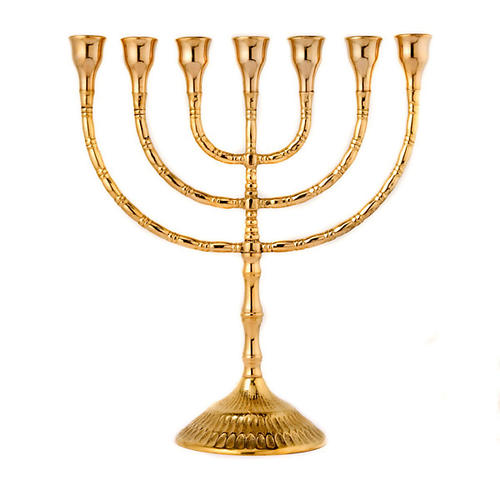
The Menorah was a seven-branched structure, oil lamps burned on each branch. In the Torah, the book of Exodus, it is thoroughly described for what concerns its shape, size, and materials it had to be made of. In fact, when God appeared to Moses, he commanded, among other things, to create a particular object, destined to become the symbol itself of the Jewish religion: “You shall make a lampstand of pure gold. The base and the shaft of the lampstand shall be made of hammered work; its cups, its calyxes, and its petals shall be of one piece with it.” (Exodus 25-31)

It had always been associated with the Tabernacle, the movable sanctuary, which represented the space where the presence of God on Earth showed (Shekhinah). The Jewish Tabernacle was built following the model of the one Moses described when he returned from Mount Sinai. Originally, it was an enclosure made of cloths and tents; in the so-called ‘Most Holy Place’, it stored the Ark of the Covenant, which contained the two stones tablets of the Ten Commandments and other sacred objects.

Tabernacle

Read more:

The importance of the tabernacle in the Catholic Church
The tabernacle is the place of the church that holds the ciborium containing the Eucharist.

Later, in the X century BC, Solomon built a stable Tabernacle inside the Temple of Jerusalem.

A golden Menorah was placed near the Tabernacle of the Temple, where pure and consecrated oil made from crushed olives burned. It was shaped as a common home lamp, but it was much bigger, and decorated with alternating knobs and flowers. Three branches come out from each side of a central beam. It is said that the structure was made of a single piece of beaten gold, just as God himself ordered it. On the Menorah, seven little lamps burned. In the sacred Jewish texts, we can read that there was not just one, but ten seven-branched candelabra near the Tabernacle of Jerusalem, Solomon himself had them built, five on the right side and five on the left side of the Sanctuary. The directions Moses gave to build the Menorah also included some references to botanic, for example to the almond tree, the first tree that blooms in spring, symbol of rebirth and nature. According to the Jewish, passing through the roots of an almond tree you could enter the legendary town of Luz, home of the immortals.

Anyway, among the symbols of the Jewish religion, the Menorah was considered so precious and important that, when Emperor Titus ransacked Jerusalem in 70 AD, he also wanted the theft of the Menorah represented on the triumphal arch in the Roman Forum dedicated to him.

There is no trace of the original Menorah stored inside the temple. Legends say that the Menorah that Titus stole was a fake and that the original is still hidden somewhere in Israel. Whatever the truth is, the precious candelabra showed up occasionally throughout history: first, in the hands of Vandals, then in Constantinople, until all tracks were lost.

Today, the most plausible hypotheses concerning its fate are that the Jewish candelabra is in Rome, hidden somewhere in the Vatican, in a grotto in Jerusalem under the plain of the Temple, in the Tiber river, in Constantinople.

What did the Jewish Menorah stand for?

Some traditions consider the Menorah as the symbolic representation of the burning bush where Moses heard the voice of God thundering on Mount Horeb.

Therefore, the Menorah would symbolize the divine light that spreads out.

According to others, the seven lights of the Menorah symbolize the 7 days of the Creation of the Universe, and that the light in the center corresponds to Saturday.

It is also believed that the seven lights symbolize the 7 heavens full of the light of God, or else, the presence of God with 7 eyes watching over the Temple. Alternatively, the planetary system, with the sun in the middle and the planets on its sides.

According to the Kabbalah, the Menorah is also a symbol of the Jewish alphabet. In fact, it has seven branches with 22 bulks, just as 22 are the letters of the alphabet.

The Jewish said that the oil burning in its lamps were the material image of what would have oiled the Messiah.

menorah

What about today?

Today the Menorah is the universal symbol of Judaism and it is even shown on the official emblem of the State of Israel.

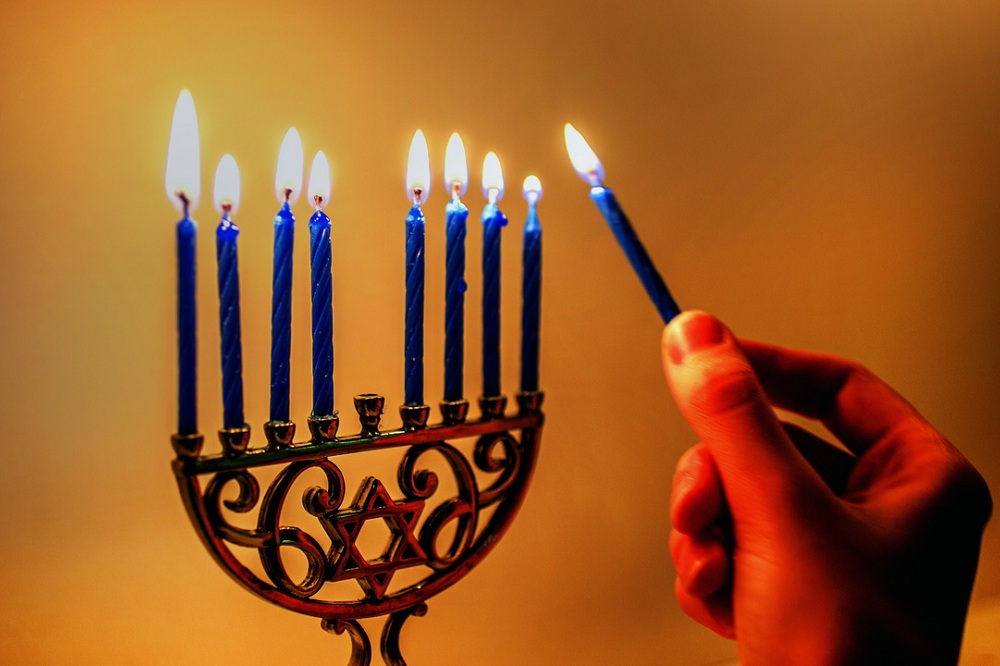
In the Jewish tradition, there are also other types of candelabra, such as the Chanukkiyah, or Hanukkiah. It is a nine-branched candelabra where nine candles are lit. The lighting of the candles is carried out following a very ancient and articulated ritual, because it expresses the duration and vitality of Judaic faith.

That is why tradition wants one light to be lit each night, during the feast of Hanukkah, or Chanukah, which celebrates the consecration of the new altar in the Temple of Jerusalem after the liberation of the city from the Hellenics. The celebration lasts 8 days, from the sunset of the 24th day of the month of Kislev (December).  Actually, since the Jewish calendar is different from the Gregorian one, the first day of Chanukah changes every year.

In 2019, the Chanukah will begin at sunset on Sunday, December 22, and will end on Monday, December 30. The lights are lit when stars appear, except on the Shabbat, when they are lit before sunset. The Chanukkiyah must be lit preferably with relatives and friends. Sharing miracles is a fundamental aspect of Judaism, especially for what concerns conveying culture and faith to new generations. The more people celebrate the ritual, the better it is.

Many people convolute Chanukkiyah for Menorah. It is true that the two candelabras represent the same thing, but the Menorah has seven branches, the Chanukkiyah has nine.

According to another Jewish tradition, there is also a public Menorah lighting. Since ancient times, Menorahs were lit even outside homes or on the windowsills, so that anyone could see them from the streets.

Today the public Menorah is a huge Menorah lit in a public place during the above-mentioned Jewish feast of Chanukah, the Feast of Lights. During this feast, Judaism also celebrates the miracle of the Menorah of Jerusalem: after the oil ran out, it continued burning for eight days!

The Menorah is used today in other cults and worlds such as Masonry, which considers its lighting, carried out following a particular ritual, as a way to enhance the brothers’ skills, besides having other symbolic meanings.

The lighting and extinguishing of the Menorah and the Chanukkiyah

The central candle of the Chanukkiyah is called “Shamash”, which means “guardian“. It is placed higher than the other lights. The Shamash is used to light the other candles. During each evening of the Chanukah, the Shamash is lit first; the others are added gradually, one on each night of the feast. The first night, the candle is placed in the support on the extreme right of the Chanukkiyah.

During the following nights, the other candles will be added, following the supports from right to left. The second night of Chanukah, they will have to light the Shamash, then the candle of the first night on the extreme right, then add a second candle in the next branch. On the third night, they light up the Shamash again, the two candles on the right, and another candle on their left, and so on.

They must always use the Shamash to light the other candles.

candle

Read more:

Why lighting up a candle in church?
Lighting up a candle in church is a tangible sign of faith. From the baptism candles to votive candles, light as a symbol of love towards God.

While lighting the Shamash, they recite a series of blessings. Such blessings must be repeated during each lighting. The first blessing is to bless the candles, and says: “Baruch Atah Adonai Eloheinu Melech Ha’olam, asher kidshanu b’mitzvotav v’tzivanu l’hadlik ner shel Hanukkah.” (Blessed are You, Lord our God, King of the universe, who has sanctified us with His commandments, and commanded us to kindle the Chanukah light.).

A second blessing follows, recited every night of Chanukah after blessing the candles: “Baruch Atah Adonai Eloheinu Melech Ha’olam, she’asah nisim l’avoteinu, b’yamim haheim bazman hazeh.” (Blessed are You, Lord our God, King of the universe, who performed miracles for our forefathers in those days, at this time.).

Only on the first night of Chanukah, after the two blessings, they say the Shehecheyanu, a special formula that the Jewish recite each time they do something, or celebrate a special ritual, for the first time: “Baruch Atah Adonai Eloheinu Melech Ha’olam, shehekheyanu, v’kiyamanu vehegianu lazman hazeh.” (Blessed are You, Lord our God, King of the universe, who has granted us life, sustained us, and enabled us to reach this occasion.).

Once all blessings have been recited, they take the Shamash with their dominant hand, and light up the other candles with that, from left to right, that is, from the last one they put to towards the first one. Once all the candles of the Chanukkiyah are lit, they put the Shamash back to its place in the center, and place the candelabra on the windowsill where everyone can see it. In fact, lighting up the Chanukkiyah is a sign of their own Jewish pride.

Concerning the extinguishing, they need to let the candles blow out on their own. It is important that they burn for at least 30 minutes after they are lit. Therefore, if they have to go out, they have to wait at least that long, then the candles can be put out, even if the best practice would be to let them burn completely.

The Kabbalah describes how the lighting and extinguishing of the Menorah should be carried out. According to this tradition, starting from the left side of the Menorah, the Worlds of Emanation, of Creation and of Formation are symbolically represented. The Menorah is extinguished starting from the lights on the extreme left to the extreme right, putting out the various ‘worlds’ progressively. For what concerns the lighting of the Menorah, first, the triad dedicated to the Emanation, then the one dedicated to the Creation, and finally the one dedicated to the Formation. Therefore, they started from the first lights on the right and on the left, going towards the center. Jewish rituals were celebrated with the entrance into the Temple, then the extinguishing of the Menorah, leaving only the central light on, and only at the end, everything was lit up again.

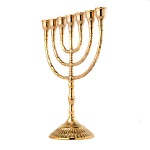
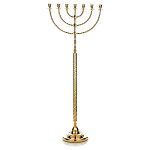
Menorah seven flame candlestick
Buy Now
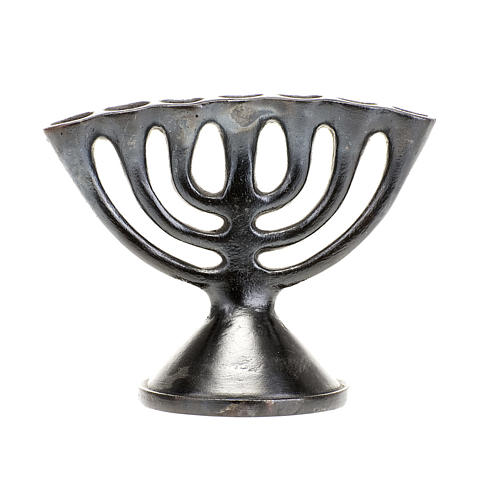
Ethiopian menorah candle-holder
Ethiopian menorah candle-holder (2)
Ethiopian menorah candle-holder
Buy Now
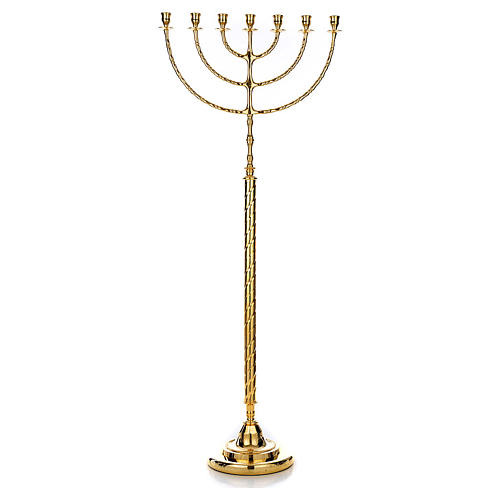
Candlestick Menorah in gold-plated brass with 7 flames
Buy Now
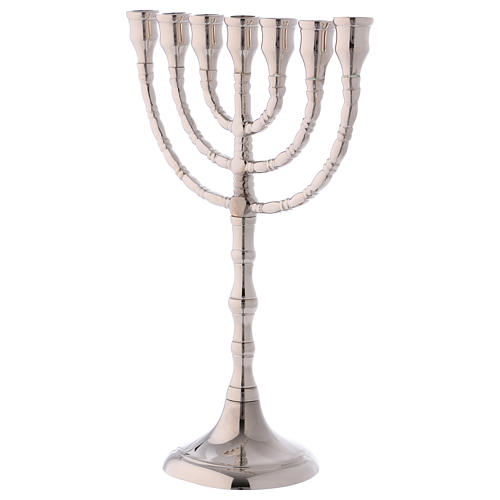
Menorah candle holder with 7 flames in silver-plated brass 25 cm
Menorah candle holder with 7 flames in silver-plated brass
Buy Now
Basilica of Our Lady of Guadalupe in Mexico City

Basilica of Our Lady of Guadalupe in Mexico City

Contents1 The history of the Basilica of Our Lady of Guadalupe2 The Basilica of Saint Mary of Guadalupe3 Expiatory Temple to Christ the King4 Temple of the Pocito5 Capuchin Nuns’ Temple6 How to get to the Basilica of Our Lady of Guadalupe The Basilica of…

The miracles of Saint Gerard Majella

The miracles of Saint Gerard Majella

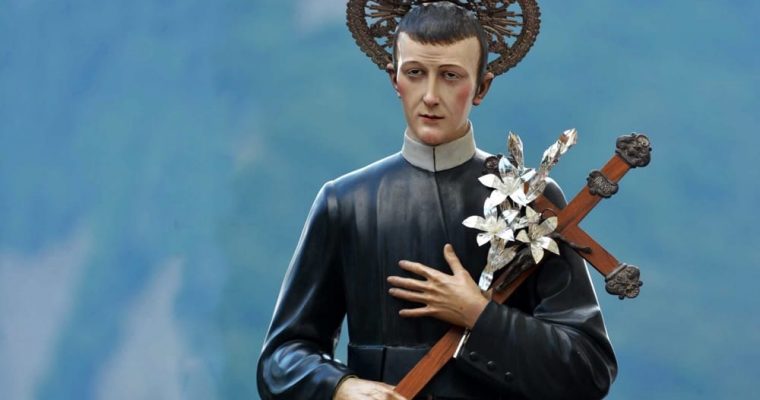
Contents1 Saint Gerard and the religious call2 Miracles of Saint Gerard3 Prayer to saint Gerard Majella The miracles of Saint Gerard Majella let the world know the human and spiritual story of this exceptional young man. Let’s find out more about the saint Patron of…

What is the Scapular?

What is the Scapular?

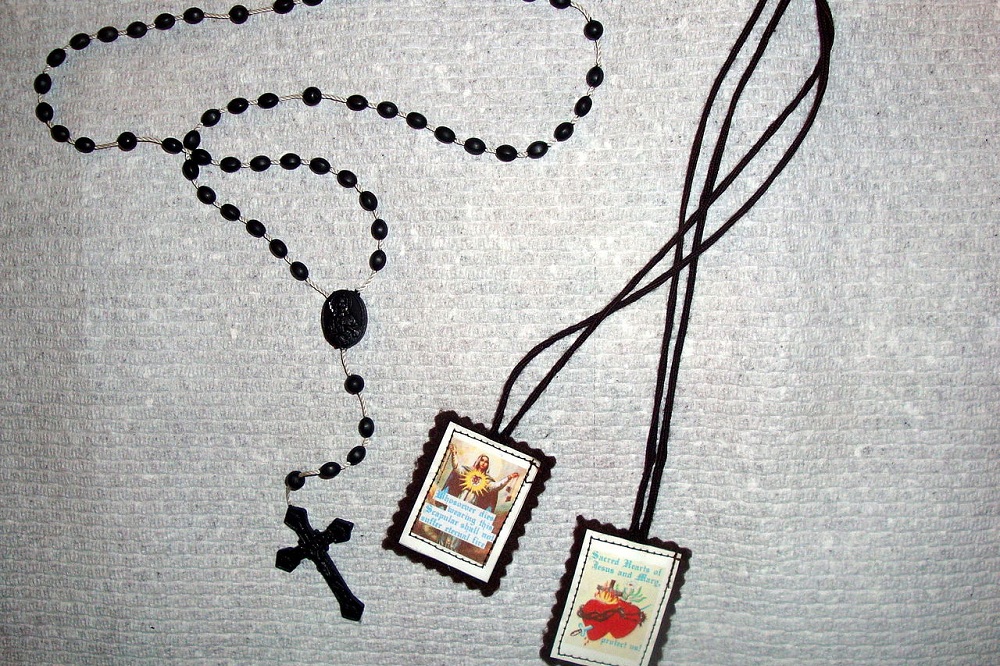
The scapular has evolved throughout time, from being a work garment for monks to becoming a devotional object used also by lay people. What is its meaning? And most of all, how can we wear it without falling into error?

At the beginning, the scapular was a strip of cloth worn thanks to an opening for the head. That way, the two pieces of cloth were hanging down on the chest and on the back.  It was used by many religious orders, such as the Benedictines, the Dominicans and the Carmelites. It covered shoulders and stomach and was used as a work garment in order to preserve the tunic underneath. Some orders adopted a hood as well, integral part of the scapular. With time, the scapular became longer and longer, turning into a strip of cloth until the feet.

The Carmelite order

Besides the original practical scope of protection, the scapular is also a devotional object. In particular, the Carmelite order made it a visible sign of their Marian devotion. The members of the Order wear the scapular during the processions dedicated to the Virgin Mary of Monte Carmelo, and during the pilgrimage from one altar to the other on Holy Thursday.

The Carmelite order

Read more:

The order of the Barefoot Carmelites
The Barefoot Carmelites (or Discalced Carmelites) are nuns whose life is devoted to God by solemn vows.

A legend says that in 1251, when the Order of Carmelo (which moved from the Holy Land to Europe) was not recognized and suffered from persecutions from any side, the Prior general Saint Simon Stock asked the Virgin Mary for help. In order to do that, he dedicated the hymn Flos Carmeli to her. The Virgin listened to his heartfelt and poetic plea, and showed herself to him bringing him a scapular as a sign of love and friendship for him and his Order. The Virgin Mary herself stated that those who died wearing the scapular would never know the pain of hell, because that was a sign of salvation, protection and support. A symbol of peace and alliance between men and Heaven.

Scapular

In his Bulla Sabatina (1322), John XXII stated that the use of the scapular guaranteed the shortening of the pains in the Purgatory. Since the Bulla Sabatina, the devotion towards the scapular spread widely.

In 1908, the Sacred Congregation of Indulgences confirmed the benefits guaranteed to those who wore this devotional sign.

A bulla dated February 11 1950 by Pius XII recognized the value of the scapular among Marian devotions, inviting everyone, whether religious or lay, to wear it.
In 2001, John Paul II said that he had been wearing the Scapular of the Carmine upon his heart for a long time.

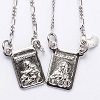
The scapular is known today also as ‘abitino’ (small dress). A reduced version was created for lay faithful. It is made of two brown squares of cloth kept together by cords. The image of Our Lady of Carmelo is on one side, the Heart of Jesus on the other side. It is a miniature of the Carmelite robe, and is usually made of canvas. Those who wear the scapular enters the Carmelite family and consecrate themselves to Mary. The scapular is then a visible sign of the alliance with Mary.

Pope Pius XII established that the scapular could be replaced with a medal. This medal preserves the meaning and value of the classical scapular, as long as the first time it is worn it receives the same imposition the scapular itself received. Such imposition must be given by a priest and accompanied by a special prayer.

Today we can find jewel-scapulars in stores, made of wood and metal, often silver, decorated with rhinestones or made of fabric. They can be worn as jewels, and that makes them even more accessible to all those faithful who wish to express their devotion to Mary and their will to embrace the spiritual and life principles of the Order of Carmelo:

  • Consider God at the first place in our life and always execute His will;
  • Listen to the Word of God in the Bible and put it into practice every day;
  • Look for the communion with God through the prayer;
  • Show mercy and participation to the sufferings of our neighbor and help those in need as much as possible;
  • Regularly receive the sacraments.

About the possibility to wear a scapular-shaped jewel, some time ago we published an article about religious jewels, and on how important it is to know their meaning well before wearing them. We cannot wear a religious jewel just for fashion, although many fashion designers carelessly propose crucifixes, rosaries, medals dedicated to Mary or the Saints, as if they were simple glamour ornaments. When we wear religious jewels, it is very important that we think of the meaning we give them, which makes the difference (often very thin) between sacred and profane.

Religious jewels

Read more:

Religious jewels: fashion or devotion?
We are talking here about religious jewels, about how they are often impoverished of their deepest and truest spiritual value

In particular, wearing a jewel-scapular can be a gesture of great devotion and a support in everyday life for our own spiritual salvation. The scapular is not a pass for Heaven though! It is not enough to wear it to be granted salvation, but, as it is in such cases, it is our mental attitude that counts, the way we approach things. The faith of those wearing it determine its efficiency, the way we carry out our everyday life, our morality, our mercy. Those who expect salvation must behave in a worthy way.

5 religious key chains to give on 5 different occasions

5 religious key chains to give on 5 different occasions

What could be a not too expensive gift, but which can also let the people we love know that we think about them? Have you ever thought of a religious key chain? Small, practical, useful, it is the perfect gift for any occasion. And for…

Murano (Venetian) glass: the making and its characteristics

Murano (Venetian) glass: the making and its characteristics

Contents1 History of the glassmaking art in Murano2 Murano glassmaking3 Murano glass crosses4 Murano glass jewels5 Murano glass crosses Murano is a wonderful island that has been guarding the secrets of a unique and inimitable artisanal craft for centuries. Let’s discover the Murano glass jewels…

History of Saint Peter’s Baldachin

History of Saint Peter’s Baldachin

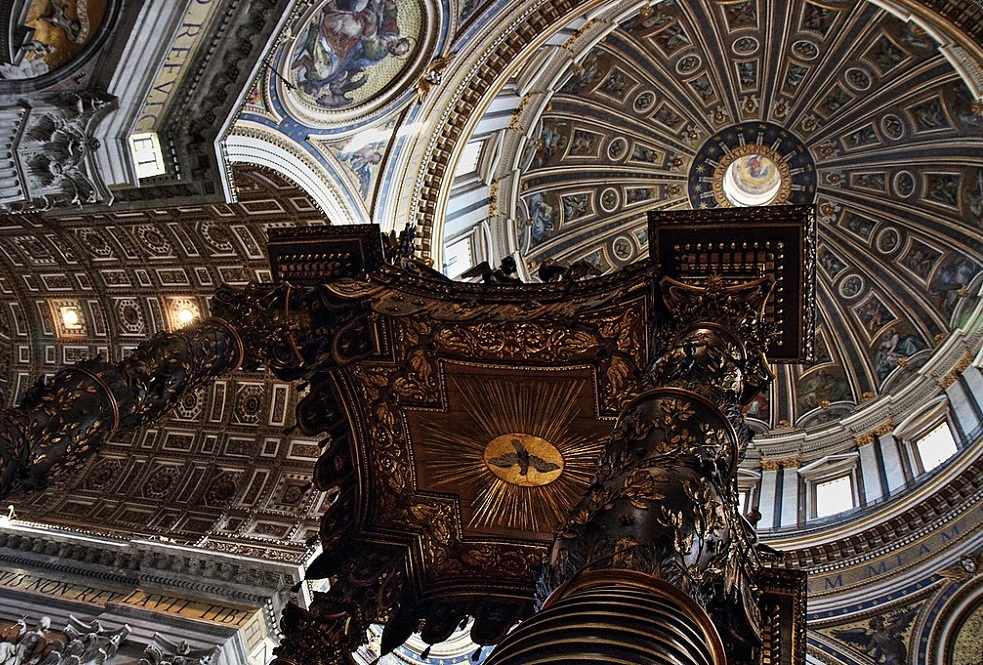
Saint Peter’s Baldachin is one of the most spectacular monuments we can admire inside Saint Peter’s Basilica. What is it? Who made it? Let’s get to know this sumptuous baroque art piece, which is admired by millions of visitors from all over the world every year.

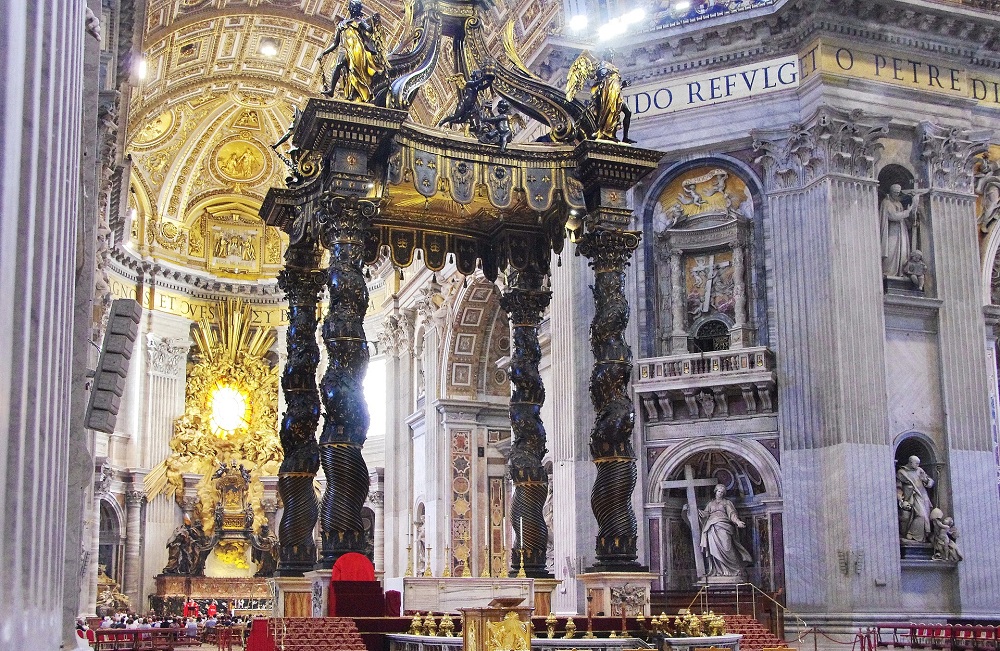
Saint Peter’s Baldachin is a ciborium placed in the heart of the Basilica dedicated to the Saint Father of the Church. In Baroque art, a ciborium is a canopy that covers the high altar. Baldachins are real sacred furnishings. They are usually big square or rectangular pieces of fabric, supported by four or more columns decorated with fringes and friezes; they are used to protect cardinals, bishops and popes during processions.

As it is for all other sacred furnishings, even baldachins are often part of the Church treasures. In fact, they were often made with great care and attention, with the best fabrics, gold and precious stones decorations.

Artistic value

Saint Peter’s Baldachin is much more than a simple ciborium. It just not covers the high altar, commissioned by Clement VIII in 1594, but also Saint Peter’ tomb next to it. Such solemn and devoted place is furtherly enclosed by the majestic cupola designed by Michelangelo. A very impressive look, intended exactly to inspire wonder and reverential fear in anyone looking at it, as it was typical of Baroque art and architecture. That is why Saint Peter’s Baldachin is recognized as one of the most amazing monuments of such artistic movement, which enriched Rome with unique palaces and monuments between 1600 and 1700.

In particular, Gian Lorenzo Bernini designed and built Saint Peter’s Baldachin between July 1624 and 1633. That was not the first time the Church had moved to give homage to the saint’s tomb. Already a hundred years after Peter’s death, at the end of the II century A.D. the Presbyter Gaius had commissioned a small grave shrine, known as ‘Trophy of Gaius’, which soon became a destination of pilgrimage even before Constantine’s arrival. He had the ‘Trophy of Gaius’ stored in a marble shrine. Later, to mark and honor the burial place of the Apostle, they put the altar of Gregory the Great (590-604), the altar of Callistus II (1123) and in 1594, the altar of Clement VIII. The baldachin by Bernini was erected above this last one. This list of unbelievable monuments tells us two thousand years of Church history, and lets us imagine the devotion of millions of men and women who, throughout the centuries, went to that place moved by their own faith.

Saint Peter' tomb

Characteristics and peculiarities

Saint Peter’s Baldachin is twenty-eight and a half meters high, more than a ten-story building! It has a square base, and recalls the shape of the papal baldachin used to cover the pope during processions. Four high bronze columns are at the angles of the marble plinth; they were obtained with the bronze imported from Venice and by fusing the columns of the pronaos of the Pantheon of Agrippa together. They rise in a helical pattern and seem to wrap around themselves like the ones of Solomon’s temple, up until the sumptuous capitals. The columns are 11 meters high and are entirely covered with laurel branches to give homage to Urban VIII passion for poetry.

Bees, symbol of the Barberini family that commissioned the monument, and lizards, which symbolize rebirth and Resurrection thanks to their ability to shed their skin, fly and run among the columns. The first lizard on the Northwestern column faces the sun and symbolizes the pursuit of God; the second lizard in the Northeastern column holds a scorpion in its mouth, which is a symbol of evil in the Apocalypse.

An interesting detail: a rosary is fused in the column on the back at the left. It is a homage from Bernini, through which he declared that he dedicated his work to the Virgin Mary. On one edge, we can see a crucifix, while on the other side there are three devotional medals. On the other side of the column, we can spot another medal, which should represent Pope Urban VIII himself.

The columns rise from polychrome marble plinths where women faces representing the stages of a birth are carved: from the moment of the conception to the birth of the baby, newborn in the last frieze. It seems that this particular choice of decor for the plinths was dictated by one of Pope Urban VIII nieces, who experienced a very difficult pregnancy. Or maybe, it was a way for Bernini to show his own devotion towards ‘Mother Church’.

The capitals are of composite type, with pulvino. Pulvino is an architectural element shaped as an upside down truncated pyramid. It was typical of the Byzantine architecture, and was placed between the capital and the impost of the arch; it was often decorated with fretwork or low reliefs. Here, the composite capitals sustain the ionic volutes of the arches, and are decorated with acanthus leaves, typical of the Corinthian capitals.

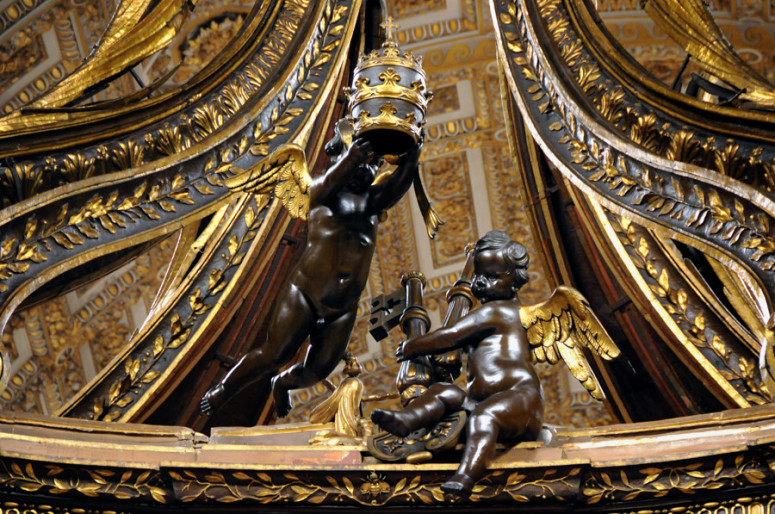
The cover is made of gilded wood and shaped as a dolphin’s back; it is lavishly decorated and is proof of the excellence of this monument, a true synthesis of Baroque architecture and sculpture.  In particular, four angels’ statues rise on the top of the baldachin at the four corners, and other puttos statues, designed by Francesco Borromini, support the festoons. Some puttos hold Saint Peter’s keys and the papal crown in their hands. One of them lifts a huge upside down bee’s body towards the sky, recalling the symbol of the Pope’s family once more. A globe with a cross stands upon it.

Angels

The dynamism of shapes

Besides the greatness of the work itself, we can notice the lightness and dynamism of the shapes, obtained by the artist thanks to his inestimable skill in treating hard materials as if they were soft and light. Even the fringes in fake fabric that ornate the cover, even though it is made of bronze, seem to be fluttering in the breeze!

Bernini did not work alone on this majestic monument. Francesco Borromini was his assistant for the architectural part, and many other artists helped him with the fusion and chiseling parts.

It took Bernini almost 10 years to complete the Baldachin, which was inaugurated in 1633 by Pope Urban VIII. Thanks to its particular architectural structure and the mainly sculptural mark, Saint Peter’s Baldachin can be considered a real manifesto of the Baroque art.

There is a guardian angel in your baby’s room

There is a guardian angel in your baby’s room

The guardian angel. An imaginary friend when we are young, a constant and comforting presence next to us when we grow up. Let’s find out (and rediscover) the importance of such celestial presence that protect us for life. When we are young, it is easy…

Easter Blessings to families

Easter Blessings to families

The tradition of blessing during Lent and Easter is very ancient and represents one of the most important moments of the liturgical year, not only for the faithful receiving it, but also for the priests giving it. Let’s find out why. We talked previously about…

Blessed olive branches at Easter: should you keep them or throw them away?

Blessed olive branches at Easter: should you keep them or throw them away?

When we go to Church on Palm Sunday, the last one before Easter, we receive a blessed olive branch. Where does this tradition come from? Why was the olive chosen? And what should we do with the olive branches once Easter has passed?

For Christians (but also Orthodox and Protestants celebrate it), Palm Sunday is the Sunday before Easter. It is the day when, according to the tradition, Jesus entered Jerusalem, welcomed by a cheering crowd: 12 The next day the large crowd that had come to the feast heard that Jesus was coming to Jerusalem. 13 So they took branches of palm trees and went out to meet him, crying out, “Hosanna! Blessed is he who comes in the name of the Lord, even the King of Israel!” (John 12,12-13)

Palm Sunday celebrates the triumphal entrance of Jesus into Jerusalem, and the joy of those who laid down capes, cut branches of palm trees and shook them in order to welcome him. The event is connected to the Jewish feast of Sukkot, the feast of tabernacles. The faithful went up to the temple of Jerusalem carrying braided branches of palm trees, symbol of faith, mirth, symbol of prayer, and willow, whose narrow leaves recall the closed mouth of the faithful in front of God (Lv. 23,40). Osanna, or Hosanna, was an invocation of salvation that dated back to the freedom from Egypt, when the Jewish were forced to live in the desert in tents and huts for a long time.

Easter

Read more:

The origins of Easter
Easter is perhaps the most important of Christian holidays. It reminds and celebrates the Resurrection of Jesus.

The Holy Week starts on this day. The Lent goes on until the celebration of the ninth hour on Holy Thursday.

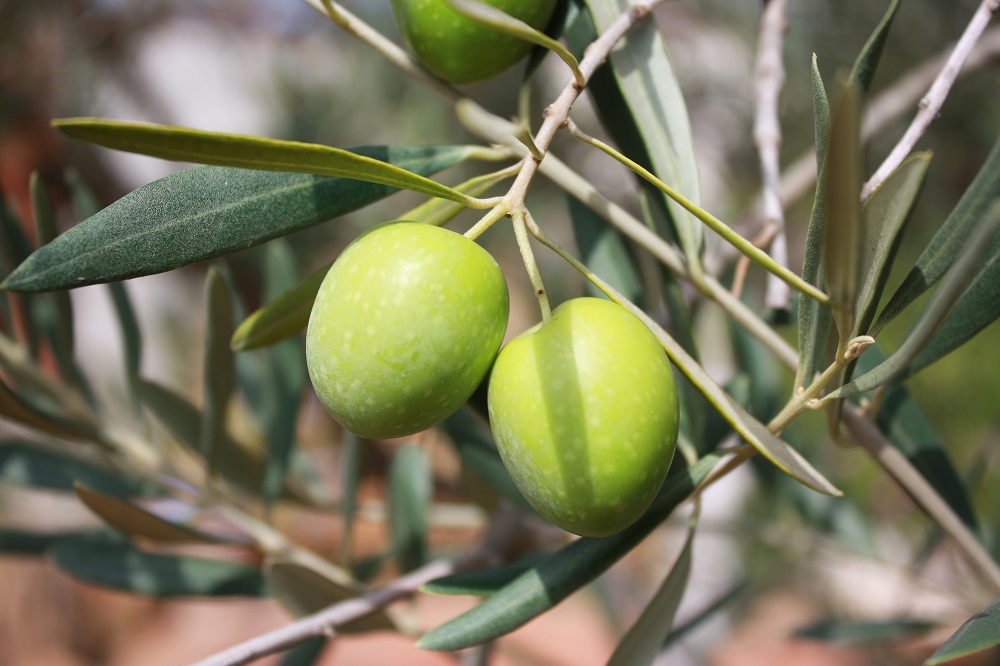
The liturgical tradition of Palm Sunday strengthened over the centuries. Since it is meant to commemorate and celebrate the arrival of Jesus in Jerusalem, it begins outside the church, where the priest blesses the olive branches surrounded by the faithful. Why olive branches? It’s easy to say: in Italy, as it happens in all of those countries with a high catholic presence, it’s not easy to find many palm trees. Therefore, olive tree branches replaced palm trees branches.

Once the Priest has blessed the olive branches, we can enter the church. The readings on Palm Sunday are connected to Christ’s Passion, and in particular to the Passio, that is, the ‘Narrations of the Passion’, from the Latin verb patior, meaning ‘to suffer’. In the ordinary form of the Roman ritual, the Passio is extracted from Mark, Luke or Matthew’s Gospels; in the extraordinary form, it comes from Matthew’s Gospel. The telling of the Passion, divided into four parts (Jesus arrest, Jewish trial, Roman trial and finally, his sentence, execution, death and burial) is read by three readers, who represent the narrator, the characters of the event and Christ himself. During such a solemn occasion, the priest wears a red robe.

But why olive branches?

We briefly talked about how olive branches replaced palm trees branches during such occasion, and why.

Actually, only John’s Gospel mentions palm trees branches (Mt 21,1-9; Mk 11,1-10; Lk 19,30-38; Jn 12,12-16). Matthew’s and Mark’s Gospels mention generic tree branches, while Luke’s does not mention any at all. Nevertheless, the habit of blessing olive branches and take them home after the Mass has long been established. Faithful store their blessed olive branch as symbol of peace, or take one to relatives and friends as a sign of love and good wish. In some places, it is still common for the head of the family to bless the Easter meal with the olive branch dipped into blessed water.

Since ancient times, all those civilizations that are located on the Mediterranean basin consider the olive tree as a holy plant. The Greeks used its branches to braid crowns to decorate the heads of the winner athletes. It was also a plant dear to Athena, goddess of wisdom and war. Even the Romans used the olive to honor eminent men, while the Jewish considered it a symbol of justice and knowledge. Furthermore, the dove set free by Noah brought an olive branch back to the Ark, according to the Old Testament, as a sign that the Flood was over and with it, God’s wrath as well. In this sense, we can consider the olive as a symbol of rebirth and peace.

Trees and plants in the Christian tradition

Read more:

Trees and plants in the Christian tradition
In ancient times, the relationship between man and nature was much closer than itis today.

The story of Jesus too is full of references to this plant, until the last, tragic night in the Garden of the Olives where he was arrested. Christ himself, with his sacrifice, becomes an olive, symbol of reconciliation between humankind and God.

We must not forget that with the oil coming from the fruits of this exceptional plant we can make the Chrism, used for Christening, Confirmation, Extreme unction and the consecration of new priests. The word Christ, which we are used to call Jesus by, actually means ‘oiled’.

And once Easter has passed, what should we do with the olive branches?

Many people keep them in their homes as a decoration and a memory of Palm Sunday and Christ’s Passion. They are actually sacred objects, since they were blessed during the Mass, becoming sacramentals, and the Code of Canon Low absolutely forbids throwing sacred objects away. Instead, they deserve a special place in our homes, as a reminder of Christ’s love and sacrifice for us.

Otherwise, we can burn the olive branches, bury them, or even take them back to the church. They will be burned and used to make the ash for Ash Wednesday.

How can we keep the olive branch without ruining it?

The olive bags are perfect for the scope. They are practical cases where the olive branch does not crumble apart, and keeping it inside a case, its leaves will not spread all over the house once it has dried out. You can find many models in our online store, some of them are very simple and neutral, others are decorated with religious symbols, such as the logo of the Jubilee of Mercy, the Easter dove, the Holy Family, images of Jesus entering Jerusalem, or Jesus the Good Shepherd, and many more. What better package to offer an olive branch to someone we love as symbol of peace and love?