Author: Redazione

Our Lady of Fatima: Penance and prayer are salvation

Our Lady of Fatima: Penance and prayer are salvation

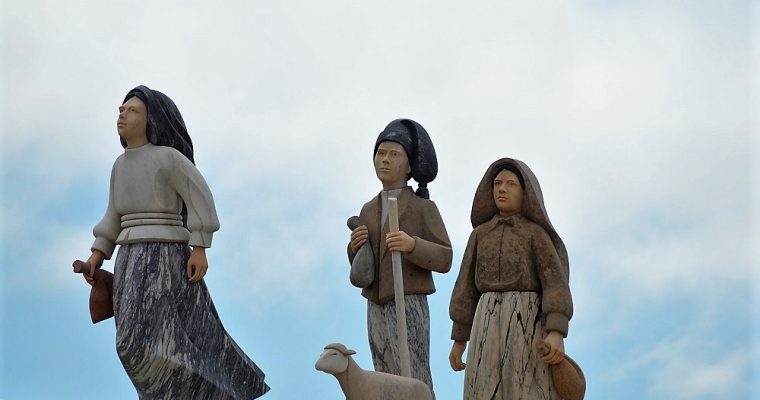
Contents1 History of Our Lady of Fatima2 The three shepherds of Fatima3 The three Secrets of Fatima4 Sanctuary of Fatima On 13 May we celebrate the Madonna of Fatima. Her invitation to penance and prayer as instruments of salvation today is more timely than ever.…

5 places of pilgrimage to go to at least once in a lifetime

5 places of pilgrimage to go to at least once in a lifetime

Contents1 Pilgrimages of Faith2 Pilgrimage to Medjugorje3 Pilgrimage to Lourdes4 Pilgrimage to Fatima5 Macerata – Loreto pilgrimage6 The pilgrimage to the Holy Land God’s action on this Earth leaves a strong mark that attracts us: here are five pilgrimages of faith to be made at…

The most popular prayer for expectant mothers and 5 gift ideas for them

The most popular prayer for expectant mothers and 5 gift ideas for them

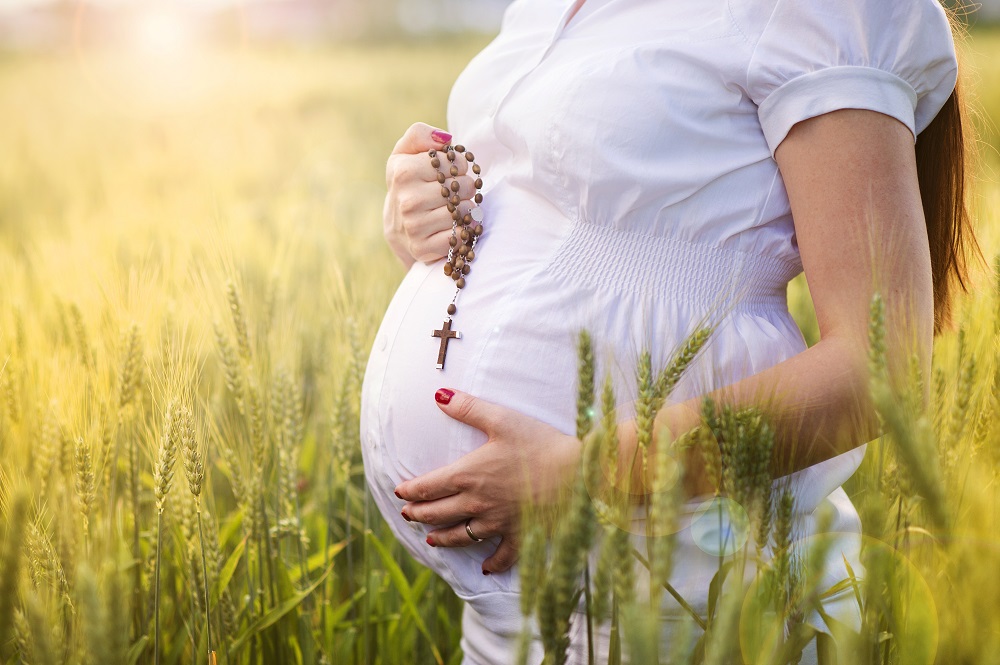
Pregnancy is a special period, made up of joys, hardships and daily surprises: here are some good ideas for expectant mothers.

Being an expectant mother means being part of God’s creative action especially. But also having to endure the fatigue and waiting that accompany pregnancy. What are the prayers for expectant mothers? Who is the protector of pregnant women? And for everyone else: what gift to give to a new mother? Here are some answers within this article.

Prayer of the expectant mother

This is the prayer of the expectant mother, which the mother recites for the creature she carries in her womb and for herself:

Lord,
I pray you with love for this sweet hope that I hold in my womb;
I humbly thank you for choosing me as the instrument of your love. In this waiting, help me to live in continuous abandonment to your will;
grant me a pure, strong, generous heart. 

To you I offer the worries that already make me restless:
anxieties, fears, desires for the creature that I do not yet know. Let her be born healthy in the body, remove all physical harm from her
and every danger to the soul.

O Mary, you who know the ineffable joys of holy motherhood,
obtain for me a heart capable of transmitting a living and ardent faith,
sanctify my expectation, bless this happy hope of mine and my spouse.

Amen

mothers day

Read more:

Mother’s Day, heart of the Marian month
On May, we celebrate all mothers of Italy. A sweet, warm day that revolves around children, but not only. May is the month dedicated…

Prayer of the expectant mother to Santa Rita

There is also a prayer directed to Saint Rita, who was a holy wife and mother before losing her husband and children and becoming a nun. Here it is:

At your birth, O Saint Rita, you had the symbolic name of a gem and a flower.
Look lovingly at me that I am about to become a mother.
You too became a mother of two children, 

you loved and educated as only a holy mother can do.
Pray that the Lord will grant me the grace of the child,

that with my husband we await as a gift from heaven.
From now on we offer it to the Sacred Heart of Jesus and Mary

and we also entrust it to your protection.
May the miracle of a new life blessed by God be fulfilled in joy.

Amen

Santa Margherita da Cortona protector of women in childbirth

Read more:

Santa Margherita da Cortona: protector of women in childbirth
We discover the figure of Saint Margaret of Cortona, the Nova Magdalena (New Magdalene), famous among saints and blessed for being…

Who is the protector of pregnant women?

So, who is the protector of pregnant women? There are a lot of them! Several women have been holy mothers in their lives or who have helped other women to become one. One of these is Santa Margherita da Cortona: we told her compelling story in an article on our blog. Another great woman, who is invoked as the protector of women in childbirth, is Sant’Anna, mother of Mary. But undoubtedly, the Mother of Mothers is her: Mary of Nazareth, mother of Jesus Christ, Mother of God and Queen of the Family.

Gifts for expecting moms

What to give to an expectant mother? Here are some gift ideas to show affection and joy to pregnant friends or relatives.

The necklace angels caller

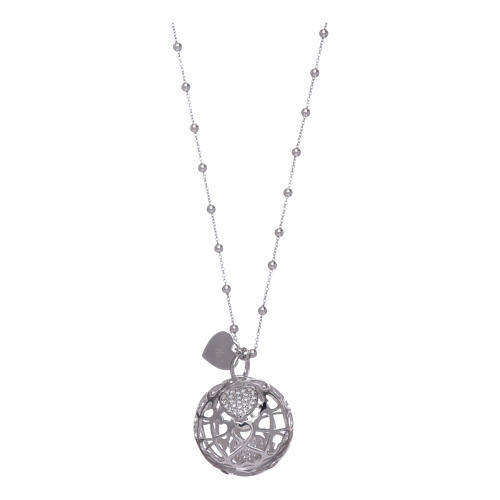
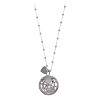
A jewel with a particular meaning is the pendant angel caller. The characteristics of this pendant are the spherical shape and the internal bell. When it moves, the angel call necklace emits a soft and pleasant sound, called the call of the angels. This jewel expresses the wish that the angels, attracted by this sound, watch over the child and protect him.

Carillon above cradle

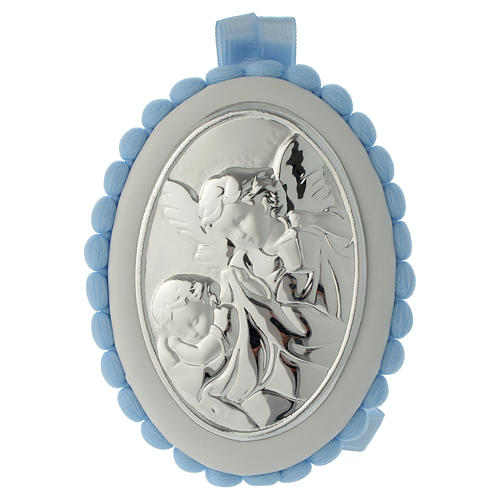
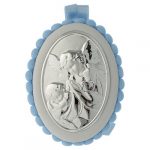
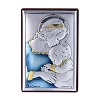
Preparing for the arrival of the new creature is a journey full of emotions. A medal to hang over the crib can be a nice way to take part in this journey. Pink crib medal for girls and blue for boys: children will sleep accompanied by a sweet lullaby and the image of Jesus, the Madonna, an angel or a saint.

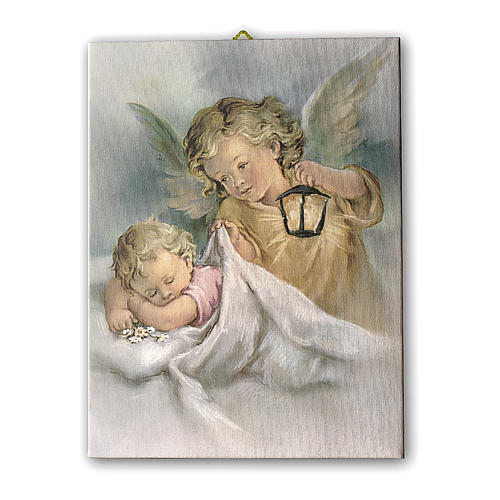
The picture with guardian angels

Always enrich the bedroom with a symbol of faith, why not give a picture with guardian angels? The hope is that the child is always under the protection of the angels.

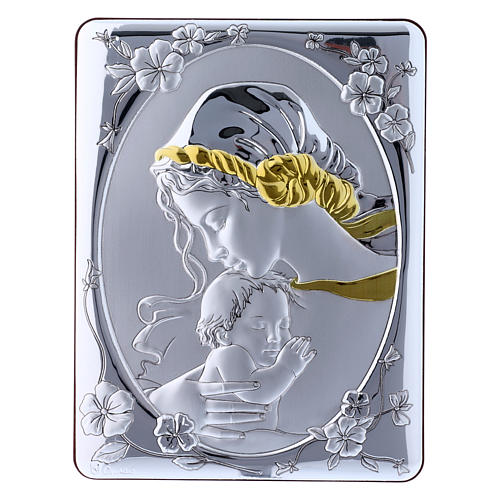
Picture of Mary with Child

The beautiful thought is to wish the mother to love her child as Mary loved Jesus. It can be expressed with a picture of Mary with the Child Jesus, the Mother and the Son par excellence.

Self-care products

Pregnancy is a beautiful time but it has its hardships! An expectant mother will appreciate the attention of those who will give her some relief in the most tiring moments. A natural product such as balsamic salts, for a relaxing foot bath, can be an excellent idea.

Of course, all of these gifts work when accompanied by two fundamental elements: affection and kindness!

Amen necklace angel caller rosè with heart and zircons in 925 sterling silver
Amen necklace angel caller rosè with heart and zircons in 925 sterling silver.
Buy Now
Cradle headboard light blue with pom pom, angel and music box
Cradle decoration light blue with pom pom, angel and music box.
Buy Now
Our Lady with Baby Jesus painting finished in gold, made of laminboard with refined wooden back
Our Lady with Baby Jesus painting finished in gold.
Buy Now
Camaldoli Foot-bath. Podiatric balsamic salts (250 gr)
Camaldoli Foot-bath
Camaldoli Foot-bath. Podiatric balsamic salts (250 gr) .
Buy Now
Painting on canvas Guardian Angel with lamp 70x50 cm
Painting on canvas Guardian Angel
Print on canvas Guardian Angel with lamp 70x50 cm.
Buy Now
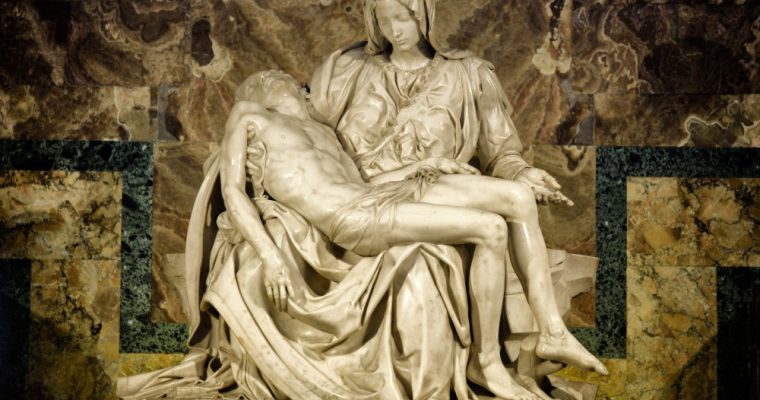
La Pietà by Michelangelo Buonarroti: history and description of one of the most beautiful works in the world

La Pietà by Michelangelo Buonarroti: history and description of one of the most beautiful works in the world

Michelangelo Buonarroti’s Pietà is one of the most famous works of art of all time and one of the masterpieces of the Italian Renaissance. Let’s discover the secrets of this wonderful sculpture. It is difficult to think of a work of art that is as…

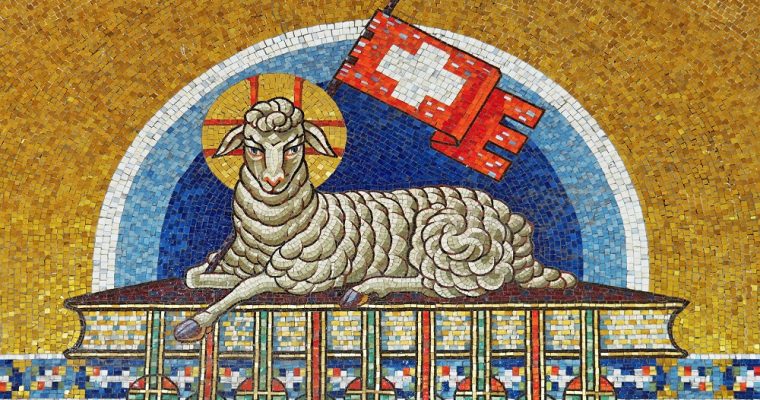
The symbolism of the Easter Lamb

The symbolism of the Easter Lamb

Easter is getting closer, carrying its solemn suggestions and symbols full of spirituality. The Easter Cross, candles, lamb. Not just simple traditions, but objects of devotion and spiritual renovation. Let’s check them out. If we should explain what we celebrate for Easter to a child,…

Easter in art: the most beautiful artworks representing the passion of Christ

Easter in art: the most beautiful artworks representing the passion of Christ

Easter is the most important celebration for Catholics. For this reason, it has been pictured by artists in every conceivable declination for the past centuries. Let’s discover together some Easter masterpieces in art.

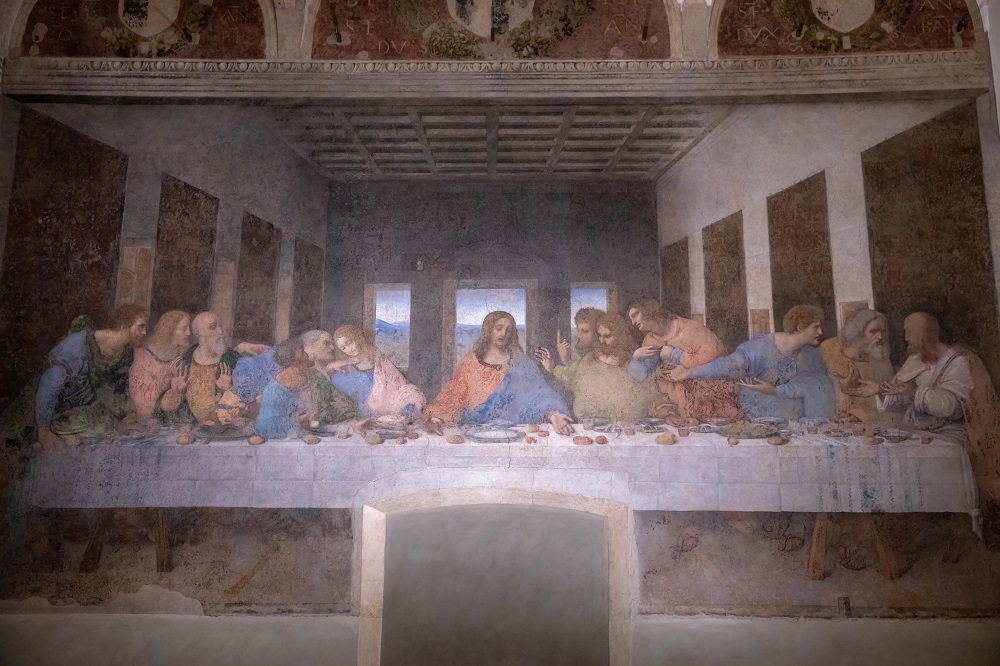
Following in the footsteps of Easter artworks could be another way to prepare to such a unique and precious holiday for all the faithful. It allows to relive the last days of the mortal life of Jesus: its relentless and painful path towards the final sacrifice, the Last Supper, the meditation in the Garden of Olives, the Passion, up to its Death on the Cross and its Resurrection. Every act of this tragedy deserves to be contemplated: it offers food for thoughts and spiritual growth. It has always been like this and the recurrent presence of Eastern related artwork serves as a demonstration of it. We could affirm that the whole history of Western art is summarized in a series of milestones frequently related to Easter. Of course, we are not talking only of “famous” artworks. Among the pieces of art that we could consider as immortal we must place The Pietà by Michelangelo, which represents the moment where the body of Christ is laid down from the Cross and entrusted to the loving and sore hug of Its mother Mary. Moreover, we could mention The Last Supper, by Leonardo Da Vinci, that we mentioned among the 5 sacred images that should not be missing in your house. On the other hand, there is also a rich tradition bounded to art and popular devotions. Let’s think of the Easter Creches, that revisit the last days of the life and death of Jesus, relating to the Via Crucis tradition and to the holy representations of the 14th century. The ultimate objective of these shapes of folk art is always the same: explain through images the episodes of the life of Jesus’ or Mary’s life to those who did not know Latin, thus spreading spiritual messages, making them accessible to everyone.

How is Easter calculated

Read more:

How is Easter calculated?
Each year changes date but remains the most important holiday: in this article, you will find out how Easter is calculated…

The Last Supper by Leonardo da Vinci and The Last Supper by Giotto

The Last Supper by Leonardo da Vinci

We already mentioned The Last Supper, that is the last meal eaten by Jesus with its apostles, to celebrate the Jewish Easter. This was also the occasion where Jesus established the Eucharist, breaking the bread and offering wine as Its body and blood to His fellows. Numerous artists tried to represent the dramality of that particular episode during the past centuries: Jesus already knows that he will be arrested and will face never ending tortures the day after. He knows that one of His faithful fellows will betray Him, and He publicly declares it, exactly as He declares that Peter will disown Him three times. It is an announced drama, that relives in the faces and postures of the protagonists. Other than the most known Last Supper by Leonardo, Giotto figures among the artists that have pictured this episode as well. His homonymous fresco is accessible in the cycle of the “Cappella degli Scrovegni” in Padova. The subject of the Last Supper has always been much dear also to painters of sacred icons.

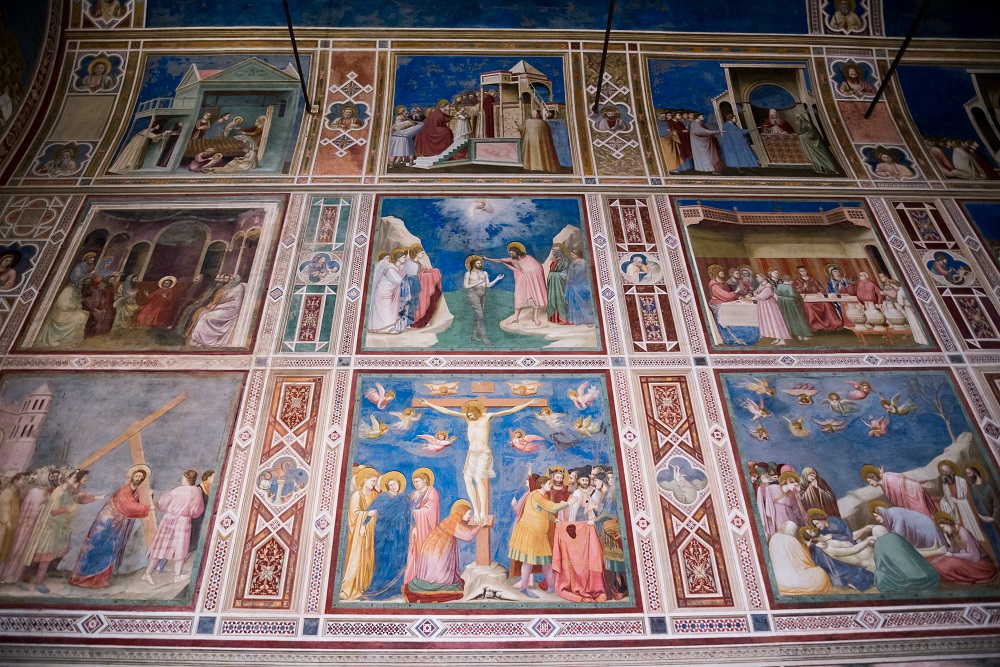
The Crucifixion by Giotto

Scrovegni Chapel

The Cross is the main symbol for Christianity.  It encloses the mystery of Salvation: the extreme sacrifice made by Our Lord to redeem the whole humanity from the Original Sin. All His sorrow, all His immeasurable love is in there. Even the subject of the Crucifixion has been recurrent in the art history since antiquity, both in paintings and sculptures. For example, we could think about Gothic art, the marvellous paintings of Cimabue, Greek and Russian icons, but also about Masaccio, Mantegna, Van Eyck up to Baroque art with Velázquez, Goya and Rembrandt. In particular, the “Ascent to Calvary”, fresco realized by Giotto between 1303 and 1305, shows all the desperation of the angels and of Our Lady, mixing the human sorrow coming from the tragic event to the heavenly one.

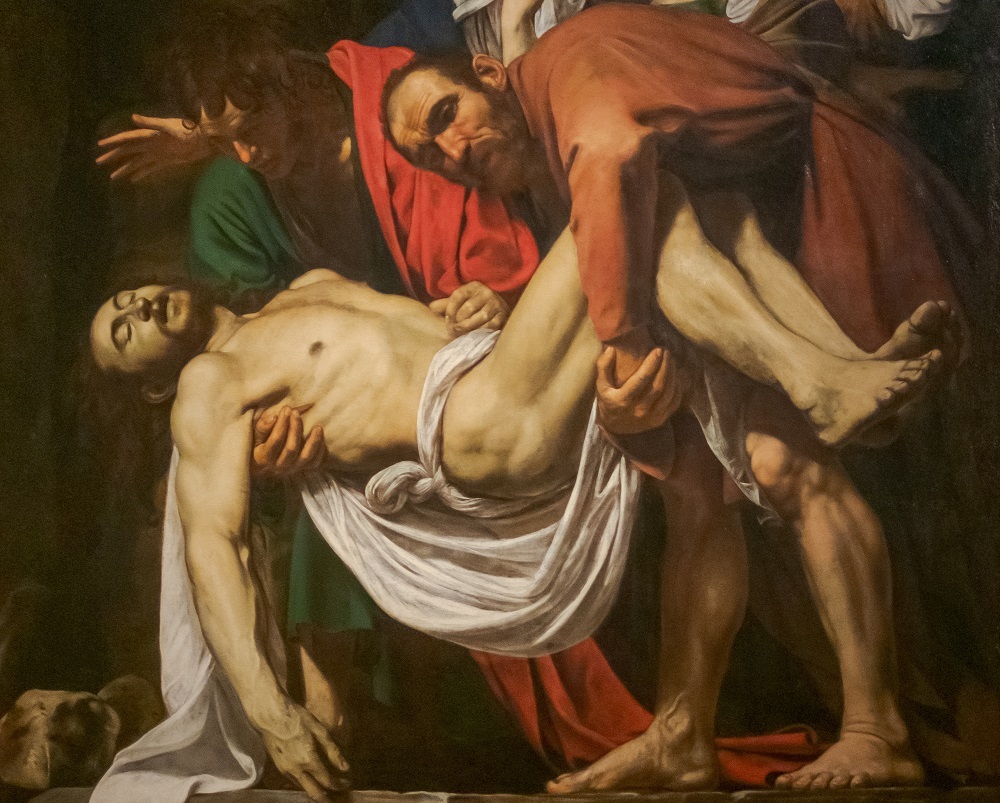
The Entombment of Christ by Caravaggio

The Entombment of Christ by Caravaggio

The Entombment of Christ has deeply touched many artists, that have depicted the scene with multiple interpretations become legendary. It figures the moment when the body of Christ was taken from the Cross and welcomed into the caring arms of his loving ones. Let’s think about the famous sculptures by Benedetto Antelami, kept in the Cathedral of Parma, or at the paintings by Beato Angelico, Rubens and Caravaggio. This latter painted a version of the Entombment of Christ that reminds us The Pietà by Michelangelo both for the postures of some figures and the wealth of detail.

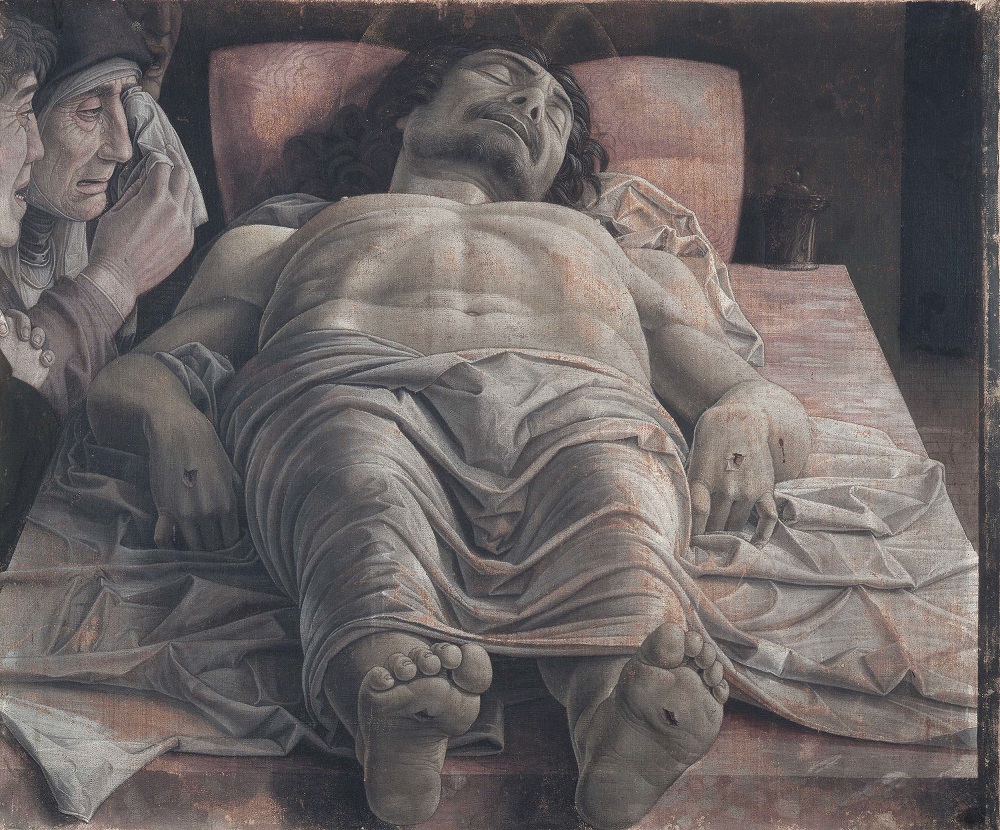
The Lamentation over the dead Christ by Mantegna

The dead Christ and three mourners, by Andrea Mantegna

Even the iconography of the dead Christ, brought to fame by Mantegna, has left the mark on the hall of fame of sacred art. Mantegna depicts the Christ with a revolutionary perspective arousing a remarkable emotional impact. From another point of view, the Veiled Christ, kept in the Cappella di San Severo in Naples, suggests a different, more enigmatic perspective.

The Pietà by Michelangelo and the Lamentation of Christ by Giotto

The Pietà by Michelangelo

When referring to The Pietà we mean a particular refiguration of Our Lady that rocks in her arms the dead body of Christ just taken down from the cross.

The Pietà has been a devotional subject very dear to Northern European art since the Middle Ages. It has known its consecration with Michelangelo, that has transformed the rigidity of figures and the severity of Nordic faces in a masterpiece of Renaissance sweetness and beauty. Its Vatican Pietà is one of the most famous artworks of all times. In addition to Michelangelo, Giotto was also able to convey the poignant and awfully human drama of Mary leaned over his son’s body.

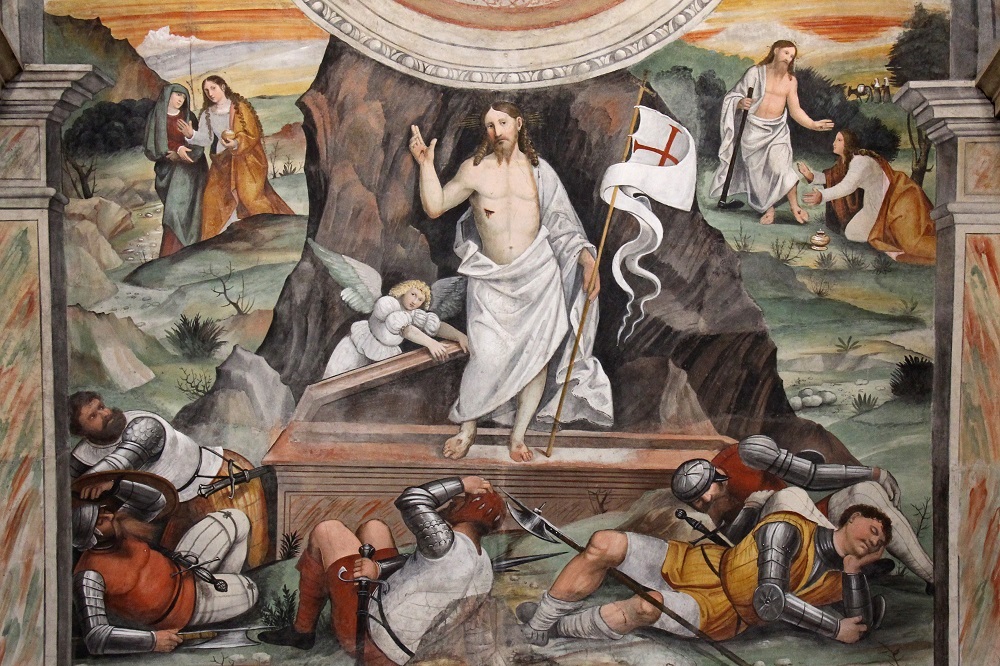
The Resurrection seen by Tiziano, Raffaello and Rubens

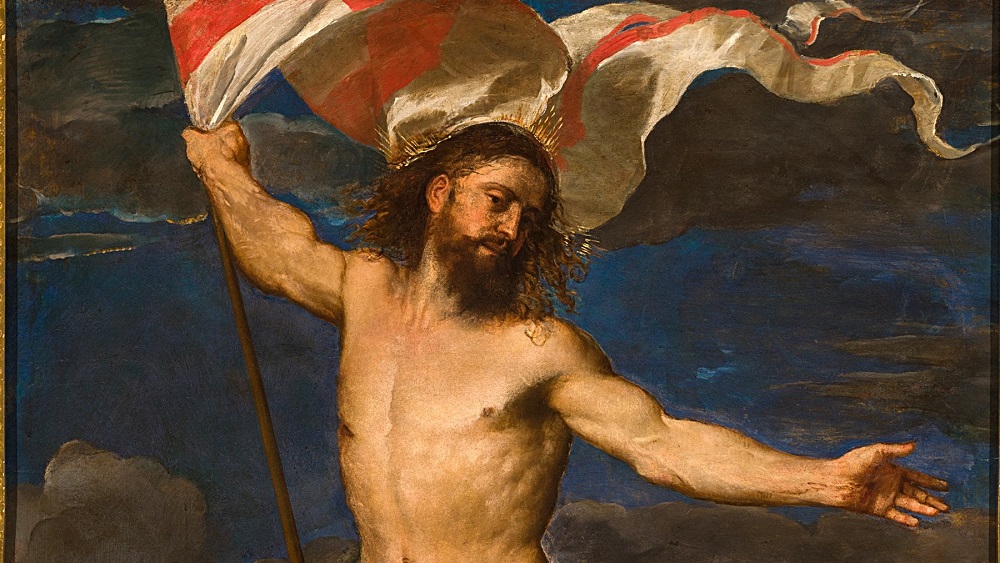
The Resurrection by Tiziano

The Resurrection is the moment of the triumph of Jesus. It is the fulfilment of His mission, His victory over darkness and death that frees humans from the Sin and opens the door of Heaven to the New Covenant. Masters such as Tiziano, Raffaello, Rubens have realized masterpieces inspired to the resurrected Christ. Each of them instilled their personal deep emotions and a senseless spiritual concern.

The Easter Nativity scene, an ancient tradition to be rediscovered

The Easter Nativity scene, an ancient tradition to be rediscovered

Contents1 Why make an Easter scene at home2 Easter Nativity statues3 Meaning of Easter4 DIY Easter Scene Easter Nativity? Of course! In our country, it is an ancient and much-loved tradition. But when should it be set up? What are the characteristic figurines? Let’s find…

The Florets of St. Francis explained briefly

The Florets of St. Francis explained briefly

Lent, a time of penance and little sacrifices. Today we are talking about the Florets of San Francesco, a collection of episodes from the life of the Poverello of Assisi and a fairy tale reconstruction of his preaching. We talked about the importance of little…

How is Easter calculated?

How is Easter calculated?

Each year changes date but remains the most important holiday: in this article, you will find out how Easter is calculated in the Jewish and Christian world.

The most important feast of the liturgical year: Easter! Easter chocolate eggs, doves and rabbits brighten up the Easter period but for the Christian world, the true essence of Easter is Jesus’ victory over the dead and the salvation of all humanity from sin. Not even the forty days of Lent seem enough to prepare for such a great event! And speaking of liturgical times, all the movable feasts of the Church – which we talked about in a previous article – depend precisely on Easter.

In this article, we will see what Easter means in the Jewish world and the Christian world, and how it is calculated in the different calendars.

religions

How is Jewish passover calculated?

Passover and Easter are linked by the history of the two religions. The events that gave rise to the Passover are those narrated in the book of Exodus: the liberation from the slavery of the Jewish people in Egypt and the beginning of the journey to the Promised Land under the guidance of Moses. The transition from slavery to freedom is considered one of the most striking examples of God’s intervention in the history of the Jewish people.

Passover – called Pesach – lasts eight days: it begins with the dinner celebrated on the night of the fourteenth day of the month of Nisan, which falls between March and April of the Gregorian calendar. The dinner is reminiscent of the one that the Jews ate just before leaving to leave Egypt. A particular element of the celebration of the Jewish Passover is the unleavened loaves, that is unleavened: the Jews, having to leave Egypt in a hurry, had not had time to cook a real meal and the unleavened loaves represent the readiness in leaving following the command of God.

How is Easter calculated?

The date of the Jewish Passover is different from the Christian one because it is based on the Jewish calendar, in which each month begins with the new moon and follows the cycle of the lunar phases. The fifteenth day of the month coincides with the full moon. Passover, therefore, falls on the first full moon after the spring equinox. Referring to the Gregorian calendar, the date is between 26 March and 25 April. In 2022, Passover includes the days from 15 April March to 23 April.

differences between Judaism and Christianity

Read more:

The differences between Judaism and Christianity
What are the differences between Judaism and Christianity? Is the God of the Jews the same as the Christians?…

Christian Easter

Christian Easter is the celebration of the event of the Resurrection of Christ. It always falls on a Sunday. In the Catholic Church, Easter is celebrated for eight days from the Sunday of the Resurrection, called the Octave of Easter. The week preceding Easter is Holy Week and in the last three days – Holy Thursday, Good Friday and Holy Saturday, known as the Easter Triduum – the events of the Passion, crucifixion and death of Jesus are relived. Each day of Holy Week has a specific meaning, which we have explained in an article on our blog.

The feast of Easter is the most important event in the liturgical calendar of the Church and all the main feasts of the year depend on it. The celebrations preceding Easter Sunday are intense and lead the faithful to relive the significant moments of the Passion of Christ. The Jewish tradition is also present for Catholic Christians: on Holy Thursday the Passover supper of the Jews and the Exodus are often remembered, part of the history that led to the birth of Christianity. On the night between Holy Saturday and Easter morning, the Mass of the Easter Vigilis celebrated, in which readings from the Bible are read that trace the History of Salvation, from the creation of man to the fulfilment of the Promise with the Resurrection.

How is Christian Easter calculated?

The dates of Passover and Christian Passover are often close since the events of Christ’s death and resurrection took place in the days of the Jewish Passover: the Last Supper of Jesus with the apostles was an Easter supper. Christian Easter is also calculated starting from the spring equinox, which by convention is considered to fall on 21 March, the beginning of spring: Easter Sunday is the first after the first spring full moon. In this way, Easter always falls between 22 March and 25 April. In 2021, Christian Easter falls on Sunday 4 April.

How is Orthodox Easter calculated?

While still within the Christian world, in some countries the Orthodox community refers to the Julian calendar and not to the Gregorian one for the definition of liturgical feasts. Easter also falls in a different period than for Catholics and Protestants. The Julian calendar is the ancient Roman calendar promoted by Julius Caesar, while the Gregorian one dates back to the Middle Ages and was named after Pope Gregory XIII, who introduced it.

While for Catholics and Protestants Easter falls on the first Sunday after the first spring full moon, for the Orthodox it is simply the first Sunday after the equinox. The period is the same, but the two dates may differ by a few weeks. In particular, in 2021 Orthodox Easter falls on 2 May of the Gregorian calendar.

Sacred Icons the ultimate guide

Read more:

Sacred Icons: the ultimate guide
Sacred Icons. Only mentioning them evokes exotic and charming suggestions, a way to live religion that is far from…

High or low Easter: what is meant?

Often, when speaking of the Easter date, the expressions “high Easter” and “low Easter” are heard. What is meant by high or low Easter? It is a way of indicating whether, in the current year, Easter falls sooner or later than the day of the vernal equinox. Easter is “low” if it falls a few days after the equinox, between March 22 and April 2; “average” if it falls between 3 and 13 April; “high” if it falls between 14 and 25 April.
On our site, you can find numerous accessories to better enjoy this important day. Visit our Easter department and choose the ideal items for you and your loved ones!

Lenten Fioretti: 5 ideas on small sacrifices or things to do

Lenten Fioretti: 5 ideas on small sacrifices or things to do

Contents1 How to make a foil to the Madonna2 What do we have to give up?3 Religious foil not maintained Lent, a time of penance, prayer and devotion. What are the most suitable Lenten florets to prepare for Easter in the best way? Of all…

Ash Wednesday: what it is about

Ash Wednesday: what it is about

Contents1 The Meaning of Ash Wednesday2 Why is ash used?3 Ash Wednesday fasting Carnival is about to end. After Shrove Tuesday there is Ash Wednesday, which marks the beginning of Lent. But where does this particular festival originate? What is Ash Wednesday? Where does its…

Santa Margherita da Cortona: protector of women in childbirth

Santa Margherita da Cortona: protector of women in childbirth

We discover the figure of Saint Margaret of Cortona, the Nova Magdalena (New Magdalene), famous among saints and blessed
for being the protector of pregnant women.

Saint Margaret of Cortona had a life full of events – not always happy – which led her to the fame of holiness even before she died. The most significant places and episodes of his life still bear the traces of his presence today.

Life of Saint Margaret of Cortona

Margherita was born in Laviano, on the border between Tuscany and Umbria, in 1247. Still a child, she loses her mother and her father remarried: thus begins the adventures of little Margherita who, as in fairy tales, is the victim of her stepmother’s jealousy and torments. At eighteen, Margherita falls in love with Arsenio, a young man from Montepulciano. It is an opportunity for redemption: the two decide to flee together, to get married. However, his family opposes the union, even after the birth of a child, and Margherita finds herself living in a situation of illegitimate coexistence that brings her a lot of inner suffering. Arsenio’s family does not welcome her – and neither does the rest of the nobility of Montepulciano – and Margherita tries to respond to the situation of suffering by dedicating herself generously to the poor.

The situation is complicated when Arsenio is killed, after nine years of living together: there is no more space for Margherita in the castle; she seeks refuge with her father but here too she is refused, through the intervention of her stepmother. Now homeless, Margherita heads to Cortona – perhaps inspired by the Holy Spirit. Finally, someone welcomes her: they are the Franciscan Minor friars of Cortona, who treat her like a daughter, prepare a cell for her in the old convent and accompany her on an intense journey of conversion.

For several years he undergoes penance and lives a life of profound prayer. She decides to enter the Franciscan Third Order but is refused for about three years because she is “too beautiful and young”. It was then admitted in 1277.

A local noble, Diabella, offers her a cell within the walls of her palace. Margherita entrusts her son to the care of a tutor from Arezzo, moves to her new cell and dedicates herself to a life of prayer and service to others. He follows his son’s studies from afar, with affection and attention. He develops great spiritual and faith skills and plays an important role in admonishing the Franciscans who deviated from right preaching and in pacifying the disputes between Guelphs and Ghibellines.

In 1288 he went to live as a recluse under the fortress of Cortona, near the ruins of the church of San Basilio. By now she is already very famous and it is thought that among the many people who seek her for advice and help there is a young Dante Alighieri.

On 22 February 1297 Margaret died after several days of prayer and meditation.

Santa Margherita da Cortona: protector of women who have to give birth

In 1278, with the help of Diabella and the nobility of the area, Margherita founded the Casa Santa Maria della Misericordia, a small hospital to welcome the sick and the needy, which still exists. In particular, she was highly regarded for the help she gave to pregnant women, before and during childbirth. For this reason, today she is venerated as the protector of women in childbirth.

The miracles of Santa Margherita da Cortona

After her death, her veneration grew also thanks to the numerous miracles attributed to her intercession. One of the best known was the protection of the city of Cortona from the attack of Charles V in 1529: despite being unguarded in front of the 25,000 enemy soldiers, the army managed to repel the assault. Her holiness is also testified by a writing by Fra Giunta Bevegnati, her confessor: Legenda de vita et miraculis beatae Margheritae de Cortona. Pope Innocent X approved its cult in 1653 and Benedict XIII canonised it in 1728.

Feast of Santa Margherita da Cortona

On the day when the saint is commemorated, February 22, both Laviano and Cortona are involved in the celebrations. In 2020, a procession took place from the place of birth of the saint to that of her death. A popular proverb accompanies the anniversary: “the feast of Margherita of snow or flowers is always dressed”. The time of year marks the final part of winter and the scent of approaching spring.

Sanctuary of Santa Margherita da Cortona

The sanctuary dedicated to Margherita stands in the same place where the saint retired before dying. The church present there at the time of the saint was dedicated to San Basilio but was in ruins after the sacking of Cortona in 1258. Thanks to the intervention of Margherita it was restored. After her death, Margherita was buried in that same church. Later built a larger church, in 1330 the body of the saint was married there. Inside the sanctuary, you can still see a precious wooden crucifix: the same one in front of which the saint prayed and put herself in a relationship with the Lord.

The Shrine of Padre Pio in San Giovanni Rotondo

The Shrine of Padre Pio in San Giovanni Rotondo

Contents1 What is a Shrine2 The Shrine of Padre Pio in San Giovanni Rotondo3 23 September What drives thousands of people to visit the Shrine of Padre Pio in San Giovanni Rotondo every year? Let’s get to know one of the most famous pilgrimage sites…

10 religious bracelets you can give for Valentine’s Day

10 religious bracelets you can give for Valentine’s Day

Contents1 Silver and golden bracelets2 Rosary or Decade bracelets3 Prayer bracelet (AMEN)4 Various bracelets What about giving a religious bracelet for Valentine’s Day? Why not? A classy and original idea for an elegant gift, but with a deep spiritual meaning. We already dedicated a long…

La Candlemas: history and curiosities

La Candlemas: history and curiosities

La Candlemas, the story of a party with great suggestions that has its roots in pre-Christian rites linked to the triumph of light. Let’s find out what it symbolises for the faithful and why.

La Candlemas, the story of a party with a thousand shades. The feast of Candlemas, celebrated by Catholics on 2 February has taken on gradually different meanings over the centuries.
Born as a Marian celebration, it evoked the Purification of the Madonna, but later became a Christological festival focused on the figure of Jesus and his recognition as the Savior of the world.
No less important is the popular dimension of this festival, testified by proverbs and customs, linked in particular to the passage from winter to spring that this day represents. To name just a few: “Candlemas, dark of winter, there is no fear“, or “for Santa Candelora if it snows or if we are outside winter“.

A feast linked to the triumph of light over darkness, as evidenced by the tradition of blessing and lighting tapers and candles, but also a symbolic passage that determines the end of the Christmas holidays and the beginning of the Easter journey.

La Candlemas, the story of a festival with many religious and symbolic meanings, which we hope to help you discover.

lighting up a candle in church

Read more:

Why lighting up a candle in church?
Lighting up a candle in church is a tangible sign of faith. From the baptism candles to votive candles, light as a symbol of…

Why is it celebrated and when

Candlemas is a popular term used to remember and celebrate the day of the presentation of Jesus in the Temple of Jerusalem. In fact, according to the law of Moses, parents had to accompany the firstborn males to the temple, forty days after their birth, to officially present them. Our Lady and Saint Joseph were no exceptions for little Jesus, and forty days after Christmas they took him to Jerusalem.

This episode in the life of Jesus is told by Luke (Luke 2:22-39) and is celebrated by the Catholic Church on 2 February, but it is also celebrated by the Orthodox Church and some Protestant churches.

According to Luke, on the occasion of the Presentation of Jesus in the temple, an old man named Simeon, who had long awaited the coming of the Messiah and had been promised by God that he would not die without seeing him, saw the baby Jesus, took him in his arms and he said, “Now, O Lord, let your servant
 go in peace according to your word; for my eyes have seen your salvation, prepared by you before all peoples, light to illuminate the nations and glory of your people Israel.” (Luke 2:29-32)

In practice, Simeon recognised Jesus as the long-awaited Messiah. But his revelations don’t stop there. Addressing Joseph and Mary, amazed by his gesture, he continued saying: “He is here for the ruin and resurrection of many in Israel, a sign of contradiction 35 so that the thoughts of many hearts may be revealed. And you yourself a sword will pierce your soul.”(Luke 2:34-35)

A prophetess, Anna, daughter of Fanuèle, who arrived at that time, in turn, began to praise God and to speak of the child as the Redeemer.

The curious name that the feast has taken is because, on the occasion of this celebration, candles are blessed, which are then distributed to the faithful. These candles represent Jesus the light of the world, paraphrasing the words that the old Simeon pronounced taking Jesus in his arms: ” My eyes have seen your salvation, prepared by you before all peoples, light to illuminate the people and glory of your people of Israel. ” (Luke 2:30-32)

Originally the feast of Candlemas was called Ipapante, a Greek term that means meeting, referring to the meeting between the Holy Family and Simeon and Anna at the temple. It is attested since the fourth century, in the East, and subsequently, thanks to Pope Sergio I, it also spread to the West. It was celebrated by lighting candles and candles in abundance.

The dimension of the encounter with Jesus remains a very important element of this feast. The presentation of Jesus in the temple coincided with his recognition by Simeon and Anna, two people who have always waited for his coming. But there is also the revelation made to Mary, the prophecy regarding the future of her son, and the immense pain she will have to feel, that sword that will pierce her soul.

History

Like many religious holidays, Candlemas has also evolved. We can talk about Candlemas, the story of a festival that brings together many different festivals and traditions.

In the past, before the liturgical reform that followed the Second Vatican Council, the feast of Candlemas was called the Purification of the Blessed Virgin Mary. This definition, however, completely ignored the origin of the feast, namely the presentation of Jesus in the Temple and the meeting with Simeon, who first acclaimed him as the light of the world.

The choice of the name Candlemas instead derives from previous rites, from the similarity of the practice of the Skylight in the evening of the Roman rite, which involved the lighting of a lamp at sunset to symbolise the light of Christ that defeats darkness and sin.

But it is also likely that this festival derives from pre-Christian celebrations that had the triumph of light over darkness as their common denominator, and consequently involved the use of torches and lamps.

Let’s think of the Roman tradition of the Lupercals, with their purifying torches. The Lupercals were held in February, which for the Romans was very important from a religious and symbolic point of view, as the last month of winter. In particular, it was dedicated to the rites of purification and fecundity, so much so that the Latin verb februare, “purify”, gave its name to the month. The same verb also derives from the name of an Etruscan god of the underworld, Februus, who was venerated with sacrifices at this time of the year.

Also in the Roman world on the calends of February (in the first days of the month) the Goddess Februa, or Juno Februata, was celebrated, in whose honour torches were lit.

Another ancient festival similar to Candlemas is the Celtic festival of Imbolc, which sanctioned the transition between winter and spring, between darkness and light.

The purification of Mary

We mentioned in the previous paragraph how until the Second Vatican Council (1962-1965), but still today due to the extraordinary form of the Roman rite, the feast of February 2 was called the Feast of the Purification of the SS. Virgin Mary. According to Jewish tradition, a woman was considered unclean for forty days following the birth of a male child. At the end of this period, during which he could not touch anything sacred or enter the sanctuaries, she had to go to the temple to purify herself.

Here is the reference to the purification described in Leviticus: “When a woman becomes pregnant and gives birth to a boy, she will be unclean for seven days; she will be unclean as in the time of her rules. And on the eighth day let him be given circumcision. Then she will remain another thirty-three days to purify herself of her blood; he will not touch any holy thing and will not enter the sanctuary until the days of his purification are completed” (Leviticus 12:2-4)

The Feast of the Purification of the SS. Virgin Mary sanctioned the end of the Christmas celebrations and opened the new liturgical period for Easter.

liturgical candles

Read more:

Liturgical candles: when and why they are important
Light has always had a very deep and essential meaning for men. There is no religion that hasn’t made it a key element in its…

This tradition linked to the purification of the Madonna spread above all in the West, at least up to the liturgical reform decreed by the Second Vatican Council, which instead wanted to shift the centrality of the rite from the mother to the Redeemer Son, Light of the World. From a Marian vision to a Christological vision, therefore. However, the memory of the Candlemas feast remains in part as a feast of purification in some popular customs. For example, in the Sicilian village of Chiaramonte, women go up to the top of the mountain, the day before the party, and purify themselves with dew.

5 sacred plaster statues for your church

5 sacred plaster statues for your church

Why aren’t the sacred plaster statues that we find in the church considered as objects of idolatry, but as an integral part of every Christian’s profession of faith? We are used to seeing numerous sacred plaster statues in our churches depicting Jesus, the Madonna, saints…

Does the Tree of Life really exist?

Does the Tree of Life really exist?

The tree of life is mentioned in the Holy Scriptures, from Genesis to the Apocalypse, as a symbol of life par excellence. Is there really such a special tree? Men have always attributed a symbolic and religious value to certain trees. Just think of all…

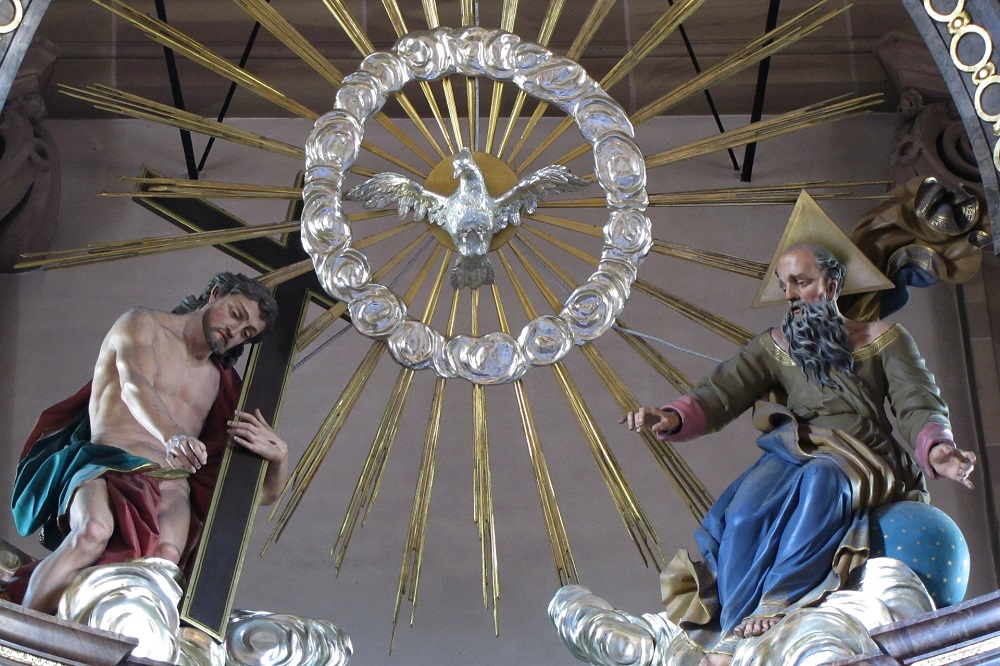
Holy Trinity: meaning and iconographic representation

Holy Trinity: meaning and iconographic representation

The concept of Trinity summarises the fundamental doctrine of the Catholic Church: God is One and Only, and yet three equal and distinct Persons coexist in him. Let’s understand together how.

Due to its fundamental importance in the act of believing of every Christian, the dogma of the Holy Trinity deserves a very long and articulated theological study.

We would like to explain it simply and understandably, through the words of a prayer that we have all known and learned since childhood: the Creed.

The Holy Trinity in the Creed

This central mystery of the Christian faith and life has been affirmed since the First Council of Nicaea, in 325 AD, and inserted in the Nicene-Constantinopolitan Creed drawn up after the Council. In this document-prayer, which was intended to settle the numerous disputes that divided the church of the time, the uniqueness of God is affirmed as the first article of the profession of faith:

I believe in one God, the
Father Almighty,
Creator of heaven and earth, and
of all things visible and invisible.

and, in a second article, the divinity of Jesus Christ son of God is recognised and declared:

I believe in one Lord, Jesus Christ, the
only-begotten Son of God,
born of the Father before all ages.

He went on to write:

God from God,
Light from Light, true
God from true God,
begotten,
not made, consubstantial with the Father,
by whom all things were made.

It is precisely in this prayer that we learn from childhood that the mystery of the Most Holy Trinity is summed up: God is one, his divine substance is unique, and yet three distinct “persons” coexist in this unique substance. To define these three persons, the Greek term “hypostasis” was used, with the theological meaning of person, accompanying it to the concept of “ousia”, substance, to define that in the Trinity one ousia and three hypostasis, one substance and three persons coexist.

What are the three Persons who make up the Holy Trinity?

We have already named two of them citing the CreedGod the Father, creator of heaven and earth, and Jesus Christ his Son, Savior of the world.

The third Person of the Holy Trinity is the Holy Spirit, sent by God the Father in the name of Christ. Citing the Creed again:

And I believe in the Holy Spirit, the Lord, and giver of
 life,
 who proceeds from the Father and the Son; who equally
 with the Father and the Son is adored and glorified; who spoke through the prophets.

Where the verb to proceed is used in the meaning of deriving. Therefore the Holy Spirit comes from the Father and the Son, is made of their very substance. The last definition “and from the Son”, rendered with the Latin expression filioque was added on the occasion of the drafting of the Nicene-Constantinopolitan Creed and was one of the main causes of the Great Eastern Schism of 1054 because the patriarch of Constantinople at the time considered it a heresy.

The Holy Trinity in the Holy Scriptures

In the Old Testament, there is no mention of the Trinity. God is one and only, and from the vitality and fullness of His Spirit comes the spirituality of men. There are of course some hints that prepare the advent of the Messiah, or of the Holy Spirit, or even passages that differentiate in some way the manifestations of God, speaking for example of a “reflection of perennial light, a spotless mirror of God’s activity and the image of his goodness” (Wisdom 7:26). Generally speaking, the books of the Old Testament preserve the uniqueness of the Person and Substance of God, also to avoid falling into the risk of polytheism.

It is in the New Testament that the Trinity encounters its revelation when the Word becomes flesh in Jesus (John 1:14) and, after the latter’s death and resurrection, with the descent of the Holy Spirit.

In the Gospels, Jesus and God the Father are indicated as one:

“I and the Father are one” (John 10:30)

“Jesus saith unto him, Have I been so long time with you, and yet hast thou not known me, Philip? he that hath seen me hath seen the Father. How can you say, Show us the Father?” (John 14.9)

and yet distinct:

All things are delivered to me by my Father. And no one knoweth the Son, but the Father: neither doth any one know the Father, but the Son, and he to whom it shall please the Son to reveal him.” (Mathew 11,27)

Jesus addresses God the Father as something other than himself, in many steps, but, at the same time, all his experience, his very substance, refers to God.

The Baptism of Jesus shows an important passage because the voice of God descends from Heaven to recognise him as the beloved Son:

“And immediately coming up from the water, he saw the heavens dividing and the Spirit as a dove coming down upon him. And a voice from heaven was heard: “You are my beloved Son, in you, I am well pleased” (Mark 1:10-11)

There are also hints of the coming of the Holy Spirit, as a gift from God, an emanation of his Love that will manifest itself through His Son, at the moment of his glorification:

“On the last day, that great day of the feast, Jesus stood and cried out, saying: «If anyone thirsts, let him come to Me and drink. He who believes in Me, as the Scripture has said, out of his heart will flow rivers of living water». But this he said concerning the Spirit, which they that believed on him were about to receive; for [the] Spirit was not yet because Jesus had not yet been glorified.” (John 7:37-39)

Some passages from the New Testament explicitly mention the three persons of the Holy Trinity:

  • when Jesus orders all nations to be baptized “in the name of the Father and of the Son and the Holy Spirit”(Matthew 28:19);
  • in St. Paul’s reference to the three persons as the foundation of the diversity of ministries in the Church, even in the unity of God: “There are also differences of charisms, but only one is the Spirit; there are diversities of ministries, but only one is the Lord; there are diversities of operations, but there is only one God, who works all in all”(1 Corinthians 12:4-6);
  • in the greeting formula at the end of the second letter to the Corinthians: “The grace of the Lord Jesus Christ, the love of God and the communion of the Holy Spirit be with you all.” (2 Corinthians 13:13)

And here, as mentioned, we stop, aware that we cannot exhaust such a varied and profound topic in a single article. We remind you that the Catholic Church celebrates the SS. Trinity on the Sunday following Pentecost, in the celebration, is called the Solemnity of the Holy Trinity.

sacred icons

Read more:

Sacred Icons: the ultimate guide
Sacred Icons. Only mentioning them evokes exotic and charming suggestions, a way to live religion that is far from the modern…

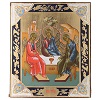
The Trinity of Rublev: history and meaning of the icon

The dogma of the Holy Trinity often recurs in the history of art, as is inevitable given its importance, although it was not easy for the great artists of the past to translate its profound mystery.

In particular, we spoke in a previous article dedicated to the most famous Russian icons of an icon created around 1422 and now housed in the State Tretyakov Gallery, in Moscow: “The Trinity” by Andrei Rublev.

most famous russian icons

Read more:

Famous Russian icons: the 5 most important icons
The famous Russian icons are dazzling examples of ancient art, of a millenary tradition that draws its origins from the Byzantine splendours and…

In this icon, one of the most beautiful ever painted in Russia, the great Russian painter Andrei Rublev chose to depict the Holy Trinity in a different way than usual, by painting three angels representing the Father, the Son and the Holy Spirit. The three angels, probably archangels, surrounded by haloes and with golden wings, are seated around a table on which a cup is placed, a symbol of Christ’s sacrifice. The table is that of Abraham, who received the visit of three wayfarers (Genesis 18) who announced the birth of his son Isaac to him and his wife Sarah. For this reason, the icon is also known as Abraham’s Hospitality. The client, the spiritual head of the monastery of the Trinity of San Sergio, had asked the painter for a representation of the Trinity that would express the profound sense of unity symbolised by this dogma within the Church. The three angels have virtually identical faces, proof of their being one, without order, without hierarchy. The recurring colours, which in Russian iconography are of great symbolic importance are:

  • gold:symbol of royalty, it dresses the angel on the left, which would represent God;
  • red:symbol of sacrifice, it dresses the central angel (Jesus);
  • green:symbol of life, clothes the angel on the right (the Holy Spirit)

In addition, all the figures wear blue details, a colour that symbolises eternal life. In 1551, in the context of the Council of One Hundred Chapters, this work was defined as the icon of icons, and still today it remains one of the highest examples of the art of sacred icons by virtue of the otherworldly spirituality and harmony that it knows how to communicate.