Homepage | Religion | Saint Bridget of Sweden, Co-Patroness of Europe
Saint Bridget of Sweden, Co-Patroness of Europe
1 July 2026
Reading Time: 5minutes
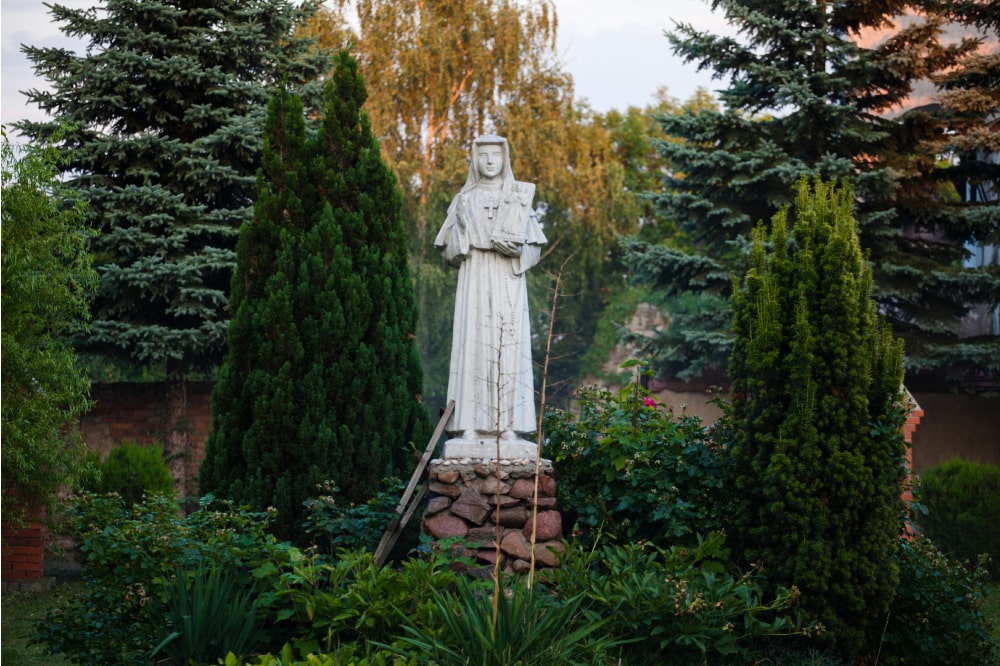
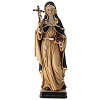
Saint Bridget of Sweden, a 14th-century Swedish mystic, is one of the co-patron saints of Europe. She went on pilgrimage to Santiago de Compostela and the Holy Land.
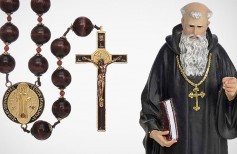
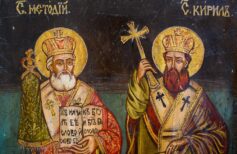
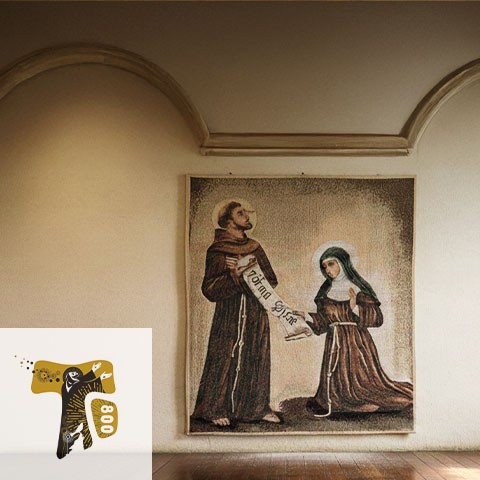
There are six patron saints of Europe: Saint Benedict of Nursia, Saint Catherine of Siena, Saints Cyril and Methodius, Saint Teresa Benedicta of the Cross, and Saint Bridget of Sweden, the focus of this article. If Saint Benedict earned the title of patron of Europe for creating, through his Rule, a new model of monastic life that would profoundly shape the human, social and cultural history of the Middle Ages, and if Saint Catherine positioned herself as a mediator among the states of a Europe that was yet to exist, ensuring the common good and the freedom of all, Saint Bridget of Sweden offered, through her Revelations and her very way of life, a model of unity and harmony among all people, brothers in Christ, like sheep in the same fold with only one Shepherd as their guide and protector.
Born into an aristocratic family, she was a happy wife and mother of eight children before embracing religious life. Even as a married woman, she demonstrated absolute devotion and an innate concern for others, shown through works of charity and mercy, often alongside her husband. Together, they became Franciscan tertiaries and studied the Scriptures, to such an extent that Bridget gained a reputation for her pedagogical skills, which even led her to teach at the court in Stockholm. This early phase of her life also includes her pilgrimage to Santiago de Compostela, the first in a long series of journeys and pilgrimages to sacred places throughout the known world, which marked the life of this saint.
After being widowed, Bridget travelled to Rome with her daughter Catherine, who would also later be canonised, and to many other places of worship and devotion in Italy. From there, she continued to the Holy Land, to witness and experience the places where Christ had lived out his earthly life. She returned to Rome already ill and died under the care of her daughter Catherine, to whom she entrusted the religious order she had founded: the Order of the Most Holy Saviour. This was a revolutionary monastic order, as it provided for double monasteries in which men and women lived, imitating the early Christian community. The Rule allowed for sixty nuns led by an abbess, and twenty-five male religious guided by a general confessor, divided into thirteen priests (representing the twelve Apostles plus Saint Paul) and the remaining disciples and deacons, who symbolised the four Doctors of the Church: Augustine, Ambrose, Jerome, and Gregory the Great. In 1422, Pope Martin V ordered the suppression of double monasteries, and today the order founded by Saint Bridget is exclusively female, known as the Congregation of the Most Holy Saviour ofSaint Bridget. Its sisters are known as the Bridgettines, and they devote themselves to hospitality and the mission of reuniting all Christian churches, regardless of denomination.
In addition to her devotion, prayers and revelations, Saint Bridget is remembered for her work of intercession and counsel with popes, heads of state and political leaders in Sweden and across Europe. It is precisely this role that earned her the designation of co-patroness of Europe.
The Prayers of Saint Bridget
Saint Bridget received two sets of prayers from Jesus and the Virgin Mary, known as the Prayers of Saint Bridget.
The first series consists of 21 promises and 15 prayers, to be recited daily for one year. The second consists of 5 promises and 7 prayers, to be said daily for 12 years.
The 21 promises revealed to her by Jesus include the deliverance of souls from Purgatory, conversion for loved ones, and protection against enemies in the name of the Cross.
The Revelations of Saint Bridget
Bridget was deeply moved by the sufferings endured by Jesus during the Passion. Meditating upon them, she experienced many vivid mystical visions of Jesus, the Virgin, and the saints. She shared these revelations with her spiritual directors, who compiled them into eight volumes. These are the Revelations of Saint Bridget, the authenticity of which was acknowledged by the Council of Constance in 1415.
“You are mine, and for that reason I shall do with you as I please. Love nothing as you love Me.” Thus God claimed Bridget as His prophetess and spokesperson. The Virgin Mary taught her that there are two ways to reach God’s heart: humility and true contrition, or contemplation of Christ’s sufferings. “Contemplate My beauty through the beauty of the elements… Look at Me. I am the fairest on Tabor, but the most reviled on the Cross, where I had neither form nor comeliness. Look at Me and reflect… Amend your faults! Listen to the voice with which I cried to you: ‘I thirst for you!’”
How to Pray the Bridgettine Rosary
In addition to the Prayers, Saint Bridget also received from the Virgin the Bridgettine Rosary, dedicated to Our Lady’s sorrows and her sixty-three years on Earth. When prayed daily for one year, it is said to guarantee the fulfilment of the 21 promises made by Jesus to the faithful.
Pope Urban V approved the Bridgettine Rosary and the indulgencesassociated with it: seven years’ indulgence and seven quarantines for each recitation of the Rosary; one hundred days for every Our Father, Hail Mary and Creed; a plenary indulgence at the hour of death for those who pray it at least once a week; a plenary indulgence for those who recite it daily; forty days for those who wear the Rosary, pray at the sound of the bells for someone dying, and recite the Our Father and Hail Mary while making an examination of conscience; and so on.
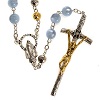
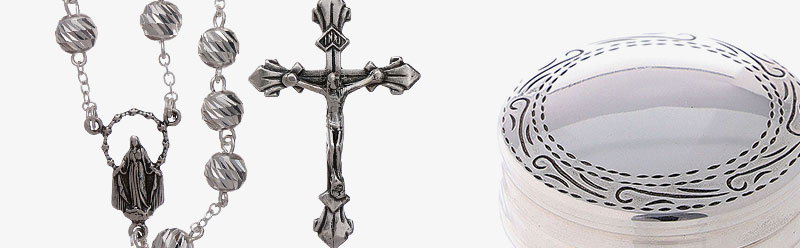
To recite the Bridgettine Rosary, a special rosary is used, consisting of gold-coloured beads (on which the Creed is said), silver-coloured beads (for the Our Father), and blue beads (for the Hail Mary). Unlike the traditional Rosary, which has five decades per mystery, the Bridgettine Rosary has six.
On 5 October, the liturgical memorial of Saint Faustina Kowalska, mystic and devotee of the Divine Mercy devotion, is celebrated...
What’s the Future of Religion?
What’s the Future of Religion?
A Beginner’s Guide to Christianity
A Beginner’s Guide to Christianity
Mind-Blowing Statistics About Christianity You Need to Know
Mind-Blowing Statistics About Christianity You Need to Know
8392
Enter the Holyart world: $20 discount voucher valid on over 60,000 items
Come and discover Holyart, the largest e-commerce of religious articles in Europe and immediately receive a $20 voucher to use with your first purchase.
Check your mailbox: you will receive your discount within 5 minutes








 30 September 2026