Homepage | Religion | Seven Archangels: why do we only venerate three of them?
Seven Archangels: why do we only venerate three of them?
31 August 2026
Reading Time: 6minutes
Although the Church only approves the veneration of the three Archangels mentioned in the Holy Scriptures, Michael, Gabriel and Raphael, there are seven Archangels who have passed through the history of humanity. Here are who they are
We have already dedicated an article to the three Archangels recognised by the Catholic Church. They are Michael (“who is like God?”), Gabriel (“strength of God”) and Raphael (“medicine of God”), that is, the three Archangels mentioned in the Holy Scriptures. But in reality, if we focus on more ancient texts, such as the Book of Enoch, an apocryphal text attributed to the antediluvian patriarch Enoch, great-grandfather of Noah according to Genesis, but never recognised in the Jewish or Christian biblical canons, we find as many as seven named Archangels: Uriel, Raphael, Raguel, Michael, Sariel, Phanuel and Gabriel.
In the Book of Tobit, contained in the Catholic Bible but not in the Jewish one, there are seven leaders of the Angels who are always admitted into the presence of God, an integral part of His will. John also speaks in the Book of Revelation of seven spirits who are always before His throne: “John to the seven churches that are in Asia: grace to you and peace from Him who is, who was and who is to come, from the seven spirits who are before His throne” (Revelation 1:4). Pseudo-Dionysius the Areopagite, theologian and philosopher, author of mystical writings close to Neoplatonism, mentions, alongside the usual Michael, Gabriel and Raphael, also Camael, Jophiel and Zadkiel.
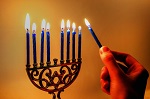
The number seven is not accidental. In all cultures of the past, particularly in Jewish culture, and even earlier in Mesopotamian civilisations, seven indicated completeness and perfection. We find it often, as well as other special numbers: there are seven deadly sins and seven theological virtues for Christians, but there are also seven branches of the Jewish Menorahcandelabrum, seven fundamental attributes of Allah and seven heavens created by God according to the Qur’an, and so on.
For Christianity, seven is the divine number par excellence: God rested after seven days of Creation, there are seven sacraments, seven gifts of the Holy Spirit, seven sorrows of Mary, seven Seals broken, seven trumpets sounded by seven Angels, seven Portents and seven Bowls of God’s wrath.
And so we have seven Archangels, who according to ancient Jewish angelology sit before the throne of God, ready to carry out His commands and intervene in human affairs.
So why do Catholics venerate only the three Archangels Michael, Gabriel and Raphael?
How many Archangels are there according to the Catholic Church
Let us begin with the assumption that the modern Catholic Church has abolished the veneration of Angels who are not directly mentioned in the Holy Scriptures. Therefore, the only Archangels currently recognised are three: Michael, Gabriel and Raphael.
But who are the Archangels? Let us remember that, according to the Jewish angelic hierarchy and subsequently in Christian theology, the Archangels, together with the Principalities and Angels, belong to the Third angelic hierarchy, the one furthest from God and closest to humanity, and for this reason they are often sent by the Almighty as messengers and instruments of His will in the world.
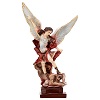
The dimensions of the St Michael statue are 22x13x6 cm.St. Michael is represented with…
Over the centuries there has been an evolution in this devotion, with different Angels and Archangels (the leaders of the Angels, in practice) being recognised and venerated at different times. In the 12th century, the Archangels recognised and venerated by the will of Pope Gregory I were seven. Besides Michael, Gabriel, Raphael and Uriel, there were also Simiel, Oriphiel and Zachariel.
In the 16th century, a series of reforms led to the compilation of a list of seven Archangels recognised by Catholics: Michael, Gabriel, Raphael, Uriel, Barachiel, Jehudiel and Salathiel.
Today Catholics venerate only the first three. Here is where they are mentioned.
The Archangel Raphael appears in the Book of Tobit, where, among other things, he helps Tobit heal his father after he has become blind:
“I am Raphael, one of the seven Angels who are always ready to enter into the presence of the majesty of the Lord” (Book of Tobit 12:15)
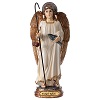
Saint Raphael Archangel statue shown here with white robes embellished with gold details. He carries a fish in one hand…
The Archangel Michael appears in the Book of Daniel, recognised by the Hebrew Bible and included in the Old Testament of the Christian Bible. The Book speaks of the Babylonian exile of the prophet Daniel and of his apocalyptic visions:
“At that time Michael shall arise, the great prince, who watches over the children of your people. There shall be a time of anguish, such as never occurred since the nations came into existence until that time; but at that time your people shall be delivered, everyone whose name is found written in the book.” (Daniel 12:1)
And in Daniel we also find the Archangel Gabriel:
“While I, Daniel, was considering the vision and trying to understand it, behold, one standing before me having the appearance of a man; I heard the voice of a man in the midst of the Ulai, who cried out and said: ‘Gabriel, explain the vision to him.’ He came where I was, and when he arrived, I was afraid and fell with my face to the ground. He said to me: ‘Son of man, understand well, this vision concerns the time of the end.’” (Daniel 8:15)
However, Saint Gabriel the Archangel is also mentioned in the New Testament, specifically in the Gospel of Luke, when he announces to Elizabeth, wife of Zechariah, the future birth of John the Baptist:
“The angel answered him: ‘I am Gabriel, who stand in the presence of God, and I have been sent to bring you this good news (…)’” (Luke 1:19)
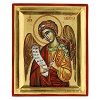
Hand-painted Greek icon depicting the Archangel Gabriel: the strength of God. This icon is hand-painted on an aged wood plate and decorated with golden leaf…
The fourth Archangel, Uriel
A fourth Archangel, Uriel, whose name means “Light of God” or “Flame of God” in Hebrew, was once venerated, but in the medieval period, during one of the Councils of Aachen, his cult was forbidden. Considered by medieval Jewish mystics as the Angel of Sunday, of Poetry, and one of the Sacred Sephirot, that is, one of the emanations of God, according to ancient traditions it was the Archangel Uriel who foretold to Noah the arrival of the Universal Flood, and who checked that lamb’s blood had been placed on the doors of the Egyptians’ houses, in order to preserve the Jewish firstborn during the plagues of Egypt. In other ancient texts he is identified as the cherub who guards the gates of Eden with a flaming sword.
The Archangel of death
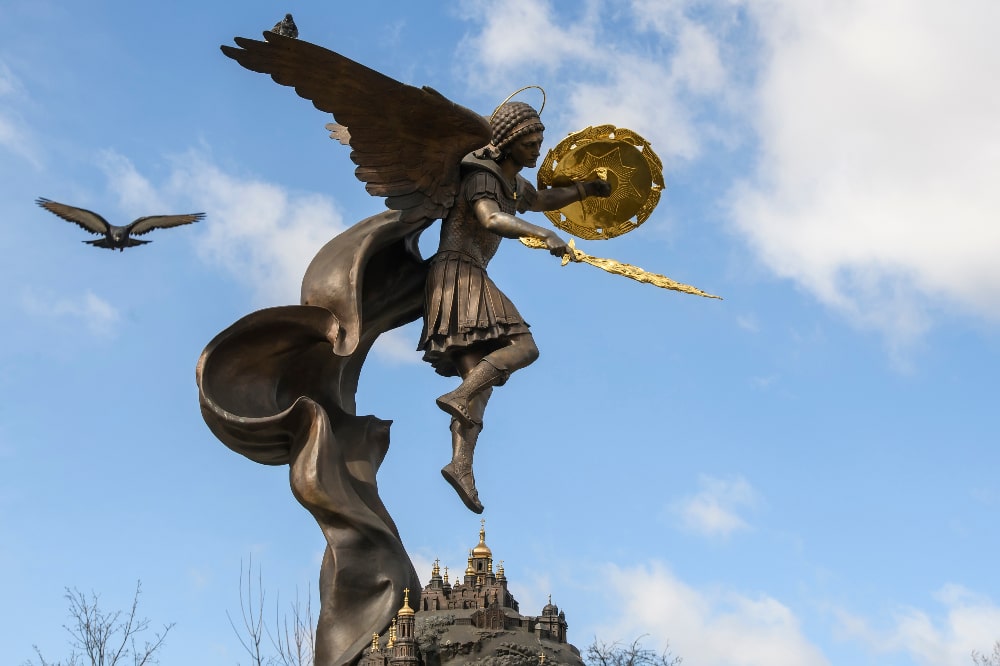
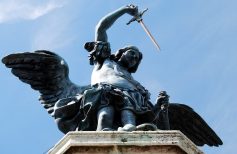
Saint Michael the Archangel, whose name derives from the Hebrew Mi-ka-El meaning “who is like God?”, is indicated in Christian tradition as the angel of death, the psychopomp angel who leads souls into the holy light and towards eternal reward or punishment. Perhaps this definition comes from the Book of Revelation, where John describes the Archangel Michael as the majestic presence called upon to examine the souls destined for the Final Judgement. The warrior angel par excellence, it was Michael who led the heavenly hosts in the war that resulted in the expulsion of the rebellious Angels from Paradise, and since then he has continued to stand as the defender of God against the Evil One.
Read more:
The cult of Archangel St. Michael
St. Michael the Archangel is one of the three archangels recognized by Christianity, and not just that.
In Jewish and Islamic tradition, however, the role of the angel of death is entrusted to the Archangel Azrael, “he whom God helps”. It is he who separates the soul from the body, and according to Muslims, who also consider him the cleverest and wisest of the Archangels, in some stories he even manages to deceive the other three through his cunning.
Despite their diversity, many religions show elements in common. Let us discover which religions believe in angels Angels are perhaps...
What’s the Future of Religion?
What’s the Future of Religion?
A Beginner’s Guide to Christianity
A Beginner’s Guide to Christianity
Mind-Blowing Statistics About Christianity You Need to Know
Mind-Blowing Statistics About Christianity You Need to Know
8599
Enter the Holyart world: $20 discount voucher valid on over 60,000 items
Come and discover Holyart, the largest e-commerce of religious articles in Europe and immediately receive a $20 voucher to use with your first purchase.
Check your mailbox: you will receive your discount within 5 minutes

 16 October 2026