Author: Redazione

The role of the priest in the Holy Communion

The role of the priest in the Holy Communion

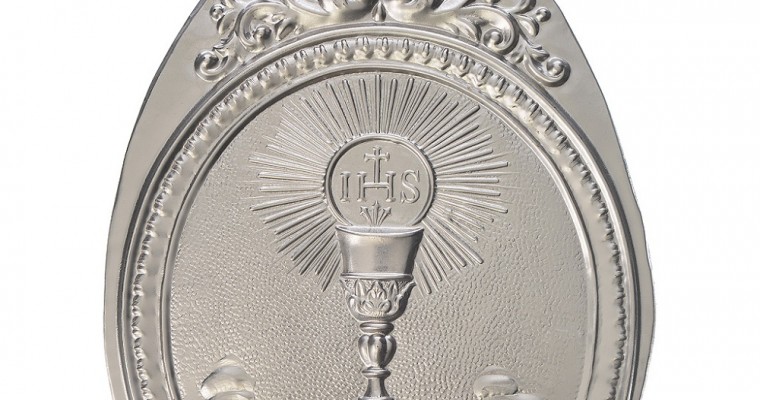
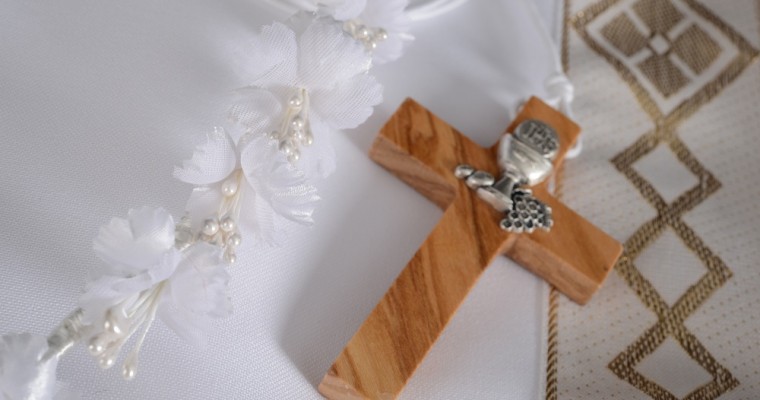
The role of the priest in the Communion’s preparations is important and complex in its gestures, words and symbols, defined since the origins of the Church in a precise and recurring ritual. The purpose of this ritual is to prepare the group of Faithful to…
Sant’Agostino d’Ippona: philosopher, bishop and theologian

Sant’Agostino d’Ippona: philosopher, bishop and theologian

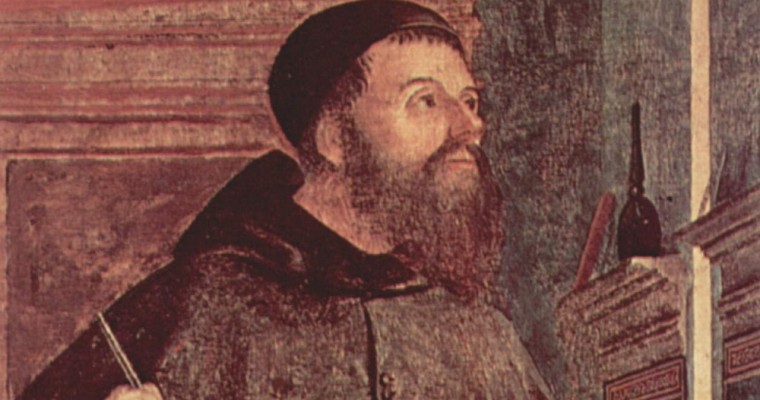
Very few men of faith can be compared to Sant’Agostino d’Ippona. He was not only a great theologian and bishop, philosopher and doctor of the Church. Sant’Agostino d’Ippona put his higher sensitivity and genius in the service of Faith as a priest, but also as…

13 May 2017 – Fatima’s centenary

13 May 2017 – Fatima’s centenary

On 13 May, faithful throughout the world celebrated the Holiday of Our Lady of Fatima.

This year, however, it was a very special celebration: it was the centenary of Mary’s first appearance to the three shepherds Francesco, Jacinta and Lucia. On May 13th, 1917, the three children, while aiming to graze the herd at Cova da Iria (Conca di Iria), in the surroundings of Fátima, a small town in Portugal, saw a cloud descending over them, and from that cloud emerged a woman dressed in white and carrying a Rosary in her hands.

That was only Her first apparition, as the beautiful lady asked the children to return to that place on the 13th of each month, for the next five months. During these meetings, she revealed to the children and to the other witnesses great wonders and secrets about the destiny of all humanity.

Fatima’s apparitions have been recognized by the Catholic Church since 1930: the Portuguese town became the center of a cult that still attracts thousands of pilgrims every year.

On May 12th and 13th, Pope Francis went to the Sanctuary of Fatima and was welcomed by thousands of believers in prayer, to celebrate the centenary. During the celebration, he canonized the two shepherds, Francesco and Jacinta, who died very young. The Pontiff recalled the importance of the figure of Mary for Christians all over the world: the way she, with her humility, mercy and devotion, becomes vehicle between God and men, as a lovely and immensely good mother.

“If we want to be Christians, we must be Marians: we must therefore recognize the fundamental, vital and providential relationship that unites our Lady with Jesus, and opens the way that leads us to Him”, said the Pope during the candle blessing in the Cappellina of Apparitions.

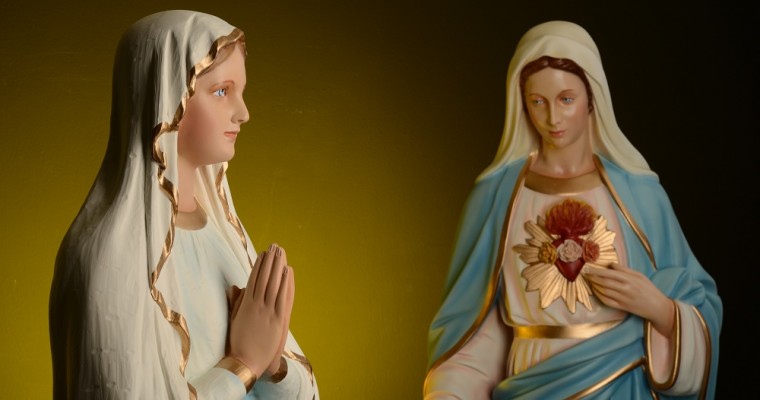
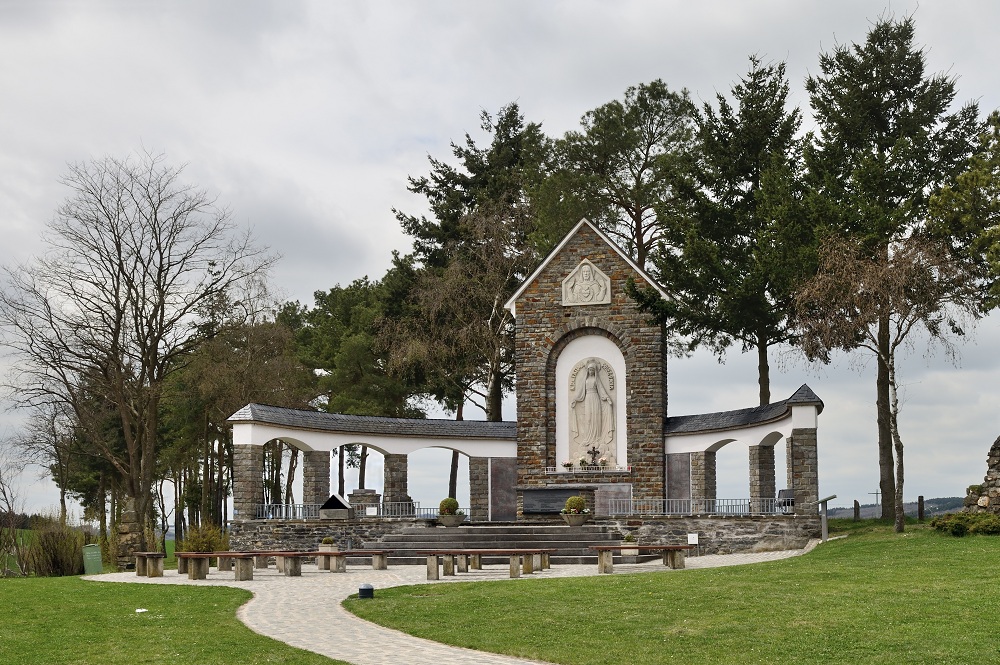
The statue of Our Lady of Fatima, in the sanctuary erected where the Virgin appeared to the three shepherds, is worshiped by faithful from all over the world.

5 questions and 5 answers to the altar wine

5 questions and 5 answers to the altar wine

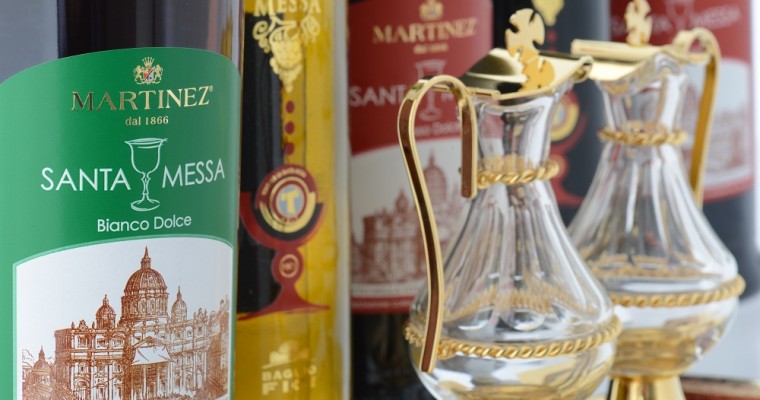
During the Last Supper, Jesus offered his disciples bread and wine, celebrating therefore the first Eucharist. Bread becomes body, wine becomes blood, in a solemn ritual that transcends every human understanding, but which has been renewed every day for thousands of years, throughout the world,…

Birth and evolution of confraternities: from Roman times to today

Birth and evolution of confraternities: from Roman times to today

Confraternities are associations of laic Christians who decide to gather together to promote aggregation, increase devotion and worship, and perform charity, penance and catechesis. They’ve existed since the origins of Christianity in Roman times, and quite likely the first confraternities took inspiration from secular institutions…

Combine elegance and faith: Discovering the Holyart Jewelery

Combine elegance and faith: Discovering the Holyart Jewelery

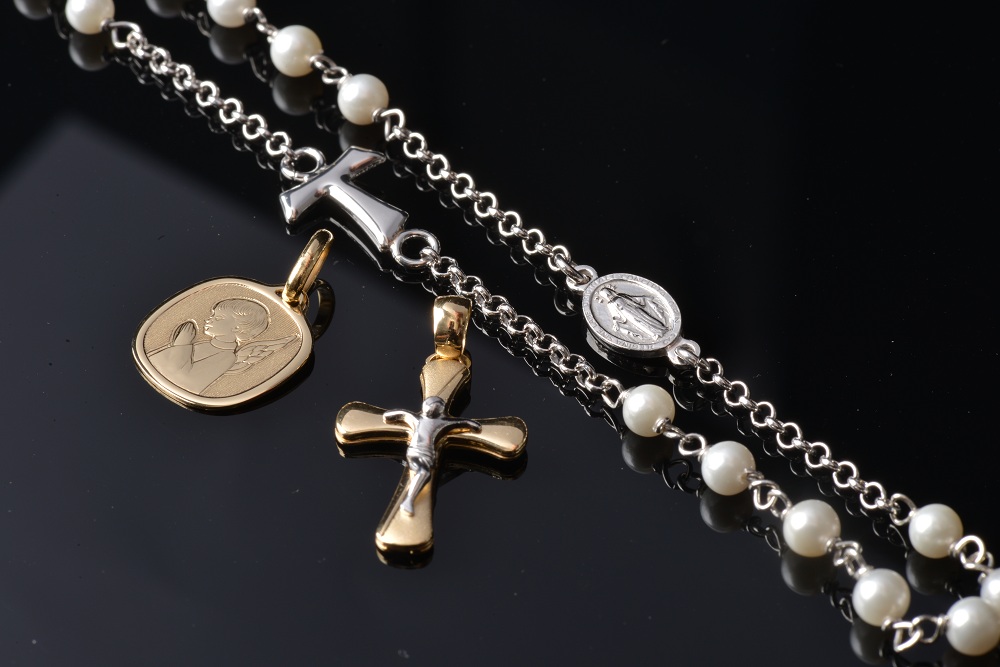
Who said that you can’t combine beauty, elegance and faith into a single, perfect combination? Holyart has tried to do so with its collection of exclusive jewels handmade by Italian jewelery masters, beautiful to wear and unique. These are jewels made of gold, silver, hard stones, and enriched with refined decorations and beautiful hand-made chisels.

Truly old-fashioned objects for the care and the raw materials selected, but also with an eye for modernity and fashion, as we also offer design jewels from innovative lines like the MATER, which features rings, rosaries and bracelets in silver 925. Modern jewelry, characterized by refinement, elegance and solidity, such as the ring-rosary in silver, available in light version, burnished or decorated with enamels that give a touch of color and more refinement.

For those looking for a more classic lines linked to tradition, why not choose from the many angel-shaped pendants, wonderful gifts for First Communion or Confirmation, or any other occasion?

For example, Raffaello’s angel-shaped pendant in 750/00 gold polished, handcrafted at an Italian ornament shop with over sixty years of history. This is a light and young jewel despite the great definition of details.

You can also choose from a wide selection of silver rosaries, decorated with punching and enriched with hard stones (amethyst, agate, Quartz, onyx black, coral, turquoise), brilliant, river pearls, nacre or Swarovski crystal. Our rosaries are handcrafted by experienced masters too.

Furthermore, for a special gift to celebrate an important moment, a silver bracelet can be the ideal present. In our wide selection of silver and gold bracelets, decorated with gemstones, brilliant or Swarovski crystal, we offer a delightful silver bracelet with modern and elegant lines, decorated with small stylized angels, a gift ideal for those who always want to carry a piece of sky with them.

Here are some gift ideas for your wedding day

Here are some gift ideas for your wedding day

The wedding day is a very important, precious, and unique moment. It definitely is so for those who get married and see their dream of love coming to life with the person they chose to be their companion or partner for life. It is also…

The Dominican’s Rosary Movement

The Dominican’s Rosary Movement

The Dominican’s Rosary Movement shows both the desire for community devotion and the desire to promote Dominican Spirituality and the philosophy of love linked to the Holy Rosary. Dominicans daily lives involve searching for truth and intimacy with Jesus, pursued by daily actions, but above…

Veneration of sacred images

Veneration of sacred images

The Catholic Church has always used sacred images and statues for the practice of worship. Naturally it doesn’t come to mind that the first Christians were forced to hide their faith and to lead their worshipping in secret places, where, at most, they could use secret symbols incomprehensible to their enemies. However they too gathered the remains of the early martyrs, who were to become saints, and respected and venerated them as objects of worship.

Many ancient and modern religions are iconoclastic, or condemn the worship of images: thinking of Islam, which forbids the depiction of the image of Muhammad, but also Protestantism, which once condemned and decreed the destruction of many statues and pictures present in Catholic churches.

Even the Bible condemns idolatry, and many passages of Sacred Scripture forbid the construction of statues and images, though such condemnation is directed only to the representation of pagan gods. The Bible forbids idolatry, and not the creation of images for the worship and veneration of the one, true God. In fact, in other scriptures, God Himself ordered men to show their devotion by making statues and objects of veneration.

The use of sacred images, the worship of statues of the Virgin Mary Jesus or the saints is thus not contrary to the teachings of the Bible. Indeed, it is somehow the heritage of those first signs of devotion, compassion and love brought by early Christians to those remains of martyrs.

It was the Council of Nicaea in 787 that formalized and consecrated the use of sacred images. It was given to them the same level of sacredness given to the cross, and therefore the right to be used in churches, during celebrations or as an object of veneration by the faithful, in private homes and public places.

As established by the Council, sacred images could be painted, made in the form of mosaics, carved, woven, provided that they: “are images of the Lord God and Savior Jesus Christ, or the Immaculate Our Lady, the Holy Mother of God, the Saint Angels, the saints and the righteous. ”

The veneration of sacred images evolved over the centuries in many forms of popular devotion and has certainly contributed significantly to the spread of the Catholic religion in the world.

The cult of Divine Mercy

The cult of Divine Mercy

The cult of Divine Mercy started rather late. It was a cult started by Maria Faustina Kowalska, a Polish nun canonized in 2000 by Pope John Paul II. A member of the Congregation of the Sisters of Our Virgin Mary of Mercy, Sister Faustina showed…

Christian symbols and their meanings

Christian symbols and their meanings

The main idea of Christian religious symbolism was born from the desire to idolize banned images in early Christianity and the need to hide this worship. The early Christians had to resort to symbolic representations, signs, abstract forms like the cross, the stylized fish, in…

The origins of Easter

The origins of Easter

Easter is perhaps the most important of Christian holidays. Present in all practices, it reminds and celebrates the Resurrection of Jesus. Its origins are lost in time and its reminiscences and rites remind not only of the Jewish Easter, but also of ancient pagan cults. Thinking about the meanings connected to eggs or Easter bunnies, which are certainly symbols used to celebrate the return of spring, hence the name of the festivity.

The English name of Easter may derive from that of Eostre or Ostara, a pagan deity linked to the cult of spring and fertility, or Ishtar, mother and wife of Tammuz, an ancient Babylonian god, whom she brought back to life after death. To celebrate his resurrection, more than 2000 years before the birth of Christ, homes used to be decorated with flowers and image of bunnies and eggs painted and then hid for the children to find, who would eat typical sweets as well.

The pagan cults around the world have plenty of celebrations of death and resurrection, often associated with the ones dedicated to fertility. It is therefore possible that Easter, as we know it and celebrate it, has deep pagan roots.

As for the biblical tradition, it’s rather interesting that in Scriptures there is no mention of the celebration of Resurrection. Easter is mentioned, though understood as Passover, or Pesach (pasa ‘in Aramaic), commemorating the freedom of the Jews from Egypt. The sacrifice of the lambs reminds of the signs drawn with blood on the Israelites’ doors, so that the angel of death sent by God would spare their firstborn, and kill the Egyptians’. In the Christian Easter Jesus, the Lamb of God, replaces the lamb of the Old Testament. By eating bread and wine, the body and blood of Christ, Christians renew the sacrifice of the Lamb in springtime, instilling in it a new and deeper meaning.

Even the Lent may be inspired by pagan traditions. A period of forty days of abstinence is present in cults of various pagan gods such as Osiris, Adonis and Tammuz.

Easter eggs may come from the cult of fertility in ancient civilizations. Eggs were hung in Egyptian temples as a symbol of life and offered in sacrifice in Egypt, China and Babylon to celebrate the spring season, representing terrestrial and celestial rebirth. For Christians the eggs are the stone tomb from which Jesus rises to new life.

The Easter Bunny ultimately comes from the traditions of the pre-Christian fertility. It has no real religious symbolism, but has over time become a symbol of Easter, especially for children.

Statues of the Madonna in Italy in Southern Italy

Statues of the Madonna in Italy in Southern Italy

The Council of Trento was one of the largest assemblies of bishops in history. It lasted from 1545 to 1563, its main purpose: to evaluate the impact that the Protestant Reformation was having on the Catholic Church, and discuss that. The result of this meeting…

Tapestry: What is it and how it’s made

Tapestry: What is it and how it’s made

Tapestry is an extremely ancient art form which has been present in all cultures in the world for millennia. The oldest tapestries date back to ancient Egypt, and some were also found in pre-Columbian America and the enduring remnants of the ancient Asian empires. The…

The order of the Barefoot Carmelites

The order of the Barefoot Carmelites

The Barefoot Carmelites (or Discalced Carmelites) are nuns whose life is devoted to God by solemn vows. The order was founded in 1560 by a group of nuns following Saint Teresa of Jesus, a charismatic woman and religious figure, who wanted to breathe new life into the Carmelite order, by restoring the old rules and reforming its life’s choices. In part, she drew inspiration from the reform implemented by the Franciscan Peter of Alcantara.

The Discalced Carmelites are cloistered nuns, mainly devoted to contemplative prayers. The spirituality of the order is strongly devoted to the figure of Mary, considered as an example of life in communion and devotion. The life of the Discalced Carmelites is defined by specific schedules and acts that mark the liturgical time and work inside the house, the garden, or the orchard. They are required to maintain a climate of silence and prayer.

Some monasteries of the Discalced Carmelites produce delicious jams and other products made from crops and orchards. These products, sold in the shop of the monastery or distributed in some Italian shops, contribute to the maintenance and management of the monastery itself. The choice of excellent raw materials and the natural and traditional artisanship allows for jams and other products a wide range of flavors to satisfy even the most discerning palate.

The jams of Discalced Carmelites are produced with care according to ancient recipes. The fruit is collected, treated and left to cook with traditional methods, to provide a tasty and authentic result. The various jams produced by the Discalced Carmelites are the result of traditional methods. They are produced responsibly, with no additives, and are 100% natural. A healthy and genuine specialty that leads back to ancient and precious flavors.

Paschal candle: the light that frees us from darkness

Paschal candle: the light that frees us from darkness

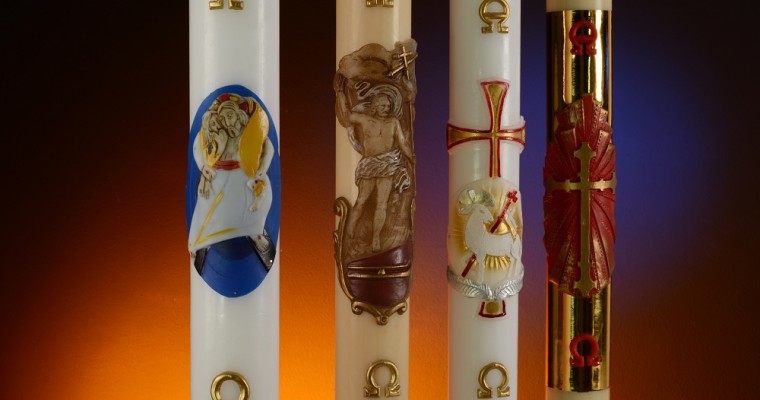
The Christ-Light axiom is one of the most recurring in the Catholic religion. From the origins of the Liturgy, light from lamps and candles was used as symbol of light of the Resurrection of Jesus: a light, which can dissipate the darkness of the darkest…

The great tradition of holy Romanian icons

The great tradition of holy Romanian icons

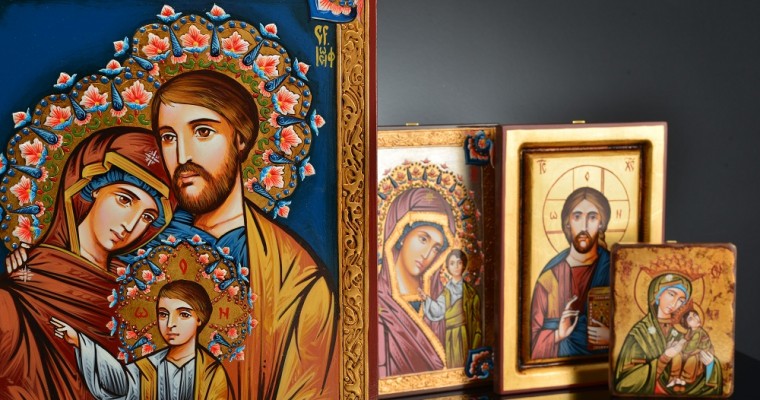
Sacred Romanian icons are derived from ancient Byzantine tradition. It is a way of interpreting the sacred representation closer to western sensitivity compared to other forms of art of the same kind. Used colours are generally warm and intense, the outlines of a mobile and…

The dove in Christian iconography

The dove in Christian iconography

Even before the birth of Jesus, the dove was considered an animal with a strong symbolic value. For the Greeks was a symbol of love and a messenger of the goddess Aphrodite. In Egypt, it was used as a shipping bird, to send messages. Among the Jews, it was a sacrificial offering for the poor, who could not afford more expensive sacrifices. It symbolised love, the yearning for God through purification, peace.

At the end of the Flood, a dove sent by Noah, is carrying an olive branch in its beak, giving new hope to decimated humanity. In this sense, the dove appears as a heavenly messenger. In the Bible, the dove is the most mentioned bird, and embodies beauty, tenderness, fidelity of love, but also purity, freedom, and the passionate search for God.

The wails are those of sufferers waiting for a salvation that never comes. In other traditions, it was considered the symbol of the soul of a deceased person. In fact, among the Slav peoples, there was the belief that it was the soul of the deceased from turning into a dove.

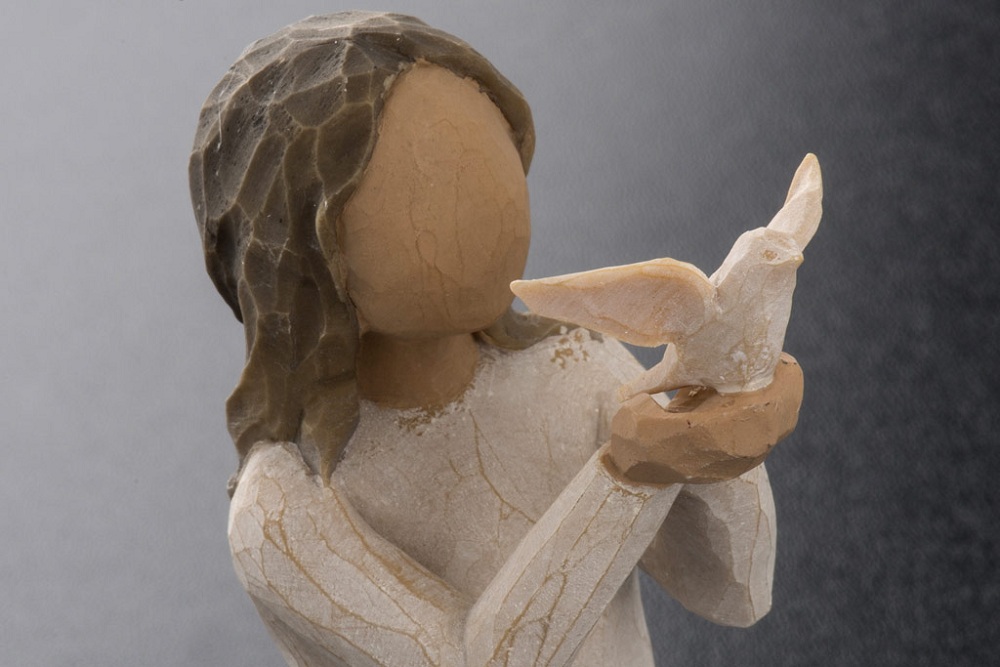
With the advent of Christianity, the dove became the symbol of the Holy Spirit. When Jesus was baptised, in fact, it is said that a dove descended on his head. It is a new beginning for man, the renewal of the Covenant with God after the Flood, God’s Love that descends upon men by giving them a hope of salvation and eternity.

Jesus often used the image of the dove, coupled with that of the snake. He told his disciples “Be wise as serpents, harmless as doves.” (Mt 10:16).

The significance of this warning is that you must be smart and cautious to escape deception, but without losing innocence, trust in others. The Christian must live with this dual nature, that of the serpent, intelligent and realistic, and the Dove, ethereal and light, without exceeding in both directions.