Author: Redazione

The Botafumeiro, the largest thurible in the world

The Botafumeiro, the largest thurible in the world

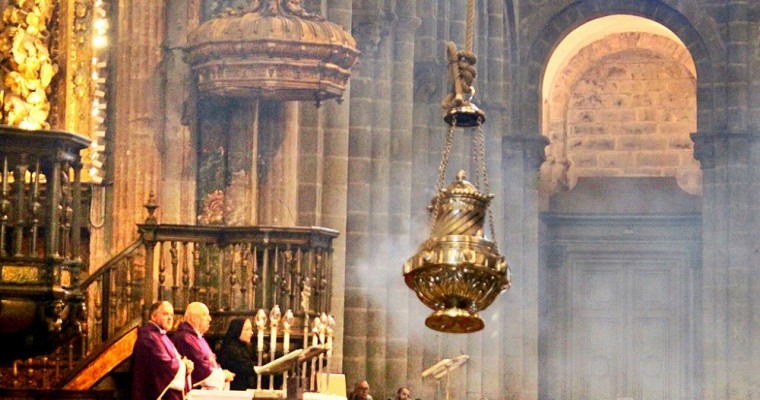
The Botafumeiro in the Santiago de Compostela Cathedral is the largest church thurible in the world, loved by all pilgrims that undertake the Camino pilgrimage The Botafumeiro. A funny, exotic name that evokes suggestions from a distant past, memories of an ancient history told at…
10 mistakes we make when taking the communion

10 mistakes we make when taking the communion

Communion is the highest and solemn moment in a Mass, when bread turns into Christ’s Body. Here are a few mistakes we should avoid when approaching Eucharist. The Eucharist. The Blessed Sacrament. Holy Communion. Whatever we choose to call it, it is undoubtedly the most…

The day the Holy Sacrament landed on space

The day the Holy Sacrament landed on space

Perceiving God’s presence while immersed in a particularly majestic and beautiful natural setting is something that has always joined almost all believers. In fact, how can you be insensitive while contemplating the magnificence of the sky, crossed by wispy vessels made of clouds or quilted by shiny stars? How can that not remind you of the infinite wisdom and generosity of Who created a secular wood, with trees as high as pillars built to sustain the sky, or a undergrowth quivering with life, blooming with fern, and an infinite swarm of small animals? Or even more, the vastness of the sea, its eternal and uneven motion, its scary fury when winds blow the waves and shake up the sea beds devouring the coasts. Where do such strength and such untamable violence come from? Who can calm it down?

Humanity has always watched the unrivaled show of nature impotent and full of wonder, and cannot help but read in it the certainty that something or someone above exists, and that men owe the amazing beauty that surrounds them to this supernatural and eternal presence. For Christians, everything recalls God, the Heavenly Father, of course, creator of heaven and earth and of everything existing between these two spheres, included men themselves.

So how can we not understand the intense and unique emotions felt by those who are lucky enough to have the chance to see our whole planet from a super privileged position, that is, space?

We are talking about astronauts, those brave and capable men and women that are on space missions, which take them far away from Earth for some time, unthinkable for most people, and in quite unusual life conditions. Yet, in spite of the distance to their daily existence, their loves, their habits, or maybe exactly because of this kind of suspension from earthly life, while immersed in a setting like no other and from which they can contemplate the fullness of the creation in its truest meaning, those men and women feel the presence of God next to them with even more intensity.

How do catholic astronauts live their faith while into orbit? How can they compensate for the lack of the Holy Sacrament for quite a long time?

Everyone according to their own possibilities, of course. It is true that there is no way for them to participate to a mass and receive the communion, but there are no obstacles for them to pray, alone or even together. This is the case of Sid Gutierrez, Thomas Jones and Kevin Chilton, three astronauts on a mission around the Earth on the ship Endeavour to study changes during April 1994: they not only prayed together, but even celebrated a catholic liturgy with Eucharist on board of the Space Shuttle.

Already in 1968 the crew of the Apollo 8 while in orbit around the Moon had launched an important message to the Christians on Earth, reading live on TV some passages from the Genesis.

Later, Buzz Aldrin, the second man to step foot on the Moon during the mission Apollo 11, wanted to celebrate Eucharist on the silver satellite using a travel kit which included the Holy Sacrament, which was granted by a special permission given by the Presbyterian Church.

A more recent case is Michael S. Hopkins, an astronaut and colonel of the U.S. Air Force. His mission began in September 2013: 24 weeks on board of the International Space Station. Before his departure, the astronaut converted to Christianism, and finished his catechesis path. Maybe it was the freshness of his faith that made it intolerable for him to have to give up, for such a long time, receiving Christ’s Body. So, with the intercession from his priest and a special permission given by the Archdioceses of Galveston-Houston, he was allowed to take a pyx with six consecrated hosts into space, each one divided into four parts: all that was necessary to receive the Holy Sacrament once a week for the whole duration of his mission. Plus, the diligent priest also sent him the sermon every week, to make is experience of faith even more complete and comforting.

What is it like to pray in space?

The International Space Station is equipped with a particular and unique observatory module, called Cupola. The Cupola is a semi sphere of 3.5 meters of diameter, equipped with six side windows and a roof window. Astronauts enjoy a very wide and privileged view from these windows, and that brings a list of pros. First of all, from there they can follow all their colleagues’ external maneuvers, or the mechanical arm movements and all docking operations.

But the thing that makes the Cupola really special, from a human and psychological point of view, is that they can see the Earth from there. We are used to sci-fi movies, so it can look trivial to our eyes; but let’s try to step into their shoes, so far from home, and try to imagine the effect it can have watching our own planet covered in blue, suspended in the cosmic emptiness like all of the other planetary bodies. It is not by chance then that many astronauts choose the Cupola as a place to pray, as many pictures taken during various missions confirm. It is exactly when we feel our vulnerability the most, our being nothing compared to the vastness of the creation, that we feel God’s presence next to us, His endless Love enveloping us, comforting us, protecting us. Everything looks now more beautiful, precious and priceless, because He is with us, even when we are so far from home, lost in an abyss covered with stars that spins around us, indifferent and eternal. We can therefore understand the astonishment, the respect and the love astronauts on the International Space Station must feel when they contemplate the deep space beyond the windows of the Cupola and pray.

The declaration from the already mentioned Thomas D. Jones is also meaningful. In his biography, among other things, he writes: “Every night, before I went to sleep, I thanked God for those wonderful sights of Earth and for the success of our mission. I prayed constantly for the safety of our team, and for everything to end up in a happy encounter with our families.” Similarly, in this mission, astronauts were allowed to take some hosts with them, which were distributed by one of them, designed to be an extraordinary minister of Eucharist

Kevin shared Christ’s Body with Sid and me, and we floated in the flight cabin, silently thinking about this moment of peace and real communion with Christ“, adds Jones: “While we were peacefully meditating in the darkness of the cabin, a magnificent white light rose from space entering the cabin. The radiant light of the sun penetrated through the front windows of the Endeavour, bringing warmth. What other sign could we ever ask for? It was the sweet confirmation from God of our union with Him“.

Thomas D. Jones’ book goes beyond the scientific aspect to give us a testimony of great humanity and faith. Through his eyes, the blue of the Earth seen from space becomes the Virgin’s mantle, and we cannot be insensitive to the deep emotion of his words when he describes the colors of our planet seen as impossible to be found in any picture of any painter of the world. Once again, the awareness of our being small compared to the creation and God becomes known from the reports of those who were lucky enough to enjoy this unique and privileged view. One more gift from God to his favorite children, one more promise of beauty and love that He wanted to give to men.

Hosts for celiacs: let’s shed some light on that

Hosts for celiacs: let’s shed some light on that

The modern world can easily question anything. Centuries-old traditions, actions repeated for millennia, by multiple generations, even rituals codified in time and kept unmodified since the beginning of time, now require modifications to adapt to the needs of modern men. It’s not always about making…

Curious facts: how weddings are celebrated around the world

Curious facts: how weddings are celebrated around the world

Have you ever thought about how weddings are celebrated in the rest of the world? Italian habits and customs are deeply rooted in centuries-old traditions, but it would be interesting to find out about particular traditions of other countries, such as lucky days to get…

Jesus said there is no better novena than this one, and it only consists of 11 words!

Jesus said there is no better novena than this one, and it only consists of 11 words!

Why do you confuse yourselves by worrying? Leave the care of your affairs to me and everything will be peaceful. […] Surrender to me does not mean to fret, to be upset, or to lose hope, nor does it mean offering to me a worried prayer asking me to follow you and change your worry into prayer.
Surrender means to placidly close the eyes of the soul, to turn away from thoughts of tribulation and to put yourself in my care, so that only I act, saying: You take care of it.

This is how the “Surrender to the will of God” by Father Don Dolindo Ruotolo goes; Don Dolindo was a capuchin friar who lived between 1882 and 1970. An invitation coming from Christ himself to all men, so that they remember what it means belonging to Him, being Christians because “of Christ” with all heart and soul.

The idea of a complete surrender to God’s will can look like a less effective and deep manifestation of faith compared to other forms of devotion, to going to mass, to daily prayers, to the frequent recital of the Rosary, and so on. Yet, paradoxically, it is exactly in the moment we stop struggling over something that we are more appreciated by Jesus. It is not necessary to repeat over and over what our needs or our requests are, nor what we desperately need. God already knows that very well, without having to listen to our prayers. And it isn’t even necessary to pimp ourselves to his eyes, showing off our faith with external and superficial acts, boasting a constant participation to the mass, an exemplary regularity in reciting the Rosary or in praying. We are already beautiful to God’s eyes for what we feel deep in our heart, for what we really are and feel.

We will always be missing something. We will never be fully satisfied and settled. We live in a constant situation of need, in a status of lack from which we cannot come out, because it is a part of the human condition. However, we must not believe that our weakness, our incompleteness, our not being able to go on by ourselves might look as negative to God’s eyes, or something to be blamed for. On the contrary! It is exactly this vulnerability, this inadequacy, to make us so dear to Him, merciful and good Father; He is always ready to show us His love, to welcome us in His embrace, to comfort us and make us feel at home.

Rosary beads and rosary cases
On Holyart over 1700 different rosaries with merciful Jesus and other Saints

Therefore, admitting our own vulnerability is the best gift for our Lord. In the very moment we admit that we cannot go on and need Him, that is when we open the way for His love, we give Him the faculty to come to our rescue and love us as only He can do.

I say to you in truth that every act of true, blind, complete surrender to me produces the effect that you desire and resolves all difficult situations.

Father Don Olindo understood that. A pious man, who spent his whole existence in prayer, dedicating himself to collect confessions from countless Christians, acting as spiritual guide for anyone who might need one; he understood in depth how much our necessities and our smallness were the right way to receive the love of God.

Surrendering to his own limits, admitting his weakness, man turns into God’s hands, at the mercy of his benevolence, and that is good enough to see his prayers granted. According to the friar, a real and true act of surrender is worth more than any anxiety, worry or request. God is there to listen to us, we just need to ask him what we need and say: “You take care of it.”

Father Don Dolindo was also the spiritual guide of Padre Pio, and helped many people who turned to him looking for help and comfort. To help them, he did just that, he surrendered completely to God, encouraging the people concerned to do the same. The prayer of surrender he left us, which can be recited or read in full, or used as a novena, a segment per day for nine days even inside the recital of the Rosary, is a repetition of one single concept: O Jesus I surrender to You, You take care of it!

It is a different way to convey our requests to God, to show Him our own needs, fears and necessities. It requires an infinite trust, which comes from deep in our heart, as a child turns to an adult and taking for granted that he will receive help, love and fulfilment of all of his wishes. That is what we are to God’s eyes, children in need for love and help; only our pride and our ego often make us forget that, and make us arrogant and only superficially subdued. We cannot give God the benefit of the doubt: we either believe in Him or not, we either rely on His will and His love, or we’d better stop asking and demanding.

This is Father Don Dolindo’s message, an invitation to surrender completely, and let every reservation, every resistance, every reason and why fall down. Diving into the love of God with no barriers, no safety net, only trusting His embrace, ready to welcome us.

The saints that changed the world

The saints that changed the world

The history of Europe and of the Western world as we know them goes through many and constant political and social changes, economical and thoughts revolutions. The study of these phenomena is fundamental to understand history, and should also be the core and engine of…

Padre Pio and the Order of Friars Minor Capuchin

Padre Pio and the Order of Friars Minor Capuchin

What makes Padre Pio, known today as Saint Pio from Pietralcina, such an adored and celebrated figure since he was still alive, and yet so discussed? The popular adoration he received since his youth is probably due to his fame as thaumaturge, to the miraculous…

Padre Pio and his favorite prayer

Padre Pio and his favorite prayer

Padre Pio is a figure that was controversial and debated in the Catholic Church sphere for a long time. Even after his canonization on June 16th 2002 by Pope John Paul II, his name kept splitting the public opinion between those who recognize his sanctity and greatness, and those who doubt some of his powers and miraculous manifestations attributed to him.

This is not the place to debate what we should believe or not about the Saint from Pietralcina. He devoted his existence to prayer, sacrifice and to the complete dedication towards other people, and that is a given fact; this is why his figure provoked an impressive devotional boost, which was already high when he was still alive, but even higher after his death in 1968. In almost every catholic city or home, we can find at least a statue of Padre Pio, or a medal, a pendant, anyway something that recalls this Capuchin friar that was so gentle, so good, and able to bring hope and healing to the most suffering body and soul.

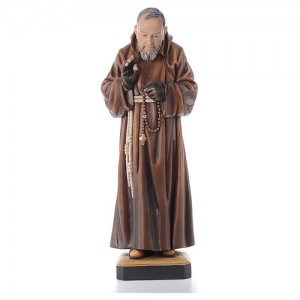
St Father Pio of Pietralcina wooden statue painted

In this particular article we want to linger on the prayer that Padre Pio used to say when someone asked him to pray for them or beloved ones, whether in person or in writing. These prayers, in which he conveyed all of his faith, love and spiritual energy, usually had the effect people hoped for, with astonishing, and even miraculous results.

Padre Pio did not invent this prayer, of course. It is actually a prayer we already know, and about which we already discussed in the past: it is the efficacious Novena to the Sacred Heart of Jesus written by Saint Margaret Mary Alacoque. Margaret Mary Alacoque was a French nun and mystic who lived in the XVII century; she received many revelations from Jesus and was one of the main promoters of the devotion of the Sacred Heart of Jesus. In fact, the prayer Padre Pio used to say to help those who invoked his help is addressed mainly to the Sacred Heart of Jesus, such a good and merciful heart that cannot let the supplications of those relying on it go unheard.

As for all other prayers, it is obviously not a magic formula, nor an extraordinary litany that, if recited the right number of times and with the right intonation, can lead to miraculous effects. Padre Pio used to say it with all his heart, all the faith his big soul was capable of, and so should we, if we expect to be listened. Even though the Sacred Heart of Jesus is infinitely good and powerful, we must always remember that everything that happens or could happen in the future lies in the will of God, in His plan for all men and us. Only if we accept our smallness with absolute humility and awareness in front of Him and His will, we can hope to be listened in our pleas and satisfied in our big and small requests.

Here is Padre Pio’s prayer to the Sacred Heart of Jesus:

O my Jesus, you have said: “Truly I say to you, ask and you will receive, seek and you will find, knock and it will be opened to you.” Behold I knock, I seek and ask for the grace…

Our Father….Hail Mary….Glory Be to the Father. Sacred Heart of Jesus, I place all my trust in you.

O my Jesus, you have said: “Truly I say to you, if you ask anything of the Father in my name, he will give it to you.” Behold, in your name, I ask the Father for the grace of…

Our Father….Hail Mary….Glory Be to the Father. Sacred Heart of Jesus, I place all my trust in you.

O my Jesus, you have said: “Truly I say to you, heaven and earth will pass away but my words will not pass away.” Encouraged by your infallible words I now ask for the grace of…

Our Father….Hail Mary….Glory Be to the Father. Sacred Heart of Jesus, I place all my trust in you.

O Sacred Heart of Jesus, for whom it is impossible not to have compassion on the afflicted, have pity on us miserable sinners and grant us the grace which we ask of you, through the Sorrowful and Immaculate Heart of Mary, your tender Mother and ours.

St. Joseph, foster father of Jesus, pray for us. Amen.

Padre Pio and guardian angels

Another aspect we would like to linger on about the figure of Padre Pio of Pietralcina is his special relationship with angels and, in particular, with the guardian angel. Padre Pio admitted he strongly felt this discreet and infinitely beneficial presence next to him since he was a child. In his writings he turned to his guardian angel using many names and nicknames which make us clearly perceive the evolution of this special relationship, from childhood to adulthood: little companion of my childhood, good secretary, little angel, my good angel, inseparable companion, celestial figure, illustrious warrior, celestial messenger. In other places, the friar from Pietralcina defines his guardian angel as a brother, as a friend, as a member of his family.

While going through Padre Pio’s writings, we realize how often he considered that figure, in is daily fight against Satan and its mischiefs, in spiritual matters and in practical matters. Not just that, but the Saint always reminded those asking for his help and comfort to do the same, that is, not lose sight on their guardian angel, and angels in general, as mediators between men and God, and as a precious help sent from Heaven.

It is even said that Padre Pio could come into contact with the Guardian Angels of those who looked for his help, and that it would allow him to know those people and their hidden truths.

What is it that made angels so special for the Saint from Pietralcina?

Padre Pio states that the guardian angel always watches over the person he was given custody of since the moment of conception. The angels’ mission, given directly from God, is to guide their protégés through the rugged path of life like a warlord, wrapping them in a shield with their wings, supporting their steps so that they will not stumble on stones and the ruggedness of the way.

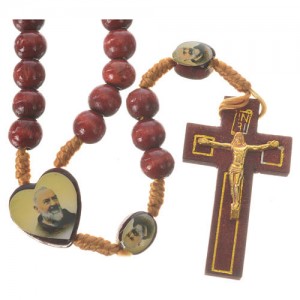
Rosary with Padre Pio and Merciful Jesus in wood

This constant and comforting presence never leaves us, cradle-to-grave, protecting us from evil and keeping us in Jesus’ grace even when we are wrong andwhen we succumb to the temptation and sin. Even then, the guardian angel stays by our side, and according to Padre Pio, prays for us with even more passion in order to support our cause in front of God. Because this is also and most of all what a guardian angel does: he prays for us incessantly, and becomes mediator between us and God to bring all the good we do to his attention, such as our good actions, our best thoughts, our prayers, fears and hopes.

Therefore, according to Padre Pio, angels have to praise and glorify God, and work as mediators between Him and men. They also have to fight the devil, in all of its forms and manifestations, preventing it from ruining men and women’s lives. Guardian Angels in particular have to guide and support those under their protection.

Padre Pio used to encourage those he knew and loved, and all those writing and meeting him, to remember how lucky they were to have their own guardian angel by their side, and in general, all angels. He recommended them never to be tired of praying to their own guardian angel, and suggested he most appropriate prayers to say, as this one that is very famous:

“May your good guardian angel always watch over you, and be your guide on the rough path of life; may he always keep you in the grace of Jesus and hold you up with his hands so that you may not hurt your foot on a stone; may he protect you under his wings from all the deceits of the world”.

Priest, friar and monk: three words that are often convoluted

Priest, friar and monk: three words that are often convoluted

The three words priest, monk and friar are often confused with each other. And it’s a legit confusion actually, because these three religious figures have much in common, and the differences among them are often uncertain. Apart from the fact that a monk or a…

The Morning Prayer: how to start your day right

The Morning Prayer: how to start your day right

Jesus told his disciples and his friends that they should pray, always, and never get tired of it. From that exhortation comes the Liturgy of the Hours, which schedules the moment of prayers during the day, so that every moment of our lives is a…

Story and production techniques of Prayer Cards

Story and production techniques of Prayer Cards

The word Paryer Card defines a small rectangular card, displaying on one side the printed or carved image of a saint or other sacred objects, and on the other a prayer or a hagiographic text related to the portrayed saint. There are Prayer Cards that celebrate a particular sacrament or holiday, such as the printed Prayer Cards that are distributed during the celebration of the First Holy Communion of children.

The origins of Prayer Cards

The Prayer Card has always played a fundamental role in spreading the Christian religion since its origins, around the XV century. We must remember that in the past centuries the majority of people could not read nor write. Education and access to books, codexes and sacred texts were reserved to elite of people, while the vast majority of the devotees could not consult them firsthand. This lack was compensated partly by cathechesis, sermons during masses, verbal evangelization, which orally passed epsiodes and passaged from the Bible and spread the philosophical and spiritual principles of Christianism.

Images were another powerful means of diffusion since the very beginning.

Since the Prayer Card is, as its name says, printed, we need to wait until the invention of printing to be able to talk about that. Actually, the road that leads us to this fascinating and particular devotion object is long, and includes many more famous and higher aspects of religious art.

Miniatures

Let’s begin by talking about the work of miniaturists, who cooperated with amanuensis in copying the ancient sacred texts and the miniature codexes. Their contribution was extremely artistic, since they were asked to embellish the texts with initial letters that included representations of Jesus, the Virgin Mary or the Saints.

While at the beginning these initial letters were just a simple decorative element, they gained their own value around the XV century. They became richer and more complex, turing into real scenes that told evangelic episodes, sometimes independent from the text they accompanied, with no need for written words.

Since these miniated codexes were used on a daily basis in liturgy, they were subject to tear and wear, and deteriorated till the point they were useless. The miniatures were then cut and inserted into other codexes, or more often, hanged inside the houses or brought along as an object of pocket devotion.

That is how the idea of having a sacred image that can be easily carried was born, so that anyone could carry one. And since it was not that easy to have a cut out saved from a miniature codex, the demand for miniatures specifically created for that aim began to grow. Artists and artisans worked hard to satisfy this new and more demanding market. From that to the next stage of evolution, that is, the printing press, is a short step. But not that short, actually.

Woodcut

The first kind of printed reproduction of Prayer cards dates back to the middle of the XV century, and coincides with the spread of the so called woodcut. Woodcut is a very ancient printing technique, used since the IV century in Egypt to decorate fabrics. An image was carved on a wooden board, which was later inked with a roller and then impressed on a piece of paper or parchment. The lines that created the image were carved on wood with sharp blades and burins. Wood was then carved in order to emboss the lines. Around the middle of the XVI century this type of work was joined by woodcut on copper sheets, carved in the same way.

These boards, called molds, were used on a large scale to print sacred images, especially connected to the story of Mary, Jesus and the Saints. Those images were then sold at a cheap price, so that they could be bought also by humbler families as objects of devotion. They were also used as superstitious objects to protect travel chests from thefts, or in workshops and stables. The first woodcuts were created in monasteries, but the production and sale of the carvings spread soon in villages and towns, and many workshops dedicated only to this kind of market started up. With time, the tecniques improved and colored woodcuts began to appear, which were printed at first, then hand-colored.

Even after other printing methods spread widely, sacred images woodcut was still practiced as a form of art in itself. Linoleum sheets or other less perishable materials are used today instead of wood to produce the Cards. Among the most ancient and precious woodcuts we can mention the Madonna of Bruxelles (1418) and the Madonna of the Fire, still hanged in the Duomo of Forlì (1429).

Burin engraving

In Germany and in the Netherlands, around the XV century, the copper carving was also famous, as we were saying. In this case, the copper sheet was chiseled with a burin, a small chisel made of metal, and sharp blades. The pros of this choice were mostly connected to the perishability of wood, which made the molds unusable after just a few applications, while copper, being able to not absorb ink humidity and not deforming, could be used much longer.

Unlike woodcut, burin engraving on copper produced a cavity impression, where the ink penetrated instead of being embossed.

Etching

Another technique that spread at the time was etching, which was highly popular in Hamburg and especially in Antwerp, in the Flanders, artistic and business capital of the Spanish empire. It was the Order of Jesuits that promoted the diffusion of the sacred images made with this technique. Later, Paris became the first city in Europe in the production of sacred images of great beauty and refinement made with etching. The graphic workshops in Rue Saint-Jacques in the Latin Quarter also experimented more and more daring and accurate techniques. Also in this case, they worked on metal sheets (usually zinc or copper), which were corroded with acids. The sheet was cleaned, degreased with chemical processes, covered in an acid-resistant solution on which the selected image was hand-drawn. That way only the lines that needed to be impressed on paper were uncovered. In fact, when in the following stage the sheet was soaked in acid, the acid corroded the metal only where it had no protection. Having done that, the sheet was washed, dried, covered in greasy ink and placed in a chalcography press, where it impressed its cast on paper. This type of production allowed a higher attention to details and shades, therefore more refined and rich images. In particular, the engraver Jacques Caillot was able to give his sacred etchings such depth and realism that they are still famous today.

Canivet

The Canivet technique spread also in monasteries during the Counter-Reformation age. The advocates of this movement considered keeping the nuns occupied with ordinary manual works a necessity. Embroidery and decoration of sacred vestments was highly encouraged, like trousseaus for private buyers, whose money contributed to the monastery sustenance.

Prayer Cards made with the technique of Canivet, also called Prayer Card products, were paper or parchment bases with an oval in the middle on which a sacred image was painted. Later, the oval was surrounded by a delicate engraving obtained with a canif, a very thin blade. The object was then completed with a cartouche and colors. The effect was like an ornamental crochet, it recalled achitectonic shapes, sacred images, flowers and animal decorations. Together with Canivets in the monastic environment, nuns and school girls began to enrich their works with fabrics, pearls, golden and silver threads, ribbons, and all that fantasy and creativity suggested to their minds. The results were collage-prayer cards, very elaborate and of great impact.

This kind of works spread soon also outside monasteries. In the XVI century many artisans began carving the engravings and put them on fabric bases. Besides being devotion objects, Prayer Cards made with the technique of Canivet were used also to celebrate anniversaries and to gladden events.

Prayer Cards series production

Around the end of 1700, Prayer Cards began to be used to remember the most precious moments of a devotee’s life, such as Christening, First Communion, Confirmation, Holy Matrimony and Death. Many publishing houses began dedicating themselves exclusively to this production on large scale, making thousands of Prayer Cards of any kind and for any occasion.

Given the impressive spread of sacred images in all Europe with woodcut, etching and the other techniques described above, the Church decided to intervene, imposing an official approval that had to be stamped on the back of the image itself. “Imprimatur” is the Latin word for the approval.

Lithography

Lithography was invented in 1796. This is a printing technique that exploits the property of calcareous stones to absorb or reject grease when they are emulsified with acid-gummy solutions.

This technique depeloped into chromolithograph, obtained by using different calcareous stones soaked in colred inks, then fixed with resin and water mixed with Arabic gum. The press allowed pressing the stones on paper, and impressing the colored image.

Liberty Prayer Cards and laced Prayer Cards

Chromolithograph was proposed again in the Art Déco and Liberty fields, with the printing of Prayer Cards decorated with garlands, symbols, ribbons, flowers, and enriched with prayers and embossed images.

At the same time in Prague, the new European capital in the production of Prayer Cards, the techniques of embossing and stamp also spread; those techniques involved the application of golden or colored decorations, such as bright and vivid flower frames, on the Card. The whole card was then painted with a translucent paint that made the colors and details even more intense.

Inspired by Canivets, during the 30s also Lace or Crochet Prayer Cards reached the peak. In this case, too, they were made of an icon surrounded by an elaborate crochet. Thanks to the new printing techniques such as the Punch Press, it was possible to reproduce thousands of this type of Cards.

Today

Recently, the phenomenon of Prayer Cards collector was born, which grew remarkably in just a few decades. This interest for Prayer Cards brought also a renewed attention in modern production, at least for what concerns the choice of the image to represent.

The Novena to Saint Benedict

The Novena to Saint Benedict

Saint Benedict of Norcia is celebrated on July 11th. This is actually just one of the dates dedicated to the saint from Umbria, founder of the Benedictine order and creator of the so called Rule, which will strongly affect lives and spiritual experiences of all…

The consecration of the Sacred Heart of Jesus

The consecration of the Sacred Heart of Jesus

The worship of the Sacred Heart of Jesus for Christians is twofold: on the one hand, it means worshipping the heart of Jesus as a symbol of his humanity, of having become a man and having sacrificed for us all. On the other, it is…

Altar linens in the liturgical celebrations

Altar linens in the liturgical celebrations

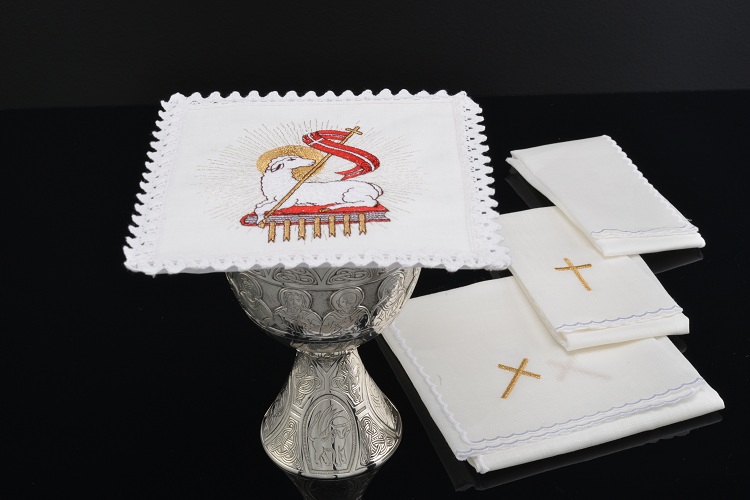
Altar linens are an essential accessory for the celebration. In addition to a true and proper use connected to church supplies, they are valuable for the ornament of the altar and its consecration.

Altar linens are usually composed of a corporal (square cloth in linen or cotton, starched on which is placed the body of Christ), a pall (a drape of fabric, squared, adorned with fine embroidery, with which chalice and paten are covered, in order to protect them from dust, dirt and insects), a hand towel (or manuterge, is used by the priest to cleanse his hands during the consecration), a purificator (the cloth with which the priest thoroughly cleans the cup at the end of the celebration), a tablecloth for the altar and others.altar-linen-bread-grapes-spikes-jhs-symbol

Within the altar linens also fall: the amice (ie liturgical vestments made up of a white linen rectangle on which two tapes are sewn, that allow the priest to wear it and cover the neck), and the tabernacle veil (a large triangle cloth, placed behind the altar, hanging from a wooden stand or held by statues, also used to completely cover the altar between celebrations).

This is hardly used, whereas another similar is used over the tabernacle.

Altar linens must be of quality, since their devotional use. In the past, they were made of linen, cotton or hemp, enriched with beautiful embroideries. Even today, although altar linens are also available in polyester and other synthetic fabrics, it is important that they are made with care.

Altar linens can be finished with simple hem, partitions, embroidery and lace.

They are decorated with symbols that recall the liturgy, and that can change depending on the celebrations or festivities underway. Recurring themes include the cross, the golden symbol JHS, Marian symbols, the chalice, grapes, ears of wheat, the Eucharist and the dove.

St. Joseph: the supposed father of Jesus

St. Joseph: the supposed father of Jesus

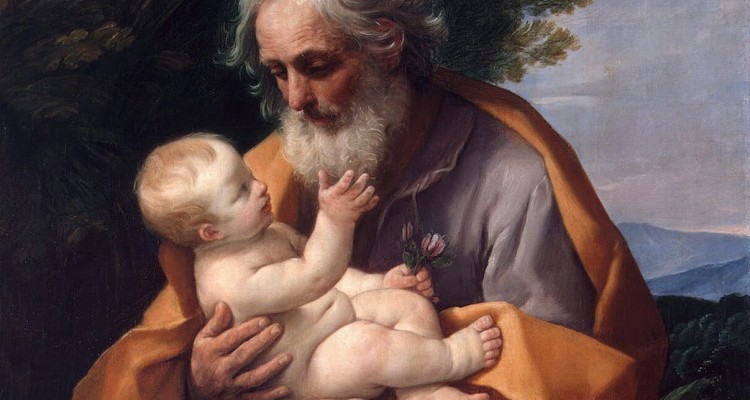
St. Joseph is a very beloved figure venerated by Christians and with affection and incomparable devotion. In his being considered the supposed father of Jesus and faithful and respectful husband of the Virgin Mary, has ended up becoming the father of the whole Church, of…

The symbolic value of bishop rings

The symbolic value of bishop rings

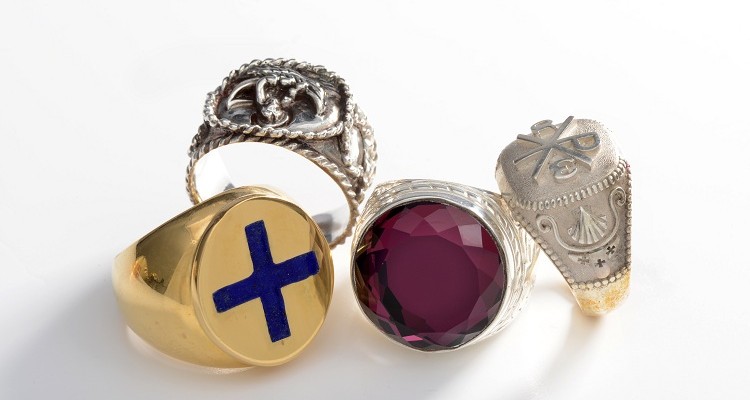
The Bishop is among the priests, one of the most important and invested figures with meaning for the faithful. In his role of “supervisor” (from the greek επίσκοπος, episkopos) he embodies in himself the value of souls pastor, the supreme minister of religion, teacher and…

Mary’s immaculate Heart

Mary’s immaculate Heart

May was the month dedicated to Marian Devotion.

Pope Francis, like all of his predecessors, is a great supporter of the love for Virgin Mary; he invited all devotees in this occasion to pray the rosary every day of the month so that our prayers, through Mary, could easily reach God.

Pope Francis and his Marian devotion

Pope Francis’ Marian devotion has been clear in many occasion since the beginning of his Pontificate. Pope Francis took particular care in reminding how Mary had been some kind of safe haven for those relying on her, like an ark offering shelter during a heart storm, to stem winds of worry and rescue us. This very evocative image of Mary like a rescue ark was presented by Pope Francis during the mass in the Santa Maria Maggiore cathedral for the feast of the translation of the miraculous image of Our Lady of Salus Populi Romani. In that occasion the Pope spoke about the need to invite Mary in our homes (and in our lives), relying on her as we would do with an immensely good and patient Mother. This is Mary, according to the Pope, a Mother whose hands caress life, whose mantle shelters us.

“When we lack hope, when joy is scarce, when our strength is exhausted, when the star of life is obscured, the Mother intervenes. And if we invoke her, she intervenes more. She is attentive to our labors, sensitive to the turbulence – the turbulence of life -, close to the heart. And she never, never despises our prayers; she does not let even one fall. She is a Mother, she is never ashamed of us, she only waits to be able to help her children.”

Then adds:“Invite Mary to our home, in our heart, in our life […] But without a heart, there is no love and faith risks becoming a beautiful tale of other times.  The Mother, on the other hand, guards and prepares children. She loves them and protects them, so that they love and protect the world.”

Pope Francis Marian devotion has deep roots, which the Pope tried to tell, with his direct words that speak straight to the heart, in his book “Mary Mother of all”.

statua-sacro-cuore-di-maria-165-cm-vetroresina-dipinta-per-esterno
Statue of the Sacred Heart of Mary in painted fibreglass 165 cm for EXTERNAL USE

It is indeed to Pope Francis and his love for Mary that we owe the diffusion of the image of the Virgin undoer of knots. As many other South Americans, Pope Francis grew up surrounded by the devotion for the South American images of the Virgin Mary, but it is during one of his study trips to Ingolstadt in 1986 that father Bergoglio found out the image that will become the symbol of his devotion to Mary. It is a votive German image dated back to the XVIII century made by the painter Johan Melchior Schmidtner, probably an ex voto for a troubled marriage. In the painting we see Mary, surrounded by two angels, crushing the Snake head, while she is undoing the knots on a long thread handed to her by one of the angels, knots that are causing the trouble between the spouses. The future Pope was so touched by this image that once he got back to Argentina he started spreading it, raising a big interest among people. When he became Archbishop, Francis strengthened the cult of the Virgin undoer of knots, spreading reproductions of the painting everywhere, and having chapels and sanctuaries built in honor of this particular image of Mary.

From this representation also prayers were born, and even a Novena, that is recited when the “knots” of life are so oppressive that one cannot go on peacefully. This knots can have different causes, such as familiar problems, tensions and conflicts between parents and children, husband and wife, the anxiety we feel when someone we love is sick and suffering, or when someone has a bad habit that poisons his life and pushes him away from God. But the Virgin undoer of knots can come to our rescue even to just help us fight our daily anxieties, fears, solitude and depression that block us and don’t let us live our lives. Mary, with her motherly goodness, is willing to help us undo these knots and live better, if we are ready to ask for her help and faithfully rely on her.

Here is an example of prayer addressed to the Virgin undoer of knots:

Virgin Mary, Mother of fair love, Mother who never refuses to come to the aid of a child in need,

Mother whose hands never cease to serve your beloved children,

because they are moved by the divine love and immense mercy that exist in your heart,

cast your compassionate eyes upon me,

and see the snarl of knots that exists in my life.

You know very well how desperate I am, my pain,

and how I am bound by these knots. I entrust into your hands the ribbon of my life.

No one, not even the evil one himself, can take it away from your precious care. 

In your hands there is no knot that cannot be undone. 

Powerful Mother, by your grace and intercessory power with Your Son and My Liberator, Jesus,

take into your hands today this knot (Mention your request if possible).

I beg you to undo it for the glory of God, once for all.

You are my hope.

O my Lady, you are the only consolation God gives me.

You are the fortification of my feeble strength, the enrichment of my destitution,

and, with Christ, the freedom from my chains.

Hear my plea.

Keep me, guide me, protect me.

Be my safe refuge.

Mary, Undoer of Knots, pray for me.

Going back to Pope Francis, he showed his Marian devotion also towards the Madonna of Fatima. During his trip to Portugal, the Pope went to the small town that hosted some of the Marian apparitions officially recognized by the Catholic Church. These apparitions took place in 1917, when three local shepherds recalled seeing a woman dressed in white and holding a rosary in her hands, while descending from the sky enveloped in a cloud.

Pope Francis stood still for ten minutes in front of the statue of the Virgin Mary placed in the small chapel of the apparitions, and canonized the two shepherds, Giacinta and Francesco Marto, after he prayed on their tombs. Pope Francis had already shown his predilection towards Our Lady of Fatima when he consecrated his Pontificate to her during Marian day, on October 13th 2013. That day the Pope uttered a real act of entrustment, now included in the book “Mary. Mother of all”

Act of Entrustment to Mary, Virgin of Fatima

Blessed Virgin Mary of Fatima, with renewed gratitude for your motherly presence

we join in the voice of all generations that call you blessed.

We celebrate in you the great works of God, who never tires of lowering himself

in mercy over humanity,

afflicted by evil and wounded by sin,

to heal and to save it.

Accept with the benevolence of a Mother

this act of entrustment that we make in faith today,

before this your image, beloved to us.

We are certain that each one of us is precious in your eyes

and that nothing in our hearts has estranged you.

May that we allow your sweet gaze

to reach us and the perpetual warmth of your smile.

Guard our life with your embrace:

bless and strengthen every desire for good;

give new life and nourishment to faith;

sustain and enlighten hope;

awaken and animate charity;

guide us all on the path to holiness.

Teach us your own special love for the little and the poor,

for the excluded and the suffering,

for sinners and the wounded of heart: gather all people under your protection

and give us all to your beloved Son, our Lord Jesus.

Amen.

Immaculate heart of the Blessed Virgin Mary

The feast of the Immaculate Heart of the Blessed Virgin Mary is on the Saturday after the second Sunday after Pentecost. The memory instead, mandatory since 2000, is on the day after the solemnity of the Most Sacred Heart of Jesus. It is a moving feast then, just like the one for the Sacred Heart of Jesus. Even though the devotion to the immaculate Heart of the Blessed Virgin Mary has always existed, and whose main supporter was Giovanni Eudes (French devoted scholar who lived at the end of 1600 and was a great propagator of the devotion to the two Sacred Hearts), its liturgical memory was extended to the whole Church only in 1944 by Pope Pius XII. This recognition, preceded by the Consecration of the world to the Immaculate Heart of Mary in 1942, was established following the requests from Alexandrina Maria da Costa, Portuguese mystic declared blessed by Pope John Paul II, and Sister Lucía of Fátima, one of the three shepherds that saw the Virgin Mary in 1917 in the namesake city in Portugal. The woman became a nun with the name of Lúcia de Jesus Rosa dos Santos, or Sister Mary Lucia of Jesus and of Immaculate Heart, taking inspiration from the tradition of the mystical devotion to the Sacred Hearts of Saint Teresa of Avila. Sister Lúcia de Jesus Rosa dos Santos was the last survival to fully know the “Secrets of Fatima” revealed by the Virgin Mary during her famous apparitions. The Cult of the Immaculate Heart of Mary surely owes much to this religious and seer figure. The apparitions of Fatima in 1917 gave great impulse to this particular devotion, much opposed for many centuries.

The above mentioned Giovanni Eudes founded the Heart of Mary fraternity in 1640 in Naples, and since 1643 was promoter of the liturgical feast of the Immaculate Heart of Mary; however, Rome opposed this celebration for a long time, which began spreading in the rest of Italy and Europe anyway. Only after 1765, with the affirmation of the feast of the Sacred Heart of Jesus, the feast for the Heart of Mary was recognized as well.

Iconography of the Immaculate Heart of Mary

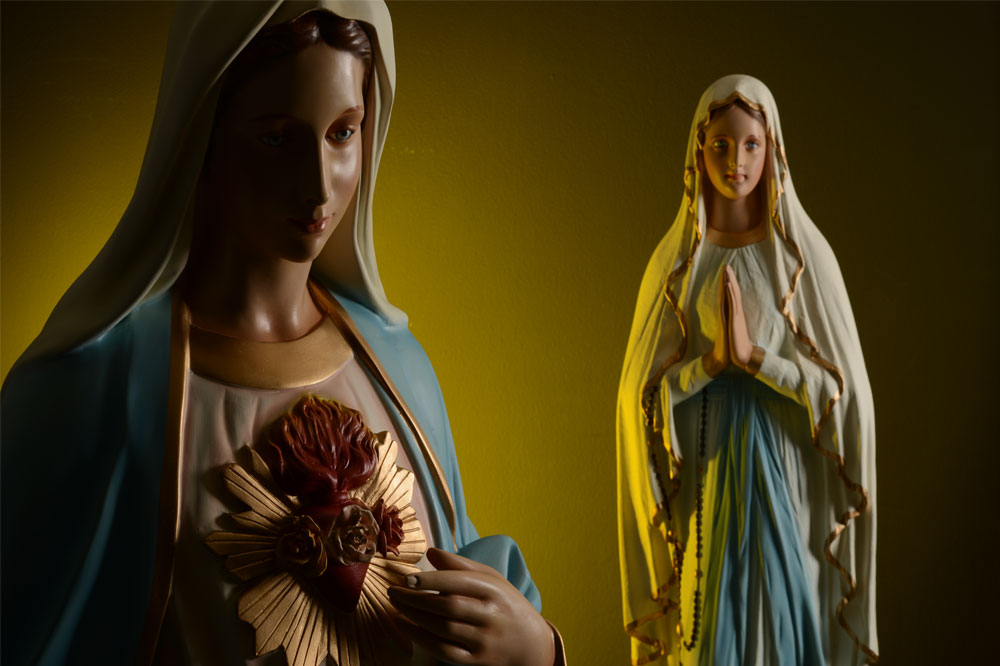
Popular iconography depicts the Immaculate Heart of Mary stabbed by a sword and surrounded by a wreath of flowers. The sword would recall the prophecy uttered by Simeon during the presentation at Jesus temple, when he said to Mary, anticipating the pain she would suffer for her son’s death: “And a sword will pierce your own soul too.” (Luke, 2,35) Above the heart a shiny flame is burning, the Flame of Love of the Immaculate Heart of Mary, a flame that is capable of blinding the Devil and clearing anyone that might have lost the way with its heat.

The Immaculate Heart of Mary becomes the main character of multiple images of the Virgin Mary: pictures, prayer cards and statues depicting Mary with one hand raised to point her chest, or also holding her heart radiating light.

Here is the Prayer to the Immaculate Heart of Mary dictated by the Virgin Mary herself to the seer Jelena Vasilj in Medjugorje on November 28th 1983:

O Immaculate Heart of Mary,

show Your Love toward us.

May the flame of Your Heart, O Mary,

descend on all mankind.

 We love You so.santino-cuore-immacolato-di-maria-10x5-cm-ita

Impress true love in our hearts

so that we have a continuous desire for You.

 O Mary, Humble and meek of heart,

remember us when we are in sin.

You know that all men sin.

Give us, by means of Your Immaculate Heart,

spiritual health.

 Let us always see

the goodness of Your Maternal heart

and may we be converted

by means of the flame of Your Heart.