Saint Efisio and the Most Famous Festival in Sardinia
27 April 2026
Reading Time: 5minutes
Saint Efisio the Martyr saved the city of Cagliari from the plague, and since then he has been commemorated on 1 May with a solemn procession, one of the oldest and longest in Europe.
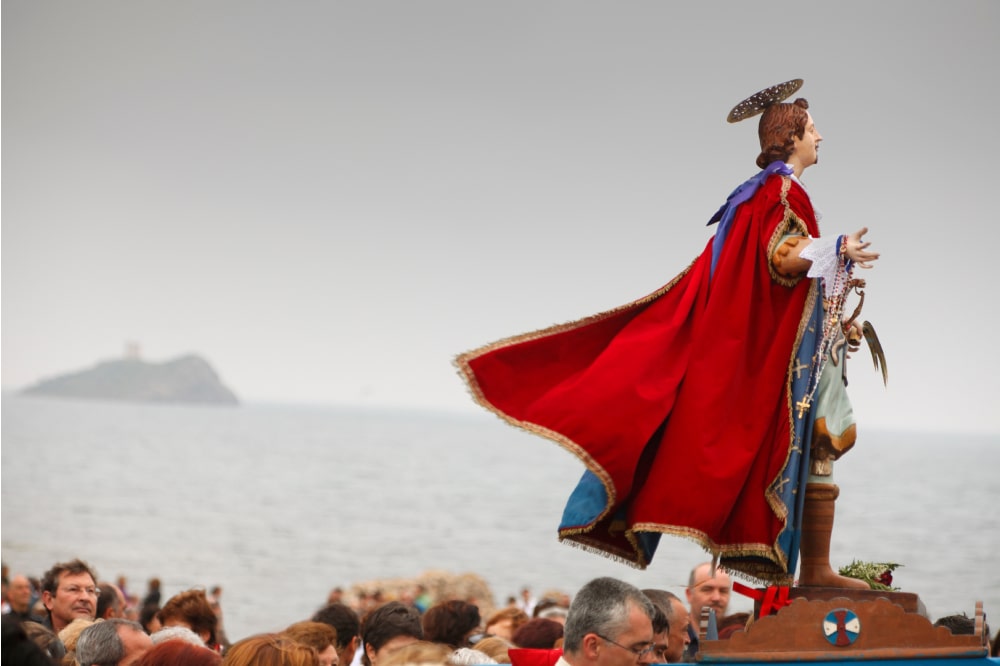
On 1 May, Cagliari and the whole of Sardinia celebrate Saint Efisio the Martyr. The statue is taken from the church in the district of Stampace and carried in procession through the streets of the city to Pula, a small town within the metropolitan city of Cagliari, and then to Nora beach, the nearby archaeological site dating back to the Phoenician and Roman periods, where a small Romanesque church stands, on the very spot where Efisio is said to have been beheaded.
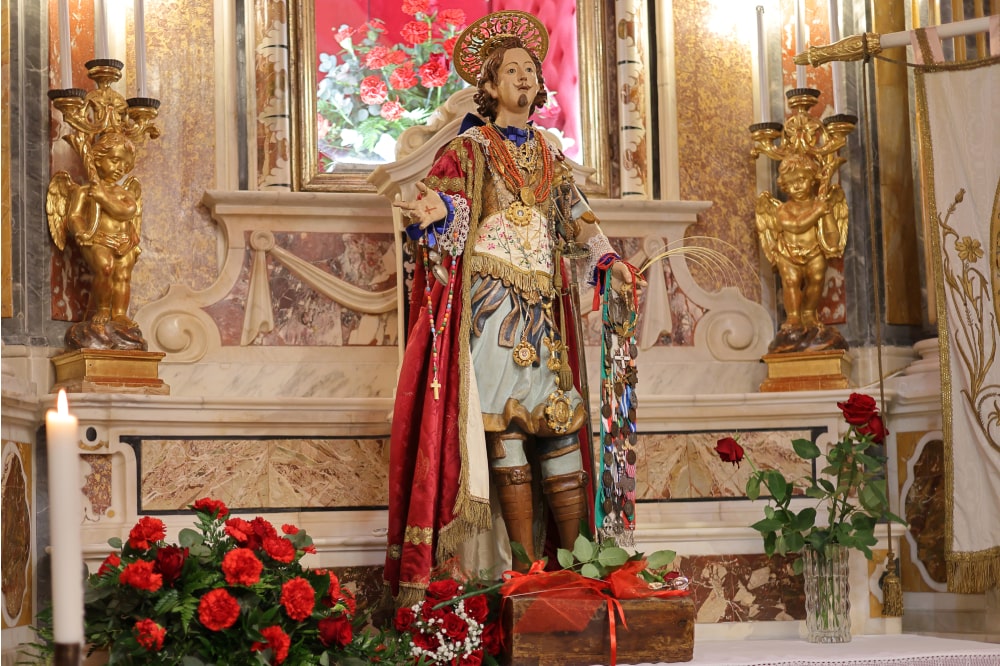
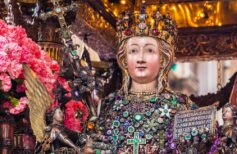
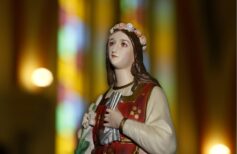
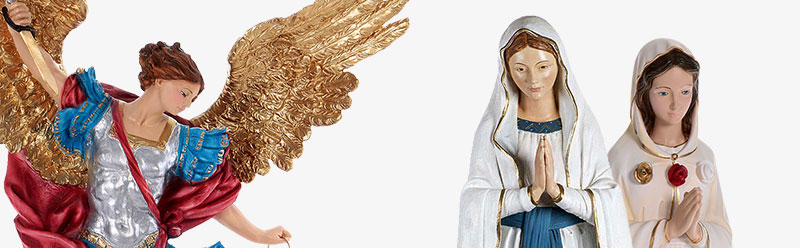
This Catholic statue is made of resin and depicts Saint Ephysius, a martyr who wanted to preach Christianity in pagan Sardinia.
In the little church of Stampace, there are three statues of Saint Efisio. The most recent, on display at the archaeological museum, was commissioned in the 18th century from the artist Giuseppe Antonio Lonis, and it is the one used on Maundy Thursday, when it is taken on the traditional tour of the seven churches, on Easter Monday, and during the procession of 15 January.
The oldest statue is that of Sant’Efis Sballiau (“the mistaken Saint Efisio”), dating back to the 16th century. The nickname “sballiau” refers to the fact that the Saint is depicted with the stigmata on his left hand and the palm of martyrdom on the right, the reverse of the usual iconography.
Finally, there is the statue used on 1 May, for the festival of Saint Efisio in Pula, which is carried in procession from Cagliari to Nora and back between 1 and 4 May, retracing the stages of his martyrdom, from the place of his imprisonment to that of his death — the beach of Nora, precisely. The journey starts in Cagliari, passing through Capoterra, Sarroch and Villa San Pietro before reaching Pula, and then continues to Nora, where the statue remains for two days of celebration. The statue dates from the 17th century and depicts Saint Efisio in a Spanish-style fashion, with a goatee, moustache and nobleman’s attire.
The Saint is also highly venerated in Pisa, where he is celebrated on 13 November. It was only in 2011 that Cagliari was able to obtain the relics of Saint Efisio, which were previously held in Pisa and displayed on the occasion of Low Sunday (the Sunday after Easter).
When is Saint Efisio Celebrated?
The Church has established his liturgical feast on 15 January, but the 1st of May marks the main celebration, known as “sa festa de sant’Efis su martiri gloriosu”, commemorating the miracle by which the Saint saved Cagliari from the plague in 1656. On that occasion, the councillors of Cagliari pronounced the Perpetual Vow, which has bound the city to Saint Efisio ever since, with the promise to honour him every year.
Even at Easter, on Maundy Thursday, the statue of the Saint is removed from its usual place in the Stampace churchand taken in procession to the city’s seven historic churches, while on Easter Monday it is brought to the cathedral, to recall another miracle and another Vow pronounced in 1793, when the Saint protected the city from the bombardments of the French revolutionary army.
It is the Archconfraternity of the Gonfalone and of Saint Efisio the Martyr that oversees the celebrations in honour of the Saint. On the occasion of the great festival of 1 May, groups of costumed participants in traditional dress from all over Sardinia arrive in Cagliari. The procession beginning on 1 May is one of the oldest and longest in Europe, covering 65 km on foot over four days.
Each year, in preparation for the festival, the Archconfraternity elects a Third Guardian, who must plan every aspect of the celebration together with a municipal representative known as the Alter Nos. On 25 April, a gilded carriage drawn by two oxen is brought to the church and blessed. On the 29th, the statue of Saint Efisio is dressed and adorned with gold jewellery and ex-votos. On the morning of 1 May, the oxen are also decorated with floral crowns, and the Third Guardian and the Alter Nos begin the celebration by attending Mass in the little church of Stampace.
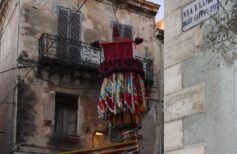
The procession involves over 3,000 people in traditional clothing, more than two hundred horsemen, the Campidanesi, the Militiamen, and the Guardians. Religious devotion and folklore come together in the festival of Saint Efisio, amidst songs, vibrant colours, and moving rituals that attract thousands of devotees and visitors. The procession advances on a carpet of pink, red and yellow petals in the ritual known as sa ramadura, and the air is filled with fragrant aromas and the poignant sacred chants of the four a cuncordu choirs. Flower- and fruit-decorated carts, called traccas, accompany the carriage carrying the statue of the Saint.
The Festival of Saint Efisio has reached its 366th edition and is set to be included in UNESCO’s Intangible Cultural Heritage of Humanity list.
Why Is Saint Efisio So Important to Cagliari?
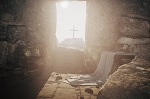
Efisio was originally from Antioch, in Asia Minor, born around 250 AD to a pagan mother and a Christian father. Raised in the worship of eastern deities, he joined the imperial army and, under Diocletian, harshly persecuted Christians. When he arrived in Italy with the army, one night he saw in a dream a radiant Cross among the clouds, and a voice from Heaven condemned him for his violence against Christians. Efisio realised it was Jesus who had spoken to him, and he converted at once, left the army, and began preaching the Gospel. His preaching brought him to Sardinia, from where he wrote to the Emperor himself, urging him to convert as well. Diocletian had him arrested and condemned to death. However, no matter how severely he was tortured, his wounds would miraculously heal, gaining him more and more followers and sympathisers. He was beheaded in Nora on 15 January 303 AD, invoking God’s protection over the entire island.
The people of Cagliari attribute many miracles to Saint Efisio. The most important is linked to the plague that struck the city in the spring of 1656. The disease, which had arrived in Sardinia from Catalonia aboard a sailing ship, claimed many lives — ten thousand in Cagliari alone, starting with the city’s Archbishop. Saint Efisio is said to have appeared to the island’s viceroy, asking him to make a Perpetual Vow in exchange for saving the city. The plague vanished with the September rains, and from the following year onwards, uninterruptedly, Cagliari has upheld its vow by offering the Saint the 1st May procession.
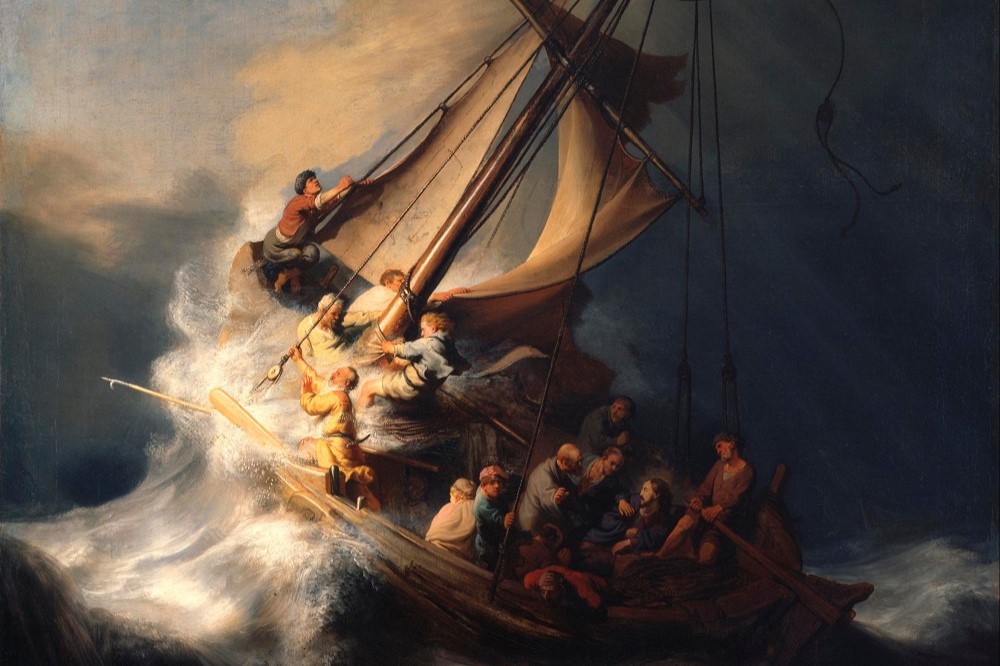
Rembrandt’s painting Storm on the Sea of Galilee tells a story of faith and hope. Especially when we feel lost...
What’s the Future of Religion?
What’s the Future of Religion?
A Beginner’s Guide to Christianity
A Beginner’s Guide to Christianity
Mind-Blowing Statistics About Christianity You Need to Know
Mind-Blowing Statistics About Christianity You Need to Know
8113
Enter the Holyart world: $20 discount voucher valid on over 60,000 items
Come and discover Holyart, the largest e-commerce of religious articles in Europe and immediately receive a $20 voucher to use with your first purchase.
Check your mailbox: you will receive your discount within 5 minutes







 26 October 2026