Author: Redazione

Consistory of Cardinals: What It Is and How It Works

Consistory of Cardinals: What It Is and How It Works

Contents1 What Does Consistory Mean?2 Ordinary and Extraordinary Consistories3 Who Can Be Appointed Cardinal? The Consistory is a gathering of cardinals around the Pope to make important decisions. But how has it evolved throughout history, and how does one become a cardinal? The word Consistory…

How Does One Become a Saint? Explaining the Process of Sanctification

How Does One Become a Saint? Explaining the Process of Sanctification

Contents1 What Is the Difference Between Sanctification and Beatification?2 Who Decides Sanctification?3 The Process of Sanctification The process of sanctification consists of various stages and unfolds over a long period. Here’s how one becomes a Saint. How does one become a Saint? It may seem…

The Most Famous Religious Proverbs: Between Faith and Wisdom

The Most Famous Religious Proverbs: Between Faith and Wisdom

God sees and provides: just one of the most famous religious proverbs. Let’s discover the others.

Don’t look in the mouth of a horse that was a gift. A word to the wise is enough. Strike while the iron is hot. The old hen makes good broth. When did we first hear these proverbs? Probably when we were too young to question their meaning. Often, they are peculiar phrases, seemingly nonsensical, yet each contains a truth, usually derived from experience, popular wisdom, and ancient traditions rooted in the history of a people, a culture, or even a religion.

Indeed, there are religious proverbs that convey profound meanings related to God, spirituality, and faith through maxims or metaphors. Proverbs also express a form of popular philosophy, often originating in rural settings and inspired by everyday objects, daily actions, animals, and seasonal changes. Among these rural proverbs, the figures of Saints frequently appear, often linked to the agricultural calendar, farming activities, and animal husbandry. In our country alone, there are thousands of proverbs connected to various regions and dialects.

The truth expressed in proverbs is undeniable and well-founded. They affirm what people believe to be true, or in some cases, they validate commonly held beliefs. Their origin is deeply rooted in the history, customs, and traditions of the people to whom they belong, making them of historical, social, anthropological, and linguistic interest. To support the importance of proverbs in our culture, there is a specific field of study dedicated to examining their origins and the oral traditions and direct experiences they encapsulate: paremiology (from the Greek paroimĂ­a). Alongside this is paremiography, the collection of proverbs, with ancient and illustrious origins such as the Book of Proverbs from Jewish culture in the Bible, the “sentences” of Menander from the Hellenistic period, or sayings recorded and passed down by Aristotle. By the medieval period, there already existed a rich and extensive Corpus paroemiographorum.

There are two types of proverbs:

– Prescriptive, which directly or indirectly encourage certain behaviours (e.g., Don’t look a gift horse in the mouth);

– Descriptive, which describe behaviours to avoid or follow (e.g., He who keeps company with the lame learns to limp).

Let’s explore some of the most famous Christian proverbs and proverbs about saints, and how they overlap with popular wisdom, creating a fascinating blend of the sacred and the profane.

Proverbs About God and Religion

We’ve highlighted some of the most well-known religious sayings, aiming to uncover their meanings.

God sees and provides

Derived from the Latin phrase: “Spes confisa Deo, numquam confusa recedit” (Hope placed in God never departs in confusion), this proverb is widespread in Italy with various forms. Its meaning is clear: a good Christian should fully trust in God and place their faith in Him. If someone harms us, it is God’s role to make them realise their mistakes and possibly punish them. It encourages not to lose hope and to rely on divine providence. However, it also implies that one should behave righteously while awaiting divine judgement. A variant of this saying is another religious proverb: “Help yourself, and God will help you,” which clearly advises against passively waiting for divine aid when facing challenges, urging personal effort alongside faith in higher support.

Among the proverbs encouraging resilience and trust in God, consider “The Lord works in mysterious ways,” which suggests relying on divine providence, as God may offer unexpected solutions when least anticipated.

Man proposes, God disposes

This ancient proverb appears in famous literary works and derives from the Latin: “Homo proponit, sed Deus disponit.” It conveys that no matter how hard one tries or how well one plans, the final outcome is determined by God’s will. Thus, while humans strive with good intentions, ultimately, God decides.

He who waits for God is well served

If we pursue our goals with patience, allowing things to unfold naturally without succumbing to haste and anxiety, God may intervene to ensure favourable outcomes.

What is done for good does not displease God

This implies that the end justifies the means, at least when actions are for a higher good. God is ready to forgive and overlook the methods used if they serve worthy purposes. This ancient popular proverb dates back to the Middle Ages. A related variant is: “Only what I enjoy and give for God can I truly call mine,” where material goods are the means to achieve good, such as helping others or performing acts of charity.

charity

Read more:

Giving alms: is it charity?
A manifestation of mercy strictly connected to the duties of a good Christian: let’s see in which cases it is right to practise it.

God sends only what we can bear

In other words, God gives each person only what they can endure and overcome, serving as encouragement not to be discouraged, as no problem is too great to handle, even if it seems insurmountable. This originates from the Latin: “Ultra posse viri, non vult Deus ulla requiri.”

Proverbs About Saints

There are many weather-related proverbs tied to the agricultural calendar and saints’ feast days, such as “By Saint Urban’s day, wheat becomes grain,” “Saint Martin’s summer lasts three days and a little more,” “Saint Lucy’s day is the shortest of the year,” “By Saint Benedict’s day, the swallow is under the roof,” and “For Saint Catherine’s day, either rain, snow, or frost.”

Other proverbs use saints as examples to encourage living closer to God.

Ice Saints

Read more:

Ice saints: the phenomenon who brings winter into spring
Who are the saints of ice, who take us back in winter during full spring?


Saints do not eat

Those with a rich and intense spiritual life, like a saint, do not need physical nourishment because their spirit is sufficiently fed. This is an ancient Tuscan proverb.

When God does not will it, the saints cannot

A variant of: “If God does not will it, no saint can intervene.” Only God’s will matters, and nothing can oppose it. Not even saints can intercede against His omnipotence.

Joke with soldiers but leave the saints alone

Meaning do not mix the sacred with the profane, and also a warning against blasphemy. It’s better not to joke about saints and sacred matters, though it’s acceptable to jest about secular and non-serious topics. This derives from the ancient Latin phrase: “Noli miscere sacra prophanis.”

What is the Angelus Prayer?

What is the Angelus Prayer?

Contents1 The Angelus Prayer2 The Pope’s Angelus in St Peter’s Square3 The Angelus with Pope Francis From a Marian prayer to a papal blessing, the Angelus is a moment of devotion and dialogue between the Pontiff and the faithful, renewed every Sunday. We often hear…

Mother of the Church: the feast instituted by Pope Francis

Mother of the Church: the feast instituted by Pope Francis

Contents1 How the feast of the Blessed Virgin Mary, Mother of the Church, came about2 Why it falls on the Monday after Pentecost3 Prayer to Mary, Mother of the Church The Roman rite celebrates Mary, Mother of the Church, on the Monday after Pentecost. Here’s…

31 May: Feast of the Visitation of the Blessed Virgin Mary

31 May: Feast of the Visitation of the Blessed Virgin Mary

The Feast of the Visitation of the Blessed Virgin Mary commemorates a key moment in the history of Salvation. In the encounter between Mary and her cousin Elizabeth begins the spreading of God’s message as He becomes man.

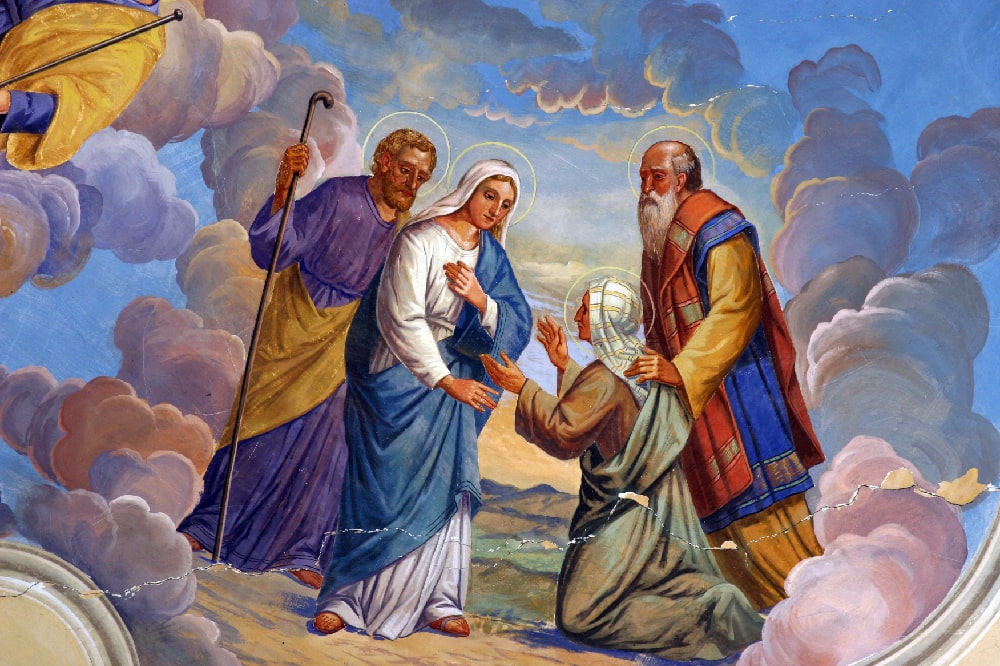
On 31 May, concluding one of the Marian months par excellence, the Visitation of the Blessed Virgin Mary is celebrated. This feast, one of the main Marian celebrations held each year in honour of the Virgin, commemorates her visit to her cousin Elizabeth. Mary had recently received a visit from the Archangel Gabriel announcing her forthcoming motherhood, in what we also know as the Feast of the Annunciation of the Lord, celebrated on 25 March. When Elizabeth saw her cousin and heard the miraculous news, she greeted her as the Mother of the Lord, and the child in her womb—who would become John the Baptist, the forerunner of Christ—leapt for joy.

Marian Feasts

Read more:

Marian Feasts: Here Are All the Annual Celebrations Dedicated to Mary
Marian Feasts, All the Faces of Devotion to Mary, Mother of Jesus…

The Feast of the Visitation is also known as the Feast of the Magnificat, from the hymn found in the Gospel of Luke, which recounts the episode and in which Mary gives thanks to God for having chosen her and for having freed Israel from slavery. Here is the opening of the hymn:

My soul magnifies the Lord
and my spirit rejoices in God my Saviour,
for He has regarded the lowliness of His handmaiden.
Behold, from henceforth all generations shall call me blessed.
(Luke 1:46–48)

The meeting between Mary and Elizabeth offers many layers of interpretation and, in many ways, marks a transition from the past, represented by Elizabeth and the long wait for the Messiah, to the awareness that a new era has arrived, and the divine plan is about to unfold.

Elizabeth and Mary

It is the Evangelist Luke who tells us about Mary’s journey to her cousin’s house (Luke 1:39–55). Mary had been visited by the Angel, who not only announced her imminent motherhood but also that of Elizabeth, wife of Zechariah, a priest of the Temple in Jerusalem and member of the tribe of Levi—an elderly woman believed to be barren. So the young girl hurriedly set off from Nazareth in Galilee, possibly joining a caravan of pilgrims heading to Jerusalem, to assist her relative. Mary runs, eager to be of help, but also moved by the desire to share the angel’s announcement. In this haste we read Mary’s sense of mercy, but also her astonishment, her being overwhelmed by the mystery she had become part of, and at the same time, the wish to speak with another woman also chosen to play a part in God’s plan through a truly miraculous late pregnancy.

Elizabeth lived in Judea, in a town called Ain-Karim, a few kilometres west of Jerusalem. Mary set off and arrived at her cousin’s house three months before the birth of John. Upon seeing her, Elizabeth was filled with the Holy Spirit and praised her for being part of God’s plan, greeting her with the words:

Blessed are you among women, and blessed is the fruit of your womb!
And how is it that the mother of my Lord should come to me?
For behold, the moment the sound of your greeting reached my ears, the baby in my womb leapt for joy.
Blessed is she who has believed that the Lord’s promises to her will be fulfilled.

Two extraordinary mothers meet, two annunciations that touch each other, in an encounter that might seem ordinary—just two relatives greeting each other. But Mary is carrying the Son of God, the Saviour of the world, while Elizabeth is carrying His forerunner, the one who will baptise Him and signal the beginning of His earthly mission. It is a meeting filled with joy, but also laden with a solemn gravity. It marks the point of no return, the beginning of a New World, and the two women can only sense it, feel it, without fully knowing the destiny awaiting the two children they carry—children who would go on to change the course of human history forever.

When is the Visitation of the Blessed Virgin Mary celebrated?

The feast was instituted in 1389 by Pope Urban VI, although it had already been celebrated by the Franciscan friars since 1263. Urban VI and, later, Pope Eugene IV made the Feast of the Visitation a topic of debate against the supporters of the antipope during the Great Schism. The feast was confirmed by the Council of Basel in 1441.
The Franciscans originally celebrated the Visitation on 2 July, but following the Second Vatican Council, the feast was moved to 31 May to conclude the May Marian celebrations. The Feast of the Queenship of Mary, which recognises and honours the regal dignity of the Virgin, was moved from 31 May to 22 August, the eighth day after the Assumption.

Prayer for the Visitation of the Blessed Virgin Mary

On the occasion of the Visitation of the Blessed Virgin Mary, a prayer written by Blessed Charles Eugène de Foucauld, a French religious who lived between the 19th and 20th centuries and was recently canonised, is recited. For him, Mary’s Visitation to Elizabeth held a powerful message of missionary vocation—an invitation to every baptised Christian to bring Jesus to others, just as Mary did, along with the extraordinary message of the Angel.

Mary, attentive Mother of the Visitation,
teach us to listen to the Word—
a listening that makes us leap for joy and rush

towards every situation of poverty
where the presence of Your Son is needed.
Teach us to carry Jesus
silently and humbly, as You did!
May our fraternities (families) be among
those who do not know Him,
to spread His Gospel
not by words but by life;
not by proclaiming Him but by living Him!
Teach us to travel simply,
as You did,
with our gaze always fixed on Jesus
present in Your womb:
contemplating Him, adoring Him, and imitating Him.
Mary, woman of the Magnificat,
teach us to be faithful to our mission:
to bring Jesus to others!
O beloved Mother, this is Your very mission,
the first that Jesus entrusted to You
and which You graciously shared with us.
Help us and intercede for us so that we may do
what You did in the house of Zechariah:
glorify God and sanctify others in Jesus,
through Him and for Him! Amen!

World Mission Day

Read more:

World Mission Day: giving oneself to others
October 24 marks World Mission Day, which consecrates October as missionary month

Saint Rita of Cascia, Patron Saint of Marriages and Impossible Causes

Saint Rita of Cascia, Patron Saint of Marriages and Impossible Causes

Contents1 Saint Rita, Protector of Marriages2 Donating a Wedding Dress to Saint Rita3 The Devotion of the Fifteen Thursdays of Saint Rita Among the few married saints that Christian history can enumerate, Saint Rita of Cascia is perhaps the most beloved. Invoked as the protector…

Saint Julia, Martyr and Patron Saint of Corsica

Saint Julia, Martyr and Patron Saint of Corsica

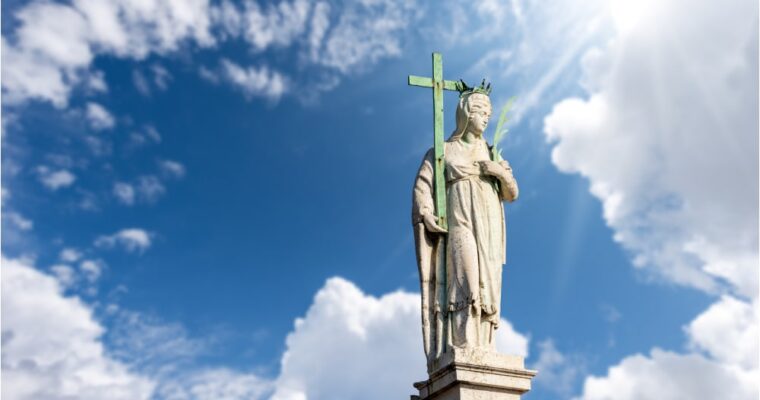
On 22 May, Saint Julia is celebrated as the patron saint of both Corsica and Livorno. Born into nobility, she lived as a slave and died a martyr by crucifixion. The story of Saint Julia the Martyr is not widely known, as it appears in…

Saint Paschal Baylon, the Patron Saint of Cooks and Pastry Chefs

Saint Paschal Baylon, the Patron Saint of Cooks and Pastry Chefs

Protector of unmarried women, Saint Paschal Baylon was a shepherd before becoming a friar. Though illiterate, he became a theologian of the Eucharist and gifted the world with an unrivalled dessert: zabaglione.

Saint Paschal Baylon was a religious figure of Spanish origin who lived during the second half of the 16th century. He belonged to the Order of the Alcantarine Friars Minor, the strictest branch of the barefoot Franciscans founded by Peter of AlcĂĄntara. Born into a humble family, he was unable to study formally but showed a strong religious calling from a very young age. Employed by his family as a shepherd, he nonetheless managed to be accepted as a novice by the Friars Minor and took vows as a lay brother. That is, he was a member of the order and wore the religious habit but was not ordained as a priest.
Working as a porter in various Spanish convents, he taught himself to read and write using prayer books, to the point of writing a collection of reflections on the real presence of Christ in the Eucharist. He travelled through France, which at the time was torn by religious wars and the Calvinist Reformation.
Devoted to mortification of the flesh and frequent fasting, he died at the age of 52 and was beatified a century later.

The host

Read more:

The host in the Eucharistic celebration
The unleavened bread that symbolizes the body of Christ during the celebration started by Jesus during the Last Supper.

For his love and devotion to the Blessed Sacrament, Saint Paschal Baylon is often depicted adoring a monstrance—the sacred vessel used to display the consecrated Host for veneration by the faithful. There are also depictions of him with a flock of sheep, recalling his past as a shepherd, or with Saint Peter of Alcántara in adoration of Our Lady of the Well, whose devotion was entrusted to the Alcantarine friars.

We’ve already mentioned Saint Paschal Baylon in an article dedicated to patron saints of women. But why should this particular saint be especially dear to women? The legend behind this special connection is indeed quite… sweet. It involves an ancient and timeless dessert, used worldwide to fill cakes, biscuits and pastries, but also served as a spoon dessert or a comforting and invigorating drink, especially in the colder seasons. We’re talking about zabaglione.

There are various, more or less fanciful, stories about the origins of this delicacy. Likely already known and enjoyed in the late Renaissance, it is said that a mercenary captain, Giovan Paolo Baglioni, was the first to mix eggs, sugar, and wine—the only provisions his soldiers had managed to find—to create this nourishing treat. Since his men called him ZvĂ n Bajòun’, it’s possible that the name zabaglione stems from that.
However, the name of Saint Paschal Baylon may also have been altered over time to Sambayon and then zabaglione. Indeed, it seems the saint lived in Turin for a time, and in the Piedmontese dialect, zabaglione is still called sanbajon. But Saint Paschal is credited not only with the name of the dessert, but with the very recipe itself!

He was known for his kindness and willingness to help everyone, so much so that many sought his advice. Among the faithful who came to him most often were women who could not find a husband and others who, though married, suffered from their husbands’ lack of vigour.
Thus, for his merits as a matchmaker and counsellor to struggling couples, Saint Paschal is the patron of women, particularly unmarried ones, and for his invaluable contribution to the art of pastry-making, he is also regarded as the protector of cooks and pastry chefs.

Prayer to Saint Paschal Baylon

In Naples, during Spanish rule, a rhymed prayer soon became popular among unmarried women, who recited it to Saint Paschal, asking for his help in finally finding a husband:
Saint Paschal Baylon, protector of women,
help me find a husband,
fair, rosy and full of colour,
just like you, exactly so,
O glorious Saint Paschal!

The Church of the Forty Martyrs and Saint Paschal Baylon, located in the Trastevere district of Rome at Via di San Francesco a Ripa 20, is still known today as the “Church of the Spinsters”.

The Recipe for Zabaglione

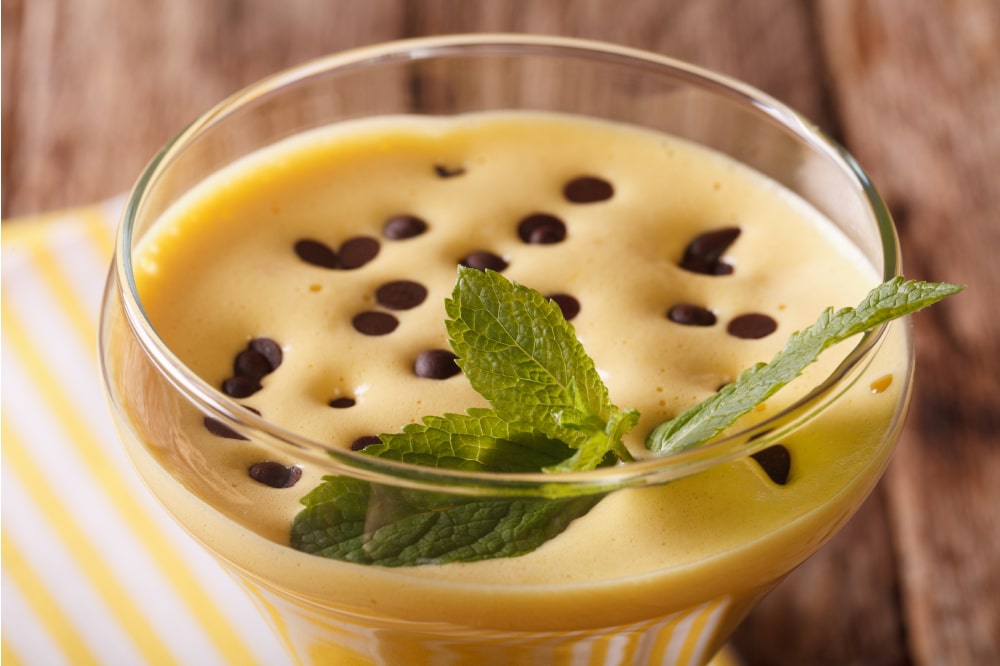
But what was this miraculous recipe that Saint Paschal Baylon recommended to his followers, and which rekindled their husbands’ passion in the bedroom? It was a rich, almost liquid cream made of eggs, sugar, and sweet Marsala wine.
In a previous article, we discussed how sweet fortified wines have been elevated over the centuries to the status of ideal Mass wines, and the differences between Mass wine and vin santo.

Here’s a zabaglione recipe you can try at home, using any of the many sweet fortified white wines available in our online shop—perhaps enhanced with some extra-dark chocolate from the Trappist monks of Frattocchie, for an even more irresistible variation.

Let’s see how to prepare zabaglione. You’ll need:

4 egg yolks

8 tablespoons of Marsala or another fortified wine

60 g of sugar

80 g of dark chocolate (optional)

Place the egg yolks and sugar in a saucepan with a thick bottom and beat them with a whisk or electric mixer until the mixture becomes pale and frothy. Gently add the wine in a thin stream while mixing. Then place the saucepan over a bain-marie (hot water bath), making sure the water doesn’t boil, and stir for 10 minutes. You’ll obtain a smooth cream.
If you’d like to try the chocolate version, chop the chocolate and add it along with the Marsala before heating.
Pour into dessert glasses and serve warm.

The 10 Most Famous Marian Shrines in Italy 

The 10 Most Famous Marian Shrines in Italy 

Contents1 Sanctuary of Our Lady of Divine Love2 Sanctuary of Our Lady of Sorrows in Pietralba3 Sanctuary of Our Lady of the Guard in Genoa4 Sanctuary of the Blessed Virgin of the Rosary in Pompeii5 Sanctuary of Our Lady of Saint Luke6 Basilica of the…

20 curiosities about Pope Francis

20 curiosities about Pope Francis

Information about Pope Francis, curiosities and his pontificate’s special moments. A Pope who made himself loved immensely and whom we will never forget There are people who leave such a deep imprint in the fabric of history that they make the world a better place…

Ice Saints: The Phenomenon That Brings Winter into Spring

Ice Saints: The Phenomenon That Brings Winter into Spring

Who are the Ice Saints, who in the heart of spring return us, for a few days, to the depths of winter? Halfway between peasant tradition and devotion, here’s what happens on the days dedicated to them.

Who are the Ice Saints? The peculiar name may at first conjure images of sacred sculptures depicting saints, or perhaps evoke fairy-tale-like atmospheres reminiscent of the northern lands, the Snow Queen, and so on. The truth, however, is much more down-to-earth, linked to a climatic phenomenon which, although considered an anomaly—or, as meteorologists say, a singularity—has been studied for centuries, and continues to influence human life, especially that of farmers.

But what is it all about? And why “Ice Saints”?

Quite simply, it has long been observed that around the sixth week after the Spring Equinox (which falls on 21 March), winter, which had seemed a distant memory, makes a brief return for a few days, bringing a sudden drop in temperatures and, in some cases, frost that can endanger seedlings and freshly sprouted crops. This is one of the reasons why, particularly in certain parts of Central and Northern Europe where the phenomenon is more common and intense, farmers prefer to wait until the Ice Saints’ days are over before beginning to sow.

According to the Gregorian calendar, the period in question runs from 11 to 15 May. These five days have, over the centuries, been dedicated to an equal number of saints. The tradition linked to them, blending peasant folklore, popular wisdom, and religious devotion, remains widespread—especially, as mentioned, in Northern Europe, particularly in Germany, Sweden, Poland, Austria, Switzerland, but also France, England, and Hungary.

Even in Italy, there are legends associated with the Ice Saints that have over time given rise to customs and proverbs among the farming communities—many of which are still in use today.

Let’s look at the names of the Ice Saints: Saint Pancras, Saint Servatius, Saint Mamertus, Saint Boniface of Tarsus, and Saint Sophia of Rome—though her liturgical feast actually falls on 17 September. The Germans call her die kalte Sophie, “Cold Sophia.”

Let’s get to know them better—and keep an eye on the May weather forecast!

Saint Mamertus

The first of the Ice Saints commemorated, whose feast day is 11 May, is Saint Mamertus of Vienne, a French archbishop who lived in the 5th century. Renowned for his literary and theological education, he became Bishop of Vienne, clashed with the Archbishop of Arles, and around 470 AD introduced the Rogation Days in France. These were processions accompanied by prayers and acts of penance, intended to invoke Divine Grace to support sowing, combat drought, and ward off natural disasters. His remains still rest in Vienne, in the ancient Church of Saint Peter of Vienne, and many churches, chapels, and hospitals—even in Italy—are dedicated to him.

Saint Pancras

Saint Pancras, commemorated on 12 May, died very young—just fourteen—during one of the Christian persecutions initiated by Emperor Diocletian. Born in Phrygia, a province of Asia Minor, to Roman parents, he was orphaned early and raised by his uncle Dionysius, who brought him to Rome and introduced him to the Christian community. After receiving Baptism, young Pancras embraced the new faith with passion and enthusiasm, and inevitably fell victim to the persecution ordered by the Emperor. Brought before Diocletian himself—who was struck by the boy’s beauty and fervour—Pancras was coaxed and threatened to renounce his faith. Yet he remained so resolute and unyielding that the Emperor was forced to sentence him to death. He was beheaded at sunset on the Via Aurelia. A Roman matron, Ottavilla, gathered his body and head, prepared them for burial, and laid them in a tomb over which a Basilica was later built. His devotion also spread widely in Germany, where he became co-patron of the Teutonic Knights.
Today, most of his relics lie in the Basilica of Saint Pancras, built on the site of his martyrdom, though parts of his body are also preserved in churches in Italy and France.

Saint Servatius

On 13 May, another Ice Saint is celebrated: Servatius of Tongeren, Bishop of Tongeren in Belgium, originally from Armenia. Living in the 4th century AD, he was a strong supporter of Saint Athanasius of Alexandria during the First Council of Nicaea (325 AD), the first ecumenical council of the Christian Church. He was also the first to evangelise Belgium. His remains are preserved in Maastricht, Netherlands, in the Basilica that bears his name.

Saint Boniface of Tarsus

On 14 May, the final day of the Ice Saints, Boniface of Tarsus is remembered—a Christian martyr and another victim of the persecutions carried out by Diocletian and Galerius. Steward to a noblewoman named Aglaida, he travelled to Tarsus on her behalf to retrieve some precious relics of saints. Though Aglaida was still pagan, she had grown curious about Christianity and hoped the relics would help her better understand the faith. Upon arriving in Tarsus amidst the Christian persecutions, Boniface declared himself a Christian and was martyred. When his embalmed body was returned to Rome and delivered to his mistress, she too converted to Christianity and spent the rest of her life in prayer. Boniface’s remains were laid to rest in what is now the Basilica of Saints Boniface and Alexis, built by Aglaida on the Aventine Hill.

Saint Sophia of Rome

Though associated with the Ice Saints, Saint Sophia’s feast is actually celebrated in September (though in the Middle Ages, it fell on 15 May). Saint Sophia—or Sonia—lived in Rome during the 2nd century AD. A noblewoman married to the distinguished senator Philander, she converted to Christianity and gave her daughters the names of the three theological virtues: Pistis (Faith), Elpis (Hope), and Agape (Charity). She also converted her husband and, after his death, devoted herself to acts of mercy and evangelisation.
Reported as a Christian, she was brought before Emperor Hadrian, who had her flogged and branded on the forehead. He then had her daughters tortured and beheaded, one by one, in front of her. Sophia buried them and died from grief at their tomb. It was the year 122 AD. The tomb of Sophia and her daughters is still visible in the Catacombs of Saint Pancras on the Via Aurelia.
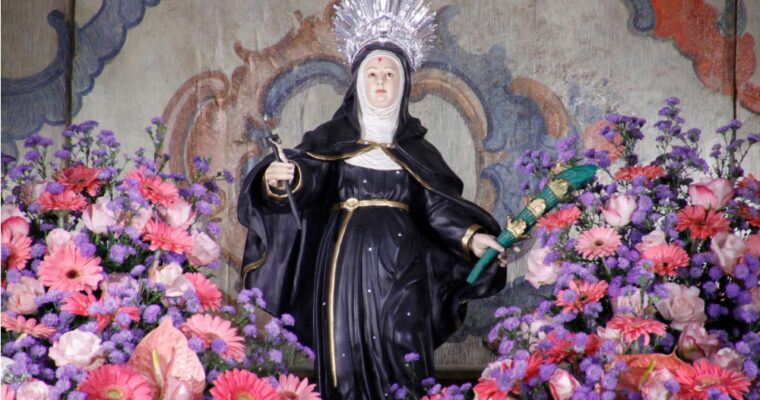
The memory of Saint Sophia and her daughters was included in various Martyrologies, and they are all commemorated together on 17 September. In iconography, they are usually depicted as four women dressed in mourning.

Our Lady of Divine Love and Her Sanctuary 

Our Lady of Divine Love and Her Sanctuary 

Contents1  The Sanctuary of Divine Love in Rome2  Pilgrimage to Divine Love3  The Image of Our Lady of Divine Love and Her Miracles A place of miracles and a destination for pilgrims, the Sanctuary of Our Lady of Divine Love is one of the most…

Saint Dominic Savio, the Student of Don Bosco

Saint Dominic Savio, the Student of Don Bosco

Contents1 Don Bosco and Saint Dominic Savio2 The Miraculous Abitino of Saint Dominic Savio3 Prayer to Saint Dominic Savio Patron saint of children and expectant mothers, Saint Dominic Savio was an example of extraordinary virtue and qualities that were unparalleled, not only among his peers.…

The Major Divisions in the Christian Religion

The Major Divisions in the Christian Religion

The Christian religion is actually made up of many religious denominations, similar in some aspects, profoundly different in others. Let’s take a look at them.

The Christian religion is one of the most widespread monotheistic religions in the world. We all know that it originated with Jesus Christ, from whom his followers took their name, “Christians.” We know that it has many elements in common with Judaism, including some books of the Holy Scriptures, but also with Islam, as all three religions—Christianity, Islam, and Judaism—are Abrahamic religions, meaning they consider Abraham as the origin of sacred history. In particular, Christianity and Judaism share the sacred book, the Bible, of which the Jewish people recognise the books of the Old Testament but not the New Testament, which is composed of the four Gospels, the Acts of the Apostles, the Letters, and the Book of Revelation, even though all these books confirm alignment with Jewish writings. However, the fundamental issue is that the Jews did not recognise Jesus Christ as the Messiah and Son of God promised by the prophets.

The differences between Judaism and Christianity

Read more:

The differences between Judaism and Christianity
Let’s try to discover together what divides (and unites) two of the most widespread religions in the world.

If we look around us, we quickly realise that speaking of Christianity as a single religion would not only be reductive but also entirely incorrect. The history of Christianity over the centuries has led to the creation of many religious variants, some of which have gained traction, becoming fully independent and recognised denominations. In essence, they are all Christian churches, all drawing from the life and teachings of Jesus, but each with significant differences in doctrine, traditions, and even the number of Sacraments. We have chosen to examine the three main divisions of the Christian church: Catholicism, Orthodoxy, and Protestantism. These three denominations, despite the differences we will explore, share the Nicene or Niceno-Constantinopolitan Creed, which consists of a set of faith principles defined during the First Council of Nicaea in 325 AD, primarily based on the oneness of God, the nature of Jesus, and the Trinity.

Life of Jesus

Read more:

The story of Jesus: the most important events of His life
Between Gospel story, historical reality and devotional legend, let’s reconstruct the human story that changed the fate of humanity

Catholicism

It is sometimes common to see Catholicism and Christianity confused as if they were the same thing. This is, of course, a mistake. Catholicism specifically refers to the branch of Christianity that recognises the Roman Catholic Apostolic Church as its highest religious authority and the Pope as its supreme leader. Catholic Christians place great value on the figure of the Virgin Mary and venerate many Saints. They also attribute great importance to apostolic tradition, recognising the Apostle Peter as the one to whom Christ entrusted His church. For this reason, many aspects of Catholic doctrine are based not only on the Holy Scriptures—the Bible—but also on Apostolic Tradition, a Christian text written around 215 AD that contains the “tradition” (traditio) of the apostles, meaning the foundational instructions and liturgical and ecclesiastical guidelines underlying Catholic doctrine. This text is not recognised at all by Orthodox and Protestant Christians, and this is one of the reasons for the division among the three Christian denominations.

The Catholic Christian religion recognises seven Sacraments: Baptism, Eucharist (or Communion), Confirmation, Reconciliation, Holy Orders, Marriage, and Anointing of the Sick. The Holy Mass is celebrated as a precept, and during the celebration, the consecration of the Bread and Wine takes place before the assembly of the faithful, followed by the distribution of the consecrated hosts.

Orthodoxy

Regarding Orthodox Christianity, this refers to the church that emerged from the East-West Schism, which took place in 1054 AD at the height of a period of doctrinal controversies and theological debates. Orthodox Christians do not recognise a single religious authority. Each church within Orthodoxy is governed by its own bishops through local synods. Therefore, there is no figure equivalent to the Pope for Catholics, although the Ecumenical Patriarch of Constantinople is recognised as primus inter pares (“first among equals”) by all other bishops and acts as a spiritual representative for all Orthodox Christians.

Orthodox Christians base their faith on Holy Tradition, which includes the Holy Scriptures, the teachings of the Church Fathers, and the dogmatic principles established in the seven historical ecumenical councils. The Orthodox Church, therefore, promotes and disseminates the original Christian faith, established by Jesus and handed down by the apostles, whose bishops are their direct successors.

Orthodox Christians also recognise Seven Sacraments and venerate the Virgin Mary as “TheotĂłkos,” Mother of God. They also honour the Saints. Priests are allowed to marry, but if they do so, they cannot become bishops, nor can monks, whose communities play a fundamental role. For Orthodox Christians, humans are born pure, not tainted by the Original Sin of Adam and Eve, which they call Ancestral Sin. However, sin is an inherent part of human nature, meaning that all people are naturally predisposed to sin.

Orthodox icons

Read more:

Orthodox icons: representations of Christ’s works on Earth
A meeting place between art and pure and solemn spirituality. In ancient icons, a tradition that goes beyond space and time remains alive.

Protestantism

Protestantism, or Protestant Christianity, originated with the so-called Reformation, which was actually a series of events leading to the formation of various branches of Christianity. Notably, the English Reformation led to the creation of the Church of England, while the Imperial Diet of Speyer in 1529, also known as the Protestation at Speyer, gave rise to the term “Protestant.” The Protestant Reformation spread across 16th-century Europe, fuelled by strong opposition to the decadence of the Church of Rome and the papacy, culminating in a complete separation. Key figures of the Reformation were Martin Luther (Lutheranism) and John Calvin (Calvinism).

There are many branches of Protestantism, from Anglicanism to Adventism, from Calvinism to Lutheranism. In Italy, Protestantism is primarily represented by evangelicalism.

In general, Protestants share many principles of the Niceno-Constantinopolitan Creed and the Apostolic Creed with Catholics and Orthodox Christians, but they differ primarily in Christology, the role of grace, the relationship between faith and works, and many aspects of church authority.

Jesus is the only means of salvation for humanity, as the living Word of God and the sole point of reference for the believer.

Humankind, by its imperfect nature, is inherently sinful, regardless of actions or efforts to remain pure and righteous. Only God can grant salvation, solely by virtue of His immense love. The Holy Scriptures, particularly the Gospels, serve to make humans aware of their own damnation, but it is within themselves that they must find faith in Salvation. Therefore, Salvation is determined by faith, not by deeds.

Only the Bible is considered the law of God, and no person can act as an intermediary between it and others to manipulate its content, except for the Church Fathers. This belief essentially eliminates any authoritative role for the clergy, as priests are no longer mediators between humans and God—only Jesus can fulfil this role. This doctrine establishes the concept of the universal priesthood, meaning that every believer is, in essence, a priest. At most, a pastor may provide interpretations of the Holy Scriptures.

Regarding the Sacraments, Protestants recognise only Baptism and the Eucharist, which symbolise God’s promise of salvation and redemption for all humanity. However, in the Eucharist, the Bread and Wine remain unchanged, as transubstantiation does not occur.

The host

Read more:

The host in the Eucharistic celebration
The unleavened bread that symbolizes the body of Christ during the celebration of the Eucharist, started by Jesus during the Last Supper

Mary is not venerated as the Mother of God and is not an object of devotion, nor are the Saints.

The Anglican Schism, which led to the creation of the Anglican Church, took place in the 16th century at the behest of King Henry VIII, who rejected papal authority and the Roman Catholic Church. Deeply influenced by Protestant doctrines from continental Europe (Calvinism and Lutheranism), the Anglican Church is based on the Thirty-Nine Articles of Religion and the Book of Common Prayer. Closer to Catholicism than other Protestant churches, it recognises the Archbishop of Canterbury as its spiritual leader and bases its principles on the Bible, apostolic traditions, and the writings of the Church Fathers.

How Pope Francis transformed the Church during his pontificate

How Pope Francis transformed the Church during his pontificate

Contents1 The Pope of the suburbs2 Reforms and Transparency: Francis’ New Church3 The fight against abuse4 Custodian of the common home and prophet of universal brotherhood5 A Pope on a Journey: Francis, a Pilgrim of Peace6 A shepherd close to the weak What did Pope…

The Most Beautiful Quotes on Peace by Pope Francis 

The Most Beautiful Quotes on Peace by Pope Francis 

Contents1 Quotes on Peace by Pope Francis2 The Words of Pope Francis on the War in Ukraine3 Prayer of Pope Francis for Peace In this particular and dramatic historical moment, Pope Francis’ quotes on peace represent a beacon of hope for all of Christianity. Never…

Sunday in Albis: what is commemorated and what is the religious significance of this day

Sunday in Albis: what is commemorated and what is the religious significance of this day

The celebration of Sunday in Albis combines ancient rites and popular traditions. Here is how the devotions of the second Sunday of Easter originated.

We are all familiar with the significance of Holy Week, the week of Easter, and particularly the Easter Triduum, the final days of this extraordinary liturgical period, which culminate with Easter Sunday. However, this event does not mark the end of the Easter season but rather its beginning. It is, in fact, with Easter Sunday that the Easter Octave begins, a solemnity of the Lord, which concludes the following Sunday, Sunday in Albis.

The liturgical year

Read more:

The liturgical year: let us clarify
The liturgical times of the Catholic Church are the seasons in which the liturgical year is divided. Let’s explore these together!

Similarly, the Jewish Passover, Pèsach or Pesah, did not represent the conclusion of the celebration that commemorated the exodus of the Chosen People from Egypt. The Jews celebrated the Passover meal on the night between the 14th and 15th of the month of Nisan, and from there began the seven days of the Feast of Unleavened Bread, an ancient propitiatory festival for the harvest, during which barley flour cakes without yeast were prepared.

For Christians, the importance of the days following Easter, the Easter Octave, arises from the appearance of Jesus eight days after the Resurrection, as recounted in the Gospel of John 20:26-29:

“26 A week later his disciples were in the house again, and Thomas was with them. Though the doors were locked, Jesus came and stood among them and said, “Peace be with you!” 27 Then he said to Thomas, “Put your finger here; see my hands. Reach out your hand and put it into my side. Stop doubting and believe.” 28 Thomas said to him, “My Lord and my God!” 29 Then Jesus told him, “Because you have seen me, you have believed; blessed are those who have not seen and yet have believed.””

This explains why, according to tradition, Sunday in Albis is also known as Thomas Sunday, referring to the doubting apostle.

Saint Thomas

Read more:

Saint Thomas, the Doubting Apostle
A devoted follower of Jesus and a great evangelist, often remembered more for his skepticism than his immense and solid faith.

What does Sunday in Albis mean?

Sunday in Albis is also known as the Second Sunday of Easter; Quasimodo Sunday, or Quasimodogeniti (in the Lutheran Church), from the beginning of the Antiphon that opens the religious service (Quasi modo gĂŠniti infĂĄntes, rationĂĄbile, sine dolo lac concupĂ­scite, ut in eo crescĂĄtis in salĂştem, allelĂşgia. “Like newborn babies, crave pure spiritual milk, so that by it you may grow up in your salvation. Alleluia”); Antipascha Sunday (in Eastern Churches); Dominica de Thomas or Thomas Sunday.

Sunday in Albis, or White Sunday, is the more “official” term, from the Latin Dominica in albis. The name given to Sunday in Albis derives from the custom of the early Christian Church to administer Baptism to new believers on the night of Easter, during the Easter Vigil. The full expression would actually be Dominica in albis vestibus depositis, the Sunday on which the white garments are laid aside, referring to the white robes worn by the newly baptised throughout the week following Easter, and removed, indeed, the Sunday after Easter.

Sunday in Albis or Divine Mercy Sunday?

Sunday in Albis is also called Divine Mercy Sunday, but this designation is very recent compared to the others. It was, in fact, Pope John Paul II who gave it this title only in 2000, on the occasion of the canonisation of Saint Faustina Kowalska, dedicating this day to the devotion of Divine Mercy. With this new designation, the pope also granted special indulgences on this date.

In one of her visions, Sister Faustina saw Jesus dressed in white, with one hand raised in blessing and the other resting on His chest, indicating a wound from which two rays of shining light emerged, one white, the other red, representing respectively the Water that justifies souls and His Blood, which is life. It was Jesus who asked the saint to have an image of Him created in this form and to spread its devotion with a celebration that would take place on the first Sunday after Easter, when the image was to be blessed by the pope. Thus was born the Feast of Divine Mercy.

What does Monday in Albis mean?

As for the term Monday in Albis, sometimes attributed to Easter Monday, it actually originates from a series of interpretative errors that have been perpetuated over the centuries, up to the present day.

The Monday following Easter, or the Monday of the Angel, recalls the visit of Mary, the mother of Jesus, and Mary Magdalene to Jesus’ tomb. The two women found it open and empty and encountered an Angel who told them that Jesus had risen to heaven and that they should inform the Apostles. This occurred the day after Passover, but not the Easter we celebrate on Sunday; rather, the Jewish Passover, which fell on a Saturday. Thus, the meeting of the two pious women with the Angel would have occurred on a Sunday, not on a Monday, and this is the first error.

Easter Monday or Angel Monday

Read more:

Easter Monday or Angel Monday? Let’s find out why they are called so
How is Angel Monday celebrated? You will find out in this article.

Moreover, as we have seen, Sunday in Albis takes its name from the white garments worn by the newly baptised in the week following Easter, symbolising the purity from sin regained after Baptism. No sacred text, however, speaks of Monday in Albis, but it is likely that popular tradition sought to define Monday in Albis as the first day the white garments were worn.

In any case, Easter Monday is not among the feast days of obligation, but it is a public holiday in the civil calendar, a sort of extension of Easter, an occasion for barbecues, outings, and popular festivities.