Author: Redazione

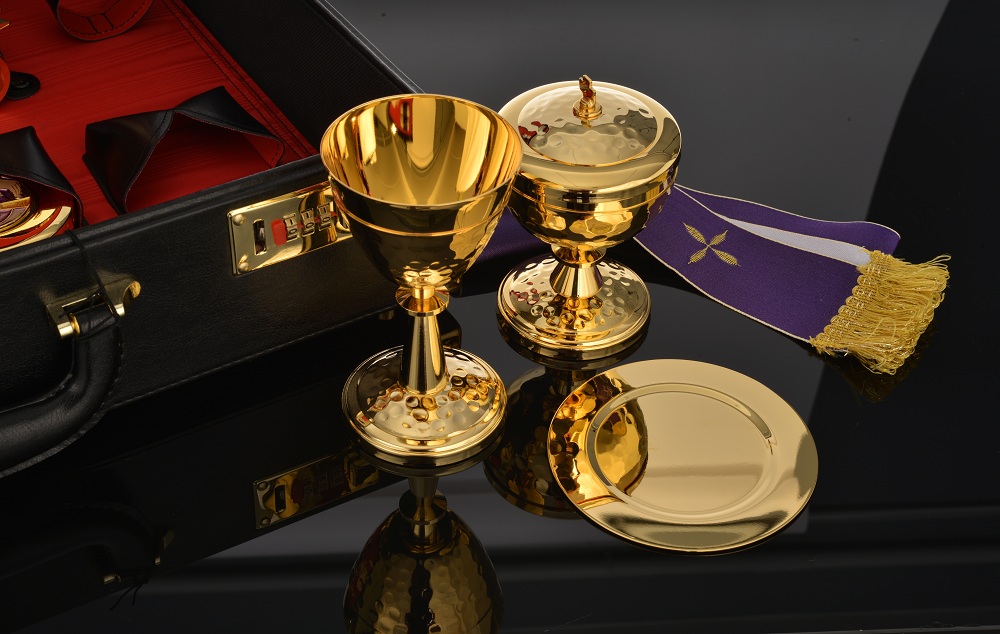
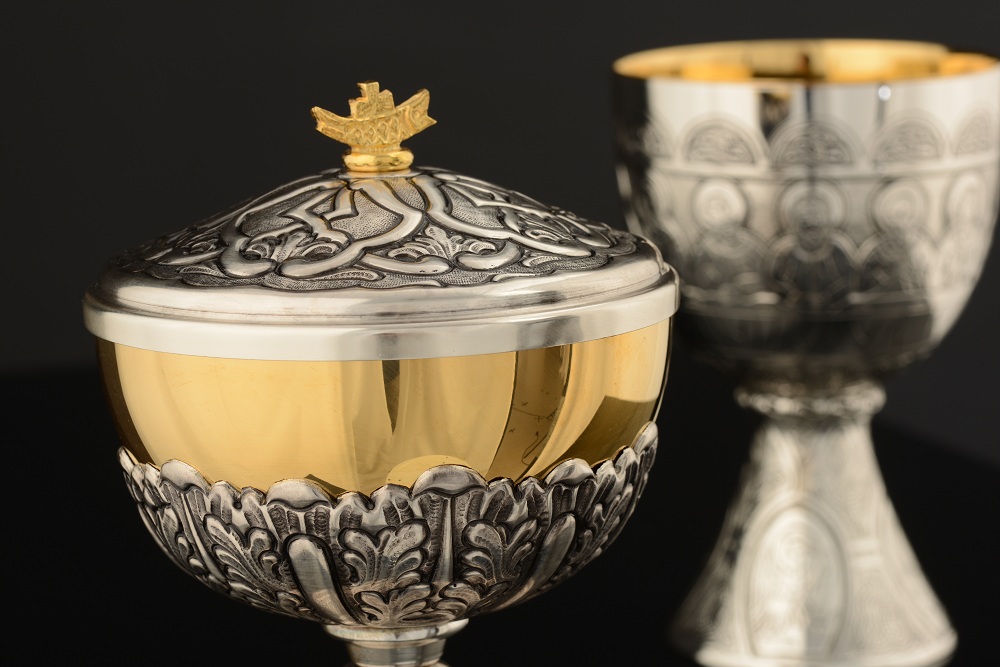
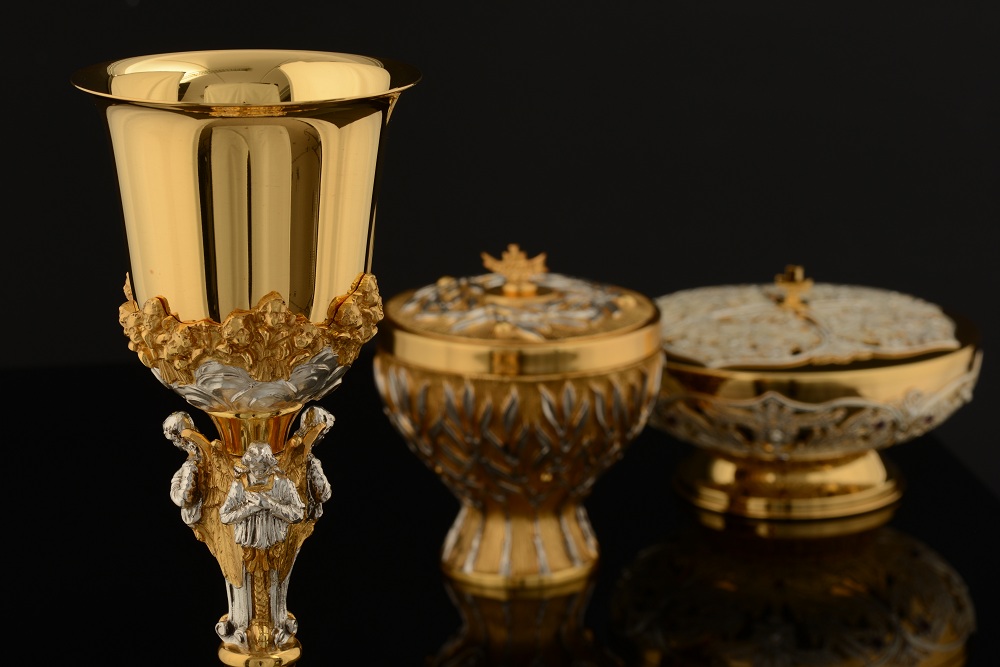
Metal ciborium

Metal ciborium

The word ‘ciborium‘ probably comes from the Greek πυξίς, generic name for any vessel intended to contain small objects. It was mostly hardwood boxes but soon came used to define containers of metal or clay, ivory or bone. In the Middle Ages people began to…
Saint Francis of Assisi

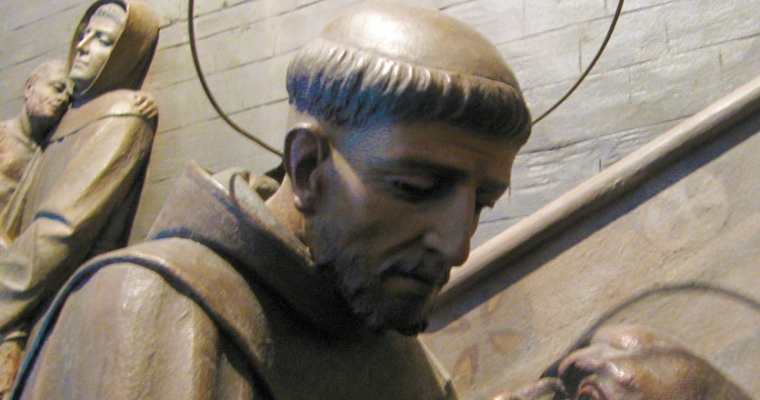
Saint Francis of Assisi

Hard to write something new about Saint Francis of Assisi, one of the most beloved saints and revered by the Catholic Church, proclaimed along with Saint Catherine of Siena the main patron saint of Italy by Pope Pius XII. Moreover, it is no coincidence. St.…

Metal chalice

Metal chalice

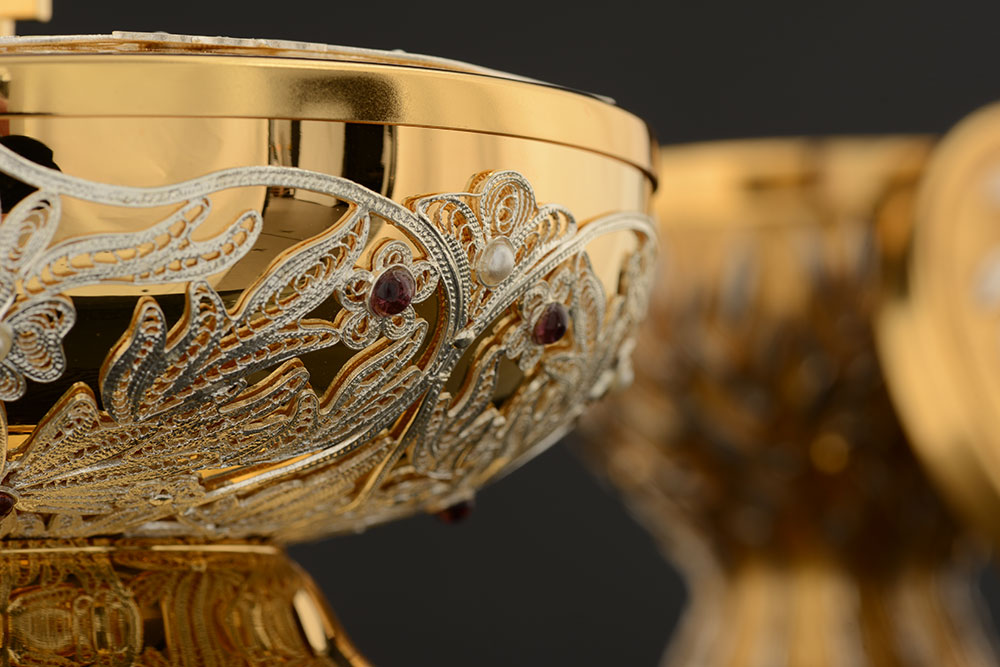
Metal chalice is indispensable and important furnishings for the celebration. In fact, it is in the consecrated chalice that transubstantiation happens, and the wine becomes the blood of Christ. The uniqueness and greatness of this revelation has led over the centuries to the need for metal chalices to live up to the height of the content, which they were intended for.

Chalices in gold or silver therefore belong to the treasures of the Church since ancient times, often finely chiselled with figures in relief, adorned with pearls and precious stones. Rituals and liturgical requirements have also decreed the evolution of metal chalice in different directions, with an adjustment of shapes and materials, which has developed hand in hand with the history of the Church and that of art. Since always, metal chalice have been related to the concept of Eucharist and Passion. In the Middle Ages innumerable legends of the Holy Grail were born, the chalice used by Christ at the Last Supper, and then to collect his blood at the foot of the cross. This symbol used to unite in devotion men and women from all lifestyles and heritage. Faith and myth come together in the metal chalices of this age and the subsequent, enriched with decorative symbolic elements that recall the Passion and death of Jesus, his glorious Resurrection.

Distribution of bread and wine during the Communion needed over time a differentiation between the different kinds of metal chalice.

Other metal chalices, also unconsecrated, were necessary for other moments of the celebration.

Today, because of the simplification of the ritual, variety has reduced, but the need that the container is appropriate to the content remains unchanged. Metal chalice can be simple and modern, but should preferably have a golden interior and, in general, express at first glance the greatness of the mystery that they welcome.

On Holyart.com you will find more than 250 metal chalices of different shapes and sizes.

Travel mass kits

Travel mass kits

Travel mass kits are indispensable objects for modern priests, called much more than their colleagues of the past, to be ready to celebrate Mass everywhere, in different environments, often not equipped for this purpose. This makes inevitable the endowment of travel mass kits, real kits…

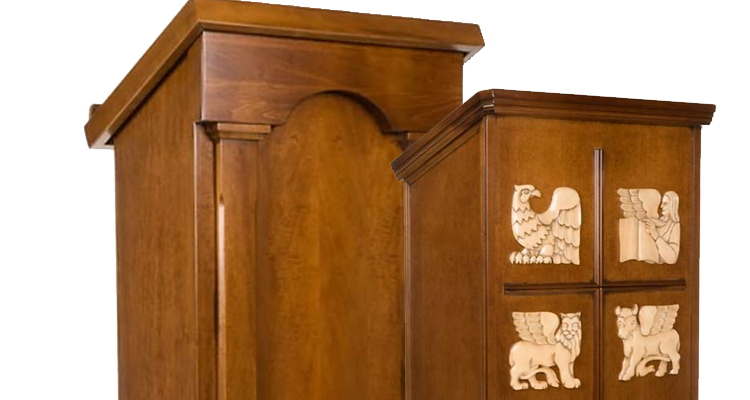
The Ambo

The Ambo

The ambo is a typical piece of furniture of the Christian Church since its origins. It is an elevated platform of various dimensions and materials, always decorated with engravings of solemn symbolic value. In its simpler forms, it is comparable to a normal lectern but…

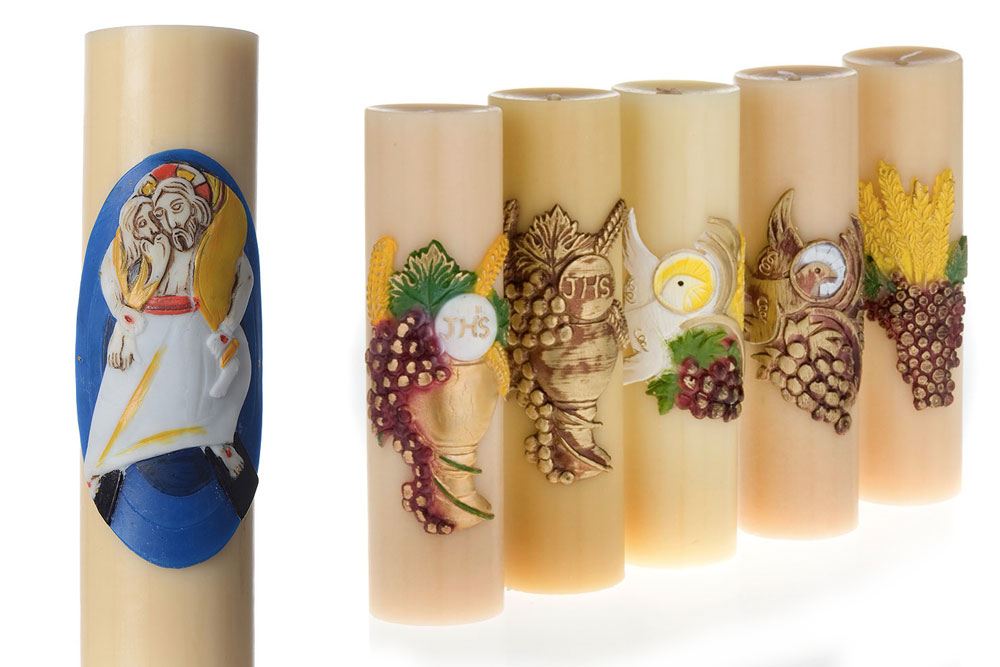
Altar candles

Altar candles

Already when we were kids, we used to light a candle in the church, a gesture that almost seems like a game, but full of meaning. And this gesture means light. The light was first created by God and illuminates our lives since the beginning, as we are baptized.

Together with altar linens, chalices and ciboriums, altar candles play an important role in the liturgy. Candlelight banishes darkness and reminds of the greatness and magnificence of the Love of God.

Normally altar candles are white, but they can vary according to the liturgical period and can be green, red and purple. All these lights are a symbol of the victory against death, as all believers are together in prayer.

In our Holyart.com catalogue, you can find different types of altar candles, in different forms and colours.

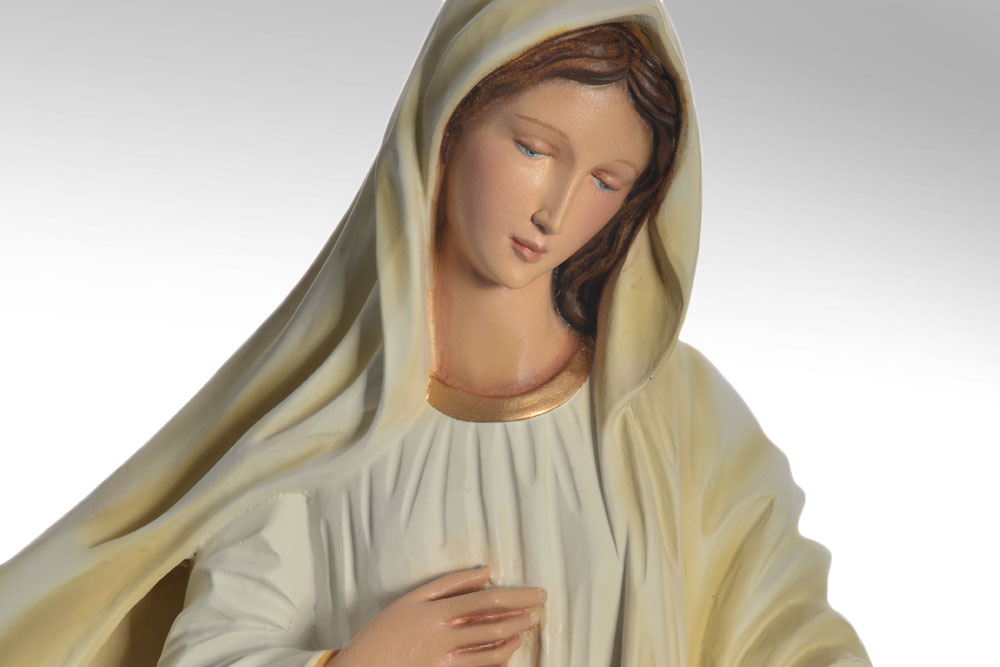
Our Lady of Medjugorje

Our Lady of Medjugorje

Our Lady of Medjugorje is the always benevolent and sweet mother that welcomes, protects and accompanies Christians along their path. Our Lady of Medjugorje is, in particular, the one who guides believers toward Peace, showing them a faithful road, made of daily devotional and loving…

Liturgical vestments

Liturgical vestments

With Liturgical Vestments, or Sacred Vestments we intend all clothes and linens, vestments and altar cloths used during mass celebrations from clergy. “Liturgical Vestment” has taken over in time of the previous definition “Sacred Vestment”, especially after the Liturgical Reform. Apparel has an important role…

The Communion chalice

The Communion chalice

The practice of passing round a chalice during a meal from which all those present drink as a sign of communion, is as ancient as humanity itself. For a Christian, there is no greater moment of the communion of the Eucharist, when the bread of life, and the chalice of salvation are offered to all the faithful in order that they may communicate with Christ and give thanks to God.

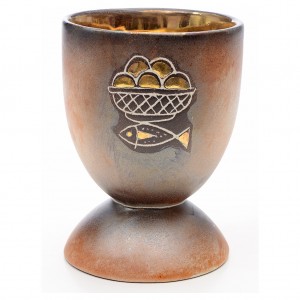
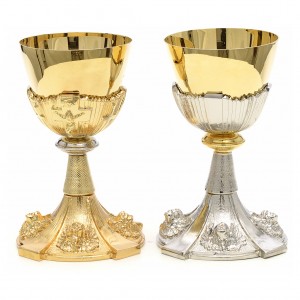
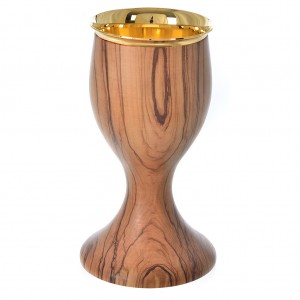
The chalice of communion has been present in liturgy since the beginning. Initially, it would have been a cup in which the wine that was to be blessed would be preserved. Therefore, it would have presumably been a humble object, for domestic use. With the passing of centuries, and the refinement of religious ceremony, even the communion chalice saw an evolution in its form and materials. Over time, they became ever more precious, as they were often made from gold and silver, embellished with unique carved patterns, as well as ornaments made from precious stones. Although nowadays there is a preference for simpler forms, and materials to make communion chalices, they must nonetheless maintain a dignified character. The inside of the chalice should preferably always be golden. Nevertheless, communion chalices of other materials are also used such as those made of wood (in particular of olive trees), and occasionally in other materials such as ceramic and glass.

During the preparation of the Eucharist, the communion chalice is subject to a particular ritual, during which certain liturgical objects and sacred linen are used, in a precise order. To understand the meaning of the Eucharist you must understand that of the chalice and wine. Jesus himself mentions them with regards to his sacrifice to confirm the new and eternal alliance. Wine therefore, to remember the promises made by God to his people, to celebrate an ancient and eternal alliance, which renews itself, to a time which symbolizes passion and hope. A miraculous gift which is born from terrible pain, from the sacrifice of Christ in remission of all the sins of man. A sacrifice and alliance which the faithful are called to remember every day, dinking from their personal “communion chalice” in the acts of daily devotion, in the gesture of charity. In this way, the miracle is repeated and the chalice of passion is transformed into a chalice overflowing with infinite joy.

Here you can find our selection of communion chalices, available on our Holyart.com catalogue.

Chalice in ceramic with round foot, fish and loaves, gold inside
Chalice in ceramic with round foot
Chalice of communion with Angels
Chalice in Assisi seasoned olive wood, thin cup, 18.5cm diameter
Chalice in Assisi seasoned olive wood
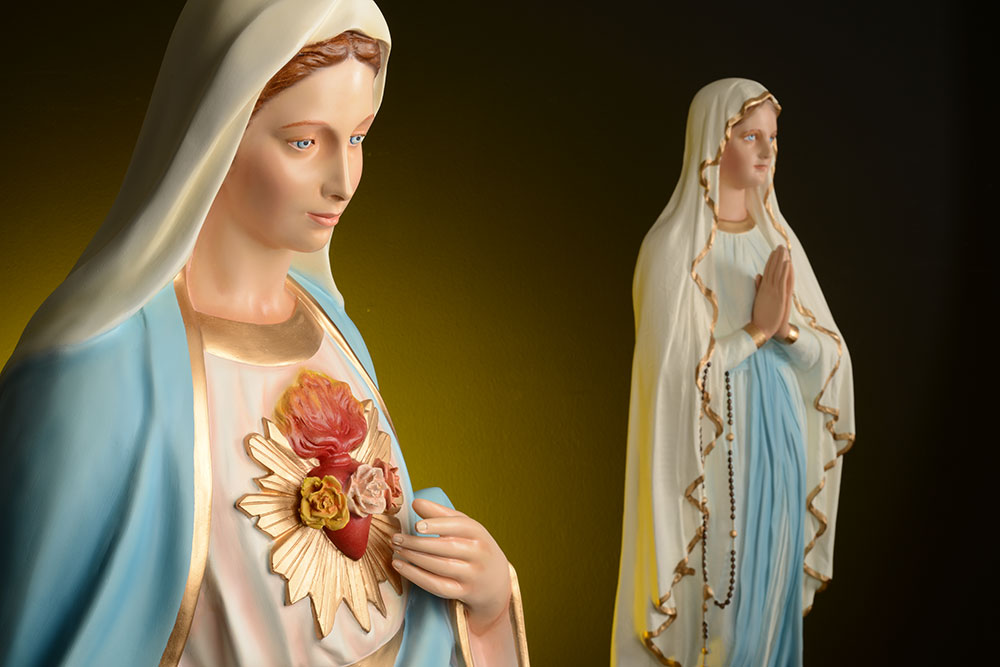
Virgin Mary statues

Virgin Mary statues

Amongst the various duties of a good Christian, the veneration of the Virgin Mary is the one which above all, gives voice to a need. The intrinsic need in the heart of every man, in any time and place, to be able to turn to a…

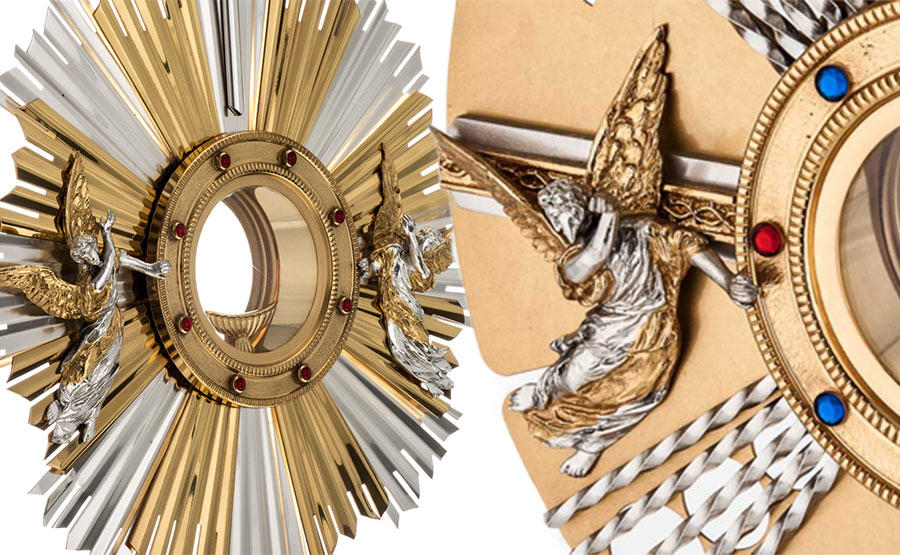
Metal monstrance: the liturgical function

Metal monstrance: the liturgical function

The word in Italian for monstrance ‘ostensorio’ derives from the Latin ostendĕre, which means to show. This has always been the function of this particular sacred object. Since the beginning, the intention behind its creation was to show the Body of Christ in the most…