Author: Redazione

10 liturgical lectern covers for your church

10 liturgical lectern covers for your church

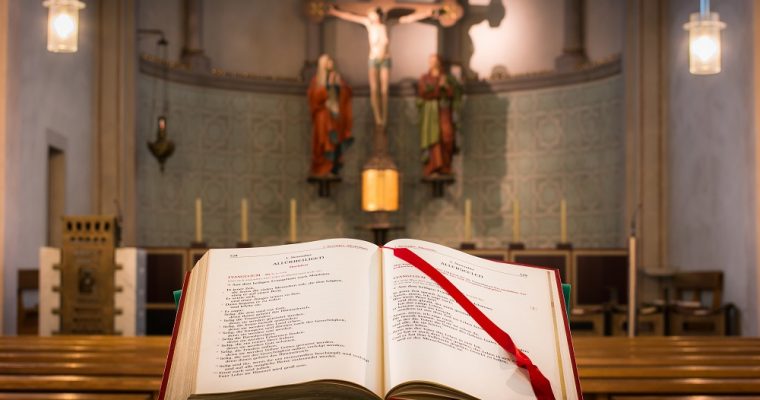
The fabric lectern cover, apparently simple liturgical furniture, conceals a vast range of non-trivial meanings. Let’s explore these together! Nothing in the liturgy is left to chance. Every gesture, every word, every object contributes to creating the celebratory context where the priest and the faithful…

Why is Jesus on the cross such an important symbol for Catholics?

Why is Jesus on the cross such an important symbol for Catholics?

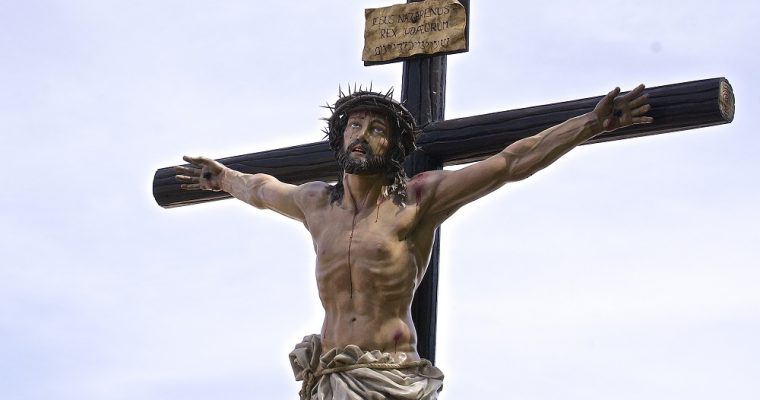
Contents1 Why Jesus was put on the cross2 What were the last words of Jesus on the cross3 Why is it such an important symbol for Catholics?4 Representations of Jesus on the cross The figure of Jesus on the cross represents for every Christian the…
Parish registers: what they are and what they are for

Parish registers: what they are and what they are for

Parish registers are irreplaceable documents for reconstructing the religious life but not only that, their importance extends to the community. Let’s find out what they are, how they are compiled and how we can consult them too.

What are parish registers?

Each parish preserves the history of the men and women who frequent it and who have frequented it. It is not just a question of the real, physical presence that animates its rooms, in the common rooms, catechism classrooms, and of course inside the church.

A presence that remains, in some way, to linger even after those people no longer attend the parish, and have long since passed away, as always happens in places full of rich spiritual activity.

The parishes keep track of the passage in the world of the parishioners, of their human and Christian life, of their relationships, thanks to the parish registers.

But what does that mean? Simply said. The parish registers are books on which the parish priest, or whoever on his behalf, records everything that happens within the parish. In particular, the parish registers report births, thanks to the registration of Baptisms, the deaths of parishioners, through the reporting of funerals, marriagescommunionsconfirmations, and in general the administration of the sacraments.

The obligation to compile and keep these special books derives even from the Council of Trent (1545-1563).

In reality, although the church began to require a check on parish registers starting from the Council, many parishes already compiled them as early as 1300, as evidenced by the ecclesiastical registers found for example in Palermo, whose annotations begin in 1350, or those kept in the Florence Baptistery, dating back to 1340.

In 1563 the Council of Trent ended, within which it was established not only that the parish priests would have to record baptisms, marriages and, subsequently, also the deaths of their parishioners in various registers intended for that particular use. In addition, the task of the priests would have been to keep track of the ‘state of souls’ of the persons entrusted to them.

From 1614 also the drafting of the so-called State of souls, which we will return to shortly, becomes mandatory.

In some areas of Trentino Alto Adige, the first printed parish registers appear as early as the early 1800s. But they will be compiled mostly by hand everywhere until the 20th century.

Also in 1900, the habit of drawing up duplicates began to spread, to try to preserve above all the oldest registers from deterioration.

The Code of Canon Law concerning parish registers states the following:

Can. 535 – §1. In every parish there should be parish books, that is, the book of the baptised, marriages, the dead and possibly other books according to the dispositions given by the conference of bishops or by the diocesan bishop; the parish priest is to see to it that these books are carefully written and diligently preserved.
§2. Confirmation and everything concerning the canonical status of the faithful concerning marriage should also be noted in the book of the baptised, without prejudice to the prescript of can. 1133, to the adoption, as well as concerning the sacred order, to the perpetual profession made in a religious institute and the change of the rite; such notations are always reported in the baptismal certificates.
§3. Each parish has its own seal; the certificates issued on the canonical status of the faithful, as well as all the acts that may have legal relevance, are signed by the parish priest or delegate and bear the parish seal.
§4. In each parish there should be a tabularium or archive, where the parish books are stored, together with the letters of the Bishops and other documents which must be kept for their necessity or usefulness; these books and documents must be checked by the diocesan bishop or delegate during the visit or at another opportune time and the parish priest is careful that they do not fall into the hands of outsiders.
§5. Even the most ancient parish books are to be kept diligently, according to the provisions of particular law.

How to enter an event in the parish registers

As can be imagined, the annotations on the parish registers must be made according to precise rules, imposed by the Roman rite. Each annotation must be complete with:

  • place
  • date
  • reported event
  • name of the officiant
  • name of the person concerned
  • any witnesses

Often, especially in older registers, the person who is the protagonist of the registered act is indicated not only with his or her name but also with references to relatives and other participants in the life of the parish. Furthermore, the person was often indicated by different names, perhaps using a usual nickname or the transliteration of the name in dialect.

roman-rite

Read more:

Ambrosian rite and Roman rite: let’s see the differences together
Ambrosian and Roman rite. How do they differ?…

If we look at the old parish registers we will see that they were compiled by hand and that there was a different book for baptisms, weddings and funerals.

The ecclesiastical register called “State of the souls” or “​status animarum”​ deserves a separate discussion. As we have already mentioned, it became mandatory only after the Romanum Ritual of 1614. On it, the personal data of the parishioners was reported along with the sacraments they received, but also information relating to the profession they carried out and what they possessed, as this register was also used to calculate the so-called tithe, the ‘tax’ to be paid to the church.

The editorial language was usually Latin, especially as regards the ritual formulas, but also the common language that was spoken by the people, even with influences due to the local dialect. Particularly interesting for historians are the notes that parish priests often marked on the page, to record significant events, such as cataclysms, famines, battles.

What are the parish registers for

The religious interest, but also and above all historical, of these registers will appear even more evident if we consider that, before 1867, there was no birth register at the municipal registry. Therefore, only the parish registers allow us to reconstruct what may have been the demographic evolution of a particular area, but also to find out more about the people who lived there, their stories, life and death. The fact that the registers, for each event, not only show the name of the person concerned, but also those of relatives and witnesses, can allow us to reconstruct a  genealogical line that unfolds from register to register, from parish to parish.

As for the possibility of consulting parish registers, perhaps to seek information on one’s ancestors or to carry out studies, even today the ecclesiastical registers are kept in the parish of residence of those who are brought back. So it is enough to know the place of origin of the person on whom we are researching and to hope that the records have not been lost due to fires, collapses, wars.

Alternatively, a search can be made at the data collection centres dedicated to Family History, spread all over the world, which also keep the registers of many Italian parishes. Again, a search can be made in the diocesan archives.

How can you consult the parish registers online?

Today, modern technologies allow us to greatly speed up our research on parish directories. In fact, consulting parish registers online is already a reality in Italy. And when it is not possible to directly access the aforementioned data with a click, it is nevertheless possible to find sites specialised in indexing the registers, which can easily guide us on the parish or diocese in which to go and look for what interests us. The work of digitalising parish registers in our country is naturally slow, but essential to preserve precious, priceless documents, which otherwise would be destined to be lost due to deterioration. Thanks to photographs and scans, operated with the utmost care in environments that guarantee the protection of delicate documents, it is possible to create digital archives in every parish, in every diocese. Furthermore, making the data of the parish registers available online constitutes the creation of a treasure of knowledge and experience for all. The further one goes, the more the desire, even the need, emerges to look back and understand the past.

Fasting as proposed by Our Lady of Medjugorje

Fasting as proposed by Our Lady of Medjugorje

The fasting proposed by Our Lady of Medjugorje is just one of the forms of fasting encouraged by the Church since its origins. Why do we fast? What are the physical and spirituals pros of such practice? Moreover, what are the rules to undertake fasting…

Ferragosto, the feast of the Madonna

Ferragosto, the feast of the Madonna

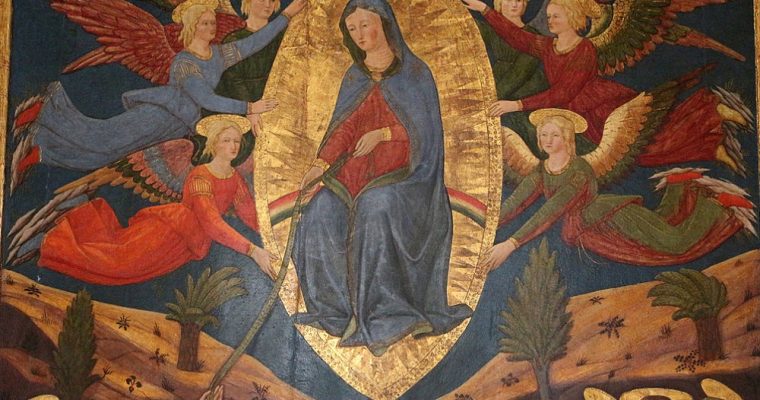
Contents1 The Assumption and the Dormition2 Ferragosto: how is the Assumption of Mary celebrated?3 The Assumption of Mary in art4 Chaplet of the Assumption In addition to representing the heart of summer, Christians consider Ferragosto to be the feast of the Madonna. In fact, on…

The night of San Lorenzo: the night of shooting stars

The night of San Lorenzo: the night of shooting stars

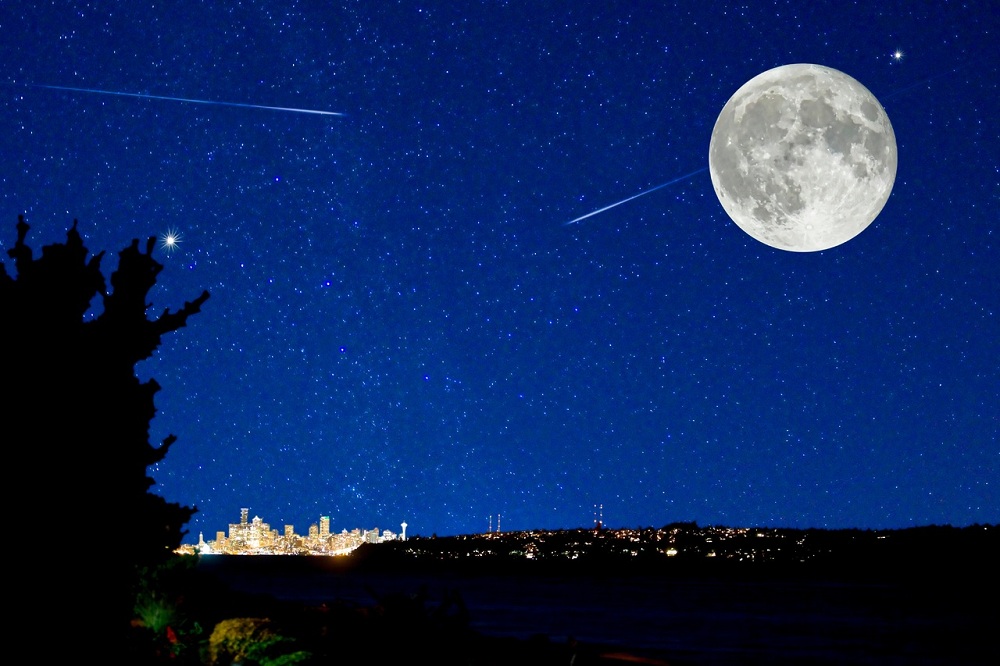
The night of San Lorenzo is awaited every year with trepidation by countless people. Some await it for astronomical interest, some because it is an exceptionally romantic night, some to express their devotion to San Lorenzo. But what makes this night so special from multiple points of view?

First of all, let’s try to understand if there is an association between San Lorenzo, a young martyr who died under the Roman emperor Valerian in 257 AD, and the shooting stars that characterise this special night.

Lorenzo was born in Osca, Spain, a town on the slopes of the Pyrenees. While attending humanities and theological studies in Zaragoza, he met the future Pope Sixtus II, who was one of his teachers. A friendship was born between the two made of esteem and mutual respect. In particular, the future Pontiff was able to appreciate the moral integrity of the young student, his charity towards the poorest and most needy.

Lorenzo and his mentor left Spain together for Rome and, when the latter was elected Bishop of Rome, he entrusted the task of Archdeacon to his friend and pupil. As Archdeacon, Lorenzo was in practise the first counsellor of the Bishop, and as such he had to watch over the purity of the faith and the discipline of the whole curia, but also manage the ecclesiastical properties. As the official representative of the Bishop, the Archdeacon also had to take his place on the occasion of visits to the sick and assistance to the neediest, such as orphans, widows, outcasts.

Lorenzo became a much-loved figure in Rome and even after his death he was the object of immediate popular veneration. It fell in 258 AD, under the emperor Valerian, who had promulgated an edict with which he sent to death all Christian bishops, presbyters and deacons. Pope Sixtus II was killed along with four of his deacons while celebrating the Eucharist in the catacombs of Pretextate. Lorenzo, who was 33 years old, was arrested and given into custody to a Roman centurion who, fascinated by the young man’s kindness, converted to Christianity and was killed in turn. Lorenzo was burned alive on the grill, which will later become his emblem.

San Lorenzo is the patron saint of librarians, cooks, booksellers, pastry chefs, vermicellai, firefighters, caterers and glass workers, as well as of the cities of Grosseto and Tivoli, of Sant’Agata li Battiati in the province of Catania, of Aidone in the province of Enna.

But what binds this young and beloved saint to the night of the shooting stars?

Meanwhile, we can say that, according to Christian tradition, the shooting stars that swarm across the sky on the night of August 10 are the embers that escaped from the flames of the grill on which the poor saint was burned. Another legend has it that they are his tears.

For the Greeks and many other pre-Christian peoples, shooting stars were divine signs. Their passage could even lead to the deposition of a king, as happened in Sparta where, in the ninth year of a ruler’s reign, a shooting star was sighted, he was forced to abdicate. The period of the greatest presence of shooting stars was then associated with fertility rites and propitiatory ceremonies to have abundant harvests.

According to the Romans, who celebrated Emperor Augustus in various ways in August, the shooting stars were the result of the ejaculation of Priapus’ phallus carried in procession or his tears. Since Priapus was the god of fertility, it was thought that this bright rain would make fields fertile. This theory linked to fertility would also justify the juxtaposition between this festival and San Lorenzo. In fact, the female counterpart of Priapus, the Great Mother who made the earth rich and fruitful, was also known as Larentia. The passage from Larentia to Lorenzo, and from Priapus’ tears to those of the young martyr, is understandable.

When is the night of San Lorenzo?

In reality, we know that the shooting stars visible even to the naked eye on the night of August 10 are the Perseids, or meteors composed of dust and ice, coming from the constellation of Perseus, which in this particular period of the year, between the end of July and the end of August, and in particular between 10 and 12 August, pass very close to the Earth. Therefore, August 10, the anniversary of the death of San Lorenzo, as well as an anniversary dedicated to him, coincides with the moment of greatest intensity of this meteor shower.

Poem about the night of San Lorenzo

We mentioned how, in ancient times, the shooting stars that fall from the sky on the night of 10 August were considered the tears of Priapus, god of fertility and, subsequently, those of San Lorenzo martyr. The great Italian poet Giovanni Pascoli wanted to take up this symbolism of shooting stars as tears in his immortal poem X August dedicated precisely to the night of San Lorenzo. The choice of this date is not accidental. On 10 August 1867, Pascoli’s father was murdered by a shot fired by unknown persons as he was returning home to his family. This tragic and painful event irremediably marked the poet, who in his production dedicated many verses to the incident, as in one of his most famous poems, La cavallina storna, or precisely as in 10th August, where the sky itself burns and cries, flooding the Earth, bitterly defined as an “opaque atom of Evil“, an impotent witness to the umpteenth injustice done by men.

San Lorenzo, I know it because so many
 stars for the calm air
 and falls, because such a great
 planet in the concave sky sparkles.

[…]

And you, Heaven, from the top of the
 planet earth, infinite, immortal,
 oh! this opaque atom of Evil floods him with a weeping
 of stars!

Phrases for the night of San Lorenzo

Even if we don’t have the evocative power of Pascoli, we are all fascinated by the shooting stars that rain down from the sky on August 10, giving life to one of the most magical and romantic nights of the year. Poets, writers, but also film authors, even comedians, have uttered phrases dedicated to the night of San Lorenzo that have remained famous and that can be mentioned on this occasion, perhaps to impress those we like!

For example, the sentence pronounced by none other than the Greek philosopher Plato will certainly be effective: “You look at the stars, my star, and I would like to be the sky to look at you with a thousand eyes.” Who can resist such a declaration of love?

The great Bob Marley instead leaves us a message of hope, very much in line with the thought of his time, but which we like to consider always current, suitable for every man, at all times: “If you make a wish it is because you see a star fall. If you see a star fall it is because you are looking at the sky, if you are looking at the sky it is because you still believe in something.

Bittersweet, as his work often was, Oscar Wilde’s assessment: “We are all immersed in mud, but some of us look to the stars.” No less poetic was the great French novelist Victor Hugo: “The soul is full of shooting stars.”

The Italian music scene offers many examples of songs in which the shooting stars of San Lorenzo are mentioned:

I see the eyes of a woman who loves me
; And I no longer feel the need to suffer
; Everything is illuminated
; Everything is in its becoming ray
; I see stars falling in the night of desires
Lorenzo Jovanotti

I hate people who hate rain and wind and only look at the sky on the night of San Lorenzo.
J-Ax

And even the stars fall, some both outside and inside,
 for a wish you make another hundred remain outside!
Ligabue

But aside from the romance, there are also many funny quotes about the night of San Lorenzo. On the Internet there are many, for all tastes, such as those of the influencer Fran Altomare: “Meanwhile, in a parallel universe, the stars make a wish as soon as they see someone stumble.“, Or the aphorisms on the Night of San Lorenzo by the author of aphorisms on Twitter Twilla_ria: “The wish did not come true. It was a shooting star.

San Lorenzo night song

We have already mentioned how several singers have mentioned shooting stars in their song lyrics. But some went further and dedicated a song to the night of San Lorenzo. For example, the singer Franco Simone wrote a song entitled Notte di San Lorenzo, which tells of a nocturnal and solitary journey that the singer-songwriter makes in this magical night, and of an encounter that would change his life:

A thousand lights between the fingers,

ten stars come back to fall,

to understand the whole night,

they want mountains of love

Even Murubutu, stage name of Alessio Mariani, founder rapper and voice of the Reggio-based collective La Kattiveria, dedicated a song to the night of San Lorenzo. His was a daring experiment, but the singer is used to combining hip hop with literature, history and philosophy, creating what he calls “literary-inspired rap” or “literaturap“.

And at the feast of the Saint known throughout the Sila
 So many people also came from the cities
 Under a black ink, moon in the sky and ivory We
 searched in the dark, among the lights of the cosmos
 Seekers of comets in the scattered
 fiefs Thieves of Perseids in the August sky

The Night of St. Lawrence

Even the cinema has been infected by the fascination that has always been exercised on men by this magical August night. The Taviani brothers in 1982 shot the splendid film The night of the Shooting Stars, set in the Tuscan countryside in August 1944, it tells the dramatic events of men and women overwhelmed by the madness of the Second World War, between acts of heroism of the Resistance and the foul reprisals of the fascists.

Ambrosian rite and Roman rite: let’s see the differences together

Ambrosian rite and Roman rite: let’s see the differences together

Contents1 Difference Roman and Ambrosian rite2 The Ambrosian Lent3 The meaning of “aliturgical” Fridays4 Saturdays and the preparation of catechumens5 Ambrosian and Roman rite wedding Ambrosian and Roman rite. How do they differ? How is it possible that, within the Catholic Church, there are different…

The story of Adam and Eve

The story of Adam and Eve

Contents1 The creation of Adam and Eve2 The story of Adam and Eve for children3 Adam and Eve: the story of the apple and original sin4 Adam and Eve expelled from paradise5 Who were the children of Adam and Eve Who does not know the…

Famous Russian icons: the 5 most important icons

Famous Russian icons: the 5 most important icons

The famous Russian icons are dazzling examples of ancient art, of a millenary tradition that draws its origins from the Byzantine splendours and embraces centuries of history and political and social upheavals, always remaining true to itself. Let’s get to know them better.

The charm of Russian icons is truly timeless. Over the centuries, starting from the very origins of the Russian Orthodox Church, just before the year 1000, they have become the emblem of a solemn and visceral religious expression, which draws inspiration from ancient, oriental suggestions, and which for a very long time remained uncontaminated by all those innovations and revolutions that have instead overwhelmed and distorted Western art from era to era.

As it is reasonable to imagine for a large country accustomed to very long times for changes, even the art of religious icons has long remained unchanged and immutable, and yet the symbolism that pervades Russian icons does not cease to fascinate and conquer, even today. Indeed, perhaps precisely the worrying loss of values and points of reference, the decline of taste, accelerated unbearably by the spasmodic speed with which everything changes, making the new already old in an instant, makes the recovery of a certain iconography even more necessary, which, by its very definition, is almost more a theological treatise than a mere artistic expression. Not for nothing in an exhaustive article, The Sacred Icons: The Complete Guide, we defined the creator of icons as more a writer than a painter. This is because each Russian icon tells a story made up of many intertwined stories, of evangelical references, of spiritual messages hidden in every detail, in every particular.

Sacred-Icons-the-ultimate-guide

Read more:

Sacred Icons: the ultimate guide
Sacred Icons. Only mentioning them evokes exotic and charming suggestions, a way to live religion that is far from the modern concept…

The peculiarity of Russian sacred icons arises precisely from the fact that they are an expression of deep and unique religiosity, but also the summary of the Russian national culture, of the spiritual ideals of these people of unshakable faith.

History of ancient Russian icons

The history of Russian icons began in the Middle Ages, towards the end of the 9th century, with the so-called Kievan Rus’, one of the first Eastern Slavic monarchies, which united numerous Slavic tribes in a single strong state under a single Christian prince. This state stretched across the territories currently occupied by eastern Ukraine, western Russia, Belarus, Poland, Lithuania, Latvia and Estonia. Kyiv was its capital, and the kingdom was called Rus’, or Land of Rus’, or even Kievan Rus’.

As we have already mentioned, the artistic, but also the theological basis of Orthodox Christian icons is Byzantine. From the art of the Byzantine Empire derive the canons to which all Russian Orthodox icons are attributable. In particular, the solemnity and drama of the art of Byzantium married beautifully with the desire to manifest the mystery and presence of Christ the Saviour. But that’s not all. The Virgin Mary has also been a recurring thematic subject in Russian iconography, since its origins.

The art of Russian icons flourished between the fourteenth and fifteenth centuries, just as the Byzantine Empire was facing its collapse. These are years of saints and sinners, of bloody invasions and burning faith. Between 1350 and 1450 Russian pictorial art reached its apogee and immediately afterwards began to break away from the Byzantine canons, moving towards a new style, increasingly linked to Russian culture, history and traditions. In particular, three historical, social and political factors can be identified that have profoundly influenced this evolution: the political-civil development of Orthodox and nationalist Russia, which claims its traditions as the engine of its own strength and development; the spiritual knot that arose around the monastery of the Holy Trinity and St. Sergius of Radonez, by the great Russian ascetics; the arrival in Russia of Theophanes the Greek, a very talented Byzantine artist who essentially influenced Russian art.

Another great artist, perhaps the most important for Russian art, was the monk Andrei Rublev, born around 1370, author of the famous Icon of the Trinity. Its flat, elongated and dimensionless icons will influence all the works of the 15th century, with their deep religious sense.

The five most important Russian icons

Five icons in particular are considered the most significant of Russian art. Unfortunately, only copies of two of them are preserved, but even these images are attributed even miraculous powers. Let’s take a look at them together.

Our Lady of Vladimir

Preserved today in the St. Nicholas Church near the State Tretyakov Gallery in Moscow, the icon is known as Our Lady of Vladimir and is one of the most significant examples of Russian art. Its iconography is Byzantine. In fact, it was a gift made by the Patriarch of Constantinople to the prince of Rus’ at the beginning of the 12th century. The icon depicts the Virgin Mary holding Baby Jesus in her arms, who leans tenderly to her cheek. The icon of Our Lady of Vladimir travelled extensively and often changed hands before finding its current location.

It is considered miraculous because on more than one occasion it was attributed the miracle of having defended Moscow from terrible invaders. The first time occurred in 1395 when Tamerlane decided at the last moment and inexplicably to save the city, and subsequently, the icon saved Moscow and its inhabitants two more times, during the invasions of the Mongols in 1451 and 1480.

Our Lady of Kazan

Unfortunately, only a copy of this splendid icon remains, kept in the Bogoroditsky Monastery in Kazan, from which the original was stolen in 1904. The icon had already been lost once, after a terrible fire, in the 15th century, but it was found miraculously, thanks to a little girl who told that the Madonna had appeared to her in a dream asking her to look for her image among the ashes and devastation.

One of the most adored symbols by the Russians, she is considered the Holy Protector of Russia. In 1612, when the Poles had taken Moscow, it was carried by the reconquest troops as an emblem.

“The Trinity” by Andrei Rublev

We have already mentioned this work, currently housed in the State Tretyakov Gallery in Moscow. It was painted by the great Andrei Rublev, one of the most important Russian painters of all time. It does not represent the Virgin Mary, unlike the other icons listed here, but three angels seated at Abraham’s table, representing the Father, the Son and the Holy Spirit.

No miraculous event is attributed to this icon, which nevertheless remains one of the most beautiful ever painted in Russia. The harmony and spirituality it transmits are unmatched.

The Theotókos of Smolensk

Unfortunately, only a copy of the Theotókos remains preserved in the Cathedral of the Assumption of the city of Smolensk.
The name of the icon, Theotókos, comes from the Greek “Parent of God”, but we can translate it as “Mother of God” since it depicts the Virgin Mary with the Child.

Legend has it that the author of this work is none other than Saint Luke the Evangelist. The Byzantine emperor gave it to his future son-in-law, Prince Vsevolod of Kyiv in 1046, as a wedding gift and a symbol of the new alliance between the Orthodox Church and the newborn kingdom of Rus’.

Another legend states that it was this miraculous icon that protected Russia from Napoleon’s invasion and, in general, from all enemies that came from the West over the centuries.

Unfortunately, during the German invasion and the occupation of Smolensk between 1941 and 1943, the icon was irretrievably lost.

The Icon of Unexpected Joy

The icon of Unexpected Joy comes from a legend told by Saint Dimitrij of Rostov, where a young thief in love with the image of the Madonna depicted in an icon, who was saved by the latter, who appeared inviting him to change his life.

The icon represents the boy who dialogues with the image of the Madonna and therefore is an Icon in the Icon.

It expresses all the devotion of the Russian people to Mary, the merciful mother, who collects the fears, the tears of men, who consoles the tears and is always ready to act as a solicitous between men and God.

May is the month of Our Lady: how to celebrate the Marian month

May is the month of Our Lady: how to celebrate the Marian month

Contents1 May as month of Mary. Why is that?2 Prayers to Mary during the month of May3 Marian month explained to children4 Items dedicated to Mary in Holyart catalog May is the month consecrated to the Virgin Mary. Special prayers, devotions and Mother’s Day, which…

Mother’s Day, heart of the Marian month

Mother’s Day, heart of the Marian month

Contents1 What are the origins of Mother’s Day?2 May as the Marian month3 Mary, mother of all mothers4 Gifts for Mother’s Day On May, we celebrate all mothers of Italy. A sweet, warm day that revolves around children, but not only. May is the month…

Giving alms: is it charity?

Giving alms: is it charity?

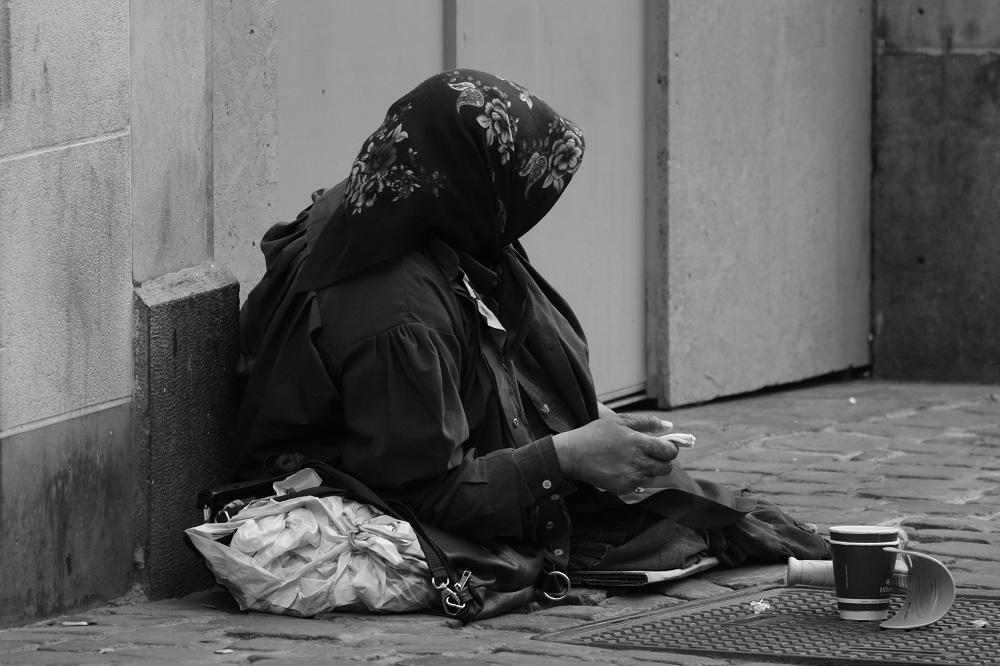
Almsgiving to the poor is a manifestation of mercy strictly connected to the duties of a good Christian. In some ways, it is also a form of justice, since everyone should have the right to have the necessary to live. Let’s see in which cases it is right to practise it.

Is almsgiving a correct form of charity? Is it right to practise this?

The question may seem trivial, something that is answered without thinking, just like, without thinking, sometimes we happen to casually stretch a handful of change into the outstretched hand of someone asking us for help along the road, or in front of the church. A gesture performed in a hurry, without thinking, or, with equal indifference, not done. In both cases, almsgiving results as something uncomfortable, unpleasant, negative, for those who do it (or don’t do it), and for those who receive it.

Of course, it shouldn’t be so. We must consider the importance that charity plays in the life and faith of a Christian. It is one of the theological virtues, that is those virtues that should be at the basis of the life and action of the man who wants to approach God and live in His word.

The duty of almsgiving is as old as the Bible. Sacrifice and almsgiving were two duties that a religious person had to fulfil. There are important pages in the Old Testament, where God demands special attention for the poor who, from time to time, are the propertyless, foreigners, orphans and widows” Pope Francis recalled during the Jubilee Audience of 9 April 2016, dedicated to Mercy and Almsgiving.

Charity as acceptance, therefore, availability towards one’s neighbour, the will to put oneself at the service of others, of the poor, of the needy, in the name of a sense of superior justice, of a yearning for what is just, good, beautiful.

Charity and alms in other religions

Muslims also hold this virtue of great importance, which for them is called zakat, and is the third pillar of Islam. The zakat is one of the most important religious duties for a good Muslim and represents a way to pay off the debt that every man has to God for all that is beautiful he has given him. Only in this way can man demonstrate that he deserves those gifts. Indeed, the Prophet Muhammad says: “Charity is an obligation for every Muslim, and whoever does not have the means to do a good deed or avoid committing a wrong one. This is his charity.”

Jews exercise a particular form of charity: the Zedaqah. But what are the differences between Christian charity and Jewish Zedaqah? In a previous article dedicated to the differences between Judaism and Christianity, we talked in-depth about the importance of the Zedaqah in the Jewish religion. It is one of the most essential obligations for a good Jew, so much so that it is one of the three actions with which a man can overturn an unfavourable decree. Indeed, the Hebrew sacred texts state that the Zedaqah can save a person even from death, and in the Talmud, it is written that it is worth more than all the other mizvot (positive and negative obligations for Jews) put together. Again in the Talmud, we read that every time a person applies the Zedaqah, he personally receives the Divine Presence. For the Jews, therefore, the Zedaqah is an instrument of redemption and salvation. What exactly is it? Without pretending to list here the long list of precepts and rules linked to the Zedaqah, we can define it as a form of charity, of almsgiving. For the Jews it is a positive precept, therefore an obligation, to give to the poor in proportion to what is due to them, if one has the faculty to do so, whether they are Jews or non-Jews, family members, friends, strangers. This mitzvah is defined by many passages of the Hebrew sacred texts, where we read for example: “You will keep the stranger, the resident and the one who lives with you” (Lev. 25:35), or “You shall open your hand” (Deut. 15:8).

The-differences-between-Judaism-and-Christianity

Read more:

The differences between Judaism and Christianity
What are the differences between Judaism and Christianity? Is the God of the Jews the same as the Christians? Let’s try to discover together…

However, we must not confuse the Jewish Zedaqah with Christian charity. The two practises arising from completely different assumptions.

The term charity derives from the Latin “Caritas”, love, benevolence. So, simplifying a lot, we can affirm that every form of Christian charity derives from compassion, from love, from empathy towards those who suffer and are less fortunate.

For Jews, this is not the case. The word Zedaqah means “justice”, and it has nothing to do with the feelings that the practitioner has for the one who receives it. A good Jew must necessarily practise the Zedaqah, even towards those who, at first sight, do not deserve it. He has to do it because he should do so.

But how does charity work?

To fully understand the meaning of almsgiving it would be enough to dwell on the etymology of the word itself. The word alms derives from the Greek “eleèo”, I have compassion, and it would serve nothing else to make manifest the true meaning of this word and all that it entails.

Almsgiving is a way to show one’s charity, one’s love for one’s neighbour, one’s compassion. But we must be very careful not to fall into the illusion that it is enough to give material, monetary offer to be at peace with one’s conscience. The efficacy of almsgiving resides solely in the spirit with which it is dispensed, that spirit of charity which should be the basis of a good Christian. Charity should be manifested every day, in many different ways, and only in this way does it become a form of faith, the witness of one‘s will emulate Christ, to imitate his example. This requires commitment, energy, sacrifice because offering one’s availability to those in difficulty, offering not only economic but above all human comfort, takes much more time and effort than those necessary to open the wallet and take out a few coins.

Jesus himself warns us against the wrong way to give alms, motivated only by selfish, superficial, petty reasons. He said to the Pharisees: “You think yourselves righteous before men, but God knows your hearts: what is exalted among men is detestable before God” (Mt 16, 14-15).

Pope Francis adds to the dose: “Almsgiving is done by looking the poor in the eyes, involving him, and thus demonstrating sincere attention to him. Otherwise, it is only public self-promotion, like that of certain Pharisees of the Gospel.
It is useless to give alms just to wash one’s conscience, to exorcise the spectre of poverty under the illusion of relieving someone else’s state of poverty, to make oneself beautiful in the eyes of others, of the parish priest, of the community. Charity is and must be first of all an act of love, and secondly the recognition of an act of justice: everyone should deserve to live worthily, having at least the bare essentials to do so. God does not want goods to remain in the hands of a few, but that they belong to everyone, to guarantee dignity and survival to everyone. What God created belongs to everyone.

Even the collection of offerings in the church, the so-called begging, which aims to support the religious community and allow the parish to invest in works of charity for the poor and needy, is an essential form of almsgiving for those who believe and regularly attend the church. By giving something you show your willingness to share with other faithful and with anyone in need, sacrificing something that belongs to us for the common good. Not surprisingly, it takes place at the moment of the presentation of the bread and wine, in the process of becoming the Body and Blood of Jesus. The Sacrifice par excellence of Christ is joined by a small personal sacrifice of those who are preparing to celebrate the Eucharistic mystery.

To whom to give alms?

So must we give alms to everyone, without distinction? It is necessary to make conscious choices. No one should indeed be denied help and mercy in times of difficulty, but it is also true that it is not productive to justify and feed phenomena of begging and especially of exploitation of weaker and defenceless people, such as children or the elderly or the disabled.

Furthermore, we will have to learn to discern the real poor from those who, out of laziness or willful misconduct, do not want to work for a living, and are content with what little they can steal from good-hearted people. Woe to encourage certain behaviour!

Those who ask for alms should do so only out of actual necessity, not as a job, and it is a specific duty of a good Christian to know how to distinguish, also to be able to intervene to help differently those who, due to lack of knowledge of the country or simplicity of intellect, he desperately wants to work and he might as well, but he can’t find a way.

In any case, it will be important, in giving alms, to respect the dignity of those who receive it, guaranteeing a bond, a contact that goes beyond that exchange of coins. Shaking hands, looking, a kind word, even a caress, will be the most precious and pleasing form of charity not only for those who receive it but also in the eyes of God.

The differences between Judaism and Christianity

The differences between Judaism and Christianity

Contents1 Judaism and Christianity differences2 The Jewish religion in brief and the Jewish sacred texts3 What the Jews call God What are the differences between Judaism and Christianity? Is the God of the Jews the same as the Christians? Let’s try to discover together what…

Eucharistic adoration for children

Eucharistic adoration for children

Eucharistic adoration for children is a delicate and important matter. Let’s see how we should introduce them to it in the right way, what prayers are most appropriate for the youngest ones before the Most High and how Eucharist should be explained to kids. Eucharistic…

Ecclesiastic hierarchy within the Catholic Church

Ecclesiastic hierarchy within the Catholic Church

The Church is a very wide and complex institution, and, as such, it needs a well-defined hierarchy that has developed throughout time. Let’s find out something more about the ecclesiastic hierarchy within the Catholic Church.

First, what do we mean by ecclesiastic hierarchy? When Jesus founded the church, he developed it following the model of His community, his disciples and the many apostles. To some extent, this first hierarchical definition is still today the base of the hierarchy of the Catholic Church as we know it.

The Pope, bishop of Rome, is Saint Peter’s successor, designed by Jesus as the master and founder of the Catholic Church.

The Bishops, elected by the Pope, are the apostles’ successors.

Of course, as the Word of God spread throughout the world and the church with it, there was the need to create a hierarchical organization that could grant a detailed control on the territory and that would allow the Church to reach a greater number of faithful.

The Catholic ecclesiastic hierarchy as we know it today is the result of many councils and deliberations. Times changed and many events happened, therefore the church had to define a list of key figures, the ecclesiastical offices, which help the Pope and Bishop in their dutis of govern and care of Christ’s people. The word hierarchy comes from the two Greek words ‘hieros’, sacred and ‘archeia’, command.

The church hierarchy is based mainly on the faculty of the ordained of the various levels to administer the Sacraments or not, and on the power of intervention on a jurisdiction level, for example by electing a new bishop or entrust a priest with a new parish.

how to become a deacon

Read more:

How to become a deacon: duties and education
Who is a deacon and what does he do? How to become a deacon? Let’s find out more about this figure that has always been present…

For the former, we talk about ‘potestas ordinis’, power of Holy Orders, for the latter it is ‘potestas iurisdictionis’, power of jurisdiction.

In a previous article dedicated to deacons, we already explained how the Second Vatican Council convened by Pope John XXIII in 1962, which lasted until 1965 under the guidance of Pope Paul VI, defined the modern organization of the Church and its ecclesiastical order. Clergy as we know it, and which include all those who received an Ordination, is made of three main ecclesiastical levels: Bishops, Presbyters and Deacons, which constitute the Church hierarchy.

First Level

At the top of the ecclesiastical hierarchy, we already mentioned the Pope as Bishop of Rome and supreme leader of the Church. His mandate is for life.

After him in importance, we find the Cardinals. All of the other bishops are considered as the apostles’ successors and are elected by the Pope, but some of them can rise to the office of Cardinals, always by his will.

What is the difference between bishops and cardinals?

Cardinals must help the Pope administrate the church. In order to do so, they meet in the College of Cardinals, or Sacred College. They have to participate in the conclave, the election of the new Pope. The typical color of cardinals is purplish red and the word we have to call them by is Eminence.

Bishops, on the contrary, receive their office through the episcopal ordination. Bishops, like presbyters and cardinals, retire at 75 years old. Their duties include guiding the dioceses, the ‘portions of God’s people’, that is, the territorial and administrative units that compose the Church, ordaining priests and deacons and administrating the Sacrament of Confirmation. Bishop can also administrate all Sacraments, including the religious Ordination. Their color is purple and can be called Monsignor or Excellency.

What is the difference between bishop and archbishop?

A simple bishop holds a diocese. An archbishop is the bishop of an archdiocese, that is, a diocese at the head of an ecclesiastical province made by many dioceses. If the archbishop is also the head of the ecclesiastical province, he gets the name of metropolitan, or metropolitan bishop. The title of archbishop can also be only honorary.

Second level

On the second level we find Presbyters, that is, the priests, also called parish priest if tied to a particular parish. The parish is one of the administration units of the Church. More parishes compose a vicariate; therefore a priest could also be a vicar, coordinator of all the parishes in the territory. Presbyters also retire at 75. Priests can administrate all Sacraments except for the religious Ordination, they can give the Eucharistic blessing and distribute the Eucharist to the faithful.

Third level

On the last level of the ecclesiastic hierarchy, we find Deacons, who assist priests and bishops during ceremonies. They can only administrate the Sacrament of Baptism and the matrimony, if they have a particular mandate. They preach the Word of God and offer their services to the parish communities. They can be married and have children.

Other ecclesiastical titles

Other ecclesiastical titles and offices are more or less specific, usually fulfilled by men that already have a position in the ecclesiastical hierarchy.

For example, the Apostolic Nuncio is some sort of ambassador, he represents the Holy See in a State.

A Catholic Primate is an honorary office assigned to a bishop or an archbishop who presides over an ancient or prestigious diocese or an archdiocese.

The Vicar general can represent the bishop in the management of the relationships between parishes and vicariates, the various districts a diocese is divided into, and in the matters concerning regional authorities, administration of ecclesiastical goods and jurisdictional matters.

Ecclesiastic hierarchy

Clothing and colors of the various levels of the Church

Of course, depending on the level and the duties each man of Church has, there are different clothes and sacred criterions to follow. The ecclesiastical vestment is an obligation established by the Code of Canon Law, and since 1983, the Italian Episcopal Conference decreed the obligation of the cassock or the clergyman for everyone inside the clergy. Presbyters can just wear a cassock or a clergyman, maybe with other clothes and accessories. In particular, the sash is an accessory that allows people to determine the level of a man of church thanks to its color: black for priests, dark purple for Bishops and other prelates in general, marbled dark purple for Apostolic Nuncio, marble red for Cardinals, marble white with golden fringes for the Pope.

Read more:

Clergy clothing: the simple elegance of the clergyman
Simple and sober: this is what we expect a priest to look like. Practical clothes that let people can immediately identify them.

Then, the saturno (Roman Hat), the typical black hat that Presbyters wear along with the cassock, decorated with bows that change color according to the religious levels of those wearing it: green for Bishops, red for Cardinals, red with golden decorations for the Pope.

The pellegrina, an ancient mantle-like item typical of peregrines, has become an ecclesiastical garment only for bishops. It is a short mantle, open on the front. The pellegrina is black with crimson borders and linings for Bishops, bright red borders and linings for Cardinals, all white for the Pope. An alternative to the pellegrina is the mozzetta, a short cape closed on the chest with buttons, reserved to high prelates.

There is also the cope, a long mantle with a small hood, almost down to the feet and open in front. Bishops and Presbyters wear it during solemn celebrations outside the Mass, and is fastened at the breast with a clasp that varies according to the ecclesiastical level.

Deacons wear the dalmatic, a long tunic with wide sleeves, which Bishops can also wear under their chasuble.

Jubilee of Mercy Logo: what is it and who designed it

Jubilee of Mercy Logo: what is it and who designed it

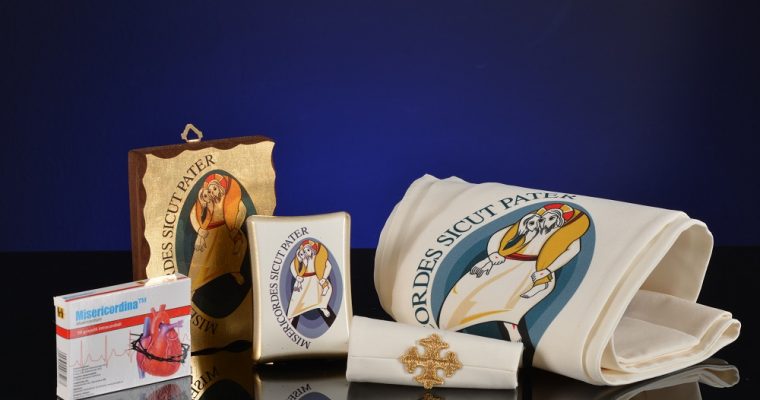
Contents1 What is the Jubilee?2 How often is it held?3 What do we do during a Jubilee?4 The Jubilee of Mercy5 Meaning of the Jubilee of Mercy Logo The Logo of the extraordinary Jubilee of Mercy was created and designed by an artist and religious…

Free will: what it is, what it means

Free will: what it is, what it means

Contents1 So, what is free will?2 Fate or free will?3 Free will in the Bible4 The concept of free will according to Dante5 Free will for Saint Augustine6 Free will according to Luther7 Free will according to Erasmus of Rotterdam What is free will? What…

How to become a deacon: duties and education

How to become a deacon: duties and education

Who is a deacon and what does he do? How to become a deacon? Let’s find out more about this figure that has always been present in the Catholic Church, and has important and solemn duties during celebrations.

The word ‘deacon’ comes from the Greek word diàkonos, servant, but it would be reductive to consider such men assisting priests during celebrations as just a mere ‘servant’. In this article, we will try to deepen the subject and to explain the path to become a deacon to those who want to undertake this commitment of faith.

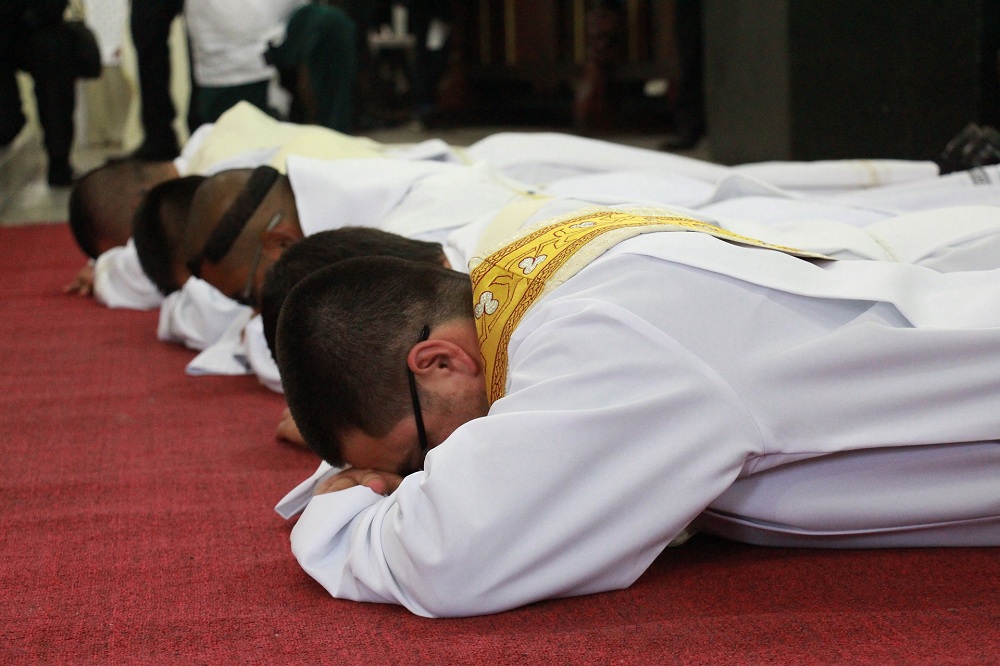
We can consider the deacon as a man that chooses to live halfway between a lay and a priestly status. In fact, even though he belongs to the ecclesiastic order, the deacon is not a priest. It is true that the diaconate can be the first step towards priesthood, and in such case, it is called transitional diaconate, but a deacon can choose to stay such forever and offer his services under that specific role, in that case, it is called permanent diaconate.

The presence of figures that can be associated with deacons is documented since the Apostles time, but the Vatican Council II established the laws and methods of diaconate once and for all, through the dogmatic Constitution Lumen Gentium.

Within the ecclesiastic ministry, the deacon is the so-called first level. In fact, starting from the Second Vatican Council, the modern organization of the Church defined three degrees that summon all those who have been ordained: the first level is the Diaconate, the second is Priesthood and the third is the Episcopate.

baptism

Read more:

Baptism: meaning, symbols and how to organise one
Baptism is the first of the sacraments that enshrine the true birth of a Christian. It is through Baptism that we are purified from original sin

On the first level, we find deacons, who offer their services to priests and bishops. They can administer the Sacrament of Baptism. They work as assistants during the celebration of weddings and as coordinators for the ministry of charity; they have the authority to preach the Word of God.

On the second level, we find priests, also called presbyters. They also work along with bishops, but unlike deacons, they can administer all Sacraments except for holy orders, they can impart Eucharistic blessings and distribute the Eucharist to the faithful. They must obey to bishops and accept the duties they are given, from the ministry of a parish to missionary work. Of course, they also preach the Word of God.

On the third and highest level, we find bishops, considered as the successors of the Apostles. Their powers cover all three ministries: munus propheticum or munus docendi (ministry of education), munus regalis or munus regendi (ministry of pastoral government), and munus sacerdotalis or munus liturgicum (ministry of sanctification).

Originally, there were also women deacons, who helped bishops baptizing women and offered their services for them. Their duties were probably not comparable to those of men deacons; in fact, at the end of the XI century, the figure of women deacons was removed. Pope Francis, on May 12 2016, declared that he wanted to “build an official commission to help study the matter” of deaconesses. However, as of today it is not possible for women to access such position.

Pope-Francis

Read more:

Anniversary of the election of Pope Francis
Pope Francis’ pacific revolution. On the fifth anniversary of his election, recently celebrated, let’s see how the Church has changed…

What does a deacon do?

Concerning the deacon’s duties, the Vatican Council II defined the triad “diaconia of the liturgy, of the word and of charity“. In the above-mentioned dogmatic Constitution Lumen Gentium, we can read, among other things, that the deacon must serve “the people of God, in communion with the bishop and his group of priests” (Lumen Gentium 29).

The bishop is the one who establishes the mandate of a deacon.

The deacon assists the priest or the bishop during the Mass, for example by performing the service at the chalice and at the book, annunciating the intentions of universal prayer, helping in the distribution of the Communion. In addition, he must purify and put back the holy vase. He can read the Gospel and the sermon, and in general, he can practice the ministry of the Word.

Outside the Mass, the deacon can celebrate the Sacrament of Baptism.

In the Latin ritual, and only if delegated by the priest, he can celebrate marriages.

He can also bless people, places and objects, and administer sacraments in general. He can also take part in the Rite of the Funeral and take the viaticum to dying people.

As we said, he cannot administer the Eucharistic blessing, nor administer the communion, but he can keep and distribute the Eucharist.

One or more deacons can often take care of charity works and structures for the diocese or the parish.

How to become a permanent deacon

Those who want to become permanent deacons must go through a path of spiritual, human, pastoral and intellectual education, which must be at least five years long. Such step requires a huge commitment, study and spirit of sacrifice, and must be taken with the awareness of the time and energy that the person can put into it, along with the work and care for his own family, should there be one.

During this period, the aspiring deacon must dedicate himself to theological studies as well and must absolutely serve the parish communities. He will also need to possess a high school diploma.

The document Basic norms for the formation of permanent deacons, edited by the Congregation for Catholic Education and Congregation for the Clergy, sums up all of the regulations that are necessary to educate a deacon.

Of course, the aspiring deacon must be baptized. If he was baptized as an adult, at least 5 years must have passed.

He must be at least 25 years old if unmarried, 35 years old if he’s married. In fact, while the candidates for transitional diaconate must be strictly unmarried, permanent deacons can be married at the moment they are ordained. So, can a deacon get married? No, he cannot; if the aspiring deacon is not already married when he is ordained, he will not be allowed to get married afterwards and will have to respect celibacy. In case the aspiring deacon is already married, the Church will have to recognize his marriage and protect it.

He must provide several documents, included the certificate of Baptism, the confirmation of his marriage, a recent picture of himself and one of his wife, a letter of consent from his wife, a letter of presentation, medical reports, transcription of his course of studies, a background check and the certificate of legal residence.

In addition, the dean of the structure where the aspiring deacon took his education and studies will have to write an accurate report about his progress during the five canonical years.

The jobs of the Deacon within the parish

Since the basic requirement for a deacon is charity, his duties within the parish will be related mainly to such practice. Imitating Christ-servant, the deacon will have to be an example for all faithful and always be at the service of his brothers, especially the most needy and suffering. He will always have to be committed in a service of charity, Christian education, animation of pastoral structures, especially those involving young, adult and sick people.

He will have to spread the Word of God among the faithful, organizing and promoting family groups and meetings about the Scriptures. He will also offer advice and help to catechists.

He will have to promote liturgical participation by contributing to the formation of Readers, Acolytes and ministers, guiding the Extraordinary Ministers. He can also participate in the organization and management of the parish choir.

The married deacon and his family

If a married man decides to become a deacon, he must make sure that his family is ready to support him in his choice unconditionally.  In fact, the commitment required by such duty in terms of time, but most of all of conduct, cannot be isolated from a serene family situation. This commitment will surely not exclude his family. On the contrary, thanks to that, the deacon is able to offer an authentic proof of family life, which works as an example and model for other families. A married deacon can show his family as a proof of the sanctity of marriage, of the virtue of marital chastity. Plus, if his wife and children approve, he can involve them in his services for the parish and the community, creating some sort of “diaconal family”. We must think that the deacon is and always will be a man. As such, since he can also be a husband and a father, he can be a proof of a higher sensitivity and empathic skill compared to other families, especially in the most delicate situations that may imply contact with children, young and old people.

The preparation of a deacon

We already mentioned that the aspiring deacon must go through a path of human, spiritual, doctrinal and pastoral education.

Concerning his human education, the deacon will have to cultivate the necessary virtues that allow him to become an example and vehicle between the faithful and Christ. Love, respect, loyalty, consistency, obedience, humility. Most of all, he must be a mature person with a strong inner balance, so that he can face any situation with resolution and self-confidence. He must be able to relate to others, always looking cordial and available. If he’s married, his marriage will have to be strong and enlightened by all of the virtues and joys of a Christian marriage.

The spiritual education of a deacon is related to the discovery of Christ’s love and its sharing as service and propensity towards others. A deacon must learn to give himself without hesitations, putting selfishness aside. The Eucharist, which he will have to be often part of, will give him strength and nourishment for such work of love. In addition, the deacon will have to nourish his spirit with readings and studies about the Word of God, and through his personal and family practice of the Liturgy of the Hours.

His theological education must be adequate for the duties he will have to perform, and as complete as possible. Besides reading and studying the Gospel, he will have to understand the study of the works of the Fathers, a solid theological and moral base, the accurate study of Liturgy and the Teaching of the Church.

Pastoral education will come on its own thanks to the participation in the parish community and the exchange with other already ordained deacons. According to his personal sensitivity and his inclination, the deacon will choose what pastoral environment he will put his energy in, compatibly with the duties the bishop will assign him.

Wishes to a newly ordained deacon. What could be the best gift?

A friend or relative embracing the sacerdotal path is always a reason for joy. Diaconate is not an exception. If someone you know and love chose to undertake this hard and demanding path, he will surely be happy to know that you are with him and support him. What better occasion than his ordaining to give him something special?

A typical gift for a future deacon is the stole, which he can use during celebrations when he will assist the priest on the altar. He will need a few, of different colors, according to the liturgical occasion. In addition, a surplis or an alb can be useful and appreciated gifts.

Alternatively, you can opt for a sacred book, such as the Liturgy of the Hours, maybe a prestigious edition.

An always-appreciated gift is a crucifix that the deacon can wear every day, or a sacred image he can keep at home and remind him of his commitment at any moment: a picture, a sacred icon, a statue or a cross.