Author: Redazione

Saint Peter in the Vatican: Church symbol of the whole Christian world

Saint Peter in the Vatican: Church symbol of the whole Christian world

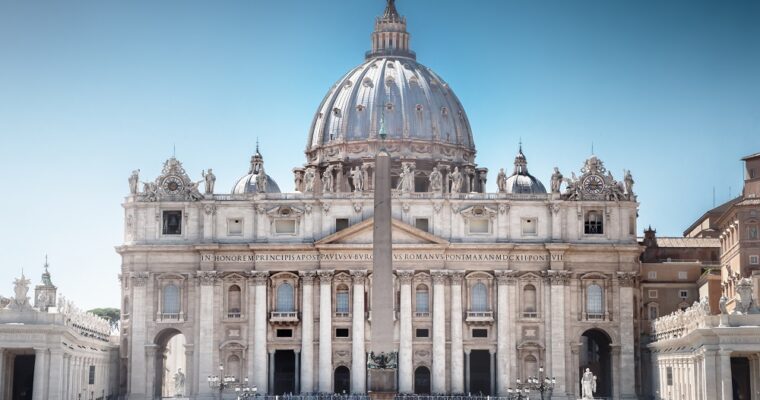
Contents1 The tomb of Saint Peter2 Tombs of the popes in the church of Saint Peter3 The dome of Saint Peter4 The Pietà by Michelangelo5 The canopy of Saint Peter Saint Peter in the Vatican is a basilica full of meanings, mysteries and sacred works…
Stuffed wafers: the recipe for a surprising dessert

Stuffed wafers: the recipe for a surprising dessert

Contents1 How to make the wafers2 The ingredients of a wafer3 Stuffed wafers Stuffed wafers, a dessert with an ancient and irresistible flavour that evokes an age-old tradition. Let’s discover the most delicious recipes to make at home. Hearing about stuffed wafers can at first…

Sacred art on fabric, the most beautiful tapestries to express your faith

Sacred art on fabric, the most beautiful tapestries to express your faith

Sacred tapestries have always been the protagonists of religious art. Preserved in churches all over the world, they are considered precious treasures to be exhibited only on great occasions. But some display them in their own homes.

Why talk about sacred tapestries today? The need to see depicted the image of God, or the sweetest face of the Virgin Mary, or triumphant or blessing Christ, is an indispensable component of Christian devotion. We must in no way read in this need a form of idolatry. Indeed, it is precisely devotion, especially popular devotion, that demands these representations, as manifestations of visible and tangible faith and love. Christianity, moreover, was based from the beginning on the need to visually render the symbols of faith, to allow the members of the first Christian sects to communicate with each other without incurring persecution.

We must also consider that in ancient times most of the men and women who attended the church were illiterate. Therefore, the representations of Jesus and Our Lady, as well as of Saints, became indispensable both to inspire faith and to ‘tell’ what in the Sacred Scriptures remained the prerogative of the few scholars.

We have focused on this topic in the past, talking about the sacred paintings to have in the house. Yes, because at the same time as the spreading of sacred images in the churches, the need to have one or more sacred representations in one’s own house, as a testimony of the faith of the inhabitants of the house itself, of their belonging to God, was soon manifested.

5 must-have sacred images

Read more:

5 must-have sacred images and pictures
Since the origins of Christianity, people felt the need to reproduce the object of their devotion…

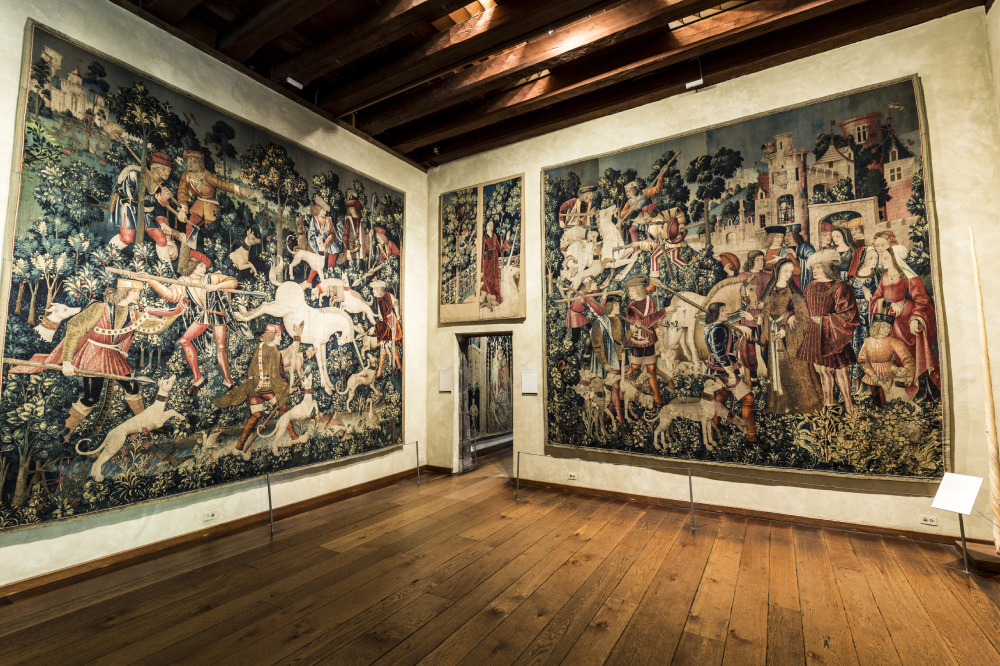
What we have written about sacred paintings also applies to sacred tapestries, especially if we consider that the art of tapestries is very ancient and has always been widespread in every part of the world. It is no coincidence that many famous painters and artists have lent their art to the creation of sacred tapestries, drawing the bases on which the artisans would then lay their own warp of coloured threads.

Beginning in the 14th century and throughout the Renaissance, castles, houses and places of worship were enriched with countless tapestries. In addition to representing objects of art and devotion, they also fulfilled the difficult task of thermally insulating environments, often too large and difficult to heat.

How a tapestry is made

The name ‘tapestry’ derives from the name of the French city of Arras, one of the first centres of this ancient and fascinating art. In this city, during the Middle Ages, artists and craftsmen of all kinds were gathered, from painters to weavers, from carpenters to jewellers, because the art of sacred tapestries was complex and needed many skills.

The tapestry is a piece of fabric woven by hand on a frame, usually made of wood, starting from cardboard, or a preparatory drawing, made by a painter.
Like each fabric, a tapestry is composed of a weft, the set of horizontally arranged threads that make up the visible design of the tapestry, and a warp, the threads stretched vertically on the frame that supports the weft.

Tapestry What is it and how it’s made

Read more:

Tapestry: What is it and how it’s made
Tapestry is an extremely ancient art form which has been present in all cultures in the world for millennia…

The warp threads are organised into two series that are divided into openings called passages, or warp mouths. Here the plot is passed through which, unlike what happens with a normal fabric, is not spread with a single shuttle, or spool of wire, but with many different shuttles, one for each colour. This required in the past that the craftsmen work on small sections of tapestry from time to time, passing and going over the weft through the warp, to build the various elements of the design.
The threads of the weft are then crushed with a comb so that the warp is completely hidden.

In ancient times it took years to make large craft tapestries. They were real works of art, which reached care in the details and sharpness in the surprising colours. Being designed to cover the walls, the old tapestries were usually large.

In the 17th century, the tapestries painted directly on fabric, usually, silk and linen, began to spread and real oil paintings on cloth hung on the walls, which became an integral part of the furnishings of many castles and palaces.

The Jacquard frame

In the nineteenth century, the textile industry was revolutionised by a series of innovations. Mechanical frames powered by steam, hydraulic frames and flying spools appeared, intended to change the working methods of weavers around the world.

Joseph-Marie Jacquard, a French inventor who lived under Napoleon, invented the Jacquard Frame. In practice, it is a frame that uses perforated cards that automatically guide the weaving of the weft on the warp and consequently the formation of the design on the fabric. This allows the weaver to work alone, without the need for an assistant to intervene from time to time to create the warp holes to follow the drawing on the preparatory cardboard.

The Jacquard frame was composed of a structure that was to be applied on a normal frame, and which included a ribbon formed by perforated cartons to reproduce the design that was wanted to be made, a chain that advanced the perforated panels, a series of cylindrical counterweights connected to the meshes of the licks, or the components of the frame that divided the warp threads. The counterweights were connected to the meshes of the licks, to which the various warp threads were secured. When the counterweights found a hole in the pre-drilled cardboard, they ‘dropped’ the thread creating a warp hole in which the weaver could insert the weft thread to create the desired design. The weaver then proceeded by combing the plot and following the next ‘fall’.

As expected, this invention was welcomed with great enthusiasm but also with fear, because many weavers saw it as a threat to their work. Even in France in 1831 a revolt broke out among the silk weavers of Lyon (the Canuts), but this did not prevent the Jacquard loom from spreading rapidly throughout Europe.

In the past, the Jacquard frame was still a manual frame, in which the movements of the cartons were determined by the weaver using levers and knobs. The most complex fabrics were spread on frames that allowed the processing of more warps with the help of pedals.

Today Jacquard frames are automated in all their parts, from mechanical movements to the progression of computer-managed drawing schemes.

Our religious tapestries

In our online shop, you will find many tapestries suitable for hanging in your home. These are mainly reproductions of famous tapestries, or tapestry works obtained from famous works of art of the greatest masters of the past.

Our religious tapestries are of different sizes, suitable for every wall and every room. They are all produced in Italy and made in a frame with different types of material, from polyester to Lurex, to Viscose. Some of these tapestries have been embellished with particularly fine yarns and refined workmanship.

As for the subjects, there is only the embarrassment of choice. There are sacred tapestries representing Our Lady, Jesus, the Saints and the Pope. Others, as we mentioned, are reproductions of significant scenes of the Sacred Scriptures, such as the Last Supper, the Adoration of the Magi or the Annunciation.

Here are some sacred tapestries that reproduce famous works of art.

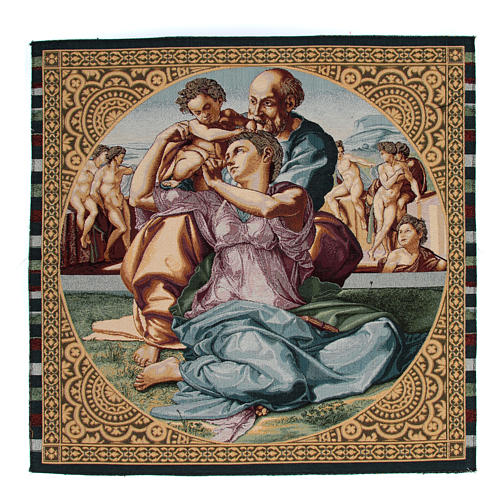
Doni Tondo by Michelangelo tapestry
This beautiful tapestry is inspired by Michelangelo's Tondo Doni. Painted in a greasy tempera on a panel between 1503 and 1504, the original is preserved in the Uffizi Gallery in Florence. He had been commissioned to Michelangelo by Agnolo Doni, a wealthy banker, probably on the occasion of his wedding to Maddalena Strozzi. The tondo, the only work on mobile support made by Michelangelo, represents the Holy Family, with the Madonna in the foreground who turns to take Jesus the Child from the arms of Joseph behind her. The tapestry has an exclusive design and a refined weaving made with a Jacquard frame. Made in Italy. The size is 65x65 cm, and the design is made with sanding on the entire perimeter, therefore suitable to be framed.
Buy on Holyart
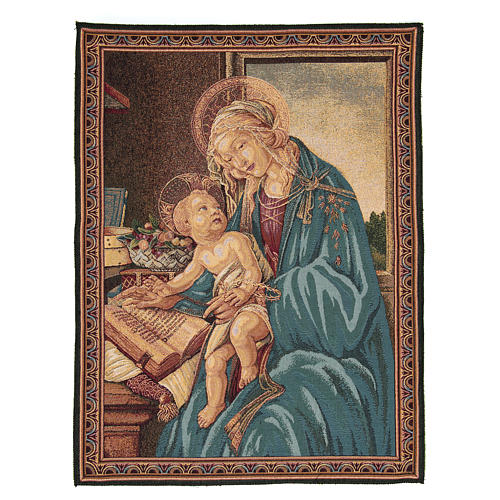
Botticelli's Madonna of the Book
The tapestry inspired by the Madonna del Libro by Sandro Botticelli is 65 cm wide and 53 cm high. It reproduces with a skilful weaving on a Jacquard frame the eponymous tempera painting on a table by Sandro Botticelli, kept in the Poldi Pezzoli Museum in Milan. In it, Mary leafed through a book while holding the Child Jesus. The work is rich in symbolic elements, such as the star on Mary's robe, which recalls the star comet of the Magi, the three nails between the fingers of the Child, the crown of thorns around his wrist, or even the basket of fruit, which contains cherries (which recall the blood of the Passion), plums (love between mother and son) and figs (symbol of Resurrection).
Buy on Holyart
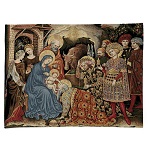
Adoration of the Magi by Gentile da Fabriano Tapestry
A sumptuous tapestry with an exclusive design, made with refined Jacquard weaving and embellished with gold and lined lurex yarns, this tapestry depicts the Adoration of the Magi by Gentile da Fabriano, painted in 1423. 63 cm wide and 80 cm high, the product is Made in Italy and is equipped with a pocket for inserting the rod to hang it. Preserved at the Uffizi Gallery in Florence, it is considered the artist's masterpiece and the most brilliant example of international Gothic in Italy. Commissioned by Palla Strozzi, a very rich man, as well as a cultured and refined humanist, the painting represents the adoration of the Magi with a magnificent scene, which in some way also pays homage to the opulence of the magnificent client. The scene is actually composed of many paintings on which the attention of the viewer dwells from time to time, enriched by countless naturalistic details and costume.
Buy on Holyart
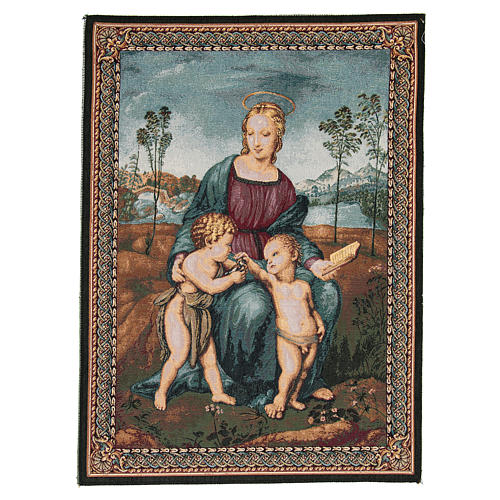
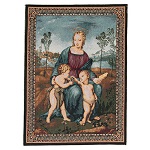
Madonna of the Goldfinch by Raphael
The tapestry inspired by the Madonna del Cardellino by Raffaello Sanzio has a size of 65x53 cm. It reproduces the subject of Raphael's oil painting on a panel in the Uffizi Gallery in Florence. Made for Lorenzo Nasi, a wealthy wool merchant, and for his betrothed Sandra Canigiani, he was lost in the landslide that swept their home on the Costa San Giorgio in November 1547. It was found among the rubble in seventeen fragments and subsequently restored several times. It represents, against the backdrop of a river landscape, the Madonna who holds Jesus the Child between her legs, and Saint John who embraces her. Both children play with a goldfinch, one of the symbolic birds of the Passion of Christ.
Buy on Holyart
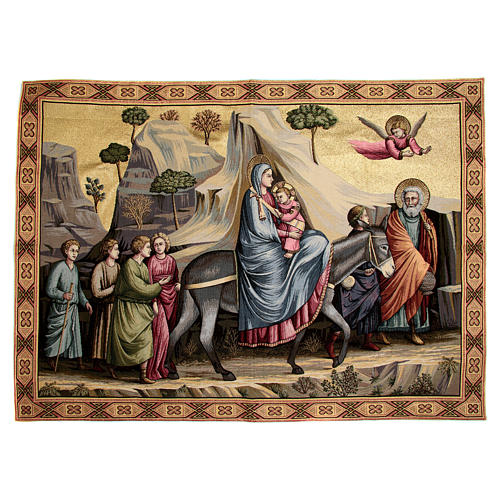
Tapestry inspired by Giotto's Flee
Another splendid sacred tapestry to be exhibited in the house is this tapestry inspired by the Flight into Egypt, one of the frescoes of the cycle of the Scrovegni Chapel in Padua painted by Giotto between 1303 and 1305. The tapestry measures 94x132 cm, and is made with refined Jacquard weaving and embellished with gold and lined lurex yarns. It is equipped with a pocket for inserting the rod to hang it. The original fresco depicts the Holy Family fleeing to escape the Massacre of the Innocents, led by an angel who shows them the way from heaven. Mary is in the middle sitting on a donkey, with Baby Jesus fixed to her chest thanks to a striped scarf tied around her neck. Joseph and a servant walk beside them, while three other figures close the procession talking to each other.
Buy on Holyart
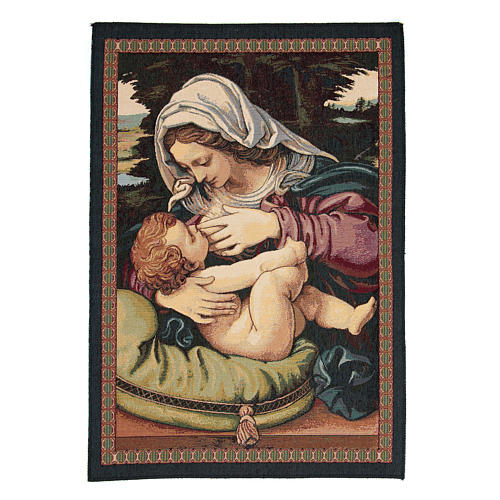
Virgin of the Green Cushion by Andrea Solari
The tapestry of the Madonna del Cuscino by Andrea Solario is Made in Italy with an exclusive design and refined Jacquard weaving. Suitable to be framed it measures 65x45 cm. The original painting is by Andrea Solario, an Italian Renaissance painter influenced by Leonardo da Vinci's school, but also deeply linked to Venetian colourism and Flemish art. The Green Pillow Madonna, now preserved at the Louvre, was made by the master during his stay in France. Show the Virgin while breastfeeding Baby Jesus who is leaning on a green pillow in the foreground. A scene of great tenderness and family love.
Buy on Holyart
The Marriage of the Virgin tapestry
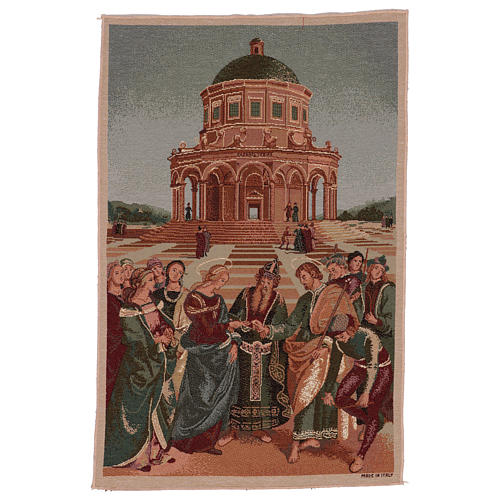
The tapestry reproducing Raphael's Marriage of the Virgin is 59.5 cm wide and 38.5 cm high. Made with a Jacquard frame it has been carefully finished by hand and worked entirely in Italy. It takes inspiration from the painting by the Maestro dated 1504 and preserved in the Pinacoteca di Brera in Milan. The work was originally commissioned by the Albizzini family for the chapel of San Giuseppe in the church of San Francesco in Città di Castello. The painting shows the marriage of Mary and Joseph, united in marriage by a priest and surrounded respectively by a group of women and a group of men. In the background, the temple of Jerusalem constitutes the true optical centre of the painting and the fulcrum of all space, which develops around it.
Buy on Holyart
The liturgical year: let us clarify

The liturgical year: let us clarify

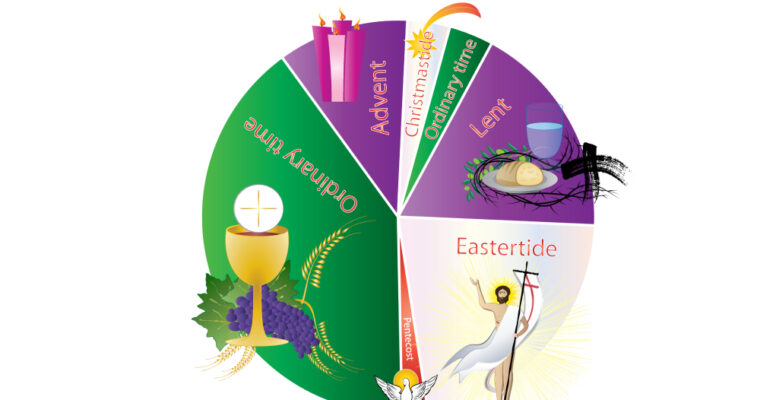
Contents1 Liturgical times of the Catholic Church2 Advent3 Christmas4 Ordinary Time 15 Lent6 Easter Season7 Ordinary Time 28 Colours of Catholic liturgical vestments9 The liturgical year explained to children The liturgical times of the Catholic Church are the seasons in which the liturgical year is…
How to clean old icons and store them in the best way

How to clean old icons and store them in the best way

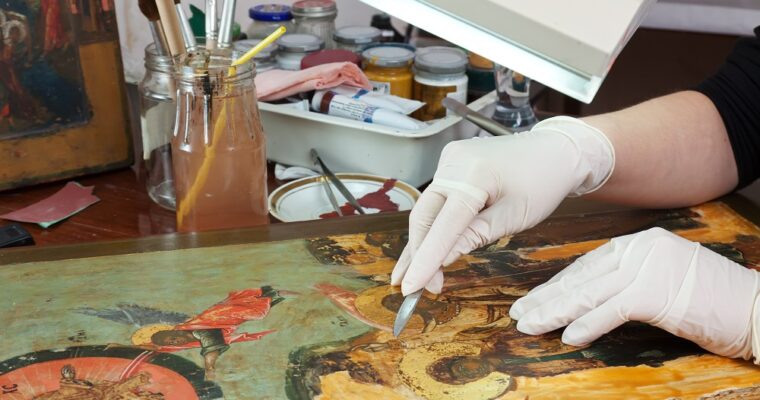
Contents1 How to clean old icons2 Who to contact for the care of ancient icons3 How to store old icons Sacred icons and artistic creations are imbued with an ancient sacredness that transcends the centuries. Let’s find out how to clean the old icons and…
From the chalice cover to the corporal, all the tissues of the liturgy

From the chalice cover to the corporal, all the tissues of the liturgy

Mass services are always present in religious celebrations. Let’s get to know them better and discover how beautiful they can be.

Sometimes we take for granted certain objects that belong to the ceremonial of the Mass, but that perhaps pass a little in the background compared to other liturgical objects, such as the chalice or the paten, and the sacred furnishings in general.Si tratta dei servizi da messa, o servizi da altare.


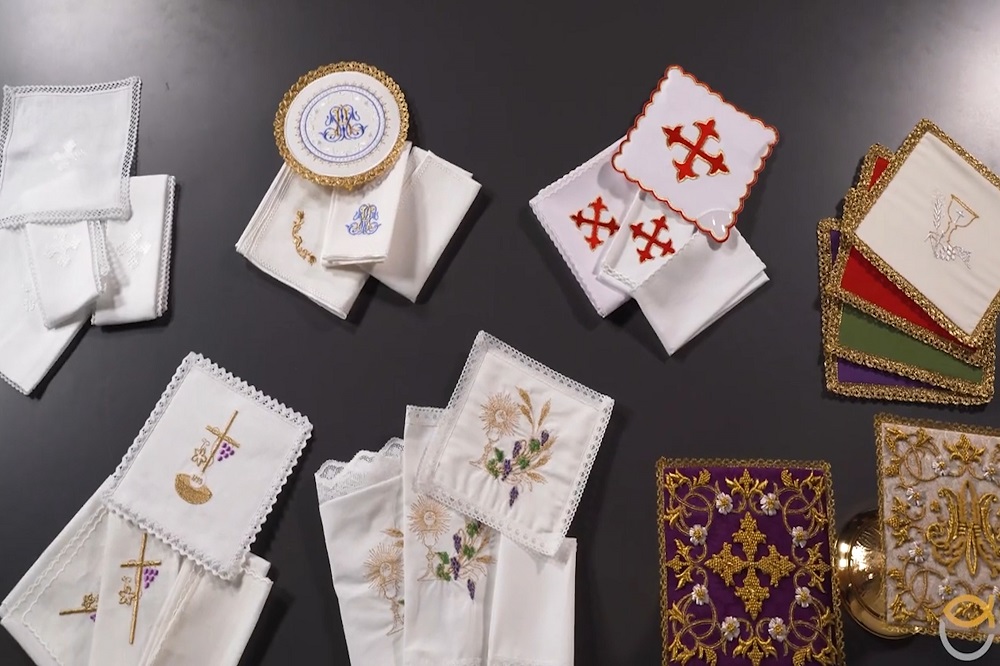
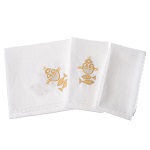
Made of fabric, they are usually four coordinated pieces: the corporal, the pall, the purifier and the towel.

Then there are other liturgical objects in fabric that can be combined with these four, such as the tablecloth for the altar, the amitto and others.

Here is in detail what it is:

  • Corporal (is a slightly rigid square cloth, usually packaged in starched linen, but as we shall see also with other fabrics. It is used folded during the celebration of Mass to cover the chalice. During the Offertory it is stretched out on the altar to welcome on itself the paten and the chalice of the Eucharist. Since it “supports” the body of Christ has assumed this name);
  • Pall (also called animetta, is a square of cloth, generally white. It is usually starched, but can have a hard and soft consistency. It is used to cover the glass, over which is also laid the folded body, and the paten. In this way it is avoided that dust or insects go to contaminate their contents before the Consecration);
  • Towel (or manutergio, is a rectangular white towel of various sizes. It is used by the priest before Mass and then during the Offertory for Hand Washing);
  • Purificatoio (is a rectangle of cloth, which can have various dimensions. It is used by the priest during the liturgical celebration to clean the paten before placing the host, to clean the chalice before filling it and to dry it at the end of communion, to dry lips after drinking).

These vestments, precisely because of their importance in the liturgical celebration, cannot be common pieces of cloth. Must be quality, packaged with fine fabric, or at least carefully.

Also the colors of the services from mass are very important. In a previous article we talked about the importance of colors in the Catholic liturgy and their significance. The liturgical vestments of Catholic priests during religious celebrations and the many sacred vestments they use differ according to a range of colors that has a precise symbolic meaning. The main liturgical colors, codified in the Roman Rite in 1969, are four: white, green, red and purple.

The colours of the Catholic liturgy

Read more:

The colours of the Catholic liturgy and their meaning
The liturgical vestments of Catholic priests during religious celebrations and the many sacred vestments used by them…

The white symbolizes the joy and purity deriving from the Faith and the Resurrection, and is linked in particular to the adoration of Jesus and Our Lady. It is used practically every day, regardless of the liturgical season and the current festivity.
Green is a symbol of hope, perseverance and listening.

Purple symbolizes penance, expectation and mourning and is therefore used during Advent and Lent, or for Masses for the deceased.

Red symbolizes the passion of Christ and is used for liturgical vestments on Palm Sunday, Good Friday, Pentecost, and so on.

Other colors have not been codified, but they also recur in the sacred vestments and also in the services for mass, or at least in their decorations and embroideries, such as the blue, Marian color par excellence, or the gold, which symbolizes royalty.

Here is some more information about the services you can find in our store. All items are available both in sets and sold individually.

The fabrics of mass services

The services used to be made mainly of linen, the most resistant natural fiber that exists. Today you will find mass services packed with many other types of fabric, each with its own characteristics.

Linen

Still very used, it is light and always stylish. Among its advantages is that it dries very quickly and this allows frequent washing without the risk of damage. The regular weave makes it particularly suitable for cross stitch embroidery and other counted thread embroidery, and this too represents a nice advantage to realize the precious decorations of the services from mass.

Cotton

Soft and with high absorption properties, even cotton is particularly suitable for drying the hands of the priest and the chalice. Shiny looking, can be washed by hand or in the washing machine without any special problems.

Polyester cotton blend

Some modern services are made partly of polyester and partly of cotton. Polyester is very resistant especially to tearing and abrasion and does not require much attention. It also has the advantage of being rather elastic and does not crease.

Silk, satin and fine fabrics

Since ancient times, precious fabrics such as silk and satin have also been used for sacred vestments and services. They are smooth, soft to the touch, shiny fabrics that immediately communicate the elegance and refinement of the product. Unlike the previous fabrics, however, they are all very delicate, and require more care to keep intact their characteristics of shine and softness.

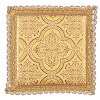
chalice veil in vatican
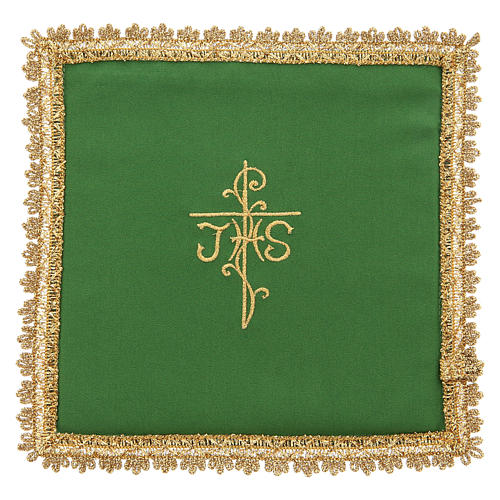
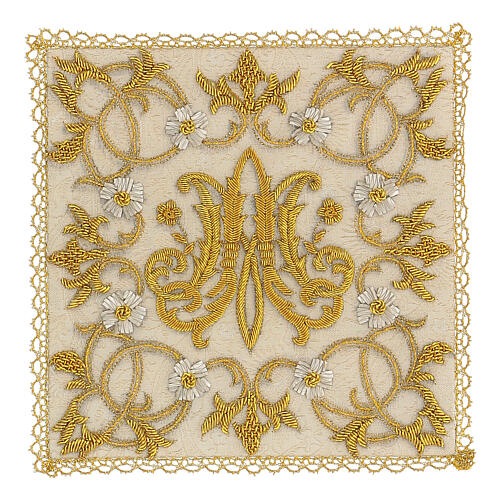
Chalice veil in Vatican fabric, polyester with removable card
Buy on Holyart
Marian pall of hand embroidered satin Gamma
Chalice veil (pall) Marian with satin hand embroidery Gamma
Buy on Holyart
Altar linen white & silver cross embroided
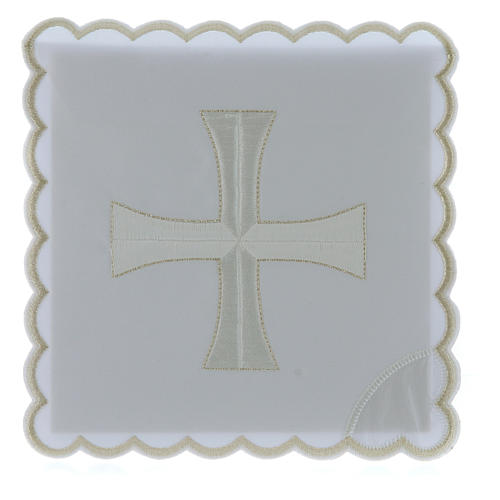
Altar linen white & silver cross embroided, cotton
Buy on Holyart
Altar linens set, 100% linen
Altar linens set, 100% linen, fish and loaves
Buy on Holyart

Decorations and type of embroidery for mass services

The services for mass differ also for the type of decoration with which they are embellished.

First the hem, which can be open or simple, made by hand or machine.

The embroidery can also be done by machine or by hand, depending on the quality of the article, but also depending on the subject represented. There are mass services decorated with simple designs such as small white crosses on a white background or more elaborate designs. The embroideries usually depict the symbols of the liturgy: the cross, the chalice, the grapes, the ears, the Eucharist, the golden symbol IHS, the dove or Marian symbols. The different symbologies adapt perfectly to the sensitivity and preference of each and the liturgical time.

The pall

Among the elements that make up the service from mass, the pall, or cup cover, deserves a further deepening. The pall can be different shape, round or square. It can also be made with a more or less rigid fabric, such as starched linen or polyester.

Some models even have inside a cardboard or a small plastic panel, which allows the pall to remain rigid. The card can be removed thanks to convenient openings to make washing easier. In some particular palls and with important processing the card can not be pulled off, to avoid ruining the object.

Another peculiarity, present only in some models, is the plastic angle. Some models have one of the corners covered with plastic. This allows the celebrant to grab the pall without the fabric getting dirty or wearing over time.

Some cup covers are much more valuable than others, not only for the type of fabric used, but especially for the more elaborate embroidery and made exclusively by hand.
This type of product, given its preciousness, can also become a gift idea for a special occasion: a seminarian who becomes a priest, a priest who celebrates a particular anniversary, and so on.

How to clean silver jewelry

How to clean silver jewelry

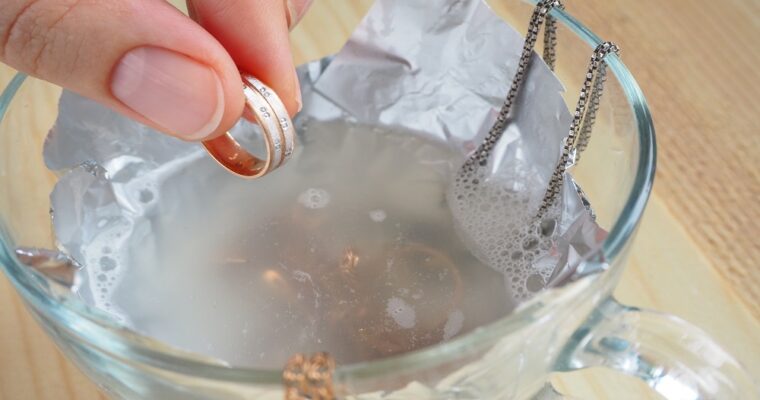
Since ancient times, silver jewels have exercised a deep fascination. Let’s find out how to clean the silver jewelry to keep them bright and beautiful. Why it is important to know how to clean silver jewelry? The answer to this question lies in the very…

Abraham’s lineage until Jesus

Abraham’s lineage until Jesus

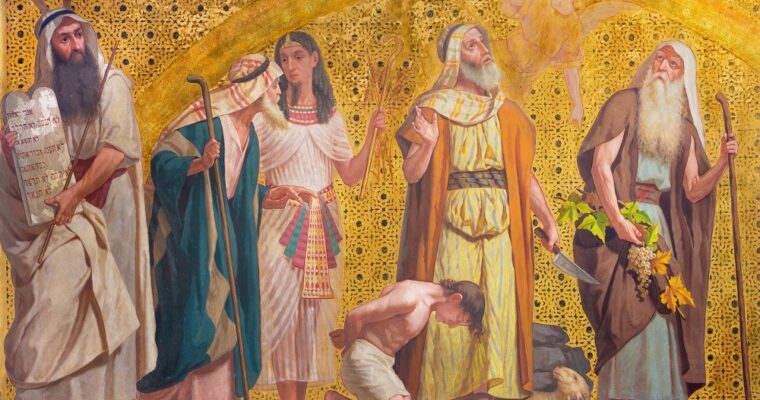
Contents1 Jesus starts from the history of the Jewish people2 Judaism and Christianity differences3 The value of numbers4 Jesus, Adam and the tree of life5 The Women in Jesus geneaology The lineage of Abraham, or the genealogy of Jesus, has a fundamental importance in the…

Our Lady of Medjugorje and the most significant places

Our Lady of Medjugorje and the most significant places

Our Lady of Medjugorje has rendered an otherwise anonymous village in Bosnia and Herzegovina unique and special. Let’s discover together the places of devotion that since 1981 attract thousands of faithful from all over the world.

We have spoken in other articles about Our Lady of Medjugorje and what has happened in this small village in the former Yugoslavia since the first miraculous apparitions took place on 24 June 1981. Ivanka Ivanković and Mirjana Dragičević, who were then fifteen and sixteen years of age, said that they had met, during a walk, a beautiful lady who floated standing on a cloud. Returning to the place of that prodigious encounter that evening, along with Vicka Ivanković, Ivanka’s cousin, they found the woman this time with a child in her arms. The group of young seers expanded in the following days, with the involvement of Marja Pavlović, Mirjana’s cousin, Jakov Čolo and Ivan Dragičević and from that moment began the daily talks between the group of six boys and the woman, whom they had identified without a shadow of a doubt with the Madonna.

Our Lady of Medjugorje, Lady of Peace

Read more:

Our Lady of Medjugorje: how Our Lady of Peace is represented
Our Lady of Medjugorje is also called Our Lady of Peace, because the message she entrusted…

This is known history, as the “five stones” are known, that is, the five passages that make up the path to Peace promised by Our Lady of Medjugorje, who for this very message is also called Lady of Peace:

But other aspects of this cult may be interesting. We speak of the places that were the scene of the apparitions, and that still today constitute the obligatory destinations for all those who go there to seek comfort and peace in Our Lady of Medjugorje.

Let’s find out together.

Krizevac: The Mount of the Cross

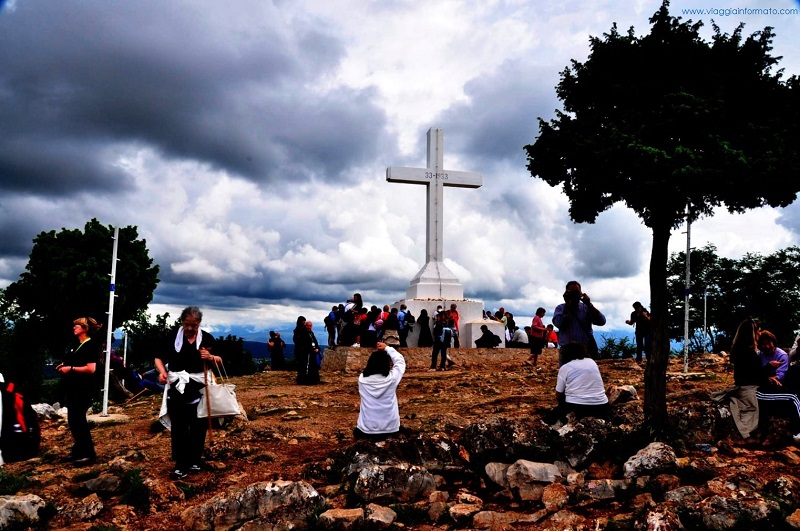
With 520 metres, this hill is the highest relief in the vicinity of Medjugorje. It is located about a kilometre south of the town, and its real name is Mount Sipovac. On its summit in 1934, an 8.56 m high reinforced concrete cross was erected, at the behest of the then parish priest, Father Bernardin Smoljan, who involved all his parishioners in the enterprise. The cross would have consecrated the parish to Christ the Redeemer of the world, protecting the inhabitants and the cultivation of vines and tobacco from the threat of hail, very frequent in this area.

The cross was assembled in less than a month on the spot after the material to build it was carried on the shoulders of the parishioners along an impervious path. For the occasion, Rome donated some relics of the Cross of Jesus that were placed at the crossroads of the arms.

Here are the words engraved on the Cross of Mount Krizevac: “To Jesus Christ, Redeemer of humanity as a sign of faith, love and hope, and in memory of the 1900th anniversary of the Passion of Christ.”

The Cross of Mount Krisevac has been the subject of miraculous events over the years. Some say that they have seen her disappear, turn on herself, or even transform into the silhouette of the Madonna.

The Virgin herself, in one of her messages to the Seers, would state that: “The Cross was also part of God’s plan when you built it.”

Every year, on the day of the Exaltation of the Cross at the foot of the monument, a solemn mass is celebrated.Exaltation of the Cross

On the occasion of the first anniversary of the death of Father Slavko, historian and beloved parish priest of Medjugorje, who passed away on 24/11/2000, the boys of the Cenacle Community, founded by Sister Elvira in 1983 in Saluzzo (CN) in Italy to offer help to drug addicts, placed on the top of Krisevac a huge boulder that bears a bronze relief depicting the parish priest, who died right on the top of the hill where he had just completed the rite of the Via Crucis, as every Friday, surrounded by pilgrims and parishioners.

The Podbrdo

The Podbrodo is nothing more than a barren hill scattered with red stones, once impractical except by flocks and wild animals. Located on the slopes of Mount Crnica, not far from the village of Bijacovici, the hometown of the six visionaries, it is located one and a half kilometres from the parish church of Saint James. What makes it so special is the fact that it is the place where the first apparitions of Our Lady of Medjugorje took place. For this reason today it is known as Apparition Hill and has become for all the faithful on pilgrimage to Medjugorje the place par excellence of meditation and personal dialogue with Our Lady.Podbrdo Medjugorje

The once impervious path has been transformed by the passage of the countless pilgrims who every day go to this place steeped in spirituality and suggestions, smoothing the roughness and making the climb much easier.

Along the path that climbs to the top of the Podbrdo, as we will see in the paragraph dedicated to the Paths of Medjugorje, are placed bronze reliefs representing the Mysteries of the Rosary.

At some point, we also come across a large wooden cross, where pilgrims stop to rest and meditate.

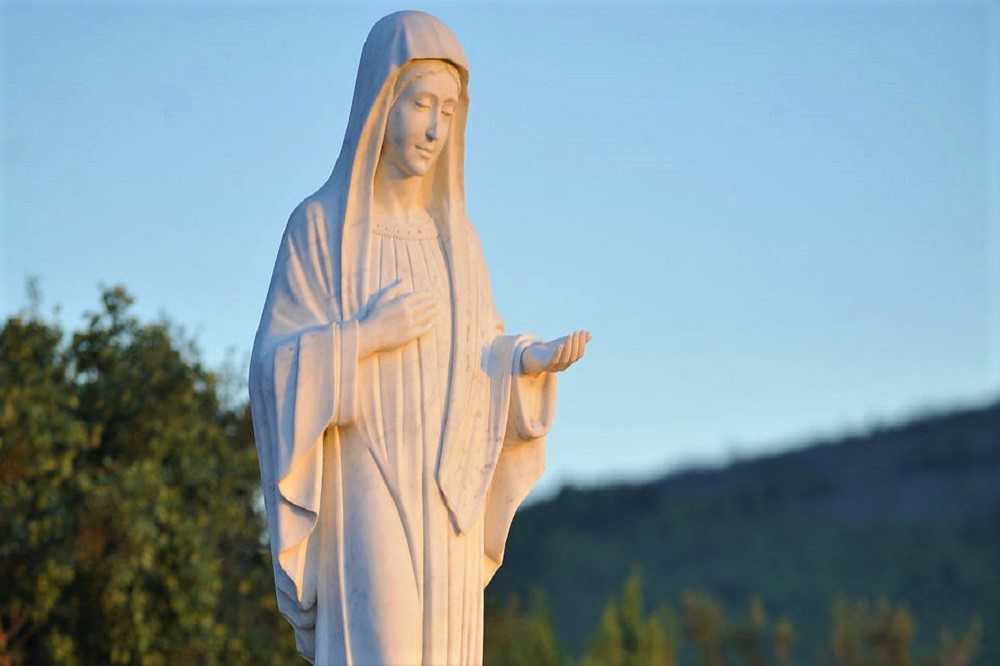
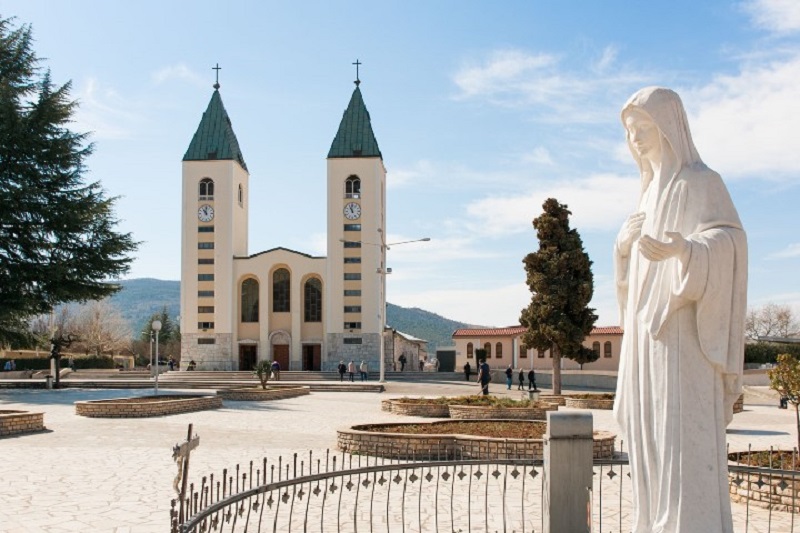
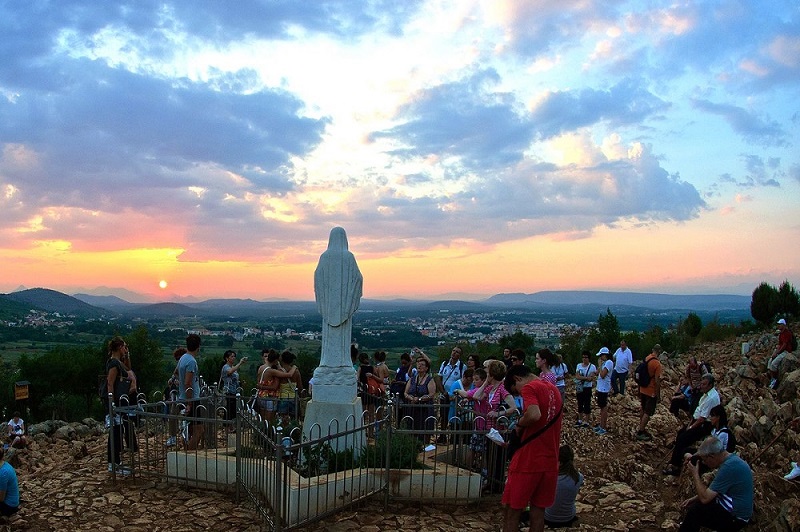
Going further there is the magnificent marble statue of the Virgin, the work of the Italian sculptor Dino Felici, gift of a Korean family for grace received. At the foot of the statue the words “I am the Queen of Peace 25/06/1981” recall the message in which Our Lady of Medjugorje presented herself as Queen of Peace. “I have come to tell the world that God exists and that in God there is life. Those who find God will find peace and life.”

This statue is another place of rest and meditation, where pilgrims stop to pray, each gathered in their inner dialogue with the Virgin, each looking for help, comfort, or just a little relief from the burden of life.

The Church of St. James in Medjugorje

St. James the Elder, the protector of pilgrims, is the patron saint of Medjugorje. The parish church is dedicated to him that today gathers not only the faithful of the area but all the pilgrims who come to Medjugorje to seek contact with Our Lady. The old church, built on a landslide in 1897, was replaced in 1969 by this one, very large compared to the number of parishioners at that time. As if the builders had a prophetic vision of what would happen in Medjugorje in a few years. What remains of the old Church stands in the park to the left of the Sanctuary.

In the square of the Church of San Giacomo, there is another statue of the Madonna always carved by Dino Felici, like the one on the Podbrdo.old Church Medjugorje

The Adoration Chapel, built in 1991 to the left of the church, welcomes all pilgrims who wish to gather in prayer and adoration of the Blessed Sacrament. The 25th of each month is also open all night for Silent Night Adoration. Every morning Holy Masses are celebrated here for the different language groups.

The Church of St. James has also been called the “confessional of the world” with its twenty-five confessionals where priests from every nation hear confessions in all languages of the world.

The church also has an external altar, equipped with 5,000 seats and used in summer for evening liturgical celebrations and large gatherings. At the back of the church a large hall was dedicated to John Paul II, which can hold up to 800 people, houses prayer meetings, the testimonies of seers and other solemn celebrations.

The Church of St. James is the centre of all spiritual activities in Medjugorje, from masses in all languages to blessings, to prayer meetings that take place every day according to a specific schedule.

The Paths of Medjugorje

The path that leads to Podbrdo

We have already mentioned the bronze reliefs along the path that leads to the top of Apparition Hill. Created in 1989 by the Italian sculptor Carmelo Puzzolo, they represent the joyful, painful and glorious mysteries of the Rosary. The friars of the shrine every Sunday at 2 p.m. lead the pilgrims in a community Rosary to the top of Apparition Hill.

The path that leads to Mount Krizevac

Even the path that goes up to the Cross of Mount Krisevac is marked by 14 wooden crosses next to which in 1987 bronze reliefs were placed, always the work of Carmelo Puzzolo, which represent the stations of the Via Crucis. On each relief is also engraved the face of the Virgin.

Every Friday afternoon the friars of the sanctuary lead the faithful along the Way of the Cross on the Mount of the Cross.

Doctors of the Church: who are they and what are the requirements for having this title

Doctors of the Church: who are they and what are the requirements for having this title

Contents1 Saint Therese of Lisieux2 The most famous Doctors of the church3 Pope Gregory I, the Great4 Saint Ambrose of Milan, Sweet as honey5 St. Augustine, Doctor Gratiae6 St. Jerome On 1 October we celebrate Saint Therese of Lisieux, one of the four women proclaimed…

The tombs of the popes and all there is to know

The tombs of the popes and all there is to know

Where are the tombs of the popes? Let’s find out where the popes have been buried for centuries and how their burial takes place Where are the popes buried? A trivial question, perhaps, but that contains a deep meaning, closely connected to the very nature…

The patron saints of Europe: the patron saint for country

The patron saints of Europe: the patron saint for country

Each country has its patron saint: in this article, you will discover all the patron saints of Europe!

Each unto its own, even for saints and countries. Knowing the history of Europe and the countries that make it up, one realises that many of the important changes and passages of European history are linked to certain saints. Many of these during and after their lives helped change not only the Church but also the world – in one of our articles we presented some of these characters. Europe and its states, throughout history, with the contribution of the popes and the people’s devotion, have been entrusted to the protection of some particular saints. These are the patron saints of Europe as a continent and of some of its member states.


saints

Read more:

The saints that changed the world
The history of Europe and of the Western world as we know them goes through many and constant political and social changes….

The patron saints of Europe

Europe as a continent is entrusted to different patrons. St. Benedict of Norcia is one of them, proclaimed patron of Europe by Pope Paul VI in 1964. St. Benedict made a crucial contribution to the development of Europe and many of its countries with the foundation of the Order of St. Benedict.

Together with Saint Benedict, among the patron saints of Europe, we find Saint Catherine of Siena, to whom Europe was entrusted in 1999 by Pope John Paul II.

Saint Bridget of Sweden is also one of the patron saints of the European continent. She was also proclaimed co-patroness of Europe in 1999 together with Saint Catherine.

The other patron saints of Europe are Cyril and Methodius, brother evangelists of the Slavic peoples, and Saint Teresa Benedict of the Cross (Edith Stein).

Patron saints of Italy: Saint Francis and Saint Catherine

The patron saints to whom Italy is entrusted are Saint Francis of Assisi and Saint Catherine of Siena. They were proclaimed patrons of Italy by Pope Pius XI in 1939. St. Francis was the protagonist of the great change in the Church and the lives of Italians thanks to his choice of service to the Church in poverty. In the historical period when he lived, the Church needed reform to make it more consistent with its teachings and close to the faithful: the vocation of St. Francis and his dedication to Christ brought a great renewal in the life of the Church.

Saint Catherine of Siena was a prominent woman in medieval society and contributed to the pontiff’s return to Rome after the Avignon captivity. She was summoned by Pope Urban VI, something not taken for granted for a woman at the time, and during her life, she became a recognised prominent position among scholars, politicians and prominent figures of European society.

Patron saints of France: Saint Joan of Arc

Thinking of France, one of the first names that come to mind is that of Joan of Arc, the flea of Orleans. Together with Maria SS. Assunta, St. Martin of Tours and St. Therese of Lisieux, she has been the patroness of the French state since the canonization of 1920. Saint Joan of Arc is famous for her feats in war. He helped to recover some of the French terroirs that England had conquered during the Hundred Years’ War and held high the banner of a Catholic state under God’s protection. She was captured by the British, tried, falsely accused of heresy and burned at the stake. The trial was declared null and void in 1456 by Pope Callistus III.

Patron saints of Germany: Saint Michael the Archangel

One of the patrons of Germany is St. Michael the Archangel. St. Michael, the warrior archangel, is a saint to whom many faithful are devoted. In one of our articles, we talked about the Sacred Line of St. Michael the Archangel: a straight line that connects seven shrines dedicated to St. Michael, mysteriously aligned perfectly. Several German churches are dedicated to St. Michael, such as those of Hamburg, Munich and Hildesheim.

Patron saints of Poland: Mary Most Holy Queen

Poland has several patron saints: Saint Casimir, Saint Cunegonde Queen, Saint Albert of Prague, Saint Stanislaus Bishop, Saint Stanislaus Kostka, Saint Andrew Bobola and Saint Florian. But the first protector of Poland, the most beloved and beloved figure of the Polish faithful is Mary Most Holy, Queen of Poland. The link between Poland and the figure of Mary is very ancient. Poland is a place where there are many representations of the Virgin, from icons to frescoes. St. John Paul II, the first Polish pope, also distinguished himself in the years of his pontificate by devotion to Mary.

Patron saints of Spain: Saint James

The patron saints of Spain are the Madonna del Pilar, the Immaculate Conception, Saint Teresa of Avila and of course Saint James. In Spanish, the equivalent of James is Santiago. The Camino de Santiago is one of the places that attract more pilgrims from the world to Spain.

Patron saints of Portugal: Saint Anthony of Padua

Portugal is attached to Mary Immaculate, St George, St Gabriel the Archangel, St Francis Borgia and St Anthony of Padua. For the latter, a great feast is celebrated in the Portuguese capital.

Saint Anthony of Padua

Read more:

Saint Anthony of Padua, the Saint of miracles
Saint Anthony of Padua was already one of his contemporaries master of Christian…

Patron saints of the United Kingdom: Saint George

The United Kingdom has different patron saints depending on the nation: St. David for Wales, St. Patrick for Northern Ireland, St. Andrew the Apostle and St. Columba for Scotland, Our Lady of Walsingham and St. George for England. St. George is a saint much loved in the English world, although many details of his history are not known. What is known is that he was a knight: he is often depicted on horseback, with a sword or spear, intent on destroying a dragon that represents evil and sin. If you want to know more about St. George and his legendary fight against the dragon, read the article we dedicated to him.

Drachentöter

Read more:

The story of St George who killed a dragon
The legend of Saint George and the dragon has become over time a parable of the struggle between good and evil…

Patron saints of Ireland: St. Patrick

Finally, how can we forget St. Patrick’s Day? Along with St. Bridget of Kildare and St. Columba, St. Patrick is the patron saint of Ireland. In his representations, he is often dressed in green, symbolic colour of Ireland. He was a bishop with a very important role in the catechesis of the Irish: often we remember the analogy of the clover, used to explain the mystery of the Holy Trinity, attributed to St. Patrick.

Saint Louis Gonzaga, patron saint of youths

Saint Louis Gonzaga, patron saint of youths

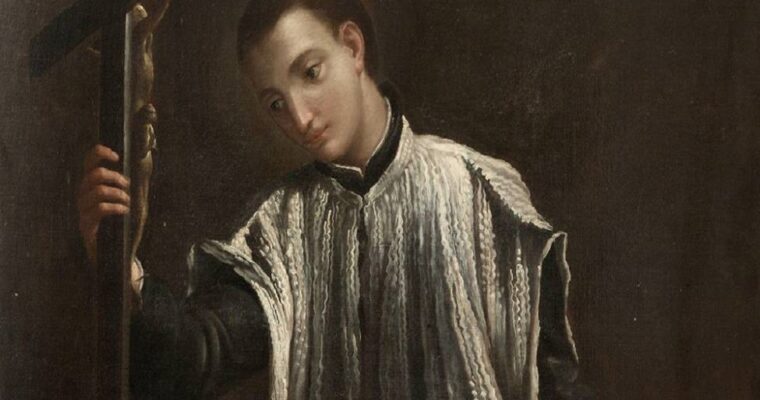
Contents1 The History of the Saint2 Patron Saint of Students3 Other young saints Saint Louis Gonzaga is one of those young people who, in the history of the Church, have dedicated their short lives to cultivating the virtues and caring for others. Young saints who…

The fragrance of the saints: for every saint, a flower!

The fragrance of the saints: for every saint, a flower!

Contents1 The month of May month of Our Lady2 The lily, the flower of Santa Caterina3 Spikenard, the flower of St. Joseph4 The lily, the flower of Saint Anthony5 The Hypericum, the Flower of St. John6 All the flowers of Saint Teresa7 The Rose of…

The flower of Saint Joseph is the nard: let’s find out together the reason why

The flower of Saint Joseph is the nard: let’s find out together the reason why

Saint Joseph, symbol of all the fathers. Pope Francis dedicated 2021 to him. But today we talk about an unusual aspect that concerns him: the flower of Saint Joseph

Many words have been spent in order to express the importance of Saint Joseph, the putative father of Jesus, patron and protector of the universal Church, and symbol of the workers. Today we dwell on a somewhat unusual attribute referred to this so-important saint. Perhaps not everyone knows that there is a flower of Saint Joseph and that same flower heads in the coat of arms of Pope Francis. It is a flower of nard.

But why was this flower, very beautiful and intense and sweet, attributed to Saint Joseph? And why did the Supreme Pontiff want it in his emblem, along with the tiara and crossed keys, symbols of papal power, the radiant sun that represents Jesus and the star symbol of the Virgin Mary?Pope Francis' shield

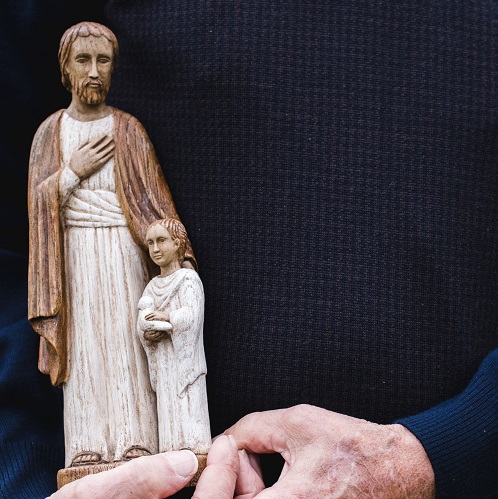
The particular devotion of Pope Francis to Saint Joseph is known to all. Not only does the Pope carry with him since the time of the seminary a statuette of Saint Joseph sleeping, to whom he claims to ask for advice through cards, but it was his decision to proclaim 2021 the year of Saint Joseph, through the Apostolic Letter Patris corde “With the heart of Father”. In this way, the Pontiff wanted to recognize the value of simple, humble people, who also spend every day helping others, just like this carpenter who dedicated his life to protecting his young wife and a child, not his.

spikenard
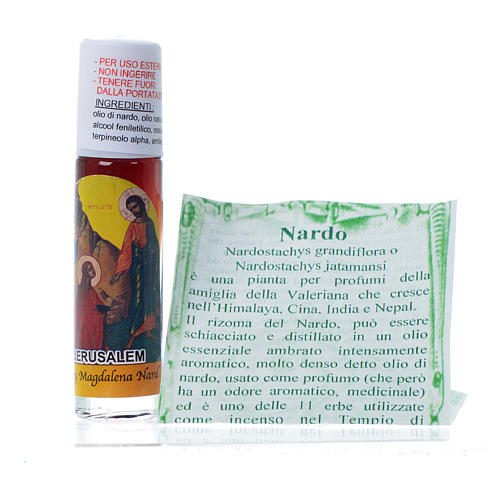
Transparent plexSpikenard, 10ml
Buy on Holyart
nardo oil
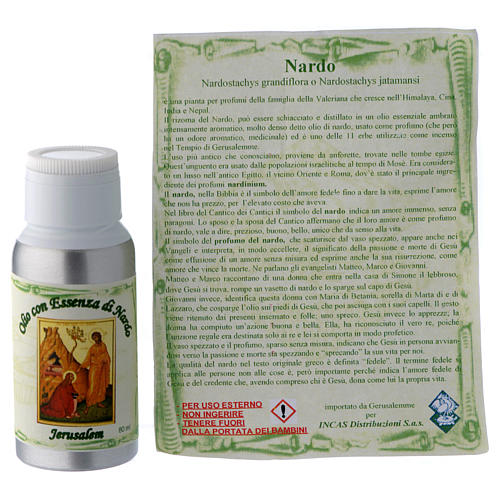
Spikenard oil 80 ml
Buy on Holyart
nard scented oil
Spikenard essential oil 35 ml
Buy on Holyart

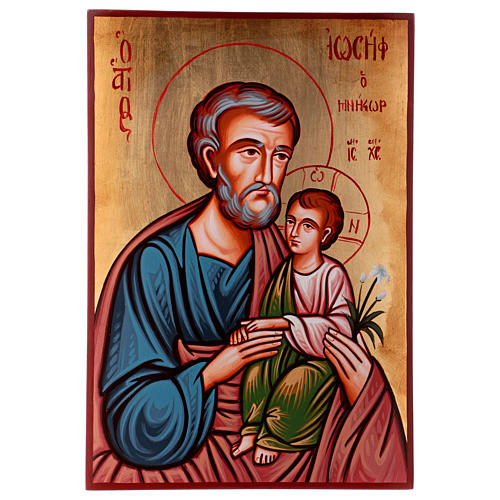
Returning to the flower of Saint Joseph, while in the most common iconography, Saint Joseph is often depicted with a stick from which blooming lilies, symbol of the purity of the Virgin, In the sacred iconography of Hispanic countries Saint Joseph is often depicted with a branch of nard in his hand. Nardo is a plant of the valerian family, native to the great highlands of Central Asia, but widespread in particular varieties in Mexico and Central America. Its flowers have the shape of white or pink spikes.  From these flowers is obtained a fragrant oil considered of great value since ancient times, used as incense: nard oil. It is obtained by crushing and distilling the content of the rhizome, the organ of accumulation of the plant’s nutrients, which allows it to survive for a long time even in hostile climatic conditions. Nard oil has always been used as a massage oil for its calming properties, but also for its antiseptic power. It calms the restless soul, lowers the pressure, promotes regular breathing, and for this reason, it is still widely used in aromatherapy, to perfume rooms and creates a pleasant and relaxing atmosphere.

This amber and extremely aromatic fluid obtained from spikenard has always been considered sacred, and often also occurs in the Bible, from the Song of Songs, as a symbol of boundless love, to the Gospels, as a symbol of divine love. It was used by a woman, perhaps Mary Magdalene, perhaps Mary of Bethany, to anoint Jesus’ head and feet. The precious oil cost the woman three hundred dinars, and for this, she was blamed when she unwittingly broke the jar that contained it, but in this episode, they wanted to read prophetic anticipation of the death of Christ, and in the precious oil poured the very symbol of His love, faithful love to the point of giving life, so immense to reach the ultimate sacrifice, so precious to spread at the very moment in which it is poured.

The Order of the Holy Sepulchre of Jerusalem is also inspired by this particular episode of the anointing of Jesus by the woman: as she anointed the members of the Saviour, the Order looks after and protects the Church, the Body of Christ. It is not by chance that nard oil has always been among the eleven herbs used for aromatic incense in the Temple of Jerusalem.

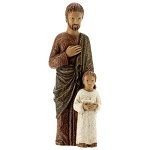
Statue Saint Joseph
Saint Joseph and Jesus
Buy on Holyart
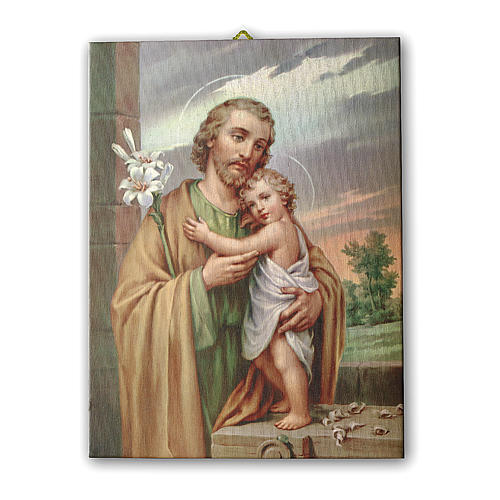
Saint Joseph canvas print
Saint Joseph print on canvas 25x20 cm
Buy on Holyart
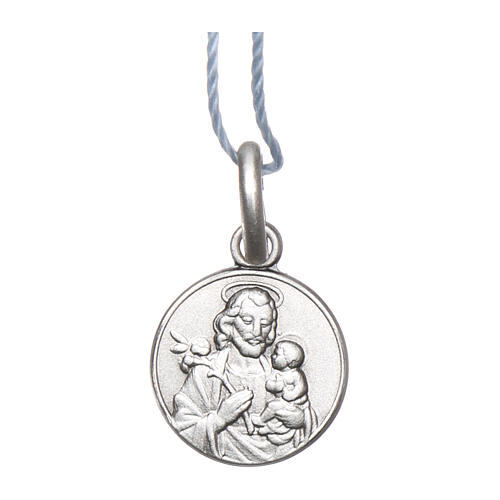
Rhodium plated medal with St. Joseph
Saint Joseph medal 925 sterling silver 0.39 in
Buy on Holyart
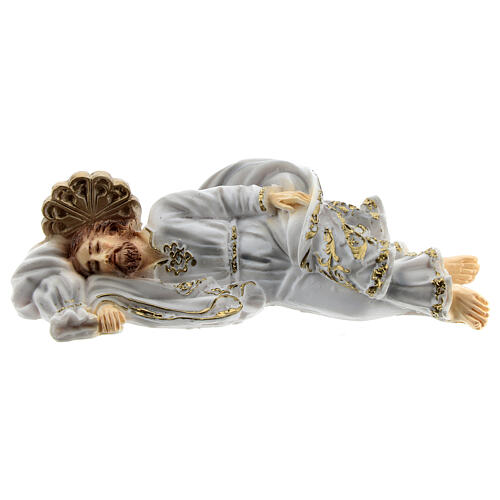
Sleeping Saint Joseph
Sleeping St Joseph statue white robes reconstituted marble 12 cm
Buy on Holyart
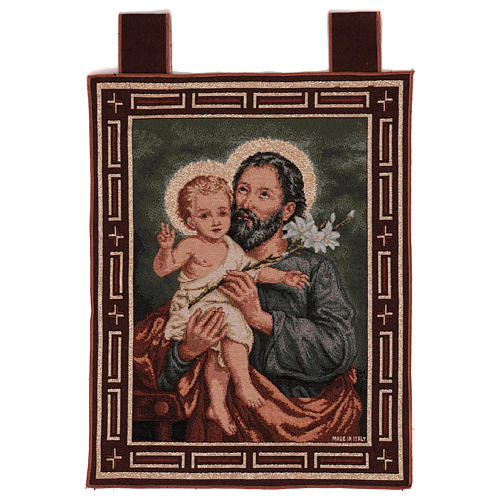
Saint Joseph with lily tapestry
Saint Joseph with lily wall tapestry with loops 18.7x15
Buy on Holyart
Icon of Saint Joseph and Baby Jesus
Buy on Holyart

What does the nard symbolize

The nard flower linked to the iconography of Saint Joseph is very different from what we see in the coat of arms of Pope Francis: the first, which occurs on holy cards and sacred images, is already in full bloom and very reminiscent of a lily, while the one on the Pope’s coat of arms looks more like a bunch of grapes. Perhaps the Pope wanted to express in this way not only his devotion to Saint Joseph but also his hope of something good yet to come, hope for the world that has yet to open, and blossom, just like a flower.

Moreover, the attribution of the nard to Saint Joseph is also linked to the time of the flowering of this flower. Saint Joseph is always represented with a flowered stick in his hand because, according to tradition, someone made fun of him discovering that Mary was pregnant but not at his own work, and challenged him: if he really had been an angel, his stick should have bloomed. And so it happened. According to another tradition, it was precisely the blossoming of the staff the miraculous sign with which Heaven indicated to the priests what should be the bachelor to choose as a spouse for Mary.

Gift Ideas for Father’s Day

Gift Ideas for Father’s Day

Here are some gift ideas for Father’s Day. Special thoughts for those who have a very difficult ‘job’… “Dear dads, best wishes on your day! Be for your children like Saint Joseph: guardians of their growth in age, wisdom and grace.” This message was tweeted…

On the occasion of Pentecost, pray Mary that unties the knots

On the occasion of Pentecost, pray Mary that unties the knots

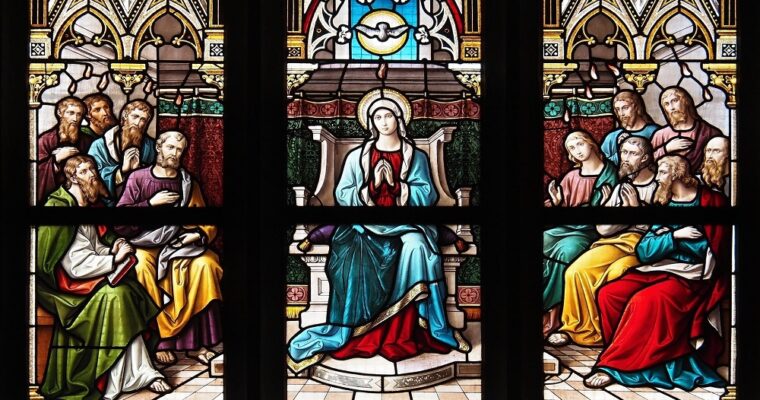
Contents1 The Origins and Meaning of Pentecost2 The Holy Spirit: What It Is and What It Represents3 Prayer to Mary who unties the knots while waiting for Pentecost4 What Mary’s knots symbolise 50 days after Easter, she will untie the knots and celebrate Pentecost, which…

Symbol of faith and courage: Joan of Arc, holy warrior

Symbol of faith and courage: Joan of Arc, holy warrior

Joan of Arc, also known as the Flea of Orléans is a French national heroine. Her figure inspired the devotion of her contemporaries, and her tragic end made her a saint still loved and venerated by the Catholic Church today.

What do we really know about Saint Joan of Arc? Let’s start by saying that it is rightfully among the ten Christian Women who changed the Church and the world. Remembered among the saints not only for her spiritual strength but also for having held the sword in the name of faith. And what’s even more surprising considering she was just a young woman.

Books have been written about her, films have been made about her, which have now brought to light one aspect of her controversial figure. Controversial, because today we know of her that she was a very young peasant woman called by God to sustain a test of courage and faith that many mature men and military navigated would not be able to carry forward. But in her time, when her brief and tragic human affair was consummated, everything and the opposite of everything was said about her. Beloved some a saint, she ended up being accused of witchcraft and, just nineteen, knew death at the stake.

Nevertheless, in 1909 Pope Pius X beatified her, but already before him Pope Callistus III in 1456 had declared null and void the process that had led to her death and had rehabilitated her. In 1920 Joan was proclaimed a saint by the will of Benedict XV and from 1922 is among other things patroness of France. Pope Emeritus Benedict XVI also expressed his interest in this young saint, in the general audience on 26 January 2011, and compared her to Saint Catherine of Siena, patroness of Italy.

How did an alleged witch become a saint? To understand this apparent contradiction we must immerse ourselves in the time and historical context in which Joan lived, fought and died. A time in which, more than in others, the human being knew how to rise to very high peaks of genius and artistic expression, and at the same time showed unsustainable barbarism and ferocity. Joan’s story is indeed only at the beginning of the Renaissance, but this contrast between spiritual, intellectual and artistic elevation, and cruelty, the little value of human life, was already well outlined.

Let us try to understand better the story of Joan of Arc, the holy warrior, “the Flea of Orléans”, as she was known to her contemporaries.

The story of Joan of Arc

We have mentioned the time when Saint Joan of Arc lived and died, a period between the end of the Middle Ages and the beginning of the Renaissance. In particular, a preponderant role in Joan’s life was played by the so-called Hundred Years’ War, a conflict that between 1337 and 1453 saw the Kingdom of England and the Kingdom of France opposed. To this, we add that the Western Schism between 1378 and 1417 had torn the Western Church with a clash between popes and antipopes for the control of the pontifical threshold.

It was in the setting of this long and terrible war that in 1412 Joan was born in Domrémy, in the north-east of France. Joan was born into a humble family of peasants. Ignorant and illiterate, she demonstrated a natural predisposition to help the poor and needy from an early age. Her childhood was characterised by charity, mercy and an aptitude for sacrifice.

At thirteen she began to say she was visited by Saint Michael the Archangel, Saint Catherine and Saint Margaret. These three beneficent presences spoke to them with heavenly voices, sometimes manifesting themselves with flashes and true visions.

When in 1429 the British, aided by their Burgundian allies, were about to conquer Orléans, a city of inestimable economic and strategic value to the French, rumours ordered Joan to leave the house of her parents and go to the aid of Charles Valois, Dauphin heir to the throne of France (he would later rise to the throne under the name of Charles VII).

Joan, who was seventeen years old at the time and about to be forced into marriage, convinced her parents of the importance of her mission and managed to get to meet first the captain of the Vaucouleurs stronghold, then, the latter convinced of his good faith, the Dolphin himself in the castle of Chinon.

Charles did not immediately trust this strange girl who claimed to have been sent by God to save France and her right to the throne.

He subjected her to many thorough investigations, conducted by distinguished theologians and high-ranking ecclesiastics, first at Chinon, then at Poitiers.

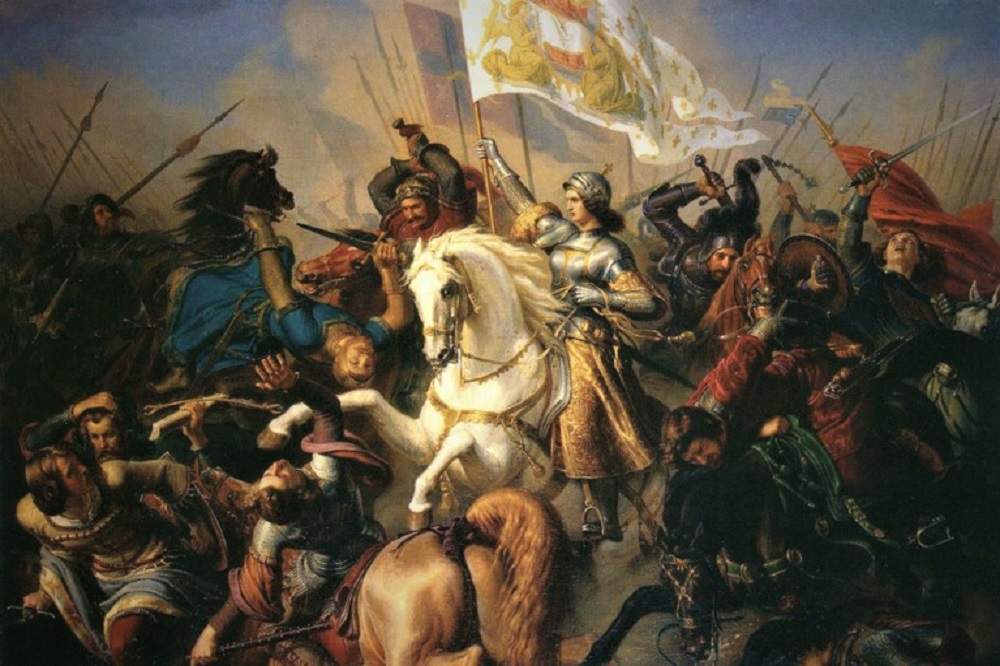
Finally convinced, Charles granted her the task of accompanying the military expedition departing for Orléans. Although she had not been given any military commission, Joan began to impose an almost monastic lifestyle on the soldiers, driving out prostitutes, prohibiting looting and violence and even blasphemy. She also decreed that they often confessed and that twice a day they would gather in common prayer at the foot of the white banner depicting God granting His blessing to the cornflower symbol of the French monarchy, with the archangels Michael and Gabriel at their sides.

Joan rode a white horse, wore armour and carried the sword at her side, like a soldier. Soon everyone, soldiers and civilians, began to call her “Jeanne la Pucelle”, Joan the Maid. In addition to the travelling soldiers, many volunteers joined her, inspired by her figure and fervour.

At Orléans, now exhausted by the long siege, John the Bastard was dealing with the surrender with Philip the Good, Duke of Burgundy and ally of the British. Joan came to the city carrying food and reinforcements for the exhausted troops.

Although the Bastard had warned her not to take military action, the same evening Joan took to the stands and, addressing the British troops, ordered them to surrender and leave, receiving in response only insults and threats. After days of fighting, during which Joan fought on the front lines, encouraging the French soldiers with her example, and receiving many wounds, the British were forced to retreat.

After the victory of Orléans Joan continued her march through France, bringing another resounding victory to Patay and thus paving the way for the consecration of King Charles VII at Reims.

Here begins the descending parable of Joan. Having won the war, at least for the time being, and brought ‘her’ King to the throne, she seems to have lost all reason to go on. However, she continued to oppose the British and Burgundians on French territory, ignoring the envy and growing hostility of the court towards her. The people who met her looked at her like a saint sent from heaven and asked for miracles.

It was at Margny on 23 May 1430 that she was finally captured by the Burgundians and, later, ceded for a conspicuous ransom to the British. Charles VII never attempted to free her, nor did he offer a ransom in turn, leaving her to her fate. The imprisonment in the hands of the British was very harsh, and in the end, Joan was brought to trial “strongly suspected of numerous crimes alluding to heresy”.

Trial and death at the stake

The trial of Joan of Arc was a farce from its earliest stages. The University of Paris, a depository of civil and ecclesiastical jurisprudence, was totally subservient to the English, who had already condemned Joan and wanted her dead. Her death would not only have freed them from a dangerous symbol much loved in France but would have discredited the authority of Charles VII.

She was tried for heresy by an inquisitorial tribunal, whose judgment Joan never accepted. She was convicted on false charges and forced to abjure. Even in prison, Joan continued to receive visits from her heavenly friends, who reassured her by exhorting her to accept her martyrdom.

She was burned alive in Rouen on 30 May 1431. She asked a priest to keep a cross high before the stake, so that she could die looking at Jesus Crucified, invoking His name.

Review of the judgment

Only after the French had completed the reconquest of all of France, in 1455, did Pope Callistus III order a review of the trial of Joan of Arc. The following year the trial was declared null and void and Joan was declared completely innocent on charges of heresy.

In 1909 Pope Pius X beatified her.

In 1920 she was canonised by Pope Benedict XV. Since 1922 Joan has been the patron saint of France.

Saint Joan of Arc like Saint Catherine of Siena

We have already mentioned how Pope Benedict XVI compared Joan of Arc to Saint Catherine of Siena, patroness of Italy and Europe. Both were young girls, and when they received their call, both were born from humble families and chose to serve God, not in the convent, but on the battlefield one, at the service of the poor and the sick the other.

In addition, both Joan of Arc and Catherine lived in a period of profound crisis for the Church, with the Schism of the West and the wars that ravaged Europe. While Joan struggled to bring Charles VII to the throne, Catherine pledged herself against the Anti-Papal League and tried to convince Pope Gregory XI to return to Rome from Avignon.

Of them, Pope Benedict says: “We could approach them (Joan of Arc and Catherine of Siena) to the Holy women who remained on Calvary, close to the crucified Jesus and Mary his Mother, while the Apostles had fled and Peter himself had denied him three times”.

Great women, who have made faith and service to God the ultimate goal of their lives and have not stopped even in the face of martyrdom, in the case of Joan, and suffering in that of Catherine.