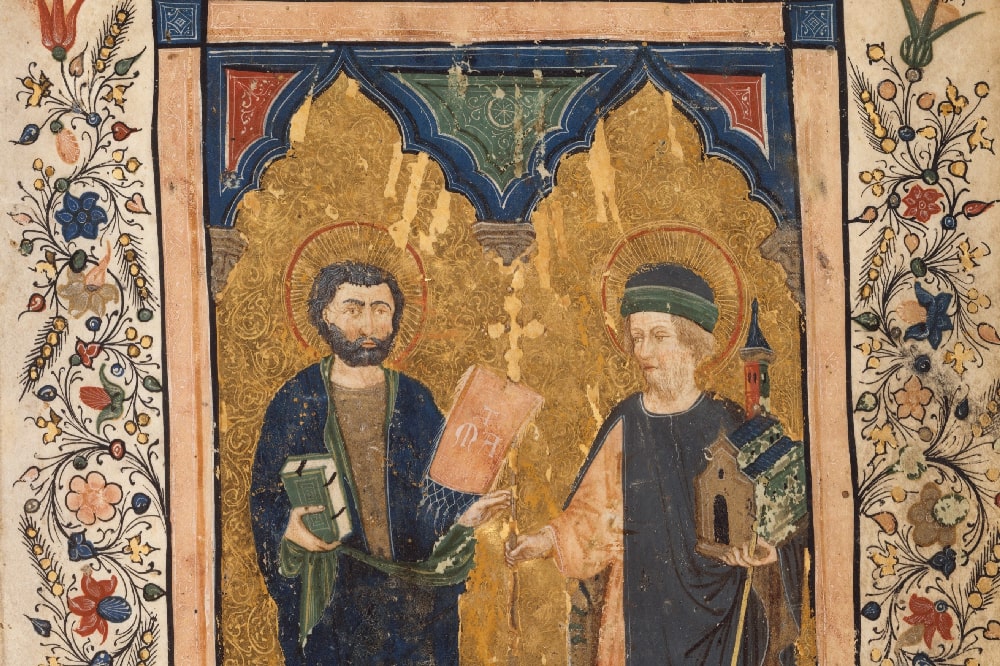
Saint Cecilia, patron saint of music, was a Christian virgin and martyr who was killed for her faith. Here is how her special connection with music and musicians came about
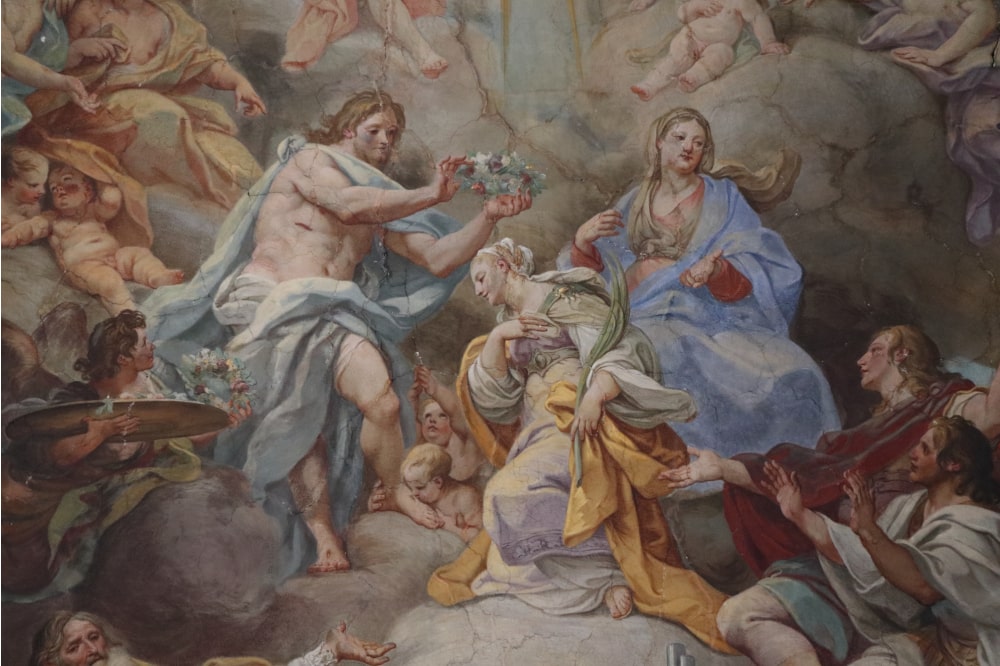
22 November marks the liturgical memorial of Saint Cecilia, Christian virgin and martyr, patron saint of music and protector of composers, musicians, singers and poets. This figure is venerated in Christianity for her profound connection with music, religious devotion, and the mystical ecstasy of which she is said to have been the protagonist. According to tradition, Cecilia was herself a musician, and sang praises to God on the day of her wedding to the young Valerian, who was her companion in life, faith and martyrdom, and according to certain legends she even sang among the instruments of torture with which her executioners attempted to force her to renounce her faith. It matters little whether her connection with music and her particular patronage derive from an incorrect interpretation of the Passio Sanctae Caeciliae, the Medieval document that tells her story. Today, 22 November is celebrated throughout the world not only with solemn Masses, but with concerts and musical events. In Rome, the Accademia di Santa Cecilia, one of the oldest musical institutions in the world, bears the Saint’s name. In many masterpieces in the history of art, Saint Cecilia is depicted playing a portable organ, as in Raphael’s famous The Ecstasy of Saint Cecilia.
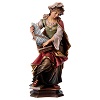
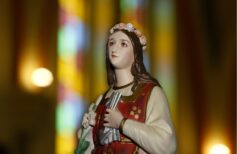
The statue is wood painted and made in Val Gardena, Italy.
Let us discover a little more about this young Saint who is so dear to musicians.
The story of Saint Cecilia
According to tradition, Cecilia was a young woman belonging to the Roman aristocracy. She lived in Rome in the 3rd century AD, during the terrible persecutions against Christians promoted by Decius, Valerian and Diocletian. Secretly a Christian, despite having consecrated her virtue to God, she was betrothed to the young patrician Valerian. Initially troubled by his bride’s devotion, Valerian was later won over by her faith and also converted to Christianity, along with his brother Tiburtius. Together, the young men prayed and gave proper burial to the bodies of Christians who were killed and could not be buried because of an imperial prohibition. Precisely because of this activity, Valerian and Tiburtius were arrested, subjected to atrocious tortures and finally beheaded.
Cecilia was arrested shortly afterwards, while praying at the tomb of her husband and brother-in-law. Tortured in turn, she did not renounce her faith and was sentenced to death. According to legend, her executioners first attempted to burn her, then to suffocate her, and finally, because she continued to escape death, the executioner struck her three times on the back of the neck to behead her, but Saint Cecilia still did not die. Her agony lasted three days and she finally died comforted by Urban I, her spiritual father, who laid her remains in the Catacombs of San Callisto, among the remains of the first Bishops of Rome.
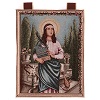
Jacquard woven tapestry finished by hand and entirely made in Italy.
Why is Saint Cecilia the patron saint of music?
The connection between Saint Cecilia and music is a central part of her story. Cecilia is said to have been an extraordinary musician and to have sung in her heart during her wedding to Valerian, despite her fear of the imminent persecution. This connection between music and religious devotion lies at the heart of her association with and patronage of music.
Another important part of her legend concerns the ecstasy of Saint Cecilia. During her imprisonment, and indeed at other moments in her short life, Cecilia is said to have experienced a mystical ecstasy while immersed in deep prayer. In these visions, she heard angels playing heavenly music. The famous painting created by Raphael for the Church of San Giovanni in Monte in Bologna, entitled The Ecstasy of Saint Cecilia, represents precisely this profound connection between the Saint and God through music. Saint Cecilia is depicted holding a small portable organ, while engaged in a sacred conversation with Saint Paul, Saint John, Saint Augustine and Mary Magdalene. At her feet lie many broken and damaged musical instruments, but the Saint’s dark eyes are turned towards Heaven, where an angelic choir is singing. It is precisely this distinction between the broken instruments, symbolising earthly and human music, connected to passions and by its nature transient, and the perfection of heavenly, eternal and spiritual music, that expresses the profound symbolic connection between the Saint and music. More recent studies have sought to see in the painting a contrast between vocal and instrumental music, the latter having long been considered inferior by the Fathers of the Church.
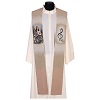
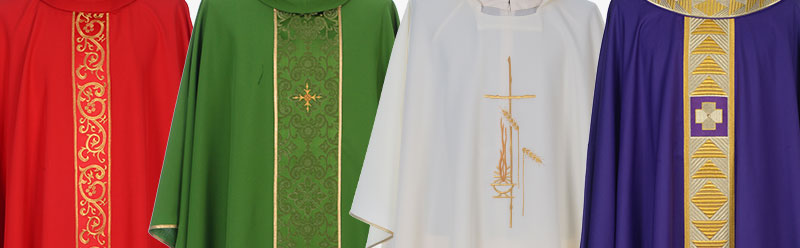
Priest stole dedicated to Saint Cecilia, embroidered like a painting on one side of the vestment and her symbols.
As we have mentioned, the medieval tradition linking Saint Cecilia to music is probably the result of an incorrect interpretation of an antiphon dedicated to her, which in Latin reads: Cantantibus organis, Cecilia virgo in corde suo soli Domino decantabat dicens: fiat Domine cor meum et corpus meum inmaculatum ut non confundar. The text was translated as “While the musical instruments were playing, the virgin Cecilia sang in her heart only for the Lord, saying: Lord, may my heart and my body be immaculate so that I may not be put to shame”. At first it was thought that the musical instruments were those played during her wedding to Valerian, symbols of secular, pagan music.
Later, it was thought that Cecilia did indeed sing praises to God at her own wedding, accompanying herself on a small organ, and a further tradition held that the musical instruments were actually the instruments of torture, and that the antiphon did not describe the wedding, but the martyrdom of Saint Cecilia, which the young woman would have faced while singing.
The Holy Martyrs are men and women, often very young, who sacrificed their lives for the love of God, and for this reason…
Saint Cecilia in Trastevere
The cult of Saint Cecilia is very ancient, and her memorial was already being celebrated in 545 AD.
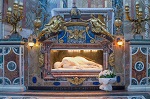
In Rome, where her house is said once to have stood, the Church of Santa Cecilia in Trastevere was built, where her relics were transferred in 821 AD and where celebrations and concerts in honour of the patron saint of music take place every year on the occasion of Saint Cecilia’s feast day. During restoration work at the end of the 1500s, the Saint’s body was found in her sarcophagus, incorrupt and enveloped in the scent of lilies and roses.
Monotheistic religions, such as Islam and Christianity, are founded on the worship of a single God and on divine revelation...
What’s the Future of Religion?
What’s the Future of Religion?
A Beginner’s Guide to Christianity
A Beginner’s Guide to Christianity
Mind-Blowing Statistics About Christianity You Need to Know
Mind-Blowing Statistics About Christianity You Need to Know
8797
Enter the Holyart world: $20 discount voucher valid on over 60,000 items
Come and discover Holyart, the largest e-commerce of religious articles in Europe and immediately receive a $20 voucher to use with your first purchase.
Check your mailbox: you will receive your discount within 5 minutes






 2 November 2026