Homepage | Religion | The Wedding of Cana: explanation, miracle and message
The Wedding of Cana: explanation, miracle and message
23 July 2025
Reading Time: 5minutes
The Wedding of Cana tells the story of the first miracle performed by Jesus. Let us see what message this story hides
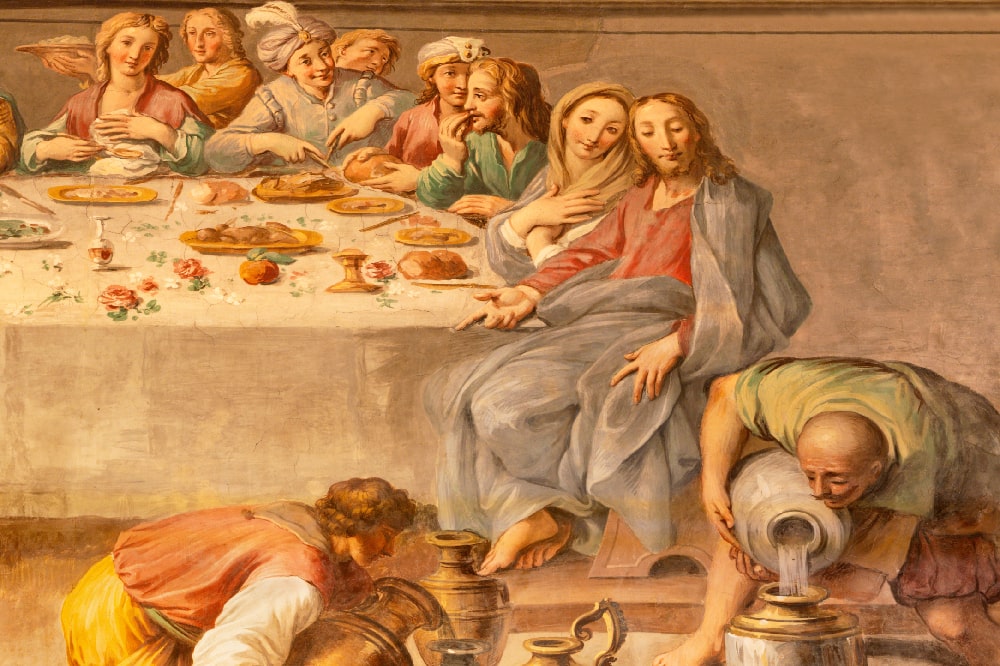
The evangelist John tells us in his Gospel about the first miracle that Jesus would perform. Known as the miracle of the Wedding at Cana, it would be more appropriate to call it The Turning of Water into Wine. We all know the story, told in John 2,1-12: Jesus had taken part with some disciples and his mother Mary at a wedding feast at Cana of Galilee, And when the wine was finished, he had six vessels filled with water brought in, and turned it into wine.
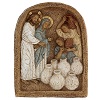
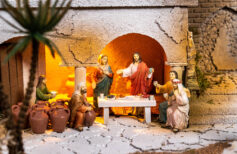
Wedding in Cana Basrelief, Bethléem monastery. Basrelief in Pyrenean stone depicting the scene…
Miracle of the Wedding at Cana
“In those days there was a wedding feast at Cana of Galilee and the mother of Jesus was present. Jesus and his disciples were also invited to the wedding. When the wine ran out, Jesus’ mother said to him: «They have no wine». And Jesus answered her: «Woman, what do you want from me? My hour has not yet come». His mother said to the servants: «Whatever he tells you, do it». There were six stone amphorae for the ritual purification of the Jews, each containing from eighty to one hundred and twenty litres. And Jesus said to them, «Fill the amphoras with water»; and they filled them up to the edge. He said to them again, «Now take some and bring it to the one who directs the banquet». And they brought it to him. As he tasted the water turned wine, the one who was leading the banquet – who did not know where it came from, but the servants who had taken the water knew it – called the groom and said: Everyone puts the good wine on the table at the beginning and, when you have already drunk a lot, the less good one. You have kept the good wine until now.»” (Jn 2,1-12)
The symbologies and doctrinal messages hidden in this simple story are many and different, so much so that for centuries the story of the Cana wedding has been the subject of dissertations by theologians and religious.
To begin with, the presence of Jesus at a wedding banquet has been interpreted by many as the moment of the institution of the Sacrament of Matrimony, For his presence that day and place would sanctify the union between the bridegroom and bride in the sight of God.
Wedding: in this department there is a selection of articles dedicated to the Wedding sacrament…
Another very important aspect of this Gospel episode is the role played by the Virgin Mary in it. Mary intercedes with her Son, pointing out that the diners have finished their wine, and in this way, she becomes the bearer of a silent plea from men towards Jesus. For the first time, Our Lady stops being only a mother, but she becomes the spokesman of humanity to her Son, and instructs those present to follow her word, abandoning herself to it in full confidence: “Do what he will tell you.”
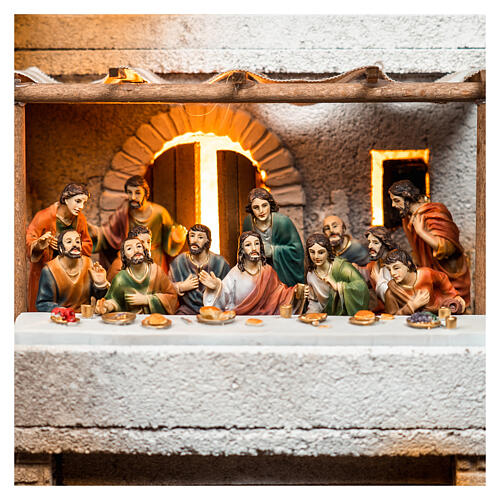
Mary’s presence at the miracle of the Wedding at Cana has an even deeper meaning. It is the first of the so-called Seven Signs, the seven miracles that in the Gospel of John tell the path taken by Jesus to show the disciples His powers and what it is intended for, before arriving at the Last Supper, to the Passion and death. Reading the Scriptures, it is easy to see that there are more occasions when Jesus uses his power to heal, heal and deliver from the devil. John chooses to tell seven episodes:
At the first of these signs is present the Mother of Jesus, and he seems to distance himself, when she turns to him for help, he almost seems to treat her badly. “Woman, what do you want from me in this? My hour has not yet come”. But Our Lady does not let these words fool her and she repeats to the servants: “Do whatever he tells you” (Jn 2:3-5). Mary knows that her Son is special, that he is destined for great things. And Jesus knows that it is time for him to break away from his mother in order to embrace the destiny that God has in store for him. The fact that he is there with the disciples on that day is already significant that his mission has begun. The disciples are his new family, who will accompany him to his destiny and final sacrifice. At the Wedding of Cana, Jesus offered himself for the first time in the name of the Covenant between God and men which He came to renew.
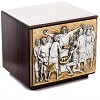
Altar Tabernacle with Resurrection in wood and two tone cast brass. The door of this tabernacle…
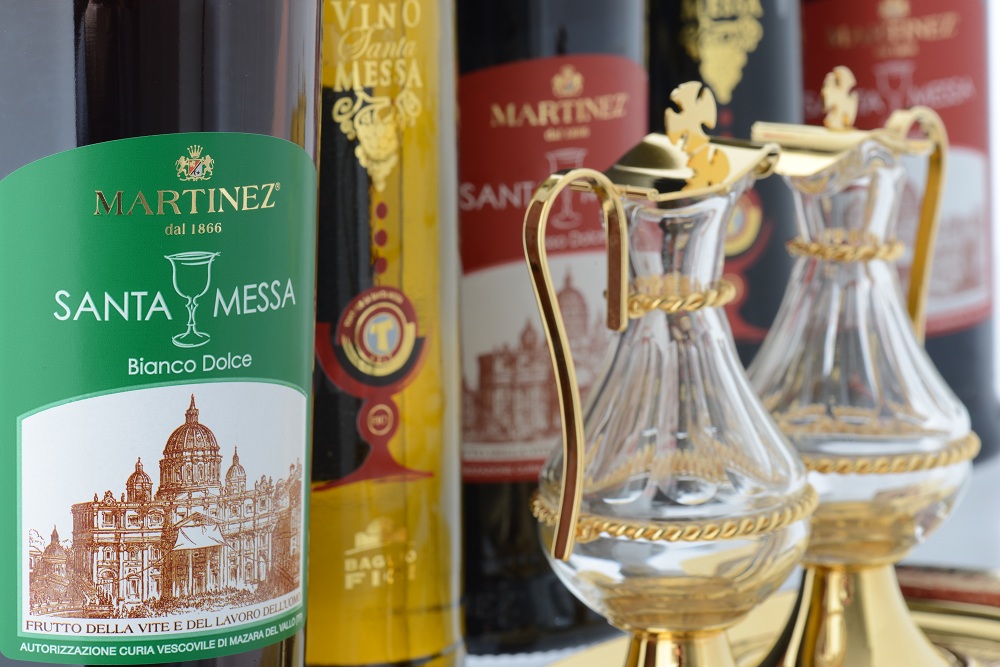
Finally, we must consider the symbolism linked to wine, which for the Jews was a very important element, a symbol of joy and sacredness at one time, elements that can not be missing in a wedding. Not only that, Jesus transforms into wine the water destined for ritual purification, not ordinary water, and turns it into an excellent wine, the best.
Painting of the Wedding at Cana by Veronese
Wedding of Cana – Veronese
The Wedding of Cana has inspired many artists over the centuries. We mention here the eponymous painting made by Veronese in 1563 and kept today at the Louvre in Paris. It represents the episode of the transformation of water into wine, with a scene rich in details and in an environment that mixes elements related to the time of the facts and other contemporaries to the artist. The guests at the banquet wear late Renaissance clothes with bright colours, there are musicians engaged in playing modern instruments, and many of the characters are portrayed with the features of famous historical figures, as well as the artist himself.
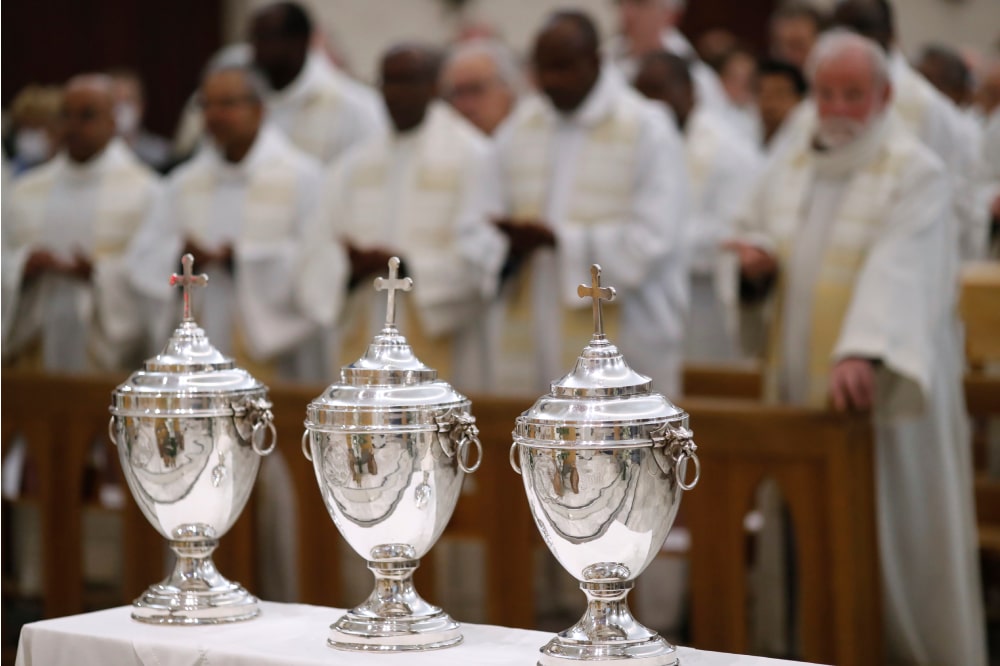
The chrism mass celebrates the mystery of the church, its unity and communion while waiting for Easter. It is also...
What’s the Future of Religion?
What’s the Future of Religion?
A Beginner’s Guide to Christianity
A Beginner’s Guide to Christianity
Mind-Blowing Statistics About Christianity You Need to Know
Mind-Blowing Statistics About Christianity You Need to Know
6683
Enter the Holyart world: $20 discount voucher valid on over 60,000 items
Come and discover Holyart, the largest e-commerce of religious articles in Europe and immediately receive a $20 voucher to use with your first purchase.
Check your mailbox: you will receive your discount within 5 minutes





 4 March 2026