To understand the importance that Catholic Christians attribute to the Most Holy Name of Jesus, it is enough to think about how his disciples and followers chose to call themselves: Christians. The very identity of the person and the community to which they belong is expressed with this attribute, which derives its root from Jesus Christ.
Let us also think about the sign of the Cross, by which the name of the Father, the Son, and the Holy Spirit is invoked. In this simple and powerful sign, in this invocation to the Most Holy Trinity, the Creed of every Christian is summarised: their will to dedicate every breath, every action, every day of their earthly existence to the Name of that Father, that Son, and that Holy Spirit, who are three and one, in the first Mystery of Faith.
We must bear in mind that in ancient times, names had an intrinsic meaning, which expressed the essence of the one who bore them, their mission, their destiny, but also a dynamic content, a kind of intimate power that, if known, could allow one to understand the thing or person to whom it belonged. “Whoever knows the name, knows the things too,” said the Greek philosopher Plato. To know the name of something means to know the thing itself, and thus knowing the name of a man allows one to grasp his essence, to place him in a correct and defined dimension. It is no coincidence that for the ancients, it was essential to know the name of a person in order to direct a spell upon them.
The Jews also gave children names that, through composition and etymology, had the power to place the newborn under the protection of God (Theophoric names, like Isaiah, “Yahweh saves,” or Joshua, “Yahweh is salvation”), or alternatively, names that expressed an event or condition linked to the child’s birth, such as Ben-Oni, the son of Rachel, whose name means “son of my sorrow.” So it was also for Jesus, as we shall see.
Devotion to the Holy Name of Jesus belongs to the Church even before the name could be spoken. Let us recall how the first Christians referred to Jesus Christ with the acronym ichthys, the transliteration in Latin characters of the Greek word ἰχθύς, ichthýs, meaning fish, and used the symbol of the fish to identify Him. This appellation came from the Gospel, and it was Peter who first used it when Jesus entrusted him with His Church:
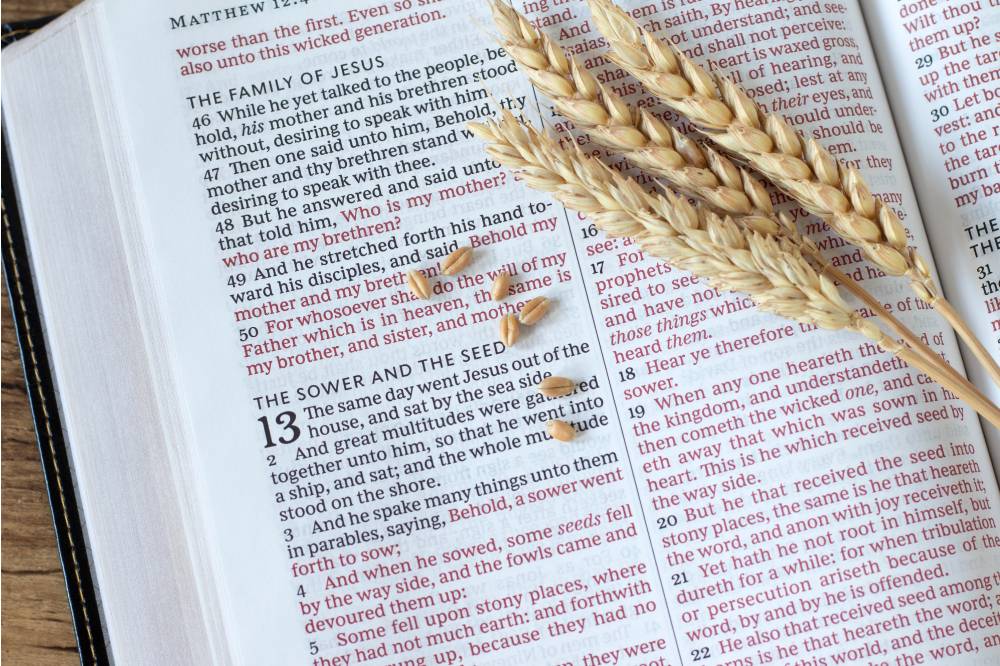
“Now when Jesus came into the district of Caesarea Philippi, he asked his disciples, ‘Who do people say that the Son of Man is?’ And they said, ‘Some say John the Baptist, others say Elijah, and others Jeremiah or one of the prophets.’ He said to them, ‘But who do you say that I am?’ Simon Peter replied, ‘You are the Christ, the Son of the living God.’ And Jesus answered him, ‘Blessed are you, Simon Bar-Jonah! For flesh and blood has not revealed this to you, but my Father who is in heaven. And I tell you, you are Peter, and on this rock I will build my church, and the gates of hell shall not prevail against it.'” (Matthew 16:13-18)
The acronym ichthys indeed stands for Iesùs CHristòs THeù HYiòs Sotèr, Jesus Christ, Son of God, Saviour.
The Most Holy Name of Jesus: the meaning of the worship
It was between the 14th and 15th centuries that devotion to the Most Holy Name of Jesus was consecrated, thanks to Saint Bernardino of Siena, a theologian and Franciscan preacher, who created the trigram with the letters IHS on a blue background surrounded by a sun with 12 rays. Later, Pope Clement VII recognised the cult (1530) and entrusted the Franciscan Order with the task of reciting the Office of the Most Holy Name of Jesus.
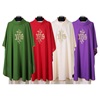
The Catholic chasuble is made of polyester, a robust and durable fabric.
The Roman Calendar initially set the liturgical memorial of the Most Holy Name of Jesus on the second Sunday after Epiphany, and later on the Sunday between 2 and 5 January. Removed from the calendar in 1969, the celebration was reinstated at the will of John Paul II and set for 3 January as an optional memorial.
In the Roman Martyrology, the feast of the Name of Jesus is defined by some lines from the Letter to the Philippians: “The Most Holy Name of Jesus, at which every knee should bow, in heaven, on earth, and under the earth, to the glory of the divine majesty.” (Philippians 2:9-11) This phrase encapsulates very well the power of the name of Jesus, before which all must kneel in respect and devotion.
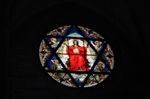
For both the Jewish and Christian religions, the name of God is Yhwh. It was with this name that He revealed Himself to Moses in the Old Testament (Exodus 3:14), and this name, known as the tetragrammaton, because composed of the four Hebrew letters יהוה (yod, he, waw, he), was used in the Hebrew Bible, the Tanakh, which for Christians is the Old Testament. In the Bible and Jewish tradition, other appellations are used to refer to God, but the tetragrammaton is used some 6,800 times. For the Jews, it was too sacred to be pronounced, and the exact transliteration has been lost over time. To invoke God in prayers, Halakhah (Jewish Law) prescribes the use of Adonai, or alternatively, the impersonal form HaShem, the Name, or hakadosh baruch hu, the Blessed Holy One. There are other names that the Jews used to invoke or refer to God, such as Elohim, the plural form of Eloah, meaning the God of Abraham, the God of Isaac, the God of Jacob. In the Ten Commandments, the phrase “yihyeh lecha elohim acherim al panay” means “You shall have no other gods before me.”
For scholars, the most accurate meaning of Yhwh is “He who brings into existence what exists,” and we see how, by crediting this tradition, the name of God coincides with His work and His will.
The name of Jesus
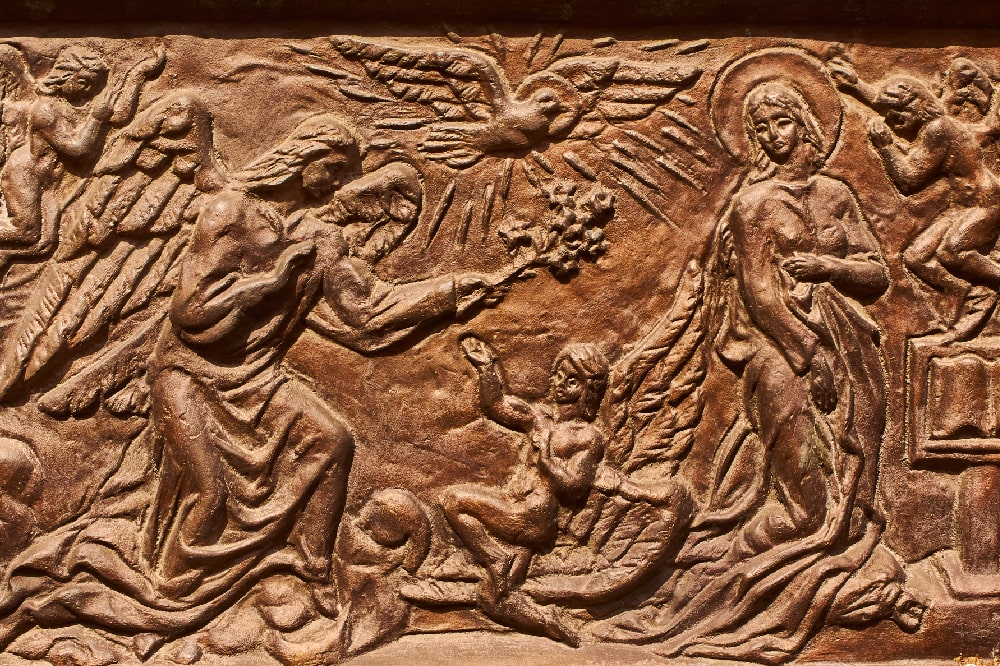
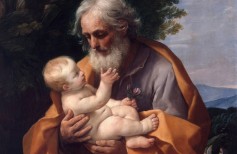
Let us now focus on the meaning of the name of Jesus. It was the angel of God who suggested to Saint Joseph the name he should give to the child who would be born from the womb of Mary, his wife. A child conceived by the Holy Spirit and made of the same substance as the Father, in a virgin maiden conceived without sin. “Joseph, son of David, do not fear to take Mary as your wife, for that which is conceived in her is of the Holy Spirit. She will bear a son, and you shall call his name Jesus, for he will save his people from their sins.” (Matthew 1:21-25)
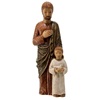
Marvellous statue of saint Joseph in pyrenian stone.
The name Jesus derives from the Aramaic name יֵשׁוּעַ, Yeshua, later Italianised as Joshua. Its meaning is: “YHWH is salvation” or “YHWH saves”: God saves. Thus, we see that even in the name chosen by the Angel for Jesus, His mission is summarised, the reason for His coming among men. He comes to save, to be the instrument and sacrifice in the name of the Father and for all men.
“In no one else is there salvation; for there is no other name under heaven given among men by which we must be saved,” we read in the Acts of the Apostles (Acts 4:12), and it is extraordinary to think that Jesus was born and immediately defined by a divine name, which was not that of God, but nevertheless indicated a characteristic of God, His very will. For this reason, from the very beginning, the name of Jesus becomes an invocation and a source of salvation, both for those who wish to be freed from sins and for those who suffer bodily pain and afflictions. Only in His holy name can men long for Eternal Life.
According to the Gospel of Matthew, Jesus is also called Emmanuel, God-with-us, the Son of the living God.
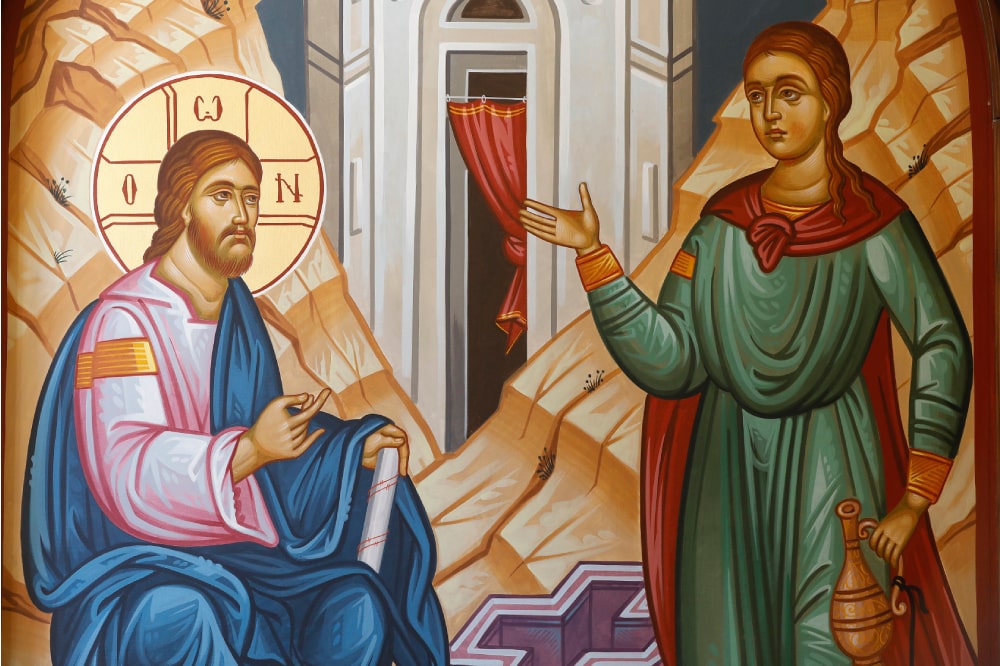
With the meeting with the Samaritan woman at the well, Jesus reveals his identity as Messiah and speaks revolutionary words,...
What’s the Future of Religion?
What’s the Future of Religion?
A Beginner’s Guide to Christianity
A Beginner’s Guide to Christianity
Mind-Blowing Statistics About Christianity You Need to Know
Mind-Blowing Statistics About Christianity You Need to Know
7715
Enter the Holyart world: $20 discount voucher valid on over 60,000 items
Come and discover Holyart, the largest e-commerce of religious articles in Europe and immediately receive a $20 voucher to use with your first purchase.
Check your mailbox: you will receive your discount within 5 minutes







 8 April 2026