Homepage | Religion | Our Lady of the Snow and the miracle of 5 August
Our Lady of the Snow and the miracle of 5 August
4 August 2025
Reading Time: 5minutes
On 5 August in Rome, Our Lady of the Snow is commemorated, marked by a spectacular snowfall on the square of the Papal Basilica of Santa Maria Maggiore, dedicated to her. This is how the cult was born
Our Lady of the Snow and the miracle of 5 August are an integral part of Rome’s religious history. Since August 5, 358 AD, a miraculous snowfall blanketed the Esquiline hill, decreeing the place where the Papal Basilica of Santa Maria Maggiore, the oldest Marian sanctuary in the West, would have stood, this day represents a significant appointment in the liturgical calendar, which combines history, faith and tradition in a unique and evocative event. The festival of Our Lady of the Snow is not only an opportunity to remember the miracle, but also a moment of spiritual reflection for the faithful, on the role of the Virgin Mary as a mediator of divine Grace, a symbol of purity and renewal, just like the snow from which she took the Marian title of Our Lady of the Snow, precisely.
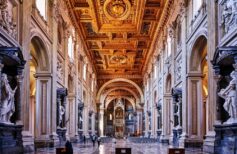
According to legend, Our Lady appeared in a dream on the night between 4 and 5 August 364 to Pope Liberius (352-366), or, according to another tradition, to the Roman patrician John, who would then report the dream to the Pope. In both cases, the Virgin asked that a Basilica be erected in her name and announced that, to indicate the exact place, she would send snow. That night, a miraculous snowfall occurred on the Esquiline Hill. Here, the Liberian Basilica was first built, on the remains of which Sixtus III had the Basilica of Santa Maria Maggiore, dedicated to the Virgin, erected. With its imposing architecture and artistic treasures, the Basilica underwent various restoration interventions over the centuries, becoming enriched with works of art. Even today, it remains one of the most important symbols of Marian faith and devotion worldwide.
Read more:
The 10 Most Famous Marian Shrines in Italy
Marian Shrines have always been places where devotion to the Virgin, Mother of Jesus, is concentrated. Between history and traditions…
When is Our Lady of the Snow celebrated?
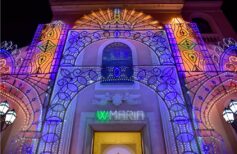
Our Lady of the Snow is therefore celebrated on 5 August to commemorate the famous miracle of the snowfall on the Esquiline. Every year, on August 5, the festival of Our Lady of the Snow is celebrated with a solemn Mass in honour of the Virgin Mary. This anniversary, which commemorates the miracle of snow, attracts tourists from all over the world. In the square in front of the Basilica of Santa Maria Maggiore, a show of sounds and lights is organised, followed by an artificial snowfall that recalls the miraculous one that occurred in 358 AD. In ancient times, white rose petals were used as a symbol of snowflakes.
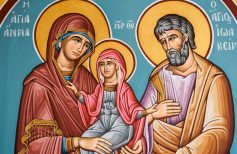
According to some traditions, 5 August is also remembered as the birthday of Our Lady. The Nativity of the Virgin is officially celebrated on 8 September, although this date is purely conventional, since there are no precise indications on the date of Mary’s birth. The choice of 8 September coincides with the dedication feast of St. Anne’s Basilica in Jerusalem, built in the fourth century AD on the site where Mary’s parents’ house is believed to have stood. However, other traditions coincide with the birthday of Our Lady on different dates, including August 5, the feast day of Our Lady of the Snow.
Why is Santa Maria Maggiore dedicated to the Virgin of the Snow?
Santa Maria Maggiore is dedicated to the Virgin of the Snow to commemorate the miracle that occurred on 5 August. This event is deeply rooted in the Christian tradition and has given rise to one of the most heartfelt and celebrated Marian festivals. Every year, on 5 August, the Papal Basilica of Santa Maria Maggiore in Rome hosts a solemn liturgical celebration and a spectacular artificial “snowfall” of white petals, reminiscent of the miraculous summer snowfall that occurred in 358 AD.
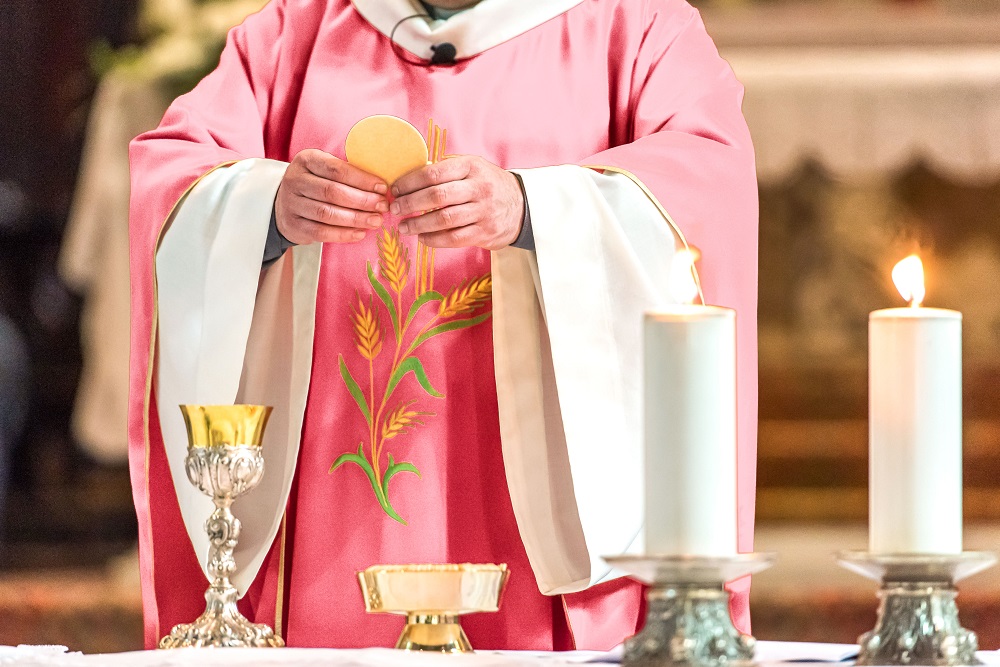
The Church of Our Lady of the Snow (in Latin, Sancta Maria ad Nives) is one of the papal basilicas, or those fundamental churches that house a papal altar, where only the Pope or a few other high-ranking priests are permitted to celebrate the Eucharist. Each of the papal basilicas also has a Holy Door that is opened on the occasion of the Jubilee. The opening of the Holy Door is a central event of the Jubilee and marks the beginning of the period of grace and mercy that it represents. In particular, the opening of the Holy Door of St. Peter’s Basilica, which for the 2025 Jubilee will take place on 24 December 2024, officially marks the beginning of the Holy Year. Walking through the Holy Door invites the faithful to conversion and to receive the grace of forgiveness.
The Papal Basilica of Santa Maria Maggiore, situated in Rome, is a remarkable example of early Christian architecture. Its construction began, as we have seen, under the pontificate of Pope Liberius, but the basilica has undergone numerous modifications and extensions over the centuries. Santa Maria Maggiore is famous, among other things, for its mosaics, dating back to the period of its construction. These mosaics run high along the central nave, both right and left. Initially, there were 42 panels, but only 27 survived (12 on the left and 15 on the right), while the others were destroyed in the eighteenth century, and in some cases, they were replaced by frescoes. The boxes represent stories from the Old Testament. Other precious mosaics adorn the triumphal arch that delineates the apse, representing scenes from the life of Jesus.
The famous sculptor Gian Lorenzo Bernini is also buried in the Basilica of Santa Maria Maggiore.
The chrism mass celebrates the mystery of the church, its unity and communion while waiting for Easter. It is also...
What’s the Future of Religion?
What’s the Future of Religion?
A Beginner’s Guide to Christianity
A Beginner’s Guide to Christianity
Mind-Blowing Statistics About Christianity You Need to Know
Mind-Blowing Statistics About Christianity You Need to Know
6696
Enter the Holyart world: $20 discount voucher valid on over 60,000 items
Come and discover Holyart, the largest e-commerce of religious articles in Europe and immediately receive a $20 voucher to use with your first purchase.
Check your mailbox: you will receive your discount within 5 minutes







 4 March 2026