Homepage | Religion | Dedication of the Church: Here Is How a New Sacred Building Comes into Being
Dedication of the Church: Here Is How a New Sacred Building Comes into Being
18 February 2026
Reading Time: 6minutes
For the Christian religion, the dedication of the church is a moment of fundamental importance. It is the solemn consecration of a new place of worship.
At the heart of every religious community, the birth of a new place of worship represents an event of profound spiritual and symbolic meaning. The construction of a sacred place is not merely the building of walls and architectural forms, but a process imbued with history, tradition, and faith. This process has deep roots in the history of the world’s major monotheistic religions, such as Christianity, Judaism, and Islam, and symbolises the offering of a physical place to the divinity and its consecration for spiritual use.
In the Christian tradition, the culmination of this long journey is represented by the ceremony of the dedication of the church, an ancient rite that confers a special blessing upon the architectural structure, consecrating it to divine service and to the community. The act of dedication is based on the words and teachings of Jesus Christ, who speaks of the church as the spiritual body of believers.
“The church is a building in which God and man wish to meet; a house that gathers us together, in which we are drawn towards God, and where being with God unites us with one another,” wrote Pope Emeritus Benedict XVI on the occasion of the dedication of the Roman parish of Santa Maria, Stella dell’Evangelizzazione.
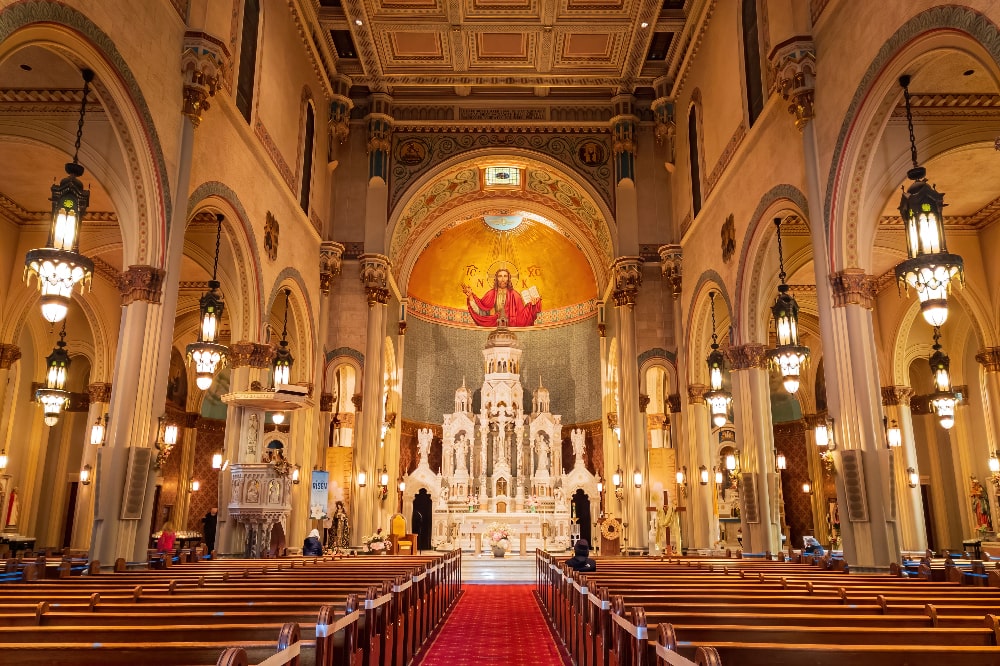
The birth of a new sacred building is not merely an architectural or artistic matter. It embodies the collective faith of the entire community. It is not the materiality of stones and marble that constitutes the temple, but the living Church that gathers within it, made up of the faithful.
The term church has always referred not only to the physical building, but also to the place where the Christian community gathers to listen to the Word of God, share prayer, and celebrate the sacraments.
What Does the Dedication of a Church Mean?
Dedication is the consecration of a church, the solemn liturgical act through which the building is permanently assigned to sacred use, thus taking on profound spiritual and symbolic significance.
At the end of construction, every church is solemnly blessed. This first rite serves to invoke divine protection and presence upon it. However, the blessing alone is not sufficient for that place to be specifically dedicated to sacred worship. In fact, it is possible to bless places not exclusively used for worship, such as gyms, warehouses, and halls, which may subsequently return to hosting other activities but which, thanks to the blessing, temporarily acquire a sacred character that renders them suitable for celebrations.
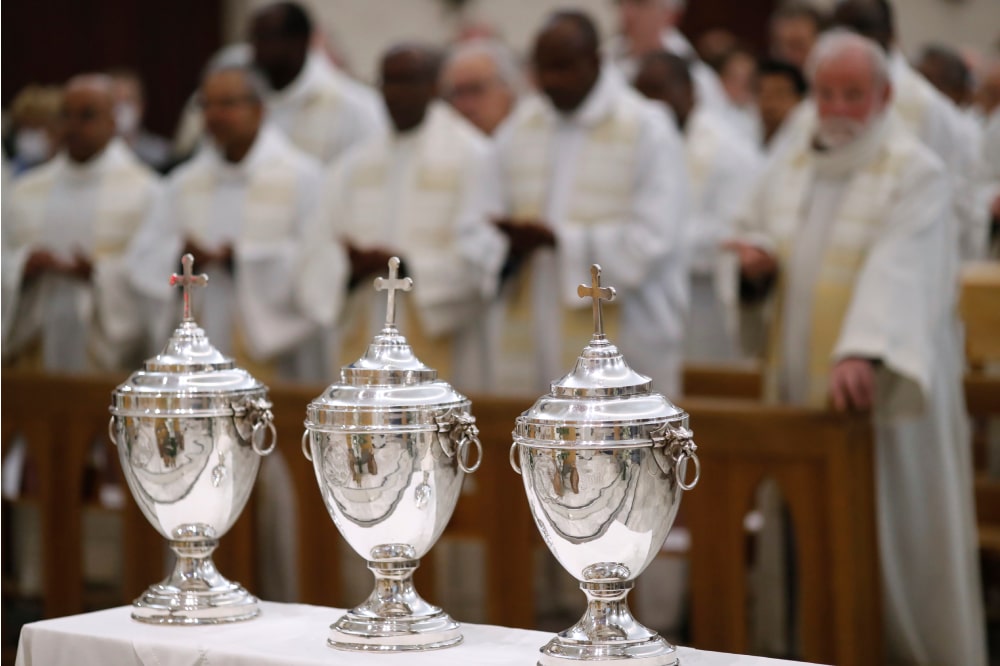
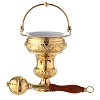
Objects for giving blessing: asperges or sprinklers, holy water pots and holy water bottles
It is the dedication of a church that represents its definitive consecration as a sacred place, a place in which the meeting between humankind and God is solemnly celebrated. In the ecclesiastical context, every church—whether a cathedral or a parish church—requires consecration.
For the dedication to take place, the church must have a fixed altar. According to canon law, the altar—that is, the table on which the Eucharistic Sacrifice is celebrated, the symbol of the Body of Christ—is considered fixed when it is built in such a way as to be joined to the floor and cannot be removed, whereas it is called mobile if it can be transported. A consecrated and dedicated church must have a fixed altar, while in all other places designated for sacred celebrations, the altar may be fixed or mobile.
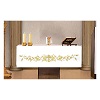
In this category you can find altar cloths handmade in Italy, of cotton and polyester and with Marian symbols.
The tangible sign that attests to the consecration is represented by the twelve Greek-style crosses, which are affixed, painted, or embedded in various points of the church. These crosses are not only emblems of Christ but also represent His triumph; they are consecrated with an anointing to signify that the place is subjected to His dominion. Their number, twelve, recalls the Apostles, fundamental witnesses of Christ and the original pillars of the Christian temple.
In the past, it was required that at least some elements of the church be constructed of stone. This choice was motivated by the durability of stone over time, symbolising the perpetual dedication to the sacred. As a result, many churches not made of stone were not consecrated. Famous examples include the Basilica of Notre-Dame in Paris, consecrated only in the 19th century, and that of San Petronio in Bologna, whose consecration took place in the second half of the 20th century.
The consecration of a church goes beyond mere formality; it is an act filled with symbolic and spiritual meaning, which confers upon the building a sacred and eternal dimension, linking the past, present, and future of the faith in a single solemn ritual.
According to the Code of Canon Law, it is the responsibility of the diocesan Bishop to provide for the dedication of a church. The rite of dedication has ancient origins, dating back to the time of Emperor Constantine and his edict on religious freedom in AD 313. From the moment Christians were permitted to leave the catacombs and erect sacred buildings dedicated to their worship, bishops began travelling to consecrate new churches in every city, fostering a new, joyful sense of unity and fellowship among peoples, all united in the body of Christ in a single harmony of participation, gratitude, and joy.
From the beginning, the heart of the celebrationwas the Eucharist, but over time, the dedication ceremony has become enriched with various rites. The current ritual, the Ordo dedicationis ecclesiae et altaris of 1977, has been simplified compared to the past and returns to the heart of the Eucharist, introducing significant symbolic rites. These include the sprinkling of blessed water, symbolising purification and baptism, the possible placement of the relics of saints beneath the altar, the anointing of the altar and the walls of the church with chrism, the incensationandilluminationof the building, signs of celebration and of the light of Christ. The entire ceremony converges towards the ambo, the specific place for the proclamation of the Word of God, and the altar.
In this category dedicated to vigil lights, you can find accessories and lamps of different styles and material.
The Parts of the Rite
The rite of dedication opens with a solemn processionand entrance into the new church. This first phase highlights two distinct moments: the presentation of the churchand its symbolic keys to the Bishop, and the sprinkling of the building. The Bishop blesses the water, symbol of purification, and with it sprinkles the people, who are the spiritual temple, along with the walls of the church and the altar.
This is followed by the Liturgy of the Word, during which three readings from the lectionary are proclaimed. The first recounts the passage from Nehemiah, which narrates the people of Jerusalem gathered around Ezra to hear the proclamation of the law of God. Before the Readings, the Bishop solemnly consecrates the church by showing the lectionary and declaring: “May the Word of God always resound in this place.”
In this category, you will find high-quality items for religious processions.
The central moment of the celebration is the dedication and anointing of the churchand the altar. After the invocation of the saints, the Bishop pronounces the great prayer of dedication, expressing the intention to consecrate the new church to God in a perpetual manner and asking for His blessing. This is followed by the rites of anointing of the altar and the church walls, the incensation of the altar and the entire liturgical space, as well as the covering and illumination of the altar and the entire assembly. After the chant of the Litany of the Saints, the relics of martyrs or saints are placedbeneath the altar, symbolising the sacredness and holiness that flow from the sacrifice of Christ.
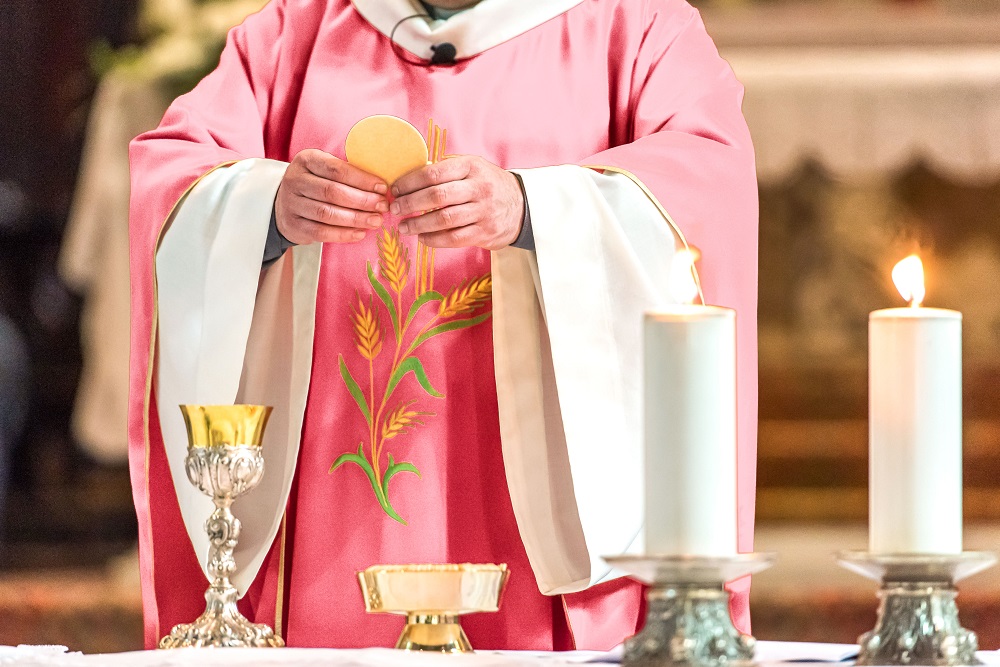
Once the altar has been prepared, the Bishop presides over the Eucharist, the oldest and most significant part of the entire rite. Through the celebration of the Eucharistic sacrifice, the principal purpose for which the church was built and the altar erected is clearly achieved and manifested through the signs.
The chrism mass celebrates the mystery of the church, its unity and communion while waiting for Easter. It is also...
What’s the Future of Religion?
What’s the Future of Religion?
A Beginner’s Guide to Christianity
A Beginner’s Guide to Christianity
Mind-Blowing Statistics About Christianity You Need to Know
Mind-Blowing Statistics About Christianity You Need to Know
7930
Enter the Holyart world: $20 discount voucher valid on over 60,000 items
Come and discover Holyart, the largest e-commerce of religious articles in Europe and immediately receive a $20 voucher to use with your first purchase.
Check your mailbox: you will receive your discount within 5 minutes








 4 March 2026