How should nuns’ habits be? Which colours are permitted? Between monastic orders and congregations, let’s explore the religious clothing of women.
“Clothes do not make the monk,” a proverb we have always been accustomed to hearing. It means that appearances are deceiving, and it derives from an ancient Latin saying: cucullus non facit monachum, “the hood does not make the monk.” Since ancient times it was normal to show respect to those who wore a cassock. Monks and priests were given special welcome and greater respect. For this reason, criminals sometimes chose to disguise themselves as monks in order to commit crimes or to take advantage of people’s goodwill. Hence the proverb.
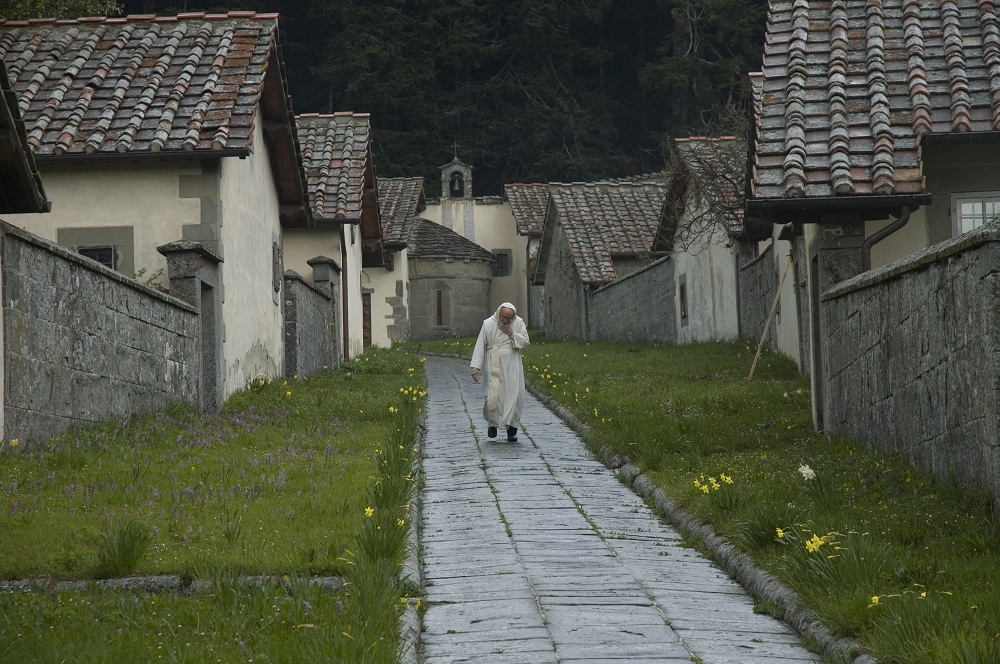
This preamble is to say that we are used to recognising women and men of the Church by the habit they wear, which differs depending on the order or institute, but is almost always traceable to religious dress. In particular, we easily recognise nuns’ habits because they are black with white accessories, but it would be a very reductive and mistaken claim to say that all nuns dress like this. Just as with monks and friars, nuns’ clothing varies according to the religious congregation to which they belong.
There are in fact many Catholic female religious orders, to which nuns and sisters belong. The substantial difference between the two is rooted in the very history of Western Christianity: for centuries the Church recognised only nuns belonging to one of the approved rules, who had taken public and solemn vows of poverty, obedience and chastity, as its representatives. Usually, they also lived in strict enclosure. Over time, however, the Holy See also recognised female communities that did not live in seclusion and led a semi-religious life within society, offering services of public utility such as caring for the sick, sheltering orphans, and so forth. Since 1917, with the promulgation of the Codex Iuris Canonici (Pio-Benedictine Code), religious women of solemn vows have been officially defined as nuns (moniales), while those belonging to more recent congregations and who have taken simple vows are defined as sisters (sorores).
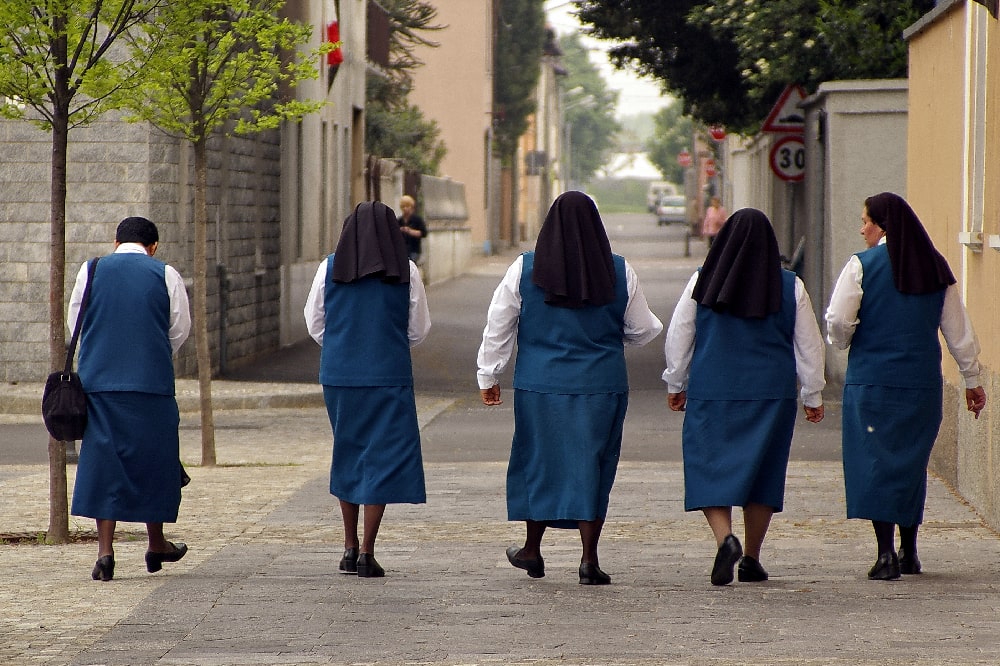
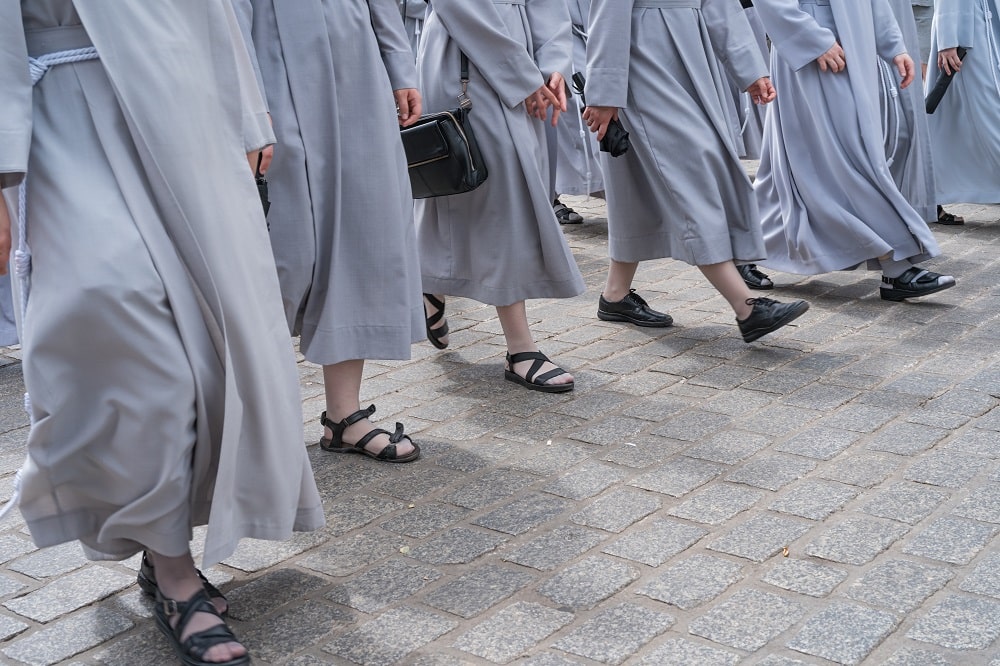
A generic description of a nun’s habit includes a long, loose tunic down to the feet or ankles, not shaped to the body, with wide sleeves and usually fastened at the waist by a cord or belt, like the friars’ habit. Over the garment they wear the veil, symbol of humility, chastity and modesty, the wimple, a band of cloth or veil wrapping the neck and framing the face while covering the hair, and the coif. Today, in reality, nuns’ habits differ greatly in colour and cut. Above all, those nuns who have chosen a life not only of contemplation, but one that leads them to work and engage with the community, often opt for more modern and practical clothing, such as jackets and cardigans, always with due regard for the decorum dictated by their role.
In this category you can find nun habits and religious apparel for sisters.
As for colours, black, grey, white, beige and brown are still the most common, but some Marian congregations prefer blue, and there are also nuns who wear red to celebrate the Passion and the blood of Christ, such as the Oratorian Sisters of St Philip Neri; pink, like the Holy Spirit Adoration Sisters; green, like the Missionary Sisters of the Divine Revelation, and so on.
Let us look in more detail at what nuns’ habits are and how they differ.
Female Monastic Orders
First of all, let us distinguish between monastic orders or institutes and regular orders, whose members take solemn vows, and religious institutes or congregations, whose members take simple vows and live a secular life. The institutes can be either clerical or lay. For example, the Ursulines of the Sacred Heart of Jesus are sisters of a female religious institute of pontifical right, whereas the Poor Clares are nuns of solemn vows belonging to the order founded by St Francis and St Clare of Assisi, and who follow a Rule centuries old.
In general, we can distinguish female monastic orders, that is, institutes of consecrated life whose members live in community and according to the public and solemn vows of poverty, obedience and chastity, into three groups: monastic, mendicant, canonical.
Nuns and Sisters of Monastic Orders
Like monks of the same order, they live in community in a monastery according to a Rule, but unlike men, they must observe enclosure. They take vows of chastity, obedience and poverty, that is, renouncing all property. They are guided by an abbess and remain bound for life to their abbey. Among the nuns of monastic orders we may recall the Poor Clares, the Carmelites, the Dominicans.
Nuns of Mendicant Orders
Like friars of the same type of order, these nuns live in community in a convent and follow a Rule that governs their entire existence. They are bound to enclosure. They take vows of chastity, obedience and poverty and may be transferred from one convent to another. Examples of mendicant orders include the Poor Clares and the Dominicans.
Canonesses Regular
The “canons” are priests who live in an abbey guided by an abbot and follow a Rule. Canonesses live in an abbey, are guided by an abbess and accept enclosure. Some examples: Lateran Regular Canonesses, Canonesses of St Augustine of the Congregation of Our Lady, Hospitaller Canonesses Regular of the Mercy of Jesus.
Clothing for Nuns on Holyart
In our online store you will find a wide selection of women’s religious clothing and habits for nuns, all made of fine yarns and of excellent quality. Our nuns’ habits are entirely crafted and tailored in Italy.
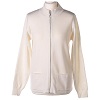
White recalls purity, and the white nun’s cardigan In Primis with mandarin collar is a perfect compromise for the woman of faith who does not wish to renounce the comfort of a modern and cosy garment, made with plain knit, 50% merino wool and 50% acrylic. The cardigan features two comfortable pockets and has been made entirely in Italy.
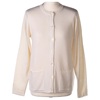
White nun cardigan with crew neck and pockets, made of plain fabric, 50% acrylic 50% merino wool.
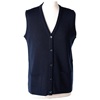
Austere, yet practical, the In Primis nun’s waistcoat with navy blue V-neck and plain knit is ideal for all seasons, over a shirt or under a jacket. It has a row of central buttons and two practical pockets.
Blue nun cardigan with V-neck and pockets, sleevless, made of plain fabric, 50% acrylic 50% merino wool.
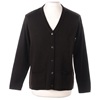
Dear to the Franciscans, brown remains a timeless colour for nuns. The brown nun’s cardigan In Primis with V-neck is an example of modern clothing that fully respects and reflects the requirements of order and decorum demanded by the role of the woman who will wear it.
The chrism mass celebrates the mystery of the church, its unity and communion while waiting for Easter. It is also...
What’s the Future of Religion?
What’s the Future of Religion?
A Beginner’s Guide to Christianity
A Beginner’s Guide to Christianity
Mind-Blowing Statistics About Christianity You Need to Know
Mind-Blowing Statistics About Christianity You Need to Know
7741
Enter the Holyart world: $20 discount voucher valid on over 60,000 items
Come and discover Holyart, the largest e-commerce of religious articles in Europe and immediately receive a $20 voucher to use with your first purchase.
Check your mailbox: you will receive your discount within 5 minutes








 4 March 2026