Homepage | Easter | Laetare and Gaudete Sunday: The Sundays of Joy
Laetare and Gaudete Sunday: The Sundays of Joy
4 March 2026
Reading Time: 4minutes
Situated within two penitential and anticipatory periods of the liturgical year, Gaudete Sunday and Laetare Sunday celebrate the joy of faith and the hopeful anticipation of believers.
Anyone who claims that the Catholic religion knows only austerity and repentance clearly doesn’t understand it. Beyond the fact that a Christian’s life, aware of their connection with God and in an open, life-giving dialogue with Jesus, is in itself a daily experience of joy, there are also rituals and specific days within the liturgical calendar dedicated to this state of the soul. We are talking about Gaudete Sunday and Laetare Sunday.
Just focusing on the adjectives that characterize these occasions reveals the joyful and happy nature at the heart of these celebrations. In fact, Gaudete and Laetare are the present passive imperatives of the Latin verbs gaudere and laetare, both meaning “to rejoice.”
Thus, they are an exhortation for Christians to embrace their faith with joy. It is no coincidence that these two Sundays fall within periods marked by suspension, anticipation, even penance, in preparation for a great, immense joy. Gaudete Sunday is the third Sunday of Advent, while Laetare Sunday is the fourth Sunday of Lent.
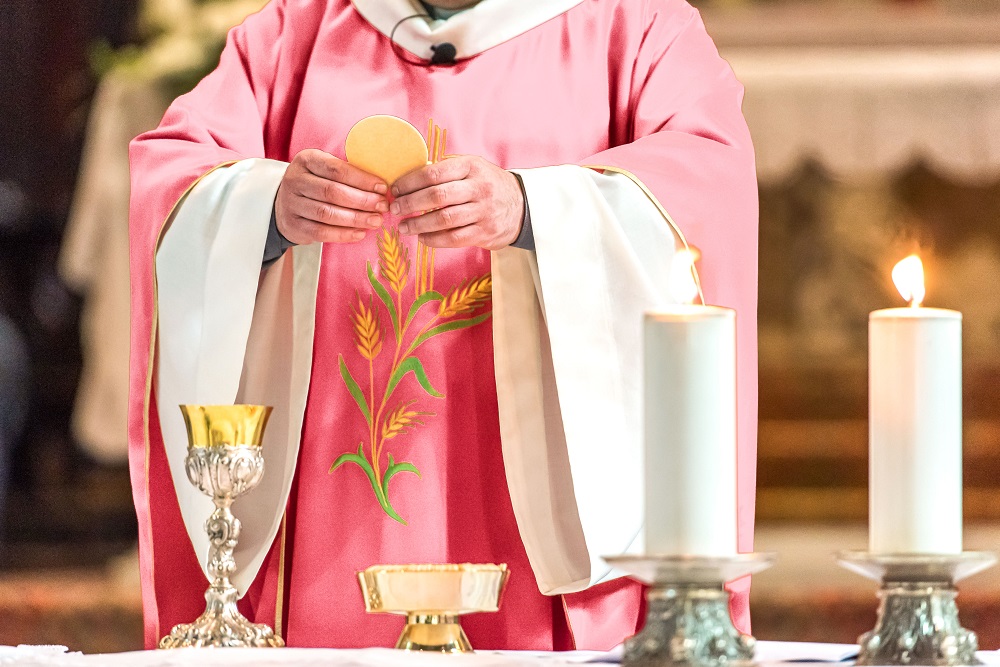
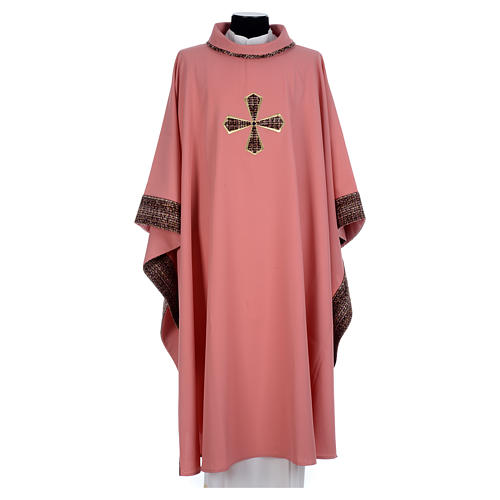
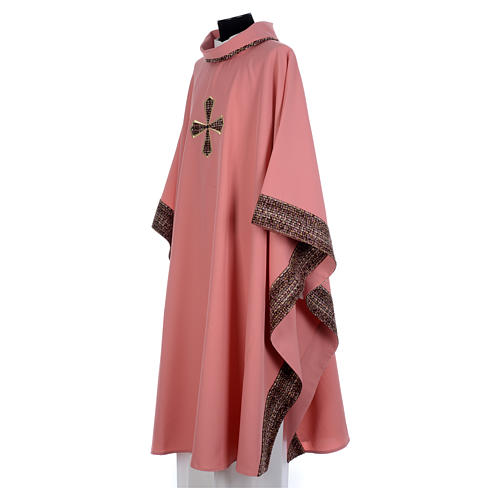
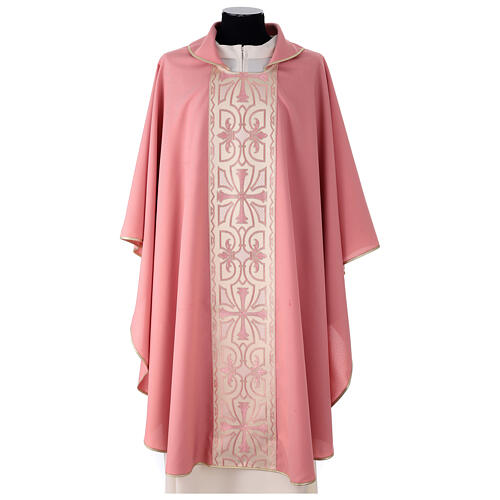
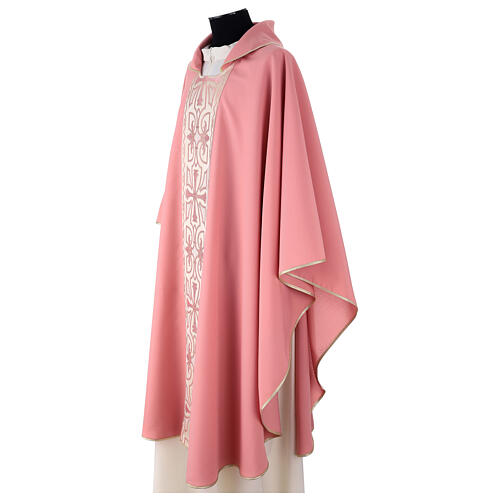
These two liturgical days dedicated to joy share several elements, such as the rose-coloredvestments worn by priests, the permitted use of the organ during services, and floral decorations used to adorn the church for Mass.
Let’s take a closer look at what is celebrated on Laetare Sunday and Gaudete Sunday.
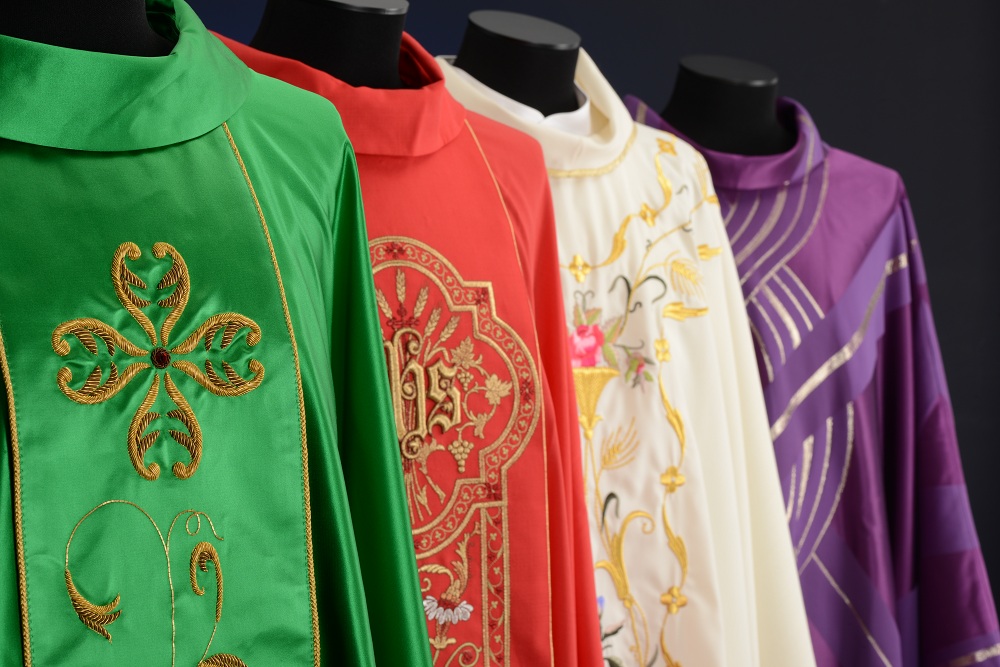
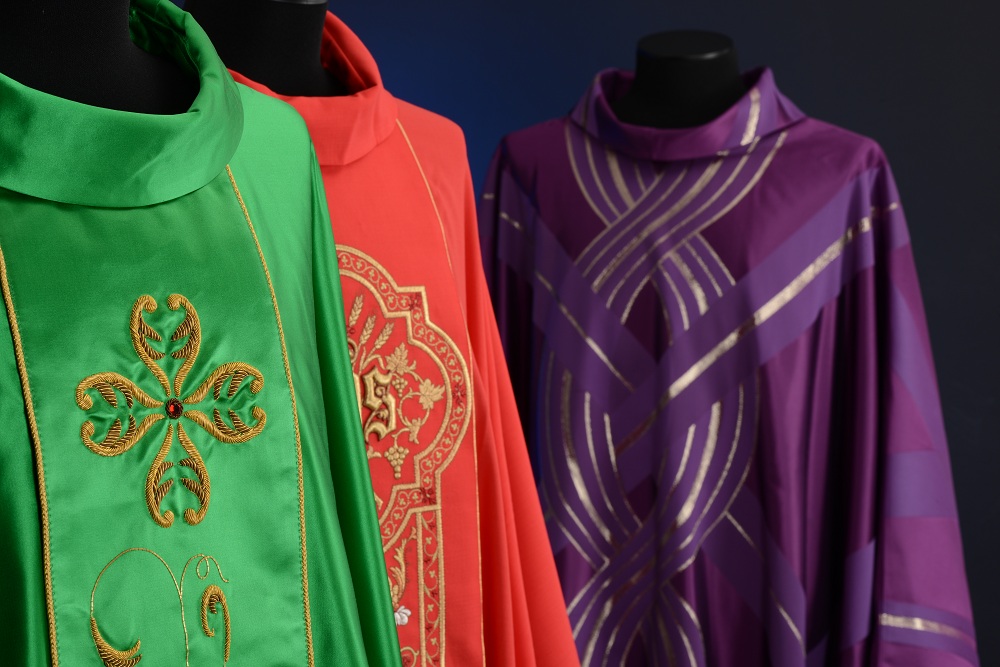
Liturgical vestments: chasubles and stoles, altar linens, copes, dalmatics, altar cloths, albs, lectern covers and many other vestments.
What Does Laetare Sunday Mean?
After the liturgical reform promoted by the Second Vatican Council, the transition from Latin to the vernacular for Mass led to a partial loss of the origins of certain names and terms associated with special liturgical celebrations.
The Introit, or entrance antiphon sung at the beginning of Mass on the fourth Sunday of Lent, reads:
Laetare Jerusalem: et conventum facite omnes qui diligitis eam: gaudete cum laetitia, qui in tristitia fuistis: ut exsultetis, et satiemini uberibus consolationis vestrae.
Psalm: Laetatus sum in his quae dicta sunt mihi: in domum Domini ibimus.
Translated into English:
Rejoice, Jerusalem, and all who love her, gather together. Exult and be glad, you who were in sadness: be satisfied with the abundance of your consolation.
Psalm: I rejoiced when they said to me: “Let us go to the house of the Lord.”
This is where the name of this special Sunday comes from.
In medieval times, the third Sunday of Lent coincided with the Byzantine feast in honor of the Holy Wood of the Cross, which likely had its roots in an ancient Roman festival celebrating the victory of spring over winter with floral decorations. Additionally, it was associated with the blessing of the Golden Rose, which the Pope performed on this date at the Basilica of Santa Croce in Gerusalemme. Hence the floral decorations and, as we will see, the choice of the celebrant’s liturgical vestment colour.
The chasuble is made of super light Vatican fabric, easy to wash and iron. Delivered with a simple matching stole…
What Is Gaudete Sunday?
Gaudete Sunday (Dominica Gaudete) also derives its name from the entrance antiphon of the Mass celebrated on this day, the third Sunday of Advent. The phrase comes from Philippians 4:4-5:
Gaudete in Domino semper: iterum dico, gaudete. Dominus enim prope est.
Translated into English:
Rejoice in the Lord always; again I say, rejoice. The Lord is near.
When considering the liturgical colours used in the Catholic Church for the vestments of priests during celebrations and special occasions, it becomes clear that these colours hold specific symbolic meanings. The primary colours, codified in the Roman Rite in 1969, are white, green, red, and violet. However, there are particular occasions when other colours are used for sacred vestments and liturgical furnishings.
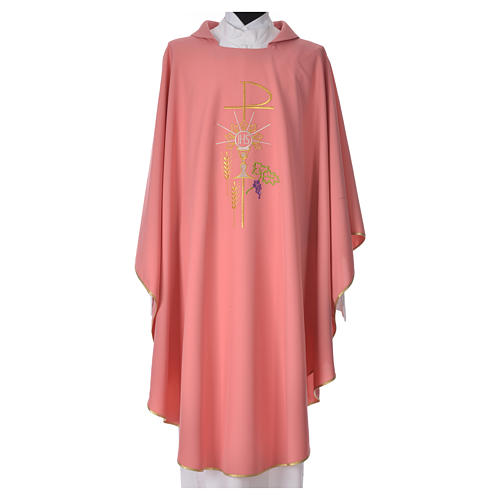
Gaudete Sunday and Laetare Sunday are examples of this. On these occasions, the priest celebrating Mass wears a chasuble, also known as a planeta—the garment used during the Eucharist—in rose, or more precisely, rose-pink.
Here lies the explanation for the rose chasuble worn by the celebrant. We have seen that Gaudete Sunday and Laetare Sunday occur during Advent and Lent, respectively. Both Advent and Lent are periods of preparation, for Christmasand Easter. They are characterized by penance, fasting, meditation, and prayer—all necessary practices to properly prepare for the two most significant feasts in the Catholic Church: Christmas, the birth of Jesus, and Easter, the celebration of His glorious Resurrection.
This understanding clarifies the choice of rose, a joyful and vibrant colour, used solely on these two days, situated roughly halfway through these periods of waiting and preparation. It serves as an invitation, an exhortation for the faithful to persevere a little longer and to rejoice because the long-anticipated celebration is near.
Pink Latin Chasuble in 100% polyester with inserts in fabric and embroidered cross Gamma Buy on Holyart
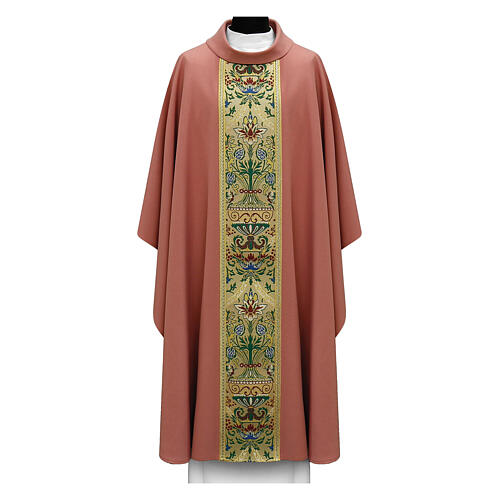
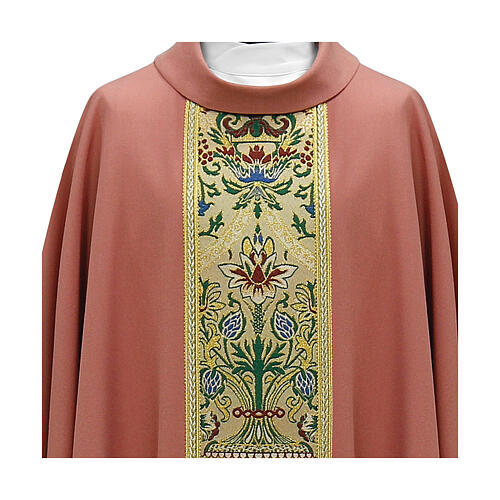
Pink Priest Chasuble with gold frontal orphrey Buy on Holyart
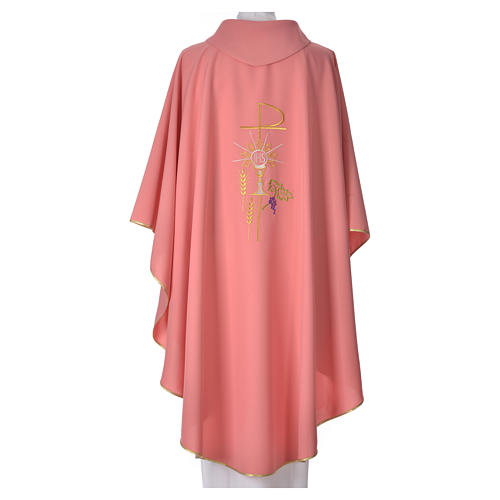
Pink Chasuble with Wheat and Grapes in 100% polyester Buy on Holyart
The chrism mass celebrates the mystery of the church, its unity and communion while waiting for Easter. It is also...
What’s the Future of Religion?
What’s the Future of Religion?
A Beginner’s Guide to Christianity
A Beginner’s Guide to Christianity
Mind-Blowing Statistics About Christianity You Need to Know
Mind-Blowing Statistics About Christianity You Need to Know
7960
Enter the Holyart world: $20 discount voucher valid on over 60,000 items
Come and discover Holyart, the largest e-commerce of religious articles in Europe and immediately receive a $20 voucher to use with your first purchase.
Check your mailbox: you will receive your discount within 5 minutes











 4 March 2026