Author: Redazione

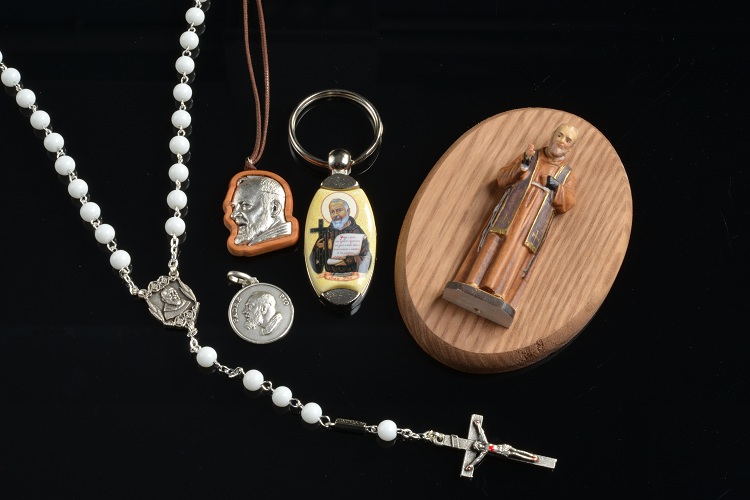
Padre Pio statues

Padre Pio statues

The sort devotion around the figure of Pio of Pietrelcina, better known by the faithful as Padre Pio, exceeds in dissemination and ardor that dedicated to many other saints and famous historic holy. This affection and enthusiasm come from the same religious character of Pietrelcina,…
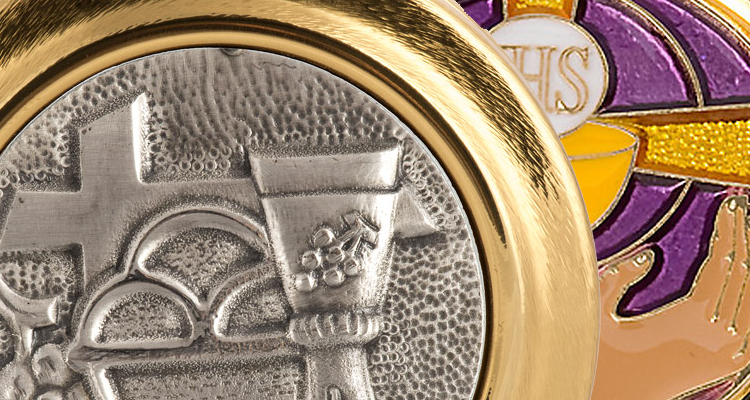
Metal pyxes

Metal pyxes

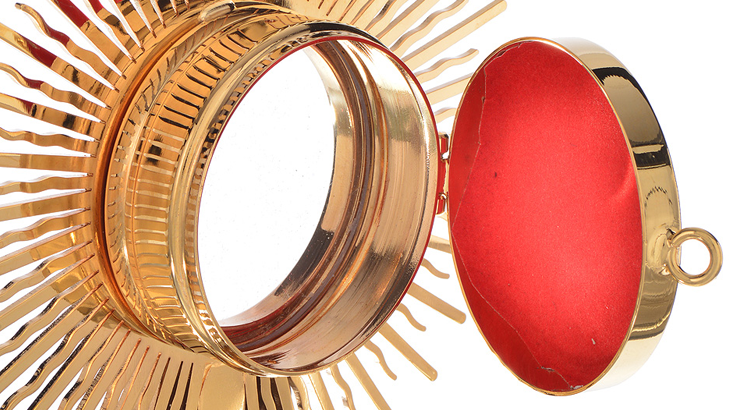
Metal pyxes are containers designed to enclose the consecrated hosts. The Eucharistic pyxes are usually made of enamel plate, pewter, silver plate, gold-plated brass, aluminum, but can also have inserts of other metals, or glass, or even be in olive wood. They are small size…

Our Lady of Mount Carmel

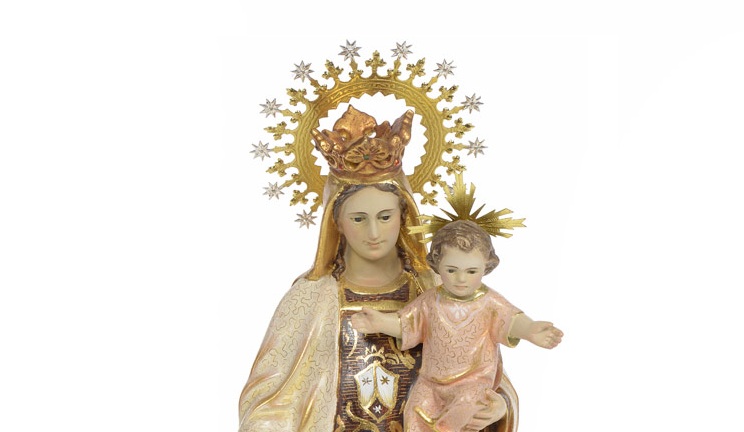
Our Lady of Mount Carmel

Our Lady of Mount Carmel (or of Carmine) is one of the oldest and most beloved forms of worship to Christians. It is celebrated on July 16th, when, in 1251, Our Lady of Mount Carmel would have appeared to the English priest Simon Stock, then General Prior of the Carmelite Order.

Mount Carmel (in Aramaic “garden”) in Israel has always been considered a place of great mysticism and spiritual strength. The prophet Elijah, gathered with other people of faith on the mountain and in open conflict with the priests of the god Baal, he claimed to have witnessed an apparition of the Virgin Mary, incarnation of the Word of God, of her generosity, including through her power and the world. The slopes of the mountain were then gathering place for monks and hermits, the “Brothers of the Blessed Virgin Mary of Mount Carmel”, and the Carmelites later.

It was the General Father of these last mentioned, Simon Stock, to whom Our Lady of Mount Carmel appeared, surrounded by angels, by light and with baby Jesus in her arms. She donated the religious a scapular (a strip of cloth with an opening for the head, which falls on the chest and back, sometimes with a hood), which when worn would guarantee the salvation from hell, and the liberation from the pains of Purgatory. Our Lady of Carmel said, “This is the privilege for you and yours: anyone who dies wearing it, will be saved.”

The Carmelites, devoted to Our Lady of Carmel, established as their rule that primitive one, established by the prophet Elijah, one of the fathers of monastic life: night vigils, fasting, strict abstinence, poverty and silence. In addition, they manifested their consecration to Our Lady of Carmel wearing the scapular, and dedicating their life imitating her.

Simon Stock, later beatified, spread the devotion of Our Lady of Carmel in Europe and composed for her the Flos Carmeli, a wonderful hymn.

Monstrance stand

Monstrance stand

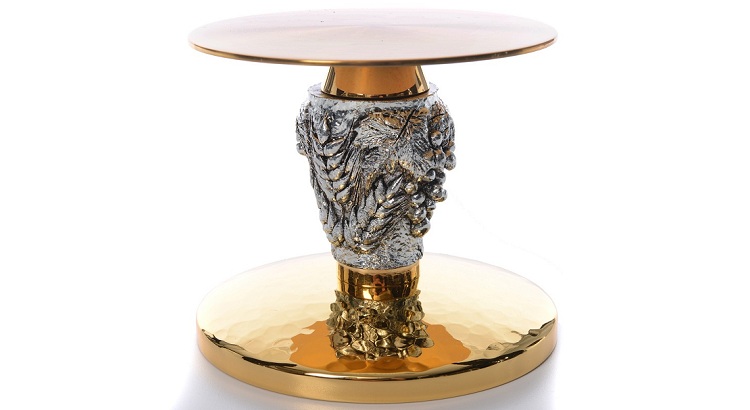
The monstrance stand is a shelf upon which the monstrance is placed. The monstrance is the sacred container used for the exposition of the Blessed Sacrament to the faithful. Such exposure takes place during worship and Eucharistic blessing. The very name of this furniture fully…

Our Lady of Fatima

Our Lady of Fatima

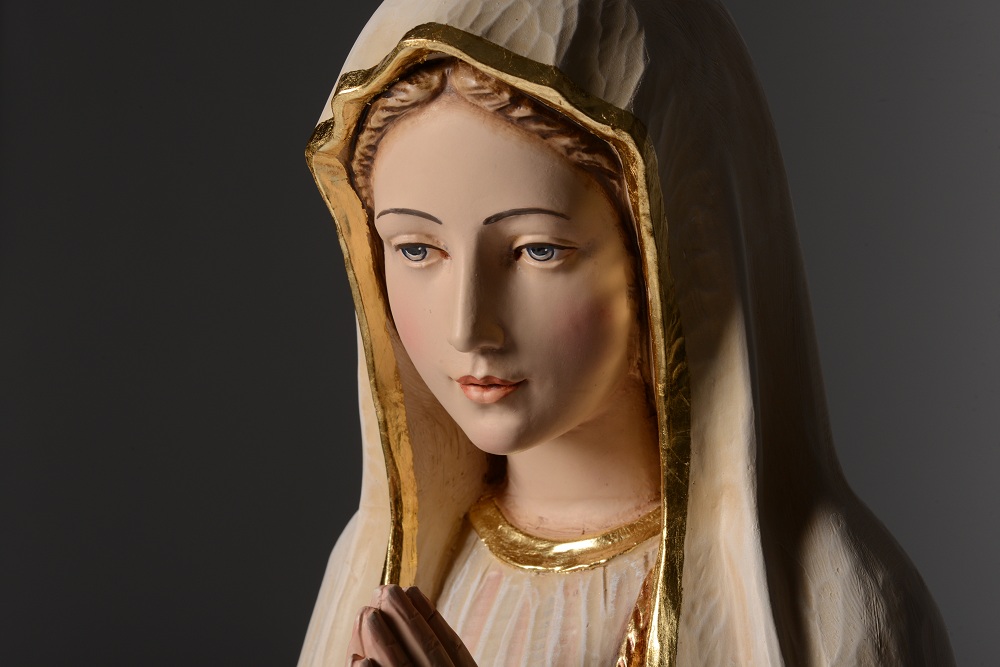
Our Lady of Fátima, or Our Lady of the Holy Rosary of Fátima (Nossa Senhora de Fátima), is one of the names by which Mary, mother of Jesus is known and adored around the world. It derives from the Portuguese town of Fatima, where in…

Holy Family statue

Holy Family statue

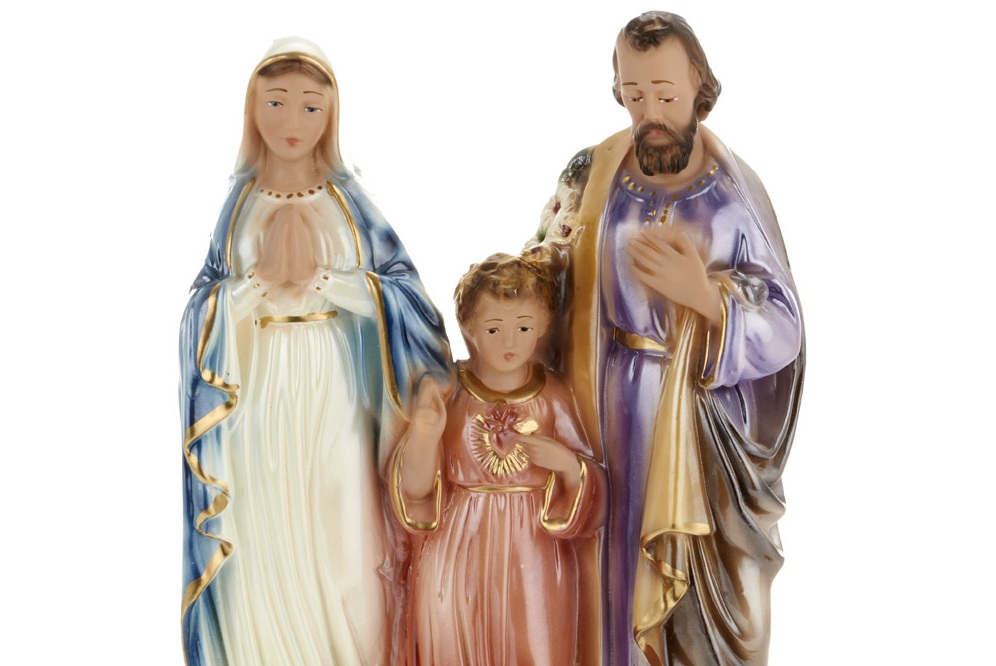
With Holy Family we commonly define the family of Jesus, Mary and St. Joseph.

It is also known as the Family of Nazareth, after the city where they lived. The Holy Family has provided since the beginning of the church the model to which every family should look up to, and still embodies the values ​​of affection, compassion and love that should be the basis of the concept of Family.

This very important symbolic value meant that the Holy Family was being reproduced since ancient times, becoming a subject of immortal works of art, and the widest possible and most humble artisan production of devotional images. In particular, the statue of the Holy Family is a very beloved element to the faithful, a subject of vital prayer and comfort.

Faithful to an iconography now decoded, the statue of the Holy Family depicts Mary as a beautiful young and a little sad woman, Jesus as a charming child, Joseph as an infinitely comforting and protective presence. Wood, metal, porcelain, in more recent times in hand painted resin, the statue of the Holy Family is a symbol that transmits an immediate sense of warmth and belonging, awakening feelings of love, protection, tenderness. To it we direct prayers of mothers for their children, of children for their distant parents, or sick, knowing that God looks with infinite love to blood relationship, the exclusive and special relationship that binds those who grew up together in a tie of affection and mutual understanding.

The statue of the Holy Family is also strongly connected to the theme of the Nativity, with all its reflections that derive, popular in the tradition of the Nativity, and solemn, in the concept of the Immaculate Conception and the miraculous birth of Jesus Christ. A symbol for all, then, that speaks to the heart and soul like no one else ever.

Lecterns

Lecterns

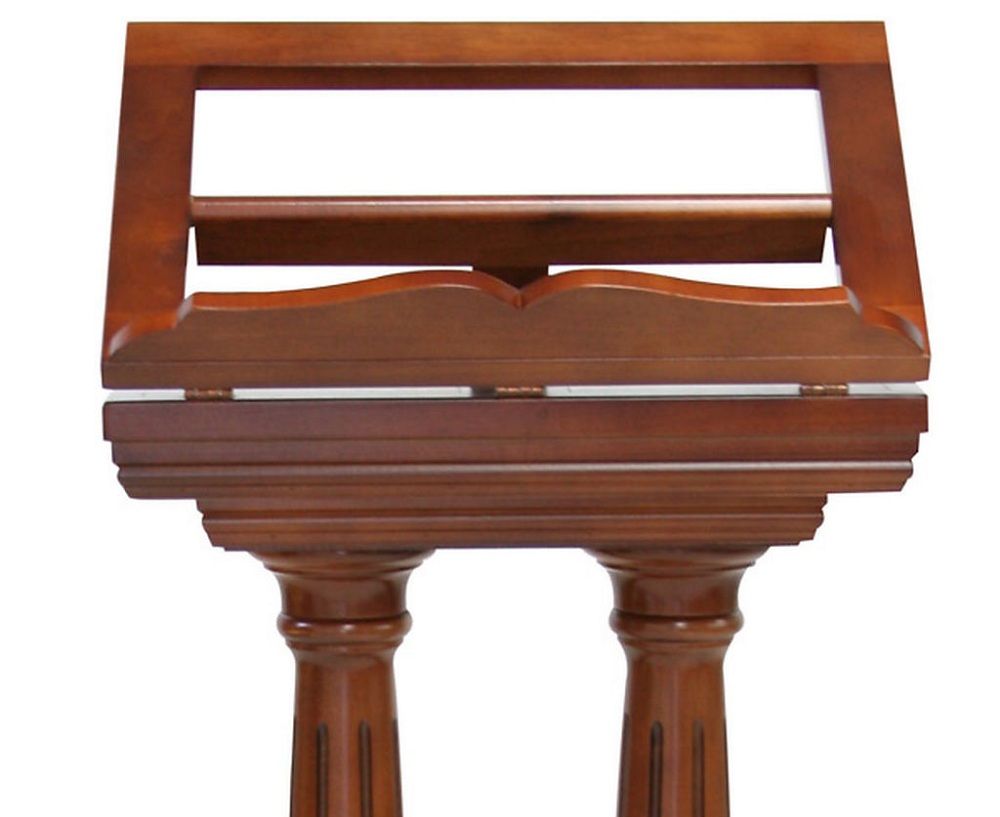
Lecterns are an essential church supplies. Usually the lectern is placed before the altar, on the presbytery. Its name derives from the greek λογειον, loghĕion, “pulpit” from which it differs in some features. While the pulpit is for the preaching, the lectern serves as a support…

Liturgical chasubles

Liturgical chasubles

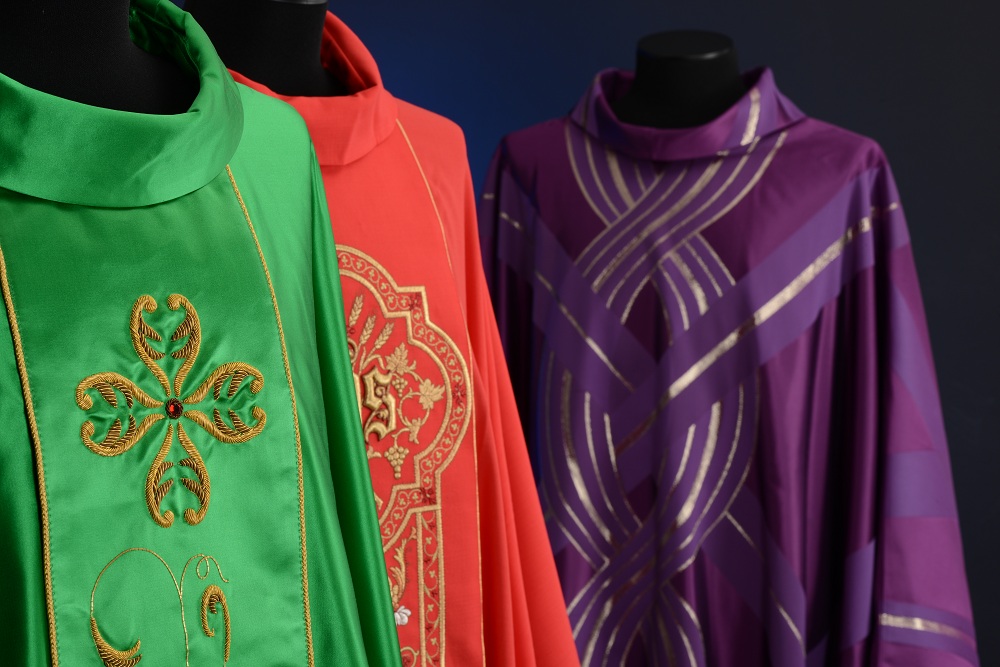
Liturgical chasubles are what the priest wears during the celebration of Holy Mass. It is one of the most important sacred vestments and its use is linked to a specific coding and specific rules. Liturgical chasubles can be of various shapes. It should be worn…

Metal reliquaries

Metal reliquaries

The metal reliquaries are containers made of different materials and with the most varied forms, designed to contain and preserve the mortal remains of the saints, or what remains of them, like fragments of bones or other body parts. The word “reliquary” comes from the Latin “relic”, that means rest. The metal reliquaries can also contain items that belonged to saints or were used by them.

In both cases, the metal reliquaries are important and valuable for the use made of them: stably exposed to the faithful or in some specific occasions, often carried in procession, are the object of veneration and absolute devotion.
For this reason, metal reliquaries have always been built with quality materials and decorated with exquisite artistic elements, although originally it was simple wooden boxes. But soon gold, silver, enamel and precious stones were used for reliquaries.

Metal reliquaries in ancient times often had the shape of a cross, or the part of the body which guarded the relic within (hands, skull, foot, bone …).

In the late Middle Ages metal reliquaries began to be built with a piece of crystal or glass, to allow the faithful to see the content. This increased further episodes of devotion, so as to trigger a strong repression by the Lutherans, who saw the veneration of relics a form of idolatry.

In some churches, the relics were so numerous as to require the installation of special rooms, chapels of relics whose walls were made of glass cases containing relics of all kinds.

In the Baroque period the metal reliquaries increasingly assumed the form of a Eucharistic monstrance, and this still remains the most widely used model, although the worship of relics have lost some of the fervor of the past. However, it remains a very strong component of popular religion in the world.

Our Lady of Lourdes

Our Lady of Lourdes

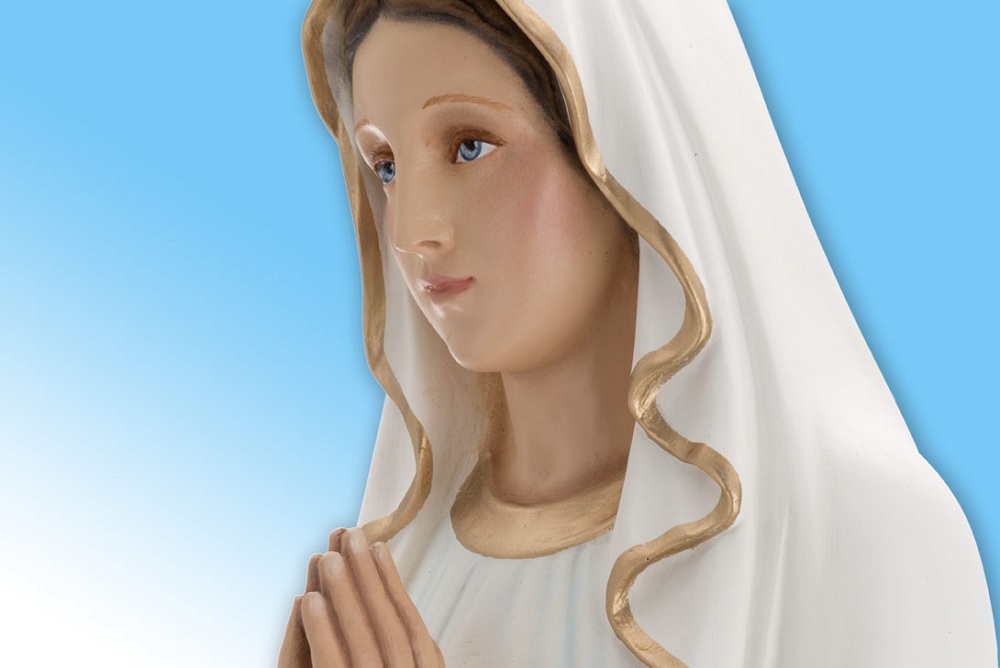
With the Our Lady of Lourdes epithet, Catholic refer to Mary, mother of Jesus, who in 1858 appeared eighteen times to Bernadette Soubirous, a fourteen year old peasant who lived in the French town of Lourdes. The girl claimed to have seen a “beautiful Lady”…

The medal of St. Benedict

The medal of St. Benedict

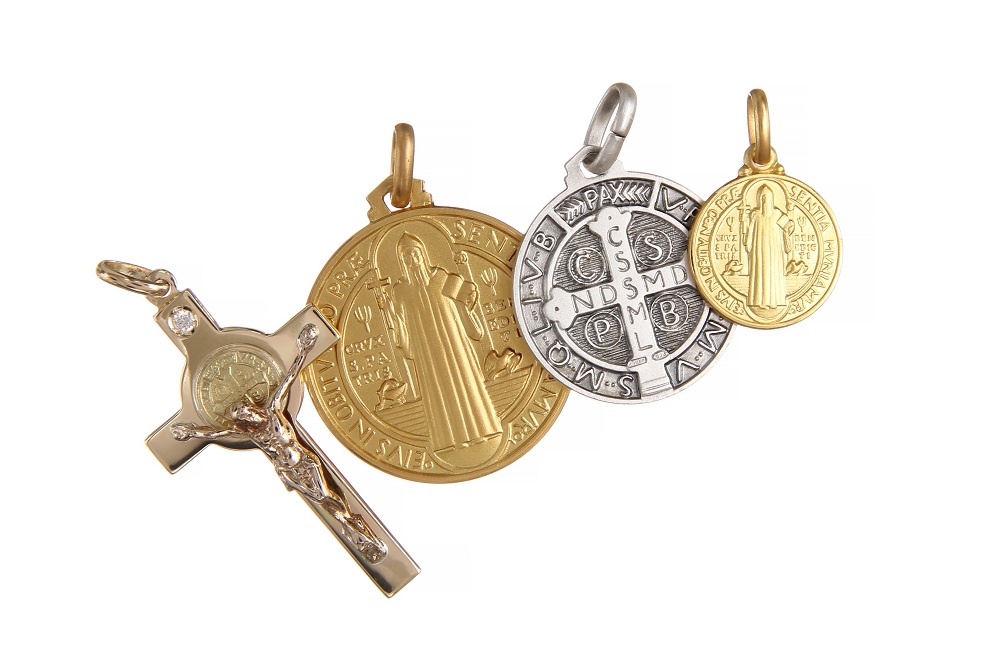
The medal of St. Benedict is a widespread sacred symbol among the Catholics. It reminds the faithfuls who wear it, the constant presence of God and his protection. On one side of the St. Benedict medal, a cross is depicted on which the Benedictine order’s…

Prayer Kneelers

Prayer Kneelers

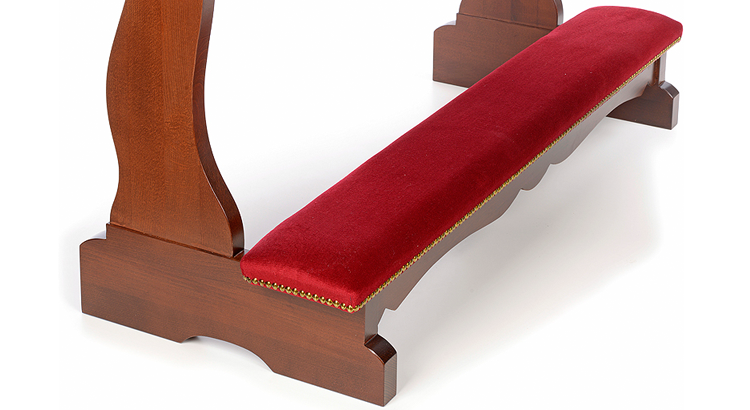
The prayer kneeler belongs to typical furnishings of churches and chapels since the fifteenth century. It is a piece of furniture, usually made of wood, used to kneel and pray.

The kneeler can be placed before the tabernacle, an altar, a statue of a saint or a Madonna. Typically, it consists of a supporting surface for the knees, usually padded or covered with a cushion, and a riser on which to lay hands in the act of prayer.

During different historical periods, the prayer kneeler was the subject of many artistic changes, enriching itself with refined details, inlays, exquisite friezes depicting angels, floral motifs and sacred symbols. The prayer kneeler, especially in the Baroque period, could be embellished with gold tooling, inserts made of ivory, bronze and other precious materials. However, it has maintained over the centuries a simple and constant line, albeit with some variation. For example, some kneelers can be equipped with drawers and cabinet doors, or of a lectern, below which is housed a closed compartment.

Among the various types of prayer kneelers we remember:

– The sacristy kneeler, where the priest kneels to pray before going to church to celebrate mass. It can be fitted with a shrug decorated with a sacred image. It can accommodate a table with the preparation and thanksgiving prayers.
– The communion kneeler on which the faithful kneels to receive communion.
– The name kneeler, usually belonging to a single or a family, marked by a plate or by a sign of belonging.
– The kneeler-stool, simple, low, without lift.
– The kneeler-chair, a chair with integrated kneeler, equipped with lift and flat surface. It can also have a folding seat under which is hidden the real kneeler.

Our Lady Of Guadalupe

Our Lady Of Guadalupe

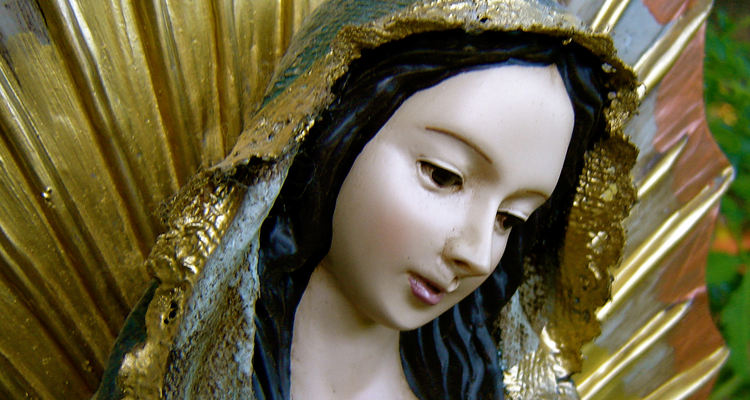
Our Lady of Guadalupe is considered the patron saint of all Spanish-speaking Catholics in the world, especially those living in South and North America. Her cult was born in Mexico in the sixteenth century, when the Virgin Mary appeared repeatedly to Juan Diego Cuauhtlatoatzin, an…

Metal Paten

Metal Paten

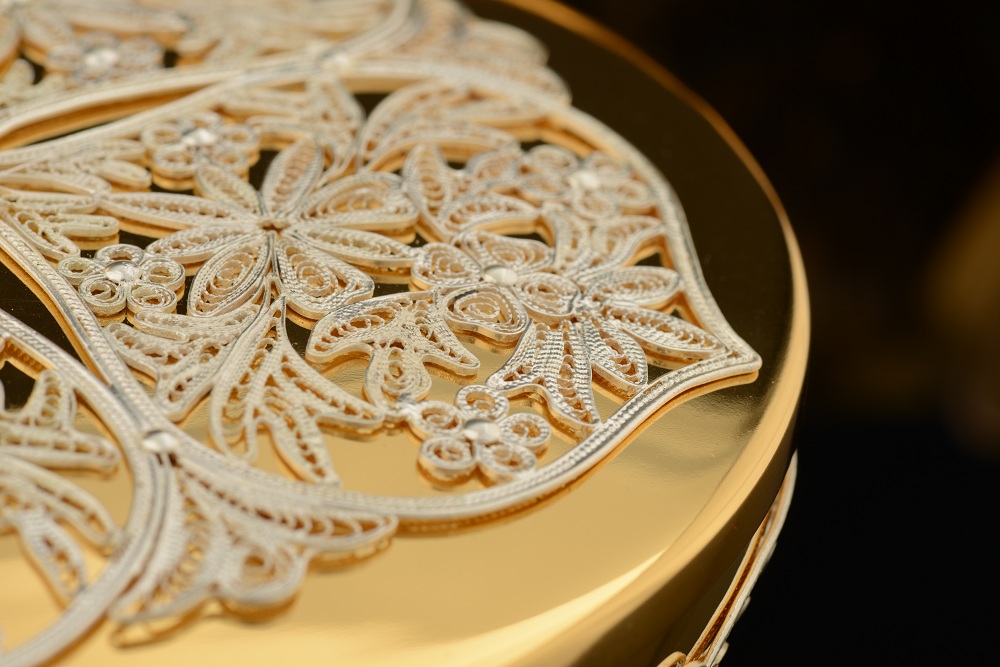
The metal paten is a small round plate on which the host is placed before and after being consecrated during Mass celebration. The metal paten is also used by the priest to catch any crumbs of the host and to cover the chalice. The paten…

St. Anthony of Padua

St. Anthony of Padua

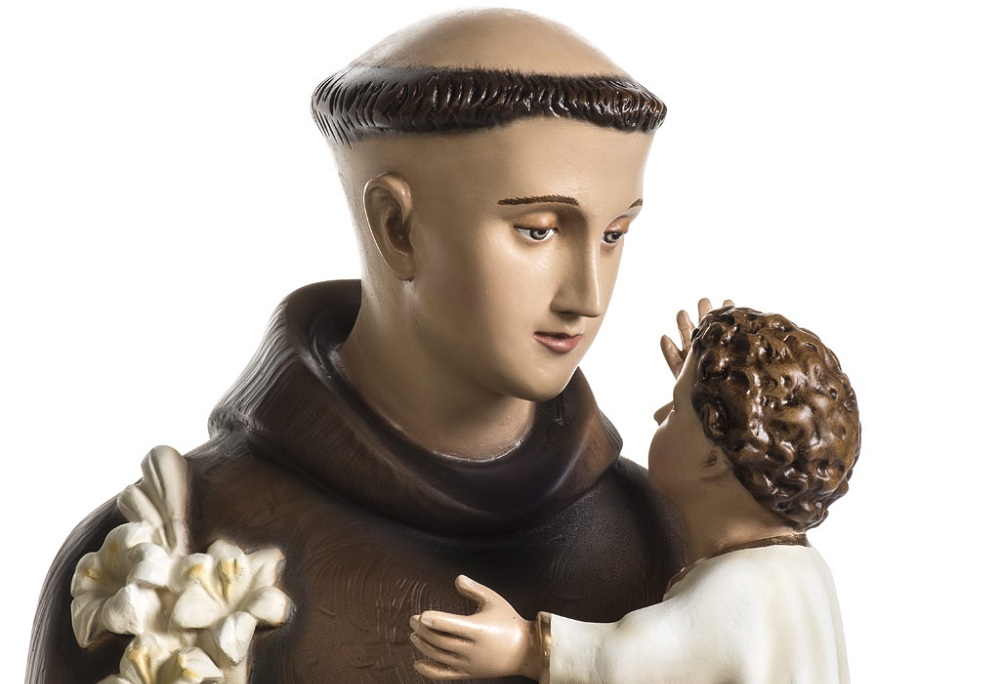
The life and Christian experience of St. Anthony of Padua arises in an era of great historical, social and spiritual changes. It would be impossible to understand the depth and the meaning of this great figure of Catholicism without taking into account the historical environment in which he grew up, was trained and knew his consecration. The years when St. Anthony of Padua lived are those considered the end of the Middle Ages. Europe is shocked by profound and irreversible changes, from all points of view. The birth of Municipalities is poised to fundamentally change the local political conception. The urbanization and the merging into the city by artisans, merchants, bankers and new professionals creates the basis for a new social class, the bourgeoisie, which is added to the knights, the clergy and the nobility.

The Church too is not immune to the changes, particularly in light of the emergence of Cathedrals as a place of assembly and religious centers, for the succession of nine Crusades, but also to the desire for renewal of the clergy, in need of finding in their origins the path for their future. During these years new religious orders are born, which impose themselves not only in ecclesiastical groups but, by their very nature, affect the history and social life. We talk for example of the Dominicans and the Franciscans, of whom St. Anthony of Padua was eminent member.

Eldest son of a noble and wealthy family from Lisbon, Portugal (he will take the name ‘of Padua’ because in that city he will conduct his most significant activities), since he was young St. Anthony of Padua manifested the love for learning, for the contemplative life and a willingness to embrace the priesthood. The example of the first Franciscans martyred in Africa in fulfilling their mission of evangelization prompted him to choose the Franciscan Order. St. Anthony of Padua in Italy had the opportunity to meet St. Francis and from this meeting he drew new strength and enthusiasm for his evangelical and human mission.

As well as a preacher and proud supporter of the Franciscan ideology, St. Anthony of Padua is also demonstrated an unyielding champion against heresy, deserving the nickname of malleus hereticorum, the hammer of heretics. Remembered as much for his many miracles and for his infinite knowledge of the Gospel, St. Anthony of Padua is the patron saint of the poor, the hungry and of lost property.

Within our Holyart.com catalog, you will find many statues of St. Anthony of Padua, of different sizes and price ranges.

Votive Candles

Votive Candles

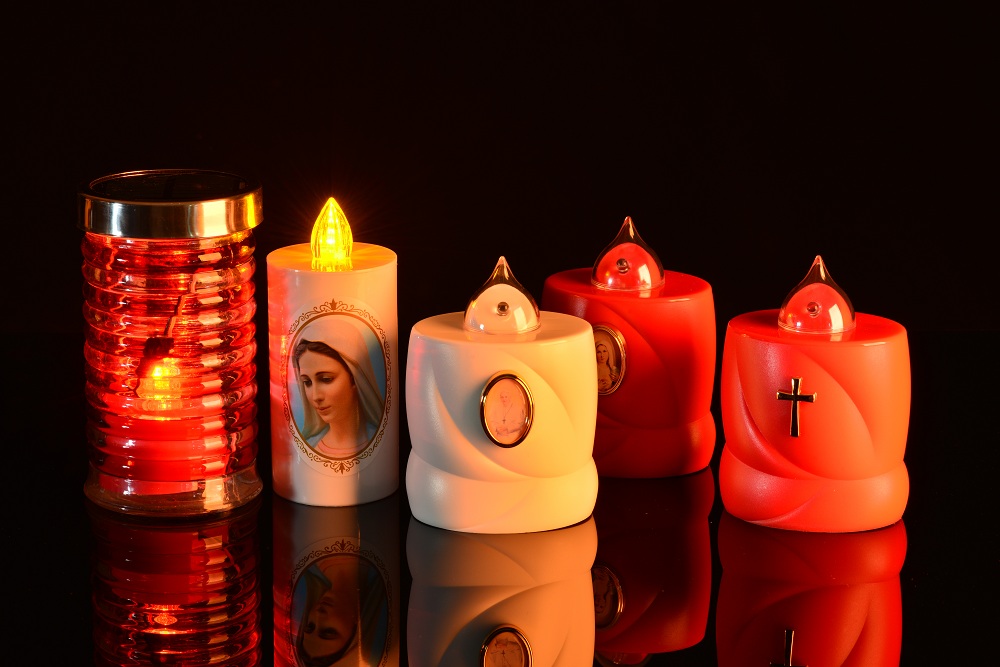
Votive candles are of great importance in all religions of the world, but in the Christian one, they take such a strong symbolic meaning that they have become over the centuries an indispensable element both in celebrations and in the decoration of churches and places…

Church supplies

Church supplies

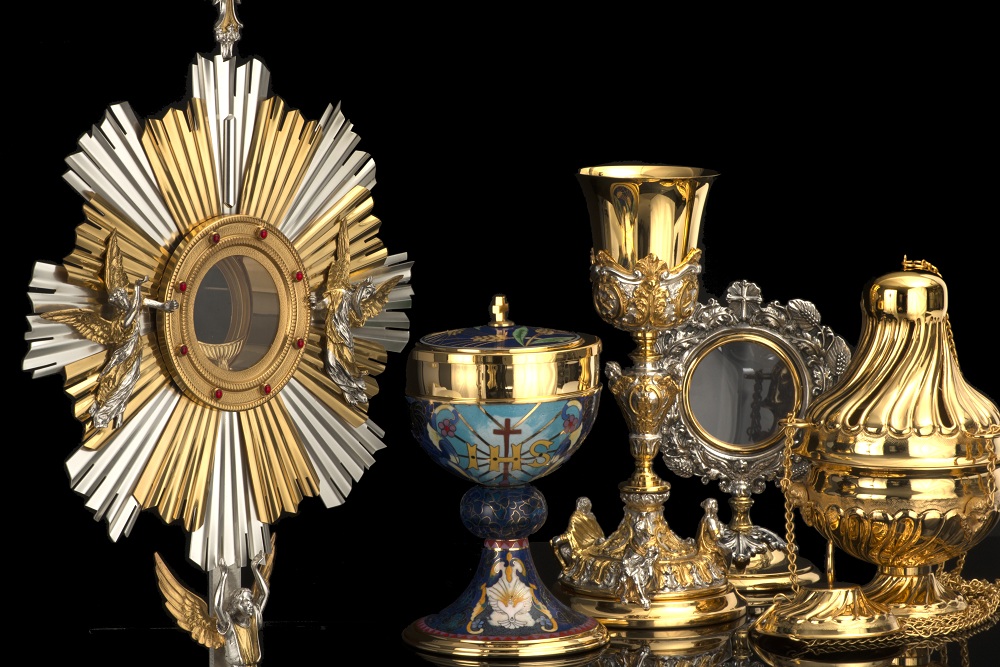
With Church Supplies we mean the set of objects that are used to worship, especially for the celebration of the Eucharist, but also to adorn the altar, the church and the person of the priest (in this case we speak more properly of liturgical vestments),…

Saint Rita of Cascia

Saint Rita of Cascia

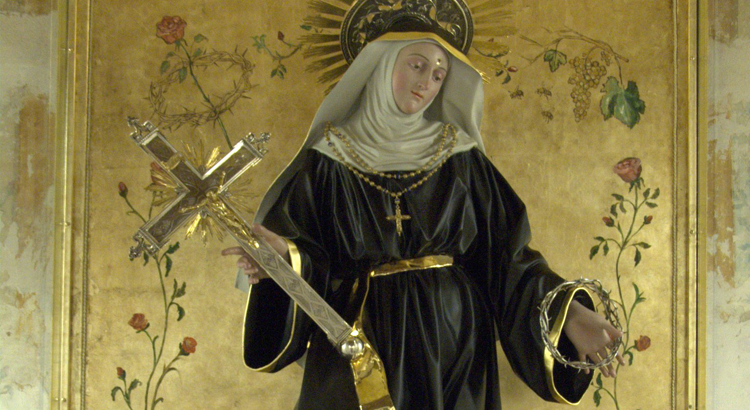
Saint Rita of Cascia was an Augustinian nun who lived in 1400. Born in Cascia (PG), was beatified 180 years after her death and proclaimed Saint after 453 years.

Saint Rita is the subject of an extraordinary popular devotion, and is certainly one of the most loved saints.

People have always felt very close to her, because of her life before taking monastic vows. In fact, Saint Rita of Cascia was for many years an ordinary woman, a wife, a mother, and this makes it more akin to common people than many other men and women sanctified over the centuries.

Widowed, Saint Rita devoted herself to a single purpose: to end the feud between families that had led to the murder of her husband. Put aside her grief and desire for revenge, Saint Rita of Cascia immersed herself in prayer, asking with assiduity and zeal to God’s forgiveness of the murderers of her husband.

Left alone, Saint Rita entered the convent, where she lived 40 years in contemplation, penance and prayer. They were years of suffering in which the nun imposed herself a hair shirt, isolation, and endless mortifications of the flesh. Saint Rita of Cascia, animated by the infinite love for Jesus, asked him to share his Passion. Jesus listened and Saint Rita was pierced in the forehead from one of the thorns in the crown wore by Christ on the cross. Saint Rita brought that painful wound as a mark of love until death.

For that Saint Rita is also known as the Saint of the “Thorn”. She is also known as the Saint of the “Rose”: shortly before her death, she asked a relative to bring her a rose from her father’s garden. Although it was winter, the woman went to the garden and found a beautiful rose flowering, which she immediately brought to the nun. The rose became the symbol of Saint Rita, which flourished in the sunshine of Christ despite a life full of thorns, to melt the winter ice from the hearts of men. The countless miracles meant that in Saint Rita was also attributed the nickname “Saint of the Impossible“.

On Holyart.com you will find Saint Rita statues, of different sizes and price ranges.