Author: Redazione

Sustainable Christmas: Decorating Mindfully

Sustainable Christmas: Decorating Mindfully

Contents1 Wooden Christmas Trees2 Recycled Plastic Baubles3 Solar-Powered Lights Wooden Christmas trees, DIY decorations, recycled plastic baubles, low-energy lights: small but significant gestures for a sustainable Christmas Christmas is a magical time for everyone. Homes fill with lights and warmth, streets shimmer with a gentle…

The Christmas Kalenda: what it is and when it takes place

The Christmas Kalenda: what it is and when it takes place

Contents1 The Christmas Kalenda2 The Christmas Novena3 Four Masses for Christmas4 The Anticipated Christmas Mass The Christmas Mass is one of the most significant moments of the year for every Christian’s spirituality. Let us discover the Christmas Kalenda and other special rites. The memory of…
The Story of Saint Barbara, Patroness of Firefighters and Sailors

The Story of Saint Barbara, Patroness of Firefighters and Sailors

Saint Barbara, patroness of firefighters, sailors, and miners, protects those who risk their lives every day in the fulfilment of their work

On 4 December, the liturgical memory of Saint Barbara is celebrated, recognising her as the protector of firefighters, sailors, and miners. Originally from Turkey, she was martyred in the 3rd century AD for her faith at the hands of her own father, Dioscurus, an associate of Emperor Maximian Hercules.

On the occasion of Saint Barbaras feast on 4 December, when the faithful commemorate her martyrdom, processions, prayers, and, in many communities, fireworks are held to honour the saint, who is also the patroness of pyrotechnicians. In particular, in Paternò, in the province of Catania, of which Saint Barbara is patron, solemn celebrations take place every year from 3 to 11 December, as well as on 27 May, the date of Saint Barbara’s patronage after she halted the eruption of Mount Etna in 1780, and on 27 July, the day of the translation of her relics.

The Santa Barbara Mining Trail is among the most evocative routes in Italy. It forms a roughly circular path of about 500 kilometres in the western area of southern Sardinia, covering the regions of Sulcis, Iglesiente, and Guspinese, and follows the ancient paths of miners, the routes connecting mines to each other and to settlements. It is a journey through breathtaking landscapes and historical trails, but also through other eras, discovering the stories of countless men who dedicated their lives to those mines, helping to shape their land.

Inside the San Giovanni di Bindua mine, near Iglesias, lies the Santa Barbara Cave, discovered by chance only in 1952. It is accessed via a small train, which traverses a labyrinth of underground galleries for over 700 metres. The Santa Barbara Cave is not only a fascinating subterranean complex but also a testimony to the geological past and the millennial work of nature, with its walls lined with dark brown tabular barite crystals, and stalactites and stalagmites forming columns that can reach up to 25 metres in height.

In Rome, near Campo deFiori, stands the church of Santa Barbara de’ Librari, also known as Santa Barbara alla Regola, a small church dating back to the early 1300s, entrusted to the confraternity of de’ Librari until its dissolution, and enriched over the centuries with Baroque decorations and splendid frescoes.

The Story of Saint Barbara and Her Martyrdom

Originally from present-day Turkey, Saint Barbara was the daughter of a wealthy pagan named Dioscurus, who worked for the Roman emperor. Jealous of her beauty, her father raised her in absolute isolation, in a high tower inaccessible to external influences. However, the young woman nurtured a fervent Christian faith and, defying her father’s wishes, secretly embraced Christianity. Her beauty and intelligence attracted many suitors, but she refused them all, steadfast in her desire to dedicate herself entirely to God.

When her father discovered her conversion, he first tried to persuade her to renounce her faith, but Barbara burned the pagan idols and fled into the forest. Dioscurus then invoked the intervention of the Roman authorities against his rebellious daughter. Barbara was dragged before Prefect Marcian and subjected to terrifying tortures. Her body was scourged with rough, stinging cloths until her skin was flayed, and her flesh was burnt with red-hot metal, yet she miraculously emerged unharmed from each torment, growing ever stronger in faith. Eventually, it was Dioscurus himself who raised the sword and beheaded his daughter, but a moment later, according to legend, the sky split open, and a lightning bolt struck him dead.

In the 6th century, the relics of the martyred Saint Barbara were transferred from Egypt to Constantinople, and subsequently to Venice, in the church of San Giovanni Evangelista in Torcello in 1009. The veneration of this martyr spread widely between East and West, acquiring over the centuries a profound symbolic meaning, becoming a beacon of protection and courage for those who work in dangerous conditions and face sudden risks and imminent peril.

Who Saint Barbara Protects

Saint Barbara is remembered not only among the Holy Martyrs, men and women who sacrificed their lives, often young, for the sake of faith. She is also one of the fourteen helper saints to whom remedies for various diseases and health problems were historically associated, with a collective feast originally on 8 August, later suppressed. Among them are Saint Blaise of Sebaste, protector against sore throats, Saint Christopher, who protected against plague, hurricanes, and travel accidents, and Saint Barbara, who offered protection against fever, lightning, and sudden death.

Holy Martyrs

Read more:

Holy Martyrs: sacrificing one’s life in the name of God
The Holy Martyrs are men and women, often very young, who sacrificed their lives for the love of God…

The patronage against sudden death likely stems from the legendary death of her father, but over time, Saint Barbara has become the saint invoked for the protection of all those who, through their work or way of life, face the danger of instant death every day, such as pyrotechnicians, firefighters, artillerymen, carpenters, and miners. Ammunition depots on warships are named “Santa Barbara” in her honour.

Symbols of Saint Barbara

Common depictions of the saint show her as a beautiful young woman elegantly dressed, often captured at the moment of her beheading, the final act of her long path of martyrdom.

Saint Barbara is often depicted with the symbols of her martyrdom, a torch or the sword with which her father executed her. In many statues and paintings, she holds only the palm of martyrdom and wears a crown, or the chalice and host, symbols of her unwavering faith. Other times, she is shown holding the tower in which her father imprisoned her — a three-windowed tower, as she had requested, one for each Person of the Holy Trinity.

Another of the oldest symbols associated with Saint Barbara is the peacock feather, evoking immortality and apotheosis, as well as beauty. Some versions of the legend recount that during her torture, the rods used by her executioners turned into peacock feathers. Other recurring symbols linked to Saint Barbara include cannons and catapults, recalling her patronage of artillery, and the book, representing her scholarly life.

The Adoration of the Shepherds: When the Angel Announced the Birth of Jesus

The Adoration of the Shepherds: When the Angel Announced the Birth of Jesus

The Adoration of the Shepherds: from the Gospel of Luke to the Nativity Scene — an ancient yet ever-relevant story From childhood, we learn to recognise the main figures of the Nativity Scene: the Holy Family — Mary, Joseph, and of course the Baby Jesus…

Christmas Mass: All You Need to Know About the Rite

Christmas Mass: All You Need to Know About the Rite

Contents1 Why is Christmas Celebrated on 25 December?2 Midnight Mass3 Why is Christmas Mass Celebrated at Midnight?4 The Four Celebrations of Christmas Mass5 When Did Midnight Mass Begin?6 When Was Jesus Born? The Christmas Mass is an ancient tradition, rooted both in the Holy Scriptures…

Last-Minute Christmas Gifts

Last-Minute Christmas Gifts

Last-minute Christmas gifts: unique gift ideas that bring joy both to those who give and to those who receive, for a truly special Christmas

Christmas should be a time of celebration and peace for everyone, yet the hectic world we live in, with its fast pace and endless commitments, often forces us to rush around trying to meet everyone’s needs, making us lose sight of the true spirit of the season. Very often, we find ourselves on the eve of Christmas still searching for the perfect gift for our loved ones—but there’s no need to worry. Even when time is short, there are still plenty of options to surprise and bring a smile to those we love. There are, in fact, many creative ideas for last-minute Christmas gifts, with suggestions for him and for her, as well as charity gifts to bring a little happiness to those spending a less fortunate Christmas than ours.

On our blog, we have published several articles to help you choose your presents and also about the origin of the custom of giving gifts and the meaning behind exchanging presents at Christmas. This is a deeply rooted tradition that dates far back in time, long before Father Christmas and the consumerist frenzy of today. The custom of exchanging gifts among adults has ancient roots, dating back to the Romans, who, on New Year’s Day (1st January), would exchange consecrated twigs as a sign of good wishes for prosperity and abundance—these were called strenae.

Today, Christmas is a universal celebration of love and hope, and the exchange of gifts carries a profound meaning that often goes beyond the material value of the object itself. Presents symbolise the wishes of love and hope we want to share with those dear to us—an expression from the heart, a gesture that brings joy both to giver and receiver.

Let’s look at some ideas for last-minute Christmas gifts.

Customisable Bracelets

A lovely idea could be to give a customisable, modular bracelet. What are they? These are bracelets made of silver and rubber to which charms—usually in silver or thermo-ceramic, but also small dangling crosses, decorated links, or Murano glass beads—can be added.

These modular bracelets are suitable gifts for any occasion, and in our online store you’ll find a wide selection of charms, including those with symbols of faith. Personalised modular bracelets combine the beauty of jewellery with the meaning of the charms chosen, creating something unique that reflects the recipient’s personal taste. They are versatile, original pieces that allow the wearer to express their personality and style in a distinctive way.

The defining feature of these bracelets is that you can add or remove charms or pendants according to your taste and the meaningful events of your life. This flexibility makes them a perfect gift, as they can be personalised over time to match the recipient’s preferences and interests.

800 silver drop filigree cross pendant
Buy on Holyart
Green speckled Murano glass bracelet loop in 925 silver
Buy on Holyart
925 silver shell bracelet charm loop
Buy on Holyart
925 silver snake chain bracelet 16-19cm
Buy on Holyart

Charitable Christmas Gifts

Choosing charity gifts for Christmas is an act of love and generosity—for both the giver and the receiver. Because Christmas should be a season of joy, sharing, and love, there is no better way to celebrate the Christmas spirit than by choosing gifts that give back. This ethical choice will not only bring happiness to those who receive the presents but will also have a positive impact on those who benefit from them.

At the heart of Christmas, we should think of giving not merely as a way to fulfil wishes or surprise friends and family, but as an act inspired by deep feelings of love, compassion, peace, respect for those who suffer, and care for our precious planet. Love for those closest to us is what drives us to search for the perfect gift—but it should also extend to love for humanity as a whole. This season offers us the opportunity to show affection and care not only to our loved ones but also to those in difficulty, those struggling to survive, and the less fortunate.

Caring for the environment is also an important part of choosing charity gifts. By selecting sustainable, handmade, or eco-friendly products, we help to protect our planet—a tangible sign of respect for the Earth we share with all living beings.

Solidarity gift ideas

Read more:

Solidarity gift ideas, for a Christmas of solidarity
Solidarity gift ideas for a better Christmas for everyone, near and far. Our selection…

Monastery Product Hampers

Among Christmas gift ideas, gourmet treats are a must. In this case too, we recommend something original—such as a hamper composed by you with monastery products. You can choose from a wide variety of sweets, such as chocolate, jams, and candies, as well as olive oil, liqueurs and digestifs, herbal infusions, and teas—all made following ancient recipes passed down through monastic wisdom and using only natural ingredients.

In monasteries, tradition and dedication come together to create a wide range of high-quality products. Our store offers a selection of unique items from monasteries around the world—from beekeeping products such as honey, to liqueurs and wines, to essential oils, sweets, brandies, herbal remedies, and much more, each crafted with care.

As you may know, monasteries are renowned for producing exceptionally high-quality honey and beekeeping products. Honey, with its natural sweetness and health benefits, is just one of the treasures you can find. What could be a sweeter gift?

Monasteries are also famous for producing fine liqueurs, wines, brandies, and spirits. These drinks, often made according to ancient recipes handed down through generations, offer a taste of tradition and craftsmanship—perfect for convivial moments or as special gifts for a warm, flavourful Christmas shared with others.

For centuries, monastic herbalists have created herbal teas, preparations, and natural remedies to promote physical and mental wellbeing. These products offer a natural approach to health and can make a thoughtful gift for those we love.

And let’s not forget that monks and nuns carefully prepare handmade sweets, confections, and delicacies, often following secret ancient recipes. These delightful treats are the fruit of tradition, patience, and dedication.

Agios Jewellery

Giving religious jewellery at Christmas? An excellent choice! Whether you’re looking for gift ideas for her or for him, a religious gift can be both original and meaningful.

Agios religious jewellery, for example, represents outstanding Italian craftsmanship and makes a wonderful Christmas gift idea. The use of high-quality materials is one of the company’s pillars, resulting in the creation of unique religious pieces in silver and gold.

The deep roots of Italian artisanal tradition combine with religious faith, giving life to extraordinary creations that carry the meaning of the prayers engraved upon them. The wide collection of Agios religious jewellery includes gold, silver, and rose gold rings, each engraved in Latin with moving prayers. These pieces represent a perfect fusion of faith and fashion, allowing the wearer to express their spirituality with elegance and style.

Agios religious jewellery is designed to be worn in everyday life. Thanks to their versatile design, you can carry your faith with you at all times.

Sacred Heart pendant necklace Agios rose ruby ​​zircons
Buy on Holyart
Sacred Heart rosary necklace pave zircons purple Agios
Buy on Holyart
Agios rosary ring gold-plated 925 silver black zircons
Buy on Holyart
Agios cubic zirconia rose infinity bracelet
Buy on Holyart
Letter to Santa Claus: You Can Send It with Our Mailboxes

Letter to Santa Claus: You Can Send It with Our Mailboxes

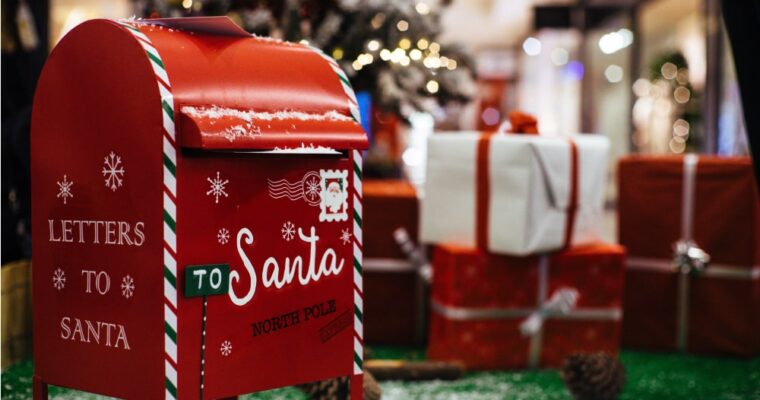
Writing a letter to Santa Claus? From now on, it’s even easier with the beautiful Holyart mailboxes! When did children start writing to Santa Claus? The tradition of sending a letter to Santa is widespread almost all over the world. About a month before Christmas,…

Christmas Music Boxes: The Perfect Union of Craftsmanship and Tradition

Christmas Music Boxes: The Perfect Union of Craftsmanship and Tradition

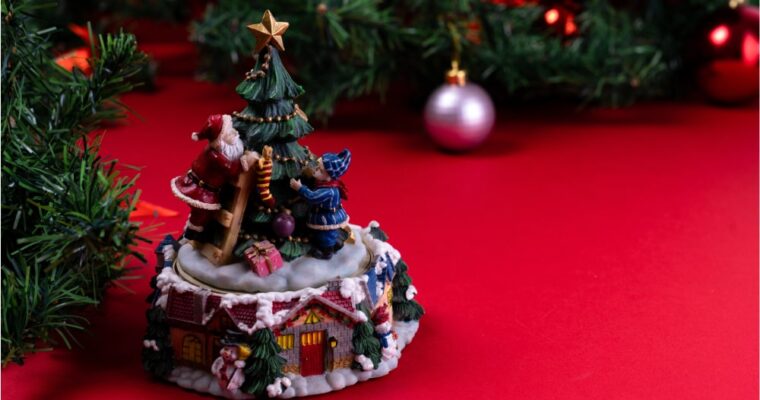
Contents1 Music Boxes: History2 Why Give a Music Box3 Christmas Music Boxes on Holyart Christmas music boxes are decorative objects that enrich the festive atmosphere with magic and a touch of nostalgia, but they are also truly special gift ideas for any occasion Who has…

The Nativity Where Mary Rests: The Nativity That Moves Pope Francis

The Nativity Where Mary Rests: The Nativity That Moves Pope Francis

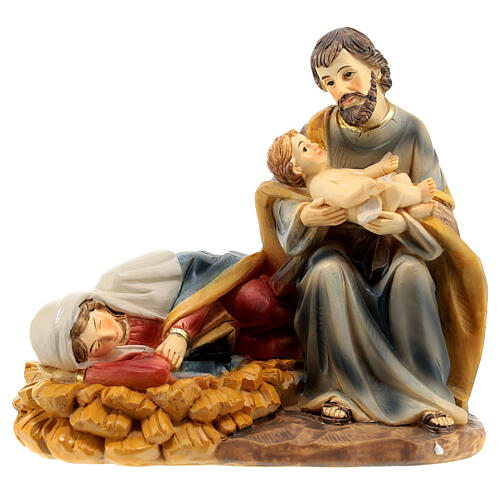
In the Nativity, Mary rests while Saint Joseph keeps watch. Here is the original depiction of the Nativity that moved Pope Francis and shows us a new face of the Holy Family.

Every year, the Nativity scene, with Mary holding the Baby Jesus in her arms or lovingly watching over him as he lies in the manger, while Saint Joseph stands slightly aside, watching over them, nurtures the spirituality and devotion of millions of people around the world during the Christmas season and beyond. But what happens if in the Nativity Mary is resting, and it is instead Saint Joseph who takes care of the little Jesus?

A few years ago, Pope Francis recounted that he received, as a birthday gift, an original reproduction of the Nativity called Lets Let Mum Rest. In this particular Nativity, unique in its kind, the Virgin Mary is peacefully asleep, with her head resting on a sack that serves as a pillow, while nearby Joseph cradles the Baby Jesus, who stretches sleepily, reaching his little hands into the air. In short, in this Nativity Mary rests, and Joseph plays the role of mum!

The Pope was deeply impressed and moved by this alternative Nativity and spoke about it during his catechesis. In particular, he focused on the simplicity and humanity of this representation, which, as much as or even more than many traditional Nativity scenes, expresses tenderness, as well as the everyday challenges within a family and marriage. Who, among those with children, does not remember how exhausting it can be to care for a newborn during the night, when mum and dad must take turns soothing the baby and getting some rest?

Thus, Lets Let Mum Rest shows not only an alternative Nativity but also a new way of conceiving the Holy Family — not as frozen in roles defined and codified over the centuries, but as it truly was and is: a family, the family of all families. Made of roles, certainly, but roles that can be reversed, and made of domestic sweetness and harmony. These are the same sweetness and harmony that the Pope wished for everyone to bring into their own homes, during the Festive season and beyond. For Pope Francis, the Nativity is a domestic Gospel, an inspiration, an invitation to welcome the example of the Holy Family and bring into one’s home joy, closeness, shared daily concerns, and a deep, loving union in everyday life.

The Nativity is more important than ever today, in the hectic pace of everyday life, when it is difficult to find time for spirituality and what is truly important, essential. Setting up the Nativity in one’s home is therefore a way to open the door to Jesus, to let him enter our lives.

The image of the Virgin Mary resting while Joseph cares for Jesus gives us an extraordinarily modern image, as unusual as it is striking. If in this particular Nativity Mary is resting, this does not mean that her thoughts and heart are not entirely directed towards the Child she has just given life to. On the contrary, it was precisely that constant devotion, that effort of love, that exhausted her energy and forced her to seek rest. And it is beautiful to imagine Saint Joseph gently taking the little Jesus from her arms and, smiling tenderly at her, saying: Go, rest a little, I will take care of everything.

A man and a woman, a husband and wife, sharing the experience of the birth of their first child, and with it the immense, ineffable mystery of which God wanted them to be a part. After all, we must remember that Joseph and Mary could not have known anything about what would follow: the sermons, the miracles, the crowds praising and following Jesus throughout Judea. They lived a normal life, a daily routine made up of hard work, good moments and bad moments, but always shared, day after day, step by step. A daily life waiting for just one child to be complete.

biblical names

Read more:

Biblical male names: what they are and their meaning
The names in the Bible have always provided an inspiration for parents…

In this married couple, who choose to reverse their roles and exchange responsibilities, the Pope, and we with him, cannot help but recognise a contemporary and human interpretation of the deeper meaning of the Nativity.

In our online store, several models of this splendid alternative Nativity are available, with Mary resting and Saint Joseph watching over Jesus.

Reclining Nativity, 20 cm, painted resin composition
Holy Family lying 20 cm composition in painted resin
Buy on Holyart
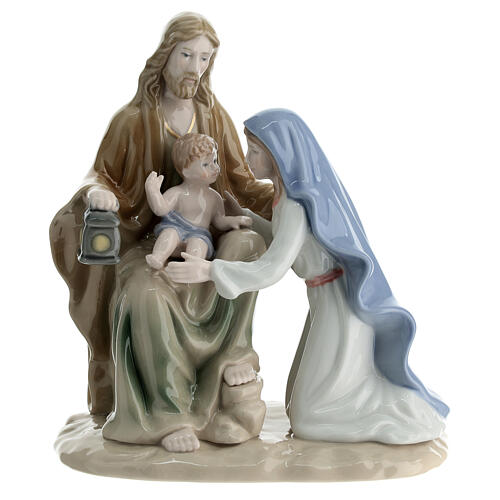
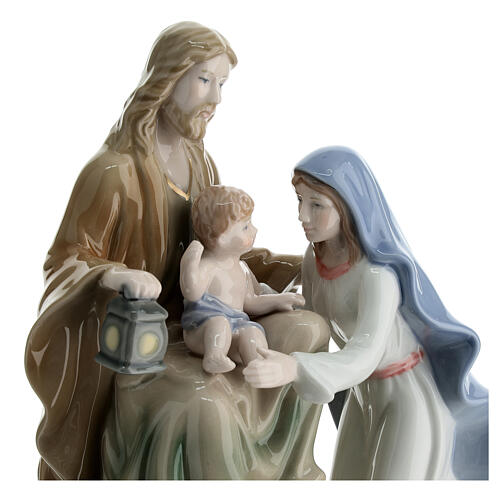
Holy Family set Navel colored porcelain 18 cm
Buy on Holyart
Holy Family statue Mary sleeping hand painted 10x15x10 cm
Buy on Holyart
How to Decorate the Inside of Transparent Christmas Baubles

How to Decorate the Inside of Transparent Christmas Baubles

Contents1 DIY Transparent Christmas Baubles2 Materials Needed3 Decorating and Ideas for the Christmas Tree Transparent Christmas baubles are an original and creative way to decorate your Holiday Tree. Here’s how to make them in just a few simple steps How lovely are transparent glass baubles…

Nativity Scene Modelling: Miniature Items and Where to Find Them

Nativity Scene Modelling: Miniature Items and Where to Find Them

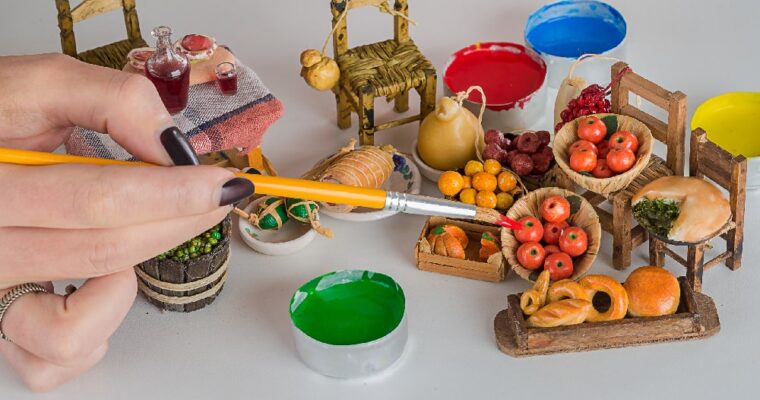
Nativity Scene Modelling: Miniature items to make your DIY Nativity Scene even more realistic – and where to find them Can we really speak of “Nativity Scene Modelling”? Absolutely! For those who love and appreciate the wonderful tradition of Nativity Scenes, creating a homemade Nativity…

Snow Globe: How It Became a Magical Christmas Tradition

Snow Globe: How It Became a Magical Christmas Tradition

The snow globe is one of the most loved and famous Christmas decorations, an object found all around the world. But how did it come about?

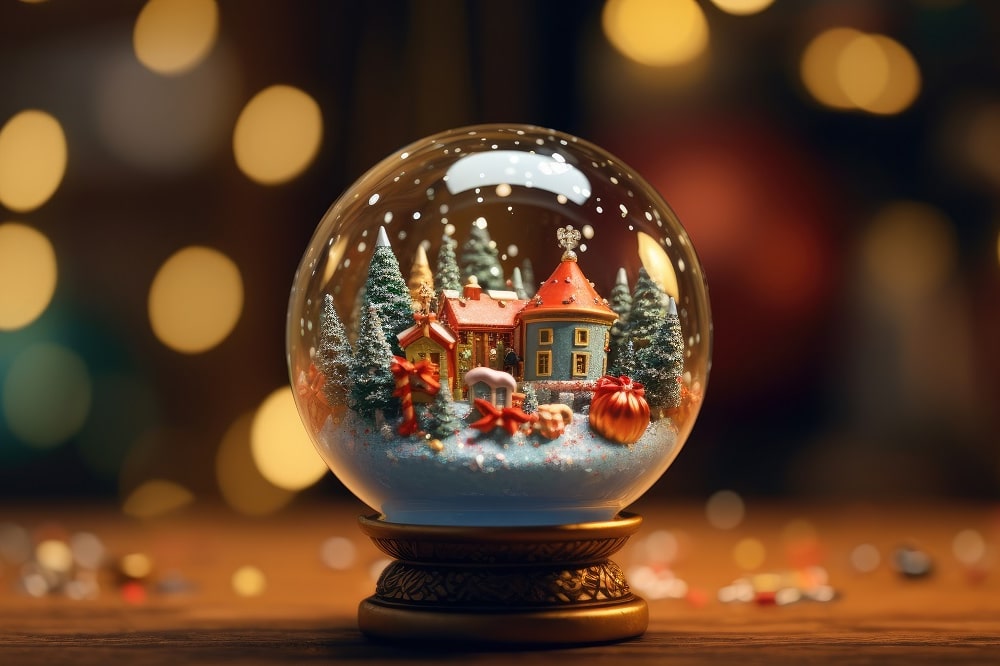
Who hasn’t received a snow globe as a gift at least once in their life? It’s a glass or crystal sphere (though plastic is now also widely used) filled with water, containing inside a small figurine or miniature scene. Besides the water, there are white particles inside the globe that float and swirl when shaken, creating the illusion of falling snow. It’s an extraordinarily popular object, offered as a souvenir in countless situations and found in virtually every gift shop in every city around the world.

What is perhaps less known is that the tradition of glass spheres containing snow — also known as snowballs or snow globes — has ancient origins, dating back at least to the 19th century. The first snow globe was created almost by accident, but soon these decorative objects became popular and have continually reinvented themselves over time, never losing their vintage charm.

Today, snow globes are often transformed into music boxes, with a mechanism that makes the figurines inside rotate to the sound of a sweet melody and stirs the snow without the need to turn the globe upside down. Especially Christmas snow globes, associated with the winter holidays, have become much-loved decorations and timeless gift ideas.


How the Tradition of Snow Globes Began

The most widely accepted sources claim that the tradition of glass spheres containing snow originated in Austria in the 19th century. The first example of a snow globe is said to have been invented by chance by a German inventor named Erwin Perzy I, who specialised in surgical instruments. While attempting to create a lamp that would properly illuminate operating rooms, he tried placing glass and metal powder inside a water-filled glass globe lit from behind by a bulb, hoping to increase the brightness.

He noticed that the effect resembled swirling snow, and he even tried adding a bit of semolina, which enhanced the effect. Inspired by this discovery, he placed a small model of the Mariazell Shrine, near Vienna, inside the globe. He had created the first snow globe — and immediately realised it could become very popular.
To this day, his descendants continue his work in the famous Perzy workshop in Vienna-Hernals, known as the Original Wiener Schneekugelmanufaktur (Original Viennese Snow Globe Factory).

In the 1940s, the Perzy family began adding Christmas-themed elements to their snow globes. They did so to support young American soldiers far from home, who could appreciate familiar miniature scenes. Thus, Perzy II started producing new snow globe models featuring Christmas trees, small Father Christmas figures, and snowmen inside. The Original Wiener Schneekugelmanufaktur began selling its products in the United States, and the snow globe trend soon crossed the ocean.

There is also a tradition claiming that the first snow globe was invented in France, where, as early as the 19th century, similar objects known as boule de neige already existed. It is difficult to confirm who had the idea first.

Regardless of their exact origins, snow globes became popular as decorations — particularly Christmas ones — all over the world. Today, they are available in a wide variety of styles and designs, from traditional Christmas scenes to customised versions featuring images, characters, and different themes. They are often considered ornamental and collectible items that bring a touch of winter magic to the festive season.


How to Make a Snow Globe

But what if we wanted to make our own snow globe? It’s not difficult at all — all you need is a bit of creativity, some simple craft materials, and a touch of manual skill.
First, choose the container. If you don’t have a glass sphere, you can use a jar — preferably a rounded one — but make sure it can be sealed tightly.
Next, select the object to place inside. It could be a resin figurine or a small statue, but remember it must be water-resistant. The figurine should be glued to the inside of the lid using waterproof glue, before filling the jar with distilled water, thickened slightly with a few drops of glycerine.
Finally, choose the particles that will recreate the snow: glitter, sequins, and so on. The Perzy family stopped using semolina long ago, replacing it first with hard wax and magnesium powder. Today, the mixture they use to make their artificial snow is top secret!
All that’s left is to close the jar tightly and seal the edge with hot glue — and there you have your personalised snow globe, ready to brighten your home or serve as a delightful gift for someone special!

Solidarity gift ideas

Read more:

Solidarity gift ideas, for a Christmas of solidarity
Solidarity gift ideas for a better Christmas for everyone, near and far. Our selection…


Christmas Snow Globes on Holyart

The charm of the snow globe has captivated us at Holyart too. In our online store, you’ll find various models of Christmas-themed snow globes — original gifts for your friends as well as festive decorations for your home.

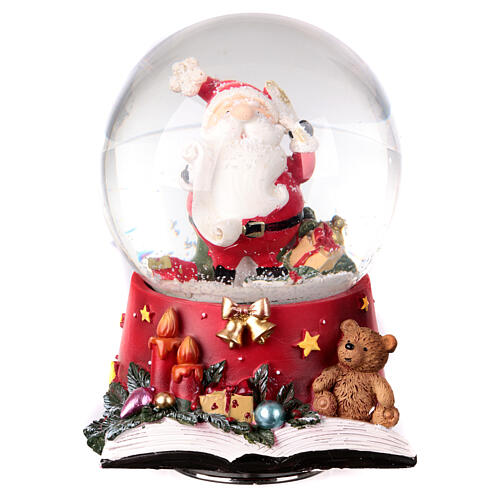
The Glass Snow Globe with Father Christmas is made of glass and resin and stands 15 cm tall. It also functions as a music box: by winding the mechanism at the base, the globe rotates and plays We Wish You a Merry Christmas.

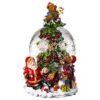
In the Music Box with Christmas Tree, the glass sphere encloses a Christmas tree made of polystone, decorated with traditional ornaments: Father Christmas, presents, teddy bears, and snow. The music box sits on a base that, when wound up, plays a Christmas melody.

The charming family of snowmen inside a glass lantern is an original reinterpretation of the classic globe. Thanks to three AA batteries, the lantern lights up and the snow inside begins to move.

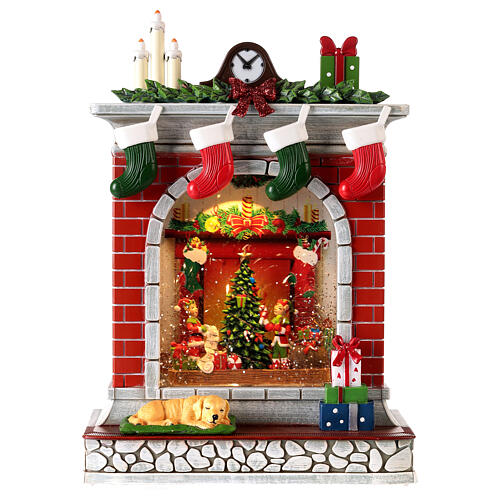
In the Glass Fireplace with Snow and Elves, the snow movement is battery-operated. The glass fireplace is decorated with Christmas motifs, and inside the glass are elves gathered around the Christmas tree.

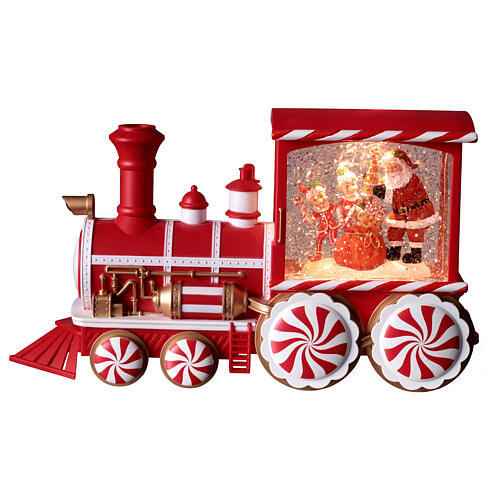
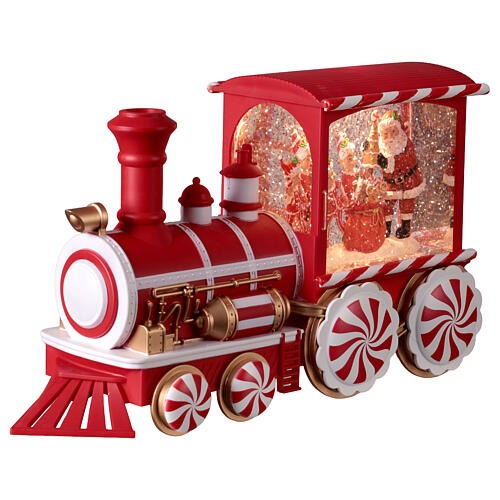
Charming and festive, the Christmas Locomotive is a delightful snow scene on a red carriage with candy-shaped wheels. Inside, Santa and his cheerful elves fill the gift sack, surrounded by swirling snow, lights, and a joyful Christmas melody.

Santa Claus snow globe with decorated base 15x10 cm
Santa Claus snow globe decorated base 15x10 cm
Buy on Holyart
Christmas tree music box 20x10x10 cm
Christmas tree snow globe with music box 20x10x10 cm
Buy on Holyart
Snow globe lantern with snowmen 25x10 cm
Snow globe with snowman in lantern 25x10 cm
Buy on Holyart
Snow globe fireplace with elves 25x20x10 cm
Fireplace snow globe with snow with elves 25x20x10 cm
Buy on Holyart
christmas-candy-cane-train-snow-globe-30x10x15-cm
Christmas candy cane train snow globe 30x10x15 cm
Buy on Holyart
A priest’s life: answers to the most curious questions

A priest’s life: answers to the most curious questions

Contents1 How much does a priest earn?2 Do priests have holidays?3 Where does a priest sleep?4 What does a priest do during the day?5 How does a priest go to confession?6 How long must one study before becoming a priest? What is life as a…

Cremation and the Catholic Religion: Is It Permitted?

Cremation and the Catholic Religion: Is It Permitted?

Contents1 Meaning of the Cross Before Christianity2 Cremation and Catholicism3 How to Keep the Ashes of the Deceased4 Burial or Cremation: What Does the Bible Say? The relationship between cremation and the Catholic religion has long been a subject of misunderstanding and confusion. Here’s what…

How Cloistered Nuns Live: A Glimpse into Their Fascinating Lives

How Cloistered Nuns Live: A Glimpse into Their Fascinating Lives

Cloistered nuns, the hidden heart of the Catholic Church, play a fundamental role in the spiritual lives of the faithful through their commitment to prayer and contemplation.

Most people, when hearing about cloistered nuns—and religious cloistering in general—are inclined to feel a sense of bewilderment. In our fast-paced world, which changes at a dizzying speed, often leaving little time to process information or absorb events and their consequences, it is difficult to imagine the life of someone who deliberately chooses to withdraw from it all, to step away from the world and let it flow past from a place of silence and isolation. But is that really how life unfolds in cloistered convents? Perhaps once it was so, but today, things are different.

While it is true that cloistered nuns—often also called contemplative nuns or cloistered sisters—still fulfil a very particular role within the Catholic Church, living in communities separated from the outside world and devoting themselves to praying for the salvation of all, it is also true that their responsibilities and contributions to the modern world have changed compared to the past. There is now greater openness, including encounters with people who come from that very world in search of help.

This form of religious life is based on separation from the material world in favour of a closer union with God. It is also characterised by an ascetic simplicity, a renunciation of worldly pleasures and comforts, and vows of poverty and obedience. The monasteries where these nuns live are generally enclosed, but today, in some cases, it is possible for outsiders to meet with them in the parlour, seeking spiritual comfort and advice. In addition to communal and personal prayer, contemplation, and adoration of God, cloistered nuns also carry out necessary tasks for the common good of the community, such as gardening, sewing, and in some cases, producing goods that are sold outside the monastery.

monks’ inventions

Read more:

The Inventions of Monks: Major Contributors to European Progress
Discover how the inventions of monks fostered technological and scientific development in medieval Europe and passed …

Great importance is also given to silence, which plays a fundamental role in the spirituality of cloistered life. It is the atmosphere in which they live and the medium through which they open themselves to God’s presence. This is a deep, interior silence—not merely the absence of noise, but a state of tranquillity essential for encountering the Divine Presence.

What Do Cloistered Nuns Do?

But what is life really like for cloistered nuns? Their lives are based on a delicate balance between prayer and work, following a carefully structured daily rhythm. A cloistered nun’s day begins early, at 5:00 a.m., with personal prayer, meditation, and in certain orders, chanting praise to God. At 8:00 a.m. there is a common Mass, followed by breakfast at 8:30 a.m. After breakfast, each nun attends to her assigned duties until lunch around noon.

After lunch, one of the nuns reads a spiritual text while the others listen in silence, creating a space for reflection and deepening their faith. This is followed by a recreation period, where the nuns gather to spend time together. At 6:00 p.m., they recite the Rosary. At 10:00 p.m., they prepare for bed and enter into nightly silence.

In addition to prayer, cloistered nuns engage in manual work, both necessary for communal living and for producing liturgical items, religious icons, sweets, and other products that are later sold outside the monastery to support the community.

Cloistered nuns renounce family ties and romantic relationships in order to embrace the religious life, but they are not entirely detached from the outside world. They receive visitors in the cloister for spiritual reasons or practical ones—such as receiving material support or selling their products. These encounters with the outside world offer them the opportunity to share their faith and to inspire those seeking a deeper spiritual life.

Silence shields monastic life from outside influences that might distract the nuns from their vocation. It helps them concentrate, immerse themselves in prayer, listen to God’s voice attentively, and remain open to His guidance. Through silence, they learn to discern God’s will and follow the spiritual path He has laid out for them.

But silence is also an opportunity for fraternal charity within the monastic community. It fosters mutual understanding, the sharing of thoughts and feelings, and growth in relationships with their fellow sisters. In silence, a space for respect and mutual listening is created, allowing for a true communion of hearts.

Despite their cloistered life, the nuns are able to stay informed about the outside world. They may read newspapers—especially Catholic ones—and listen to the radio to keep up with events and important news. They watch little television, and only religious programmes or papal appearances.

How Does One Become a Cloistered Nun?

Anyone might wonder how to become a cloistered nun. The journey is one that requires time, discernment, and a deep spiritual commitment. First and foremost, it is important to feel a strong attraction to the contemplative life. This desire may arise at a young age or develop gradually over time.

Any woman can become a cloistered nun. It is not necessary to be a virgin. Vows may be taken even by those who have had relationships with men, by widows, separated women, or even those who have experienced sexual violence or prostitution. What matters most is that the individual has a sincere desire to dedicate herself wholly to God and to follow the cloistered life with devotion and commitment.

Next, one seeks the guidance of a spiritual director or a religious community to begin a period of discernment, during which the vocation to monastic life is explored and the understanding of contemplative spirituality is deepened.

An initial period of formation is required, during which the rule of the order is studied, Scripture is explored, spiritual practices are learned, and communal life is experienced. This formation may last several years and usually includes a novitiate, where one is more deeply initiated into monastic life and participates in the community’s activities.

Eventually, after completing this process, the woman takes religious vows of poverty, chastity, and obedience, committing herself to live the life of a cloistered nun for the rest of her life.

The Carthusian Order

The Carthusian Order is one of the most renowned and strictest monastic orders in the Catholic Church. Founded by Saint Bruno in 1084 in the Isère region of France, the order takes its name from the Chartreuse Mountains, where the saint and the first Carthusians withdrew to live a life of solitude and contemplation.

Carthusian life is unique in its union of solitary men living in small communities while maintaining a strong eremitic vocation. The Carthusians devote themselves to unceasing prayer, study, manual labour, and austerity, embracing a strict rule that demands total dedication and renunciation of the outside world.

The Carthusian Order offers a valuable example of profound spiritual seeking and serves as inspiration for those desiring a life of silence and contemplation at the heart of the Church. Its motto, Stat Crux dum volvitur orbis (“The Cross stands firm while the world turns”), reflects its deep spirituality.

Throughout the centuries, the Carthusians have remained “solitaries gathered as brothers,” living mostly in isolation, except during communal liturgies and a few informal moments such as recreation.

Carthusian monks live a life centred on seeking God in solitude and silence, though they are not entirely confined to their cells. They also carry out practical tasks necessary for the smooth running of the monastery, known as “obediences”. Like cloistered nuns, their days are divided between solitary prayer and meditation in their cells, and moments of communion and sharing, such as Mass. Each brother recites the Divine Office in his own cell. Each is also responsible for daily duties, including housekeeping, all within the bounds of the cloister. Carthusian monks also practise night prayer at midnight, participating alone in the morning office.

How Many Cloistered Monasteries Are There in Italy?

In Italy, there are around 67,000 cloistered nuns and sisters, spread across convents that often have very small communities. Consider, for example, the nuns of the Monastery of Saint Rita of Cascia, who dedicate themselves to bringing Christ’s light into the world, offering love, compassion, and comfort to those in need. In that Augustinian monastery, there are only twenty-three religious sisters, but the average is even lower—about eight nuns per convent.

Saint Rita of Cascia.

Read more:

Saint Rita of Cascia, Patron Saint of Marriages and Impossible Causes
Among the few married saints that Christian history can enumerate, Saint Rita of Cascia is perhaps the most beloved …

The Oldest Confraternities: History and Curiosities

The Oldest Confraternities: History and Curiosities

Contents1 How a Confraternity Works2 Difference Between a Confraternity and an Archconfraternity3 Confraternity of the Gonfalone4 Archconfraternity of the Blessed Sacrament5 Confraternity of the Holy Crucifix6 Confraternity of Mercy For centuries, confraternities have formed a connective tissue within Italian society, balancing devotional spirit, religion, and…

Marian symbols: what they are and their meaning

Marian symbols: what they are and their meaning

Contents1 The Mirror of Justice (Speculum iustitiae)2 The Moon3 The Rose4 The Ivory Tower5 The Ark of the Covenant6 The Gate of Heaven7 The Seat of Wisdom8 The Burning Bush9 Gideon’s Fleece The rose, the moon, but also the Gate of Heaven and the Ivory…

Miracles: what they are and how they are classified

Miracles: what they are and how they are classified

Healings and exorcisms, apparitions, mastery over nature, even the resurrection of the dead. Jesus and his miracles, a legacy of history and Faith that remains ever relevant.

For the Catholic Church, miracles exist. Indeed, the miracles attributed to Jesus and reported in the canonical Gospels are to be regarded as historical events. We have deliberately made the distinction between the Canonical Gospels and the Apocryphal Gospels, because although in the latter miracles are even more numerous and spectacular, they are entirely devoid of historical veracity and therefore not recognised. After all, when speaking of the Apocryphal Gospels, it is common to encounter a more fairy-tale and marvellous dimension to the events in the life of Jesus and those who knew him, and it is inevitable that the miracles also become true acts of magic, wonders told more to amaze and capture attention than to inspire genuine Faith.

The lost years of Jesus’ life

Read more:

The lost years of Jesus’ life
Let us investigate the lost years of Jesus’ life. What was he doing before he started preaching? Did he ever …

The miracles recognised by the Church are therefore historical accounts, even if interpreted from a theological point of view, or allegorical according to some biblical scholars, but in any case clear signs of the identity of Jesus and of his mission. The Catechism (Catechism of the Catholic Church, nos. 547–550) describes them as testimony to the fact that he is the Son of God, as an invitation to believe in him, and acknowledges their effectiveness in strengthening Faith. In particular, Eucharistic Miracles are those supernatural events through which God confirms the real presence of the body and blood of Christ in the Eucharist, thereby affirming the Faith of believers.

More generally, a miracle is any occurrence not attributable to natural causes but justified by divine intervention. It is, in fact, solely within God’s will and power to alter the natural order of things, since he created and established it. Thus the overturning of the laws of nature is his prerogative. For this reason, it becomes essential for the Church to recognise and regulate what truly constitutes a miracle, which miracles are to be considered genuine, and which false, driven by the will to deceive or by mere suggestion.

The host in the Eucharistic celebration

Read more:

The host in the Eucharistic celebration
The host is the unleavened bread that symbolizes the body of Christ during the celebration of the Eucharist…

What miracles are

In the New Testament, miracles are the exclusive domain of Jesus. It is he who performs them, by virtue of his divine nature, without needing to call upon the Father. Yet he has the will and the capacity to bestow upon the disciples the power to perform miracles. The miracles of Jesus are always driven by the desire to do good—sometimes to inspire Faith, sometimes to strengthen it—never useless, never performed merely to amaze or astonish, and least of all to convince sceptics.

The miracles performed by Jesus may be divided into:

Miracles over nature are those in which Jesus demonstrates his ability to command the forces of nature and subvert its rules. Consider the calming of the storm on the lake (Matthew 8:23–27; Mark 4:35–41; Luke 8:22–25), the multiplication of the loaves and fishes (Matthew 14:13–21), and the transformation of water into wine (John 2:1–11).

Healing miracles represent the majority of those attributed to Jesus, probably because it has always been natural for those suffering from illness or disability to seek a miracle. Jesus healed people of physical ailments, but also of mental afflictions and demonic possession, by laying on hands, pronouncing specific words, or using saliva, mud, and so forth. Among the examples are the healing of the woman with haemorrhages (Matthew 9:20–22), the deaf-mute who spoke again (Mark 7:31–37), and the blind man of Jericho who regained his sight (Mark 8:22–26). Jesus also gave the Twelve Apostles the power to cast out demons and heal diseases and infirmities (Matthew 10:1). Regarding exorcisms, one may recall the man in the country of the Gerasenes possessed by many demons, who told Jesus his name was Legion (Luke 8:26–39). Finally, in the canonical Gospels there are three cases of resurrection: the daughter of Jairus (Mark 5:21–43), the son of the widow at Nain (Luke 7:11–17), and the most famous, the resurrection of Lazarus (John 11:1–44).

Among the epiphanies and apparitions we may recall those of Jesus after the Resurrection and the one that struck Paul of Tarsus on the road to Damascus.

road to Damascus

Read more:

Struck by lightning on the road to Damascus: what is the origin of this saying
Thunderstruck on the road to Damascus, a saying that hides a story of deep faith and spiritual conversion…

Miracles in the Bible

Miracles in the Old Testament, together with prophecies, are proof of the existence of God and of his plan. The wondrous events of the Old Testament are never performed by men themselves, but by God through men chosen by him for a specific purpose, whether prophets or wonder-workers. They are never useless acts of magic or displays of power for their own sake, but signs of divine benevolence or wrath, testimonies of God’s might.

One of the most frequent terms in the Old Testament to define a miracle is σημείον, sēmeíon, “sign”. But this definition is too broad, also referring to natural events not necessarily linked to God. The Greek term τέρας, téras, “wonder”, is often used with a negative connotation, as a punishment inflicted by God upon men.

To summarise, here are the four Greek terms used in the Holy Scriptures to indicate miracles:

  • meion, “sign”, clear indication of divine intervention or presence
  • Taumata, “miracles”, marvels, events that inspire astonishment
  • Dynameis, “powers”, works attributed to a superhuman or supernatural force
  • Erga, “works”, actions of Jesus, his disciples or the saints

Among the most famous examples of miracles in the Old Testament we may recall the Great Flood (Genesis 6–9), probably derived from a similar episode in the Sumerian Epic of Gilgamesh, itself inspired by a possible flooding of the Black Sea around 5600 BC, and the Exodus of the Hebrews from Egypt, which recounts many miracles, from the Plagues of Egypt to manna from heaven, culminating in the famous parting of the Red Sea.

More generally, in the Old Testament miracles are never wonders for their own sake or futile acts of magic, but prodigious events willed by God as demonstrations of his Power, or of the authority granted to those acting in his name at that moment (such as Moses).

The first miracle of Jesus

The first miracle attributed to Jesus, at the beginning of his mission, is that of the Wedding at Cana, recounted by the evangelist John (John 2:1–12). It is the famous transformation of water into wine, performed by Jesus while attending a wedding in Cana of Galilee with some disciples and his mother Mary. Since the wine had run out and the guests had nothing to drink, Mary asked her Son to do something, and Jesus had six jars filled with water and turned it into wine.

wedding at Cana

Read more:

The Wedding of Cana: explanation, miracle and message
The Wedding of Cana tells the story of the first miracle performed by Jesus. Let us see what message this…

In addition to representing the institution of the Sacrament of Marriage by Jesus, the Wedding at Cana is the first of the so-called Seven Signs, the seven miracles which in John’s Gospel narrate the path taken by Jesus to reveal to his disciples his Powers and his destiny, before reaching the Last Supper, the Passion and death. In effect, this miracle, encouraged by the Virgin Mary, represents the official beginning of his mission, which would end only with the Passion and death.